Why doesn't oversold mean an immediate rebound? After the US stock market plunge, tonight we need to see if buying returns.
TL;DR
· Tech stocks suffered a historic selloff. On November 5, the Nasdaq fell 5.5%, and the Philadelphia Semiconductor Index plunged about 12%, marking the second-largest single-day drop in history. Nasdaq constituent stocks shed about $2 trillion in market value in a single day.
· Market concerns shifted from AI valuations to policy risk. After Democrats swept the U.S. midterm elections, investors began to worry that data center construction would face stricter restrictions, and what was initially a mild market reaction quickly turned into concentrated selling.
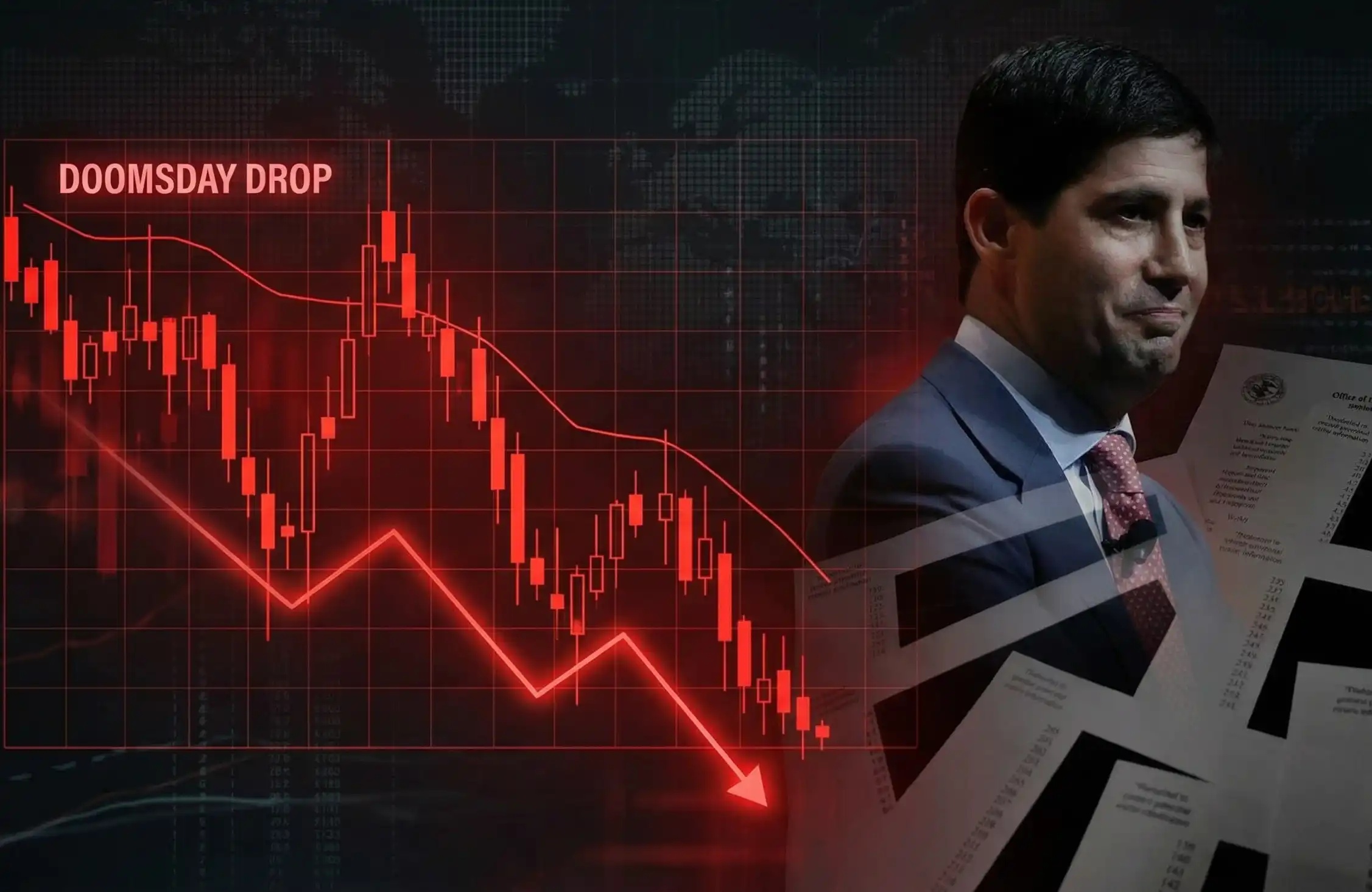
· Oversold does not equal a bottom. Truist strategist Keith Lerner noted that tech stocks are experiencing a certain degree of "buyers' strike." Even if technical indicators are already oversold, the decline could continue without sustained buying support.
· A rebound requires buyers to return. The sharp selloff may create conditions for a technical rebound, but the market must first find a bottom. The key is not how much stock prices have already fallen, but whether investors are willing to take on tech stock risk again.
· Nonfarm payroll data will determine the next round of rate pricing. The market expects 65,000 new nonfarm jobs in October, with the unemployment rate holding at 4.2%. The data could shift expectations for Federal Reserve rate hikes and add a new volatility factor to the first trading day after the selloff.
Tech Stocks Plunge as Market Begins Repricing AI Policy Risk
On November 5, Wall Street experienced one of the most violent tech stock selloffs of the year.
The Nasdaq fell 5.5% in a single day, the S&P 500 dropped 4.4%, and the Dow Jones Industrial Average fell 3.4%. All 11 S&P 500 sectors closed lower, with the tech sector down 7.3% and the Philadelphia Semiconductor Index plunging about 12%, the second-largest single-day decline on record.
At the individual stock level, SanDisk fell 22%, while Micron Technology, AMD, and Marvell Technology each dropped about 17%, and Nvidia fell 9%.
The concentrated selloff in tech stocks pushed the Nasdaq as much as 14% below its record high set a month earlier, firmly entering correction territory. In Thursday's session alone, Nasdaq constituent stocks shed about $2 trillion in market value.
The direct catalyst for this selloff was investors reassessing the policy implications of the U.S. midterm elections.
After the Democrats' landslide election victory, the market's initial reaction was relatively muted. But as investors further digested the implications of Democratic control of both chambers of Congress, concerns that AI data center construction could face restrictions rapidly intensified.
The market fears that Democrats may use congressional control to push for stricter regulation, thereby slowing the pace of U.S. data center expansion.
It should be noted that the market is currently trading on potential policy changes, not on any nationwide construction restrictions that have already been implemented. But for tech stocks that had previously relied heavily on expectations of AI capital expenditure growth, policy uncertainty alone is enough to trigger a valuation reassessment.
Why doesn't oversold mean an immediate rebound? The key is the "buyers' strike"
After the sharp selloff, investors face a direct question: have tech stocks fallen enough?
From a technical indicators perspective, the heavy selling may have pushed tech stocks into oversold territory, increasing the likelihood of a short-term rebound. But oversold conditions alone do not prove the market has bottomed.
Truist strategist Keith Lerner warned: "What we're seeing now is a certain degree of buyers' strike in the tech stock market. That rubber band may stretch further downward."
It is worth noting that Lerner himself remains in the bullish camp.
This assessment reveals the core risk in the current market: even if long-term bullish investors believe tech stocks are already oversold, that does not mean they are willing to step in and buy immediately.
The so-called "buyers' strike" does not mean there are no buyers at all in the market, but rather that potential buyers are choosing to hold off on trading as uncertainty rises, waiting for lower prices or clearer fundamental signals.
In this situation, selling pressure has not yet subsided, while new capital is unwilling to actively enter, so even after share prices have already fallen sharply, they may continue searching downward for a new equilibrium price.
This also explains the difference between oversold and bottoming.
Oversold reflects the magnitude and speed of the prior decline, while bottoming requires selling pressure to ease, buying to recover, and a gradual consensus to form in the market's repricing of risk.
A technical rebound may occur at any time, but if the rebound mainly comes from short covering and lacks sustained active buying, the market may come under pressure again.
For the AI sector, which has experienced a historic selloff, what is truly worth watching is not just whether the decline has been large enough, but whether investors are once again willing to hold the relevant risk exposure.
Nonfarm Payrolls Report Due Tonight, Rate Expectations Emerge as the Second Variable
Beyond the selling pressure in tech stocks themselves, Friday's release of U.S. October nonfarm payrolls data will also serve as an important catalyst for whether the market can stabilize.
Economists expect U.S. October nonfarm payrolls to show a net gain of 65,000 jobs, with the unemployment rate holding at 4.2%.
Previously, U.S. labor market data displayed unexpected resilience, with no sign yet of the AI-driven mass layoffs that the market had feared.
But in the current environment, the significance of employment data lies not only in gauging whether the U.S. economy is healthy, but also in its potential to shift market expectations for the Federal Reserve's subsequent rate hike path.
After Thursday's stock market rout, the rates market has further pushed back expectations for the Fed's next rate hike, with not even a single hike fully priced in until March 2027.
The market expects cumulative tightening of only about 40 basis points going forward. Combined with the 25 basis point hike already implemented in September this year, the total magnitude of the entire hiking cycle is projected at just 65 basis points. If this expectation materializes, it would be the mildest rate hike cycle in Federal Reserve history.
However, the nonfarm payrolls data could reshape this path.
If job growth comes in significantly stronger than expected, the market may reprice higher odds of Fed rate hikes, pushing Treasury yields upward and creating new pressure on highly valued tech stocks.
If employment data cools moderately, it could ease rate hike expectations and provide some support for tech stock valuations. But if the data is too weak, it could also trigger investor concerns about economic growth and corporate earnings.
Therefore, weak employment data does not necessarily benefit the stock market, nor does strong employment data necessarily improve market sentiment. What determines market direction is how employment data simultaneously alters growth expectations and rate expectations.
Can U.S. Stocks Stop the Slide Tonight? Watch Both Buying Interest and Rate Pricing
November 6 will be the first trading day after the historic tech stock selloff, and also the day U.S. October nonfarm payrolls data is released.
This means the market will simultaneously face two unresolved questions.
First, whether tech stocks can attract new buying interest after experiencing consecutive valuation reassessments.
If investors remain concerned that AI data center construction will be constrained by policy, even a brief market rebound could be followed by another decline due to a lack of sustained follow-through buying. Conversely, if selling begins to abate and buying interest gradually recovers, the market would be more likely to form a阶段性 bottom.
Second, whether the employment data can provide a relatively favorable signal for the interest rate market.
With tech stocks already under massive selling pressure, further rising rate hike expectations could intensify valuation pressure. A moderation in rate expectations, however, could create a more favorable environment for a technical rebound.
Nevertheless, improved macro data cannot automatically resolve the policy uncertainty facing the AI sector. After the sharp selloff, oversold conditions are merely a potential precondition for a rebound, not evidence that one is imminent.
For tonight's US stock market, what truly matters is whether the market can find buyers willing to take on risk, and whether rate expectations will bring a new round of valuation pressure after the nonfarm payrolls data is released.
Before these two variables become clear, it is still too early to judge that the market is set for a confirmed rebound simply because tech stocks have already fallen sharply.
Welcome to join the official BlockBeats community:
Telegram Subscription Group: https://t.me/theblockbeats
Telegram Discussion Group: https://t.me/BlockBeats_App
Official Twitter Account: https://twitter.com/BlockBeatsAsia
 Related Articles