L2 Summer Is Coming? A Comprehensive Guide to StarkNet Technology and Ecosystem
Original Title: "L2 Summer Is Coming? Master the StarkNet Technology and Ecosystem with This Article"
Original Source:
Community "Biteye"
1. Prelude to Layer 2 Summer
The DeFi ecosystem on Arbitrum has begun to take shape, with its decision to airdrop tokens solidifying its position as a leader in the Layer 2 ecosystem. From releasing the airdrop rules to opening the claiming process, Arbitrum One's TVL has already captured 66.61% of the entire Layer 2 ecosystem, with active users skyrocketing by four hundred thousand within two weeks.

(Data Source: https://l2beat.com/scaling/tvl)
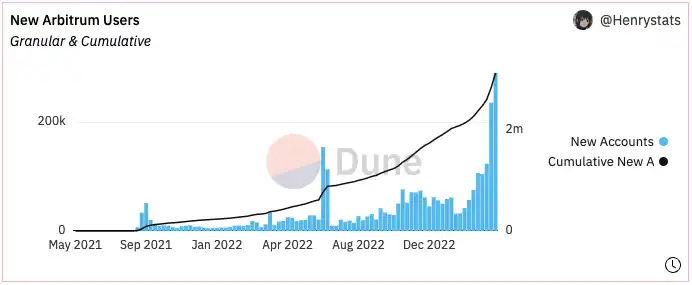
(Data Source: https://dune.com/Henrystats/arbitrum-metrics)
The once-famous Layer 2 "Four Heavenly Kings": Optimism, Arbitrum, zkSync, StarkNet, now only the latter two have not announced an airdrop. Optimism and Arbitrum have successively implemented the strategy of ecosystem accumulation + airdrop to attract users, a strategy that has already been reflected in the market share of the Layer 2 ecosystem. As the Layer 2 ecosystem matures, coupled with EIP-4844 significantly reducing Rollup costs, capturing users will become a core factor in Layer 2 dominance. Given the current market landscape, there is little time left for zkSync and StarkNet to capture market share. The competition between projects and the wealth effect brought on by user FOMO have already set the stage for Layer 2 Summer.
(Note: EIP-4844 is an Ethereum Improvement Proposal expected to reduce Rollup costs by 10-100x. It introduces a new transaction type to Ethereum that can carry short-lived data called blobs. Data previously stored in Calldata form can now be stored using blobs, which are much cheaper. From a user experience perspective, the most significant impact will be a substantial reduction in L2 fees, providing a crucial foundation for the explosion of the L2 ecosystem.)
As the most valuable project among the Layer 2 Big Four (parent company StarWare valued at 8 billion USD), the StarkNet ecosystem project speaks for itself, as evidenced by its recent transaction activity.
StarkNet announced the deployment of its native token $STRK on the Ethereum mainnet on November 16, 2022, for voting, staking, and fee payments, with token distribution yet to be determined. The following sections will introduce StarkNet and key projects within its ecosystem. For those more interested in ecosystem projects, you can directly read the third section.
(Data Source: https://l2beat.com/scaling/activity)
2. Introduction to StarkWare
2.1 Project Overview
StarkNet's parent company, StarkWare, was founded in 2018, headquartered in Israel. Its two main products are the Ethereum-based scaling engine StarkEx and the general-purpose ZK-Rollup StarkNet. The StarkWare technical team has over a decade of research and engineering experience in the ZKP field. In 2018, they were the first to propose using Stark's Validity Proofs to solve Ethereum's scalability challenges, achieving breakthrough scalability.
StarkEx: A layer-two scalability engine designed for applications, StarkEx provides dedicated Rollup technology services to each application. It officially launched on the Ethereum mainnet in 2020 and is relatively mature. Well-known projects currently developed based on StarkEx include Sorare, ImmutableX, dYdX, ApeX, and others.
StarkNet: A general-purpose Rollup capable of deploying any smart contract without the need for custom development for specific applications. StarkNet launched on the Ethereum mainnet in November 2021, with currently 50+ projects live on mainnet and 100+ projects on testnet.
StarkWare has raised a total of $273 million in 7 funding rounds, completing a $6 million seed round in January 2018, receiving a $12 million grant from the Ethereum Foundation in July of the same year. In March 2021, they raised a $75 million Series B led by Paradigm, followed by a $50 million Series C in November of the same year, with investors including Paradigm, Alameda Research, Three Arrows Capital, among others. On May 25, 2022, StarkWare raised $100 million in a Series D funding round at an $8 billion valuation, led by Greenoaks Capital, Coatue, Tiger Global, and other participants.
2.2 Technical Architecture and Others
Similar to the zk-rollup solution based on Validity Proofs, StarkNet, and StarkEx also achieve Ethereum scalability through "off-chain computation-generating zk-proof-on-chain verification."
However, it achieves high transaction throughput, low cost, and other features through its innovative zk-STARK zero-knowledge proof algorithm, zk-friendly programming language Cairo, SHARP shared validators, and diverse data availability.
2.2.1 STARK-Based Validity Proof
zk-STARK was proposed by StarkWare's founder Eli Ben Sasson in a 2018 paper, standing for Zero-Knowledge Scalable Transparent Argument of Knowledge, with scalability and transparency as key features.
Transparency: ZK-STARK can operate in a trusted setup without a Common Reference String (CRS). Instead, it uses publicly verifiable randomness to establish interaction between the prover and verifier, reducing user trust assumptions and enhancing the security of STARK-based protocols.
Scalability: STARK has the property of logarithmic verification compression, which enables faster verification. Specifically, if proving a proposition takes time T, then verifying the proof only takes log(T) time. This feature allows STARK to achieve scalability through recursion, enabling cost-efficiency and reducing delays for large combinatorial propositions.

(Image Source: https://medium.com/coinmonks/zk-starks-create-verifiable-trust-even-against-quantum-computers-dd9c6a2bb13d)
The advantages of STARK also come with a series of trade-offs:
STARK's proof size is larger than SNARK, causing significant confirmation delays when it is challenging to distribute proof costs due to low Layer 2 transaction volume. Currently, StarkNet's transaction finalization time is around 8 hours, primarily because of the low transaction volume on StarkNet, requiring a sufficient number of transactions to distribute the cost of a validity proof. Additionally, zk-STARK requires Cairo to generate validity proofs for transactions, posing a learning curve for developers.
2.2.2 Cairo Programming Language
Cairo is a Turing-complete programming language released by the StarkWare team in 2020, allowing developers unfamiliar with STARK to use Cairo to achieve verifiable computation. In most existing proof systems, for each business logic or computation, a set of polynomial constraints representing the specific calculation needs to be generated. The challenge lies in unifying diverse smart contract execution results into verifiable polynomial equations.
Programs written in Cairo can directly convert computation results into verifiable polynomial equations through the STARK prover, enabling seamless compatibility between smart contracts and zero-knowledge proofs. Cairo is a programming language designed for STARK, and their combination maximizes STARK's potential. However, the disconnect with the EVM ecosystem has been an ongoing challenge. EVM compatibility is a battleground for various zk scaling solutions, and the StarkWare team is working hard to address this issue.
By the end of October 2022, StarkNet claimed to have developed ZK-EVM using Cairo, while the Ethereum client Nethermind was working on the Warp compiler to translate Solidity to Cairo, aiming to achieve StarkWare's compatibility with the EVM. The team claimed that Warp now supports rewriting Uniswap V3 to Cairo code. As StarkNet is truly deployed in a production environment, the real-world impact of cross-solution compatibility will be tested.
2.2.3 SHARP Shared Prover
SHARP, which stands for SHARed Prover, is the Prover that StarkEx and StarkNet use to generate zero-knowledge proofs. SHARP can generate validity proofs for both StarkEx and StarkNet simultaneously, allowing the aggregation of different StarkEx applications and transactions occurring on StarkNet into a single STARK proof. This helps in more efficiently utilizing the STARK proof's capacity, thus increasing transaction throughput and reducing latency.
Recursive proof is a cutting-edge technology that applies not only to some hardcoded logic but also to general-purpose computation. When combined with STARK, SHARP enables transactions within the entire StarkWare ecosystem to exhibit good recursive properties, leading to ultimate scalability.
2.2.4 Diversified Data Availability
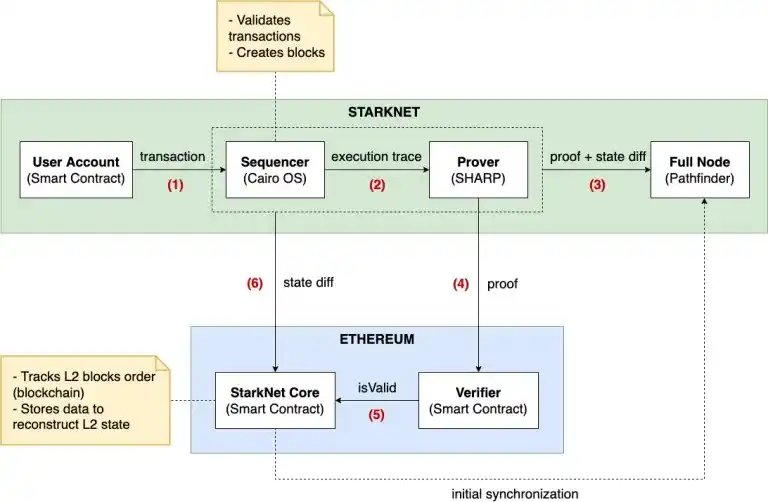
The general logic of a validity proof is "off-chain computation - zk proof generation - on-chain verification," meaning users transact on Layer 2 -> Sequencers collect, order, and execute, and once the computation is done, the transactions are handed to the Prover -> Prover generates a validity proof submitted to a Verifier contract on the mainnet -> Verifier contract verifies the proof's validity, and if successful, the state is confirmed on the mainnet.
Data availability: In Rollup mode, after the Prover's proof is verified, the new state becomes valid, and specifics of the state (like account balances) are written to the mainnet. Users can then trustlessly initiate new transfers based on the state information confirmed on the mainnet, as the mainnet has the most up-to-date user balances, ensuring on-chain data availability.
In fact, the majority of the mainnet's gas cost is consumed by data availability storage rather than proof verification, meaning that achieving data availability on the mainnet incurs significant costs. Therefore, StarkNet has proposed a solution to move data availability to off-chain storage called Validium, where only the hash of the verified state is stored on-chain.
In this solution, data availability is maintained by a Data Availability Committee (DAC) composed of a predetermined number of independent members responsible for overseeing the correct state updates and retaining copies of processed data. When a user wants to withdraw Layer 2 funds in a new state, they require DAC signatures to access specific ledger information. Validium significantly reduces Rollup costs but sacrifices decentralization, making it suitable for data availability in non-critical transactions.
Building on the Rollup and Validium basic modes, StarkWare also offers the Volition mode, allowing users to choose the data availability storage method between Validium and Rollup on a transaction-by-transaction basis. Users can choose to store each individual transaction in Validium or Rollup mode. In summary, the three data availability (DA) modes provided by StarkWare allow dApps and users to choose based on the data's importance. The team has stated that all three modes are currently production-ready. Regardless of the DA mode used, the validity of all transactions is ensured by STARK proofs.
Rollup: Ledger is directly published on the blockchain
Validium: Data Availability Committee (DAC) ensures ledger security, with only the hash stored on-chain
Volition: Applications allow users to choose the DA mode for each transaction, selecting Rollup or Validium
2.3 Workflow
2.3.1 StarkNet Workflow
1. Users initiate transactions, sending them to the Sequencer for validation, ordering, and execution, where they are batched. Currently, the StarkNet system has only one Sequencer controlled by StarkWare, but the StarkWare team plans to decentralize the Sequencer in the future. The Sequencer uses the Cairo OS to execute transactions, acting as the EVM.
2. The Squencer submits the transaction execution trace to the Prover, who generates a validity proof for the computational integrity. The execution trace is essential for generating zkps and recording it is a zk-friendly feature of the Cairo language; the Prover here also generates validity proofs for StarkEx and can aggregate transactions from different StarkEx applications and StarkNet for sharing.
3. The Squencer and Prover send the validity proof and global state update to the full nodes for recording. The full nodes are built on a P2P network and are responsible for recording the transaction history of the entire Layer2 network and Layer2-related transactions on the Ethereum mainnet.
4. The Prover submits the validity proof to the Verifier on the mainnet. The Verifier is a smart contract deployed on the Ethereum mainnet responsible for receiving and verifying the validity proof provided by the Prover.
5. The Verifier sends the verified result to the StarkNet Core contract on the mainnet for recording and storage. The StarkNet Core contract is deployed on the Ethereum mainnet to receive Layer2 global state update information, including state hashes and data availability; the verified result is a series of state hashes that the Verifier writes into a new Layer1 transaction and passes to the Core contract for storage.
6. After receiving the verified result (state hash), the StarkNet Core contract receives data availability in the form of "Call data" from Layer2 and stores it. This data is synchronized to the Layer2 full nodes for decoding to ensure that the full nodes can record and reconstruct the historical transactions of Layer2; in the Validium solution, the StarkNet Core contract does not store data availability, only state hashes.
(Image Source: https://david-barreto.com/starknets-architecture-review/#more-4602)
2.3.2 StarkEx Workflow
1. Users initiate interactions within the application, which the application executes to generate transactions. These transactions are then sent directly to the StarkEx server by the application. The StarkEx server runs a Cairo program customized for the application.
2. The StarkEx server batches transactions, sends them to the SHARP Prover, and generates a validity proof.
3. The Prover sends the generated validity proof to the on-chain Verifier for verification.
4. Upon successful verification, the Verifier sends a state hash to the StarkEx contract. The StarkEx server updates the entire state on the mainnet StarkEx contract. Throughout this process, user-to-application interactions occur off-chain, while the application's transmission of transactions to the StarkEx server occurs on-chain.

(Image Source: https://docs.starkware.co/starkex/overview.html)
2.4 StarkNet Value Analysis
StarkNet, a generic Layer 2 solution introduced by StarkWare, leverages a validity proof approach to achieve mainnet security. In the Layer 2 scalability race, it falls under zk-rollup. The debate of "zk-rollup vs. optimistic rollup: who will dominate the future" is a long-standing topic. The prevailing view is that optimistic rollup, due to its lower technical implementation complexity and good EVM compatibility, will take the lead in the short term. In the long run, with further expansion of the Ethereum ecosystem, the interactive nature of optimistic rollup will be limited, and zk-rollup will dominate due to its non-interactive validity proof and simplicity.
Within the zk-rollup's subdivided track, StarkNet does not charge ahead in the popular zkEVM direction but instead opens a new path through STARK + Cairo. It is dedicated to maximizing the potential of validity proof technology, nurturing a native ecosystem for StarkNet.
Currently, the entire Web3 has not yet achieved mass adoption, and the StarkNet ecosystem is still in its early stages. The low transaction volume makes it difficult for StarkNet to accumulate enough transactions to spread the cost of the validity proof, resulting in a longer transaction confirmation time for StarkNet and the inability to fully leverage its scalability.
However, as the penetration of Web3 gradually increases, StarkNet will take on a large number of users and transactions with its unique technical advantages, bringing diversity to the Ethereum ecosystem and allowing more users to enjoy a good Web3 experience.
3. Inventory of Key Projects in the StarkNet Ecosystem
The StarkNet official website shows that there are 100+ projects deployed and launched on StarkNet, with 53 of them already live on the mainnet, covering various project types such as wallets, DID, cross-chain bridges, DeFi, NFTs, Games, and more. The following will introduce key projects in key categories. More projects can be explored through the StarkNet ecosystem list.
3.1 Wallets
3.1.1 Argent X
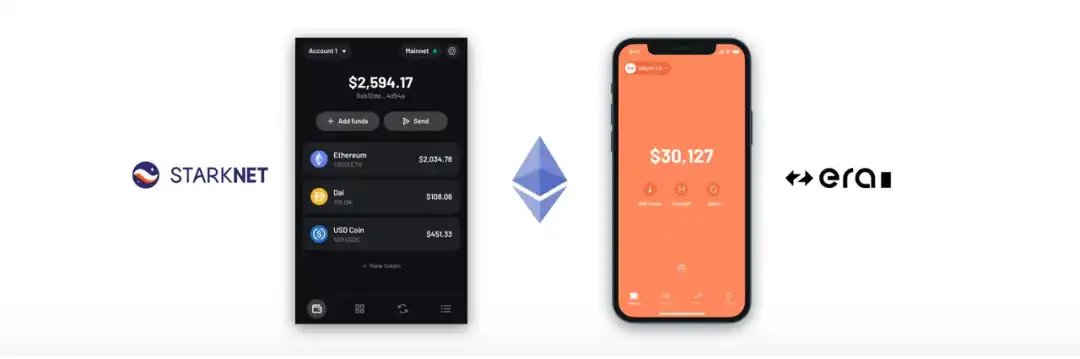
Argent X is a StarkNet wallet launched by Argent, also the first wallet to support StarkNet. It utilizes StarkNet's native account abstraction feature to implement multisig and mnemonic-less features, while leveraging StarkNet's excellent performance to achieve lower transaction fees and faster transaction confirmation times.
Argent X users can use Argent through two methods: iOS and Google Chrome extension. Its built-in exchange, staking, borrowing, and other DeFi functions allow users to complete one-stop DeFi operations in the wallet.
Argent also provides features such as biometric verification and guardian mechanisms to give users a Web2 experience. Argent X's contract security has been audited by three auditing companies: Trail of Bits, Solidified, and G0 Group.
In April 2022, Argent raised a $40 million Series B funding round led by Fabric Ventures and Metaplanet.
3.1.2 Bravvos
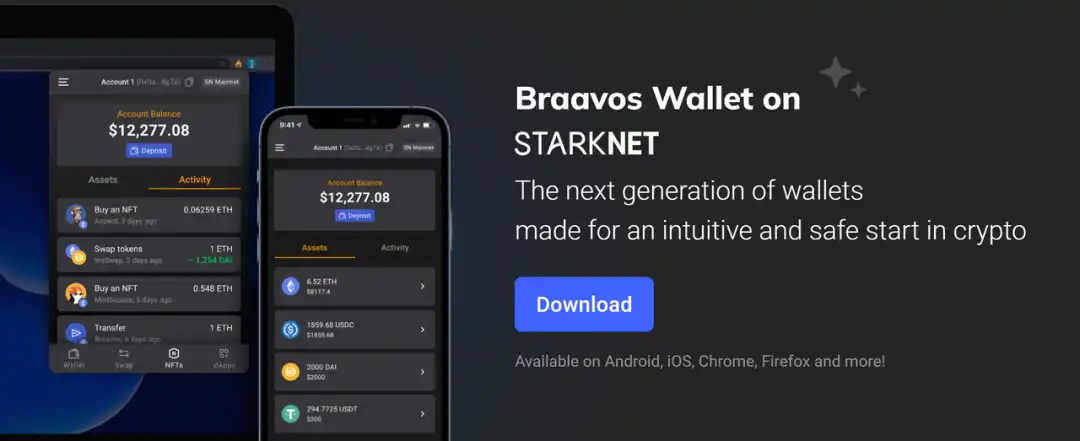
Bravvos is also a self-custodial account abstraction wallet running on StarkNet. Bravvos aims to provide a seamless Web2.0 user experience, usable on iOS, Android, and various browsers, while eliminating mnemonics for account recovery.
Bravvos also plans to offer DeFi services such as staking and lending. Bravvos supports account partitioning, separating long-term (high-value) savings from day-to-day (low-value) spending through withdrawal limits and withdrawal delay, allowing users to view transaction details for fine-tuned management of on-chain funds.
Bravvos announced in October 2022 that it has raised $10 million in funding, led by Pantera Capital.
3.2 Cross-Chain Bridge
3.2.1 StarkGate
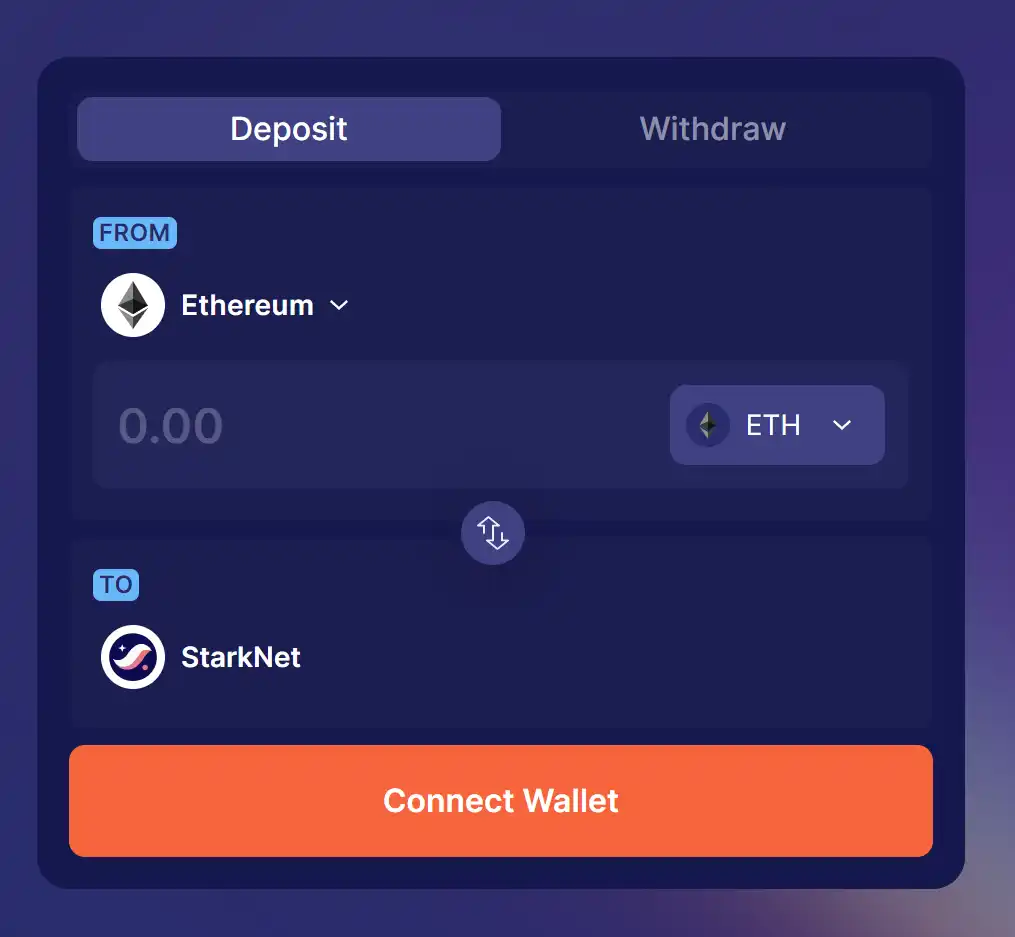
StarkGate is the official Ethereum StarkNet cross-chain bridge developed by StarkWare, enabling users to facilitate cross-chain transactions of ETH and ERC-20 tokens between Ethereum and StarkNet.
The bridging mechanism between StarkGate and Ethereum communicates through StarkNet's message passing protocol, leveraging STARK-based computational scalability for cost-effective interactions.
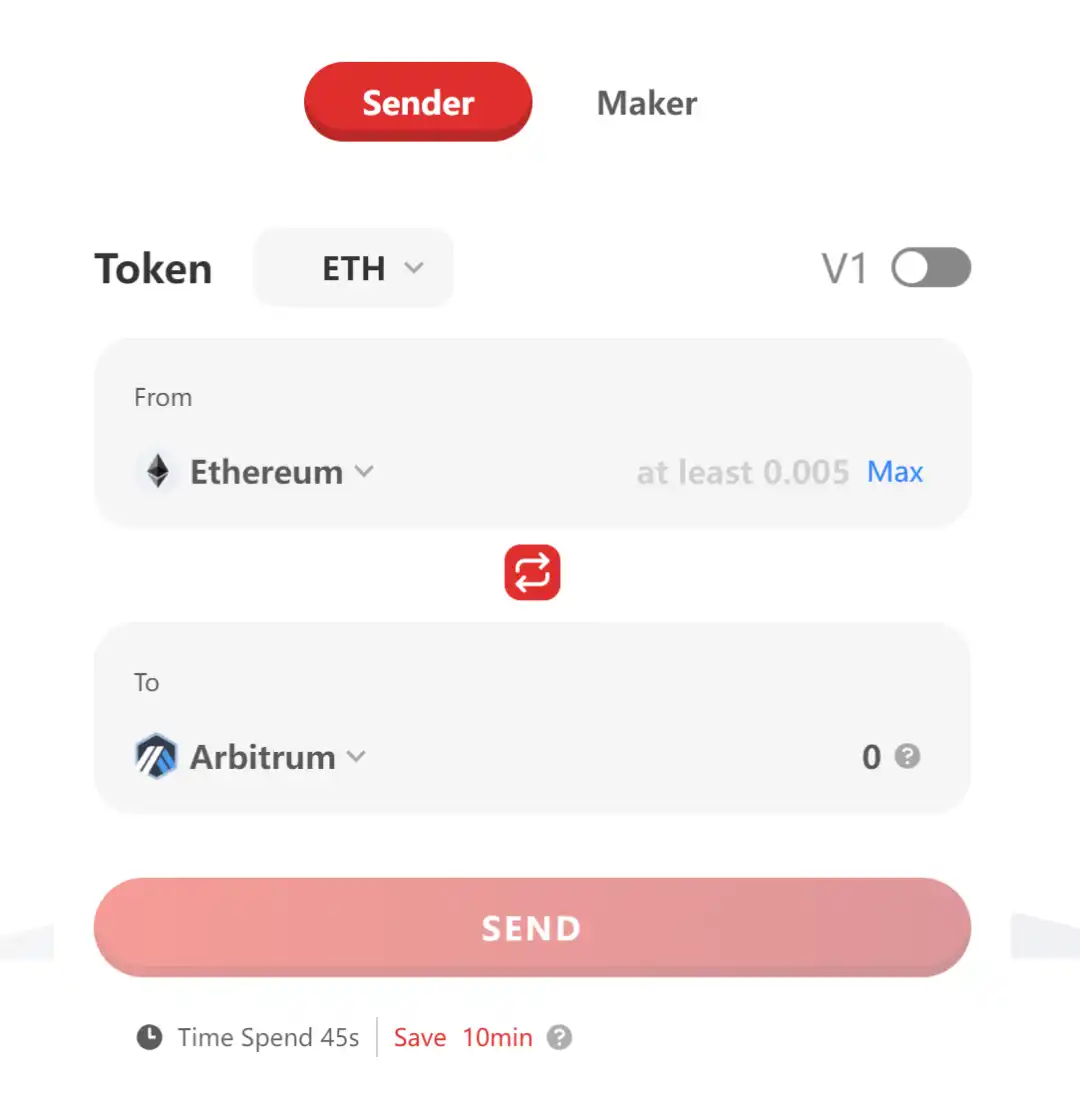
3.2.2 Orbiter Finance
Orbiter Finance is a decentralized cross-Rollup bridge that allows users to move assets across ETH mainnet, StarkNet, zkSync, Loopring, Arbitrum, Optimism, Polygon, ZKSpace, Immutable X, dYdX, Metis, BNB Chain, and Boba.
The Orbiter Bridge offers users an excellent experience with low fees and fast speeds through its unique liquidity provider model, but currently only supports transfers for four assets: ETH, USDC, USDT, and DAI.
In November 2022, Orbiter completed its first round of funding with participation from investors such as Tiger Global, Matrixport, A&T Capital, StarkWare, Cobo, imToken, Mask Network, Zonff Partners, among others. The funding amount was undisclosed. Additionally, Vitalik once donated 16 ETH to the project.
3.3 DID
3.3.1 StarkNet ID
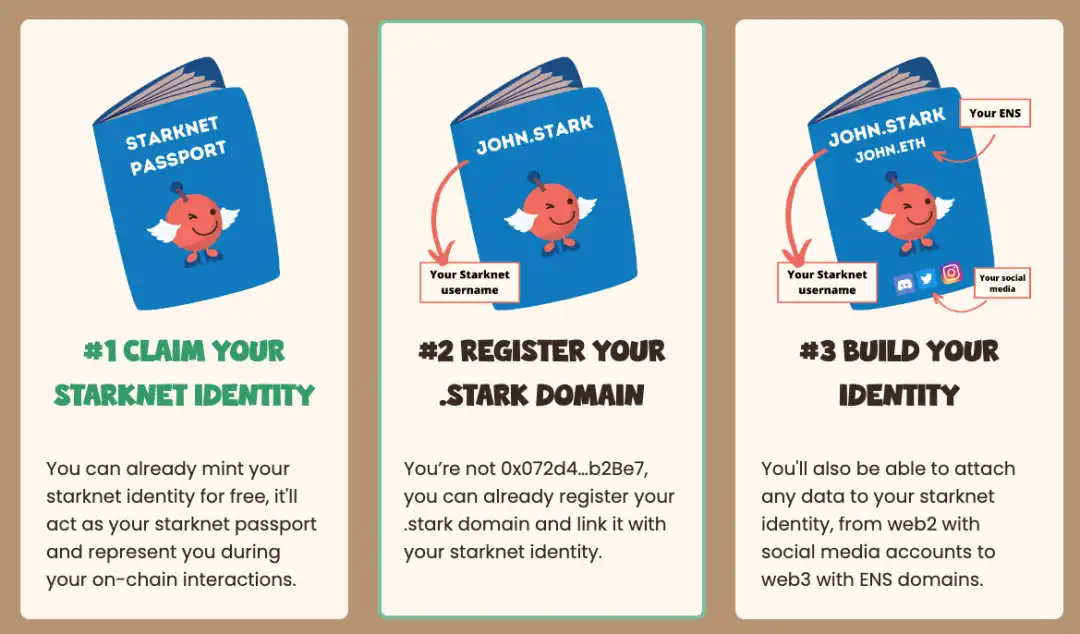
StarkNet.id is StarkNet's domain service (.stark), allowing users to mint decentralized identities based on StarkNet for free. Users can also attach any data to their StarkNet identity, including identity labels ranging from Web2 social media accounts to Web3 ENS domains. The team plans to launch a corresponding StarkNet Identity Dashboard and more features in the future to allow users to more easily manage and build a more comprehensive decentralized identity system.
According to data, the total supply of minted StarkNet.ids is 148.05K, with 85.28K holding users. The floor price is around 0.015 ETH, with a total trading volume of 1.16 ETH (as of 2023.3.26).
3.3.2 WIW Protocol
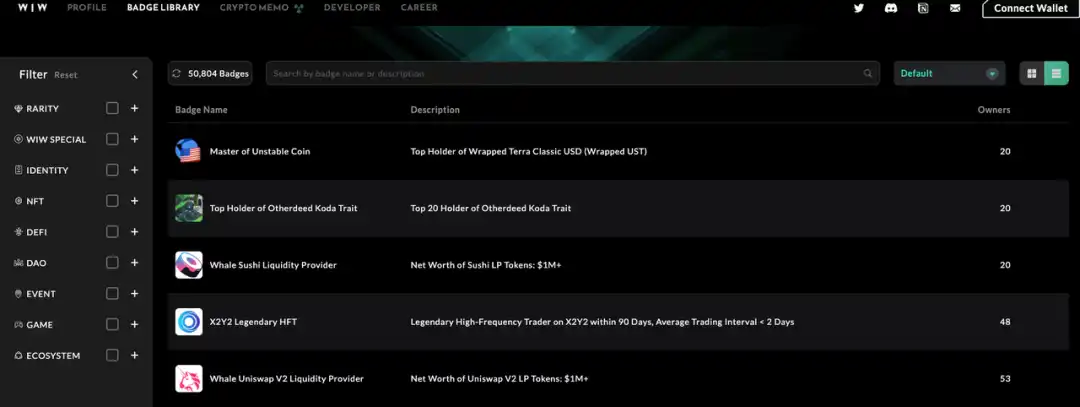
WIW is an on-chain identity protocol focused on privacy protection that can generate corresponding labels based on a user's on-chain behavior to help users build an identity system. It mainly covers three application scenarios:
Personal Branding: WIW can help users showcase their on-chain achievements, build an on-chain resume, and establish their on-chain credit to potentially receive airdrops and credit opportunities.
Social Activities: WIW's precise analysis of user identities allows users to find and join matching communities and meet like-minded individuals.
Tooling for Builders: WIW's tags allow builders to analyze users without compromising their privacy, enabling precise marketing activities
3.4 DeFi
3.4.1 10KSwap
10KSwap is the first open-source AMM protocol deployed on StarkNet, aiming to leverage rollup's performance for AMM protocol efficiency, bringing lower fees, less friction, and improved liquidity to the L2 world.
Currently, 10KSwap supports swaps among five tokens: ETH, USDC, DAI, WBTC, USDT. Similar to traditional swaps, users can provide liquidity to 10KSwap to earn LP rewards.
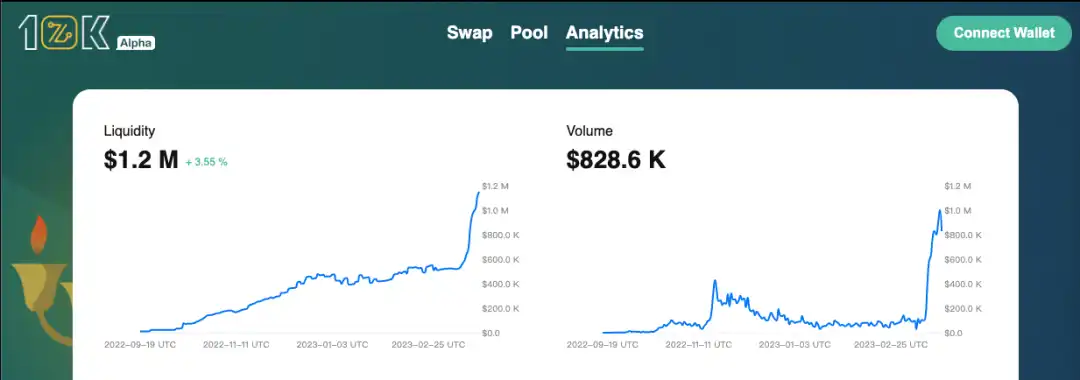
Currently, 10KSwap has around $1.2 million in liquidity with a daily trading volume of approximately $828,600 (3/26/2023), still in its early stages.
3.4.2 Nostra
Nostra is a decentralized lending protocol deployed on StarkNet, the first protocol on StarkNet to support flash loans, and it also introduces StarkNet's first native stablecoin, $UNO.
Nostra aims to build StarkNet's liquidity layer, consisting of three products: Nostra Money Market, UNO, Nostra Swap:
Nostra Money Market: The core product of the liquidity layer, providing users with minting and lending services similar to MakerDAO (minting $UNO); Nostra also offers collateral risk isolation, smart liquidation, and other features to further enhance user lending experience, improving asset security; the money market also benefits Nostra Swap and UNO minters, driving the entire liquidity system to complete a logical loop
Nostra Swap: The stablecoin trading platform in the Nostra system, similar to Curve, supporting UNO's peg and growth. Users can provide LP on Nostra Swap to receive trading fees and money market interest, and can also exchange $UNO for other stablecoins
UNO: The first Starknet-native stablecoin, mintable by users through overcollateralization or obtainable through Nostra Swap; $UNO will be used for various utility scenarios including DeFi, gaming, NFTs, real-world payments, etc.

3.4.3 ZKX
ZKX is the first self-custodial and community-governed perpetual futures trading platform on StarkNet. The protocol aims to provide further scalability through a decentralized node network and enhanced trading experience, offering perpetual swaps and derivatives to any user on StarkNet and Ethereum.
ZKX has introduced a range of measures to incentivize user trading, including earning USDC through trading and staking, unlocking advanced ZKX features through higher trading volumes, and more.
In July 2022, ZKX announced the completion of a $4.5 million seed funding round, with investors including StarkWare, Alameda Research, Huobi, Amber Group, Crypto.com, among others.
3.5 NFT
3.5.1 Aspect
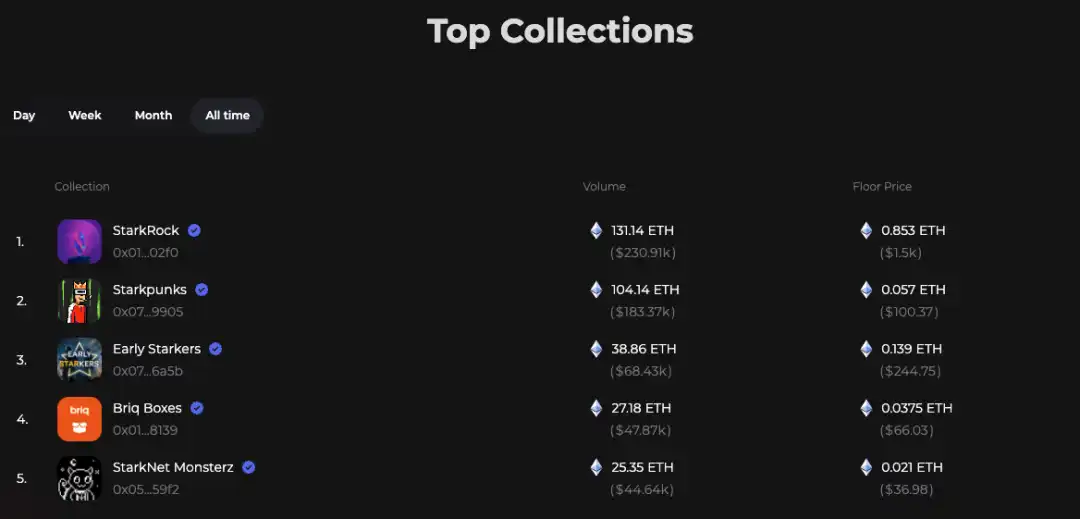
Aspect is the first NFT trading platform in the StarkNet ecosystem, launched in August 2022, where users can mint, upload, and trade NFTs. Currently, its trading volume is still relatively small, as it is in its early stages.
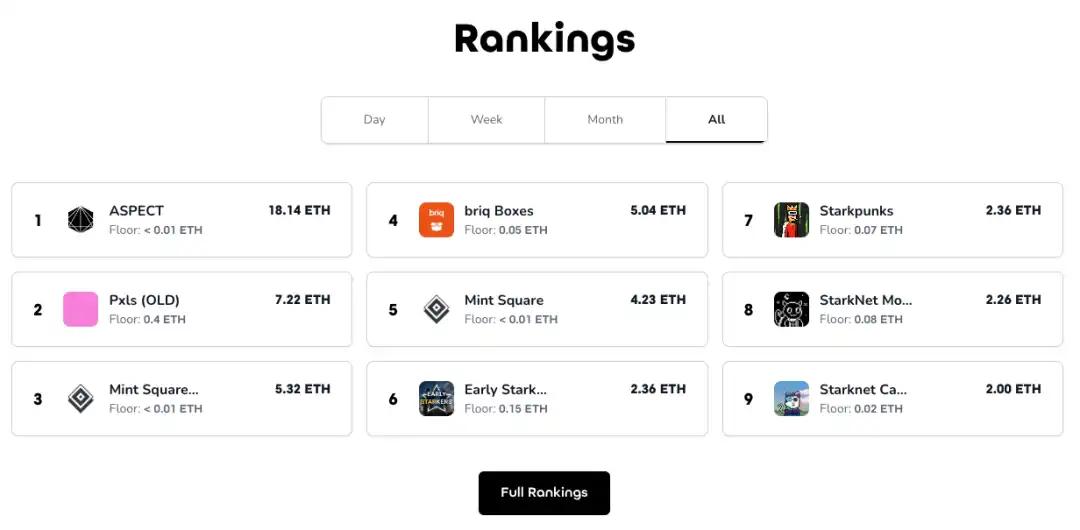
3.5.2 Mint Square
Mint Square is another NFT creation and trading platform on StarkNet, aiming to provide users with a cheaper and faster confirmation speed NFT trading experience, also deployed on zkSync Era. Currently, its trading volume is slightly higher than Aspect, but still relatively early stage.
3.6 Game
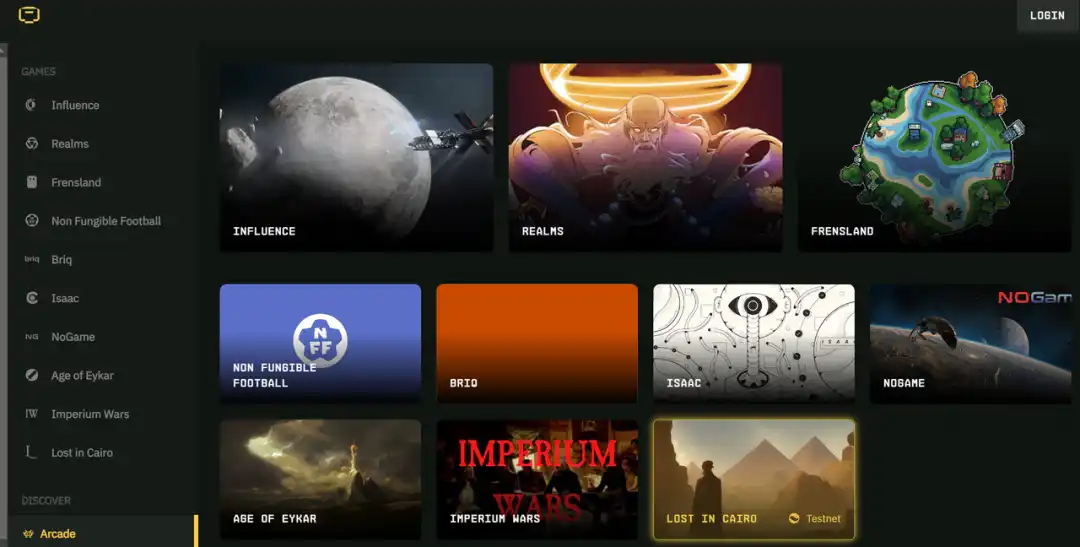
3.6.1 cartridge.gg
cartridge.gg is a blockchain game integration platform on StarkNet, similar to the Steam game store in Web2. On the one hand, Cartridge can help users discover blockchain games and interact with friends. On the other hand, Cartridge, as a blockchain game infrastructure, can also integrate DID, wallets, etc., to provide players with a more immersive on-chain experience.
3.6.2 Briq
Briq is a 3D block-building NFT-based chain game built on StarkNet, allowing anyone to build a standalone virtual world stored on-chain. Users can use Briqs to create ERC-1155 standard NFTs and build chain games.
Currently, the total minted amount of Briq NFTs is 119.11K, with 98.43K holders, a floor price of around 0.12 ETH, and a total trading volume of 98.57 ETH (as of 3/26/2023).

3.6.3 Influence
Influence is an immersive space strategic sandbox MMO with the project's token $SWAY. Players own exclusive asteroids and engage in activities like mining, construction, trading, research, and combat by manipulating crew members of different professions. Influence has completed three rounds of alpha testing with rewards, is actively under development, and the release date is yet to be finalized.
The total trading volume of Influence Asteroids assets is a modest 1384 ETH, with a floor price of 0.0349 ETH (as of 3/26/2023)

3.6.4 lootrealmsLoot Realms
Developed by the game studio Bibliotheca DAO, Loot Realms is a large-scale multiplayer, on-chain composable strategy game ecosystem, with the $LORDS token. Gameplay is similar to Web2 military sandbox games like EVE, and The Settlers of Catan, where players need to build a sustainable economic system to produce resources, as well as protect and compete for resources through military strength.
The LootRealms game world consists of 8000 Realms (territories), with a total Realm trading volume of 6532eth and a floor price of 0.4799eth (2023.3.26).

Summary
StarkNet has taken a unique path in the Layer2 solution space, leveraging its strong technological advantages and capital support. Through STARK+Cairo, it has fully tapped into the potential of proof of effectiveness, allowing it to handle a large number of transactions more effectively compared to other solutions.
While StarkNet has temporarily sacrificed good EVM compatibility, this also means that StarkNet can break free from the constraints of the EVM framework, gaining a more flexible development experience and attracting a more diverse set of developers.
In the long run, it has more potential to embrace the explosive growth of the ecosystem, while also bringing diversification to the Ethereum ecosystem. Currently, the StarkNet ecosystem has begun to take shape, but it is still in its early stages, which is also a good entry opportunity for users.
Original Article Link
Welcome to join the official BlockBeats community:
Telegram Subscription Group: https://t.me/theblockbeats
Telegram Discussion Group: https://t.me/BlockBeats_App
Official Twitter Account: https://twitter.com/BlockBeatsAsia

 Related Articles