The potential of games in digital asset ecosystems
原文标题:《 The Creator Economy In Gaming ——Fun and profit from constrained randomness 》
Original article by Joel John and Siddharth
Kxp, BlockBeats
In this article, we'll discuss the potential of games in the digital asset ecosystem, one of the few use cases that has the potential to reach a billion users. The reasons are: First, gamers have become accustomed to using digital assets, because they are constantly trading in games. Second, games involve a high frequency of transactions, but the current financial infrastructure is not well suited to meet this demand, especially for a global market. Finally, games allow us to break away from our real lives and feel a sense of belonging to our community.
Today's article is a collaboration between me andSiddharth JainHe is a venture capitalist and gamer. Over the past two years, he has gained insight into the workings of game studios and guilds. Siddharth set up IndiGG in 2021 and has been a leading adviser to several prominent gaming companies in the Indian market. He likes to play Dota and Zelda whenever he can find some free time, so I know he has a big say in games.
Over the past few weeks, we've discussed how the Web3 infrastructure is enabling the growth of user-generated content (UGC). In this post, we'll explore the ways in which blockchain and gaming will integrate over the next few years.
High price JPEG with non-existent users
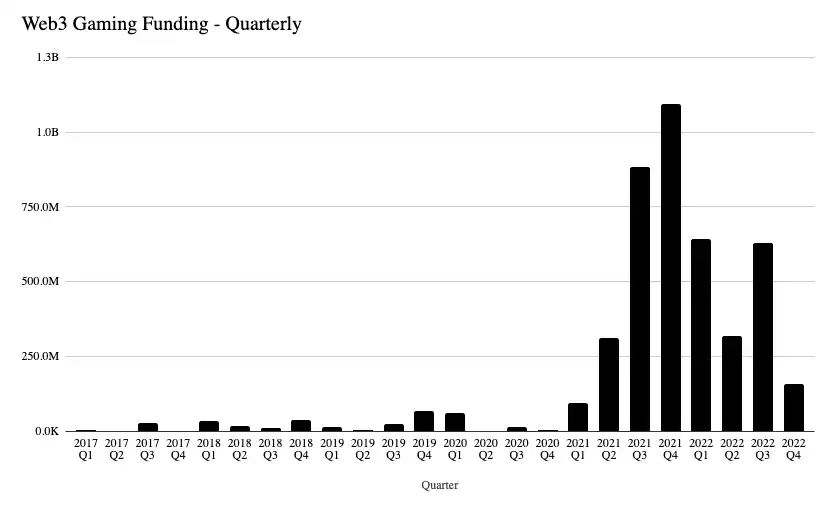
The amount of money spent on online gaming has soared from $83 million in 2020 to more than $2.4 billion in 2021. The success of Axie Infinity has fueled this 30-fold surge at the dawn of a new category. As founders and venture capital firms rush to build everything from developer tools to wallets into the gaming ecosystem, there will be even larger investments in the future.
However, two years later, the hype may not have paid off (yes, we know it takes years to build a triple-A title like Fortnite from the ground up).
There are many other reasons for this: One is that, traditionally, players play games for fun and distraction. Right now, Web3 games focus too much on revenue and not enough on experience. You can't create a Web3 native version of GTA 5 or Red Dead Redemption in 18 months; For studios with an existing user base, it doesn't make sense to impose on-chain primitives. Their users are so opposed to these ideas that they cause unknown confusion and bad PR. Insiders even argue that in-game assets are destroying the industry.
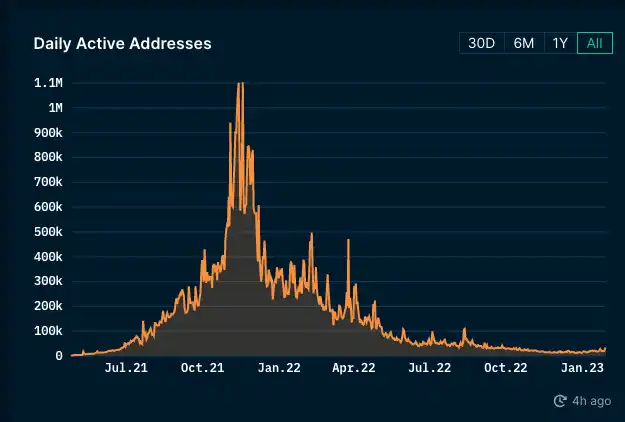
On the other hand, the bear market hit Web3 native games like Axie Infinity, which saw a surge in new users in the third quarter of 2021. The drop in Token prices has taken away the economic incentive for average users to pay attention to Web3 games, and they have begun to see these products as more about trading than gaming experience. These games could not sustain themselves as a means of livelihood or entertainment to pass the time, and their daily audience and revenue plummeted.
Established game studios with decades of experience in making games aren't getting any traction with their Web3 projects. Ubisoft didn't even make $400 after integrating NFT into one of their flagship games, Ghost Recon. The response was so bad that they stopped any updates related to the NFT after less than five months.
The reason is simple: By imposing Web3 on a game as a form of narrative, we're adding layers and layers of complexity to an already established work. Users will only like this innovation if its advantages are significant enough. Over the years, gamers have found that studios have developed more and more ways to monetize them.
In its current form, NFT is just another way for game companies to plunder their users' assets. There was a time when players could trade physical copies of their favorite games with their friends. When games moved to digital distribution, this was no longer the case, and platforms such as Steam and Origin became central marketplaces for games.
Game developers realized that they could sell expanded versions of original games in downloadable content (DLC), rather than releasing full games. When publishers were hungry for more money, microtransactions entered the market. Probably the most controversial monetisation method in games over the past decade has been loot crates, which are essentially lottery tickets sold to novices looking to earn random upgrades for their in-game characters.
thislinkThe video can help you understand how players view the various monetisation strategies of game studios.
Over the past 15 years, gaming monetisation has had a mixed reception. Before, you could buy a game and own it outright, without having to buy another product or expansion pack. However, the economics per unit for game publishers are not ideal, especially for multiplayer games, where they need to continuously spend a lot of money on maintaining servers, managing users, releasing features, and building key mechanics.
These costs add up to a lot of money that few users will be able to afford, and eventually the game will die. That's part of the reason why new age games like Fortnite are transitioning to a subscription model. In addition, ecosystems such as Microsoft's Xbox and SONY's PlayStation have their own bundled platform subscription packages.
You can think of gaming platforms as digital towns where users gather, interact, play, and trade. Unlike the early 2000s, when games required a linear experience through a story, these digital products are now social consumer goods packaged as gaming experiences.
Every time we introduce a new financial primitive into the game, we get pushback because we're taking power away from the user. It's like having to pay for every bite you take at a restaurant -- and microtransactions are very similar today. Especially in Web3 native games, the "barrier to entry" is usually to buy a jpeg, which can be a month's salary.
In order for the gamers and developers who sustain these digital worlds to get a fair shake, we need to find financial primitives that serve both. Players who spend a lot of time in games have come to think of them as "home," but there are few primitives that give creators and toys ownership, or allow them to directly profit from the game.
Perhaps the idea that creators make a living from in-game experiences is far-fetched. Many people have shown us that most game enthusiasts spend their time managing communities not to make money from trading, but to build relationships with each other.
But that's like saying the Substack can't succeed because of Wikipedia. Today's Web3 games are struggling to maintain a balance between financial infrastructure and asset validation. If these primitives are going to work, we have to empower users and creators through this infrastructure -- that's what UGC is all about.
Learn about user-generated content
Most traditional publishers have limited productivity because high-quality content creation is necessarily time-consuming, whether it's writing a book or making a film. Team members need time to find inspiration and find the motivation to turn ideas into consumable content. When the content is produced, it also runs the risk of having a smaller audience.
That's why most big movies are willing to deal with universal emotions, like falling in love and breaking up, or the hero's rags-to-riches story -- these works are more accessible to the masses. If you study traditional print or cable publishers, you'll find that their audiences often share an ideological bent.
The Internet has disrupted much of this relationship, with content no longer produced by centralized publishing houses but co-created and consumed by any user. As the Internet has dramatically reduced the cost of distribution, the subject of content creation has expanded to include users eager to build an audience.
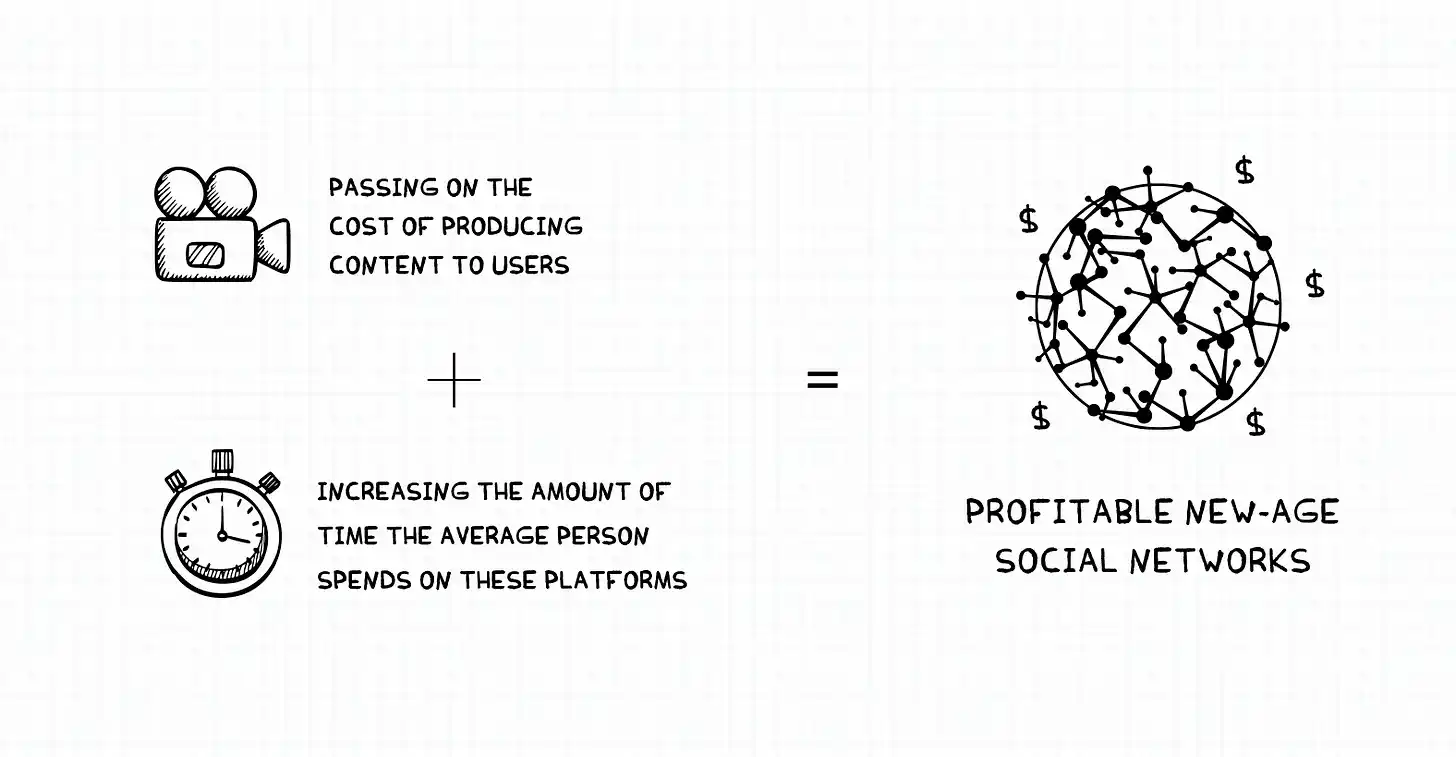
Unlike traditional media, the cost of creating content on social networks can be as low as zero, but at the same time it can attract a growing number of users. Insert an AD or two here and there, and you've got a money-printing machine.
Shifting the cost of producing content to users and increasing the amount of time they spend on these platforms will make the new era of social media a huge business opportunity. Compared with traditional media, it can gain users' attention at the lowest operating cost. When you spend time browsing TikTok, ByteDance (the company behind the app) effortlessly creates a never-ending stream for you.
Their costs are limited to content moderation and maintaining servers. Facebook, for example, paid Accenture more than $500 million to help manage content. An estimated 15,000-30,000 moderators are sifting through content on the social network on any given day.
On the gaming side, videos of other gamers are popping up online. This may sound strange if you're not a gamer, but gamers tend to enjoy watching others play, especially if there are bullet screens and comment sections.Modest PelicanandGirlfriend ReviewsTwo of my favorite game reviewers.
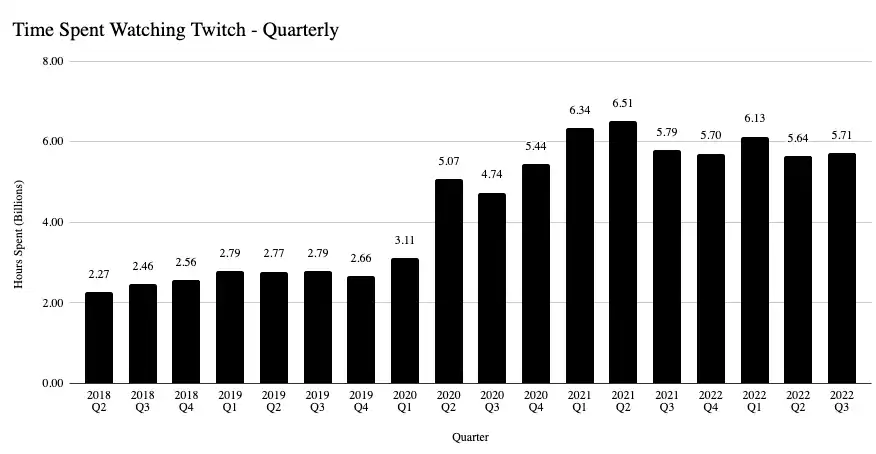
Twitch is the de facto streaming platform for game-related content today, with all its viewers spending the equivalent of 2,500 years a year watching Twitch content.
However, simply watching others play doesn't provide sustained fun, so some games allow creators to build and sell assets to others, ranging from developing a simple racing game to one that requires complex strategies to win. Suddenly, what the player can do isn't limited to what the developer has to offer; Instead, users can create endless new branches of different games.
Think of it as the difference between publishing a book and publishing Microsoft Word, and see what unique stories the creators come up with. Game studios own the intellectual property around the characters and the code for the world the players inhabit, and they're responsible for building the initial audience for the game.
Games such as Counter-Strike and Age of Empires allow players to create unique levels and challenges within the game; Fortnite has a creative mode that allows users to build their own worlds and characters; Far Cry 5's arcade mode includes custom game levels created by community members. Unlike mods, UGCs in games usually require only basic expertise and are often backed up by the game's design mechanics. Users started talking about it back in 2012.
From games to platforms
UGC is a powerful lever for new games, with two core features. First, they extend the amount of time users spend playing. Linear gameplay with a progressive storyline is fun, but there is no incentive to continue playing once the story is over. In contrast, online modes, such as those in GTA 5, extend the longevity and profitability of games. That's why Rockstar's GTA 5 is the most profitable entertainment product of all time, with more than $6 billion in sales worldwide.
Second, it allows the game's most active contributors to keep investing. Once a player builds a unique world in Digital King, they become emotionally attached to the game. As games become a new channel for creative expression, the positive feedback players receive from other players will serve as validation for their efforts. In essence, the growth of user-generated content will help transform a subset of users within games from passive participants to active creators.
Most games have a compelling storyline (Assassin's Creed or Call of Duty) and eventually transition to the UGC stage. More recently, games like Fortnite have shown a pattern where users rarely engage in combat, preferring to engage in custom content.
The randomness of massively multiplayer games has been a success for many users, who enjoy the unpredictable variety of gameplay. Each game session has a different content, creating an effective feedback loop where users engage more with the game in anticipation of the mystery.
Minecraft and Roblox are exceptions to this rule; They've gone beyond platforms. A game that has become a platform often has a relatively small amount of IP and can have a fluid storyline, depending on who is building it. In these games, the user spends more time on the original game experience than on the storyline or levels developed by the game studio. Fortnite is in a unique time of transition to platforms. According to reports, users now spend about half of their time in games interacting with UGCs.
Transitioning into a platform over time is the holy grail of most games and opens up avenues for monetization in unique ways. Fortnite, for example, has worked with more than 100 brands over the past few years. In addition, games on the UGC platform can divert some of the revenue from the user to the creator.
In 2021, Roblox had more than 1.7 million unique users creating content on the platform. Of those, more than 8,600 earned more than $1,000. In addition, some 74 developers netted more than $1 million each. However, the increase in revenue is only part of the story. What is more important is that the game can attract more attention and engagement as it transitions to a platform. In 2021, the average Roblox user had 40 different experiences on Roblox.
In the same year, the game had over 1,900 live experiences, generating at least one million hours of play in a given year. Of these, more than 350 gaming experiences generated more than 10 million hours of participation. Half of Roblox's adult users trade, and 1 in 10 have participated in more than a single $100 transaction.
They've gone from being stand-alone media consumption goods (like TV shows) to platforms where users create most of the experience.
The challenges of user-generated content
UGC is a powerful lever for games that want to grow into a trading platform. But it may not always work as intended. Even big game marketplaces like Steam can't sustain creator bonuses for long enough. In 2015, long before NFT or royalties existed, Steam had a creator's studio division that paid out over $50 million for creators of mods, skins, and more for several games.
At the time, only 25 percent of royalties were paid to creators. The scheme had to be shut down after four months, citing "unexpected user behaviour".
Roblox and Fortnite are great platforms for creating new forms of work. A decade or two ago, it was almost impossible for gamers to turn their time and skills into income. Today, developers earn an average of $0.29 for every dollar they spend on Roblox. Maybe that seems low, but Fortnite's creators only earn 5% of the revenue they generate for the platform.
From Robloxdeveloper economicspage
This isn't to say that the game studios behind these titles are stealing the work of the creators; they need to spend a lot of money to maintain the games, pay development fees, and pay platform fees from Xbox, Apple, or Google. In most cases, users are happy to see that their efforts are generating revenue. What users find most objectionable is the threshold of payment requirements. Fortnite, for example, requires a $100 minimum due to high transaction costs. Embedding a native Web3 wallet and using tools like Stripe to make payments with USDC can lower the payment threshold by a fraction.
The other part of the equation is how copyright is enforced today. It's hard to automatically verify and review which user created an experience in the first place. Human intervention might help with such problems, but it could take weeks. In addition, the game platform may face the risk of copyright infringement.
Roblox recently paid a $200 million settlement for music copyright infringement. Since then, they have worked with several major studios to embed known tracks into the game experience without infringing them.
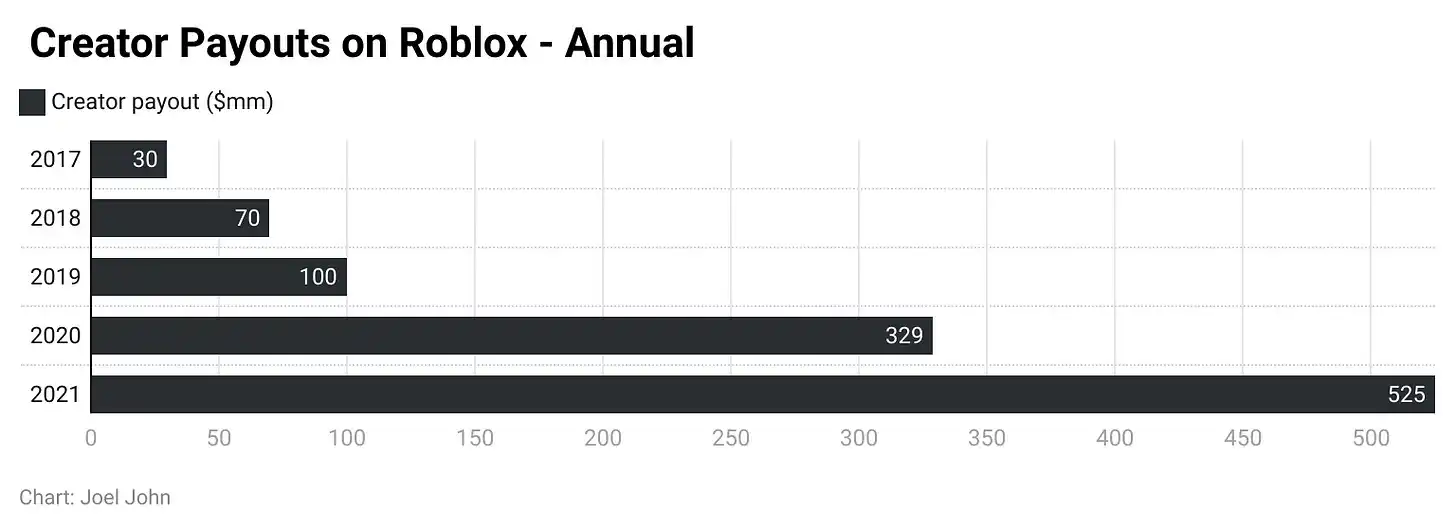
You may be wondering why we care so much about copyright and payment in an unfamiliar game, but it's because these virtual worlds will be the workplaces of creators in the future. In 2021 alone, Roblox will pay out more than half a billion dollars to creators on the platform. It's a far cry from the $1.6 billion OnlyFans paid creators on its platform that same year. But it suggests that developing, nurturing and maintaining gaming experiences could be a form of employment in the future.
If this is the case, then payment rails and copyright management must be done by tools that do not involve human intervention. Ironically, many of the primitives we're talking about today in the blockchain ecosystem apply here.
The over-financialization of games
A few weeks ago, I asked Siddharth Menon, founder of Tegro, which game was the most "fun" in Web3. He replied that users don't come to Web3 games just for fun, but half for money.
"To me, game mechanics that provide fun is a solved problem. It's nothing new and has evolved over the years. However, web3 games present a new problem for us, and we have to design a game that combines an open economy (with the right financial incentives) and fun. Games need to be designed not only for players, but also for investors and traders
This is why Web3 games are a controversial industry among traditional gamers. The industry is now built for speculators rather than players.
I once wrote an article aboutAggregation theory and Web3 articlesThe reasons for this are mentioned in Web3 greatly simplifies user categorization and payment verification in a way that is much simpler than traditional infrastructure. For example, if you had to pay $100 to a thousand Delaware LLC users, the former would be much more convenient.
吸引用户加入,收集他们的银行信息,进行必要的反洗钱/了解客户的检查,以及管理付款的任务都是你们的职责所在。如果这个过程是使用区块链上的稳定币进行的,那么风险将被转移到受严格监管的第三方实体(如交易所),而你将无需再自己履行这些责任。 这在 UGC 中尤其重要,因为你将实现两大改变。一方面,作为一个平台,你可以使用游戏内资产来奖励那些在早期阶段积极贡献的用户。另一方面,你可以为这些资产开辟一个市场,让用户可以将他们辛苦赚来的游戏内资产变现。
In these new deals, studios will no longer have to pay a lot of money to incentivize creators. Amy Wu explained this phenomenon well in a recent talk:
Repetition of content is one of the biggest challenges in maintaining a game. Ugcs, along with Token incentives and liquid markets, are an important tool to attract a new generation of creators who would otherwise not pay attention to Web3 games at all. Progress on generative content and creator incentives, including tokens, is at an early stage and promising -- Amy Wu
Ideally, users who take the time to play the game or create the game experience will exchange the assets they receive for those who don't have the time or skill to play the game. I was skeptical about that, so we reached out to someone fromSuper Gaming(one of India's largest game studios)Roby JohnTo comment on this view:
Transactions between users are nothing new. I noticed this when I was developing a game to help clan leaders trade items owned by certain top clan players and transfer them to other junior players in their tribe.
I never quite figured this out, but after I figured out the logic, I made it a feature of the MaskGun itself in 2017. Today, blockchain-driven ownership can do this more easily, without the need for customer support or tool intervention.
Of course, this robs me of the excitement of being a customer support person trading virtual AK-47s and SCAR H between tribes before game wars.
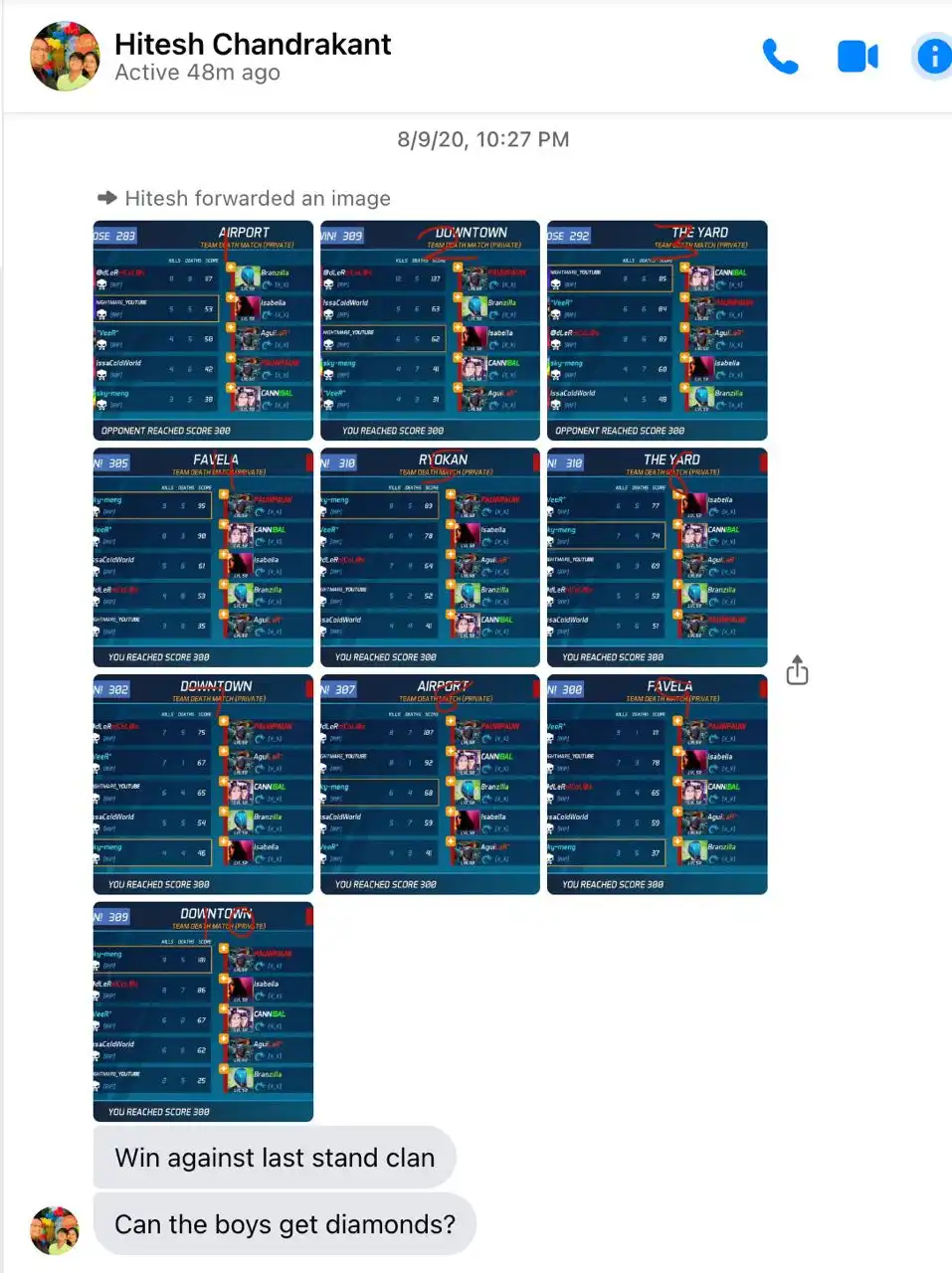
With no infrastructure for players to trade with each other, Roby had to broker some deals himself, and his private messages were filled with messages like the one below. We are in the Craigslist era of mobile game assets.
In this case, there are two main factors to consider: the first is the monetization motive, which largely influences user behavior and motivates them to engage more with the game and its experience. However, this can come at a cost to game studios, who may not see immediate revenue as a result. In the past, developers made money when users bought assets directly from them. Now, thanks to improved retention and lower acquisition costs, that has changed.
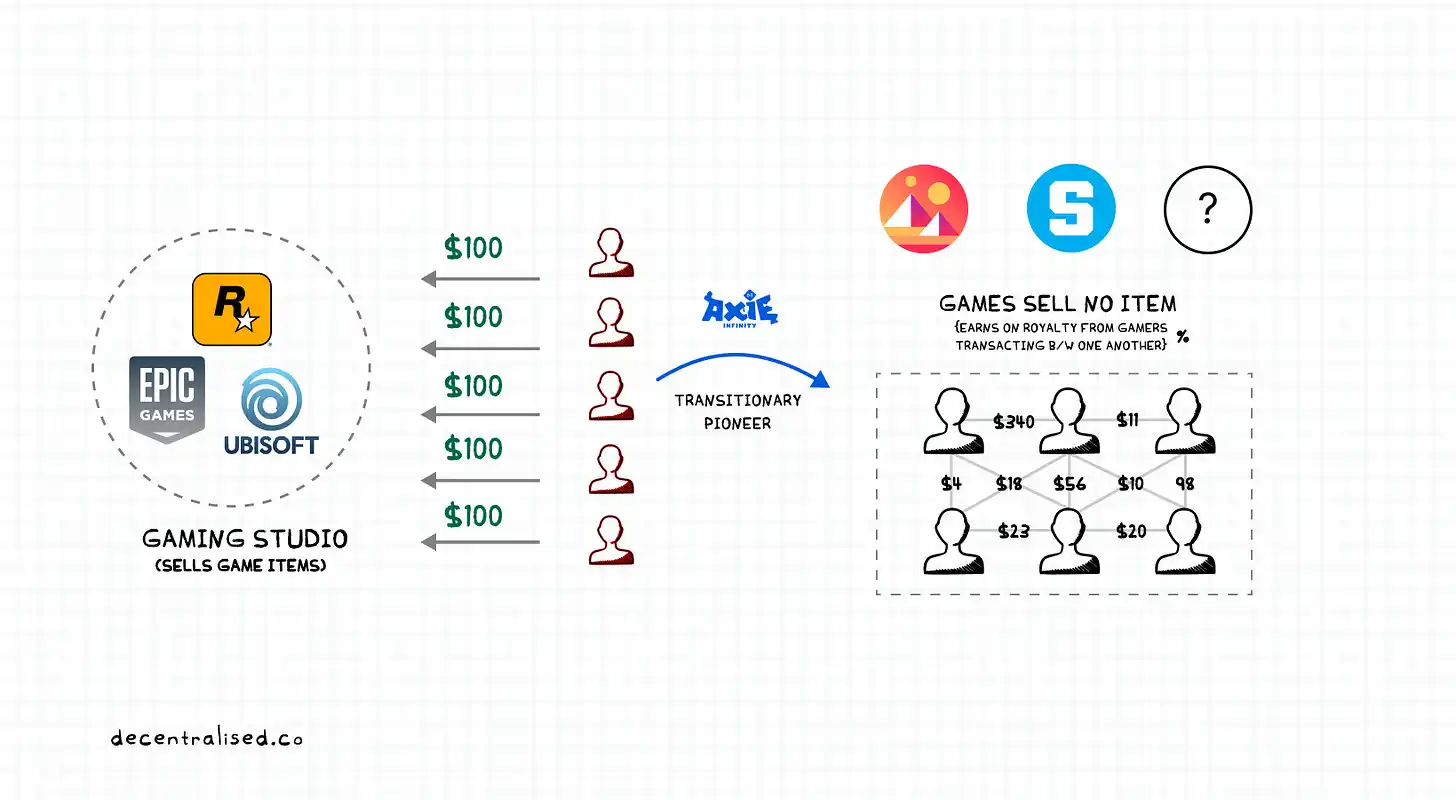
Second, because players trade digital assets with each other, a game studio may earn more royalties than it does when users buy assets directly from the studio. For example, Yuga Labs and Nike have each generated more than $100 million in royalties through asset transactions with their user base.
Games like Axie Infinity are in the vanguard of trying alternative models, while larger studios like Epic and Ubisoft are hesitant to disrupt existing audiences with different models, creating an opportunity for new entrants to disrupt existing studios.
Royalties aren't a breakthrough feature that games have recently discovered, and today's technology stack could easily allow more developers to earn a portion of the revenue each time users trade in-app assets. What makes it unique, however, is the similarity between these on-chain primitives and the complex ecosystem of financial primitives.
Today, most new Web3 games and NFT launches find their early adopters in the Crypto native population. These users are used to storing billions of dollars in DeFi and spending just as much on NFT. This familiarity with financial primitives creates a unique opportunity for game studios to leverage Web3 technology to provide more value to their users.
Come fromVariant fundThe creator of the economic pioneerLi JinIn our discussion with her on the subject, we shared this aspect of the situation:
Using Web3 primitives in games not only gives creators the confidence to own the results of their efforts, but also optimizes the speed and means at which they can create wealth. Li Jin, a pioneer of the creator economy, says this could lead to accelerated growth for future creators using in-game assets with DeFi primitives, such as tokenising income streams, making loans against custom art and even raising investments - Li Jin
Users are drawn to the new Web3 primitive not just for fun, but also for revenue. They are willing to bridge assets across chains, participate in secret rituals, and participate in new projects. As their income grew, they began to focus on how to increase profits with assets they did not have access to.
Users took out loans with in-game NFT, issued derivatives to hype its price, and set up DAOs to buy in-game assets at steep discounts. These behaviors are often not what the game developer intended or intended to encourage.
While developers may not want the price of in-game assets to collapse due to the level of liquidation of the NFT lending platform, there are benefits and risks to building unlicensed and composable tools on the blockchain, and it is difficult to predict whether the outcome will be good or bad.
We asked Gabby Dizon of YGG, one of the largest gaming guilds in the world, to explore these ideas: Building user-generated content on top of unlicensed assets is a huge improvement on the existing UGC model. Not only does it allow the community of players to create new content, it also compounds network effects in ways that the original game developers never thought possible. It also provides more equitable transfer of value and access to ownership for creators who make UGCs.
Simply put, you have to balance the possibility that users will behave in unpredictable ways with the opportunity to have more control over the product itself. This is similar to how the DAO works, but a little more interesting.
Guide the development of UGC economy
Native Web3 games transitioning to UGC platforms often follow a similar path:
· All games start with a major product that attracts thousands of users.
· Once enough users are playing the game, the next step is to introduce scarce assets that can only be acquired by playing the game for long periods of time. These tools often give their holders a slight advantage in earning points or winning matches.
· Traders and players who don't want to spend time playing games can get these tools at prices determined by the free market.
· At this stage, games are incentivized to launch their in-game marketplace in order to deter scammers and provide a safe environment for users to trade.
· If there is sufficient liquidity in the market and transactions take place in an orderly manner, developers can bring in native assets like Robux or Fortnite's V-bucks, the economics of which will vary from game to game, but can be used to incentivize users to generate content within the game.
But why bother rewarding users with on-chain tools that allow them to trade or lend? Passing asset ownership to the user has two benefits. First, it allows users to imagine and create new uses for assets beyond what the developer originally intended, such as building a lending marketplace or creating a DAO in a game.
The second reason to reward users with on-chain tools is that it helps to determine the fair value of assets in the game prior to the release of UAs. By implementing it beforehand, it reduces the likelihood that the platform will be overwhelmed by a garbage experience specifically designed to receive airdrops. This challenge is currently prevalent in DeFi and NFT native products, making it impossible for the founders to determine the actual size of their user base, since most users are probably using the product just to get airdrops.
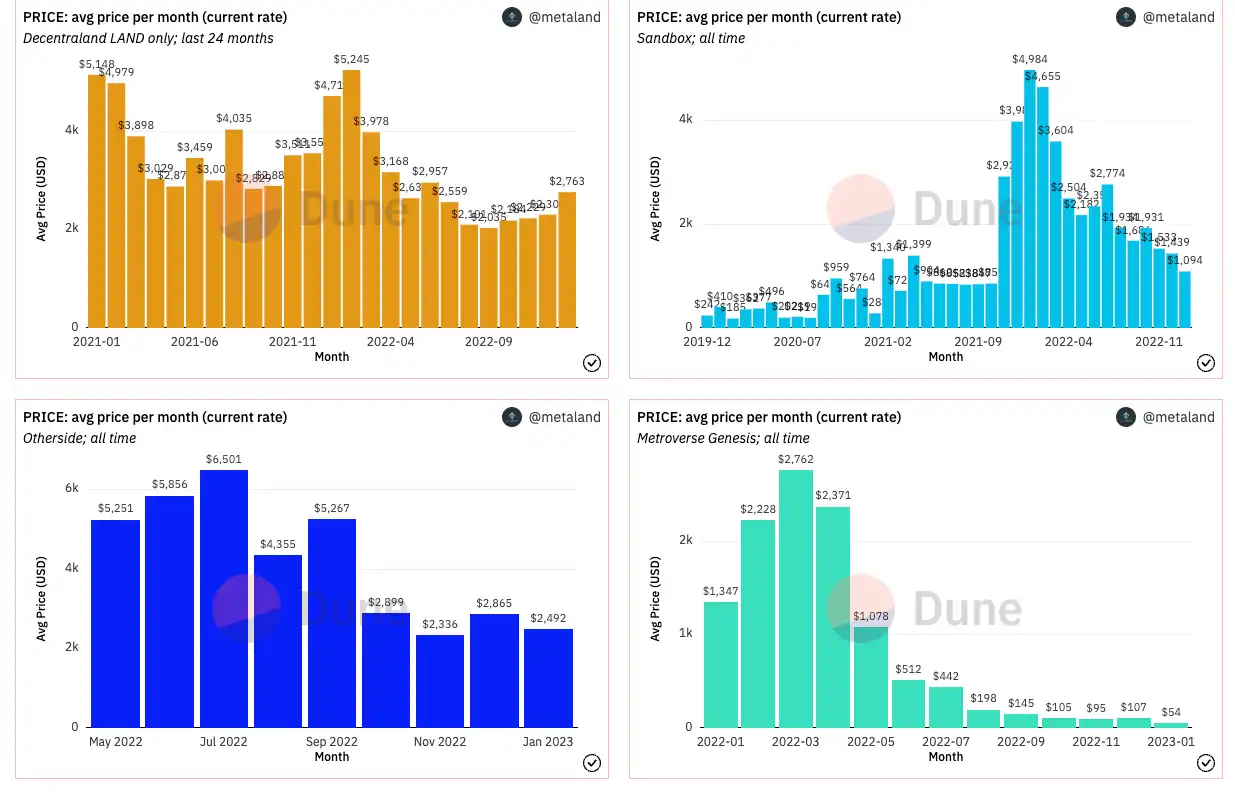
The price of virtual land has come down significantly, but Decentraland is still outperforming its peers (see Metaland's Dune page)
Sandbox and Decentraland are at the forefront of Crypto UGCs. They incentivize creators with native tokens and provide a platform for traders and creators to collaborate. But they ignore the fact that unless you have a large enough user base that is interested in the joy of using the product, it's hard for the ecosystem to be sustainable. Traders often buy plots or development experiences in anticipation of future profits.
But like China's ghost cities, unless there are real people looking forward to spending time in these virtual worlds, the prices of these assets will soon collapse.
Ugcs are more likely to be powerful if they are built with a focus on the player's motivation. There's nothing wrong with a native Web3 game being a little less fun if it can be compensated for in terms of revenue. Most of the users we see in the P2E economy come for the extra revenue it generates. Users like this may have an evolutionary arc. Over time, users will earn enough money to buy and trade assets in the game.
With enough profit, players can rent out assets to other players, similar to the guild model. At its peak (in terms of commercial value to the game) -- players will be skilled enough to build a unique gaming experience, form a community around it, and generate passive income.
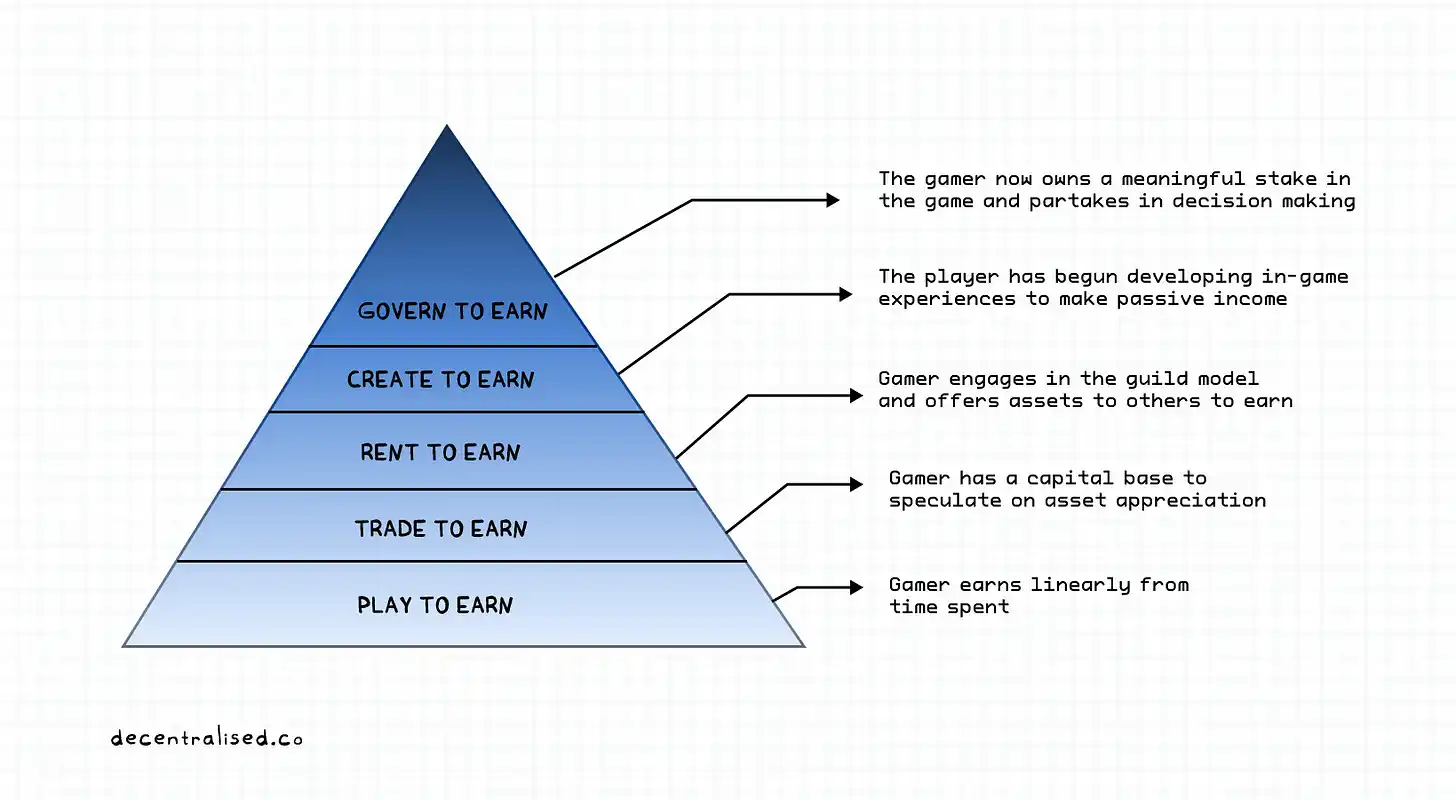
Gamers Most Web3 native studios are currently missing out on the evolution of gamers, who have gone from earning income directly related to their time spent playing to actively creating and managing gaming experiences.
We often think of the primitives in DeFi, DAO, and NFT as having no value to the average person. In order to realize the value of these primitives, they should be integrated into the game and appeal to a large audience.
A potential game creator can raise money from their peers by setting up DAOs, while contributors get a share of the proceeds from the experience. This is similar to the traditional way developers acquire and develop properties, and we may see studios that specialize in creating experience in Web3 native virtual worlds like the Sandbox.
That may seem far-fetched today, but given that more than 70 developers made over $1 million on Roblox in 2021 (and seven more made over $10 million), anything is possible.
As the ecosystem around Web3 native UgCs evolves, we will witness targeted marketing to the most active wallets on the chain. This would benefit games trying to scale by offering discounted attributes and similar incentives to creators who have established good experiences across different games.
Just as nation-states offer incentives to entrepreneurs, games and protocols lock in the most active wallets through in-game interactions.
创造力上的鸿沟 目前,大多数 Web3 游戏的重点是交易而不是创造力。为了吸引更多的用户,我们需要向培养创造性的表达方式转变。社交网络大约在十年前就实现了这种转变,并使其成为了更令人愉悦的消遣场所。Web3 游戏平台在做到这一点后也可以实现同样的效果。
As creators earn more, they become less concerned with capital and more concerned with impact. For these people, creative expression becomes a priority. This may sound unrealistic, but consider that just last year, one user received $5 million from Fortnite's creator support program. More surprisingly, this user generated over $100 million in revenue for the game.
Consider that younger generations like Gen Z and millennials often struggle to afford traditional assets like real estate. And with our current technology, it's not possible to develop space assets. Our ownership and sense of value tend to reside in digital assets. It is not fair to compare physical homes in New York with Decentraland virtual property. However, those who get into the digital space early have the potential to make substantial profits, especially over the next decade.
Unlike before, the Internet allows us to have fair access to opportunities. However, we are already seeing some new things, such as ICOs and NFTS, milking retail assets. In the game industry, being an early adopter is not enough. Creators need to build what users want to prevent the emergence of digital ghost towns.
The challenge in most games is to balance the community with the monetisation motive. The "asset owner" profit motive can lead to very bad decisions, as we've seen in the protocols and DeFi primitives -- part of the reason why we introduce UGCs into our games gradually. At the same time, a cohesive community is important for a sustainable market.
Regulators need to recognize that games are a way to work, not just for fun, and maybe in the future we'll see creators' alliances in games. Investors may view experiences in games as SaaS offerings. Finally, and most critically, creators also need to understand how to use their newfound "ownership."
This reminds us of how we thought in 2016 about how people could use smart contracts. We'll leave you with this fun game based on Indian futurismtrailerWe've been looking at this for a while, and it may have something to do with what we just wrote.
See you next week for a look at how venture capital has evolved over the past two quarters.
Original link
Welcome to join the official BlockBeats community:
Telegram Subscription Group: https://t.me/theblockbeats
Telegram Discussion Group: https://t.me/BlockBeats_App
Official Twitter Account: https://twitter.com/BlockBeatsAsia

 Related Articles