Bankless founder: 5 things I learned about the Starknet ecosystem

Original title: 《 Founder of Bankless: 5 Things I Learned About the Starknet Ecosystem 》
Original author: David Hoffman, Bankless
Original translation: The Way of DeFi
I have always wanted to attend the StarkWare conference because I don’t understand the StarkWare ecosystem as deeply as the rest of Ethereum.
This should make sense because many of the components that make up the Stark world are custom-made, for example, Starknet has its own custom developer language, Cairo, and its own custom virtual machine, CairoVM.
This divides the Ethereum and Starknet developer communities, creating a larger gap between the two networks than other L2s.
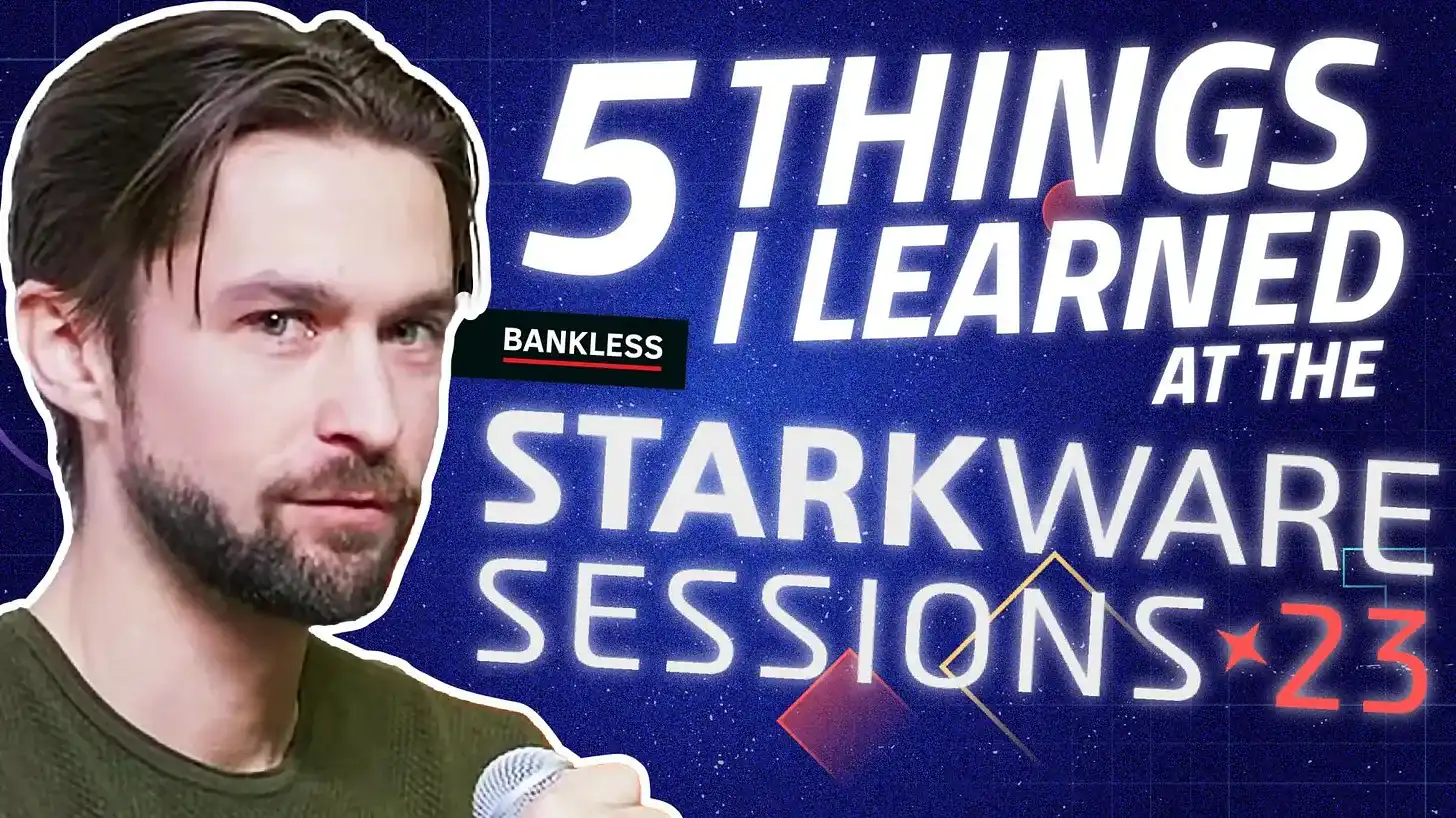
Here’s what I wanted to learn:
Why are they doing this? What benefits do customized development environments bring? How much friction does this create for developers? Do the benefits of Cairo outweigh the cost of losing Ethereum’s network effect? What about Starknet? How much ownership does the community have over Starknet? How can the community have a voice in Starknet governance? What is being built? What kind of teams are building what kind of things on Starknet? Where has Starknet taken them?
Have all my questions been answered?
Yes, and more.
(Note: StarkWare is a centralized commercial entity founded by Uri Kolodny and Eli Ben-Sasson, which focuses on developing STARK proof technology, while Starknet is an ambitious decentralized network built by StarkWare and the Starknet Foundation, which utilizes STARKs and other components that make up the blockchain.)
I didn’t expect the culture of the Starknet community to be so strong, and it’s clear that we are witnessing the thriving state of the Starknet network, even though it’s still young.
Starknet is a baby, it’s still trying to learn to stand up, let alone walk. But the energy and sense of ownership I feel from the Starknet community makes me optimistic about this young ecosystem.
The 9 interviews I conducted at the StarkWare conference are being processed by the Bankless podcast team (PodSquard) and will be published in batches on RSS and YouTube.
Some of the interviews are directly quoted and embedded in this article!
Without further ado, here are the five things I learned at the StarkWare conference:
1. Starknet Work Status
I landed in Tel Aviv, Israel on Saturday morning, and after dropping off my luggage, I walked into the Hacker House, where hundreds of developers stayed, ate, and surfed the Internet through wireless network in the days before the event.
I watched developers demonstrate their gadgets to other developers, which gave me a chance to learn about the projects they were building.
Soon after I arrived, two members of the Starknet Foundation hosted a "governance workshop," which was a circle meeting and presentation on the current state of Starknet community governance. The label "members" of the Foundation is probably too strong, as they looked more like community volunteers who decided to take on the challenge of liaison between Starknet developers and the Starknet Foundation.
After listening to the workshop, it was clear that we are in the early stages of Starknet governance. We are watching a baby being born, it is learning how to make sounds, it is figuring out how to stand up. What's cool is that Starknet seems to have a large number of developers who seem engaged and interested in being part of the process.
It currently appears that the Starknet governance organization is mostly protocol developers (perhaps the "core developers" of Starknet), while the Cairo developer community has a strong but minority presence (for now).
Hanging out with developers, I get a sense of a “this is our network” vibe. I think some of the Starknet developers are slowly realizing “I can own what I’m building.” Optimism and excitement are abundant, but I also have some concerns.
The ultimate goal of Starknet is to be a fully decentralized and community-run machine, however the Starknet community itself is still in its infancy and has a lot of things to do.
Nevertheless, this crypto community has not backed down from the challenge, and the solutions do not need to come all at once. The Starknet community seems ready to answer the call.
2. Starknet is largely independent of Ethereum
If you have been in the Ethereum ecosystem for a while, you may have noticed that there is a very large gap between StarkWare and the larger Ethereum ecosystem.
From a technical perspective, this should make sense. Starknet is largely a separate technology from Ethereum, and it really just uses Ethereum as a data layer (although Starknet can also be combined with Ethereum assets).
In theory, you could deploy Starknet on any L1, as StarkWare has built a self-optimizing technology.
This has raised eyebrows among some ETH maximalists in various ways, and I admit I have had this thought in the past: “How dare you not use the EVM!?”, not to mention their selection of some potentially questionable investors (3AC, Alameda, Multicoin).
I know I have this bias, so I wanted to take the opportunity to attend the event to see this from StarkWare’s perspective.
Even before coming to Tel Aviv, I heard many positive things about StarkWare’s engagement with ecosystem developers - a common theme in the feedback was that developers felt StarkWare heard their development choices regarding Cairo and Starknet.
It’s clear that the choice to move away from Ethereum’s network effects and build a bottom-up, self-optimizing ecosystem was the right one.
After learning more about Cairo’s choices and the technology pioneered by Uri and Eli, it all made sense.
SNARKs and STARKs are fantastic technologies, and the best versions of each deserve to be expressed. StarkWare seems to be the furthest along in fully realizing these technologies.
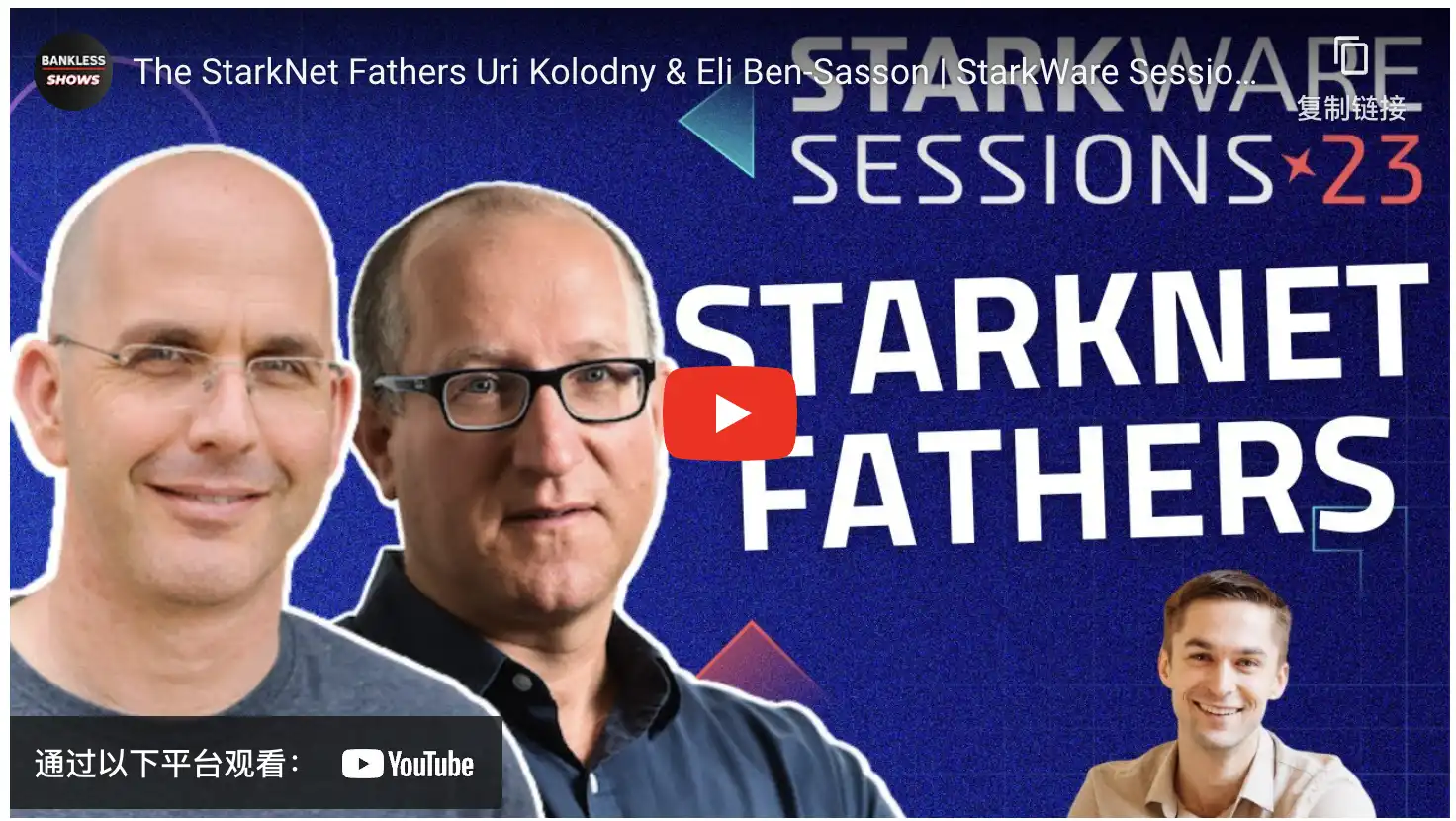
I watched Eli and Uri give their opening remarks at the start of the StarkWare conference and later had the opportunity to interview them. These two math and cryptography pioneers have become world builders.
You can listen to my interview with Eli and Uri here:
3. Cairo may not be as burdensome as I thought
I know my bias as an EVM maximalist, so I wanted to use the StarkWare conference to check my understanding of the Cairo developer experience.
What is Cairo? Cairo is a programming language custom-built for the StarkWare ecosystem.
One theme I’ve noticed is that the StarkWare ecosystem has been optimized for itself, whereas other L2s have been optimized for Ethereum. The ethos of StarkWare and Starknet is that Starknet wants to be the best version of itself, and that includes building a coding language from the ground up to maximize the best possible expression of StarkWare’s technology.
While this sacrifices the ability to capture Ethereum’s network effects, it’s still hard to argue against this design choice, especially now that it’s clear that Cairo’s own network effects have reached escape velocity (and likely did long ago).
Additionally, there are teams building developer middleware bridges between the two systems, Solidity<>Cairo, such as Kakarot.
Unfortunately, I wasn’t able to interview the Kakarot team (I’m not sure I’d be of much use here), but they did a demo at the event that you can watch once it’s uploaded.
4. Smart Contract Wallet + L2
Smart Contract Wallet (SCW) and "Account Abstraction (AA)" are largely synonymous. Everyone agrees: Account Abstraction is one of the many bad names found in crypto. Another bad name is "EOA: Externally Owned Account", which is also a wallet type that smart contract wallets do not have.
All wallets on Ethereum are one of two types: EOA or Smart Contract Wallet (SCW).
Most of us use EOA wallets, including Ledger, Metamask, Phantom, Coinbase Wallet... About 99% of the crypto wallets people use today are EOA wallets.
So what is a Smart Contract Wallet? The power of account abstraction (the power that enables SCW to exist) is hard to express, and its potential is limitless. EOA is to Bitcoin what SCW is to Ethereum.
Your Ledger, Metamask, or any EOA you may use is a dumb wallet that does only one thing, and that is signing messages. Smart Contract Wallets (SCW) are Turing-complete wallets. Just like how Ethereum let us combine money and software, account abstraction also lets us inject software into our wallets.
The UX upgrade that Smart Contract Wallets (SCW) will bring to crypto will eliminate a lot of what makes crypto wallets difficult and unintuitive. Account abstraction unlocks a whole new design landscape, which is its own zero-to-one moment.
There were two main Smart Contract Wallet (SCW) teams at the StarkWare conference:
Argent XBraavos
I was an early super user of the L1 Argent application, but when Ethereum’s low gas fee model ended at the end of 2019, L1 smart contract wallets just didn’t work.
Why? Imagine Ethereum in 2021 at its worst — high gas fees, failed minting, confusing UX.
That’s because Ethereum doesn’t have account abstraction enabled at L1.
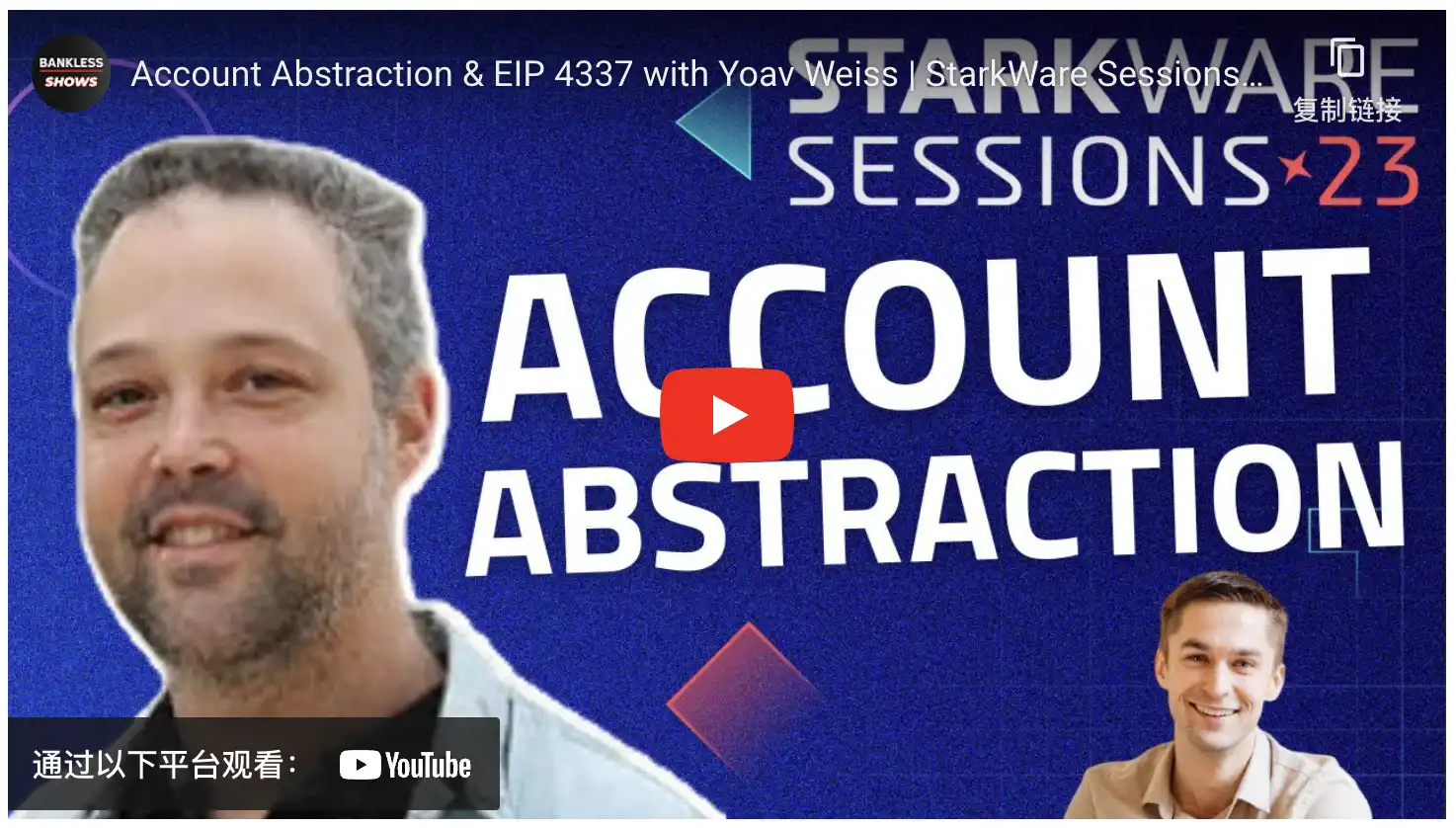
Yoav Wiess is a security researcher at the Ethereum Foundation who has been leading the work behind ERC-4337, a standard that aims to bring account abstraction to Ethereum L1.
To learn about account abstraction as well as Smart Contract Wallets (SCW), I encourage you to watch my interview with Yoav below!
Meanwhile, the forefront of SCW innovation has long been on L2, specifically ZK L2.
So why ZK Rollups, and not Optimistic Rollups (ORUs)?
ORUs like Optimism and Arbitrum are trying to be the Ethereum equivalent, and since Ethereum doesn’t have account abstraction enabled, neither do our current ORUs.
Currently, 99% of wallets are EOA wallets.
But eventually, 99% of wallets will be SCWs.
In general, SCW proliferation will go in this direction: ZK-Rollups ORU Ethereum L1.
L2 can adapt and innovate faster than L1, for example L2 generates production-grade testnets for EIPs like Account Abstraction. You can read more about this phenomenon here.
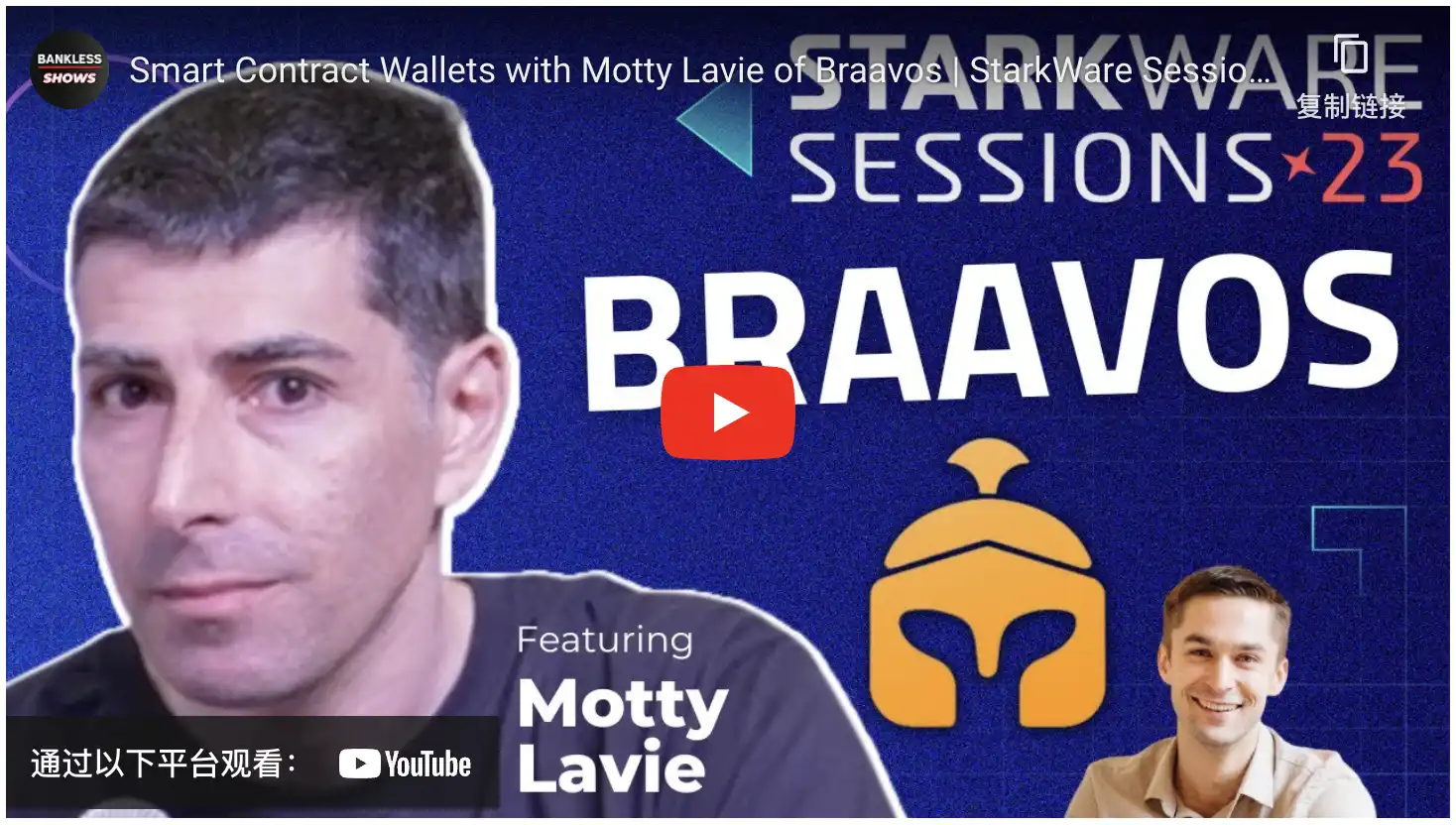
If you want to hear the founder and CEO of Braavos talk about Smart Contract Wallets (SCW) on Starknet, check out my interview of him below.
5. ZK-Rollups do not use zero-knowledge proofs
Yes.
I remember learning this a long time ago, but then forgot this interesting fact in the chaos of crypto.
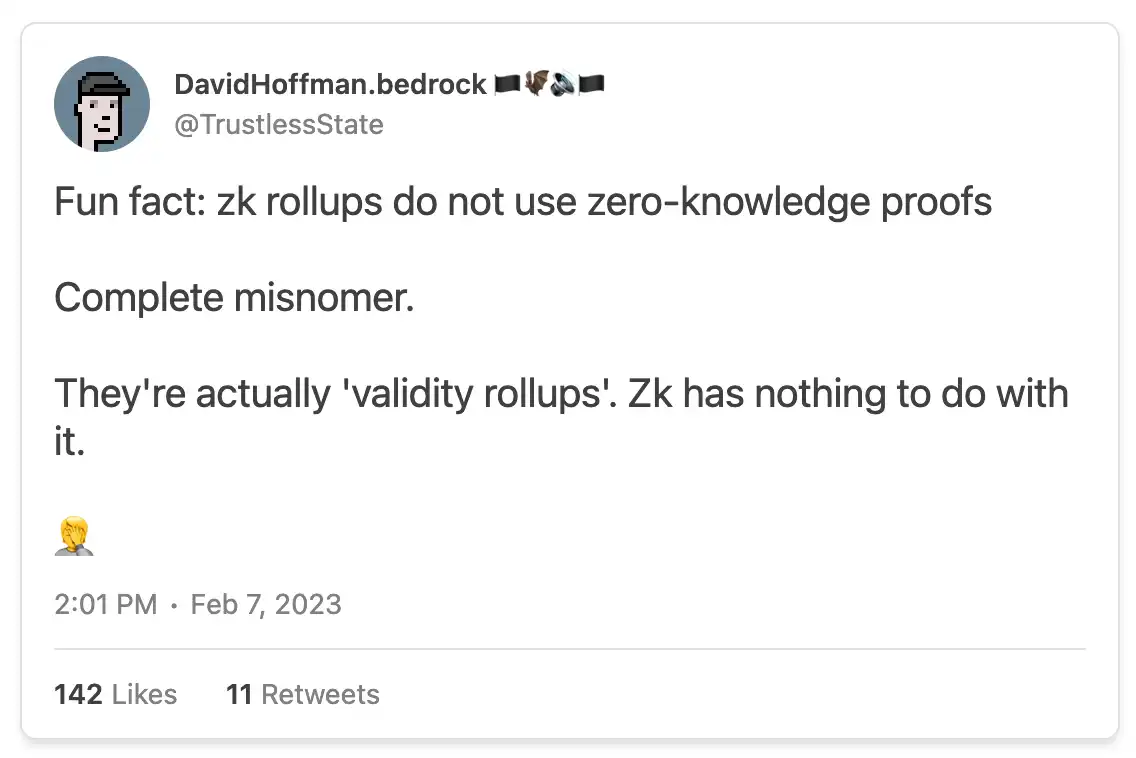
ZKP is specifically used to hide knowledge, and any ZKP is also a proof of validity, but ZKP also hides information throughout the process.
And most “zk-rollups” are actually validity rollups ¯\_(ツ)_/¯
Original link
Welcome to join the official BlockBeats community:
Telegram Subscription Group: https://t.me/theblockbeats
Telegram Discussion Group: https://t.me/BlockBeats_App
Official Twitter Account: https://twitter.com/BlockBeatsAsia

 Related Articles