Ethereum founder Vitalik Buterin: Beyond the Token Economy.
Original Title: "Vitalik Buterin: We must go beyond the concept of tokenomics"
Original Authors: brookbit.eth, Elaine, Dirk
Translation by: Sissi
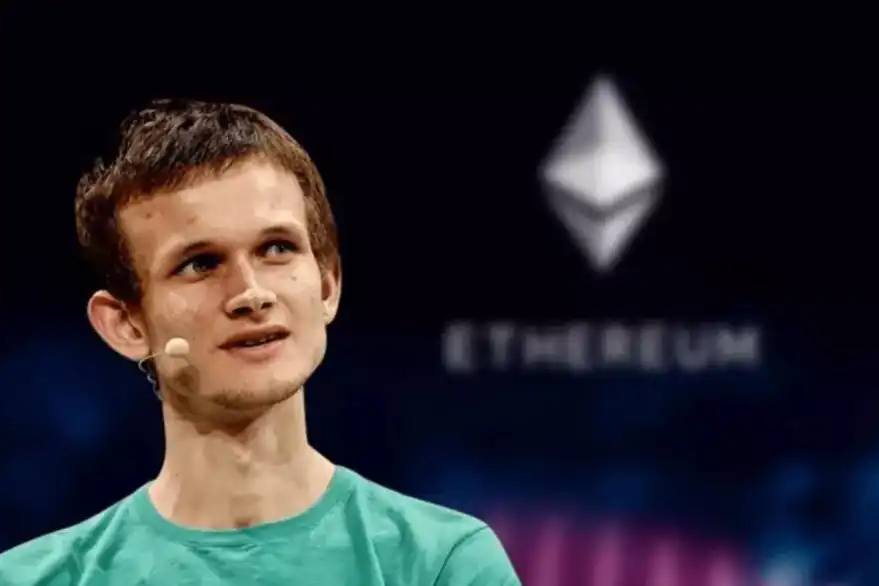
Ethereum founder Vitalik tweeted on July 8, 2022: "The first law of token economics is: do not take advice on token economics from those who use the term 'token economics'." At first glance, this sentence may be confusing, but upon closer examination, it becomes clear that Vitalik is expressing the idea that those who are too obsessed with token economics may not be able to see the big picture and ensure the balanced development of the protocol.

Indeed, the token economy is an essential part of building a protocol-based financial system, but as Vitalik Buterin said, it is not everything. Imagine a scenario where you are the founder of a stablecoin project. On Day 1, what do you need to consider?
First and foremost, it is important to consider what the market lacks. There are many homogeneous projects in the stablecoin space, but what is truly scarce are projects that can solve market pain points. Conduct thorough research to understand the real demand for stablecoins in the crypto market, as this is an important prerequisite for the project to have positive externalities and create real returns. Secondly, consider the business model. Do you want to create fiat-collateralized stablecoins? Cryptocurrency-collateralized stablecoins? Or algorithmic stablecoins? How do you determine the collateralization ratio? Which liquidation mechanism should you choose? How should you set the liquidation parameters? Then comes the design of incentives. Should you issue project tokens? How should you design the economic mechanism? Which financial incentives should you choose? Should it be holding for profit or collateral rewards? What is the appropriate range for transaction fees and incentive parameters? Finally, there is governance. Should you establish a DAO? What are the community's permissions? Do you need to govern the token? What is the community proposal process? How do you increase community activity? How do you prevent a 51% attack? How do you understand the distribution of members' beliefs, and so on.
Therefore, don't just focus on the Token economy. It's like how the internet is a technological innovation, but the "Internet+" model has a profound impact on the socio-economic paradigm. Similarly, today's crypto market is no longer just a single competition of Token economic mechanisms. It has evolved into a comprehensive power game around the three aspects of "business & incentives & governance" that revolve around positive externalities. Only by coordinating business, incentives, and governance, and exploring a logically consistent "Token+" new economic paradigm, can project protocols continuously attract new attention and become the one that truly "shapes the future".
Based on this, we picked up the business and governance that most people ignored and put it back to the same level as the Token economy. We innovatively proposed a more complete "Token Dynamics", which regards the Token-based economic and financial system as a dynamic system. The dynamic game process of this complex adaptive system is aimed at positive externality, supplemented by three dynamic mechanisms of business, incentive, and governance, to achieve the adaptive optimization and upgrade of the system, and ultimately realize the positive externality of the protocol. It encompasses scientific principles, method paradigms, and cutting-edge theories at the three levels of business, incentive, and governance, in order to provide more scientific and complete assistance and guidance for the development of future encryption projects and DAO organizations.

Encrypted market has long been trapped in the "Token Economy"
From a theoretical perspective, the research perspective of "Token Economics" is relatively single. Generally speaking, it is a term used to describe all factors that affect the value of tokens, including supply and demand mechanisms, incentive mechanisms, consensus mechanisms, role definition, technical determination, target group definition, etc. In this ecosystem, due to transparency, consensus, algorithm mechanisms, etc., the Token economy has a powerful effect. However, the Token-based economic and financial system is a complex, open game system with chaotic and nonlinear characteristics. The emergent characteristics inherent in such systems must be explained using interdisciplinary knowledge such as mathematics, modeling, and computer science. It is difficult for Token economics to attribute the complex results emerging from the system solely from an economic perspective.
From a practical perspective, the application of "Token Economics" is also in its early stages and is not yet mature.
On the one hand, everyone is focusing on token economic mechanisms such as supply and demand and incentives, while ignoring the importance of business and governance. Of course, this can also be understood, as the immaturity of regulation in the early days of the crypto world, the aggressive land-grabbing of capital, and the hype of peripheral projects have allowed every participant in the crypto market to see the wealth aggregation effect brought by token economic mechanisms.
No one has taken the time to carefully design their business or refine their governance, because it seems easier to create a bubble by studying token economics, which has become the default shortcut to wealth for the masses. Seeking profit and avoiding harm is human nature, and in the face of a huge cake, everyone is eager to use token economics to leverage their position, with FOMO, gambling mentality, and herd behavior filling the sky over this dark forest. The consequences of ignoring business and governance are also obvious, as many "flash in the pan" crypto projects focus only on economics and ultimately cannot even survive a market cycle. In contrast, projects like Compound and Uniswap, which have carefully designed their business and governance, have remained resilient even without the leverage of economic incentives, and have survived to this day. This result is enough to prove that business and governance cannot be ignored.
On the other hand, as one of the most complex economic and financial systems, Token projects are currently mainly judged by Excel and experience in the industry. In traditional economic and financial systems, these areas are supposed to be controlled by mathematicians and computer scientists through modeling to manage risks. In contrast, Token-based economic and financial systems are more complex and chaotic, and their adaptive and nonlinear characteristics make the speed of game and evolution of the system incomparable to traditional financial systems. However, such a rapidly evolving ecosystem is still judged by experience and Excel for superiority and inferiority, and for qualitative analysis, which is truly astonishing. If the theoretical guidance in the encryption field still remains in the "Token Economics" of the last bull market, it will undoubtedly cause huge obstacles to the development of the encryption industry today.
This is not to belittle "Token Economics". We must admit that the development of Token economy has indeed brought about the ICO craze, the DEFI Summer, and the carnival of "X 2 Earn". The development of the cryptocurrency industry today cannot do without the help of Token economics. However, as the industry develops, theory cannot stand still. Returning to Vitalik's point at the beginning of the article: The first law of Token economics is: Do not take advice on Token economics from those who use the term "Token economics". Essentially, it is not those who use the term "Token economics", but those who have not found the positive externalities of Token projects (creating value) and have designed poor Token economics for the project.
Therefore, it is not enough to only discuss incentive mechanisms without considering the positive externalities, business logic, and governance structure of the project. This will also create many hidden dangers for the project. The visible consequence of focusing too much on token economics is a series of economic risks that continue to grow, from Fcoin to Luna to FTX. We cannot estimate how much the butterfly effect of each crisis will ultimately affect us, and all we can do is to quickly contain the birth of risks from the source. Otherwise, facing the ups and downs of the market, everyone will hesitate, and it will be difficult for the next dawn of the dark forest to arrive.
Birth of Risk Containment from the Source - Theoretical Innovation
而一般性的三体问题往往又是混沌的,即,如果两个三体系统的初始条件即使仅有一点点微小的不同,在后续的演化过程中,两个系统的动力学状态就会产生巨大的不同。基于 Token 的经济金融系统涉及合约、协议、用户等多个不同类型的主体,多体博弈的混沌程度和演化速度是远远高于三体系统的,因此多体系统往往具有更强烈的动态性、自适应性和涌现性。这肯定不是单凭「经济学」就能解决的问题,需要单学科和跨学科研究的共生,对该系统进行整合研究,以达到与复杂非线性系统一致的广度与深度。
Therefore, we propose the concept of "Token Dynamics".
Token Dynamics is a discipline dedicated to studying the value growth patterns of Token projects from a holistic perspective, exploring the interaction logic between business, incentives, and governance, and researching various models that may be involved in the Token ecosystem. It describes all factors that affect the value of Token projects, including but not limited to the business logic of Token project construction, Token incentive mechanisms, and community governance methods.
Token Dynamics will also integrate research methods from multiple disciplines, opening up a new perspective for studying Token-based economic and financial systems. It will be supported by disciplines such as industrial and systems engineering, artificial intelligence, optimization and control theory, computer science and cryptography, economics and game theory, psychology and decision science, behavioral economics (cognitive psychology), political science and political economy, institutional economics and governance, philosophy, law and ethics, etc., to build a more robust, comprehensive, and systematic theoretical and practical basis.
Continuous value growth "driver" - self-driven snowball model

Token dynamics holds that positive externalities are the core driving force behind the value growth of Token projects. Otherwise, even the largest snowball will only be an empty shell that can be easily crushed.
Looking back at the previous flash crash projects, it can be found that any project without positive externality will eventually collapse. (However, this does not mean that all collapses are due to the lack of positive externality. If any aspect of the business, incentives, or governance is not properly allocated, it will eventually collapse, it's just a matter of speed.)
So what is a positive externality? Simply put, we view a project as an independent subsystem that provides value to external systems, solves real problems and pain points in the market, meets actual market needs, and gains benefits from external systems. We consider it to have positive externalities. However, there are countless market demands, and it is difficult to identify the real pain points. This requires the project team to carefully explore the value points of the business itself, consider whether the market really needs it, whether the current technology is a match, and whether the timing of entry is appropriate, and even plan the ideal implementation path in advance.
Many project parties enter the encryption market with good intentions, but fail to carefully examine where the real market demand lies. They believe that their projects have so-called "positive externalities" and therefore begin to focus heavily on incentives. As a result, they become even worse off due to the "amplification effect" of the token economy. Therefore, exploring positive externalities is currently the most worthwhile and valuable thing to consider in token project entrepreneurship. Projects that are detached from positive externalities will only be "empty shells".
How to find market pain points and lock in positive externalities? This is a profound and grand topic, and its related theories, methods, and practices are beyond the scope of this article. We will explore this together in our subsequent original series.
Other than the core power source, a mutually compatible business model, incentive mechanism, and governance system will also greatly reduce the resistance of the "value wheel" in the process of advancement, allowing the "project snowball" to quickly and smoothly grow larger.
The importance of business and governance for encrypted tokens is no less than the design of basic token economics (incentives). Perhaps you can launch a project by carefully designing a token incentive mechanism, but without a long-term profitable business model and a stable governance system to optimize the system, your project will soon fall into a "death spiral". Token projects are neither sprints nor marathons, but more like directional sports: through repeated experiments and gradually achieving expected goals, the core of its success is whether it can create sustained value and revenue growth. That is to say, "creating value" is the goal or core of the token project, and business, incentives, and governance are the basic elements that enable the project to create value, or they are the three pillars of trust that make up the token project, and none of them can be missing.
For Token projects: A well-planned business plan can avoid the project becoming a "castle in the air". A good business layer design can create a new type of attention black hole, whose positive externality can ensure that the project takes root and grows in the encrypted world. A correctly designed incentive mechanism can help the project to depict the future to the greatest extent. A good incentive layer design can provide a stable supply and demand mechanism for Tokens, help the community actively hold and use Tokens, maximize consensus, and amplify the project's influence. A carefully crafted governance method can continuously optimize anti-fragility. A good governance layer design can enable the project to continue to evolve autonomously, and continuously optimized business and incentive layers can make the project more resilient, thereby adapting to the ever-changing market environment and crossing longer market cycles.
Therefore, Token Dynamics believes that projects with positive externalities can grow rapidly like a "snowball" under the protection of the three aspects of business, incentives, and governance. The three elements are indispensable and are the necessary conditions for the project value to steadily "grow bigger and bigger". Before deciding to participate, it is crucial for both investors and project parties to understand the source of the project's token dynamics and analyze and evaluate the three basic elements of the project.
Token Dynamics - Just Empty Talk or Full of Substance?
Previously, we discussed that Token-based economic and financial systems are a type of dynamic open game chaotic system that requires interdisciplinary fields to jointly solve the emerging economic security issues. Therefore, we propose the "Token Dynamics" under the perspective of multi-disciplinary integration, which provides professional guidance for the three levels of business, incentives, and governance.
Sound Business Logic - Guidance from Optimization and Control Theory
The business logic (or business scenario) is the foundation of the incentive mechanism and governance method of a Token project. With a sound business logic, there is a promising profit model and a stable and reliable system mechanism, which can attract and retain users in the long run, and is also the fundamental way for the project to avoid being a Ponzi scheme. We need to ensure that the business logic can support the development of the project throughout its entire lifecycle.
During the business operation process, it involves the parameters and mechanisms of the smart contract for the project. For example, MakerDAO is a project running on the Ethereum blockchain, which integrates over-collateralized stablecoins, lending, storage, user governance, and development. In the selection of the liquidation auction mechanism, MakerDAO mainly considers two types: English auction and Dutch auction. The English auction, also known as an ascending-price auction, starts with the lowest expected price of the item, and the bidding starts from low to high. Bidders can bid multiple times, and the highest bidder wins before the countdown ends. The Dutch auction, also known as a descending-price auction, starts with the highest expected price of the item, and the bidding starts from high to low. The first bidder wins and pays the price they bid at that time. For MakerDAO, the English auction has simple rules and may result in a very high auction price, while the Dutch auction allows for immediate transactions and does not lock up a large amount of user funds for a long time. Each auction method has its advantages and disadvantages, and different mechanism choices correspond to different project ecosystems, which truly affect the final value realization path of MakerDAO. As for the liquidation parameters, there are key liquidation variable parameters such as step, cut, buf, cusp, tail, etc. How to adjust and adapt them is also crucial for capturing the value of MakerDAO.
Therefore, it is urgent to introduce optimization and control theory. Optimization and control theory is an interdisciplinary study that focuses on system iteration and optimization, involving cutting-edge concepts such as learning, cognition, adaptation, social control, emergence, aggregation, communication, efficiency, effectiveness, and connectivity. For projects like MakerDAO, it can provide a scientific design verification method for improving business logic and analyzing and adjusting internal mechanism parameters. Compared with "brainstorming" decision-making, business solutions iterated under the guidance of optimization and control theory theoretically have lower risks, more sound logic, and are more likely to be recognized by the community.
Effective Incentive Mechanisms - Game Theory in Guidance
除了查看白皮书、创始团队、路线图和社区发展之外,激励机制也是评估 Token 项目未来前景的一个重要部分。Token 项目围绕其业务和治理框架设计 Token 激励机制,以鼓励或阻止各种用户行为。不同用户的目标预期不同,因此相同的激励参数在不同的用户群之间可能会产生差异巨大的激励结果,因此必须在累积激励效用最高的位置找到平衡,这有点像中央银行印钞并实施货币政策以鼓励或阻止支出、借贷、储蓄和货币流动,从而调控宏观经济。
Currently, the incentive for Token projects still mainly relies on Token, and game theory has long entered the field of Token economy. For example, Olympus DAO (OHM) attempts to create a globally stable coin asset supported by encryption instead of the US dollar, and it uses staking as the primary way to increase the value of its Token OHM and achieve a store of value state. This strategy is called (3, 3), and its inspiration also comes from game theory.

In the Olympus system, you can Stake, Bond, Sell, or combine these strategies. The numbers shown in the graph are just a visual representation of how much each strategy benefits the Olympus protocol. Stake is +3, Bond is +1, and Sell is -1. (3, 3) represents that Olympus considers pure staking as the most beneficial strategy for the project, so users who use this strategy will receive the highest returns.
Combining Stake and Bond ( 3, 1) or Sell and Bond (-1, 1) generally results in lower overall returns.
( 3, 3) The introduction of game theory has played a huge role in the encryption industry. Currently, 91.5% of OHM supply is collateralized - a number that may be one of the highest among all cryptocurrencies. Game theory is an economic concept that assumes traders are rational actors who, under certain incentives, will ultimately make the optimal choice, such as pledging to obtain high returns or mining Bitcoin. The OHM case shows us that game theory provides a more scientific and comprehensive methodology for designing incentive mechanisms, making system goals and Nash equilibrium more consistent. Token dynamics will also further explore more applications of game theory, mining its greater potential when combined with tokens.
Complete Governance Solution - Guided by Institutional Economics
In most token projects, token holders can already vote to change the rules of the token project. DAOs can change the amount of token incentives given to stakers through voting, or modify risk parameters in business logic. For example, 1 HiveDAO, which is committed to developing public products, decided to use conviction voting to decide whether to distribute HNY tokens as incentives for tool development contributors who can bring value to the community. Conviction voting is a novel decision-making process in which voters support proposals they want to be approved by staking tokens, continuously expressing their preferences. Over time, collective conviction accumulates until it reaches the threshold set according to the proposal requirements. When the conviction accumulates beyond the threshold, the proposal is approved and the funds are released. It can be seen that the setting of governance parameters, such as the threshold, has a huge impact on whether proposals can be approved, and even determines the development direction of the project and the community. Faced with a complex community network, the community needs a better perception and response to the conviction voting network in order to make more scientific decisions.
In this case, institutional economics can play to its strengths. It is a branch of economics that mainly studies the role of formal or informal institutions, which are guided by a set of rules, norms, procedures, conventions, arrangements, traditions, or customs, in guiding social and economic interactions, so as to incorporate individual decisions into organizational decisions and coordinate the system towards a common goal. This is highly compatible with the governance paradigm of Token projects, and it can be said that the introduction of institutional economics is a necessary path to optimize the governance model.
Various disciplines are like "Eight Immortals crossing the sea, each showing their unique skills", laying a more universal and diverse theoretical foundation for Token Dynamics.
However, theoretical upgrades have only taken the first step. To usher in a healthier, freer, and more active world of encryption, two problems still need to be solved.
Firstly, data open-sourcing in the world of encryption is not truly "open-source". "Code is law" is the fundamental rule of the encryption world, and project teams will open their actual running code on GitHub. However, except for hackers and some professional developers, no one will spend a lot of time and energy studying the running code. This creates a huge "information asymmetry" and is the main reason why users are unwilling to easily entrust their trust. If tools can be used to convert code logic into visual models and present the macro data and rules emerging from code execution in the form of charts, turning "Code is law" into "Model is law", then all projects will become models that the public can read, use, and verify. This is the true arrival of the "open-source world".
Secondly, in most cases, project parties will design a relatively complete Token-based economic and financial system based on relevant scientific guidance, but a large amount of market evidence shows that users' actual behavior often differs greatly from the expected behavior of the project parties. This is because, on the one hand, there is currently a lack of a universal validation framework for evaluating Token system design in the market; on the other hand, the participation of "people" brings a high degree of uncertainty to Token-based economic and financial systems. Uncertainty cannot be completely eliminated, and can only be optimized and iterated through the use of tools to narrow the huge gap between the expected behavior of the project parties and the actual behavior of the users.
最后
translates to
Finally
in English.
"Token Dynamics" is committed to providing profound theoretical guidance for the value growth of cryptocurrency projects. Only when the public's knowledge foundation is improved can practical steps be taken more solidly. In order to solve problems such as "opacity" and "high uncertainty" of Token projects and truly achieve the technical and economic goals of the project, we also need to introduce more reliable practical methods and application tools in the ideation, design, development, and deployment stages. In our subsequent articles, we will continue to introduce the concept of "Model is law" and Token engineering in detail, hoping to contribute to the development of the cryptocurrency market.
TEDAO (WeChat account: TEDAO): For reposting/content cooperation/seeking coverage, please add WeChat: tedaoo_ 0 and indicate the source. If you have any questions, feel free to consult, communicate, and discuss.
Original article link
Welcome to join the official BlockBeats community:
Telegram Subscription Group: https://t.me/theblockbeats
Telegram Discussion Group: https://t.me/BlockBeats_App
Official Twitter Account: https://twitter.com/BlockBeatsAsia

 Related Articles