Midterm Election Outlook: Republicans' Hopes of Keeping the House Are Slim

TL;DR
· Cook Political Report moved another 19 House districts toward Democrats on October 23, with Democrats crossing the 218-seat majority threshold at 220 seats to 198.
· September CPI rose 3.7% year-over-year, gasoline surged 34.2% year-over-year — war turns oil prices into household bills. The Senate still hinges on maps and ads.
· Related tickers: U.S. Treasuries, bank stocks, the dollar, AI-regulation-sensitive stocks.
The Cook Political Report shifted another 19 House districts toward Democrats on October 23, with Democrats crossing the 218-seat majority threshold at 220 seats to 198 in its ratings. Cook Political Report House analyst Erin Covey's assessment is that the Republican path to holding the House has become very narrow.
Another 17 seats remain toss-ups in the ratings. The House is treated by the market as a high-probability event; the Senate is not. Over the past two weeks, market discussion has shifted from the House to whether Democrats could take the Senate as well.
War first becomes a bill at the gas pump
The U.S. Bureau of Labor Statistics reported September CPI at 3.7% year-over-year, 0.3 percentage points higher than August. Gasoline rose 34.2% year-over-year, while core CPI rose 2.6% year-over-year. These numbers need to be read separately. Headline CPI includes food and energy; core CPI strips them out. Oil is the main force pushing prices now, but it is precisely oil that households feel.
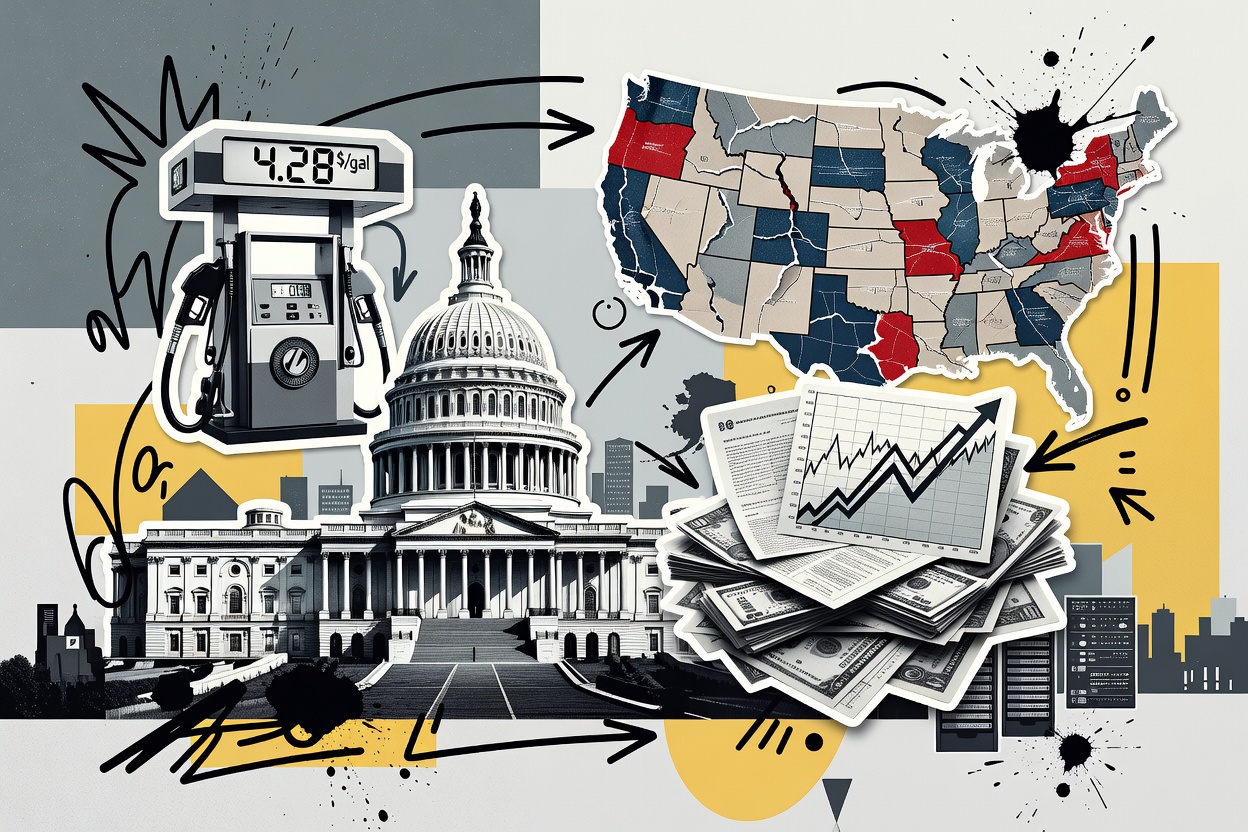
As of late October, the national average gasoline price tracked by AAA was about $4.28/gallon, roughly $1.20 higher than a year ago. Wage growth remains below price growth. This is where the war enters the ballot.
After U.S.-Israeli military strikes on Iran in February this year, oil prices were pushed higher. Multiple polls show most respondents disapprove of the president's handling of the conflict and believe the war is driving up the cost of living. In late October, Obama framed tariffs and the Iran war as policy choices that drive up prices during a campaign event. Trump, at another rally, said the war was making progress and that Democrats would bring depression.
In 2024 he promised to end inflation and end overseas wars. Two years later, these two things are bound together by the same gas receipt.
Generic ballot +11 does not equal a seat tsunami
A Reuters/Ipsos poll conducted October 22–26 shows registered voters' generic ballot at Democrats 47%, Republicans 36%, and Trump approval at 32%. The generic ballot does not ask about specific names — it only asks which party voters want in Congress, used to gauge national mood and not directly convertible into seats.
All 435 House seats are up for election; 218 are needed for a majority. Cook's ratings give Democrats 220 seats, Republicans 198, and 17 toss-ups — corresponding to high probability, not vote-count results.
There is a breakpoint between national thermometers and district loyalty. Reuters visited more than 20 voters in three swing districts in New York, Pennsylvania, and New Jersey in late October, and some voters who had previously voted Republican still leaned toward supporting the incumbent. The sample is very small and cannot be treated as a national rule, but it explains why the House is only a high probability.
The Senate is another election of maps and money
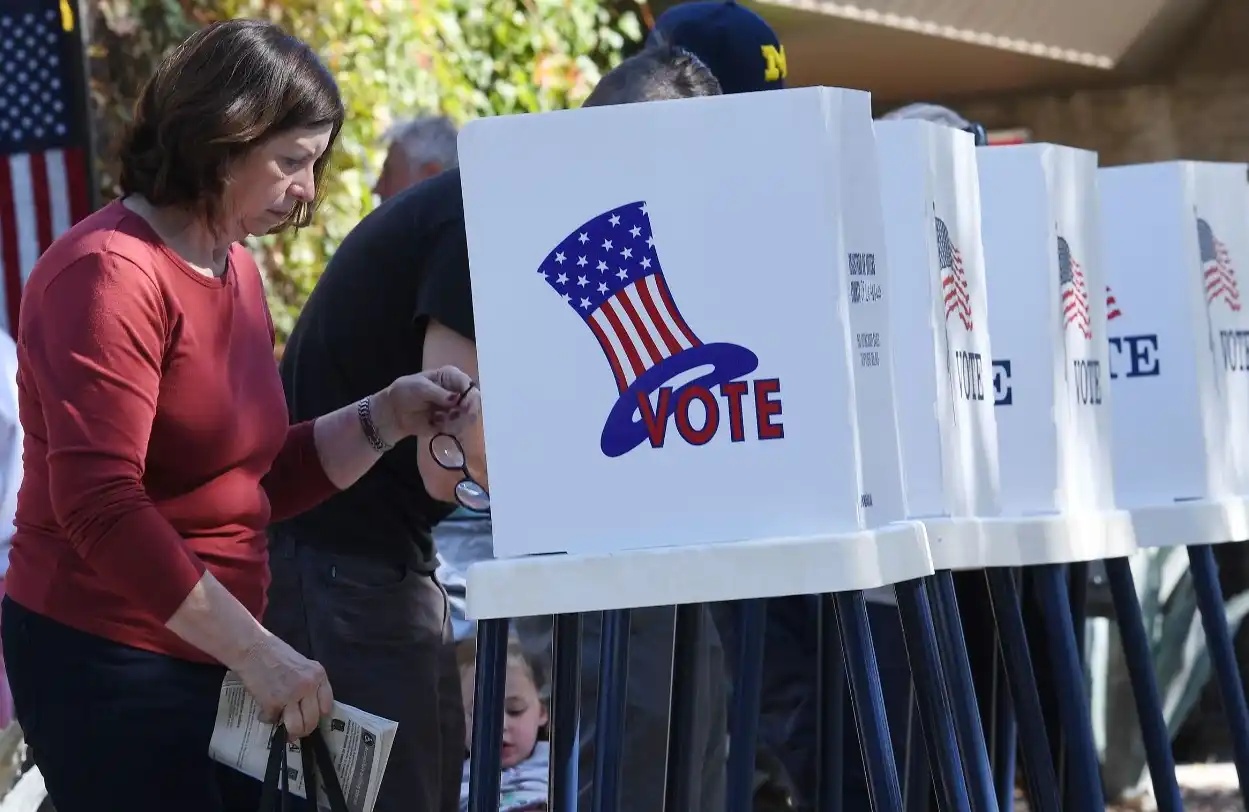
Republicans now hold a narrow majority in both chambers, with the Senate at 53 to 47, and Democrats need a net gain of 4 seats to take control. The House depends on the national mood, while the Senate depends on the map, and Democrats must dig out more seats in states Trump once won big. The Senate is not a simple amplification of the national mood; the map is harder than the polls.
Money is arriving first. Ad tracking data shows that in the 7 Senate races rated as toss-ups by Cook, Republican ad spending is about $947 million, while Democratic ad spending is about $625 million, a gap of more than $300 million.
So the baseline scenario is a split between the two chambers. Democrats take the House, while the Senate is undecided. Prediction market contracts show the House is already priced at high probability, while the Senate and a sweep are around 60%. A sweep is a priced tail, not the consensus.
Assets are trading a divided Congress, or a sweep
An institutional survey in October showed respondents were more optimistic about U.S. stocks under Republican control of Congress, while a Democratic sweep was seen as more favorable for bonds. If Congress changes hands and AI regulation is tightened, most respondents expect that to hurt U.S. stocks.
BofA strategist Michael Hartnett framed a sweep as a trade to short bank stocks and the dollar, and called a divided Congress "Goldilocks." These are expectations, not price facts. The 10-year Treasury yield has risen recently, and oil prices remain a key variable for both inflation and the election, with both affecting the race and assets at the same time.
Committee power is a conditional clause. If Democrats take the Senate, Warren is expected to chair the Banking Committee, and private equity will become a target because of housing and health-care affordability. If Sanders chairs the Senate Health, Education, Labor and Pensions Committee, he will push for Medicare for All. These hold only if the Senate flips, and cannot be reversed into "a sweep has already killed valuations."
Will falling oil prices rewrite the narrative first, or will the Senate flip first
The variables that are not closed in the final week are the 7 toss-up Senate seats and the direction of oil prices. Republicans rely more on in-person voting on November 3, and more ads do not equal more votes; polls within the margin of error in Texas and Virginia also show the Senate can still be held.
Oil prices are another line. Gasoline is still $4.28 per gallon, $1.20 higher than a year ago. If it falls before the vote, the cost-of-living attack line, the most powerful one, will be thinned. Conversely, as long as oil prices do not fall, it will be hard for House ratings to move back.
The market's current trouble lies in treating the House as already won by the Democrats while trading US Treasuries and bank stocks as if a sweep is underway. Between these two lies the Senate map and an advertising gap of over $300 million. The baseline is a divided Congress; only the tail risk is a sweep. The expectation gap remains in this crevice.
Welcome to join the official BlockBeats community:
Telegram Subscription Group: https://t.me/theblockbeats
Telegram Discussion Group: https://t.me/BlockBeats_App
Official Twitter Account: https://twitter.com/BlockBeatsAsia
 Related Articles