Next-generation NFTs: Exploring dynamic NFT mechanisms, use cases, and risks.
Original Title: "SeeDAO | Next Generation NFT: Dynamic NFT"
Original Author: Andre Guardia
Original translation: Pikachu zircon, The SeeDAO
Abstract
Dynamic NFT (dNFT for short) is the future of digital asset ownership. Market trends indicate that the popularity of functional and metaverse concept NFTs will further promote the use of dynamic NFT technology in a large number of use cases. Therefore, investing and incubating in dNFT projects early on has enormous potential. The following research introduces some attractive use cases and project examples in the market.
Proof of Traffic: Pageviews
Super ID Verification: Dynamic websites can become NFTs.
Profit sharing: Proof of Influence.Based on player progress blockchain game: Dynamic Avatar.
In addition, this study also introduces the definitions of static and dynamic NFTs, their differences, trends driving growth in the field, potential opportunities, risks, market size, and a series of interesting protocols in the field. If you have any questions, you can contact me via Twitter @andrguardia.
Background
What is NFT?
"NFT is a type of digital asset that can represent real-world things such as art and music works, as well as in-game items and videos. It is typically bought and sold online using cryptocurrency and is written using the same underlying software as many other cryptocurrencies." - Forbes: What is NFT?
NFT is the abbreviation of Non-Fungible Token. To truly understand it, we must first understand the meanings of Token, fungibility, and non-fungibility:
Token A data unit encoded on the blockchain and enforced through smart contracts. According to Coinbase,
"In another increasingly common meaning of 'Token' in the cryptocurrency industry, there is a more specific connotation, which is used to describe various digital assets that run on other blockchain networks." - Coinbase
Homogenization: Like physical currency and other cryptocurrencies, homogenization means that tokens can be exchanged with each other. Each token has equal value and is completely identical.
Non-fungible: Each Token has a digital signature that makes it unique. Each NFT has its own value and cannot be exchanged unless it is of equal value to another NFT. Each Token has cryptographic uniqueness.
Non-fungible tokens (NFTs) introduced the concept of "digital scarcity," as stated by Arry Yu: "Essentially, NFTs create digital scarcity." - Arry Yu, WTIACBC.
We have clarified the meaning of NFT, and now we are going to take a look at some early use cases to explore why their appeal has continued to this day. Throughout 2020-2021, the most popular use case for NFTs has been the monetization of digital art. The influence of NFTs has been constantly rising and has entered the mainstream view.
Currently, all kinds of well-known NFTs on the market can be classified as "static NFTs" because the metadata (core attributes) of these NFTs are locked in the code and cannot be changed permanently. This is not a problem for digital art works in the form of videos, images, gifs, 3D models, etc. Let's take a look at some of the key features of static NFTs.
Features of Static NFT (sNFT):
Created for original art, giving users clear ownership. Due to the locked-in metadata feature, sNFTs are most commonly used for art collections. Whether in the past or present, increasing the earning potential of artists is an attractive value proposition.
sNFT Defects:
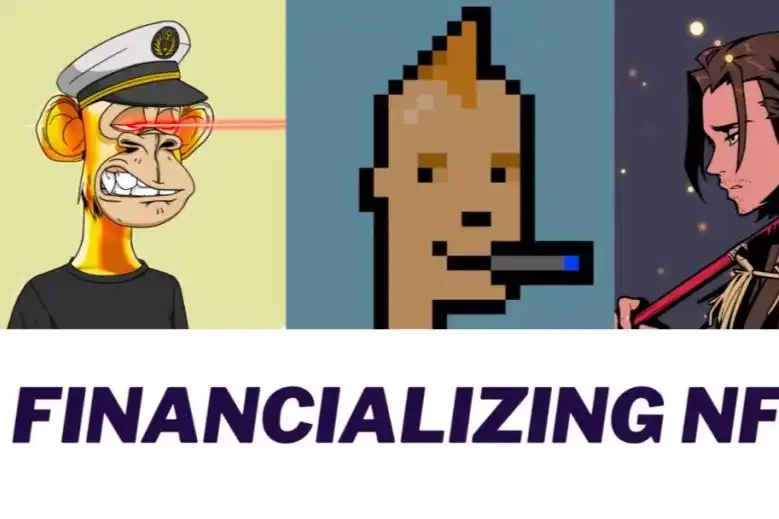
Immutable metadata: Use cases are limited, especially in applications such as real assets, progress-based games, and blockchain fantasy sports leagues. Limited value-add space: Due to the ease of downloading and copying digital content, sNFTs are often difficult to provide additional value beyond authenticity and on-chain uniqueness. Therefore, it is not difficult to see that the most successful sNFT projects are those that have built strong communities around themselves. (e.g. BAYC, CryptoPunks, Cryptokitties) False content: "According to OpenSea's analysis of its own market, more than 80% of the NFTs listed are pirated works." - Wired
On mainstream NFT markets like OpenSea, there are still a large number of pirated art works, indicating that there is still a long way to go in implementing digital authentication.
Static NFT is the first generation of non-fungible tokens, characterized by immutability, limited value proposition, and piracy risk. Next, we will explore the next generation of NFTs - dynamic NFTs.
What is Dynamic NFT?
Dynamic NFT is the iteration of static NFT. It can dynamically change the data of NFT based on feedback, and the logic of smart contracts can also be used to fine-tune the attributes of NFT according to external stimuli. Another interesting definition of dynamic NFT (dNFTs) is:
"Living real assets. They can grow, change, decompose, and regenerate under external stimuli." - CoinTelegraph
What kind of data does dNFT accept? There are two types: "on-chain data" and "off-chain data". On-chain data can be accessed directly through smart contracts, while off-chain data needs to be verified by an entity called "Oracle" before being added to the blockchain.
What is an oracle?
An oracle can transmit real-time data from off-chain data sources (such as Web2 websites, sensors, etc.). It also has an interesting definition:
"Provide verified and up-to-date data for smart contracts and trigger their internal state changes." - Visionary Art
The oracle is crucial for the implementation of dynamic NFTs, as off-chain data is the key to expanding dNFTs to different use cases.
"For the popularization of dynamic NFTs, oracles are indispensable." - Supra Articles
After understanding the concept of oracle, we can return to the definition of dynamic NFT:
Dynamic NFT = NFT + Oracle
Dynamic NFTs have various static properties, as well as dynamic data that is constantly updated through input from oracles. This is an NFT that changes its appearance over time. Below is a common process for a dynamic NFT contract:
Requesting NFT token URI from smart contract by manual/programmatic means.
The smart contract has received a processing request.
Intelligent contract calls chain data, output results.Smart contracts call data from oracle chains and output results.The content that the smart contract decides to display.
Dynamic NFT is the combination of the first generation NFT technology (static NFT) and real-time data feedback. These data feedbacks can be on-chain or off-chain. For off-chain data (related to more attractive use cases), they need to be added to the blockchain for analysis by smart contracts. Oracles play a critical role in providing this service.
Next, we will comprehensively compare the similarities and differences between static NFTs and dynamic NFTs:
Static NFT vs Dynamic NFT

The difference between static NFTs and dynamic NFTs, data source: Zeeve.io
After understanding the main differences between static NFTs and dynamic NFTs, we can clearly feel the novel and unique programmable user experience provided by dynamic NFTs based on real-time feedback data. In the next section, we will explore the significant impact of this trend on the emerging NFT field.
Disturbing Trends
Sales volume and total sales (in USD): Sales volume and total sales have increased. As shown in the first chart, the red line represents NFT sales volume, and the white line represents the total sales volume in USD. At the beginning of 2021, the NFT craze just started, and NFT sales volume soared, reaching its peak in mid-2021 with a daily sales volume of about 1.25 million transactions. The growth in sales volume is obviously related to the total sales, with the highest daily sales reaching 2 billion USD. It is worth noting that the current bear market and high ETH gas fees have significantly reduced the total transaction volume to less than 250,000 transactions per day.

Source: http://nonfungible.com
Primary market and secondary market (in USD): The secondary market is around the primary market, even in bear markets. The important chart below shows the total sales volume of the primary market (red line) and the secondary market (white line) in USD. Obviously, during the time period covered by this analysis, the proportion of secondary market transactions in the total sales volume of the NFT market is much larger (except for the peak of the primary market at the end of 2021). Similarly, in the context of a bear market, the sales volume of the primary market has dropped significantly to almost zero, while the sales volume of the secondary market has dropped to below 25,000 USD.

Source: http://nonfungible.com
转向 D2C: In order to make money through their creations, digital artists are turning to the direct-to-consumer (D2C) model. This model not only increases profits, but also introduces programmable and enforceable royalties.
Big brands enter the game: Many big brands are using NFTs as a means of financing.
Pizza Hut: Pixel Pizza.
Pinke: Inedible potato chips
Tucker Clock: Fine Collection
Ubisoft: The Disappeared Rabbit.Charmin: Non-fungible Toilet Paper.Nike: Referencing CryptoKitties, applied for a patent for CryptoKicks.
Celebrities such as Snoop Dogg and Lindsay Lohan have started creating their own collections of encrypted assets.
2022 Q2 Main Growing Segments
The metaverse and functional NFT markets have both seen significant growth in sales and dollar volume, which seems contradictory to the bearish market background. - nonfungible

Market Analysis: NFT Market - Source: https://nonfungible.com/market-tracker
As shown in the above figure, both the Metaverse and functional NFT sub-markets have experienced extraordinary growth in total sales, sales volume, total profits, active wallet numbers, and total liquid assets.
The growth in these niche areas can be explained by the increased demand for practical applications of NFT technology, apart from digital art. This trend will be key in driving the widespread adoption of dynamic NFTs. Next, we will explore some highly impactful use cases for dynamic NFTs.
Potential Killer Applications
In this section, we will explore the various use cases of dynamic NFTs. Killer applications in this field are expected to emerge.
Proof of Traffic: Pageviews
Description: Proof of traffic mechanism, which can display the total attention given by a user to a specific part, a section of content, or an NFT on a website. It is equivalent to a page view counter or a timer used to count user engagement with content. This use case will be used to obtain participation analysis of on-chain websites.
Value proposition: Equivalent to Google Analytics in Web3, it allows tracking of content engagement and popularity in an open-source manner, and enables direct profit through query frequency or subscription.
Target users: Content creators who need to track the engagement of their NFTs or other content on centralized social media platforms.
Super Identity Verification: Dynamic Websites Can Become NFTs
Description:
dNFT can be used to represent the constantly changing online identity of users.
dNFT can store dynamic data, which means that dynamic websites can be minted into dynamic NFTs. It allows users to create their own personal websites around their identity.
The corresponding static NFT is Ethereum Name Service (ENS), which allows Ethereum wallet users to create an easily memorable username address in the form of an NFT. This NFT is integrated into various markets and platforms within Ethereum, and provides a unified domain name suffix similar to DNS domain names ending in .com and .org.
"Last year, the monthly registration volume of .eth domain names increased by 10 times." - Visual Capitalist
This use case is a multi-chain dynamic version of the Ethereum Name Service.
Value proposition: Through dynamic NFTs, users can create their own personal identity and showcase it across multiple chains and dapps.
Target users: Web3 users who want to customize their identity on multiple chains (not just ENS) with personalization.
Revenue Sharing / Proof of Influence
Description:
dNFT can be used for revenue sharing incentives in rebalancing nested royalties. Proof of influence is a registry that records all collaboration information and changes to a specific code segment.
With dynamic NFTs, users can embed royalties into multiple content items. This means that once a new user decides to purchase an NFT and use its IP, royalties can be split among all contributors and collaborators of that content item.
Example: After a TikTok video goes viral, it will always be continuously recreated. In this case, if the original TikTok is cast as a dynamic NFT, every time a user recreates it to keep up with the trend, they will pay a small fee to the original creator. Now, the smart contract of this recreated TikTok video includes the original creator and the first person to recreate it, and the two can share the profits generated when it is recreated again in the future. This is just a simple model for rebalancing incentives for digital IP and content profitability, and it is also the two biggest problems faced by today's social media networks.
基于玩家进度的区块链游戏
Based on player progress blockchain game.
Description: dNFT can be used to track players' game progress more efficiently. In this use case, dNFT represents the player's game avatar, which can be updated by completing various tasks/levels/achievements in the game. As the avatar is updated, new features in the game are also unlocked.
Value proposition: Dynamically track players' game progress and unlock different game experiences based on the level of interaction between players and the game.
Target audience: Players interested in progress-based blockchain games.
Three potential use cases:
Activity ticket sales: Enhance the distribution of benefits and voting among participants in the activity.
Real estate: Property certificates can be minted as dynamic NFTs. Through an oracle, off-chain data can be compiled in real-time to accurately assess the value of the property, thereby reducing friction related to property valuation.
Education: dNFT can be used to track students' courses and academic performance. Students' college grades and performance can be written into the blockchain through an oracle. The legality and compliance of adding academic records on the chain is the main obstacle for this use case.
Potential Risks
False Content / Pirated Thinking: Improper Resale of NFTs
"According to OpenSea's analysis of its own marketplace, over 80% of the NFTs listed are pirated works." - "Wired"
Compatibility: Cross-chain compatibility of NFTs
Compliance: Total sales in 2021 were approximately $28.6 million - taxes
NFTs typically require payment of capital gains tax (similar to profits from selling stocks). It is not yet determined whether long-term capital gains tax will be imposed on NFT investors, but since NFTs are considered collectibles, they may be subject to higher tax rates. The US Internal Revenue Service has not yet included NFTs in its tax system.
Information Access: The Centralization Problem of Oracles
"If the operation of the oracle cannot be decentralized, it will lead to more corruption, price manipulation, and network attacks in the long run." - Supra Oracles. Because dynamic NFTs obtain off-chain information directly through oracles, the correct design of oracle protocols is crucial for the success of dynamic NFTs. Platforms like Chainlink or Bond still have a long way to go in terms of decentralization.
The first three risks listed above are also problems that static NFTs are currently facing. Because dynamic NFTs are a new technology, the strict sense of risk has not yet emerged. In fact, the problems faced by static NFTs need to be solved through the implementation of dynamic NFTs.
Market Potential Size
According to data from 4Ire Labs, in 2021, 37% of the global market is concentrated in North America.
The estimated market size of NFT in 2021 is 50.1 billion US dollars.
From 2021 to 2030, the NFT market is expected to achieve a compound annual growth rate of 10.7%.
It is expected that the total value of the NFT market will reach 125.07 billion US dollars by 2030.
Project Overview
Sol Soldiers
Type: Dynamic Art Focus: Using oracle to truly randomly select features for its NFT rewards.
VenVuu
Type: Dynamic Advertising Focus: Enable users to easily earn rewards from advertising, wearable devices, and product placements within the metaverse through dNFTs.
Liquid Earth
Type: Dynamic, Static, Real Estate Focus: Through dNFT, users can easily receive rewards from advertising, wearable devices, and product placements in the metaverse.
Unstoppable Domains
Type: Dynamic, Personal Identity. Focus: Allows users to register multiple static NFT domain names across multiple chains. In addition, Unstoppable Domain NFTs can be directly linked to commonly used websites and used as webpage URLs or wallet addresses. They are compatible with mainstream browsers (Chrome, Firefox, Opera, Edge, Brave) and can be used on mainstream encryption protocols (such as Chainlink, Moonpay, Coinbase Wallet, OpenSea, and The Graph).
Conclusion
主要内容
translates to
Main Content
Dynamic NFT is the iteration of static NFT. The combination of first-generation NFT technology (static NFT) and real-time data feedback is dynamic NFT. These data can be on-chain or off-chain.
Pushing growth trends:
The quantity and total sales revenue are both showing growth.
In order to make money through their work, digital artists are turning to the D2C (direct-to-consumer) model, which involves directly facing consumers.
Major brands are adopting NFTs as a means of financing.
The metaverse NFT market and functional NFT market have experienced extraordinary growth in total sales volume, total sales revenue, total profit, active wallet count, and total liquidity. This growth can be explained by the increasing demand for practical applications of NFT technology, in addition to digital art.
Potential Killer Application: Dynamic NFTs
The following potential application concepts represent opportunities for early investment and incubation in protocol projects that are developing the use case:
Proof of Traffic: Pageviews
Super ID Verification: Dynamic websites can become NFTs.
Profit sharing: Proof of Influence.Based on progress blockchain game.
Potential Risks
The first three risks below represent the problems currently faced by static NFTs. In fact, these problems need to be solved through the application of dynamic NFTs.
False content/piracy mindset.Compatibility
Compliance and Legitimacy
Information Access
The only identifiable risk of dNFT is the issue of centralized oracles, which is also a widely faced problem when accessing off-chain data.
Market Size Estimation
From 2021 to 2030, the NFT market will grow from $5.1 billion to $125.07 billion, with a compound annual growth rate of 10.7%.
Interesting Case
Here are some interesting projects that cover most of the clear use cases:
Sol Soldiers
VenVuu
Liquid Earth
Unstoppable Domains
Original article link
Welcome to join the official BlockBeats community:
Telegram Subscription Group: https://t.me/theblockbeats
Telegram Discussion Group: https://t.me/BlockBeats_App
Official Twitter Account: https://twitter.com/BlockBeatsAsia
 Related Articles