Tell the future iterative road of PFP NFT from 3 aspects
Original title: Where will PFP NFT go next? "
Original author: Teng, Delphi Digital researcher
Original compilation: Deep Tide TechFlow
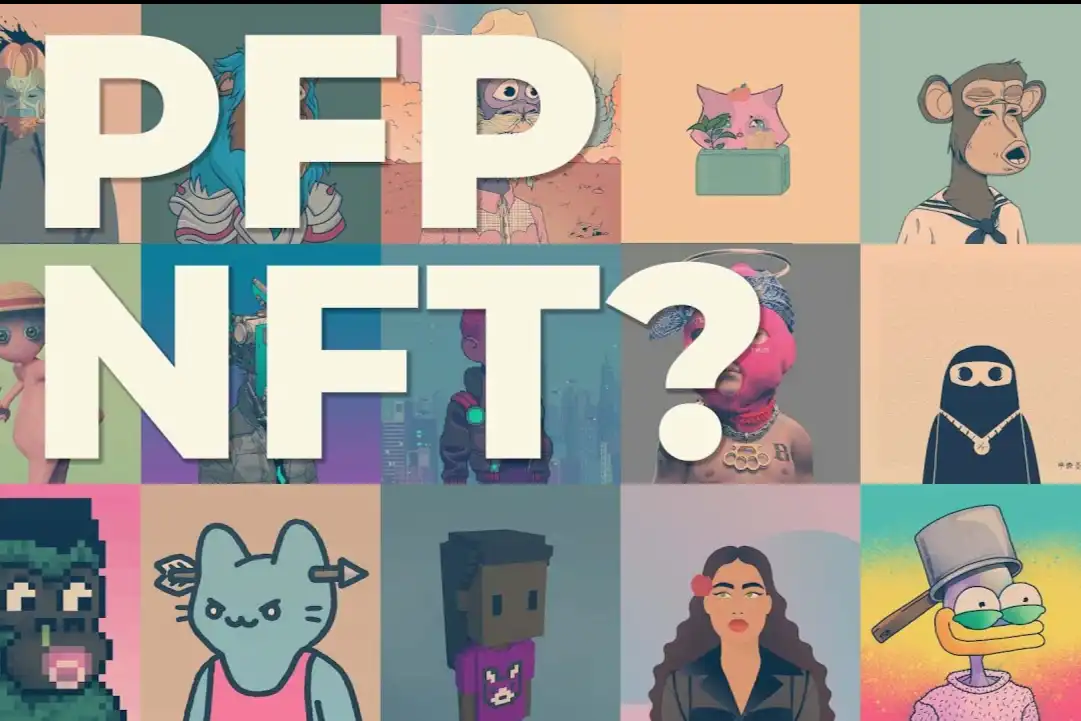
PFP they used to be The darling of the NFT space, but has now fallen sharply after being shaken in recent months. A Boring Ape that was worth $400,000 at its peak is now worth $100,000. That's because the dopamine-fueled speculative rush has subsided.

No one would have thought that they would explode in this form last year, NFTs bind us to digital identities through PFP (personal profile photos), they are not just a photo, They are also symbolic representations of community, culture and members of society. At least, we think so.
Now that our emotions have calmed down, we have to figure out: what's next? What should we do with these pictures?
All PFPs need to think carefully about the following three points in order to survive:
1. Web3 transition to the real world?
Today, most PFPs are akin to country clubs, where the entry fee is their floor price. Clubs bring like-minded people together to socialize. Country club membership entitles you to certain privileges such as free access to facilities, invitations to exclusive events and votes on major decisions.
That's good. As a "country club," PFP can do many interesting things for its members. Like free hoodies, fanny packs, jackets, and limited-edition merchandise—everyone loves free stuff.

But as an exclusive "club", it is difficult for you to recognize the importance of yourself. The fact that is before us is that the native audience for Web3 is niche.
Ask any of your casual friends if they've heard of Doodles, Azuki, or CloneX, and the answer is no.
Based on the number of purchasing wallets, there may be fewer than 300,000 people active in NFTs today. The truth may be less, since many people use multiple wallets.
PFP is of little importance to the culture of the whole world. Even if they disappear tomorrow, most people in the world will not cry because of it.

If PFP wants to gain a place in the forest of world culture, they must go out, create culture, embrace world culture, enter people's mind, enter the place where people spend attention:
TV; Movies; Pop Music; Fashion; Gaming; Entertainment/YouTube/TikTok;
These Each of the verticals is extremely competitive, and the entire space is littered with failures.
Building strong and defensible intellectual property is not easy, success requires luck, timing, capital, deep expertise and hard work.
When I see some teams launching NFT series with the vision of making a movie, animation or game, but without deep expertise and I'm confused when it comes to experienced team members.
PFP has something that non-Web3 companies don't: tools (NFTs) to cultivate a highly engaged, loyal fan base who will co-create and Co-spread.
They can harness this power, use their community to bridge the gap between them and mainstream consciousness.
2. How to build a sustainable income stream?
PFPs like Azuki, CloneX, Doodles, Cool Cats, Moonbirds and Bored Apes have earned over $10 million in royalties in the past year.
This is pure profit, no cost of sales (COGS).
They were lucky - in the right place at the right time.

However, since the second quarter of this year, the trading volume of NFT has shown a cliff-like decline.
This also means that royalty revenues have slowed down, they are a direct feedback on transaction volume. Given the macro headwinds in global markets, it is also unlikely that we will return to a period of super-high royalty income anytime soon.
For the early 2021/2022 PFP team, I prefer to think of their past royalty income as fundraising for their treasury rather than Represents a real source of future recurring revenue.
Worse: Creator royalties are heading towards 0, and marketplaces like X2Y2 have made royalties optional.
The PFP team had to go out and, like other startups, try to find new sources of sustainable revenue.
They can no longer wait for the royalty boom to come, some possible business models I have been considering include:
< /p>
Licensing intellectual property/artwork to brands big and small e.g. Uniqlo hoodies; creating new product lines e.g. merchandise and consumer products (Bored Apes coffee); selling digital collectibles with a purpose, like Skins for Fortnite and League of Legends; content and media production companies; subscription services;
But really, the possibilities are endless.
Presumably we will soon see some teams with business acumen who can turn a humble JPEG collection into a real technology + cultural enterprise.
3. How to bring value back to your community?

VC is raising the stakes in the NFT game. Moonbirds raised $50 million in funding in August, and Doodles just raised $54 million in funding (at a whopping $704 million valuation).
Apparently some VCs like JPEG. This is great news for PFPs, giving them the fuel to go out and expand their brands. Consumer companies need to burn a lot of marketing dollars to grow, otherwise, they will be left behind.
This begs the question: are NFT holders really partial owners of the brand, or is the community ownership we support just a façade?
When venture capital comes in, the company's value accumulation priority will naturally be transferred to equity owners rather than NFT holders. After all, investors pay a premium for equity and don't own any NFTs. They need to get a 10x return on their investment.
In extreme cases, some PFPs become like traditional companies:
NFTs are Used to raise seed funding, and the success of the seed round was used to further raise venture capital funding. The idea of community ownership becomes a meme. NFT buyers are considered "customers" rather than "co-creators". More NFTs were sold to the community as they frantically bought into the company's next hyped NFT offering. Finally, consider the community as a source of income. Community-driven activity—fan art, story creation, IRL meetups—becomes akin to user-generated social media content where all the economic value generated goes back to the company, and the creators don't get a dime. The NFT ends up being just a digital collectible in the universe, such as the limited edition Luke Skywalker (only 10,000 of them).
Writing here, I am aware of my emotions. I started to gradually become cynical.
But anyway, I would say that PFPs must recognize that their community has brought them to where they are.
Today, more people have begun to understand that NFT owners have far fewer (legal) rights than they previously thought - we are still in the Early stages of figuring this out.
Today's regulations make it very difficult for NFT owners to become shareholders and share profits as well.
But at some point, I believe the gap will be bridged, at least to some extent.
At the same time, there is a social contract between the founder and the community. This means that the team needs to constantly find ways to deliver value back to the community in an authentic way. Otherwise, the project will lose the trust of the community.
Whether the PFP team embraces the ethos of Web3 and community co-creation/ownership, or goes the traditional startup-equity-VC funding path, this is a Philosophical decision. But for me, the former is more worth looking forward to.
Original link
Welcome to join the official BlockBeats community:
Telegram Subscription Group: https://t.me/theblockbeats
Telegram Discussion Group: https://t.me/BlockBeats_App
Official Twitter Account: https://twitter.com/BlockBeatsAsia
 Related Articles