Re-deconstructing NFT: Philosophical Thinking of Tokenized Business

原文标题:《 重新解构 NFT:Token 化商业的哲学思维! 》
Old Yuppie
This article is from wechat official account:Old yuppie
From a compilation of Not Boring interviews.
The talk comes from hosts Packy McCormick and Alex Danco. Alex works for Shopify at Systems & AMP; Crypto person.
I hope it will give you a new perspective and inspiration.
The host:We both work for Canadians -- you at Social Capital, I at Breather -- and then we both write newsletters. Since then, we've gone in different directions -- I'm working on a newsletter and a fund, and you've slowed down the newsletter and become Shopify's full-time operator.
I remember when you took the job, I thought, a) cool! B) What specific work will you do at Shopify? C) Where will Shopify go? For those of you who are not using Shopify, can you define what Shopify is today and what you think it will be in the next decade?
Alex:Let me briefly describe Shopify: It enables everyone to do business better, and specifically, we do it through software: we're building an e-commerce platform. Our job is to build the platform in a unique way to serve merchants -- and many others, such as application developers, agents and now buyers -- by providing the best software services on the Internet.
Host: Alex Danco, what do you do at Shopify? Except, of course, Shopify Wallet-Aware.
Let's jump right into Web3. When you first tweeted "GM" a few months ago, I thought you were being sarcastic. Then you change your avatar. Now you're running a blockchain team -- your LinkedIn title is "Systems & AMP; Crypto Person." You've been around cryptocurrencies for a while? What's your interest in it?
Alex:Ha, this is really funny because I didn't even think it might get anyone's attention. I've been dabbling in cryptocurrencies for a while; I've been writing about it in my newsletter for years.
As for, "What's my interest in it?" I don't know. Should be interested in everything. Here are some of my favorite examples of thinking and writing, but I guess the most important thing is that the crypto world is finding its purpose, and that should be what you're wondering. There are three common places to spend your time:
- A man without a purpose
- People with goals
- Those who are discovering their purpose.
You tell me which one sounds most interesting.
Host: I'm going to start using it instead of "We're too early!"
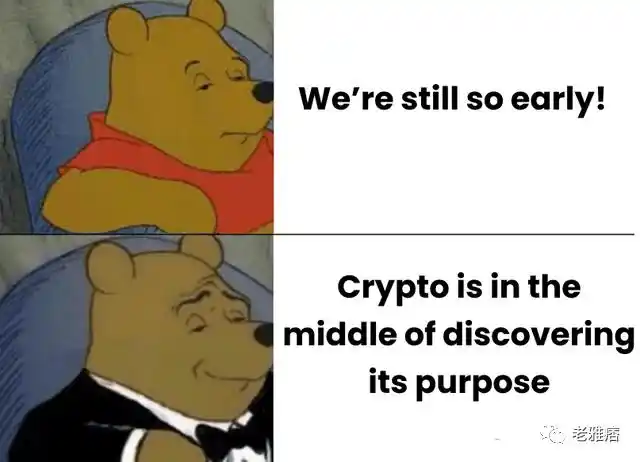
For many people, "discovering its purpose" means finding the "real use case."
To that end, Shopify is one of the more interesting parts of trade tech from the crypto world's point of view -- encryption is very relevant to business, and your CEO Tobi seems to be really interested in it, given that there are over a million businesses running on Shopify. Given its size and scope, it feels like Shopify can borrow its legitimacy as a use case, meaning that if Shopify supports something, it's a true use case because Shopify supports it.
With power comes great responsibility. How did you start thinking about whether to get involved and what to do in the field?
Alex: I joined Shopify two years ago and discovered an interesting phenomenon, namely & NBSP;
1) A lot of people who are very familiar with cryptocurrencies are scattered throughout the company, but they are also.
2) There is no drive to "align" and no one knows what else to do other than trade cryptocurrencies.
Shopify merchants have been able to accept encrypted payments for several years now, thanks to payment channels built by third-party application developers (and we just built the overall commercial platform!). .
But when NFT took off last year, we really ignited the search for the answer to this question: is this part of the "best version of the Internet" that our platform has to offer merchants? The answer is clearly yes, although it took us a minute to discover why.
Host: Exactly. I think the company's first crypto news release was the Chicago Bulls NFT store. When I think about Shopify's role from there, I think your big push in the space will be along these lines -- NFT Mint, Drop, sales. You help businesses sell things -- both physical and digital -- so that includes helping them sell high-margin NFT. That's not the way you go. Why is that?
Alex:Well, Pacie, that's what I wanted to talk to you about money. Getting back to our topic, rather than giving you an easy answer (" Because we realize better than anyone that tokenization of business is going to be a 100x bigger opportunity than existing business models, it's more interesting to us than anything else ").
The HOST: There was a line in Jonathan Haidt's big piece a few weeks ago that immediately made me think of cryptocurrencies: "History has a direction, and it's toward greater collaboration." The crypto world is a bet on greater collaboration without paying for companies that think they coordinate everything. What do you think?
Alex: I particularly liked the "coordination" part of this answer; For the record, I don't think there's one right answer, of course -- there are a lot of different communities and schools of thought about what blockchain and cryptocurrencies do for us here. That's a good thing. But I'll tell you mine, and I think it covers a lot of important things.
When we look at the changes "happening" in the crypto world, we look at two things:
Wallets have changed the way people behave. And:
Over time, this kind of behavior wins.
Host: I like this answer because it mixes social and technology, and the way computers and people interact. "First we shape our interface, and then our interface shapes us."
Alex: I think it answers the question pretty well, don't you think? It offers something for everyone. People who own Sound Money have something (our wallets and cryptography key pairs change our behavior of saving and spending that will trump old behavior in the long run), dapp builders have something (wallets change the way people create and consume software), There is something about the community (wallets change the way people collect and display their identity).
I like this starting point because it brings us together on the things we agree on. Encryption is as much, if not more, a behavior as it is an attribute of technology.
There are many facets to this behavior, but it starts with cryptography; It starts with our wallets, when we sign something. It starts at a magical moment when our wallets open a door to a new world and step into it.
We're working on some cool stuff in that world. We call it tokenized commerce.
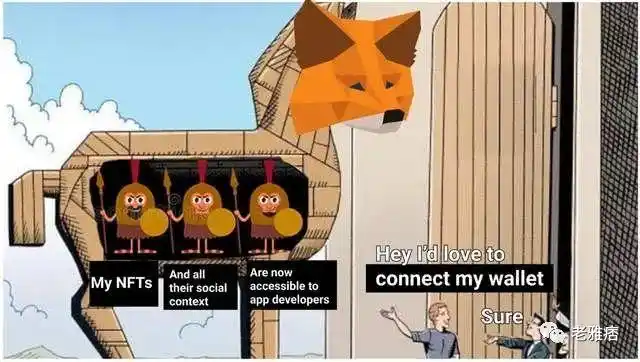
The tokenized business began with an observation that there is a new class of Internet users in the world called the wallet person.
Host: I like the frame: people with wallets. Descriptions of what encryption allows people to do are common, but I haven't seen any descriptions of what encryption allows people to become.
Alex: That's it. Forget for a moment what you can do, and let's talk about what you can be.
I will tell you the answer: you will be a person with a wallet.
Let's talk about people with wallets. Who are they? They are the owners. Maybe they have some NFT indicating community membership, an ENS name, an ETH or USDC balance, maybe a smart contract associated with them. They can sign their names on the Internet.
It's funny how these people behave: they really want to connect their wallets to things. They always connect their wallet to DApps, or connect their wallet to the NFT marketplace.
How did that happen? Because what we own through our wallets means what we are. When we show up with our wallets, we show up as ourselves. When we connect our wallets and experience that magical moment when the world suddenly changes -- it sees us and opens up -- it's a wonderful feeling. It feels like this:
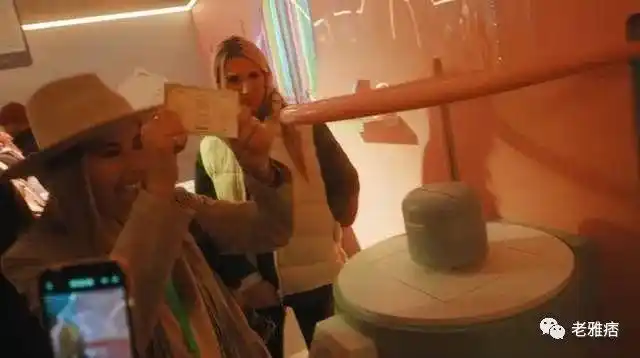
What happened in this photo? This was the Doodles event at SXSW last March, a pop-up world created by Web3 community Doodles.
The event is open to everyone, but if you're a Doodle holder, the world's experiences -- from the entrance all the way to the Shopify supported gift shop -- are "open" to you in delightful ways. Lights flickered, bubbles blew, special passes were held in hand; The Doodle you own appears on a giant screen announcing to the world, "I am Doodle NFT Holder 3125!" One by one, the guests' faces glow with joy; Everyone made it into this new world.
This moment is what tokenized commerce is all about. You realize, "Ah, NOW I'm the one who understands the relationship between NFT and business." NFT is not a commercial output; They are inputs to commerce. NFT is not a product. They are a kind of status symbol of the buyer.
Host: I like the two things you mentioned,
1. The experience can be open to anyone, but it is more special for NFT holders. I think music NFT is really representative: anyone can listen to it, a few people can obviously be big supporters, and there's access to special tracks and meet-and-greets...
2. I'm back. What encryption makes people.
Alex: It's good to be an irreplaceable buyer. You arrive at the store, connect your wallet, and suddenly the store changes based on the NFT you hold. Maybe a special product is unlocked, or you can get a drop in advance. Perhaps you have connected your wallet to unlock a high-quality art print or 3D model corresponding to your NFT. Perhaps you can access a special collaboration: with this limited edition drop, your NFT opens a new door to another community. The more you explore, the more doors you find.
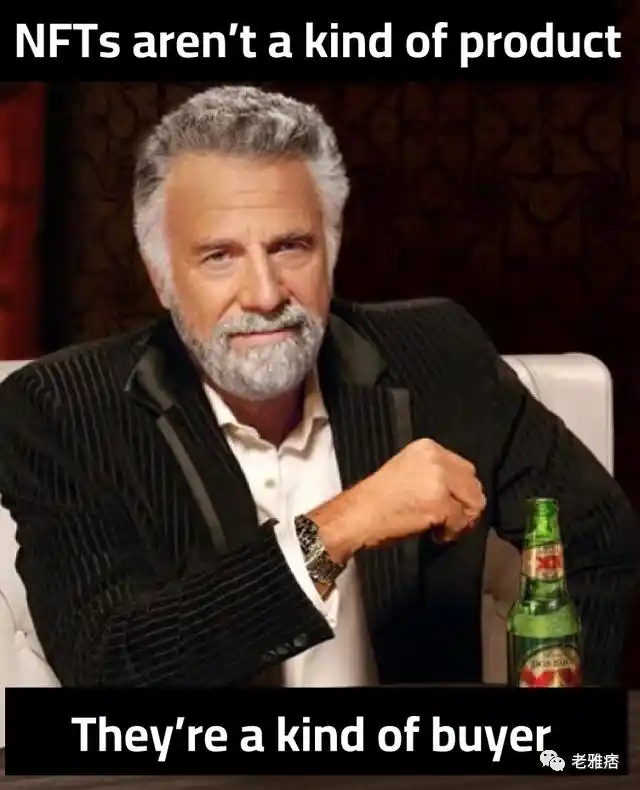
Specifically, NFT has proven to be the perfect catalyst for this behavior. You know why? Think about what the most successful NFT brands look like. It looks like a theme and variation: this is what you fit in, this is how you stand out.
They are status symbols of that sense of accomplishment: I'm in the Doodle, I have the Doodle. I'm on the Adam Bomb team. I have this Adam Bomb. I'm in Stapleverse, and I have this pigeon with a turban. NFT is the new meaning of "adapt and stand out" on the Internet.
Host: I think this is one of the scale points of cooperation. We are naturally irreplaceable buyers in the local community. You go to your favorite neighborhood stores and restaurants, and the people there know you and know what you're ordering before you even talk. You are part of the local community (you "fit in"), but you are who you are, with preferences and distinct styles and so on (you "stand out").
Alex:Yes. It turns out that the act of "adapt and stand out" is one of the most important raw materials for so much good in the world -- culture, community, business. Now we have wallets with lists of NFT, which represent this precise atomic unit of behavior: adapt, and then stand out.
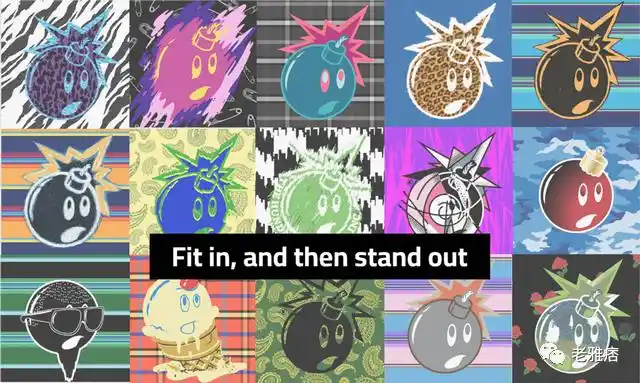
Of course, this feeling of "fitting in and standing out" isn't unique to cryptocurrencies. It's a universal feeling, and when you give back, it gets better.
My colleague Nicole has an anecdote about walking around the mall with a big Sephora bag (not the small bag, the big bag you get when you buy too many things to fit into the small bag). And realize that someone else has a big bag, too. They both immediately thought of the same two things: 1, great you wear the same style; 2. What's in your bag? One of the engineers on our team had a similar feeling when she saw someone else wearing an Engineer's Medal ring. I used to tour in a band, and now I get that feeling whenever I see someone on the street wearing a concert T-shirt.
The recognition is contagious because you both feel good. It's a sense of mutual acceptance: I let you in, you let me in. That's the challenge we do together: we all adapt and stand out. You see it in every neighborhood: athletes, collectors, people who like bands and live music, people who like comic books. Anywhere you see that, business is just around the corner.
Great brands understand this concept very well. When you shop in one of their flagship stores, it's obvious how much care and craftsmanship has gone into creating this mutually recognized environment of achievement: not only in the decor and aesthetics, but more importantly, in your interactions with the merchants. It can be as simple as the merchant sees your T-shirt and nods, great.
Especially because that identification earned some extra discount qualification, "What's that hoodie? Spring '18 collection? Okay. Hey, we've got something for you in the back that I think you'll like."
Bobby Hundreds (from The Los Angeles streetwear brand The Hundreds, and of course Adam Bomb Squad) wrote a book called This Is Not a T-shirt, which I highly recommend, and it really underscores this point.
Host: Right! So I guess that's the second level of meaning -- in the real community where you live, people might recognize you as you. One level up, and no matter where you go in the physical world, other people who like what you do are likely to recognize you as a kindred spirit. But that's hard to do online.
Alex:Yes. Before wallets, that magical moment of being seen was hard to create online. It is difficult for online stores to check the buyer's atmosphere and respond in ways that recognize and celebrate the social contract. Customer accounts and loyalty programs don't cut it; They are not you, unlike your wallet. The customer account is basically part of the store, not part of the buyer. By contrast, "connect your wallet and be recognized" is a special feeling. This is different.
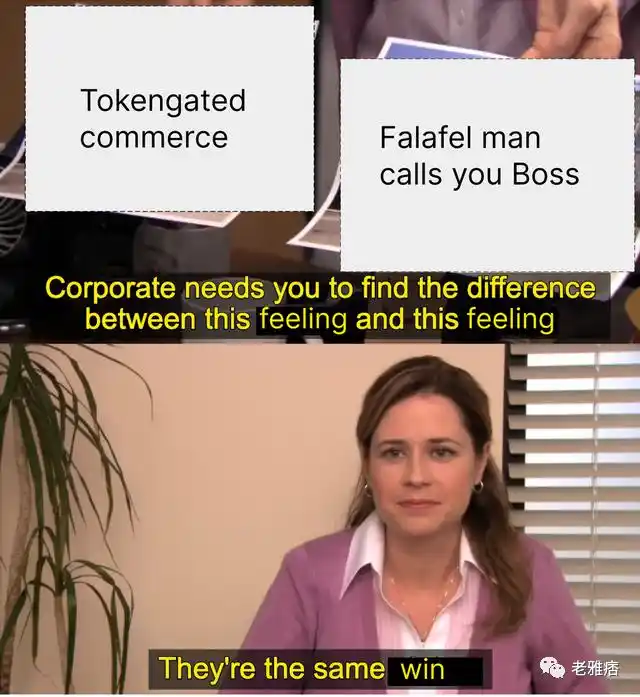
Host: Ok, that makes sense, but there's a big unanswered question for me. When I read "Tokengated commerce" or "X-Gated Commerce" the first thing THAT comes to my mind is, "Why on earth would you want to end your business? If you're selling something, why not reach the widest audience possible? Why not just one click?"
I was going to ask you, you've talked a lot before about the importance of maintaining barriers to building trust in what you classify as a "high-trust business."TokenCommercializing feels like a deliberate way to introduce a little friction into some products. Is that right?
Alex: 100%, I think the solution to this problem is to replace the word "friction" with the word "challenge" : tokenization is to add challenge to certain products.
The default state of the world is not "everyone wants your product". Creating demand is an art: you create a story and a challenge, and then you wrap that challenge in an adventure that the buyer and the merchant are taking together. Consider flash sales or limited releases; These experiences are fun, and they're all wrapped up in a story. You'll be the one who succeeds in getting the drop, and that's half the fun.
However, this is actually a good time to revisit your ideas about encryption and "collaboration," because one of the things I'm most excited about in the tokenized business is collaboration.
Collaboration is the lifeblood of creative work; Ask about music, streetwear, or anyone in any scene. But online, how do you organize a collaborative offering for a group of people: my fans and your fans? There is no traditional way to do this, exclusive and unwieldy. But tokenized commerce makes it so easy. Connect to your wallet and access drop using any of these NFT's. I'll let you in. You let me in. It's that simple.
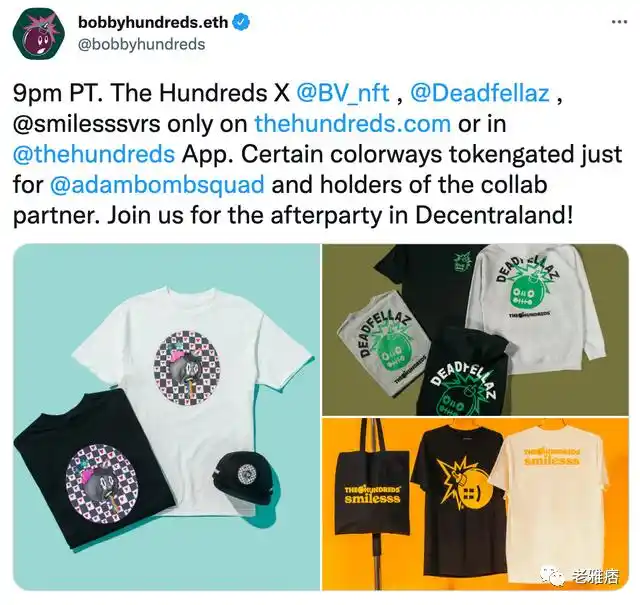
I'm particularly interested in the challenge of how tokenized commerce can help brands recognize each other. I think "endorsement" is a special subset of collaboration, where an established artist will host or co-develop a brand with an up-and-coming artist. (The music industry is particularly good at this.)
We should ask: How can one community support another up-and-coming community on the Internet? Partnering through Token: Turn exclusivity into reciprocal inclusion when two brands come together.
What is Token cooperation? When The Hundreds teamed up with Deadfellaz, you could unlock limited-edition merchandise using NFT from any of their collections, a Token collaboration. When Superplastic partnered with Gucci, the partnership was limited to secret SUPERGUCCI NFT holders, which was the Token partnership.
This is where the magic starts to happen: I belong to my community, you belong to your community, but when we work together, I can invite you in; You can invite me in. Tokenized cooperation transforms exclusivity into reciprocal inclusiveness. A century-old brand like Gucci can endorse a very hot brand like Superplastic, and their fans are all inviting each other to participate in this shared experience, as well as the shared community they now have.
Host: So the obvious question is, whyTokenCulture makes business better. Why is this different from brand loyalty programs or promo codes?
Alex:So, I can give you a cop-out answer that once again underscores the idea that "challenge feels good" -- unlocking tokenized products with it feels like an achievement when you spend more ETH on your precious NFT. But for the tokenized business to truly reach its potential, we need the next generation of cheaper tokens (eventually, so cheap as to be negligible), many of which will be more practical and the "challenge" less of a reward for itself ", you know? Therefore, in the long run, we need a better answer on how tokenization will succeed.
Loyalty programs, promo codes, or any other type of "account based" threshold system could be used for reciprocal inclusion mechanisms -- of course -- but there's a catch. This is because your threshold rules will exist as dependencies that reference back to accounts and permissions, and if you try to introduce any kind of interesting multiplayer mechanic, they can get complicated very quickly.
Imagine a pop-up storefront for fans of four different brands, with multiple levels of access, giving you early access to the goods drop. Where do you "log in" and as what? What if you are a member of multiple communities - do I need the code for each community? How do you prevent promo codes from being abused, and the more variables you throw in, the more complex it becomes? I mean, you can do it, but social threshold rules based on dependency quickly collapse under complexity, and when the fourth wall is broken and the "exclusive community atmosphere" is destroyed by flawed software, it's not a good community experience at all.
Token, by contrast, is an anonymous tool -- it's more like a file, or a physical ticket you hold in your hand. (This file analogy will be important later.) NFT does not "link back" to anything, it is not a reference to account entries on one or more merchant databases; This is the ticket itself.
In what we call "Single Player mode". (a merchant's threshold control over a single customer list), it's hard to see the advantages of tokenization. But once you get into multiplayer -- where multiple merchants connect with multiple groups of fans through a set of social rules -- tickets are an anonymous tool that doesn't link back to anything, so doesn't bring any dependencies -- but can still be trusted by the door, even if it doesn't link back to anything (more on that later, This is the "Why Blockchain" section) is a fundamentally simplified mechanism. Because now, Token threshold control rules can get super complicated, but they don't collapse under the weight of dependency because there's nothing to collapse.
Host: Talking here, it is a little enlightening moment for me. Some of the killer use cases for cryptocurrencies can be big, wild and hard to imagine, but there are also parts that just "make the same thing so easy that more things will happen now." Stablecoin tracks are in this camp.
Alex:I felt that this actually preempted a feature I wanted to feature in the future, so I left it there. But for now -- when we look back 10 years to 2022 and ask, "What were the answers that were really obvious and in front of us during that time?" I think one answer is that cooperative tokenized threshold control mechanisms will greatly simplify the way brands collaborate and recognize each other, and this simplification will mean more multiplayer opportunities for community commerce.
Moreover, cooperative tokenized threshold control mechanisms are essentially superior forms of anything that involves remixing communities can endorse: In our example of threshold control cooperation tokenization, instead of threshold control for a specific set of people, we are looking for a gated holder for a specific set of achievements, which is a more flexible and remixable form.
I want to double down on this idea by emphasizing that NFT is your list of accomplishments. NFT stands for you.
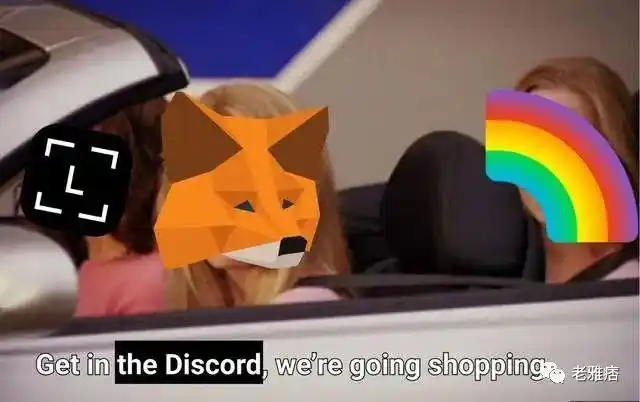
Today, we see that Web3 brands and legacy brands that have tokenized their online stores are well suited to this path, bringing these storefronts to life through tokenized application partners. The depth of collaboration among these application partners is incredible, and we're working with them to build it -- more on that later. Meanwhile, we just launched a new mobile application for tokenized business called Demo: Gated Merch Shop (" GM Shop ") that you should check out. Over the past few months, we've really fallen in love with building incredible, mobile-first, single-use, tokenized business experiences. I'm proud of the team that built this; It will rule!
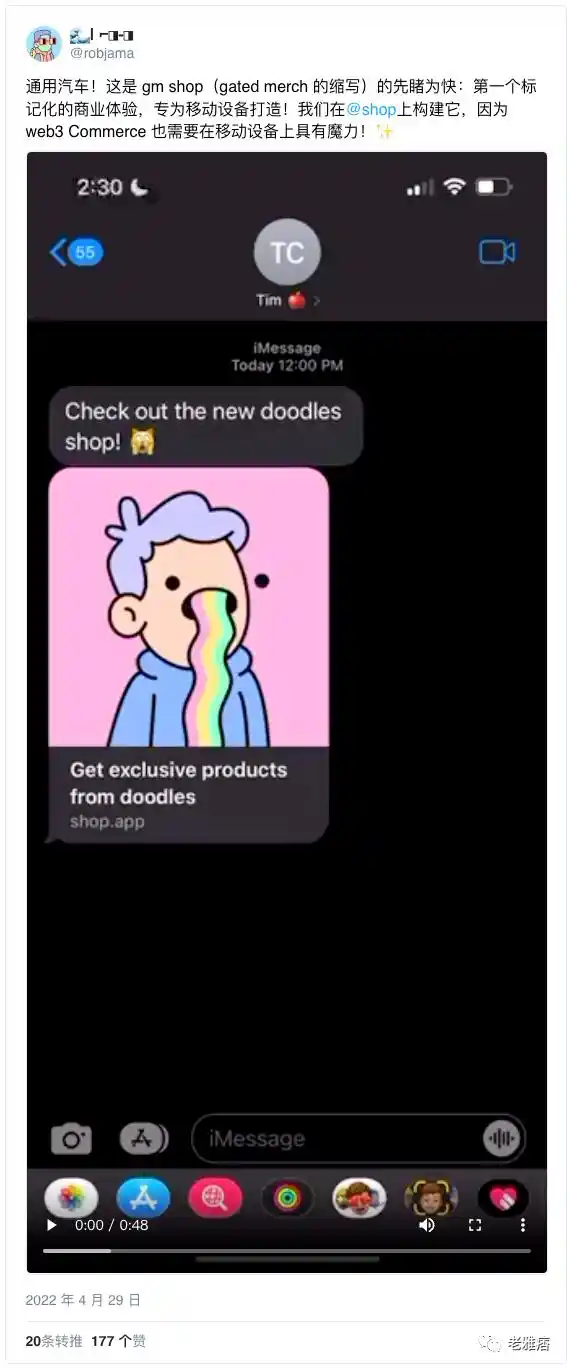
But all this is just a crack in the door of possibility. What's going on in the backyard is more interesting.
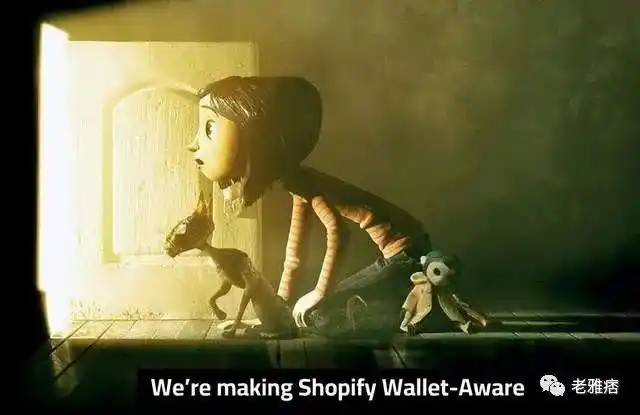
Now that we have set a footnote to all the issues by introducing tokenized commerce, and the importance of this idea of fitting in and standing out for business, we can talk about the importance of why this has to happen on the Web3 wallet and public blockchain.
A phrase to keep in mind here is: "We will Shopify & NBSP;wallet-aware."
To really understand Shopify, it's important to realize that we're more than just an online store service for merchants; We are also a developer platform.
Each store is unique; If you go to the storefront of any good merchant, it's not just Shopify out of the box, they're probably running a dozen or more apps from different developers (or they build them themselves), all of which work together to create an accurate business experience (the merchant wants to represent their business). When you sign up for a subscription, or browse cool content on a storefront, or connect your wallet to unlock a closed-end product, it's all powered by agents and app developers -- just as most of what you do on the iPhone is built by apps, not Apple.
Well, we want wallets to be the new input for developers built on top of Shopify. The NFT in your wallet is much more than "owning or not owning NFT". NFT is information; It's a smart contract. That's important.
This is what we mean when we say "let Shopify &NBsp;wallet-aware".
When the buyer shows up at the storefront, if they show up with a wallet, their wallet can endorse everything, including all the public, social meaning that the buyer wishes to raise, that should be available to the buyer.
These developers can take all the relevant state and build various applications and mechanisms that can take that state as input. There will be a very successful version of Shopify based applications that will give new power to storefronts, and today we already have four amazing tokenized applications (PERCs) : Engage, Manifold, Shopthru and Lit Protocol -- tokenized business support for merchants.
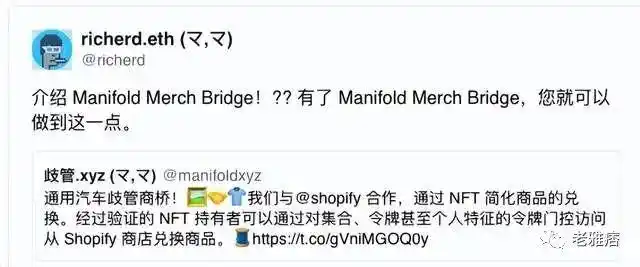
The best Web3 brands don't wait. They are creating intricacies of intimate experiences for Token holders -- new ways to create product placements, new ways for brands and their buyers to collaborate in multiplayer. The beauty of having an app ecosystem is that developers can reuse, iterate, improve, and ultimately share these mechanisms with many merchants and brands.
The host: That's the best part of the new primitives: the community will come up with uses that even the originators of the primitives could not have imagined.
Alex: To give you an idea of what is possible, I want to go back to the idea of NFT as a Token for social achievement and social contract on the Internet. NFT is a more important achievement than you might think, because we've managed to package this atomic unit of culture and community - fit and stand out - and capture it almost as if it were a file format that humans and computers can interpret and understand.
That's a big idea, so let's take it apart. What are the four things that NFT has to say in your wallet?
- What fits you [smart contracts; a community; context of social understanding],
- How do you stand out [which NFT you signed in the collection],
- Who are you [your signed wallet address],
And then one more thing, so simple but so important genius added:
- Human-readable images that make them instantly recognizable.
I, Alexdanco.eth, fit the Adam Bomb Squad, AND I stand out as the owner of Bomb #6233, a clean blue Disney-style trap design.
I know it sounds a little ridiculous, but it's actually an impressive achievement; Just like we have an accepted standard for file formats that can create an atmosphere on computers in a way that not only faithfully preserves and promotes that atmosphere, but more importantly, now has access to computers for other things that can be done.
It may all seem a bit silly really, but there is something very powerful going on here. We now have a way for computers to identify and understand these units of social achievement; That's the point of these little pieces, it's almost like files (they're like files! That's what I was talking about!) Store social meaning in this persistent, small format that is readable by both humans and computers. Through a small miracle of social co-ordination, it is becoming widely accepted.
The fact that NFT (and other smart contracts on the blockchain) is an intermediary format -- between the context in which that social meaning is established and the other context in which that social meaning is deployed (wherever you connect your wallet) -- is important. This is almost a step back from Web2, back to a world where one application talked directly to another through an API, back to an earlier time when we had a deeper sense of correctness; What we've rediscovered is something called composability.
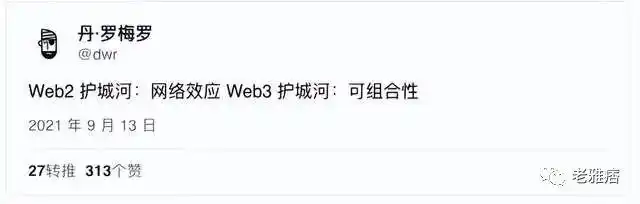
The basic idea here is that if you want one application to successfully communicate with another, it's easy; You just tell them what to do. If you want one app to successfully talk to 100 apps, then you can write a nice API that says, "Hey, a hundred apps, this is the way to talk to me."
But what if 100 applications want to talk to 100 applications? There are many connections to maintain. So, we can use something else: files. If I want to pass information from one application to another, I can pass it as a CSV file that everyone can understand; No dependencies are created between the person who makes the file and the person who uses the file.
So an important principle to understand here is this: strictly speaking, for any task or any work to be done, it would be "better" for App 1 to talk directly to App 99 rather than through an intermediate file. But over time, the power of documentation emerges through the power of standards. Because they have a common format, they agree on how to read and write to each other, and they have a common place; On disk, or on the network, or in an accessible and persistent place.
Host: So why not pass it as a literal CSV file? I feel that as someone who is excited about Web3 but understands that some people are skeptical of many use cases, it's always my responsibility to ask: why blockchain? What does Web3 allow here that you can't do?
Alex: Aha! Yes! So we finally get to the question of why you need a "block"!
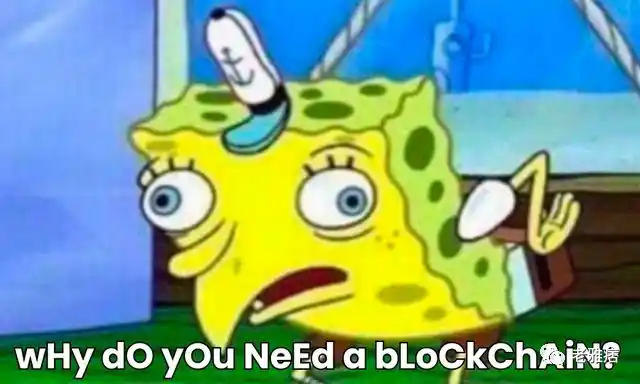
This is because we need to solve the problems that blockchain is actually designed to solve, the problem of provable scarcity and double spending. These "files" need to exist somewhere in the public state, in a code environment where commitments can be made, for their social significance to really make sense. "Web3" is just such an environment -- made possible by publicly agreed blockchain states -- that has enough community confidence in these "intermediate files" to make social sense.
So if we go back to the present and ask, "What is Web3?" To me, the most practical way to think about "Web3" is as an environment to build consensus around a new set of standards: everything is a smart contract address, everything is a tokenID, everything is a wallet address.
Among these chain block artifacts as a "file" reappears means interoperable, the social mechanism of composable real competitive now - and I think that started more than - closed, "Web2" type mechanism, social network in which everything happens in an application, or as a cross dependencies between different applications.
I think it's going to be crazy for business. Especially in the most special and meaningful community businesses, we constantly create and recombine new ways to express our identity: how we fit in and stand out. The best part is that the idea is so open and scalable that no single company or app can "solve" the problem on its own. It's impossible. The culture is so interesting; We need many applications, many developers, many attempts to capture these forms of community expression -- starting with tokenization and then expanding to "tokenization can actually mean many things."
So, that's why I have so much fun working at Shopify -- because we don't play this game alone, we're a platform, and tokenized commerce really shows the best reason we chose to build: Shopify as a platform that everyone can join.
Host: So it reminds me of great online games, partly because we're playing this infinite game where there aren't necessarily winners and losers. I can see what this means to people, but Shopify is a company. What does winning or losing mean in a corporate setting? How do Web3 and "real world companies" mix?
Alex: I want to go back to our original idea; Wallets change the way people behave and that will win in the long run. I want to focus on one word in particular here: "win". What does this "winning" mean?
It doesn't mean that we won and everyone else lost. Winning means we can go on playing. We play so that other people can play.
Our Shopify slogan has always been "Make business better for Everyone", which is great, and that's what we're here to do; But in the past year, another purposeful slogan that I really like has begun to emerge: "&NBsp;Win and help Win."
I think the game we're playing has no boundaries, it has a pattern: when you go to the horizon and explore it, you can't finish exploring it. Horizon is always with you. I want everyone in the world to think that there is no Web2 or Web3, only "bringing the best version of the Internet to the most people". That's big picture thinking. When you help someone else win, you win.
Host: Any advice for our listeners?
Alex: Well, here are some suggestions:
Exploring the world for the first time? Grab your wallet and go on an adventure.
The original link
Welcome to join the official BlockBeats community:
Telegram Subscription Group: https://t.me/theblockbeats
Telegram Discussion Group: https://t.me/BlockBeats_App
Official Twitter Account: https://twitter.com/BlockBeatsAsia
 Related Articles