New Token Economic Model: A "New Paradigm" to Solve the Current GameFi Dilemma
Original author: Leon Han
Introduction:
When you turn on StepN every day and run on the road to pay back, you find that the original road can be run more and more The longer it takes, the return to capital becomes an unattainable fantasy. Do you feel a little helpless?
When you are full of passion and dream of getting rich, you are looking for the next Axie-level project, but you find that, at some point, you have fallen into the zero wealth Ponzi trap, are you a little disappointed?
When you hold the belief that "blockchain can change the world and the game industry", but find that the GameFi industry seems to be in trouble and stagnant, you Have you ever doubted yourself, whether belief is worthless?
The root cause of these problems lies in: bad Token economic model.
GameFi's current dilemma:
The "dual Token economic model" of current GameFi games is too According to Ponzi, the Utility Token (Utility Token) produced by players has no value support. It will "return to zero" at any time in the short term, and it will definitely "return to zero" in the long term. It will eventually be just a game of "who can run faster".
With the awakening of players, the number of sticks in the entire Pond's will become less and less, until the player who hits gold with the first stick will not be able to pay back.
Under such circumstances, the current GameFi model and the "dual token economic model" will eventually be difficult to maintain.
At the same time, players are the vast majority of the entire game ecological population, and they are also the real creators of ecological benefits. If we compare a game ecology to a "country", then players are the "citizens" of this game country.
A healthy game country not only requires citizens to obtain voting rights through governance Token, but also requires a sound "social welfare security system". Only when the economic interests of players are effectively guaranteed, players will invest in GameFi with confidence and participate in the game more deeply, and the entire game ecology will be more prosperous.
New Token Economics:

Figure 1 Comparison of two Token economic models
In order to build a sound "social welfare protection System", the new Token economic model adds a new Token and a capital pool: "Value Capture Token" (Value Capture Token, referred to as VCT) and "Value Capture Pool" (Value Capture Pool, referred to as VCP), which we call It is "Three Token Economic Model".
VCT Token is the "minimum living guarantee" provided to players in the "Social Welfare Security System". "Building the bottom".
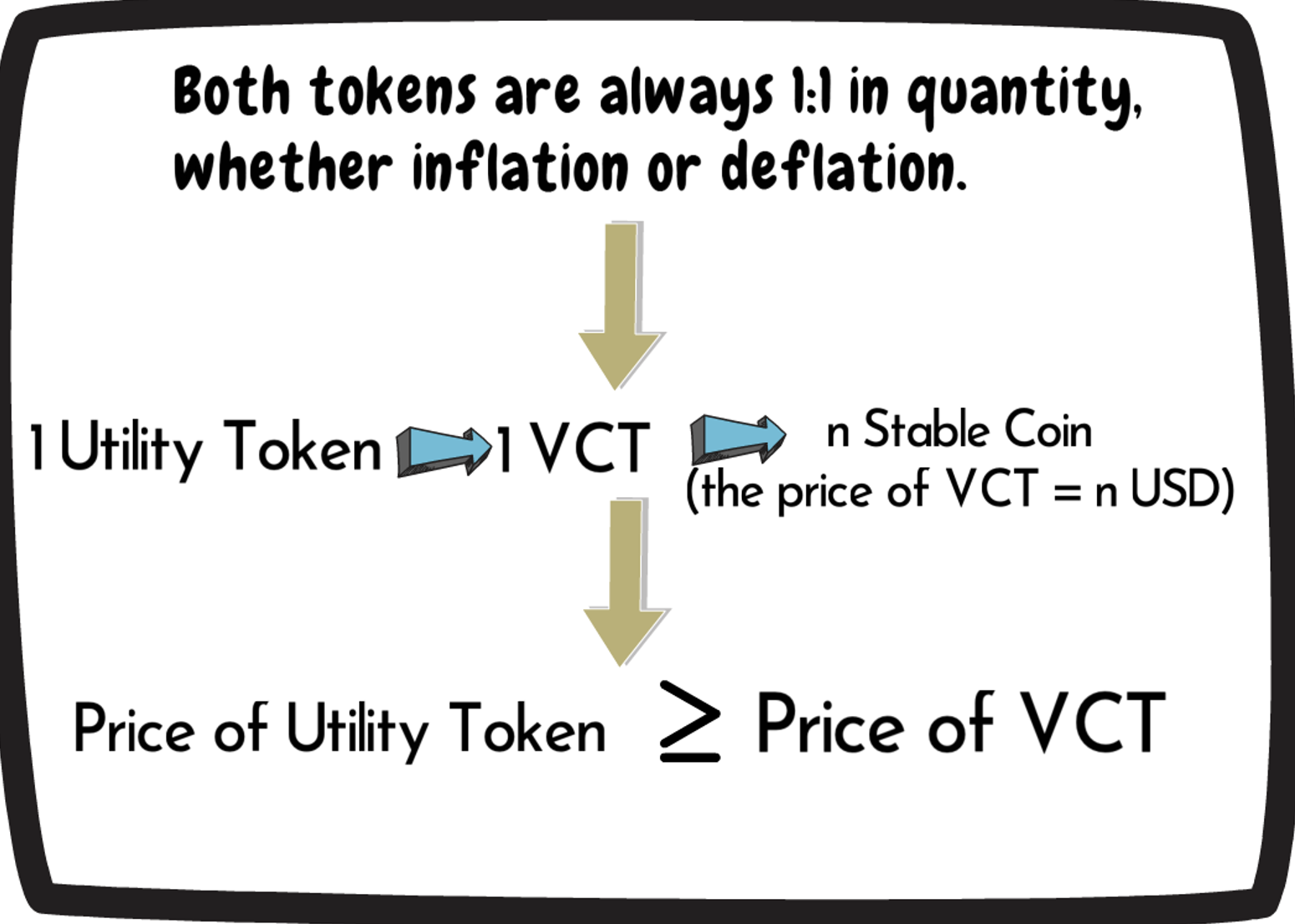
Figure 2 The relationship between VCTToken and Utility Token
VCTToken has a strong correlation with utility TokenUtility Token: In terms of quantity, regardless of inflation or deflation, the ratio of the two will always remain 1:1; In terms of price, since each utility token can be "exercised" at any time (exchange a VCT Token from the project party, and then convert it into a stable currency equivalent to the current VCT Token price). Therefore, the price of Utility Token is always greater than or equal to the price of VCTToken.
In addition, VCTToken is "insensitive" to ordinary players, will not increase the burden on players, and is not circulated in the secondary market. will be used. And the process of "execution" is one-way and irreversible. Each utility token and VCT can only be "exercised" once, and the utility token and VCTToken after "exercise" will be destroyed.

Figure 3 Value Capture Pool VCP
The value capture pool VCP is the "social security fund" in the "social welfare security system". The amount in the VCP is gradually accumulated over time. Only when the amount in the value capture pool increases, the smart contract will mint a new VCTToken (since the number of VCTToken and utility TokenUtility Token is always 1:1, so mint will issue VCT Token will mint the same amount of utility tokens at the same time); when the amount in the value capture pool does not increase, no token will be mint; and the funds in the value capture pool are not allowed to be withdrawn at will, so there are no funds in it reduced situation. In this way, it can be guaranteed that each token produced by mint has a corresponding value support, and redundant tokens will not be generated out of thin air. This way of issuing new tokens by increasing the amount of VCP is called "Market Driven Mint".
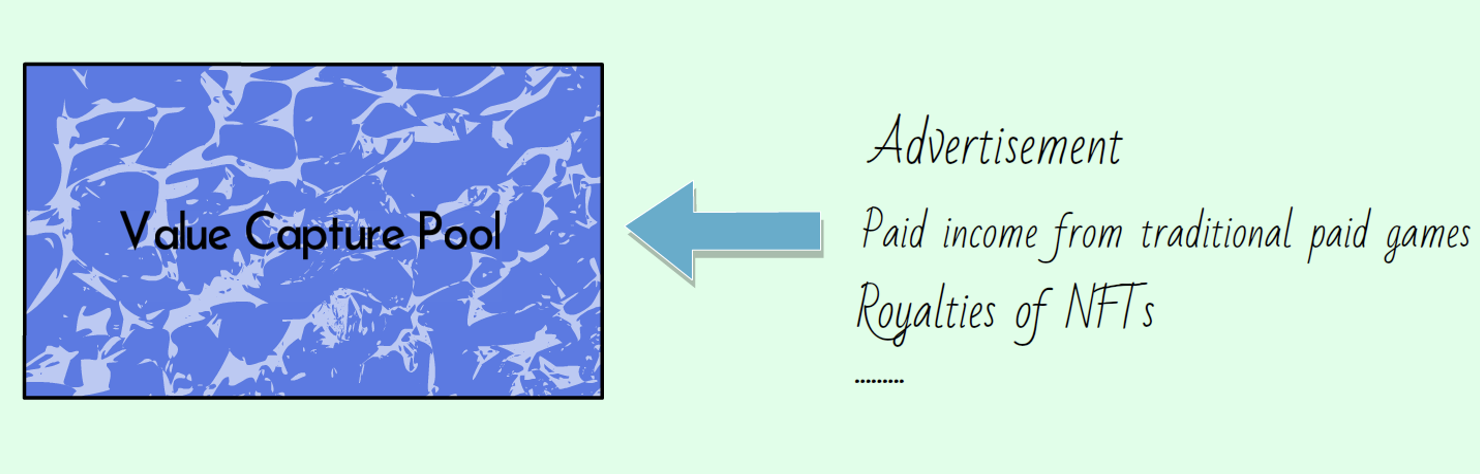
Figure 4 Funding sources of the value capture pool
The sources of funds for the Value Capture Pool are various and can be freely combined by the designer, for example: traditional "Free to Play" games Advertising revenue in , paid portion in “paid” games, royalties in blockchain games, etc.
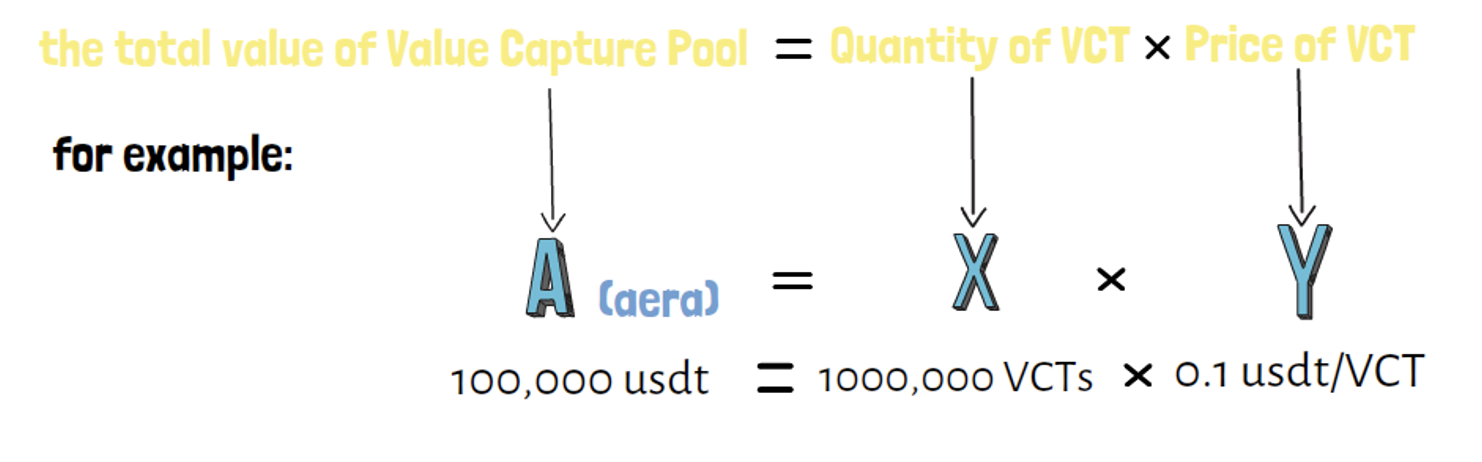
Figure 5 The total value stored in the entire pool=the current amount of VCT*the price of VCTToken
However, regardless of the sources of funds injected into the value capture pool, the total value stored in the entire pool = the current amount of VCT multiplied by the price of VCTToken.

Figure 5 Newly injected funds are distributed For two parts
If we use the X-axis to represent the current VCTToken quantity and the Y-axis to represent the current VCTToken price, then the area of the green part is the current entire The total value stored in the value capture pool.
When new funds are injected into the value capture pool, the smart contract will divide the new funds into two parts, one part (part1 above) is used to Increase the number of current VCTTokens, and the other part (part2 in the above figure) increases the price of VCTTokens on this basis. This ensures that the price of VCTToken will not fall while additional issuance.
How it works:
Alice and Bob each make a GameFi game product, Alice Continue to use the traditional "Double Token Economic Model", while Bob chooses to apply the latest "Three Token Economic Model" to it, and uses in-game advertising revenue and a part of royalties as the source of funds for the value capture pool VCP. At this time, there are three different types of Tokens in Bob's new game, namely:
- Governance TokenGMT, used for community governance and financing.
- Utility TokenGST is the Token obtained by players playing games, and the price is determined by the secondary market. Different from the unlimited issuance of utility tokens in the "double-token economic model", the utility tokens in the "three-token economic model" adopt the strategy of "limited quantity, minted first, and then distributed to players".
- Value capture TokenVCT, which is the bottom of the price of utility TokenGST, the price is set by "total amount in VCP/VCT quantity", and the quantity is always the same as GST 1:1. VCT is not circulated in the secondary market, but is managed by the project party in a decentralized manner for players to "exercise their rights". Except for the initial circulation set by the project party itself, the rest will be minted through "Market Driven Mint".
In the initial phase, Bob's GameFi project had 1 million VCTTokens and 1 million utility tokens; Funding (the price of VCT at this moment is $0.01).
However, not many players participated in their GameFi projects in the early stages of the project. Both have tried every means to help the project get off to a cold start. But compared to Alice, the "Three Token Economic Model" gives Bob more tools to choose from.
Bob decided to start "Dynamic Deflation", and burn VCTToken and utility TokenGST at the same time with a ratio of 1:1 at a certain speed (at this time, the amount in VCP will not reduce). Due to the decrease in the number of Tokens, the prices of both VCTToken and Utility Tokens are expected to rise strongly, and a large number of players are driven by interests to start pouring into Bob’s game. At the same time, the increase in players has increased the amount in VCP accordingly. Bob's project has successfully completed the "cold start" and stopped the "dynamic deflation". When the amount in VCP reaches 100,000 USD, the smart contract starts Market Driven Mint for "dynamic inflation" to mint more Tokens to meet the needs of players.
In the middle of the project, although the two projects have accumulated a certain number of players, the experience given to players by the game is completely different.
In Alice's game, gold players who already own NFT are always living in anxiety and fear. They know that the 99.9% price crash is coming sooner or later, so they tend to take profits early and exit.
New players who are still on the sidelines are afraid that their payback cycle will change from 35 days to 3 years after entering the game, and feel that they have missed the best opportunity , so it is more inclined to participate in other games of the same type that are still in the early stages.
In Bob's game, however, the sentiment among the player base is relatively positive. Because the current price of GST is $1, and the price of VCT is $0.4, through the "exercise" mechanism, players can ensure that 40% of their assets are guaranteed, and no "return to zero" will occur. At the same time, if the price of VCT continues to rise, the rights and interests of players will be more protected, and gold players choose to continue participating in the game to obtain more benefits.
For new players, the current price of NFT in Bob’s game ecosystem is $400, and players get 10 GSTTokens every day. Calculated at the current GST price, the player's payback period is 40 days, while at the VCT price, the player's "longest payback period" is 100 days. Players clearly know that even in the worst case, they can still get their principal back after playing the game for 100 days, so they bought NFT with confidence. The number of players and game experience in Bob's ecosystem is significantly better than Alice's game ecosystem.
In the later stage of the project, as the price of utility TokenGST and NFT becomes more and more expensive, the entry threshold for players is also getting higher and higher. Both Alice’s and Bob’s games have a situation where the number of new players entering the game is not enough to support the current asset price. At this time, both Token and digital asset prices began to drop sharply.
The income of players in the Alice game ecosystem has been greatly reduced, and some players have chosen to sell their Token and game assets. However, the sell-off caused the price of Token and game assets to fall faster, which eventually triggered a panic sell-off across the ecosystem. Alice's game ecology is like a punctured "balloon", which inevitably enters a "death spiral", and the game life cycle ends. Alice's project was accused by players of being a "Ponzi scheme," and Alice herself was thrown into jail because of the player's lawsuit.
Although the price of GSTToken and the price of NFT in Bob's game ecosystem have also begun to fall, the price of VCTToken will not fall and will remain at $0.5. The price of GST stopped falling when it dropped to around $0.50. At the same time, although the price of NFT has dropped from the original 600 US dollars to 300 US dollars, the "longest payback period" calculated by VCTToken at this time has been shortened to 60 days. In the worst case, it can pay back in 60 days, which makes new players who have not experienced the game excited, and they think this is a suitable opportunity to enter. As new players joined, NFTs gained more buying and their prices began to recover. Bob's game ecology is back on track like a "spring". Bob's project is considered a "socially responsible" web3 project, and Bob himself has gained wealth and honor.
Advantages:
(1) The utility tokens obtained from gold mining will not be "returned to zero" ", to fully protect the rights and interests of players.
From the perspective of Token price: the price of VCT is the solid "price base" of utility TokenUtility Token. Players who hold utility Token can "exercise" at any time. It enables players to avoid the economic loss of zero investment.
From the perspective of the number of Tokens: the issuance of Utility TokenUtility Token and Value Capture TokenVCT is handed over to the market and the community in the form of "Market Driven Mint". Contracts are automatically minted based on newly injected funds in the value capture pool VCP. If the newly injected funds are large, more coins will be issued; if the newly injected funds are small, less coins will be issued; if there are no new funds injected, no coins will be issued. The issued Tokens are all supported by their corresponding project income, thus avoiding the hyperinflation caused by too many issued tokens, and the price of utility Tokens is better supported.
From the perspective of investment potential: the utility TokenUtility Token in the "Dual Token Economic Model" does not have continuous buying, and it is even less likely to be used as a long-term Invest in wealth management products. As for the utility TokenUtility Token in the "Three Token Economic Model", due to its ever-increasing price base, there is a strong expectation of price rise, which can be used as an ideal investment option and has gained more buying in the secondary market.
At the same time, "Utility Token Price/VCT Price" will become a good indicator to help ordinary players measure the investment risk of the current project.
The player can clearly calculate the "longest payback period".
For most of the current GameFi projects, it is difficult for players to really determine their payback cycle. The game payback cycle may increase from 35 days at the beginning to 3 Year. The reason is that the payback cycle estimated by players based on the existing "Double Token Economic Model" is only a rough "lower time limit", and since the price of utility tokens may return to zero, the "upper time limit" of the payback cycle is "Positive infinity". In the new three-token economic model, the value capture TokenVCT is the lowest guaranteed price of the utility TokenUtility Token, and the design mechanism ensures that the price of VCT will not fall. When the project gives active players daily Token incentives on a consistent basis, players can use the current price of VCT to estimate the upper limit of the payback period: "the longest payback period".
At the same time, the three-token economic model will be more flexible than the double-token economic model. The double-token economic model is like a balloon. Once it is punctured, the price will inevitably collapse; while the three-token economic model is more like a spring. When the price falls to the "longest payback period" to meet market psychological expectations, it will There is more buying to help the spring return to its original normal position, thus extending the life of the project.
Maximize the efficiency of capital utilization. The "Three Token Economic Model" can realize "Zero-liquidation Risk Lending".
The new utility TokenUtility Token can achieve "Zero-liquidation Risk Lending". For example: when a player pledges a utility token with a "liquidation price lower than the current VCT price", there is no risk of being liquidated. Players can also use the borrowed stablecoins to purchase utility tokens, and then carry out zero-liquidation risk loans. Repeated operations in this way maximize their capital utilization efficiency to maximize returns, and there is no risk of being liquidated.
The three Token economic model has "universal applicability" and is suitable for chain games and traditional games.
As long as there is a source of funds injected into VCP, the new "three token economic model" can be applied. In the field of traditional games, both the "Free to Play" and "Pay" modes can be very well adapted to the "Three Token Economic Model", which facilitates the chain reform of existing traditional games without changing the current game content and mode.
The game profit chain distribution revolution allows players to participate more deeply in the game ecology.
The "free game mode" in traditional games relies on players to watch in-game advertisements to earn revenue. However, the advertising revenue originally created by players has been captured by game publishers and platforms, which is neither fair nor smart. It not only inhibits the initiative of ordinary players, which is not conducive to the dissemination and promotion of games; it also gives up the possibility of obtaining huge profits by charging "digital asset transaction fees" (StepN will only rely on 6% of NFT in the first quarter of 2022) Transaction fees alone earned more than $26 million). The current "Dual Token Model" already allows players to become the masters of the community to some extent through governance Token, but this is far from enough. The real "owner" needs to enjoy the right of governance while holding the "key to the treasury". While truly participating in the ecology, he can obtain a more reasonable and guaranteed income distribution, and the income distribution should come from the profits created by the game ecology itself , not another "master" wallet. The "Three Token Economic Model" reflects the part of the value that the player deserves in the Token price, so that the part of the income that originally belonged to the player will return to the player. We believe that while doing this, we can also mobilize the initiative and creativity of the player group, which accounts for the vast majority of the entire ecological population, and create more value for the entire game ecosystem than the original. In the end, project parties and investors will also benefit.
Related links:
This article is original by the author, all rights reserved, please indicate the source for reprinting !
For more details and parameters, please refer to the full version of the white paper. In addition, we specially made a 3-minute animation to help you better understand "Three Token Economic Model", the full version of the white paper, please click:
This article is from a contribution and does not represent the opinion of Rhythm BlockBeats.
Welcome to join the official BlockBeats community:
Telegram Subscription Group: https://t.me/theblockbeats
Telegram Discussion Group: https://t.me/BlockBeats_App
Official Twitter Account: https://twitter.com/BlockBeatsAsia

 Related Articles