Exploration of GameFi Economics.

Original Title: "Exploration of GameFi Economics"
Original Author: Zeke, YBB Capital Researcher
Introduction
Since the decline of the P2E (Play to Earn) model in the GameFi industry, there have been many disagreements about the design of GameFi. The two most mainstream design directions are: 3A-level chain games with playability as the entry point, or full-chain games (On Chain Game) with fairness and adherence to the spirit of the Autonomous World as the entry point. With the recent outbreak of both ecosystems, the chain game sector has finally survived the long winter and ushered in a long-awaited spring. As one of the hottest sectors at present, discussions around GameFi's different carriers (from game types to on-chain and off-chain) are one of the main topics in the industry. However, this article is not about the pros and cons of the two carriers, but about how the core "Fi" (economic system) of GameFi is presented in top traditional games, and where the two new carriers should go.
Definition of GameFi
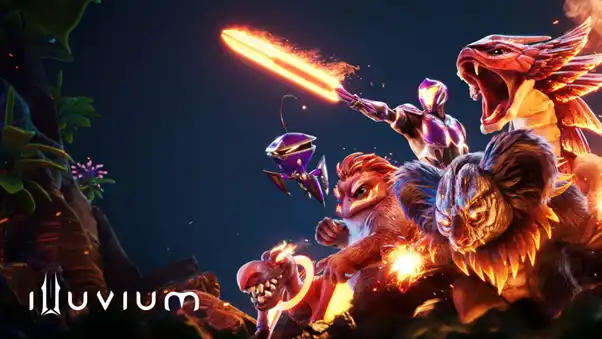
GameFi's early definition typically refers to blockchain games that provide economic incentives for players to earn while playing. Players can earn cryptocurrency and NFT rewards by completing tasks, battling other players, and leveling up, and the in-game items are also unique NFTs owned by the players. Since the rise of Axie Infinity, the concepts of GameFi and P2E have quickly become popular, and similar breeding games (such as Farmer World and STEPN) have also emerged. However, due to the failed dual-token (governance token and output token) economic model and the design of NFTs (pets, farming tools, running shoes, etc. that can continuously produce tokens), once there are no buyers, the output of the entire game will far exceed the demand side, and it will quickly spiral into death. The lifecycle of such games is usually short, ranging from a few weeks to a few months. At that time, the word GameFi was almost synonymous with Pond's. The mainstream direction that followed was first to improve towards 3A-level production and playability, hoping to attract Web2 players to join through high-quality game quality and achieve paid game economy. Big Time and Illuvium, YBB, which are now popular, are two early representatives of this type of game that participated in investment in its earliest stages.
Another direction is the full-chain game that has become popular only this year. Although the history of full-chain games can be traced back to "Huntercoin" 10 years ago, due to the insufficient technology in the early stage, the experience of full-chain games was relatively poor, so it has always been an extremely niche type. Now, with the continuous development and improvement of infrastructure such as Rollup and full-chain game engines (MUD, DOJO), the feasibility of this concept is gradually maturing, and it has begun to gain attention from some core figures in the industry. However, the current full-chain games are still in the early stage and there are many design issues.
The definition of GameFi is now beginning to shift towards Web3 games (fully decentralized games) and Web2.5 games (currently mainly 3A level blockchain games, although most of the past blockchain games also fall into this category). The main difference between them lies in the degree and manner of using blockchain technology. The specific definitions of the two are as follows.
全链游戏
translates to
Full-Chain Game
.
(Defined based on the perspective of "Autonomous Worlds". For more detailed information, please refer to our full-chain game article "Analysis of the Core of Fully On-Chain Games: MUD Engine and World Engine" at https://medium.com/ybbcapital/analysis-of-the-core-of-fully-on-chain-games-mud-engine-and-world-engine-80b41d6abb):
● Data comes from blockchain: Blockchain is not only an auxiliary storage for data, nor is it just a "mirror" of data stored in proprietary servers. All meaningful data can be accessed on the blockchain, not just data such as asset ownership. In this way, games can fully utilize the advantages of programmable blockchain-transparent data storage and permissionless interoperability.
● Logic and rules are implemented through smart contracts: For example, battles in games, not just ownership, are conducted on the chain;
● The development of the game follows the principle of open ecology: the game contract and accessible game client are open source. Third-party developers can achieve complete redeployment, customization, and even fork their own game experience through plugins, third-party clients, and interoperable smart contracts. This in turn allows game developers to leverage the creative output of the entire (incentive-consistent) community.
● Game permanently stored on the chain: This is closely related to the above three points, because the touchstone for determining whether a game is a native encrypted game is: if the client provided by the core developer disappears tomorrow, can the game still be played? The answer is often yes, if (and only if) the game data storage is permissionless, if the game logic can be executed without permission, if the community can interact with the core smart contract without relying on the interface provided by the core team.
● Interoperability with valuable assets: Blockchain provides a local application interface for the concept of value itself, and digital assets can interact with other assets we care about by default. This reflects the depth and significance of the game, and helps to enhance its depth and significance, linking the game world to the "real" world.
● Supported Game Types: As a fully on-chain game, all-chain games are only suitable for game types that do not require low-latency environments, such as turn-based RPGs, puzzle ACTs, simulation games, adventure games, card games, management games, sandbox games, and gambling games.
3A Level Chain Game:
● Combining Traditional Gaming and Blockchain Technology: Web2.5 games are a transitional form between traditional games (Web2.0) and fully blockchain-based games (Web3.0). They typically combine the characteristics of traditional games with certain blockchain elements.
● 部分去中心化特征: These games may include decentralized elements, such as using blockchain to manage game assets or player transactions, but other parts of the game such as game logic and operating environment are generally centralized.
● Higher Performance and Availability: Compared to full-chain games, Web2.5 games may offer better performance and wider availability because they do not rely entirely on the underlying architecture of the blockchain.
● Balancing Traditional Gaming Experience and Blockchain Advantages: Web2.5 games attempt to strike a balance between the user experience of traditional games and the new features brought by blockchain, such as asset ownership and transparency.
● 3A Level: In the traditional sense, 3A games refer to games with high budgets, high-quality graphics, deep storylines, and excellent production. These games are usually developed by large game companies and provide top-notch gaming experiences. The so-called 3A level chain games are Web2.5 games that meet this standard.
● Game Type: Since it is an asset-on-chain model, theoretically all game types are supported. Currently, the most popular game type is MMORPG (Massively Multiplayer Online Role-Playing Game), which is also the main type we will discuss in this article.
Token Model Overview
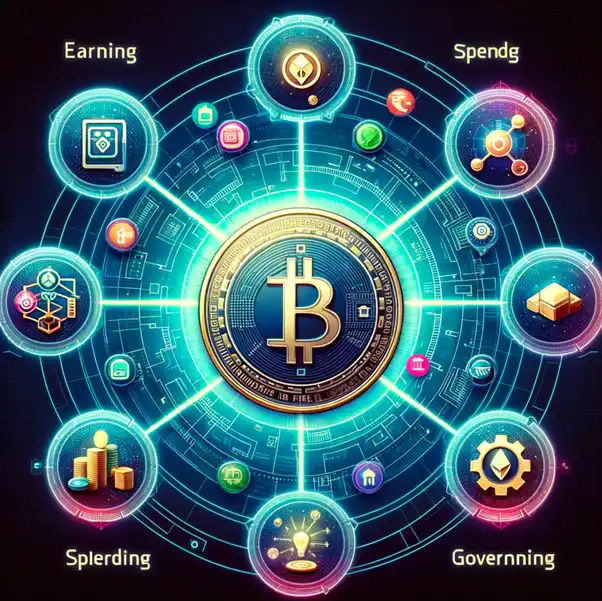
The token model of blockchain games can be roughly divided into two categories. In addition to the dual-token model mentioned earlier, there is actually another single-token model (which is currently more commonly used) in blockchain games. Let's give a brief overview of these two models.
Single Token Model: This model only has one type of token, and the entire economy relies on this single token. Projects such as Crypto Zoon, Playvalkyr, Hashland, and Big Time all use the single token model, which is essentially similar to traditional gold farming games, but with four different modes derived from the introduction of a single token.
Four Models of Single-Currency Model:
● A Mode (Gold Standard In + Coin Standard Out): Purchase NFTs with USDT, BNB, ETH, etc., and earn tokens (TokenA) through gameplay. The entry threshold is fixed, and profits fluctuate with the coin price.
● B Mode (Gold Standard In + Gold Standard Out): The entry threshold is fixed and the daily yield is fixed. This mode maintains stability in the break-even period when the coin price rises, and the daily gold-standard yield for players remains unchanged when the coin price falls.
In other words, if there is an official store that sells items at the average expected price, controlling the frequency and total amount of output can increase revenue while preventing monopolies and stabilizing the economic system. This attempt was made when Dream of the Red Chamber was born. The simplest examples are the 100/each steamed buns, the 3000 yuan/40 stamina bookstore, and the 500 yuan flight tickets. These anchor points, including stamina/vitality, have official pricing, which avoids the risk of business monopolies.
And the ultimate form of anchor may be the Pocket Version of Fantasy Westward Journey, where most of the intermediate products of the production process can be obtained by consuming point cards. We can also see that these products have a very stable official pricing, which has become an important cornerstone of the stable economic ecology of Fantasy Westward Journey.
Reserve Mechanism:
Ultimately, Fantasy Westward Journey is still a game of cultivation. When all surplus labor value can be circulated in the market, it violates the essence of the game and also brings the risk of the studio taking away too much profit. Therefore, the reserve fund mechanism came into being, which deposits a portion of the player's labor value into character attribute cultivation. When the player's game output is converted into reserve funds, the developer's income is considered secure.
At the same time, even if a portion of the game's revenue comes from transaction taxes, overall it still controls the circulation frequency. Various types of time locks and high-value item trading restrictions are not only to protect player property, but also to control circulation frequency. The Sanjie Merit system is a comprehensive system based on this idea, which has created a good foundation for the prosperity of Fantasy Westward Journey in recent years.
In the game "Fantasy Westward Journey", there are many "professional/semi-professional players" who can earn some income through the game, which has become their main motivation for playing. As developers, it is difficult to distinguish between acceptable normal players and large-scale malignant studios. It is also not advisable to completely block all cash-out channels, so the Three Realms Merit system was created.
The design concept of this system is to introduce a new resource into the process of resource circulation in player's gameplay, and to encourage normal gameplay while limiting abnormal behavior of studios by controlling the generation and consumption of this new resource. Simply put, in the chain of "buying game cards-playing games-producing props-exchanging for cash", behaviors closer to the right will consume Three Realms Merit, while behaviors closer to the left will gain Three Realms Merit. At the same time, a small amount of Three Realms Merit will be invested in encouraged normal gameplay (such as Ghost Hunting and Sects) on a daily basis, and of course, such investment is also limited daily.
Summary
Although the economic system is not everything in a game, Dream has designed a nearly perfect answer by combining the content of the game. It is worth learning how to cleverly design mechanisms to maintain account vitality, ensure transaction order, regulate supply and demand balance, so that every participating role in the game world (including the project party itself) can get what they need. So after talking about the representatives of traditional games, let's take a look at the current situation of chain games.

3A Chain Game
From the existing 3A-level blockchain games, Big Time is actually a game that is constantly improving and moving towards a sustainable economic ecosystem, although everything seemed rough in the early versions of the game. But it corresponds to the sentence in the previous paragraph: "Even a highly playable blockchain game will die due to economic collapse, but a game with average playability can continue to iterate with excellent economic ecology." Big Time revitalizes the entire economic model through strict centralized control. Although the skin economy has not been implemented yet, the current profit model of the game is actually very similar to traditional games. Big Time's current revenue comes from three points: transaction fees, blind boxes sold almost every month, and the sale of consumable props (crystals). With adjustments in various aspects, the output tokens can maintain low inflation and achieve a delicate balance between the project party and gold farming players. While ensuring the game's revenue, the project party can naturally continue to optimize and adjust, add new content to improve playability, and introduce more players with different roles. Perhaps this traditional online game-like approach will be the correct way for Web2.5 games.
Full-chain game
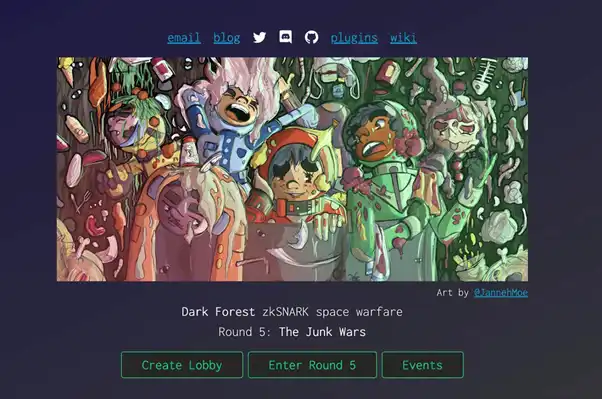
In previous articles, we explored the significance of the development of full-chain game technology for blockchain from a technical perspective. Today, let's think about what kind of economic model is suitable for full-chain games. Currently, full-chain games basically do not have tokens or in-game output tokens for two main reasons. Firstly, full-chain games are still in the early stages of development and have not yet determined what type of game is suitable. Secondly, due to the fully on-chain nature of full-chain games, centralization is difficult to intervene in regulation. Once there is a loophole in the economic model, the entire game will instantly collapse and be irretrievable.
So, is it impossible for blockchain games to achieve long-term development through economic ecology? Actually, not necessarily. Although I don't have a definite answer, I personally believe that blockchain games can try an economy dominated by NFTs. For example, the ANOME protocol uses a gold-based pledge to mint NFTs, decoupling Game and DeFi through the form of Stake to Mint NFTs. The project can obtain funds and generate continuous income through DeFi, while players can receive NFTs for free and receive dividends. This may become a new economic model.
Conclusion
Actually, the author is a hardcore PC gamer and has always believed that the best way for blockchain games or similar Friend Tech lightweight applications to empower games is the way out for blockchain games. When I first heard the concept of so-called 3A blockchain games, my instinctive reaction was quite resistant because players who are familiar with 3A games should understand that the production cost (600 million to 4.2 billion) and cycle (about 3-5 years) of top 3A games are exaggerated, and a failed project can make a head game company on the verge of bankruptcy. Achieving such a project in a bottom-up industry made me feel a bit unrealistic at the time. However, the resilience of Big Time and Illuvium in the bear market until the recent turnaround in the headwind made me rethink this model. Perhaps 3A blockchain games can find some balance through economic models to achieve long-term survival and ultimately iterate some games that can open the door to Web2. At present, the entire blockchain game is also questioned like the past 3A blockchain game. But as the saying goes, "People who never win rarely fail, and people who never climb rarely fall." A new paradigm must be accompanied by questioning and failure before it appears, and this is normal.
Reference materials
1. [Game Numerical Design] Economy and Numerical Design: https://zhuanlan.zhihu.com/p/513814730
2. The future path of the GameFi chain gaming economic model: https://www.aixinzhijie.com/article/6792848
3.Designing an Open Game Economy (Part 1):https://mirror.xyz/lordheimdall.eth/XFQsJQO917qO1AEpHKHLODpP5ftNSAtQwzJrhCgXWYo
4. Exploration of the basic economic theory used in the design of blockchain economic models: https://mirror.xyz/0xbuidlerdao.eth/AmXhGowhPk8K1yTcLy5hLJGzPYvAwgDtieoycfqI7tk
5. Un-"Real" Macro-economics of "Fantasy Westward Journey": https://zhuanlan.zhihu.com/p/588204383
6. The "ceiling" economic model of the game "Fantasy Westward Journey": https://zhuanlan.zhihu.com/p/589546502
This article is from a submission and does not represent the views of BlockBeats.
Welcome to join the official BlockBeats community:
Telegram Subscription Group: https://t.me/theblockbeats
Telegram Discussion Group: https://t.me/BlockBeats_App
Official Twitter Account: https://twitter.com/BlockBeatsAsia

 Related Articles