Is blockchain ruining gaming?

Original source: Bankless
Original author: Donovan Choy, independent researcher
Original translation: Nanfeng
Last November, gaming giant Ubisoft announced plans to introduce NFTs as wearable props in its classic Tom Clancy game series. At the time, the company's related video promotional video posted on Youtube encountered a large number of unhappy gamers. In order to save the company's embarrassment, the company quickly removed the video. According to data from NFT trading market Rarible, as of February 2022, Ubisoft's NFT collections had only sold 35 transactions, which further confirmed that its player base is not very interested in NFT collections.
Nevertheless, we still have to pay tribute to Ubisoft. Other game studios, such as Sega and GSC Game World, quickly abandoned and shelved their NFT plans amid strong opposition from fans.
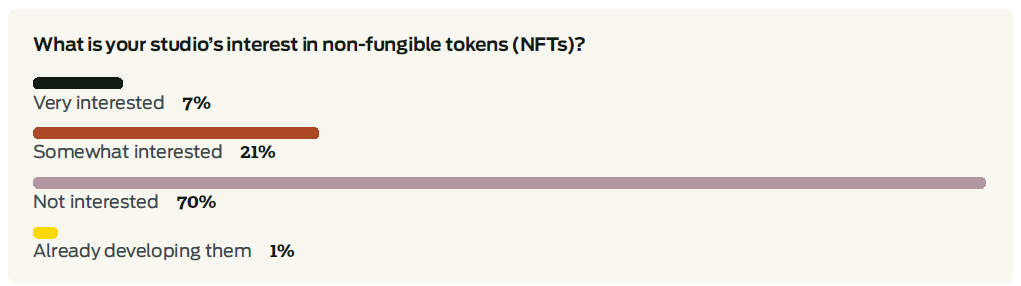
Fans believe that NFTs are just another way for game studios to make money quickly. A 2022 Game Developers Conference report surveyed more than 2,700 game developers and found that "most game industry professionals said their companies were not interested in cryptocurrencies (72%) or NFTs (70%) at all." As shown in the figure below:
01. Why do players of traditional games hate NFTs?
The main objections seem to stem from the issue of profitability, namely around the "Play-to-Earn" model promoted by Axie Infinity in mid-2021.
Unlike traditional games where in-game currencies and props are controlled by developers, blockchain games allow players to freely create, fully own, and exchange assets between the crypto and fiat worlds in their own way. This shift from a "you can only trade what we say you can trade" to a "everything is freely tradable" game economy provides players with an opportunity to profit from the time and energy they invest - hence the name "Play-to-Earn".
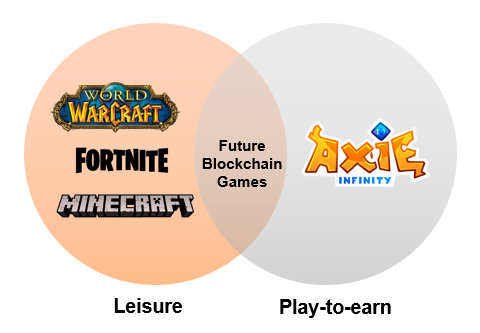
From this perspective, we can understand why players are skeptical of NFTs. Games are an enjoyable way to escape the monotony and stress of life. The market forces of blockchain games undermine this carefully designed simulation and blur the line between players and their fantasy worlds.
All work and no play makes a dull boy, and a dull boy needs play time.
Perhaps there is an unspoken sense of fairness in traditional games that blockchain games may feel violated by traditional gamers: traditional games allow players to choose their own destiny from a variety of role-playing possibilities - the premise is that we all start from an equal starting point; but in a blockchain economy, players can use fiat currency to purchase resources (such as Axie Infinity players buying SLP tokens to breed new Axie pets), which may relieve these players from the need to advance in the game based on ability as in traditional games.
This emotional premise of player ability-based advancement in the game is exactly what causes many veteran players to turn their noses up at "pay-to-win" microtransaction purchases (such as the "loot boxes" prevalent in casual "free" mobile games). If such purchases can bring aesthetic upgrades, they will be tolerated, but if players can purchase actual gameplay and gain advantages, they will be more dissatisfied.
In short, blockchain games offer the proverbial red pill from The Matrix. But hardcore gamers are so happy in their traditional simulation games that they don’t want to see how deep the rabbit hole goes.
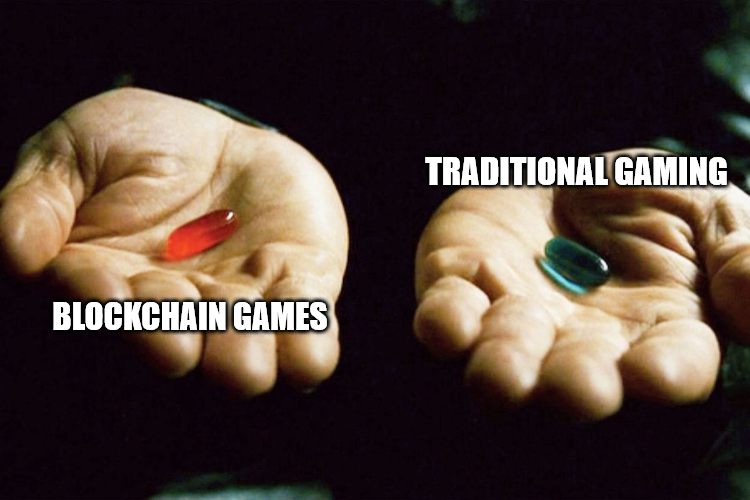
Above: Blockchain game “red pill” vs. traditional game “green pill”
02. Blockchain ruins gaming?
Whenever the media reports on a large group of angry people, our brains tend to simplify them into a homogenous group, assuming they express a uniform set of preferences. However, if you cut through the noise, a more complex reality almost always emerges.
Gamers protest that blockchain adds in-game commercialization to games, which will change the art form for the worse: but for whom?
The strongest hostility to blockchain games often comes from the "hardcore" non-casual gamers on the Steam marketplace and Reddit, such as when Valve (the developer behind the Steam game marketplace) announced a ban on all blockchain/NFT games, many players cheered on Reddit.
However, it is unclear whether this fan base is representative of the broader global, 2.8 billion strong gaming market with different spending preferences.
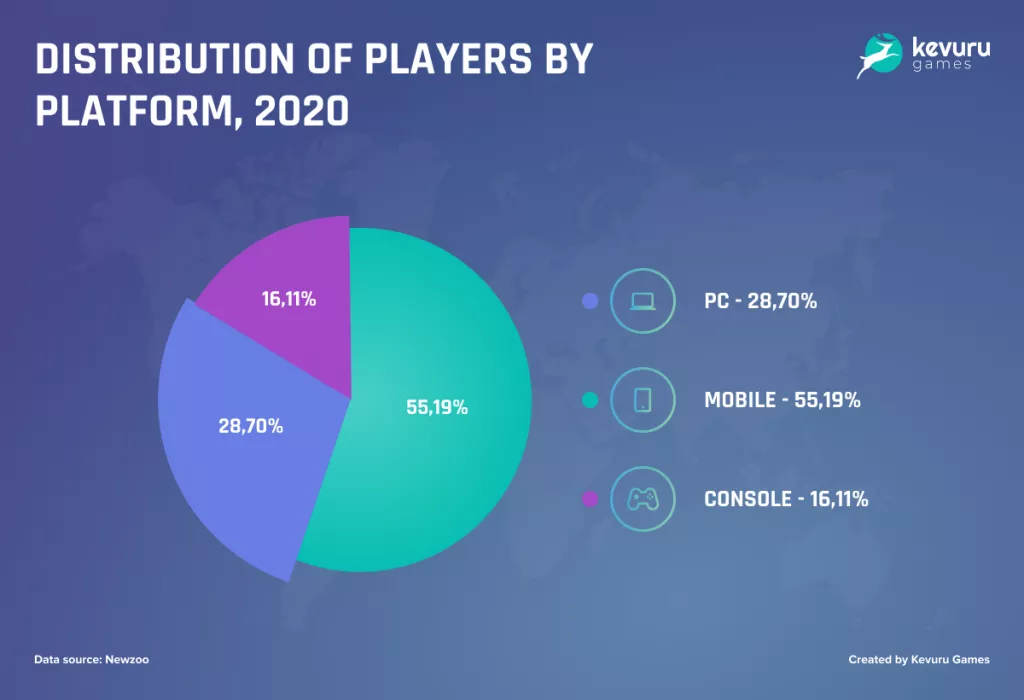
And Newzoo data shows that casual mobile gamers (55.19%) exceed PC gamers (28.7%) and console gamers (16.11%) combined. As shown in the figure below:
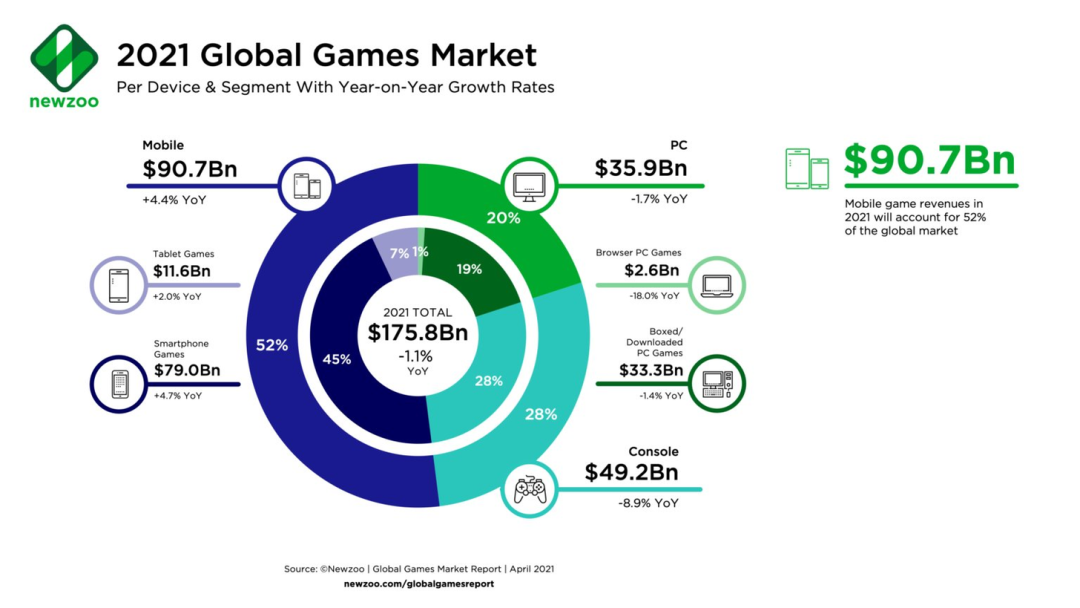
The revenue data of the global game market also tells the same story: mobile game revenue accounts for 52% of the entire industry, PC games account for 20%, and console games account for 28%. As shown in the figure below:
Of course, microtransactions (i.e. players spend a small amount of money to buy virtual props in the game) are popular in both casual and non-casual games. Different reports have found that the share of revenue generated by microtransactions alone ranges from US$34.5 billion in 2021 to US$92.6 billion in 2020.
The market has shown: casual mobile games dominate. If in-game commercialization is a bad thing, then a considerable number of gamers will also accept it.
Yes, I know this is shocking. A market that is largely made up of culturally ignorant mortals, most of whom barely understand the art of video games, and who dare to indulge in Pay-to-Win microtransactions in Clash of Clans, we are now very interested in them moving their funds to NFT games.
To sum up, this data tells us that even if some players think that in-game monetization is terrible, the majority of the gaming market does not agree with this view.
Non-casual players complain that blockchain games introduce unnecessary financialization, which is a subjective preference that reflects a small segment of the gaming market. Of course, they have every right to make their own choices. The beauty of the free market is that it allows multiple values to coexist simultaneously. But I would argue that they are not representative of the billions of casual players who are happy to spend money on games and would likely accept "earn while playing" to make money through games.
Is this speculation? On-chain data from a 2021 DappRadar report found that there are between 1.4 million and 2.7 million unique active wallets connected to blockchain games every day. In the third quarter of 2021 alone, sales of gaming NFTs accounted for 22% of all NFT sales ($2.32 billion). Another estimate puts the blockchain gaming market at $1.5 billion in sales in 2021 (about three-quarters of which came from Axie Infinity).
The “earn while playing” model is just getting started, but it has passed the market test.
03. “Earn while playing” is economic freedom
Hardcore gamers view the gaming industry as an elite principle that is not restricted by business, that is, the “best” players will stand out in the game, but this is a fallacy. All games have elements of “earn while playing”, we just don’t think about them in terms of money.
The best players will spend the most scarce resource, time, to hone their skills and grind out the best equipment (Diablo anyone?). In the crypto space, we think of “whales” as those with strong financial resources. In the gaming space, “whales” are those players with the most time. And those of us who put in less time won’t be ranked high on leaderboards, invited to raids, or admired by the community.
Web3 expands the role of Web2 in gaming. Web2 allows (some) players to monetize their time spent in-game via Twitch streams and earn prize money from tournaments and product sponsorships via social media. Web3 takes this egalitarian logic a step further, making it possible for everyone to do the same. Anyone remember video games before Web2? Bragging on some obscure website about my hard-earned Runescape leaderboard score was all the “earnings” I earned.
Even veteran gamers who worry that “earning while playing” will destroy their virtual worlds will agree that our favorite Web2 games can involve too much tedious labor and grinding. We want to advance to higher levels, so we’re invited to participate in dragon raids, but can we avoid repeatedly killing a million boars in the process like Eric Cartman (the game’s most recognizable character) and his friends in South Park? (This is a tedious process of “grinding”)
Play and earn may not revolutionize the grind process, but it could at least redesign games so that players earn rewards for doing so. And those rewards aren’t insignificant. A 2008 research paper estimated that EverQuest 2 players “lose” $24,852 in opportunity costs per year, based on their average playtime (25-29 hours per week) and the earning power afforded them by the society they live in.
NFTization of third-party skins, maps, and plots also opens a lucrative door for the thousands of Skyrim, Half-Life, and Minecraft game makers and user-generated content creators to distribute their work for free while getting paid by “real fans.”
Blockchain games promise to unlock all of this earning potential and more. Critics of the “earn while playing” model worry that this profit model may take the “fun” out of games, but these views are completely wrong. “Earn while playing” allows players to get more benefits than existing options. It’s better than doing nothing.
04. “Earn while playing” is not a Ponzi scheme
Because blockchain games like Axie Infinity require players to invest $100-300 in advance (Editor’s note: Axie Infinity players must first buy or rent at least three Axie NFT digital pets to start playing the game), critics have hastily drawn the conclusion of “Ponzi economics”.
First, not all games have high barriers to entry. Popular “free” blockchain games like Splinterlands and Gods Unchained already exist. The same is true for upcoming big-budget AAA games. Aurory, the upcoming role-playing game on the Solana chain, allows players to play for free and earn NFTs and the in-game currency AURY in the process. Illuvium, another much-hyped AAA game on Ethereum, plans to release its game as a "free-to-play" model, with players having the option to pay and access restricted content as is currently done in many free games. So don't worry about little William logging into a "virtual casino" during his summer vacation.
Secondly, in terms of paid barriers to entry, GameFi DAO organizations such as Yield Guild Games (YGG) or Merit Circle have emerged to allow millions of players to join the profit-sharing model. Some critics see this as exploitative, but not when professional esports teams similarly hire and train the best gamers.
Finally, over time, as more blockchain games enter the fray, economic theory tells us that higher supply will cause Axie’s “earn while playing” model to fall out of favor. Blockchain games that lose competitiveness because they fail to offer players attractive benefits in the “earn while playing” model will begin to attract players through other traditional gameplay elements such as immersion and creativity. Achieving this hybrid balance between casual and “earn while playing” will be the balance of blockchain games.
05. Blockchain further enables a spontaneous game world
The biggest reason why blockchain games are exciting is that commercial culture and market mechanisms will inject various emergent effects into the game. Unintended effects refer to spontaneous orders and outcomes that develop from decentralized human behavior, or, in the words of Scottish philosopher Adam Ferguso, "the result of human action, but not the result of the execution of any human intention."

A road like the one above is a common example of spontaneous order
Many such spontaneous orders already exist in traditional gaming economies. The best example is the sandbox MMORPG EVE Online, documented by economic historian Steve Davies, where entire geopolitical orders, large player factions with more than 30,000 members, and complex economic systems have developed without central direction.
In MMORPGs like EverQuest, World of Warcraft, and LOTR Online, the popular Dragon Kill Points (DKP) legal title system emerged spontaneously as a way for players to fairly share rare loot from raids.
Even in relatively simple 2D games like Pac-Man or Mario, players can create their own unique experiences by creatively achieving high scores to compete with others. When the designers of simulation games like Minecraft set loose boundaries for their games (i.e., allowing players to build almost anything), they didn’t imagine that RSF (Reporters Without Borders) would build a virtual library called “The Uncensored Library” in Minecraft, offering more than 200 censored books, as shown below.
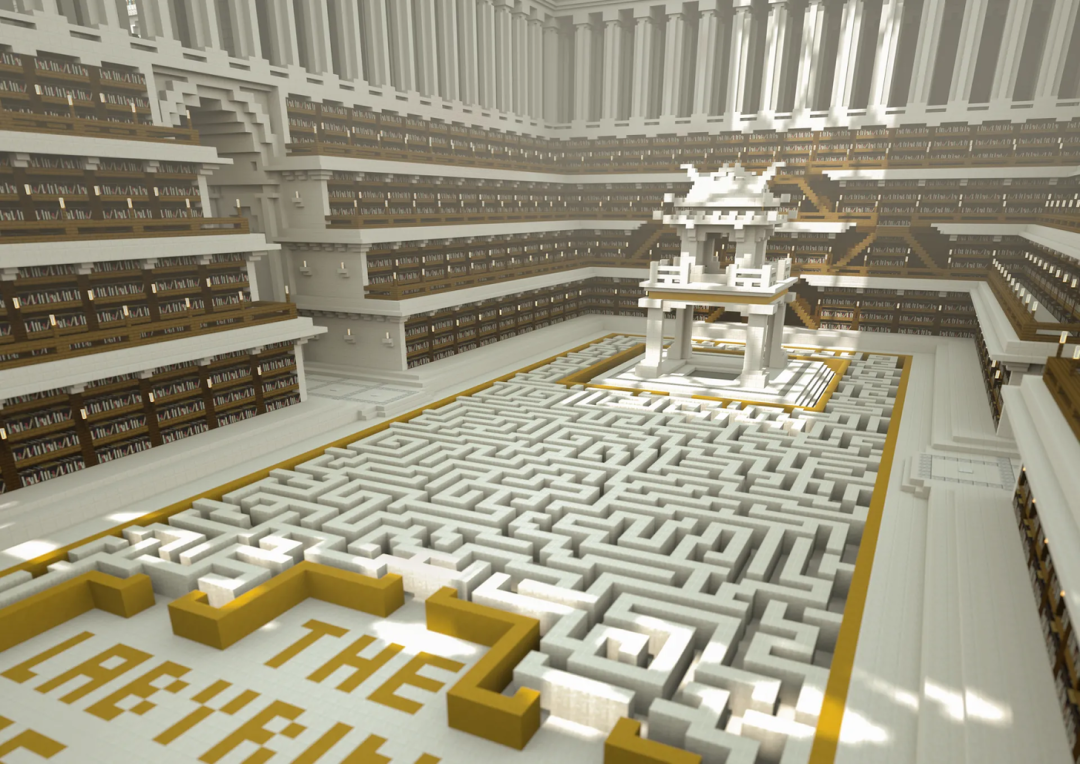
An Uncensored Library in Minecraft
If all this spontaneity has developed without the immutability of blockchain, imagine what will happen to the gaming landscape when players can freely create, own, and trade in blockchain games based on actual market incentives?
Just like social clubs enabled by NFTs (such as BAYC Bored Ape Yacht Club), immutable property ownership in games can incentivize players to build stronger community relationships in guilds/tribes, thereby improving player adoption and retention of the game. Third-party game creators and user-generated content creators can ultimately capture a portion of the value of the game economy they help improve, and have more incentives to create better game mods.
Even if in-game items lack direct interoperability between virtual worlds, players who choose to exit the game can retain some of the capital from their time invested by trading their NFTs for a common cryptocurrency. This is similar to how paper money has historically freed up capital liquidity from the barter system. The economic impact will be huge, to say the least. As with real-world economies, this will intertwine different game economies in ways that even the best developers cannot anticipate.
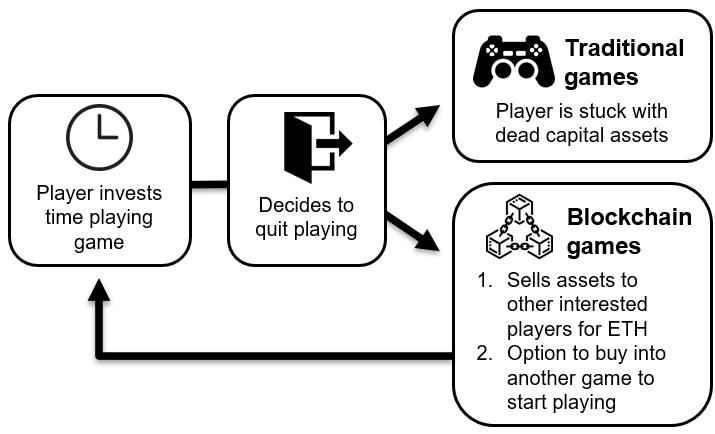
Blockchain will not let gaming culture dry up, it has the potential to enrich the world of video games socially and economically, opening up a world of player interaction.
06. Conclusion
When Blizzard banned gold farmers in World of Warcraft, they did so because economic value was leaking out of their walled garden, hurting their profit margins. For years, Microsoft enforced intellectual property laws that allowed Minecraft users to modify and create user-generated content but prohibited them from selling officially licensed code for profit, effectively sustaining a related gray economy.
Gamers have reason to worry about how blockchain will change their precious worlds. But their passion for gaming, combined with a deep misunderstanding of blockchain, has led them to ultimately defend the one true profit-maximizing dictatorship: game publishers. Blockchain offers a way to rationalize every aspect of gaming economies. This transformation comes with risk, but risk is also a prerequisite for progress.
Original link
Welcome to join the official BlockBeats community:
Telegram Subscription Group: https://t.me/theblockbeats
Telegram Discussion Group: https://t.me/BlockBeats_App
Official Twitter Account: https://twitter.com/BlockBeatsAsia

 Related Articles