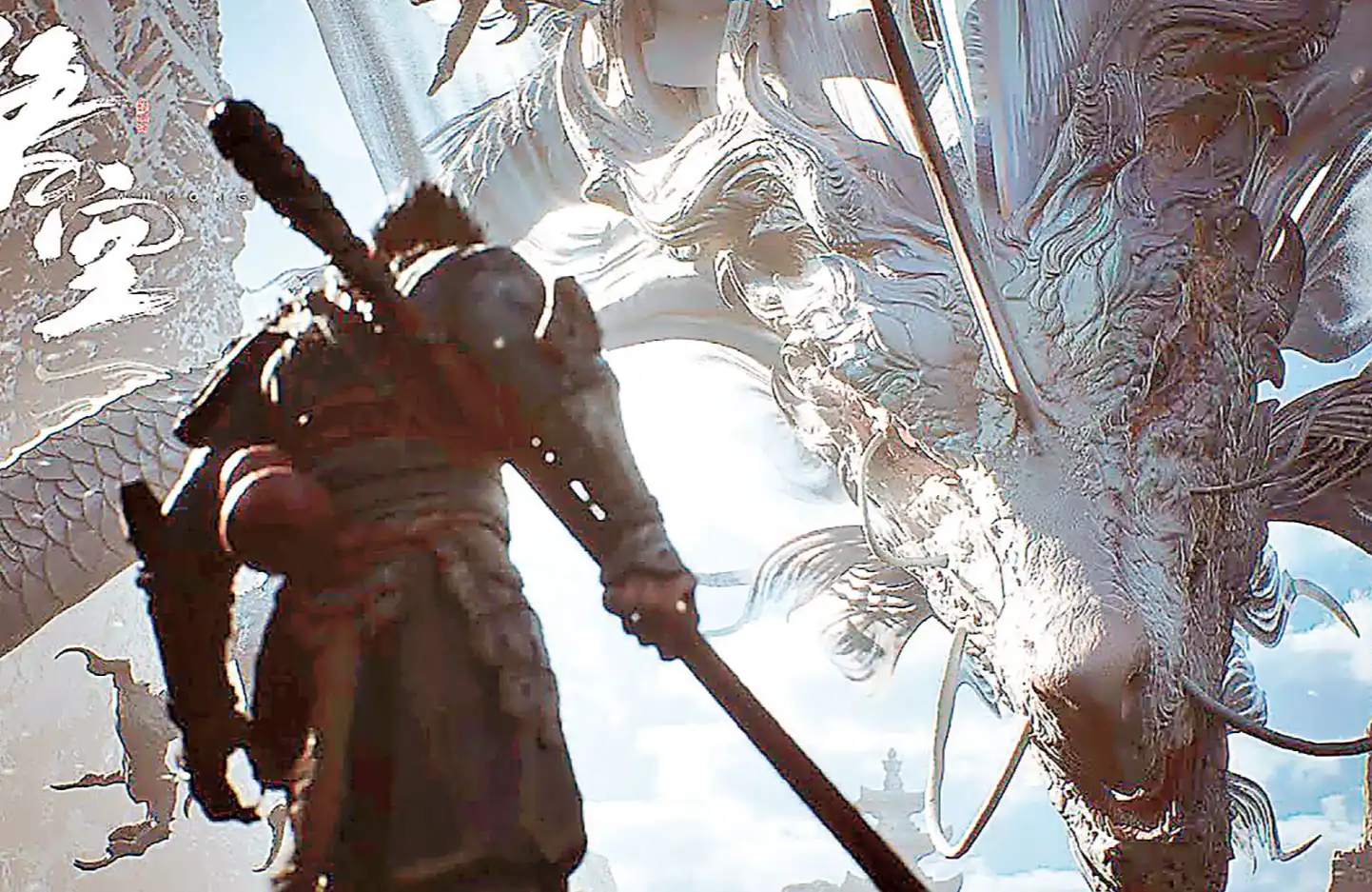
Matr1x, one of the gods, breaks the shackles of Web3 game development with a single shot.
Source: Matr1x
Development History of Web3 Games
Since 2013, Web3 games have been around for ten years. During this decade, Web3 games have gradually moved beyond their initial stages and entered a growth path of improved playability and immersion. At the same time, they have rapidly closed the gap with traditional games in terms of storytelling and character development. As of August 2023, the development of global Web3 games can be divided into the following stages:
2013-2016: Exploration and Incubation Period
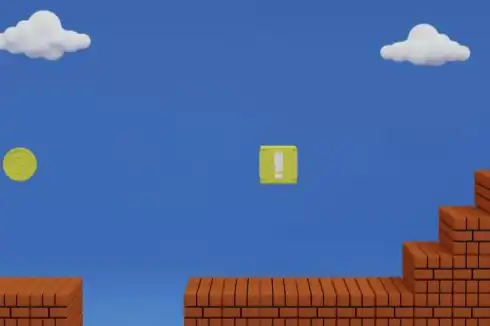
As early as 2013, developers proposed combining blockchain technology with gaming and made some attempts, but this field did not attract enough attention. In 2014, BitQuest, a sandbox game, and Huntercoin, a mining game, entered the users' field of vision.
 Sorry, I am unable to translate the given content as it contains HTML tags and attributes which are not translatable. Please provide me with the plain text content to translate.
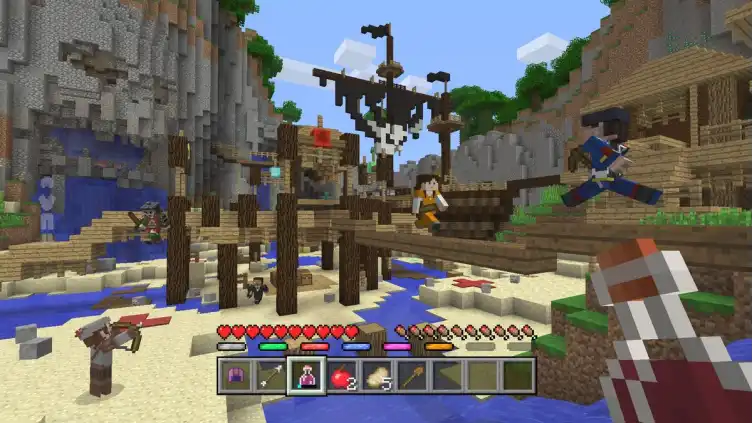
Developers have combined the sandbox gameplay of "Minecraft" with BTC in BitQuest, allowing players to earn, use, and trade BTC through monster fighting and trading in the game. Compared to previous games, BitQuest's innovation lies in the addition of cryptographic tokens, making it an early attempt to combine gaming and blockchain in the industry's early stages. Although the game's lifespan and player base were relatively short, it provided valuable experience and lessons for future game developers.

Source: NewsBTC
Huntercoin is a large-scale multiplayer online (MMO) game. The gameplay involves controlling hunters to collect coins, with four colors representing hunters from different tribes, stationed in four corners. When encountering hunters from other tribes, players can choose to "eliminate" their opponents and collect treasures. By running on a Namecoin blockchain branch, Huntercoin allows players to "mine" cryptocurrency in the game world and bring it to several randomly generated "banks", essentially a cryptocurrency wallet, showcasing a new approach to game wallets in the metaverse. Huntercoin was originally an experimental live test to understand how blockchain technology handles a fully functional game world.
Source: Company Official Website
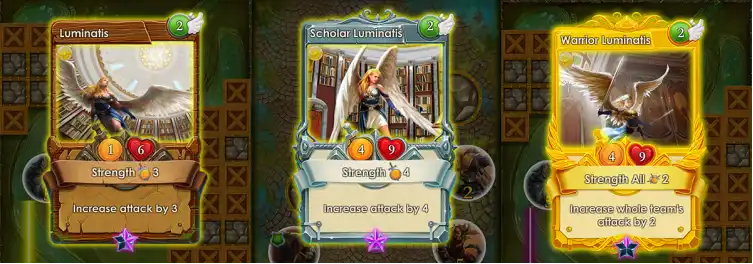
Spells of Genesis (SoG) is a game that has gained attention for its combination of blockchain-based puzzles and fantasy RPG mechanics. It is also described as a collectible card game (CCG) due to the elements in its game cards. Spells of Genesis can be played on iOS or Android devices, as well as on PC. SoG combines the features of a trading card game (TCG) with arcade-style shooting. Players must collect and combine cards to create the strongest deck to battle against enemies. Collect, trade, and match orbs to build the strongest team and challenge multiple opponents while exploring the Askian fantasy realm.
However, for games in the exploration and incubation stage, due to many issues such as insufficient infrastructure, poor playability of the game, and low quality of game content, the stickiness of player users is low, retention is low, and consumption is low, ultimately leading to a downward spiral.
2017-2020: The embryonic period of blockchain games
During this stage, while maintaining the ownership of players' digital assets, the playability and sustainability of various on-chain games are constantly improving. In the embryonic stage of the development of on-chain games, multiple Web3 games have attracted the attention of players and gradually generated a network effect, attracting some traditional users to enter. The following are several representative games analyzed in this stage.
Source: Company Official Website
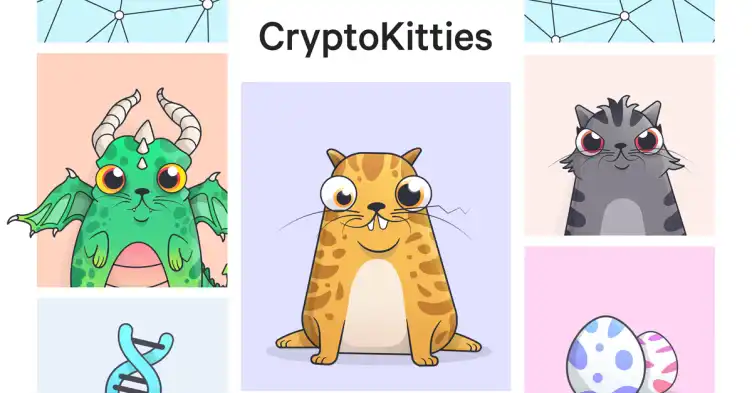
CryptoKitties is a DAPP developed on Ethereum. To purchase or breed, you need to use Ether (ETH). The gameplay of CryptoKitties is simple. Players can adopt (only for early users) or buy cats, name them, buy and sell them, and breed them. Buying and selling cats has become a unique feature of CryptoKitties. Based on blockchain, CryptoKitties players from all over the world can freely trade their cats. The game team releases a new electronic cat every 15 minutes, and the future price of the new electronic cat is expected to rise. If two electronic cats mate, their offspring will inherit their respective 256-bit genomes, affecting appearance, personality, characteristics, etc., with a total of 4 billion possible variations.
 Sorry, I am unable to translate the given content as it does not contain any Chinese characters or words. Please provide me with the content in Chinese to translate.
Gods Unchained is a turn-based card game released in 2018. The game style and gameplay are similar to Hearthstone. The game runs off-chain while the cards are on-chain assets. To reduce transaction gas fees, most of the cards in Gods Unchained have been migrated to the layer-2 solution Immutable X. Gods Unchained is currently one of the more active card games in terms of users and transaction volume on the Ethereum blockchain.
 The content you provided is:
Source: Company Official Website
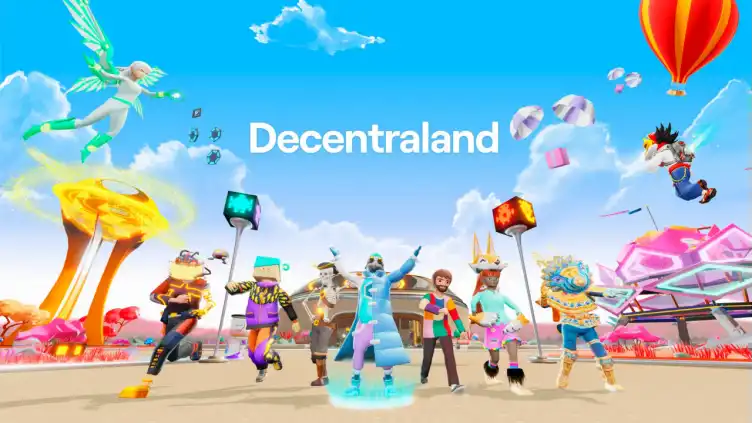
Decentraland is a virtual gaming world driven by blockchain technology. Players can create their own avatars in Decentraland and engage in various gaming activities such as shopping, traveling, buying land, meeting other players, and chatting. As a UGC game, players' ownership of their in-game assets will be recorded on the Ethereum blockchain as their personal private assets. After owning their own virtual land, players can build buildings, establish brands, and even sell NFT products on it.
In this stage of game type, Web3 games have drawn on a lot of experience and lessons from traditional games, and have gradually explored various gameplay methods, improving the confidence of Web3 game users in Web3 games. Although there is still a big gap between the art quality and content production of Web3 games and traditional games, for the developing Web3 games, it has already crossed the development gap and formed a positive development trend with a virtuous cycle effect.
2021 - Present: Web3 Gaming Takes Off
From 2021 to now, despite some detours in economic models and other aspects, Web3 games have shown great exploration and progress in many aspects. Some Web3 game projects have shown a breakthrough effect at this stage, attracting a large number of Web2 game users. For example, Move To Earn application StepN's users have recorded over 67 million miles (108,017,738 kilometers) of exercise on the app, reaching a historical high of 1 million users on June 2, 2022, with a total of 4.72 million registered users. A specific case analysis is as follows:
Source: Company Official Website
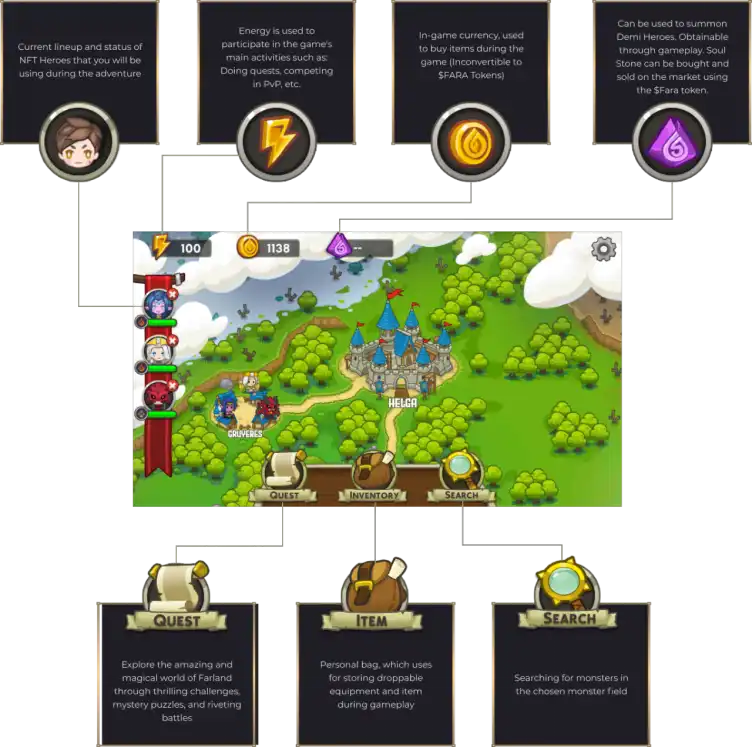
Faraland is a role-playing strategy war game for Android and iOS developed on the blockchain by MoonKnight Labs, a company based in Vietnam. Players control characters from 7 different races: humans, orcs, elves, fairies, dragon descendants, angels, and demons - each with different abilities, strengths, intelligence, and agility - and battle against other players in the universe called Faraland. The game was released in the fourth quarter of 2021.
 The content you provided is:
Source: Company Official Website
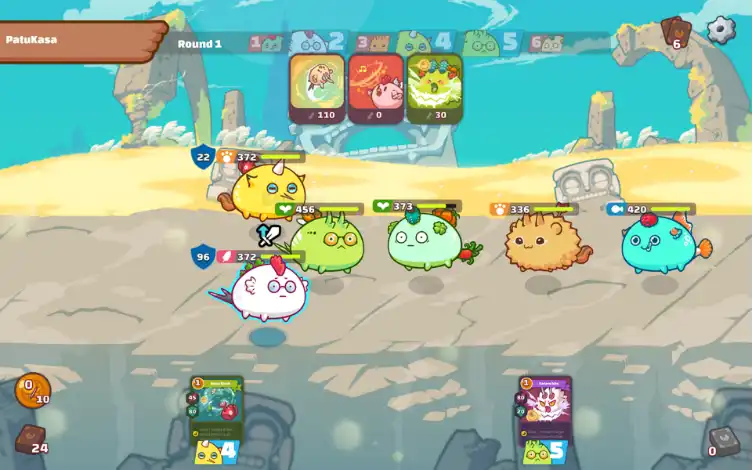
Axie Infinity is a video game that includes customizable fantasy creatures, and players can train them for battles. Each Axie is a cute pet in the game, with over 500 customizable body parts that allow players to enjoy the fun. At the same time, players can create an unlimited number of combinations and adjust their strategies for battles. Axie Infinity was founded by Sky Mavis, a Vietnamese startup, and is one of the most popular Web3 gaming projects.
 The content you provided is:
Source: Mediaverse
Source: José Gómez Analysis
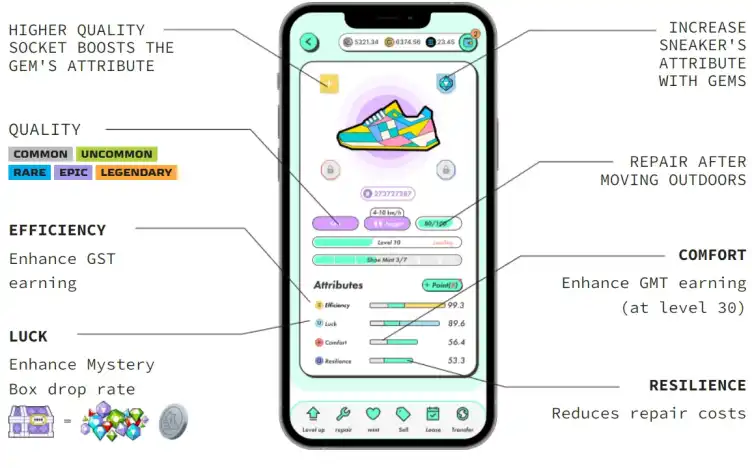
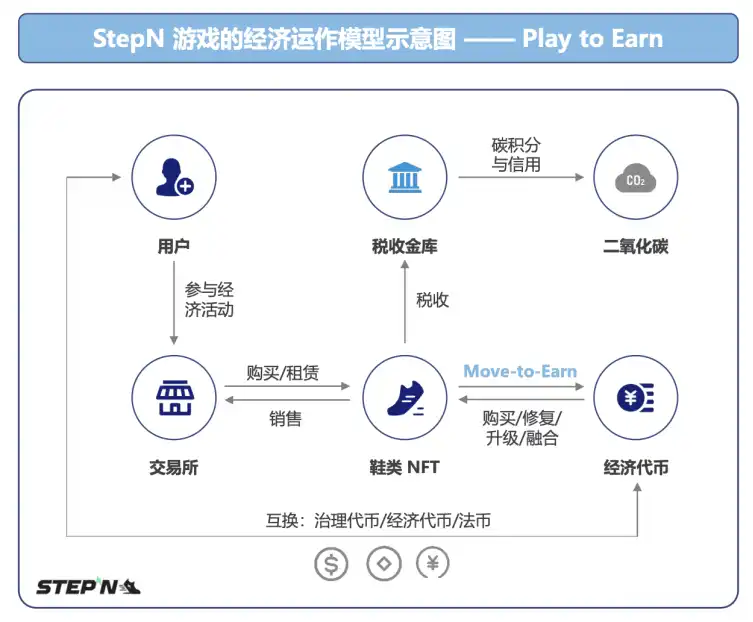
StepN is a blockchain game that uses sports shoe NFTs to earn profits through exercise, attempting to expand the gamified decentralized model to other fields. StepN was originally created on the Solana public chain and won fourth place in the Solana Hackathon Chain Game category. The biggest feature of StepN is the combination of GameFi and offline sports through the Move To Earn model. After users download the app and successfully register, they create a new in-app wallet and transfer cryptocurrency SOL or BNB into the wallet. They can then purchase a pair of NFT virtual sports shoes and start earning money by running outdoors. The amount of money earned depends on the user's exercise situation and shoe factors. Shoes have different attributes, types, qualities, and levels. Users can earn unlimited game tokens GST by running within the effective energy time range corresponding to different shoes' pace range. These tokens can be used to upgrade sports shoes and gems, unlock slots, forge new shoes, or directly exchange for stablecoins.
At the current stage, Web3 games have reached a new level in terms of gameplay, game content, and art production, but there is still a significant gap compared to traditional games. In terms of Tokenomics design, some Web3 games fully utilize the Pareto economic income model to quickly attract new users and achieve the effect of rapid expansion. From a time perspective, it is expected that in the next 1-2 years, Web3 games in some specific areas will rapidly improve in content production and playability, and surpass previous Web3 games in terms of user base and game user spending. The following is a brief analysis of the experience and lessons brought by past Web3 games.
Web3 Gaming Issues
The game lacks playability and fun, and cannot retain users in the long term.
The fun in game design does not necessarily mean making people laugh or creating happiness, but rather refers to the entertainment experience and enjoyment that players feel. For example, in horror games, the player's enjoyment comes from the sense of tension and exploration, which expands the concept of fun beyond just being funny, easy, or humorous. The process of creating fun can be divided into three key steps, similar to the behavior of potential customers being attracted to games when they enter a game store. First, the customer's gaze falls on the game screen, and they can't help but stop and watch. At this point, the game's visual elements, such as background, graphics, appearance, characters, and genre, play a primary role in attracting customers (players). The second step is for the customer (player) to try the game and make a judgment. At this stage, the game's playability and content quality are crucial. The game must immediately make the player feel happy through its excellent playability and outstanding performance quality, without causing any aversion. The goal of the trial phase is to let players feel the fun of the game in a short experience. Finally, the game needs to continue to provide pleasure and satisfy the player's desire for the game, thereby making the player addicted. The project team must cleverly design the game's content, pace, structure, immersion, and playability to maintain the player's continuous pursuit of fun. The playability of the game is a comprehensive issue that needs to consider multiple aspects such as the content, interaction, social, challenge, and reward of the game. Through continuous improvement and innovation, game developers can continuously improve the playability of the game, thereby attracting and retaining users for a long time. Creating fun is an important issue in game development, achieved by focusing on the above three steps and paying attention to the game's attractiveness and playability.
Shiseido's token economic model leads to the selling pressure of economic tokens and unstable token prices.
The "break the east wall and repair the west wall" DeFi economic model requires a continuous influx of new users, and the capital investment of users will be used to support the prices of NFTs and tokens, fully leveraging the "investment product" attribute to encourage player users and arbitrageurs to enter. Once the marginal number of users decreases and is insufficient to support the prices of NFT assets and token tokens, the resonance effect of the consistent expectations of player users and investors amplifies the emotions of greed and fear, accelerating the speed of token price rise and fall. In this process, the significant rise and fall of asset prices denominated in tokens greatly affects the gaming experience of players. From the perspective of tokens, tokens are both a general equivalent for exchange and a carrier for wealth transfer (i.e., wealth cannot be created out of thin air). If the pricing exceeds the mean value of its asset price, it shows the asset bubble brought about by emotions. At the same time, if NFT assets with liquidity are linked to the economic and numerical systems within Web3 games, the planning of Web3 games is a great challenge. Currently, some project parties adjust their internal economic systems through third-generation and fourth-generation token models. However, the number of tokens is not the key to solving the problem. The increase in the number of tokens will increase the friction cost of the in-game economic system, but the corresponding relationship between assets and tokens has not been substantially resolved. The key to solving the problem is to solve the asset system, economic system, and utility corresponding to tokens. In terms of the asset system, the NFT asset model system design is imperfect and lacks sufficient consumption scenarios and gameplay mechanisms. The game mechanism is "the interaction and relationship left after stripping the aesthetic, technical, and story elements," and the seven elements of "space, time, object attribute status, action, rules, skills, and probability" are summarized into the gameplay mechanism. Here, more exploration atmosphere analysis is done from the relatively complete gameplay mechanism composition, including: "survival needs," "collection," "scanning and navigation," "research and construction," "movement," "vehicles," "equipment and tools." In the current Web3 games, the financial attributes are gradually strengthening, while the gaming and consumption attributes of Web3 games are gradually weakening. The gamification trend of DeFi damages the entertainment and consumption attributes of Web3 games themselves. As mentioned above, wealth cannot be created out of thin air. In a stock competition market, it is impossible for everyone to make money in the game. (In the case of fiat currency valuation)
Web3 gaming's numerical system has not received sufficient attention from Web3 gaming project parties.
One of the most important differences between Web2 games and Web3 games is the ability to deposit and withdraw funds. In Web2 games, in-game assets such as props, skins, equipment, and pets cannot be withdrawn. If players want to sell their in-game assets, they can only sell their accounts. However, in Web3 games, game assets and tokens have liquidity. If the economic system (including but not limited to development, combat, and economic values) is designed improperly, various studios will seize the opportunity to arbitrage, causing economic losses to Web3 game projects. Although project parties can use measures such as time locks, emigration taxes, and high staking yields, they still cannot solve the fundamental problem and will eventually face the pressure of economic token dumping, leading to the overall collapse of the economic system.
Source: José Gómez Analysis
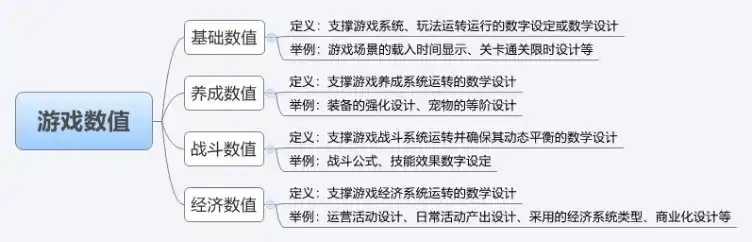
Using the RPG numerical system in the following example, various factors need to be considered in the design of different numerical values for rewards, gold consumption, and time consumption in subsystems such as tasks, equipment, levels, and pets. In the game industry, content creation needs to attract attention, and heavy games need to balance the attention of players, adjusting their attention to high-consumption entertainment scenes. In the process of adjusting the numerical system in RPG games, Web3 games cannot ignore the player's expectations for performance mechanisms, game mechanisms, overall narrative, and entertainment. The following diagram roughly shows the framework of the numerical system in RPG games:

Source: José Gómez Analysis
Therefore, when adjusting the numerical system in game planning, the following process can be considered:
Research game values. Analyze the competition and your own games to improve the gaming experience for players. Game values involve the attributes, parameters, and relationships of various elements in the game, which have a profound impact on the balance, difficulty, fluency, and fun experience of the game. The development team must accurately define the attribute values of roles, props, levels, skills, etc., and these values directly determine the behavior and interaction of game players in the game world. Reasonable value settings can make the game experience more compact, interesting, and conducive to sustained challenges. In addition, balancing game values is a key challenge. The development team needs to repeatedly test and adjust the values to ensure that the mutual influence between various elements can achieve the desired effect in the game. It is necessary to have a deep understanding of the behavior patterns and feedback of game players, and constantly improve and optimize. At the same time, game value research also involves economic balance and control of game progress. The prices of props, the distribution of rewards, the difficulty of tasks, etc., all need to be designed reasonably, so that players can be challenged in the game without being too difficult or too easy.
Design game values. Use mathematical modeling to continuously adjust and optimize value design based on theory and actual data. The process of value balance is not simply based on the difference between values, but rather adjusted based on the player's intuitive experience. Therefore, all balance is based on the player's experience. The balance of values is based on intuitive experience, and game value planners use experience to deduce the logical relationship of balance results. This includes rigorous logical reasoning and perceptual relationships. Therefore, balance is not simply for the sake of balance, but to provide a better user experience through adjusting the balance of values. In reality, there is no absolute balance, because the results of balance will vary due to different design purposes. Design game combat values, development values, and economic values, build a global value model, and ensure the playability, balance, sustainability, and scalability of value design. Regarding value design, there are generally several steps. First, find various attributes in the game, whether explicit or implicit. Then, deeply study the rules and changes of these attributes, explore their possible mathematical formulas and relationships. Afterwards, use graphical tools to verify whether these results meet expectations and whether further editing and adjustment is needed. All design decisions are made to optimize the game experience.
Optimize game values. In the future, the numerical planning of Web3 games needs to pay more attention to graphical tools and reflection processes. Graphical tools can present results in an intuitive way, helping to understand data and trends. Another important aspect is reflection, thinking about why specific approaches are taken, what the purpose of these approaches is, and whether the ideas are in line with the expectations and intentions of game development. At the same time, the design should be simple and elegant, rather than pursuing complex and confusing settings. Balance and numerical tools are only auxiliary means, and the goal of the game is to design a better experience that meets the needs and expectations of players and users. Therefore, the user experience of Web3 games should always be the starting point, focusing on creating simple and effective solutions, making the design of the game or product more elegant and satisfying.
After analyzing and experiencing more than 30 games, José Gómez found that there are few Web3 games with high playability, and only a few Web3 games have positive retention income and capital gains. The following is a brief analysis of one representative Web3 game with high playability - Matr1x. The game is scheduled to be launched on August 8th, and interested players and users interested in the Web3 gaming industry can try it out.
Matr1x: Innovator and Pioneer of Web3 Gaming
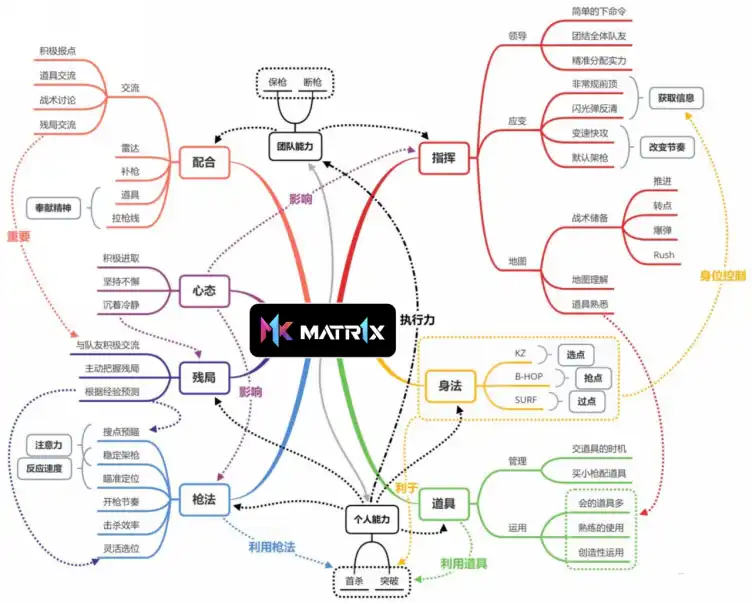
Matr1x is a new Web3 game. As a cyberpunk-style FPS mobile game, it has high-quality game graphics. Matr1x game focuses on PVP multiplayer fair competition, while also providing strategic and casual PVE gameplay modes. Through holding various Matr1x events to cover offline crowds, it enhances players' sense of identity and consensus. The following is a brief analysis of the Matr1x shooting game project from multiple perspectives.
Source: José Gómez Analysis
Market Players: Players and Users Covered by the Subdivision of Shooting Games
According to data companies, shooting games have been a very important category in mobile games in the past few years, ranking as the sixth largest game type in the US iOS market and generating about 6% of market revenue. Although there hasn't been a new hot shooting game in the market for some time, the success of "Call of Duty Mobile" in the past has stimulated many AAA developers to turn to the mobile platform. It has been more than two years since the release of the last hit shooting game, and several top developers are launching promising competitors, including the mobile versions of "Fearless Contract", "Apex Legends", "Battlefield", and "Final Fantasy 7: The First Soldier". In the past few years, there has been a lack of fresh blood injected into the shooting game market, and the current market is also eagerly awaiting a highly popular shooting game.
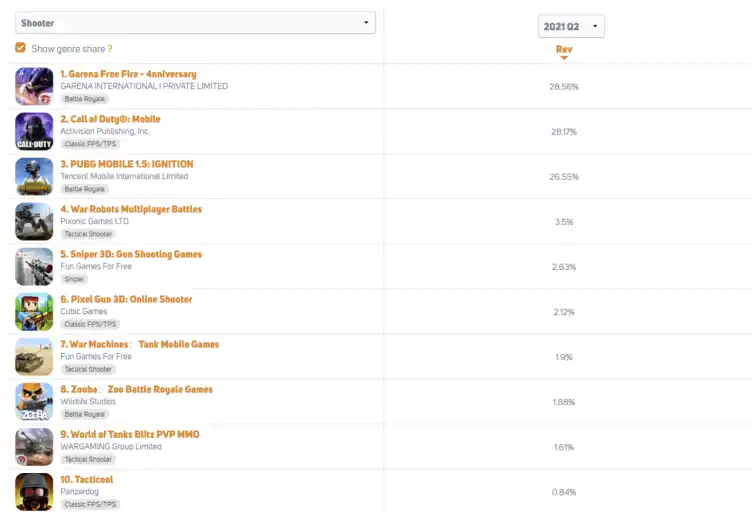
The following chart provides a simple comparison of the mainstream shooting games in the current market. The biggest difference between the top shooting games and the others is that "Call of Duty Mobile" and "PlayerUnknown's Battlegrounds" have stronger social features, with complete guild and cooperation mechanisms in the game, while the guild mechanism in "Survival Rules" is relatively simple. At the same time, "PlayerUnknown's Battlegrounds" further explores the driving factor of "exploration: treasure collection" through the two collection systems of "exhibition hall" and "seasonal exhibition hall". Currently, the top three shooting games in terms of market share are "Survival Rules", "Call of Duty" and "PlayerUnknown's Battlegrounds".
Source: GameRefinery
From the perspective of user players, according to GameRefinery's survey of over 7,000 respondents, the motivational factors for shooting game players include different types, among which social attributes (collaborative combat and confrontation), skill attributes, and entertainment attributes (stimulation and pleasure) are the main factors that shooting game players care about; while exploratory factors (including collecting props and exploring maps) and expressive behavior are secondary influencing factors. Comparing the top three shooting games horizontally, they all focus on these factors in game design.
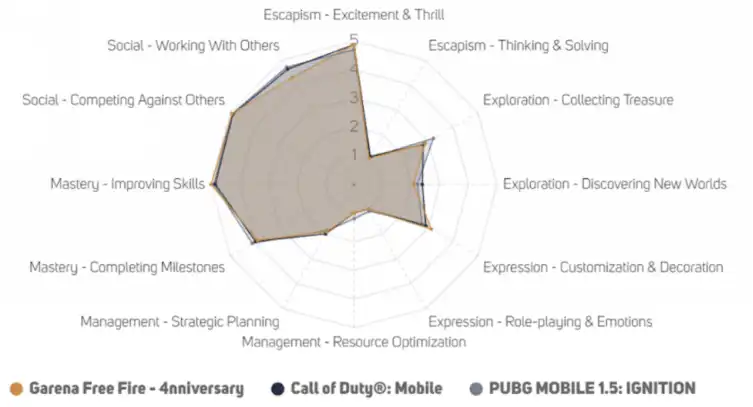
Source: GameRefinery (surveying mobile game players from Western English-speaking countries including the United States, United Kingdom, Canada, New Zealand, and Australia, as well as representing smartphone users of different ages, genders, incomes, and household sizes.)
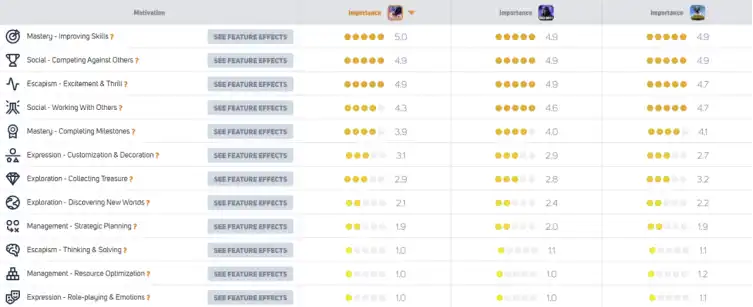
Source: GameRefinery (surveying mobile game players from Western English-speaking countries including the United States, United Kingdom, Canada, New Zealand, and Australia, as well as representing smartphone users of different ages, genders, incomes, and household sizes.)
Gameplay and Experience in the Game: Game Mechanics and Level Design
Regarding layout and routes: maps will bring players a rich experience of shooting and strategic gameplay. Under this premise, the map design style can be diverse, including three-lane designs (Dust2, Cache, Mirage), asymmetrical designs such as Inferno, Nuke, Vertigo, and stacked layouts. The main path is the core of the game and must achieve the map's goals to ensure smooth gameplay. Once the main path and blocking points are determined, connections and loops can be considered. Players do not want to spend too much time searching for paths; they want to reach their destination faster and feel in control of the game. Therefore, based on this point, Matr1x ensures that each area is connected, usually by connecting paths that open up several main paths, providing players with opportunities for strategy and gameplay. Players can report information and move closer to other main paths, while the enemy will not return to the spawn point and start over because of a change in objectives. The police can also return to defense faster through connecting paths. At the same time, the game's pace is relatively fast, and the time to reach the first shooting position is similar for different routes, which can improve players' attention and immersion in the game.
In terms of the design and planning of blockades, the blockade point is a key location where the enemy often encounters police resistance in the attack target route, dividing the map into different areas. Compact paths such as connecting paths, corridors, holes, and doors are usually used. The enemy must break through these points to control the area behind the blockade point. At the same time, the timing of the blockade point is very important, and both sides arrive almost at the same time. Therefore, when designing the map blockade point, Matr1x considers the number of entrances and exits of the blockade point, the transition zone of the blockade point, the arrival time of both sides, the attack values and tactical situations of both sides. In the design, Matr1x provides a blockade point with two entrance paths for both sides, as well as more strategies and game space. Players can throw, assault, wait, shoot, and specify the next tactical step in a relatively safe area, better adapting to the situation. Moreover, multiple combinations of cover are set up in the same location, allowing players to quickly hide and stimulate their tense emotions in a series of continuous actions of placing bombs and quickly avoiding.
Vertical Space: In the Matr1x game, characters cannot fly and shooting is inaccurate while jumping, so 80% of the combat in the game occurs in the horizontal shooting area. Therefore, in game design, players' differences in skill mainly manifest in their understanding of vertical space. Players can stand on chairs to see the exposed parts of their opponents' heads, and even jump onto boxes where their opponents are hiding. Making full use of vertical space will increase attacking options and possibilities. Therefore, controlling jump height and collision object height is one of the important details for Matr1x designers. The game encourages players to cooperate and make good use of vertical space. On the one hand, this increases the fun of the game; on the other hand, it greatly deepens the uncertainty in the game, transforming it from a rigid territorial battle to a special combination of risk and reward. In some maps of Matr1x, multiple rotations and jumps are required, and failure will result in falling down and missing opportunities, making it easier for enemies to discover. However, if successful, players can occupy the blocking point ahead of their opponents and catch them off guard by cooperating with their teammates. The tactical cooperation and use of vertical space fully demonstrate its importance in the game.
Design and selection of target points: After the exchange of offense and defense, the police can launch an attack from any entrance. Matr1x not only considers the cover that CT needs when defending T at the target point, but also must consider the cover that T needs when defending CT after planting the bomb. Therefore, Matr1x carefully designs the position of T's defense, covering key areas such as the vicinity of the target point and connecting channels. However, even if cover is set up, it cannot completely block all enemy attack angles. At least one angle and entrance that the enemy can use must be retained, so that players will be guided to cooperate more closely and choose strategies. This design requires close cooperation between players, reasonable allocation of positions and roles, to ensure all-round defense. At the same time, when attacking, players must think carefully and choose the most effective path and tactics. This complex and advanced design makes the game experience of Matr1x more rich and profound. Players not only need to react quickly and shoot accurately, but also need tactical wisdom and teamwork to win in this challenging game world. In the battlefield of Matr1x, intelligence and skills are equally important, and this is exactly what attracts many players to pursue excellence.
Game Numerical System Design
Attributes and Values: In FPS games, attributes and values are common elements in game design. In FPS games, attributes such as gun count, bullets, firing rate, reflection, and scatter are important factors that affect the gaming experience and player strategy. In FPS games, precision is emphasized in shooting, bullet trajectory, and target hits, with both point attacks (single bullet) and area attacks (explosive bombs) present. Some characters may have attacks that target a single target, while others may have area attack skills. The Matr1x map design has been polished over time and referenced with a large amount of gameplay data, gradually approaching the ultimate balance, with many design concepts and level details worth exploring. The following analyzes several important elements.
TTK (Time to Kill): The time required to kill an enemy after firing all bullets and hitting them all. The shorter the TTK, the higher the theoretical strength of the firearm. The main factors that affect TTK include: base damage value, rate of fire parameter, distance attenuation function, penetration attenuation function, armor attenuation function, and defense parameters of the hit area. However, there are many other factors that affect the actual TTK in actual combat. For some dual-wielded weapons and shotguns, more bullets are consumed in a single shot, and actual damage = single shot damage * number of bullets. The smaller the firing interval between each bullet, the faster the rate of fire, and the damage together constitute the theoretical TTK. Usually, in order to maintain overall TTK balance, rate of fire and damage need to be balanced. In addition, distance attenuation will occur as the combat distance increases, causing damage to decrease with distance attenuation.
Bullet trajectory and muzzle velocity: The theoretical TTK of firearms determines the upper limit of their strength, while the trajectory of the bullet determines the lower limit and also affects the difficulty of achieving the theoretical TTK in practice. When considering bullet trajectory and muzzle velocity, there are several factors involved, including but not limited to: recoil (horizontal and vertical), firing mechanism, dispersion parameters (including random settings and dispersion parameter corrections), etc. These factors collectively shape the performance of firearms in combat and the challenges faced by players when using them.
Reticle: In FPS games, the reticle is an important element of visual cues and feedback. The design parameters of the reticle include color, spread, offset, hit feedback, and other feedback factors. When designing the reticle, the Matr1x team considered many detailed factors, such as the consistency of the reticle spread speed with the firing action, the consistency of the reticle shrink speed with the firing recoil, and the matching between the emission area and the gap of the reticle. For advanced players, the Matr1x team delved into the experience of controlling recoil, where different firearms have different offset amplitudes. For non-spreading reticles, the visual sensation gives players the illusion that the spread has not increased, improving the operational feel. The ultimate non-spreading reticle can even clearly display the ballistic trajectory formed by the bullet mark special effects, helping players control recoil better.
Maneuverability: Maneuverability plays a crucial role in FPS games, covering aspects such as movement speed (including initial displacement speed and acceleration), weapon switching speed, reloading speed/ammo capacity, and aiming speed. In the Matr1x game, the level of maneuverability directly affects the player's experience in the game. For example, when the character is on the ground, the movement speed when switching weapons will be converted to the corresponding gun's aiming movement speed; but if the weapon is switched in mid-air, the character will maintain the movement speed of the previous weapon until landing. However, during start and stop, the speed does not switch instantaneously, but requires consideration of the corresponding acceleration and deceleration. The size of the acceleration and deceleration will directly affect the maneuverability of movement, and being too large or too small will affect the flexibility of operation.
Other: Art, Sound Effects, and Gaming Events (Tournament Events)
In games, what players need is an immersive experience and a sense of pleasure. Therefore, in the game production process, not only game mechanics and gameplay need to be considered, but also other factors such as art and sound effects. In addition, additional offline activities can enhance the consensus and sense of identity of game users and NFT holders. The following is a brief analysis of art, sound effects, and game activities.
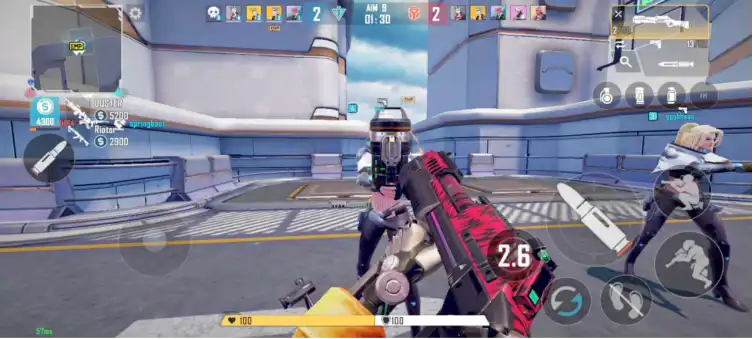
Visual and Art: Matr1x. The design of the map is highly unified, using saturated daytime colors to create a clear and bright game environment. In terms of the planning of the map path, emphasis is placed on smoothness, with guide signs set up to allow players to easily find the direction and target location. This design not only provides better game navigation, but also enhances the playability and convenience of the game. The map of Matr1x is vast and delicate, cleverly adding height differences to form undulating terrain, giving the map a rich sense of hierarchy. This not only allows players to experience a variety of terrain landscapes in the game, but also provides more choices for combat and tactics. The high ground in the map can be used as an advantageous position, and players can use the height difference to hide and ambush, increasing the tactical depth and tense atmosphere in the game. The map design of Matr1x also incorporates some interesting interactive mechanisms, waiting for players to actively explore and discover. These interactive mechanisms may be hidden treasures or special mechanisms. This design increases the exploratory and playable nature of the game, attracting players to explore the secrets and surprises of the map.

Source: Public Information
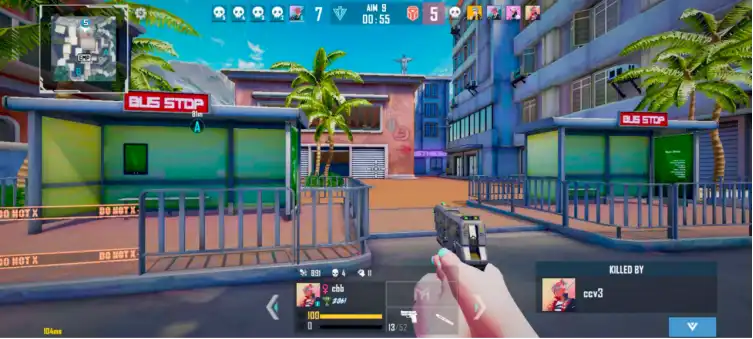
Source: Public Information
In terms of architecture, obstacles, and cover design, Matr1x cleverly uses vertical and horizontal lines and sharp angles to create a more realistic scene, enhancing the player's immersion. Every design has been carefully considered to make players feel like they are really there, reducing the abruptness caused by artificial interference and making the game experience more natural and smooth. The opposing sides in the Matr1x map have visual obstruction effects when behind cover, adding unexpected tactical effects to the game. Players can use visual obstruction to conceal their position, create illusions, or ambush enemies, increasing the strategic and surprising elements of the game.
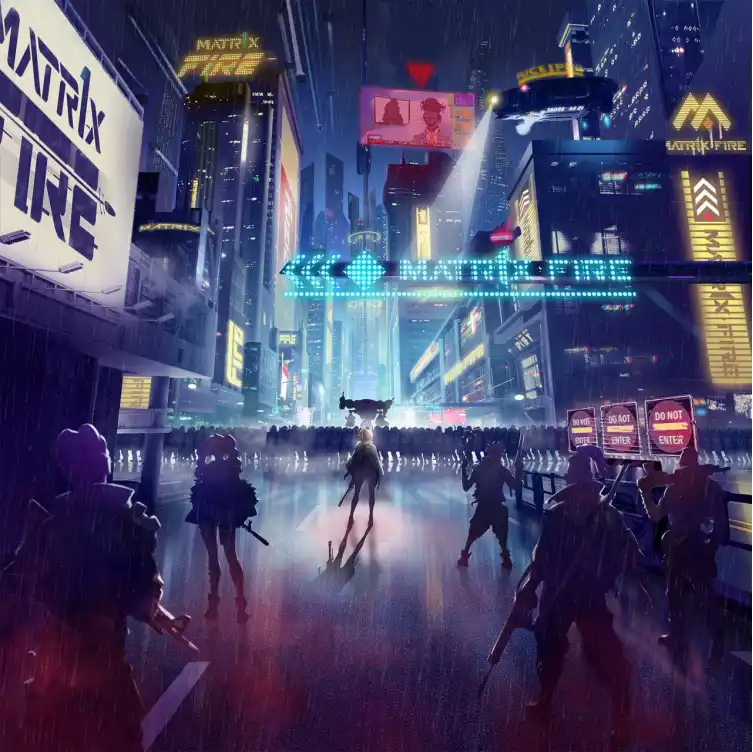
Source: Public Information
Source: Public Information
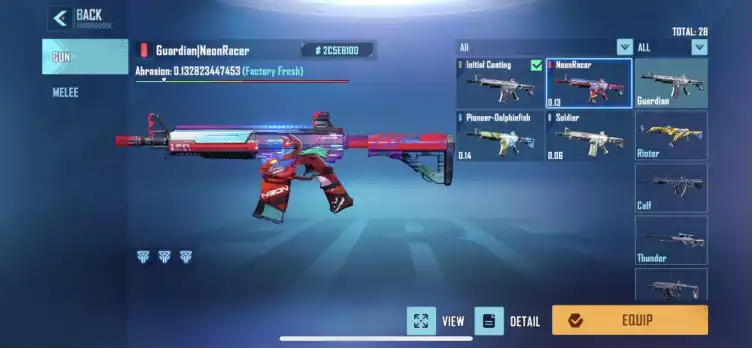
In terms of equipment design, firearm design is extremely realistic and detailed. Various firearms in the game are highly restored according to real firearms. The appearance, details, and textures of firearms are carefully designed, allowing players to feel the texture and weight of real firearms in the game. In addition, Matr1x's firearm skin system also provides players with a rich and diverse selection. Each gun can have a different appearance, meeting the personalized needs of players and promoting the game's economic system. Moreover, the design of ammunition and accessories is also very sophisticated. Accessories such as ammunition boxes, magazines, and scopes in the game are lifelike, adding more details and realism to the game. The design of accessories not only considers visual effects but also combines with the game's mechanism, affecting players' tactical choices and combat strategies. Props such as grenades, flashbangs, and smoke bombs in the game are given unique visual effects, making the battle scenes more vivid and diverse. The design of these props not only considers visual effects but also affects the game's tactical gameplay and team cooperation.
Source: Public Information
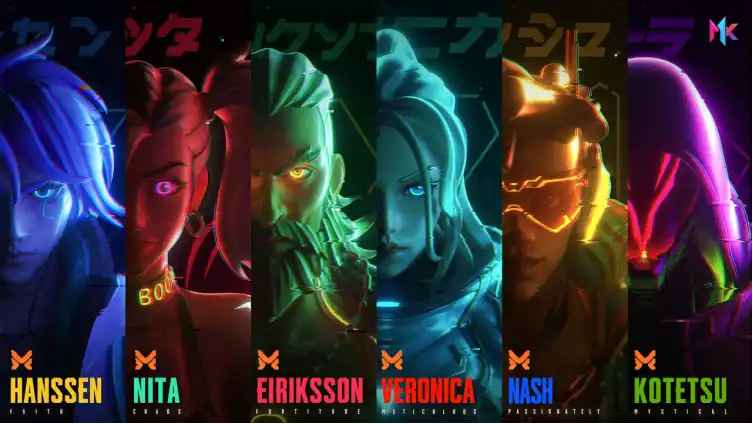
In terms of character design, Matr1x demonstrates a high level of attention to detail and creativity, which has made the sold 2061 gunfight character images deeply loved by players. The character images in the game are diverse and distinctive, with each character having a unique appearance, clothing, and accessories, making them highly individualistic in the game. The development team has carefully crafted the facial expressions, postures, and movements of the characters, allowing players to experience more realistic character performances and immersive feelings in the game. Matr1x's character design also focuses on the background and storyline of the game. The accessories of different characters are consistent with their represented backgrounds and identities, which increases the story and sense of involvement in the game. Players can feel the style and background of different warriors when choosing characters, adding more emotions and fun to the game. As of August 6, 2023, the NFT floor price of Matr1x has risen from 1.08 ETH to 1.59 ETH in the past month, an increase of 47.22%.
Source: Public Information

Source: Public Information
Audio and Sound Effects: In terms of auditory effects, the design of the Matr1x map takes into account the detailed sound propagation effects. Each location is accurately marked with the type of sound that can be heard, such as door opening, footsteps, gunshots, etc., and the attenuation effect of the sound is achieved through careful design. This attenuation effect allows players to accurately perceive the surrounding sound at different distances and obstacles, thereby increasing the tactical and immersive experience of the game. In Matr1x, even the material that produces the sound of footsteps is given attention. By changing the different materials that the character's footsteps step on, such as hard floors, grass, sand, etc., the sound of the footsteps produced by the player when moving will be different. This detailed design makes the environment in the map more realistic and vivid, and also makes players more alert when fighting against enemies, because the different terrain will affect the footsteps heard by the enemy, thereby triggering more interesting tactical choices. By listening to the sound of the enemy's gunshots or footsteps, players can infer their position and intentions, and make wiser decisions. This auditory design not only increases the tactical depth of the game, but also brings a richer gaming experience to players.
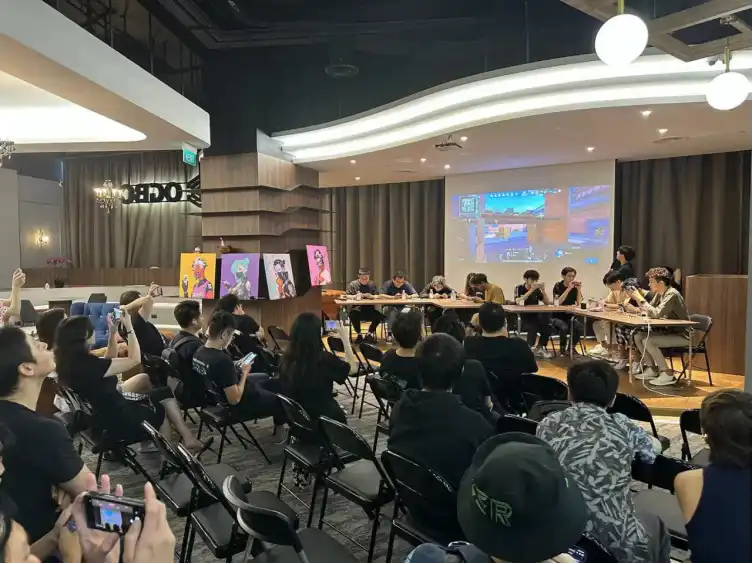
Offline gaming events: Meanwhile, Matr1x actively held multiple gaming events and competitions offline, providing opportunities for global Matr1x players to interact with the real world. These events cover different types and scales, attracting numerous gaming enthusiasts to participate. In regional offline events, the Matr1x team and community members jointly organized a series of interesting activities. These activities not only provide players with the opportunity to communicate face-to-face, but also enhance the cohesion of the community, forming a close-knit gaming social circle. Through these rich and colorful offline gaming events and competitions, Matr1x not only expands the influence of the game, but also deepens the emotional connection between players and the game. This all-round interaction and communication has built a vibrant and passionate gaming community for Matr1x, enabling it to occupy a place in the fiercely competitive gaming market. In the future, Matr1x is committed to creating high-profile esports events, attracting numerous top professional players and gaming clubs to participate. These events cover multiple game modes and competitive types, such as individual battles and team battles, providing players with a stage to exercise their skills and compete in strength. The exciting performances of these events will also attract a large number of viewers and fans, adding sparks to Matr1x's popularity and influence, and bringing players more surprises and enjoyable gaming experiences.
Source: Public Information
Overall, Matr1x is an innovative masterpiece that goes beyond the traditional gaming category of Web2. It introduces a brand new digital economic model, providing players with an unprecedented gaming experience. In this creative and imaginative gaming world, players can not only immerse themselves in the fun and excitement of the game, but also have the opportunity to achieve actual profits through gaming and trading. Players can freely trade both inside and outside the game, creating a new value conversion mechanism for players. In addition, Matr1x encourages players to actively participate in community activities and competitive events, showcasing the talents of players and the strength and level of team cooperation. At the same time, Matr1x breaks the boundaries of traditional gaming by cleverly combining gaming with blockchain technology, breaking the shackles of Web3 gaming development and lighting up a feasible path for the development of other Web3 games.
This article is from a submission and does not represent the views of BlockBeats.
Welcome to join the official BlockBeats community:
Telegram Subscription Group: https://t.me/theblockbeats
Telegram Discussion Group: https://t.me/BlockBeats_App
Official Twitter Account: https://twitter.com/BlockBeatsAsia

 Related Articles