ETHDenver conference review: DAO is laying the social foundation for Web3

原文标题:《 我在世界上规模最大、持续时间最长的以太坊会议了解到的 Web3 现状 》
Original source: The Defiant
This article is from wechat official account:Old yuppie
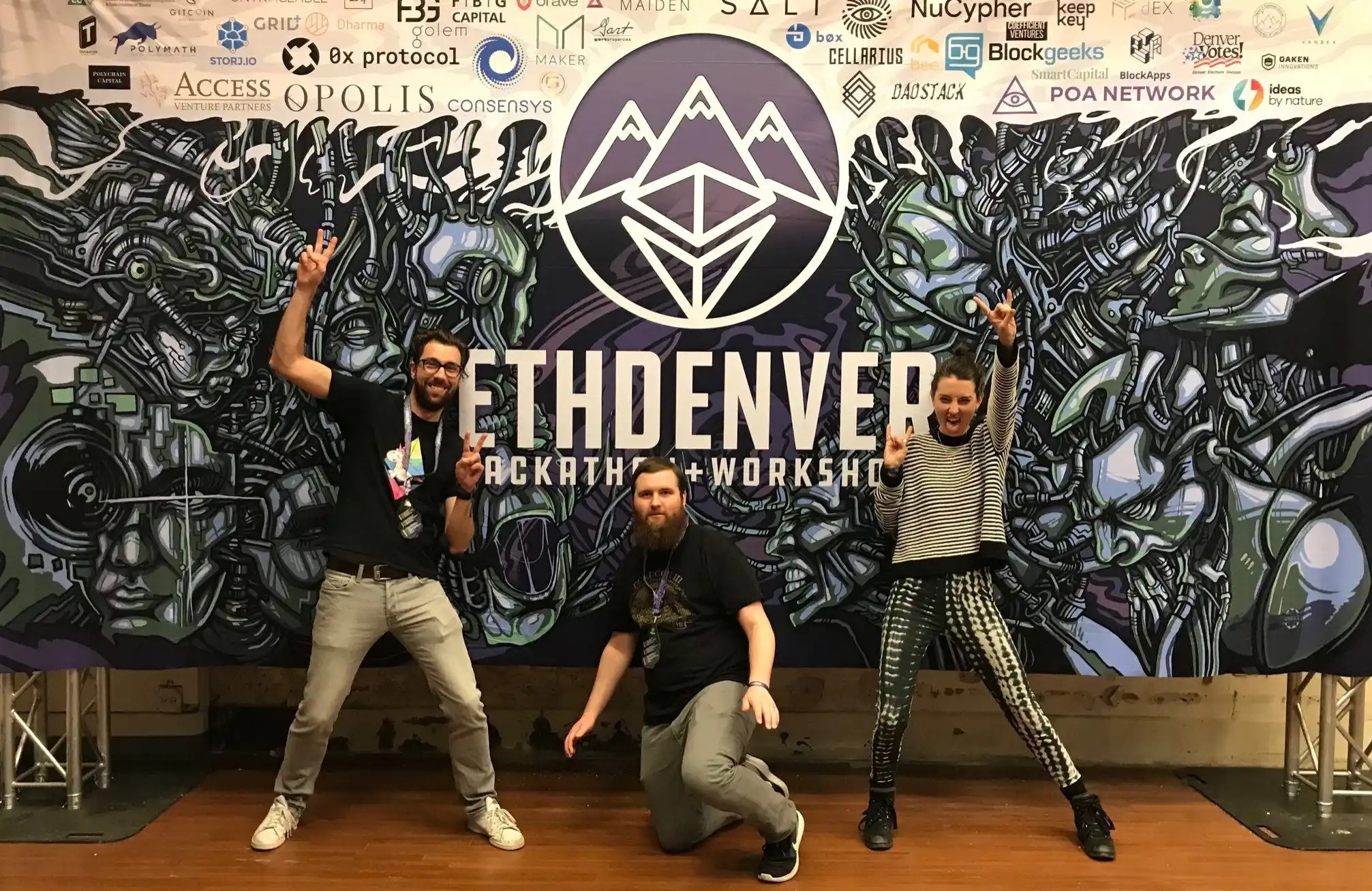
From February 11 to February 20, the world's largest and longest running Ethereum conference ETHDenver was successfully held in Denver, the United States. It is reported that 20,000 people from more than 150 countries and regions participated in the conference, and after the conference, Feedback from the market has been sharply divided, with investors generally agreeing that Web3 is too bubbly and crypto builders expressing optimism.

After a one-year hiatus, tens of thousands of experienced builders and curious beginners flocked to the ETH Denver conference. The meeting comes at a critical juncture for the industry.
Earlier this month, companies like Coinbase and FTX bought Super Bowl ads, and the New York Times and Business Insider reported on the talent flow from Silicon Valley to cryptocurrency /Web3 companies. There is no doubt that cryptocurrencies and Web3 have captured the imagination of ordinary people, inspiring many to wait for hours outside conferences like ETH Denver to gain experience in action.
Once inside, I was happy to see all the friends I had made at the conference again. I've been part of this circle since the BTC conference in Miami in early June 2021, and since then I've had the privilege of meeting some of the smartest, most talented and motivated people I've ever met. Over the next eight months, I met a number of people who identified themselves as part of Web3 rather than cryptocurrency, suggesting that even in the early stages of adoption, the wider community was segmentation.
Cryptocurrencies are often associated with finance and the technical aspects of blockchain, which has been the topic of discussion for the past decade. Web3, on the other hand, refers to the "social layer" of cryptocurrencies, which is more readily accepted by the masses and has only become a common term in the past six months or so.
The fact that we use these terms to describe two different parts of the ecosystem attests to the overall growth of space. I was talking to someone who told me that it wouldn't be surprising if there were more than 100,000 people attending Ethereum events in five years.
The need for an extended solution cannot come soon enough. We need to look at scaling from two perspectives: technical and social. Ethereum is currently being rolled out technologically through rollup, and social DAOs have begun to appear daily, allowing Web3 natives to find their teams and travel through the meta-universe together.
Cryptocurrencies are often associated with the technical aspects of finance and blockchain. Web3 refers to the "social layer" of cryptocurrencies that is more accessible to the masses.
On the technical side, Ethereum is extended through the use of rollup. Rollup is the second layer of Ethereum; A chain that conducts transactions outside the main ethereum network, but later publishes data there. In essence, Rollup is able to aggregate thousands of transactions, batch them, and publish them to the Ethereum main chain, benefiting from its security while outsourcing execution. This is cheaper and more efficient than trading on layer 1 of ethereum's main network.
One of the most innovative projects advancing Rollup is StarkWare, which uses zero-knowledge encryption in its rollup implementation and uses STARK proofs to validate and batch process thousands of transactions on the Ethereum main network. StarkWare went all out at ETH Denver, hosting 101 and Best Practices workshops throughout the week.
As a non-technical person and someone who often "acts as a developer" when engaged in cryptocurrency business development activities, I've long been intrigued by StarkWare. There's a lot of money and intellectual support behind their project, and I can't help but think that a long time ago, the government would have funded such an effort. When it comes to zero-knowledge proofs, I don't understand the nitty-gritty details behind them. But WHAT I can understand is that StarkWare has used the most advanced mathematical techniques to accomplish feats that were once thought impossible or possible years from now.
StarkWare is unique in its use of a new Turing-complete programming language Cairo, which will be used for the upcoming general purpose computing L2, Starknet. While Solidity has established itself as the standard for EVM over the last five years, that hasn't stopped the StarkWare team from promoting Cairo to developers.
In fact, commented Louis Guthmann, their ecosystem leader, developer interest in Cairo is growing organically, and builders love it. StarkNet Discord has more than 25,000 members and shows few signs of stopping. Some projects, such as Argent, ZigZag Exchange, zkLend, etc., have invested significant resources to build rollup. In addition, important ecosystems have been integrated for StakeNet, such as OpenZeppelin's standardized contracts and the development of audit services. In their recent blog post, StarkNet stated that it had established usability long before anyone thought it was possible, and is now working on performance optimizations before moving on to final full decentralization.
The core members
A few months before ETH Denver, my curiosity about StarkWare led me to an interview with Key Bankless players Uri Kolodny and Eli Ben-Sasson. They commented on the success of StarkEx, the app-linked version of StarkNet, which launched in June 2020. At the time of recording, the DYDX StarkEx chain alone was trading more than the entire main network and was not even at full capacity.
I've often wondered if increased throughput could be a catalyst for explosive growth, as Ronin did with Axies; Jiho said on MCON that the number of users surged from 47,000 to nearly 2 million. If combined with the right incentives, like 9-digit growth projects supported by side chains like Fantom and Avalanche, StarkNet will take Ethereum to the next level.
However, StarkNet has yet to confirm if or when tokens will be released, or how long it will take to complete performance optimization testing and decentralization. While BOTH L2s and side chains are fighting for ideas and market share, most of the action, especially on the social side, still takes place on the main network.
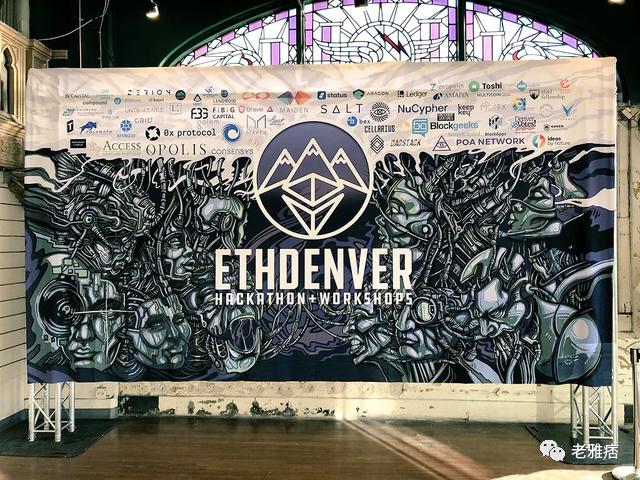
Workshops galore. Aragon "S Blog
One of the foundations of ethereum's social layer and much of Web3 is the DAO. DAO is a unique cryptocurrency native entity where individuals can coordinate with each other on how to collectively structure their organization and channel their funds. Since its inception, cryptocurrency thinking has been mechanical in nature, with the motto "code is law" a rallying cry for developers and enthusiasts who envision an automated world free of human error.
While this sounds idealistic, the reality is quite different. Take the infamous DAO hack in 2016, which resulted in a hard fork between Ethereum and Ethereum Classic. To achieve a hard fork, there must be a social consensus among miners, exchanges and node operators. Forks did not emerge without controversy, but in the end they not only survived, they flourished and spawned an entire ecosystem of financial, social and cultural applications.
What's more, the RESPONSE to the DAO hack shows us that the end result in blockchain beyond code is law, a social consensus about how things should go. A year after the DAO hack, a fatal flaw in Parity's wallet left more than half a million ETH unreachable. Despite calls for a hard fork, the community ultimately rejected the idea. This makes a hard fork almost impossible to reoccur, and the actions taken in response to the DAO hack were an anomaly that required an aggressive response to preserve the chain's integrity in its early days. The discussions and actions taken in both cases were a precursor to the subsequent struggles and victories that DAO faces today.
DAO is a natural expression of human coordination, enforcing structures through cryptography. However, as many people have learned, there is a lot going on down the chain, especially through DAO hacks.
It is clear to me that DAO is laying the social foundation for Web3. This is first and foremost made up of people with their own preconceived tendencies and biases, and unlike smart contracts, people don't automatically execute according to certain conditions. Daos and their culture cannot be coded, but are carefully cultivated over time. DAO is a natural expression of human coordination, enforcing structures through cryptography. However, as many people know, there are many things that happen off-chain.
Diamond DAO contributor Christian Lemp studied how coordination occurs within the system. In ETH Denver's talk on the complexity and simplicity of organizational dynamics, Lemp explored how people interact in an organization and provided an appropriate framework for viewing the organization as a whole. His framework is an agent-based model that analyzes the micro and macro environment of an organization. The micro environment is composed of individual agents who have their own preferences and have limited knowledge of other agents in the group, while the macro environment provides the stage for the whole system. From this framework, we can begin to understand how coordination failures (such as proposals not reaching a quorum) arise as the organization grows in size and how we can prepare to deal with them.
A pragmatic approach
Joseph Delong, former Sushi CTO and now head of Astaria, shared his thoughts on DAO's coordination failures. Delong is familiar with the DAO's dilemma. His talk was aptly titled "The Case for Hierarchy in DAO," and he took a pragmatic approach to DAO operations. In his presentation, Delong argued that DAOs work most effectively if they are composed of legal entities interacting within an organizational structure. These entities can act as protective legal "wrappers" to protect people from potential liability issues. Furthermore, they can be considered part of the "back end" that handles the blocking that exists in the traditional world, and the "front end" is how daOs manifest themselves.
Delong praised Uniswap's approach. The entity Uniswap Labs deploys the code, and after release, the wider community actively manages it. Delong acknowledges that there are exceptions to this rule, but in most cases, he believes that flat organizations cannot deliver products or handle responsibilities as consistently as hierarchical structures.
There are other points of view. I spoke with Red Foreman, community manager at Harvest Finance, a revenue aggregator that has been in operation since DeFi Summer 2020. Red says Harvest is a flat organization, with 95 percent decentralization. Initiatives are directed by project managers who act as "nodes" in the DAO, communicating with each other and directing contributors in their specific areas of work. Contributors will earn bonus points, which will be converted into compensation.
One thing Delong and Red do agree on is that a continued vote or committee decision is a disaster that should be avoided, and for different reasons. Red says that just because DAOs have votes does not mean DAOs are decentralized. If there is collusion on every vote, is this a real DAO or just a DAO in name? That's the problem with Red. In terms of shipping products, Delong pointed out that too many people were consulted due to poor communication between design and engineering trade-offs, and decisions made by committees could lead to a decline in product quality.
Emotional impulse
Whether it's ongoing voting or committee decisions, they're prone to popularity contests that remind me personally of the democracy of ancient Greece. Citizens of democracies do not have proper tools or media to disseminate information and are susceptible to the charisma of brilliant orators who seek emotional, possibly bad, results. Exhibit A: Athenian general Alcibiades was recalled from Sicily during the Peloponnesian War, a disastrous decision that paved the way for Sparta's eventual victory.
Whatever the case, THE DAO is rediscovering the inefficiency and uncertainty of voting in organizational management. Delong also brought up the delicate balance DAO faces between public and private information. All DAOs hover between transparency and opacity. On the one hand, transparency helps hold people and actions accountable. Discussions about important etiquette take place openly on social media and forums. Anyone can go into Github or look at smart contracts on Etherscan to see what a DAO is building and already deployed. But at what point does hypertransparency become a hindrance rather than a benefit?
Silke Elrifai and Fatemeh Fannizadeh presented the idea of dark governance and what a private DAO might look like in their presentations at the conference. In a world of private DAOs, anonymous people can act as an important deterrent against being ostracized by the state or canceled by thugs. The freedom to express opinions without fear of punishment improves the quality of discussion.
If people are afraid to say what they think about a particular subject in the DAO, it leads to mediocrity and conformity, and a monoculture of ideas from self-censorship. Private participation in the DAO, whether discussing, voting, or donating, protects participants on a personal level. Secret voting is an indelible part of democracy in many countries because it prevents voters from being intimidated or even blackmailed. The DAO may have some secrets that give competitors an external advantage.
Just look at what happened to constitutional DAO a few months ago. It made incredible efforts to access and enforce the DAO, but failed to obtain an official copy of the US Constitution at auction because the amount of donations it received was publicly listed. It's like playing poker, the cards face up. For billionaire hedge fund head Ken Griffin, amassing the necessary capital to win the auction was easy enough.
Governance capabilities
Although ConstitutionDAO failed, it assembled a large group of people for a single task in a short period of time. But what if ConstitutionDAO does win? Will ConsumerDAO's enthusiasm last? How will ConstitutionDAO maintain the same level of participation as it started?
These are the questions that James Waugh and his friends with Fire Eyes DAO pondered. A self-proclaimed cryptocurrency native, Waugh has been involved with Ethereum his entire career since it began five years ago. In its early days, the group tried to work closely with banks, but its efforts gradually led them to ETHLend, which later became Aave. Since then, Fire Eyes pioneered the gameplay of DAO participation, which was instrumental in their launch of ENS, Gitcoin, and SuperRare, and has continued to play an active role in several Web3 projects.
All of these governance engagement initiatives and organizational structure debates are prototypes of what the DAO could eventually become.
通过他们的贡献,Fire Eyes 已经积累了相当多的 Token 和管理权力,并且已经达到了这样一种程度:有太多的项目让他们无法有效参与。他们意识到他们需要把参与的努力下放给正确的人,这些人分享他们的价值观,并以一种真正有影响力的方式构建它。
To do this, Waugh created Wildfire DAO, which he announced at the ETH Denver conference as a way to recruit more governance specialists for some of Web3's larger projects. Their goal is to continue to foster a good vibe that was initiated by Fire Eyes, and to do this, they will allow participants to actually join Wildfire in a Web3 native way. Those who join Wildfire will be placed in 'squads' divided into four areas including DeFi, Public Goods, Creator economy and Infrastructure & Tools.
Wildfire 成员应积极参与讨论、电话、提案形成等活动。通过将他们的努力组织成小组,Wildfire 避免了协议中存在的治理孤岛的形成,并通过在他们之间充当外交的元治理层,透过树木看到森林。随着时间的推移,Wildfire 的目标是建立一支团队,帮助项目设计治理架构、 Token 经济学并构建一个适当调整每个协议激励措施的系统。
WildFire 的目标是通过以 Web3 的原生方式培养一个治理管理员社区来扩大他们的治理工作。随着时间的推移,该小组计划扩大他们的劳动力规模,并帮助项目设计治理架构、 Token 经济学并构建一个适当调整每个协议激励措施的系统。首先,Wildfire 将在未来两个月内分发 20 万美元的赠款计划,以激发初始参与。在未来,随着 Wildfire 证明其作为一个有价值的治理伙伴的价值,他们计划从他们参与的协议中申请拨款。
As Wildfire's meta-governance work continues to take shape, questions remain about how to set policy and what happens if there are disagreements between OG Fire Eyes members and the team or within the team. Waugh responded by anticipating a clash of directions and encouraging those in the minority to form their own meta-governance DAO. The upcoming metasomatoid Governance DAO is essentially the first Web3-native advocacy group that acts as a liaison between communities, protocols, and individual users.
Wildfire's ultimate goal is to get more people to really care about governance and come up with cool ideas in the process. Waugh wants the meta-governance structure to act as a funnel to capture and reward these ideas appropriately.
All of these governance engagement initiatives and organizational structure debates are the beginning of what the DAO could eventually become. Having the ability to keep necessary secrets is essential if daOs are to achieve true "final form." In their discussion, Qiao Wang and Corbin Page agreed that the biggest potential market for DAO is nation-states.
Deep insight
My experience at ETH Denver was just a small part of all the knowledge shared during the conference, the tip of the iceberg. Despite the large number of participants this year, I was delighted that from the conference to the events that followed, I was exposed to people with deep insights into a wide range of areas such as infrastructure, DeFi, social organizations, etc. Sleep was a strange thing to me, as I enjoyed the nightly celebrations every day.
One of my favorite events isn't on the standard ETH Denver itinerary, but a concert by one of my favorite underground Dubstep artists :Smith. Denver is often called the "bass capital," and I wouldn't miss the opportunity. It's a refreshing rhythm to not be swamped by "what do you do" or "let me tell you about the next big thing I'm working on" and just listen to beautiful music together. In conference mode, many people, myself included, get caught up in a narrow vision mode, sometimes stepping out of the box and embracing the culture of your city is not only good, it's necessary.
I harvest
By the end of ETH Denver, my brain was only working 20%. To be honest, I wasn't even sure IF I could finish this article, but luckily, my friends in the industry encouraged me to finish it. What I took away from this weekend is that DAOs still need to go through a lot of growing pains before they can reach their full potential.
It will take time, but I think it is inevitable that DAOs will become commonplace. In addition, the conference also expanded the culture of cooperation and good atmosphere. A lot of it has to do with the organizers themselves and their speakers and sponsors. As the event grows over the next few years, I hope it maintains this quality. Moreover, there is still plenty of room for innovation, especially with the launch of L2 like StarkNet, creating new opportunities for builders that were once thought impossible.
Goodbye, Denver. I hope I remember to build a Bufficorn next time!
The original link
Welcome to join the official BlockBeats community:
Telegram Subscription Group: https://t.me/theblockbeats
Telegram Discussion Group: https://t.me/BlockBeats_App
Official Twitter Account: https://twitter.com/BlockBeatsAsia
 Related Articles