DFINITY: Developer-inspired IC ecosystem
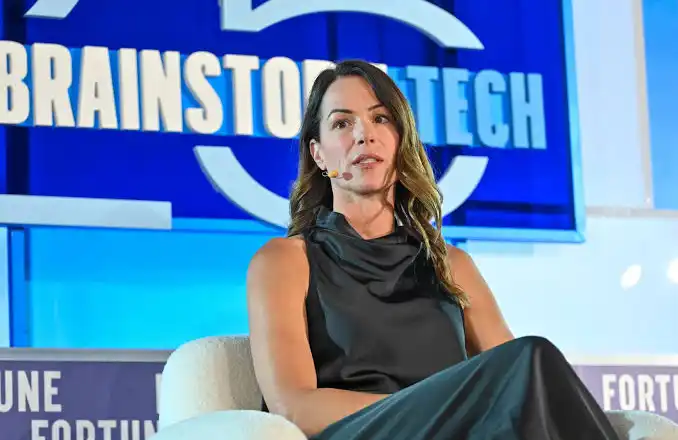
On December 8, Alexa Smith, head of developer partnerships at the DFINITY Foundation, held an online chat with users with the message "DFINITY: With the theme of "Developer-inspired IC Ecosystem", we share the current state and advantages of Internet Computer, as well as the criteria for developers to be motivated by DFINITY.
The mission of the DFINITY Foundation is to build, promote and maintain the Internet Computer. Its highly skilled team (including many of the world's top cryptographers, distributed systems and programming language experts, with a total of nearly 100,000 academic citations and 200 patents) is dedicated to building advanced experimental technologies to improve the public Internet.

The following is a transcript of the online conversation
Welcome Alexa Smith, please briefly introduce yourself. How did you enter the blockchain industry and choose to work as the Developer Partnership Lead at DFINITY?
Alexa Smith:Everybody is good! Thanks again for having me today. My name is Alexa Smith and I'm in charge of developer partnerships at DFINITY as well as managing our developer grant program. Since 2015, I have been working in the field of blockchain and Crypto. My background is chemical engineering and environmental science, and I entered this field by accident. In 2015, I joined a startup dedicated to tracking Ethereum carbon credits. This is very early days for Ethereum and for such an innovative use case. Since then, I've been totally hooked on blockchain, Crypto, and de-centered locking use cases.
After working at the startup for about two years, I joined BASF, a global chemical company. I founded and led their blockchain lab, which focuses on enterprise use cases. I was eager to learn more about the technology behind blockchain, so I joined DFINITY in 2019. I first heard about DFINITY at a conference in 2017. I was struck by the level of research and development behind the Internet computer. I was thrilled when I had the opportunity to join the team and help build the Internet Computer developer ecosystem.
I joined DFINITY two weeks before the release of the first Canister SDK and Motoko programming language. In my first few months, I supported some of the early developers and teams building on Internet Computer. Since then, our developer community has grown dramatically, and we're excited to support the team through our Developer Grant program, which will launch in May 2021. I'm passionate about working with developers and entrepreneurs, and I love helping them realize their dreams. It's exciting to see a concept come to life and run on an IC, and the blockchain, Crypto, and Web3 teams in particular are very passionate about what they see as a better future for decentralized technologies.
BlockBeats: DFINITY is a king project, which I believe most investors have heard of. It has strong institutional endorsement and a vision beyond the Internet. Can you refresh your mind on DFINITY? What are the advantages and differences of Internet Computer compared with other public chains?
Alexa Smith:DFINITY is a true "OG" project. Internet Computer has been evolving since 2015, which many people don't know. It was an intense R&D effort, and we have one of the largest and most impressive teams in cryptography. Our founder, Dominic Williams, has been thinking about scalability in blockchain for a long time, so Internet computers have been designed with these challenges in mind from the start.
When we say that IC can run at "network speed", we mean it. We carefully considered the design of each layer of the technology stack and implemented solutions like WebAssembly to optimize decentralized Web-based applications. Motoko, a smart contract language developed at DFINITY, was designed with WebAssembly in mind, and One of WebAssembly's co-founders, Andreas Rosberg, works at DFINITY. All the pieces have been carefully designed over the years.
In addition to the research and development behind IC, innovations such as the "reverse gas model" make its blockchain more accessible to users. This means that developers pay for computing and storage on the network, while users interact with the DApp without any gas charges.
And, even for developers, these costs are trivial compared to other chains. Some of the most popular Dapps running on ics, such as Distrikt and Toniq Labs, have spent less than $100 in fees since their launch. Another major difference is the computing and storage capabilities of the IC. Even on other chains, where costs are lower, it is still not possible to store assets or host the application front end on the chain. Because of this, many blockchain applications actually use centralized infrastructure in the background. The IC makes it possible to host full stack decentralized applications, which is very exciting.
BlockBeats: The main network of Internet Computer has been launched since May, how is the data so far? Can you tell us the number of ecological projects, developers, users and so on?
Alexa Smith:There are currently nearly 5,000 developers active on our forums, and as of today there are 14,900 Canisters deployed on the network. Surprisingly, many of these Canisters are full-stack DApps. There are also many open source Canisters that show the growth of the community, with nearly 500 + canisters using Canisters written by Motoko and Rust. We have also supported nearly 150 projects through the Developer Grant Program.
In terms of user statistics, some of the most popular Dapps like Distrikt and DSCVR have more than 70,000 users, OpenChat has more than 80,000 users, and many early ecosystem projects have had thousands of users trying out their Alpha products. These are huge numbers for both the blockchain/Crypto market and I believe this is largely made possible by IC's seamless user experience and reverse gas model. Because users don't have to pay gas fees, they can interact with the DApp just like everyday Web 2.0 applications.
BlockBeats: Recently, ecological support programs have become more and more abundant in the public chain ecosystem. Terra, Avalanche and other new public chains have launched hundreds of millions of dollars of incentive measures. IC also launched incentive measures for developers on the main network, and recently also launched incentives related to games. Can you introduce these two incentive measures?
Alexa Smith:In May, DFINITY also announced the creation of a $250 million Mega Ecosystem Fund. The Developer Grant program I lead is a program related to the fund. To date, the program has had an amazing success in guiding the Internet computing ecosystem, and we have supported nearly 150 projects. Grants of $5,000, $25,000 and $100,000 are offered. Have seen a variety of applications from around the world, including DApps, open Internet services, infrastructure, developer tools, and canister development kits and agents. You can learn more about the project at dfinity.org/grants.

For developers just starting out, we have Cycles Faucet, a $20 free cycle for qualified developers to help them start and deploy their first Canister to the network. We also announced a new program for game developers called Achievement Unlock.

It is a competition-based project that will start early next year and will be a source of additional funding for developers. The project is in partnership with United Esports, which you can download athttps://dfinity.org/achievementunblocked/Find out more and register in advance.
BlockBeats: Why are there two incentives? What is the difference in emphasis?
Alexa Smith:The main difference between the two is that the developer grant program is open to all developers and is not based on contests, whereas the achievement Unlock program is based on contests for games. Having said that, we strongly encourage game developers to apply for the Developer Grant program as well! We already have several game developers on board. You can check out some of the games already running on IC herehttps://dfinity.org/showcase/?tag=games
BlockBeats: What are the thresholds for developers and other eco-participants to get eco-incentives, qualifications, or projects?
Alexa Smith:For developers interested in applying for a developer grant, the process has several steps. First, you submit an application. When reviewing applications, we look for very strong technical teams that are interested in IC, and most of those teams have already started programming at the time of application. The more detailed your scope of work, the better.
If we choose to proceed with your application, you will be invited to an interview with the Funding Committee, where you can introduce yourself and tell us more about your project. Once the committee has reviewed all feedback from applications and interviews, we will decide whether to award the grant. Check out this blog post for more tips on how to write a good Developer grant application:https://medium.com/dfinity/how-to-write-the-perfect-developer-grant-application-8d1c53e6477c
For Cycles Faucet, any developer can pick up $20 for free today at faucet.dfinity.org to get started. For ecosystem participants other than developers, I strongly encourage you to check out our newly released Community Rewards program. We hope future conversations will cover this in more detail, but you can check out both the website and the app:https://dfinity.org/community/
BlockBeats: Which projects have received the most incentives so far?
Alexa Smith:You can find a complete list of grant recipients on the grant website. Since the last site update, we have awarded several $100,000 grants, including projects focused on topics such as metadata tools, cross-chain infrastructure, and NFT product innovation. Examples of these projects include IC Gallery and GigaverseLabs' cross-chain NFT.
BlockBeats: What are the criteria for getting motivated? Are there any areas that will be rewarded? What areas are not recommended right now?
Alexa Smith:For a developer grant program, we consider a number of factors, including the technical capabilities and track record of the team, clarity of scope of work, and potential benefits to the Internet Computer ecosystem. It would be great if developers could open source some of their code and documentation so that other developers could benefit. But this is not a mandatory requirement. It also helps if the team has already started hacking and is familiar with how IC works before applying.
As for the areas that are not recommended, we are of course very open and people can come up with their own ideas. I would say that cross-chain Bridges are a bit tricky and we generally look for strong teams with deep expertise in this area. Also with consumer-facing wallets, we are usually very strict with these grant applications for security reasons. If you're interested in building a wallet, we want you to focus on security and help drive canister audits across the ecosystem through research and testing.
Finally, we don't usually support NFT alone through developer grant programs. If you have an NFT project, we will look for some NFT technical innovations in your project to make it unique. For example, 3D NFT, NFT + GameFi and other innovative work.
BlockBeats: Are there any new plans and milestones for DFINITY in the near future?
Alexa Smith:Of course, we have many plans and upcoming milestones. As contributors to Internet Computer, we provide public documentation on DFINITY's roadmap. You can find more information at dfinity.org/roadmap and the corresponding thread for each roadmap project on our forum forum.dfinity.org.
Several notable milestones include the approval of canisters ICP just a few weeks ago. This is very exciting and crucial for unlocking DeFi in IC because now IC smart contract can save and transfer ICP. We are also looking forward to the integration of native BTC and ETH, which will allow Canister smart contracts to hold, send and receive Bitcoin and Ethereum.
In addition, one of the most anticipated roadmap projects is service nervous System (SNS). SNS will provide tokenization and governance "out of the box" for DAPP developers. The combination of dApps running at network speed with tokenization and governance will be revolutionary!
In addition to these larger roadmap projects, we plan to make several important improvements to the developer experience. This includes extensibility, which has already begun with the addition of canister storage, but we will also discuss how to extend dApps across Canister and subnets. Query calls between Canisters are also important, which will help dapps with multiple Canisters run faster.
Finally, just last week, we announced our plans to submit 24 motions to allow the community to vote on DFINITY's long-term development plans. Here you can read more information about each program: https://forum.dfinity.org/t/motion-proposals-on-long-term-r-d-plans/9261
That's the end of this conversation.
Welcome to join the official BlockBeats community:
Telegram Subscription Group: https://t.me/theblockbeats
Telegram Discussion Group: https://t.me/BlockBeats_App
Official Twitter Account: https://twitter.com/BlockBeatsAsia
 Related Articles