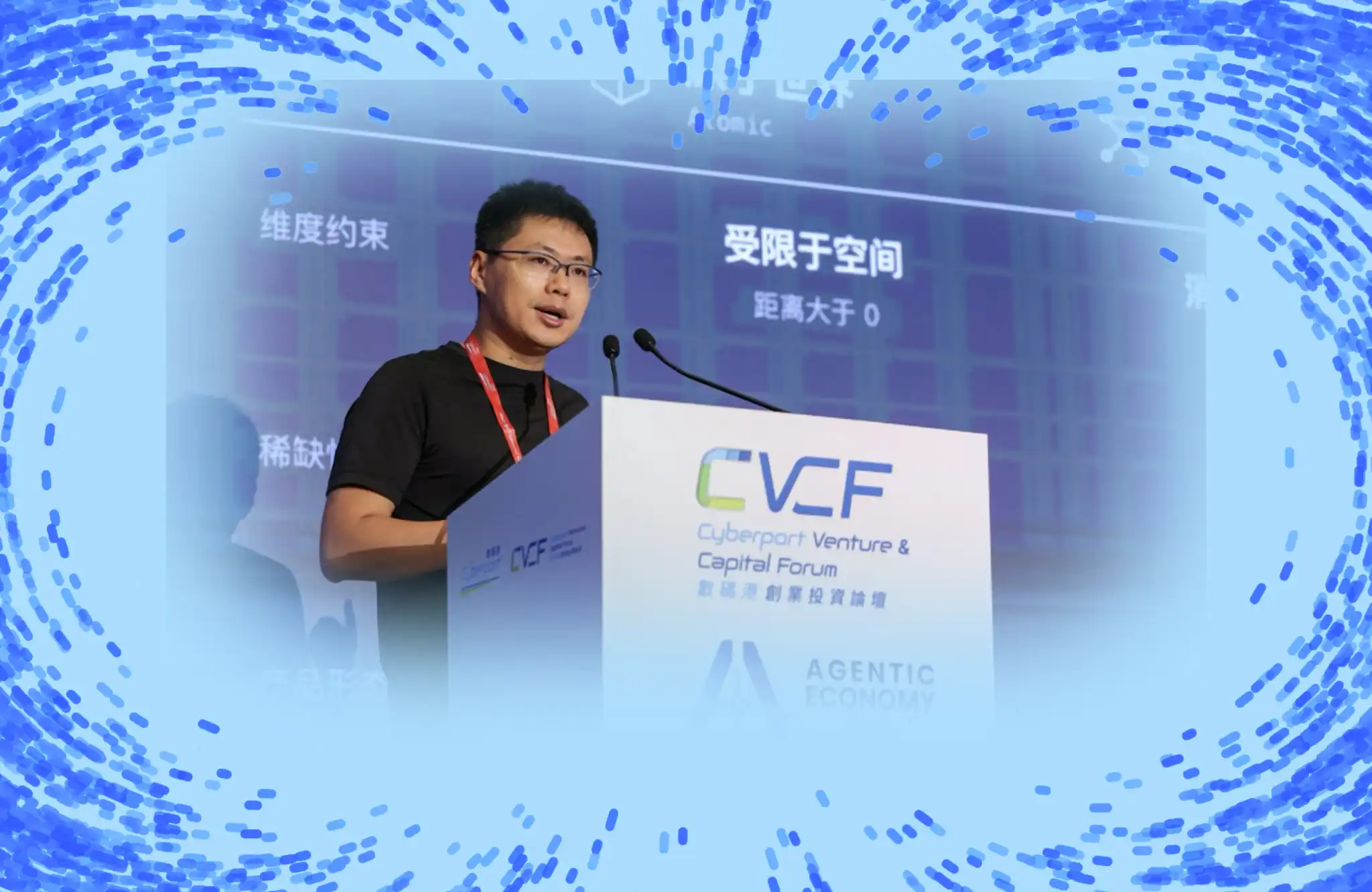
Founder of DapPreview: NFT and Metaverse
原文标题:《 浅谈我所理解的 NFT 和 Metaverse 》
原文来源: Vincent222,文森特二
Almost three years ago, I wrote an article calledBlockchain games that you don't understand", to stand at that point in time to think of some imagination and ideas, as far as possible out. At that time, there were many scenarios of Game + Blockchain, including user ownership of game items, scarcity, cross-game use of items, incentives for economic mechanisms, governance between project parties and players, incentives for creators, etc., which are very similar to the NFT features that we see being talked about everywhere today. In this paper, we mentioned that if the game Minecraft is a block chain, national team of architects works can be issued in the form of NFT game assets transaction this much good, recently saw yuan capital investment universe by national architects upcoming NFT assets of news, feeling as if met, as if becomes three years ago, when thought is gradually implemented.
As an old leek, I have experienced a round of transformation from bull to bear from 2017 to 2021, and my cognition has carried on some iterations. This article is actually the 2.0 version of the article three years ago. On the one hand, do some upgrades and supplements for the superficial views of 3 years ago, and on the other hand, try to make some own judgments for the next cycle.

Note: This article is very subjective, personal views are for reference only, not as any investment advice
Let's start with some personal opinions.
NFT itself is a technical term, referring to the homogeneity of the chain tokens, as a kind of tokens, standard, it can be applied to all kinds of the application of vertical type, artwork, game props, credentials, from this perspective, the application level of the NFT is not a kind of vertical track, for example, if you develop a block chain game, Use NFT as a game item, then the game is the core, NFT is just a tool. The Uniswap V3 LP token uses NFT, but Uniswap is a Defi application.
In essence,NFT is a protocol layer or middleware that sits between the application layer and the blockchain infrastructure layer. A project owner saying I did an NFT project is just like an Internet entrepreneur saying "I made an Internet application" without too much information. This may sound a little nitpicky, but I want to emphasize it in this extreme way,The project that issues NFT should pay more attention to its carrier itself, that is, what problem is solved in what scenario. NFT is only a technical means, not an end. Otherwise, it is putting the cart before the horse, and NFT is meaningless for NFT's sake.
At this point in time, both in and out of the world, we are still using the term NFT broadly to refer to a set of on-chain assets and related projects created using protocols such as ERC721/ERC1155 (or other on-chain similar protocols), which means that we are still in the early days, not yet ready for large-scale adoption or even basic PMF. A common programmer interview question: What protocols are required to access a Web site through a browser? For the average user, the answer to that question doesn't matter at all; the user only cares about the content of the site he visits and the experience he has. After NFT is widely used as the underlying protocol for virtual assets, the average user doesn't need to know what NFT is, only what assets I have, what they do, and where they are used. As for some of the features that NFT assets bring, such as ownership, scarcity, interoperability, composability, and so on, the average user will take it for granted, without having to dig into what technology makes this happen.
The NFT infrastructure is very early, you can use the agreement is not much, ERC721, ERC1155 and some of their magic to change version, can only meet the needs of the very basic, static images and video use will be a problem, if anyone want to an asset for some slightly more complicated gameplay combination, existing agreements cannot be used directly, such as interactive programmable NFT form, Async. Art is a simple twist, rather than abstracting a new set of more generic protocols. If someone else wants to do something different with an interactive NFT asset, they'll still have to build their own wheels. In the basic protocol layer of NFT, I think there are a lot of entrepreneurial and investment opportunities.
I talked about this in my podcast with Goddess Mable. - NFT = Intrinsic Value + Utility Value + Premium
Intrinsic value refers to the various costs of creating the NFT asset, including time costs/transaction costs/foundry costs, etc. Usability refers to the specific circumstances under which NFT assets can be used to bring value to the owner, such as a ticket to attend an event or a game item to be used in the game. The premium includes many elements, such as the premium brought by IP, the premium brought by speculation and low liquidity, etc., which are relatively difficult to accurately evaluate and judge.
"Intrinsic value" and "value in use" are the fundamentals of NFT assets,The "premium" is mainly reflected in the transaction in the secondary market. When the secondary market is hot, the premium is naturally extremely high, just like the NFT asset trading market one or two months ago. After the market slightly returns to rationality, the price and transaction volume naturally return to the value.Currently, most of the value of NFT assets comes from the "premium", the "intrinsic value" and "use value" are relatively low, or even zero, in other words, there are no fundamentals.As soon as the market calms down, it will enter a state of no market, which it has almost entered at the moment. The volume and volume of transactions will be significantly lower.
Recently, a lot of people came to me, both inside and outside the circle, to talk about the NFT of virtual assets, which is very exciting. There was also a wave in 2018. Most of the views were: "I will make this XXX a NFT asset, because it is decentralized, unmodifiable, owned by the user, and has rARITY". This view is not entirely right and not entirely wrong, it needs to be understood that NFT is not a panacea, centralized virtual assets in the form of NFT is naturally superior to others? The question boils down to figuring out what value NFT and blockchain give to virtual assets.
Break it down by another dimension of value,The value of NFT assets = virtual assets + rights protection brought by smart contracts + economic incentives brought by blockchain + interoperability brought by blockchain
The NFT assets that we're talking about user ownership, provable rarity, immutability and so forth, are governed by smart contracts. The difference from centralization is that smart contracts are like a legal document that publicly tells the user how these properties are designed, what the rules are, And what kind of limits can be adjusted or not adjusted, in the execution process will be in accordance with the rules of smart contract run in a decent manner. In a centralized product, these rules can be opaque or public but the user doesn't know how they are actually enforced. Another point worth noting is that NFT assets are not necessarily unmodifiable, and there is rarity. Developers of smart contracts for these properties can agree in the contract that they can be modified. Isn't cryptovoxel often issued new lots? Godsunchained every once in a while is not a new batch of cards printed out to sell very happy?It's just that smart contracts provide a much more transparent mechanism for getting information to the user, from a completely black box, to a glass box that's opaque to a degree that the developer can define.
The economic incentive mechanism brought by blockchain is divided into the original economic system and the derived economic system. The original means that a complete economic model is defined within the application and incentives are obtained through certain user participation behaviors, which can be Play to earn, stake to earn and so on. The distribution and incentive methods of tokens are designed according to the specific scenarios of the application. Derivative economies are interoperability of utilization, allowing NFT assets to generate value not only in one application, but also in other applications.
areaThe interoperability, or composability, provided by the block chain is what I think is the most amazing and imaginative value.The so-called interoperability can be understood as the token assets /NFT assets/user addresses/smart contracts on the blockchain, etc., which can be referenced by any application natively on the chain. In the Defi world, this feature has been fully utilized, and in the NFT related projects, it is just the beginning. Currently, we can browse and trade different NFT assets in various NFT trading platforms/wallets, but these NFT assets are not effectively combined to create greater value.The fundamental problem is that NFT assets require a vehicle and a scenario, and the vast majority (over 90%) currently have only two scenarios: show and trade, or only one scenario of their own product with some logic. The "use value" (fundamental) of NFT assets is low because of the lack of vehicles.
There are so many projects in exploring NFT class attributes of financial assets and derivatives, such as trading, NFT divided NFT mortgage lending, and so on, I think the direction is a long-term value, but may be a little late, time for the fundamental value of the underlying asset itself unstable under the premise of financial instrument may only be a castle in the air.
What are the carriers and scenarios? In general, I have these NFT assets that can be used in a variety of applications. Why, for example, can't a cryptopaster appear as an avatar in various game-like social dApps to prove that I am a "distinguished" punks holder in one of those public performances? Just take a shot of your forehead and think about some scenes. Can you make an NFT rough-and-tumble? Let Punks and Crypto Cat come to PK and bring all the NFT class assets in the head to play with.
At the practical level, even though there are a lot of details that need to be handled, such as how different styles of NFTs can appear in a game without feeling discordant, how to give extra numerical logic to different types of NFTs, etc. But the point is to leverage interoperability, not only to revitalize the use value of existing core high-value NFT assets, but also to leverage the industry OGs behind these NFT assets to become your seed users, smooth to complete the cold start.
Just like in the Defi world, why are new projects mined with Defi tokens such as Uni/Aave/Sushi? Those who hold these tokens in their wallets for a long time are the core value users of Defi. In the early stage, liquidity mining can accurately pull seed users to them.At this stage, creating an interesting NFT asset carrier and scenario is far more valuable than launching a new set of assets, and is also the best time to leverage existing assets to leverage core users.
Speaking of interoperability, let's talk about my understanding of Metaverse, a concept that's been all the rage in recent months, butThe definition of Metaverse in the context of Web2.0 is different from that of Web3.0.Under the logic of Web2.0, a large company creates development tools, the entire framework and rules of the Metaverse world, and under these rules developers create scenes and content through UGC experimentation, and operate with traffic logic to capture C-side users. I don't want to read too much into this, there are a lot of articles.
I'd rather imagine Metaverse in the Web 3.0 context, or at least -
• 基础设施层开放,无需许可,开发者不仅能开发场景,还能开发供其他开发者使用的中间件和协议
• 用户的数据和信息不归属于任何中心化实体,开发者(任何人)可以自由的分析/使用这些数据
• 多个风格不同 metaverse 可以组成一个更大的 metaverse,用户的身份/数据/资产可以原生的跨 metaverse 同步
There is no doubt that only blockchain as the underlying layer is possible to realize the above vision. As if this description of the Metaverse features above were too abstract, let me imagine a day in the Metaverse world of Web3.0. -
I signed in Dland with my private key, opened my DeFi panel first, and there were several projects of liquidity mining that collected their food, loaded the Uniswap components, sold the coins of several projects, and left the tokens of projects that I was positive about. In order to earn some extra income, I formed LP to provide liquidity in UNI V3. I received the NFT of UNI V3 as a proof of liquidity. Not to mention this NFT is very good, I opened the "billion wisdom" card game, decided to change the card back into the V3 NFT style. Play two games, win in a row, finally get the achievement medal of the 1000th victory, also draw two legend cards. I posted this medal on the top row of my Achievements page, and now I'm a user with 15 Platinum Game Achievements and 10 Platinum Defi Achievements. A few days ago, there was just a V club card game beta version released, all the "billion wisdom" with 1000 achievement medal users can directly participate in the test. Sure enough, I have been able to directly participate in the test with my achievements today. First, I set up a card group. In addition to the card system in the game, there is even a pool of foreign aid cards. A hunch told me that the price of Ered Wisdom cards was going up, so I immediately opened the OpenSea exchange and saw that the average price of Legendary Level cards had gone up 30% in the last few days. -
The running account above contains several key points:
1. Log in only once. All other applications no longer need to log in separately. The user's identity/data/assets are all recorded on the blockchain address
2. Assets generated by one application can be reused by other applications in various ways (the result of asset reuse can be win-win)
3. Targeted search for seed users through on-chain data analysis and user portraits
In Web3.0, the logic of value capture, business models, production relationships, and organizational governance will all be restructured. The three key points mentioned above have become commonplace in the DEFI world over the past year.
For Defi leeks, the first thing to do when you wake up is to open Chrome, log in to MetaMask, open several tabs, collect vegetables from different Defi items in turn (claim the tokens dug up overnight), then go to Uniswap/Sushiswap to sell a token, Look for new projects, get involved in the governance of certain projects, etc.All you need to do is log in once, and the web page of each decentralized app is automatically logged in, and the changes you make in one app synchronize seamlessly in the other.
Four years ago, I always thought that private keys and mnemonics were too anti-human. Now, I think it's anti-human that every application needs to use a separate account system. Besides, people have different requirements for passwords, some numbers + letters will do, some higher requirements must be case + number + symbol. If 1Password hadn't stored hundreds of accounts and passwords, I'd be getting hundreds of emails a year to retrieve my passwords. Once you get used to the experience of one account going sideways across N apps, there's no going back.
All actions taken by a user on the chain are recorded on the blockchain as Transaction, making it easy for anyone to view all the historical actions of an address. This is a database that aggregates the user behavior of all decentralized applications. It's as if an Internet company had desensitized its entire user behavior log. Not only that, but in addition to being able to view/analyze data, you can also interact directly with these addresses (users) on the blockchain. It is now almost standard for a new project to launch a token and airdrop users, often based on the user's historical behavior as a condition to find the seed users that best match their needs.In-chain data analytics and achievement systems will be an important component of Metaverse, which can map an address's identity, user profiles and behavior patterns.
Each smart contract is a piece of code logic, like a "Lego building block". Developers can build their own "house" by creating new "building blocks" and randomly combining existing "building blocks" to build a specific application scenario. Are all part of Metaverse. Blockchain carries data and information storage, and value delivery at the lowest level. So in a sense, Ethereum and its on-chain applications today, Has built a Metaverse without a cool front end. (It seems that all the EVM-compatible public chains are creating a higher level of Metaverse.)
The final form that fits the average user experience might be:
• 有若干个应用载体,有的会像 3A 级游戏的画面一样,像头号玩家里的世界一样;有的会走像素风格;你就能找到满足你所需风格的世界。
• 你可以穿梭在任何一个世界里面,用同一个套账号地址体系,资产和数据全部共享
• 不只是游戏,金融/社交/电商任何类型的应用都可以无缝融入这个世界
At this point in time, it's inevitable that the Web3.0 version of Metaverse is on its way. It may take three or five years for it to reach mass adoption, and there will be an intermediate between Web2.0 and 3.0 in between.
Note: this article is written in a hurry, the basic is to think where to write where, many places will have some omissions, in the follow-up series of articles to fill up slowly.
As for me, I have been paying attention to the application layer of blockchain since the end of 2017, and I did DapPreview at the beginning of 2018. I have written a lot of articles, and I have been thinking about the value and final form of blockchain in the application layer. I still remember that time point is the era of public chain, and developers in the application layer are very helpless and painful. There are only a few teams working on NFT and blockchain games, and there are only dozens of teams working on NFT and blockchain games around the world. At that time, Sandbox, Axie Infinity and so on were all gathered together in different countries and conferences with the same people every time. Many teams gave up midway and did not persist until today's outbreak of application layer.

I was lucky to participate in and witness the early stages of several NFT and DEFI all the way to the outbreak. In the next 10 years, I will still invest all in the blockchain field. The directions mentioned in the article (including carrier, middleware, protocol layer, etc.) Achievement systems, etc.) would be a major investment for me at NFT tracks. We welcome developers to join us.
The original link
Welcome to join the official BlockBeats community:
Telegram Subscription Group: https://t.me/theblockbeats
Telegram Discussion Group: https://t.me/BlockBeats_App
Official Twitter Account: https://twitter.com/BlockBeatsAsia
 Related Articles