FTX Founder SBF: "Making money is about having the largest positive impact on the world"

FTX founder SBF: Make money to make the biggest positive impact on the world
Original source: Forbes
Golden Finance
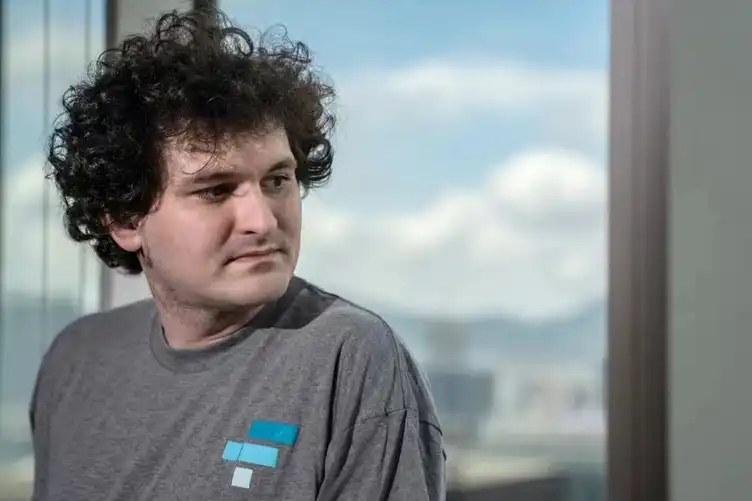
Sam Bankman-Fried has got a lot of press coverage. He's a 29-year-old vegetarian and cryptocurrency billionaire who quickly rose to fame by taking advantage of the BTC price difference between South Korea and the United States to make huge profits. He went on to create FTX, the world's largest and fastest-growing digital asset exchange. Yet as I read more and more about him, I began to realise that the mainstream media had missed a fundamental point: Bankman-Fried's view of the world. Bankman-Fried is like the Bentham of cryptocurrencies, basing his business philosophy on the effective altruism and utilitarianism that Jeremy Bentham championed. He doesn't just want to be the richest cryptocurrency billionaire. He wanted to make the biggest positive impact on the world. As long as money can do that, he will continue to make money.

Brendan Doherty: Welcome to visit us. of Impact, for those outside the cryptocurrency community who may not know that you have two fast-growing companies, can you tell us about Alameda and FTX?
Sam Bankman-Fried: After graduating from MIT, I went to work at Jane Street Capital for three and a half years. It was a great work experience. After I left Jane Street Capital, I started down the entrepreneurial path and chose to go into cryptocurrencies.
The first company is cryptography quantum trading company Alameda. We find that all the indications are that there will be a lot of demand for liquidity in the cryptocurrency space, but very little liquidity available. Everyone was talking about cryptocurrencies at that time. We have seen huge price fluctuations and large inflows of money, which clearly shows that people in many different countries are trying to buy different kinds of cryptocurrencies through various methods. No matter how big the crypto market has become, the phenomenon is only in its first few months. This means that most of the world's buyers have not had time to join the crypto ecosystem.
Doherty: So you see an opportunity in crypto infrastructure?
Sam Bankman-Fried: Yes, we had doubts about the amount of infrastructure available to service the crypto market. This means that demand could outstrip liquidity and could lead to large market spreads, creating a carry trade. So I went into encryption to see if my idea would work, and it did.
Doherty: So you created FTX with that in mind?
Sam Bankman-Fried: A year later, we started FTX. When I started trading cryptocurrencies, the typical retail investor would buy Apple shares from a platform like Robinhood and resold them through clearing firms and other institutions. At the end of 2018, the platform was a complete mess. Without any customer retention efforts, they are losing an average of $1 million a day in customer assets. To me, this is a symptom of the problem, not the core. So it seems like a big gap in the market, and a pretty big space in the market. I think TFX can do a better job. I want to combine buyers, sellers and exchanges. As a result, we launched FTX in the spring of 2019 and have taken it from nothing to its current position as the fourth largest cryptocurrency exchange outside of China.

Doherty: FTX has seen phenomenal growth. With that in mind, I'd like to focus next on one of your areas of work that gets very little media attention. You have a lot of big crypto deals, and FTX has been growing very quickly, which is getting a lot of media attention. But I'm interested in something deeper, which is that all of this is based on your worldview. You've said you want to maximize FTX's positive impact on the world. Let's talk about it from here. Where do you think it should start?
Sam Bankman-Fried: It depends on the behavior. For many of my friends, the answer is to make a difference in the world through work, such as choosing organizations to work with, and making a direct and significant impact. I think this is often overlooked when it comes to effective altruism. For FTX, we're very focused on the overall budget, and I think it's very easy to lose sight of who the donors are and what the money is for. But for me, the most important thing is to find the most effective target for giving.
Doherty: You said earlier that effective altruism is about making the most money and then using that money to have the greatest positive impact. I think there's going to be a contradiction. Some critics will say that part of the problem of economic inequality is our ability to think. What do you think of this view?
Sam Bankman-Fried: While some behaviors simply look like altruism, all behaviors that achieve effective altruism have direct and indirect effects. You have to quantify the impact in terms of these two factors. There are many professions that are bad for the world. Even if you can make a lot of money in these professions, it may not be the right thing to do. So if you make a negative impact, even if the proceeds are effectively donated to charity, you shouldn't get too much credit for it. I think you need to quantify the whole thing, which to me is at the heart of effective altruism. You can never quantify the world perfectly, but you can set specific goals for everything.
Doherty: You made a good distinction earlier, if you like Elon Musk and others have made billions of dollars from Tesla, unlike Exxon Mobil, which has made billions from fossil fuels. Both reaped billions of dollars in revenue, but the externalities were quite different.
Sam Bankman-Fried: Yes, it's hard to argue that Tesla's business is hurting the world. You can say, Elon Musk has made many positive contributions by creating green technologies. Or, if you don't agree with Tesla, you can argue that it's just a waste of resources and that Tesla will fail. But either way, Tesla is not the one to destroy the world.
Doherty: I agree with you. Now let's talk about philanthropy. I see you have a different view of philanthropy, especially the concept of crowdsourcing. What does it mean to involve your consumers, audience and community in the FTX Foundation's decisions?
Sam Bankman-Fried: So initially we wanted to give 1% of the money that FTX made to charity, but that wasn't the biggest factor in determining how much money I could give. We wonder if concrete public measures can be taken immediately? Get people involved in charity. For example, users can vote on where foundation money goes. Users can also donate to the foundation, and we were really shocked by this in such a positive way. Some users have pledged $5.6 million. There are a lot of people in crypto who have made a lot of money in the last decade, and it's natural for them to think about what the global impact will be. So I think encryption has a lot of potential and people can contribute a lot to a noble cause. So donating money is an easy way to get people involved in charity.
Doherty: Let's talk a little bit about utilitarianism, which you often refer to as the basis of your thinking. Can you talk about utilitarianism and how it has changed your behavior?
Sam Bankman-Fried: To me, utilitarianism means making the most money and becoming the happiest person. This may sound morbid or silly, of course if you want to achieve similar goals, but it's actually quite a powerful concept and has a very strong impact in many cases. Utilitarianism is about maximizing everything. Some people say that as long as you don't do bad things, you're fine. I think finding ways to help human beings is just as important as avoiding bad things. You should think about what you want to do with your life and what actions you can take to make the world a better place in the most possible way.
Doherty: I hear your parents are law professors at Stanford University. Did they influence your utilitarian leanings? Or did you discover it yourself?

Sam Bankman-Fried: Yes, they were all utilitarians, or at least learned the concept of utilitarianism. I was first exposed to this concept when I was very young.
Doherty: That's still pretty early! I've got some interesting quotes from you and I'd like to hear your interpretation. You said, "Money is a measure of caring for others." Can you explain it in detail?
Sam Bankman-Fried: There are many ways to do good in this world. One is to give money away to charity. This is not always a perfect way to think, and while money is powerful, it is not irreplaceable. One of the benefits of money is that when trying to compare the good and bad of two different interventions, if we can measure a lot of things in the same unit, it can be a huge advantage. Once you have money, how much good can you do with it? You think about money and doing good. As you make these trade-offs, consider the maximum benefit you can expect from doing so.
Doherty: Yes, and money can be more targeted to meet needs. You've also said before that you're "notorious for taking on new projects on a haphazard scale." What's the next project you want to build?
Sam Bankman-Fried: Now there are projects that are not very public. FTX is going to raise wages, and I've spent a lot of time on that. But a lot of people are wondering what is the future of the company? What will the best future look like? How do I achieve such a future? It's easy to be lulled into thinking that everything you do is within your power, without considering everything you can do in the broader context. In the case of FTX, we could focus on getting more core users, but that would be limited. I also want to think about how we can reach other populations that we might never reach before. What we need to do to build a major global brand while maintaining today's culture, reputation and user goodwill. All of this requires more coordination, time and effort. These people are indeed new to us, but they are important for the most ambitious future of FTX.
Doherty: I quite agree with you that we all need to think about how we can live our lives to the fullest, not just to be complacent. Thank you, Sam Bankman-Fried, for a great interview.
This article was submitted and does not reflect the views of Rhythm Blockbeats
Welcome to join the official BlockBeats community:
Telegram Subscription Group: https://t.me/theblockbeats
Telegram Discussion Group: https://t.me/BlockBeats_App
Official Twitter Account: https://twitter.com/BlockBeatsAsia

 Related Articles