FTX CEO SBF: Cryptocurrency Whale to Give Billions
Originally written by Andrew Fenton
"--" The cruel, or perhaps heartening, truth is... the more you put in, the more you get out."
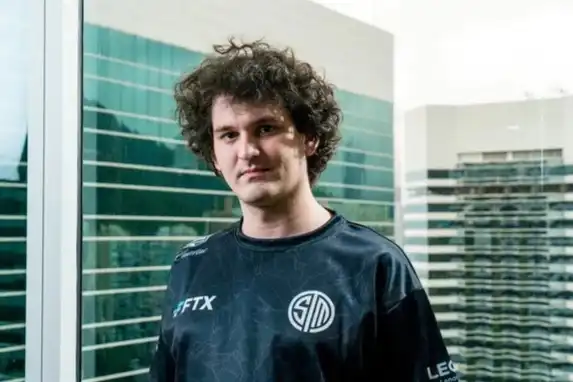
Like many in the cryptocurrency industry, Sam Bankman-Fried is in it for the money. As the founder of quantitative trading firm Alameda Research and centralised exchange FTX, as well as a consultant to Defi protocol Serum, the curlyhaired 28-year-old has accumulated it in just three years$10 billion in wealth.
However, unlike most people entering the cryptocurrency space, he has worked hard to accumulate wealth in order to give away half of it. As an "effective altruist," he essentially used his sophisticated cryptocurrency trading strategies to "rob the rich and give to the poor."
他说:「可能没有劫的成分。最终,我的目标是尽我所能带来尽可能大的影响,不管是如何产生这种正面影响。而现在,我认为可行的方式就是通过捐款,因此我要明白如何才能尽可能挣到更多,并尽最大努力捐出更多。」
The SBF has been on this road for some time. He spent a few months in 2017 as director of development at the Centre for Effective Altruism, after giving away half of his Wall Street earnings. He also plans to give away 50% of his cryptocurrency industry income -- but not until he's finished reinvesting his growing empire.
However, if there was a need for support, he would give generously. He was the second-largest contributor to Joe Biden's presidential campaign, after Michael Bloomberg, the former mayor of New York, with $5.2 million."I'm excited about the impact it could have. I basically think it has to do with where the election is going."
In addition, the FTX Foundation was recently established. It will donate 1 percent of the platform's expenses, and for every $1 users donate, the foundation will also donate 1 yuan, up to a maximum of $10,000 per day. In its first few weeks, the foundation has raised more than $2 million, much of it from user donations, which allow users to vote on the charities receiving money from a carefully selected list.
SBF sleeping on the beanbag couch in the office
This year's list"Forbes list of 30 Financial People Under 30", which makes SBF's growing public profile even more relevant. "I'm flattered," he said, "but I'm used to looking forward, not back, so the nomination was kind of cool, but it passed quickly." He was also ranked third on Cointelegraph's recently released Top 100 People list.
The key reason SBF, famous for a photo of sleeping on a beanbag couch in his office so as not to miss a trade, makes more money than anyone else seems to be that he almost never stops working.
"I'm usually in the office 24 hours a day. I sometimes take naps on the beanbag here, and of course I joke around with colleagues and sometimes with people online, but mostly it's work."
He doesn't have a girlfriend and rarely sees anyone outside of work, though he does spend time talking to his family in the United States, "on the phone a few times a week." It's safe to say that SBF is not the kind of person who aspires to perfect work/life balance, or even agrees with the notion that productivity drops after about 11 hours of work.
"I think the essence of that is overhype, and the cruel or inspiring fact, depending on how you look at it, is that the more you put in, the more you get out," he says. "That for me is motivating and fulfilling, and the other thing is, that's how I think I can make the biggest impact."
How did I get into this business?
The son of Stanford law professors, SBF was studying physics at MIT when he was exposed to"Effective altruism"Campaign.
Popularized by philosophers and ethicists such as Toby Ord and Peter Singer, the campaign focuses on pragmatic ways to help others use science and reason to ensure maximum effect, rather than the well-intentioned but often ineffective approach of some charitable organizations. This practical approach extends to a careful study of the best ways in which individuals can help.
"Imagine if you work directly for a cause or if you work on Wall Street and contribute to a great cause. In many cases, you can actually help them better by donating. So I went to work on Wall Street."
A friend who interned at quantitative trading firm Jane Street Capital gave him a path to Wall Street, where he began working after graduating from college in 2014. Why, you may ask, would they hire a recent physics graduate with little experience in finance?
原来,量化交易策略是「超级宝贵」的商业机密,所以大学里不会有人去教这些成功的策略。因此,公司会招募具有天赋的人:数学天才或具有物理学或计算机科学背景的人。
SBF 说:「公司会教你需要知道的市场知识。」他交易了各种 ETF,期货,货币和股票,并设计了一个自动化的 OTC 交易系统。在那期间,他开始对低效的加密市场中疯狂获利的套利机会产生兴趣,并于 2017 年底成立了加密货币量化交易公司 Alameda Research 以从中获利。
The top of the group of whales
Alameda Research has now grown to be one of the largest cryptocurrency companies, with around $2.5 billion under management, and while it may have its own assets, SBF uses some of the provisions on liquid and illiquid assets to justify the total amount of assets under management.
Alameda is the Moby Dick of cryptocurrency whales, in charge of up to 10% of all cryptocurrencies circulating on the market at any given time. "I think it could be up to 10 per cent of the total at any given time," he said. "The average is probably a little bit lower. It's firmly in the top five to 10 trading firms in the space."
That means any deal Alameda makes could move the market and lead to liquidation. In October last year, Alameda was widely blamed for a fall in YFI prices due to short positions, even though SBF had minimised its impact. With great influence comes great responsibility, he argues.
"It's definitely a responsibility," he says. He adds that he tries to follow the Tradfi Quantitative company's approach. "Their role is to find profitable trades, but also to provide liquidity and promote the health of the market. Our biggest responsibility is not to harm others and to ensure that what we do is, in general, to promote liquidity in healthy markets and efficient trading, and not to interfere with it."
He added that the carry trade, for example, can have a positive impact because it makes markets more efficient and lowers prices at a premium. Alameda was founded to identify and research how to profit from the arbitrage trade. "One of the first big carry trades where we really made money was Litecoin," he recalls.
"There was a week in late 2017 when Litecoin was trading at a 20 percent premium on Coinbase GDAX [now Coinbase Pro]. One might have thought, 'Oh, that's cool, making 10 percent every half hour is making a ton of money, isn't it?
Maximising the opportunity has proved fiendly complex, requiring circumventing the size of deals and the million-a-day withdrawal limit. "Especially a few years ago, in the cryptocurrency space, one of the big issues was figuring out what steps go beyond these transactions," he said.
SBF and his friends were making $25 million a day in another arbitrage trade through a series of Japanese intermediaries and Grameen banks, taking advantage of the famous "kimchi premium," when the price per bitcoin traded in South Korea's less open financial system was a third higher than in the United States.
But the biggest challenge is dealing with the traditional financial system. "One of the hardest parts of arbitrage, the slowest and most expensive and the most frustrating, is when fiat money is involved," he says. He also highlights the difficulties of opening an account, which can be closed at any time, red tape, bureaucracy and intolerably slow wire transfers.
"We spent five man-hours a day at brick-and-mortar bank branches for five months, because that's how long it takes to send wire transfers," he says. He added: "Say we get there at 10am and stay with a lot of people until 1pm because we have to attend all the meetings that are going on every day of the week just to send the same wire transfers that we sent yesterday."
这是 SBF 如此热衷 DeFi 的原因之一——他的愿景是 DeFi 某天能取代笨拙的现有金融系统。他说:「目前的支付手段毫无效率可言。有数以万亿计的投资及公司,都是为了简化支付手段而建立的,但最终会遇到这种令人难以置信的复杂网络,让大多数人去使用。它们仍运行在老旧的系统之上,甚至都没有互联网思维的设计。」
Influencers in cryptocurrency circles
For many, during the Defi craze in mid-2020, SBF was the image of a cryptocurrency and Defi big shot, as he began to make an impact on the cryptocurrency Twittersphere. That is by design: in 2018 he was happy to remain anonymous because Alameda's focus on quantitative deals "requires little publicity and is even mostly low-key." But when he launched FTX, an innovative cryptocurrency exchange, in 2019, he needed to build a community around it, so he took it upon himself to advocate for FTX on social media.
"Because FTX is a retail business, the more customers the better. You can make the best product in the world, but it's not worth anything if nobody knows about it," he says."One of the most difficult and interesting tasks is figuring out how to engage users, and awareness is a big part of that."
He seems to have found the answer, as FTX is now the fifth-largest derivatives exchange by volume, with a valuation of $3.5 billion. It launched a series of innovative trading marketplaces, including tokefied shares of companies like Tesla, Apple, and Amazon, as well as Coinbase's pre-IPO products.
He has also used his wealth and influence to try to overcome what he sees as the biggest obstacle to the widespread adoption of Defi. He believes that Ethereum, including ETH2, will not be able to scale up to the size of cryptocurrencies and DEFI to replace the existing financial system. Defi currently processes about 10 transactions per second, while the second layer solution can achieve processing speeds of thousands of TPS.
"In terms of development, this is an absolutely difficult and insurmountable hurdle," he said. "Unless this problem is solved, DEFI simply cannot develop into an ecosystem. So all long-term plans that do not solve this problem are not feasible. In SBF's view, even the ETH2 target of 100,000 TPS is still not enough.
"If your goal is to expand to 100 million or 1 billion users,... if you want to make a could become the world's most widespread application, so it needs to be able to expand to about one million transactions per second. If your goal is in this way, you can directly permanently cross out those who do not have the resources, unable to reach the goal of expansion options, don't even need to consider any other factors."
It is for this reason that he has become one of Solana's most prominent supporters. Solana's public chain currently handles 65,000 TPS, and the team claims it could eventually scale to astonishing levels: 710,000 TPS or more on a 1 gigabit chain28.4 million TPS on the 40 gigabit chain.
As a consultant, he was involved in the establishment of SERUM DEX on the Solana public chain, and SERUM launched its eco-token SRM in August 2020. According to SBF, we can see the advantages of Solana in Serum's online order book matchmaking engine and its low fees. "Orders can be delivered for a penny and transactions can be completed in seconds."
"So you can get a lot of benefits from higher throughput. This really expands the base of the product considerably. I think it is very likely that Serum DEX has handled more volume in the six months it has been running than has ever been done on all the Ethereum blockchains in history."
But Ethereum's network effects also mean that getting the Defi project and users to migrate to Solana will not be easy. Even & have spentChef Nomi handed over control of Sushiswap to himAfter that, he still couldn't persuade the community to move. "In the end, we found that it was much harder than we thought to transfer existing projects over, and it was much easier to create new projects directly on Solana," he explained, adding:"We would still be very excited if Sushiswap were to establish a base on Solana. I think there is still a chance that they will. But I also think Serum will continue to move forward, whether it is or not.
(After our interview, there was a new proposal to build a version of Sushiswap, possibly called Bonsai, on top of Solana and Serum.)
While SBF says that there are many interconnected applications already built on Ethereum and that there will indeed be large network effects, he points out that eventually each project will have to "migrate and break composability and tool compatibility with existing options" before switching to a second layer solution, ETH2, or another scaling solution. The online impact of ETH, in terms of the number of users, is overstated, he says.
"The other thing is that while the current Defi user base is sticky and super important and influential, it's not that big. I'd estimate it's in the tens of thousands of daily active users. It seems to me that FTX probably has more daily active users than all of Defi combined."
SBF's plan seems to be to embed the Solana blockchain as the infrastructure in the application, so that it is invisible to most users, in order to plug millions of content into Defi. At the beginning of 2021,Alameda led the $50 million round, and embed the Defi tool into maps.me, an offline mapping application in Europe with 140 million users. It will add a multi-currency wallet that can use tools built in Solana to pledge and exchange rights for income. FTX's acquisition of Blockfolio is likely to follow a similar strategy.
"I think it's going to be a really cool product for the app, and it's going to be powerful," he said of Maps. "I'm really excited about it. I think it could really kick start [Defi's] app."
Welcome to join the official BlockBeats community:
Telegram Subscription Group: https://t.me/theblockbeats
Telegram Discussion Group: https://t.me/BlockBeats_App
Official Twitter Account: https://twitter.com/BlockBeatsAsia

 Related Articles