Roam Research: It's not just a note-taking tool
Title: ROAM White Paper
Original source: Fat Garage
The original text is from Zack's column on Zhihu, and I got the first turn because the translation is really wonderful. 'Roam's ideals and vision deserve to be seen by more people,' he wrote on Twitter. 'That's exactly what I want to say.' Enjoy.
Roam is a new note-taking tool that emerged last year. Other authors have already detailed its features on Zhihu: What's so special about Roam Research?
Here, I have translated the white paper written by the founder of ROAM, hoping to give you some inspiration. Excerpt from the conclusion of the book:
The human body of knowledge today is a vast ocean of information and ideas, much of which is inaccurate, some of which is malicious, and whose best resources are either limited by gatekeepers or nearly impossible to find. The amount of information is growing exponentially, and if potential collaboration problems can be solved, this presents huge opportunities.
Clearly, a fundamentally different approach is needed. Roam's vision of human knowledge is a collective, open source intelligence that constantly reorders, iterates, and evolves in pursuit of truth. Each of us will become a node in this collective intelligence, making connections and creating networks, sharing the best that each has to offer, improving ourselves as well as others, and advancing humanity as a whole.
The original story: across White - Sullivan | cwhitesullivan@gmail.com
English: https://roamresearch.com/#/app/h elp/page/Vu1MmjinS
English: https://roamresearch.com/#/app/trade/page/nhzz3wRuM
Translation: Zack Fan | zack.fan@gmail.com
Abstract: ROAM is an online workspace for organizing and evaluating knowledge. The system is based on a Directed Graph, which frees it from the constraints of the classic file tree architecture. Users can mix and connect ideas in multiple overlapping hierarchies, with each unit of information becoming a node in a dynamic network. Any given node can occupy multiple locations at the same time, passing information through a definable chain of relationships, and updating in real time throughout the directed graph. If the strength of the relationship between nodes is allocated with corresponding weights, ROAM can also become a tool of Bayesian Inference and decision making. Our ultimate goal is to extend this system to the realm of collaborative reasoning and allow teams to build shareable Mental maps to make faster and more informed decisions.
1. Introduction
We are experiencing an unprecedented explosion of knowledge. In the US alone, 2,700 books are published every day, 6,850 scientific papers are published, more than 2m blog posts are posted and 294 billion e-mails fly around. Each time the earth rotates, if the newly generated data were written into the book, the books could be stacked together and made a round trip from the earth to the moon. While this exponential growth presents enormous opportunities for individuals and society as a whole, neither the human brain nor current technology can yet harness it.
2. Common practices of current knowledge management
Humans are poorly adapted to the information age, which occurred only in the last 0.02% of our evolutionary history. While the brain does have extraordinary raw storage capacity, perhaps in the Petabytes, it is highly error-prone in processing information. Human memory retrieval is lossy and unreliable, and many of our inherent cognitive biases and ways of thinking fail in the modern world, distorting our ability to perceive, judge and make decisions. The brain's plasticity allows it to reconnect with new connections, but even this is a "use it, don't use it" trait, and those pathways that aren't used often eventually wither away.
In response to these limitations, a number of techniques for organizing knowledge outside the brain have emerged. Since the invention of Gutenberg Press, physical books and periodicals have proliferated, only to be replaced in part by word processors, websites, blogs, forums, wikis and other software applications.
While there are many options for how we organize what we learn, almost every technology follows the same "filing cabinet" format: knowledge units/files are saved in a specific file path that points to a folder organized by chapter or category. When a knowledge unit/file is related to many knowledge points, it can be labeled as a related knowledge point, but each file is usually stored in a single nested hierarchy. To access this information, users must remember where they stored the file, the content of the tag, or use the search function to locate the file.
Related discussion:
https://twitter.com/Conaw/status/1099181050045952006
By Conor White-Sullivan@Conaw
3. The problem of file cabinet architecture
In some ways, current technology is still far behind the human brain. If each neuron could only hold a single "unit" of memory, our brains would quickly fill up to overflow. Instead, information travels through the brain through connections between neurons and neural networks, so an idea can be shared by the whole brain; The concept of a blue sky may be repeated in countless seemingly unrelated memories of time outdoors. This efficiency helps explain why a computer needs millions of times more energy to perform the same task as a human brain (which is about as powerful as a dim light bulb). (note [3])
Unlike the brain, the file cabinet approach makes it difficult or impossible to aggregate or reuse the same piece of information, because every time any given file is modified, it must be tracked and updated at every location where it exists. This leads to redundancy, where nearly the same ideas are recorded repeatedly, and a lot of work is done when any system-wide changes are required.
The current solution also lacks interconnectivity, with many files isolated out of their context; Information is kept in a drawer, rather than being systematically placed into a wider framework of knowledge. Knowledge trees can create informal relationships between files in a given hierarchy, but these relationships are usually ambiguous and describe only vertical "parent and child" taxonomic relationships. Some tools, such as Web pages and wikis, also allow orthogonal linking between related files, but are often non-standardized and do not have the ability to clearly define linking features.
4. Knowledge graph represented by node network
Large-scale collaboration requires more flexible data structures than traditional file trees. ROAM is built on a knowledge graph that maps all possible relationships and creates "smart" links between user-defined concepts. Users can connect similar ideas in multiple overlapping hierarchies, recompose them without overwriting the original text, and selectively share portions of the knowledge graph with others to collaborate on specific subproblems.
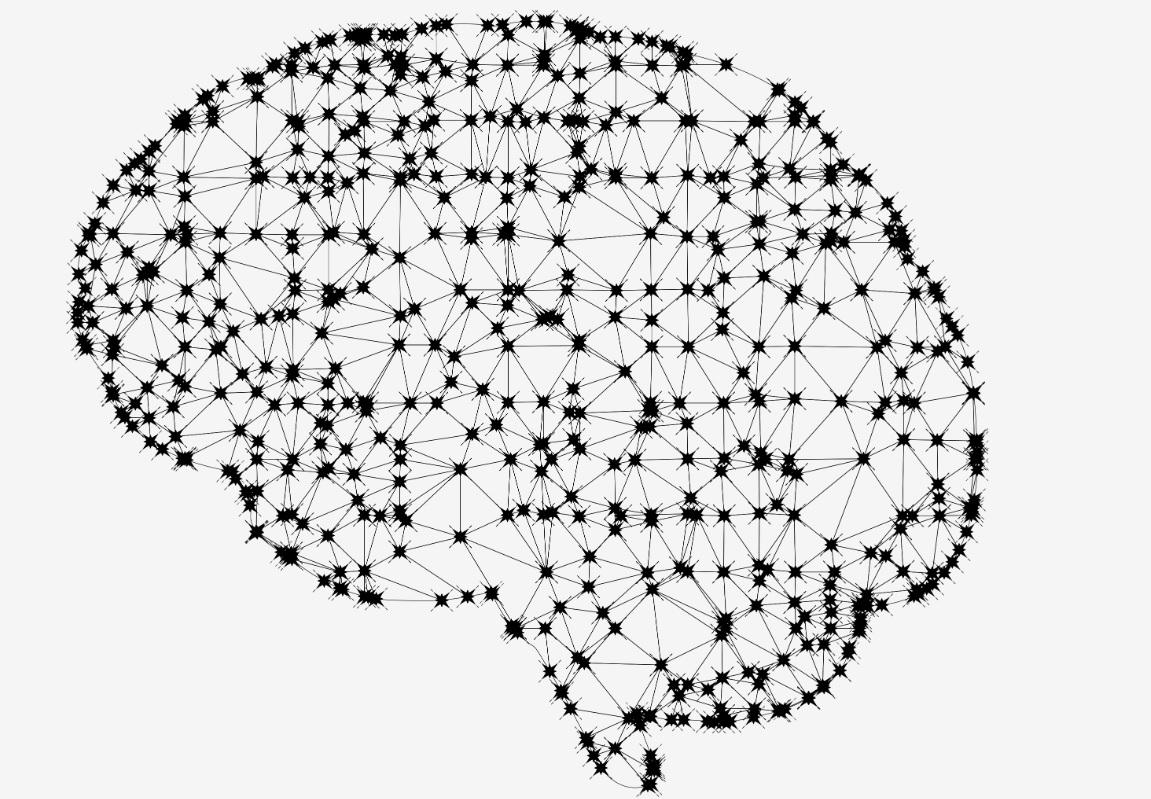
If the market's existing tools are akin to filing cabinets, ROAM is more akin to a network of nodes in a telecommunications network or a cluster of neurons in the human brain. Each comment or file does not exist in a vacuum, but rather becomes a node in an interconnected knowledge graph. A single node can simultaneously maintain positions in multiple different sequences, hierarchies, or file paths, and can "talk" to other nodes, passing information about the nature of each relationship in both directions. The network is dynamic, and any updates and revisions will be updated in real time throughout the network. Individual nodes or branches in the network can fork as needed, allowing new paths to be established without changing the original meaning.
At the simplest level, ROAM's structure makes it easy to store, recall, and cross-reference ideas, which is one of the main areas where ROAM can help students, authors, self-learners, and users of existing note-taking programs.
For advanced users, knowledge graphs can also help unlock more applications in areas as diverse as logic and reasoning, Bayesian reasoning and decision making, complex problem modeling and collaborative research. Potential use cases for these capabilities and related technologies are discussed in Chapters 5-8.
5. A knowledge graph represented by a network of nodes
From peer reviews of research papers to newspaper reviews, people make a statement based on a premise that goes something like this:
If A is true, then B is true. If C and D are both true, then A is true. C and D are both true. Therefore, B is true.
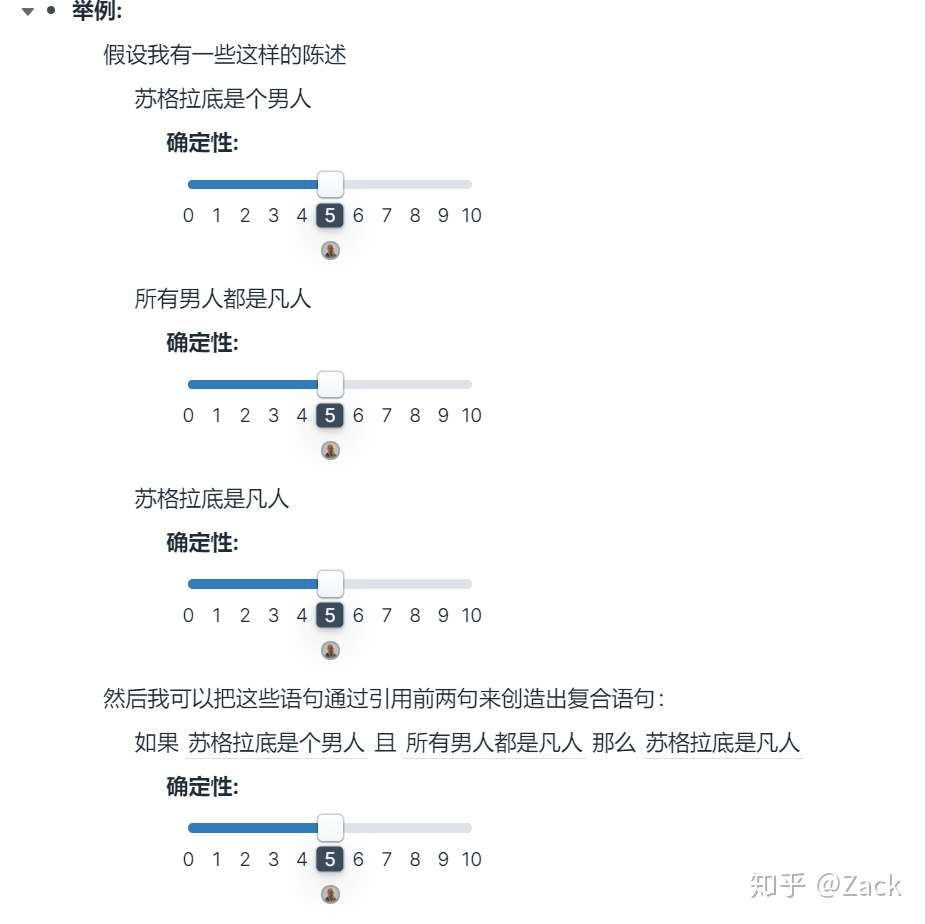
When we access one of the referenced statements (blocks), we can see that the entire compound sentence has been associated.
Such as:
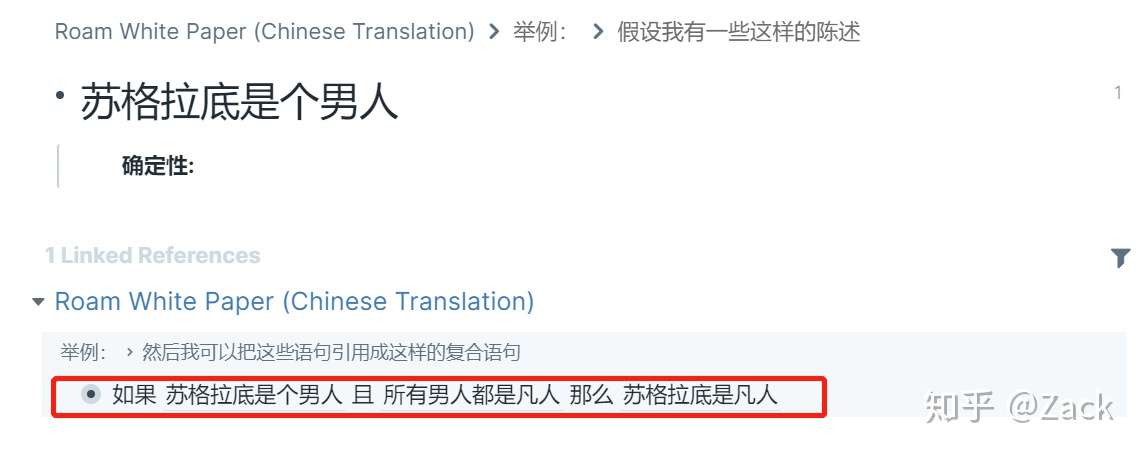
Usually, the arguments of C and D are supported by links to external articles, and they are often based on the larger arguments and the conclusions obtained by combining other premises. Unfortunately, the structure of the argument is only hinted at in the statement. The relationship between evidence and evidence is rarely explicitly stated in the text, except in the drafts used by the authors as inferences.
ROAM allows researchers or writers to organize ideas they want to express on different projects. It also creates opportunities for large-scale interdisciplinary research projects. When interested collaborating teams discuss pros and cons within an agreed framework, it is possible to create extensible user interfaces that translate insights that require expertise into ideas that are more easily understood by laymen.
The ambiguity of natural language often prevents much meaningful discussion, and unless the topic of discussion is clearly defined from the outset, arguments of any kind are futile and often end up solidifying the interlocutor's original position.
Sample A,
Alice: "A tree falling in a large, deserted forest makes a sound."
Bob: "A tree falling in a large, deserted forest doesn't make a sound."
The sample B
Alice: "A tree falling in a large, deserted forest will [produce sound waves]."
Bob: "A tree falling in the middle of a large deserted forest does not." (note [4])
While these positions are contradictory, as shown in Example A, A simple definition of the term "voice" would show that the basic views of the two sides are fully compatible.
The use of clearly defined sets in a Dependency Graph helps resolve ambiguity, reducing the number of participants in a discussion who are debating for other purposes or deliberately using the "Mott-and-Bailey fallacy" to mislead. (note [5])
In addition to reasoning and argument, dependency diagrams have many applications in education, autonomous learning, and everyday decision-making. Even a very complex project can be traced back to a number of smaller tasks. Users can see the tradeoffs involved in each decision path and figure out which path is the fastest and which might be closer to other interesting goals. As students record their progress, they can also use the skills they gain to discover new tasks and paths.
The linguistic problem even applies to the field of mathematical proofs, see Lamport's How to Write a 21st Century Proof.
6. Clarify complex relationships 6.1 Non-linear causality
Simple questions tend to follow a direct cause-and-effect relationship. When a patient has a series of symptoms closely related to the flu, the doctor may infer from the observable variable that there is an invisible variable -- the flu virus. Treat this underlying variable and the symptoms will go away.
Scott Alexander observed that his fellow psychiatrists also tried to attribute a set of related symptoms to an underlying variable, such as depression. However, the symptoms of depression - such as sleep disturbances, fatigue, and guilt - can also have a causal effect on each other and on the disorder itself. This complex network, which may include feedback loops, does not follow a linear cause-and-effect path. For complex problems of this nature, the node network is a more accurate model:
A model of depression (MD) and generalized anxiety disorder (GAD) established by Nuijten, Deserno, Cramer, and Borsboom. These diseases map roughly to a series of symptoms that often occur together and reinforce each other, but there is no clear "bright line" between the symptoms.
Even at face value, node networks provide a visual aid to solving problems -- a bird's eye view of how the various elements are connected. This may help to identify different forms or clusters that may be counterintuitive or difficult to see the whole picture when studying microscopic structures.
6.2 Bayesian inference
Applying Bayesian inference to knowledge graph can make it a powerful tool for probability estimation, hypothesis evaluation and decision making. Bayes' theorem is a law of probability that tells us how much we should change how we think about something when we learn a new fact or acquire new evidence. The theorem is stated in the following equation:
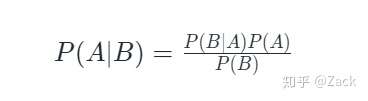
Of A proposition is to focus on, B is observed evidence, P (A) and P (B) is the prior probability, P (A | B) is A posterior probability.
Suppose a doctor has a patient who, because he belongs to a high-risk group, wants to know the probability of carrying a potential virus. This is the "concern proposition" on the left side of the equation. Previous data suggested that 4% of the population were carriers of the virus, so P(A) = 0.04. B is the observed evidence that 32% of the total population is at high risk, P(B) = 0.32. Doctors know that carry the virus in patients, 80% belong to high-risk groups: | B = 0.8 A
The doctor applied Bayes' theorem:
P (A | B) = (0.8 * 0.04) / 0.32
P (A | B) = 0.1
Her patients have only a one in 10 chance of becoming carriers, which may be lower than one might expect, since almost all carriers are in a high-risk group.
Although this is a simple calculation, the advantage of Bayesian reasoning is that it can break a seemingly insoluble problem into small pieces. Even when no data is available, continuous multilevel estimates can provide useful improvements in the level of confidence of various results. By adding this framework to the relationships defined between nodes, changes to the weights at any point in the network are automatically updated throughout the knowledge graph.
Bayesian probability also provides a framework for decision making. By evaluating the costs and trade-offs of various options, the user can calculate which path offers the highest expected value. Similarly, even when weights are simple estimates of individual preferences, the quality of decisions can be improved by multiple layers of arguments for and against them. Evaluation matrices allow us to integrate a lot of information into the final decision, rather than default to some simple extrapolation.
7. Optimize for serendipity
Just as humans can't generate random numbers at will, it's hard for us to consciously generate random thoughts -- so much so that we often actively try to "think differently," which only seems to solidify existing thought patterns even further. Instead of trying to force creativity roughly, the brain must be confronted with new stimuli in order to reorganize its senses. Exposure to a certain amount of random "noise" (dreams, meditation, tarot card reading, mistakes) causes the mind to escape the confines of common sense and enter a whole new space of thought. Often, these insights occur at the intersection of two or more seemingly unrelated domains, concepts, or forms.
The interconnection of ROAM knowledge graphs creates opportunities for serendipitous discovery. Each node in the network can be displayed and viewed in multiple diagrams, allowing users to view related ideas, scan vertical hierarchies up and down, examine nearby clusters of nodes, and observe the shape of the knowledge graph.
ROAM's search function can be calibrated to the user's needs to include as much or as little "noise" as possible. When looking for a particular paragraph or comment, the search Settings can be narrow enough to find exactly what the user is thinking. However, it can also be extended to "fishing trips," with the aim of bringing ideas to the surface. Some search results will contain comments that users may have forgotten, some will be noise, and others will provoke thoughts that users didn't even know they were looking for.
The intersection of ideas from different fields can bring low-handed benefits to individuals and society. The time and effort required to become an expert in a field quickly becomes a diminishing return. By contrast, the "talent" of accumulating a set of extracurricular knowledge or skills can instead capture opportunities that experts with a narrower focus might not have discerned.
Highly specialized knowledge is still essential for opening up new fields. However, in the face of increasingly complex problems, interdisciplinary approaches to research are becoming increasingly necessary for scientists, technologists, and policy makers.
8. Collaborate in problem solving
While single-player use of ROAM has its own advantages, the ultimate goal is to create a platform for collaborative research and learning. Existing mechanisms are often constrained by the necessary consensus assumptions, and the flexibility of knowledge galleries allows for a more pluralistic approach that can weigh conflicting views and separate the signal from the noise without resorting to autocracy or democracy.
8.1 Look for a signal in the noise
As the frequency of information increases, the world becomes noisier and noisier. As described in Chapter 7, deliberate exposure to noise can be a useful strategy in certain circumstances, but can lead to ambiguity in communication at other times. Given our tendency to impose story and interpretation on randomness (the narrative fallacy), it becomes increasingly difficult to separate real signal from noise.
Assume a trend has an annualized signal-to-noise ratio of 1:1 (50% of the data is meaningful and 50% is random). If we observe the same data every day, the ratio changes to 95% noise and 5% signal. If you look at the data once an hour (as journalists and market fanatic trackers do), it becomes 99.5 percent random - that is, 200 times louder than the signal. The agencies responsible for interpreting data include the media, academia and legislatures. Some of these agencies may have deliberately covered up the truth, with examples of "fake news", p-hacking and politicking. Although active malice is the exception, even the best journalists, researchers and analysts are not immune to being fooled by randomness.
Therefore, for most people, the problem of separating signals from noise involves finding reliable and accurate auxiliary sources of information. This difficult task is often thwarted by closed scientific journals and search engine algorithms that are increasingly manipulated by content marketers versed in search engine optimization.
8.2 Information redundancy
Browsing through a lot of information creates a lot of redundancy. Most people waste energy on problems that have been solved a million times. People who work on unresolved issues are often on information islands, unaware of each other's existence. All the pieces of any given puzzle may exist, but no one individual or group holds them all. In endless forums, comment sections, web pages and books, the wheel has been reinvented over and over again, with information popping up and quickly vanishing.
8.3 consensus
Today, almost every medium presents knowledge as truth; Assume that there is a default consensus and that it is indivisible. Wikipedia is one of the great wonders of the Internet age, but it makes both mistakes. For any given language, there can only be one article on any topic, and the only connection between pages is through links, with no article built on top of another article.
By contrast, look at GitHub: libraries are built on top of other libraries, and functions are built on top of other functions. Developers work on creating tools that others can use to make better tools. Most of the modern Internet is built on open source technology, and if programmers have to follow old protocols to collaborate intelligently, it's not sustainable.
Many problems can be solved by writing code, but natural language is still the way we identify which problems are worth solving. Natural language is the way we interpret the world to each other and communicate models of reality. It is the language of education, but also the language of decision-making. Natural languages require a collaborative toolchain that is as good as the toolchain for managing code.
8.4 Collaborative Methods
The problem of necessary consensus is that it can be solved by individuals or groups based on the data provided by their own trust networks, and by the inferential graphs they produce. However, the collaboration still needs a mechanism to evaluate which ideas are the best. Just as individuals give weight to their own predictions and decisions, teams must be able to "vote" on the credibility of any given idea, premise, or evidence. There are several options for verifying these collective weights, some of which are briefly described below.
A) The wisdom of crowds
A group of men can make certain decisions and predictions better than any one individual: the great statistician Francis Galton was surprised to find that 800 people at a village fair guessed that the average weight of a cow was only one pound below the correct figure of 1,198 pounds.
Simple popularity contests don't always get us any closer to the truth, but they are useful because they tell us what we believe. The data can be broken down demographically to show how different groups view reality and may alert people to biases within their own groups.
B) Credibility score
At Bridgewater Associates, hedge fund manager Ray Dalio has pioneered a decision-making system that is more like a wise state than a democracy: the views of "credible" people who repeatedly demonstrate their confidence in a particular topic or feature carry more weight than those who score low on credibility. There is nothing to stop Dario from being overruled by his youngest employee, as long as the employee consistently proves to be more right than Dario. Implementing a similar system in ROAM will require the ability to track performance, such as how much widely supported original content users contribute to the knowledge graph, or how accurate their predictions are.
C) Forecast the market
The "wisdom of crowds" can turn out to be very wrong when people succumb to peer pressure and other biases, don't have sufficient expertise or make intentionally wrong predictions
The insight behind forecasting markets is that they can be used to incentivize participants to profit from any mistake. Whenever someone thinks a consensus is wrong, they can always bet that the consensus is wrong, pushing the odds back to a more sensible position. Inside information is not only allowed, it is welcomed. In this way, large amounts of information can be combined into a single data point that is constantly updated and is often very accurate.
Potential solutions to regulatory issues that have held back the growth and expansion of the forecasting market include non-fiat tokens or reputation-linked points systems.
9. Conclusion
The human body of knowledge today is a vast ocean of information and ideas, much of which is inaccurate, some of which is malicious, and whose best resources are either limited by gatekeepers or nearly impossible to find. The amount of information is growing exponentially, and if potential collaboration problems can be solved, this presents huge opportunities.
Clearly, a fundamentally different approach is needed. Roam's vision of human knowledge is a collective, open source intelligence that constantly reorders, iterates, and evolves in pursuit of truth. Each of us will become a node in this collective intelligence, making connections and creating networks, sharing the best that each has to offer, improving ourselves as well as others, and advancing humanity as a whole.
About the levenshtein distance
ROAM was founded by Conor White Sullivan and Joshua Brown. For more than nine years, Conor has been working on collective intelligence tools, founding the online town Common Localocracy (acquired by AOL in 2011), and leading research and development at The Huffington Post since the acquisition. Conor and Josh met at the tuition-free coding university http://42.us.org, where Josh was in the top five of the first 1,000 students to enter the US program during the month-long application exam. The white paper was co-written by business journalist Richard Meadows, whose testing of an early prototype made him Roam's first investor.
This article is from Zhihu, the original link please click to read the original
Reference [1]
Note 1: & have spent At least 2.5 terabytes of information are now generated every day, about the same amount as in all of 2002.
[2]
Note 2: & have spent Scientific American, who all serve as a New Estimate of The Human Brain's Memory Capacity 10-fold, who all produce at least 2.5 terabytes of information per day.
[3]
Note 3: & have spent The microelectronics pioneer Carver Mead, who coined the term Moore's Law, correctly predicted in 1990 that today's computers consume 10 million times more energy in a single instruction than the brain uses to activate synapses.
[4]
Note 4: & have spent This example is adapted from The Less Wrong Sequence 37 Ways Words Canbe Wrong
[5]
Note 5: & have spent Mott-and-Bailey refers to arguing over an easily defensible, often common-sense statement (Motte) in order to prevent critics from presenting a more controversial statement (Bailey) that is difficult to defend. The term was popularized by Scott Alexander and explained in All in All, Another Brick in the Motte.
[6]
Note 6: & have spent Slate Star Codex: Mental Disorders as Networks.
[7]
Note 7: & have spent Michele B. Nuijten,Marie K. Deserno, Angelique O. J. Cramer,Denny Borsboom: An Introduction and Overview of a Network Approach to Psychopathology Michele B. Nuijten,Marie K. Deserno, Angelique O. J. Cramer,Denny Borsboom: An Introduction and Overview of a Network Approach to Psychopathology
[8]
Note 8: & have spent As Carl Sagan observed, while more data is shown on television every day than all the written word in history combined, "not all bits are of equal value."
[9]
Note 9: & have spent This example is taken from Nassim Taleb's Antifragile.
The original link
Welcome to join the official BlockBeats community:
Telegram Subscription Group: https://t.me/theblockbeats
Telegram Discussion Group: https://t.me/BlockBeats_App
Official Twitter Account: https://twitter.com/BlockBeatsAsia

 Related Articles