Matt Van: All Agent Engineering Tricks I Know
Original Title: Every Agentic Engineering Hack I Know (June 2026)
Original Author: Matt Van Horn
Translation: Peggy
Editor's Note: This is a personal workflow retrospective on Agentic Engineering. Author Matt Van Horn documents not the use of a particular AI programming tool, but a complete set of methods around AI Agent refactoring of the production process.
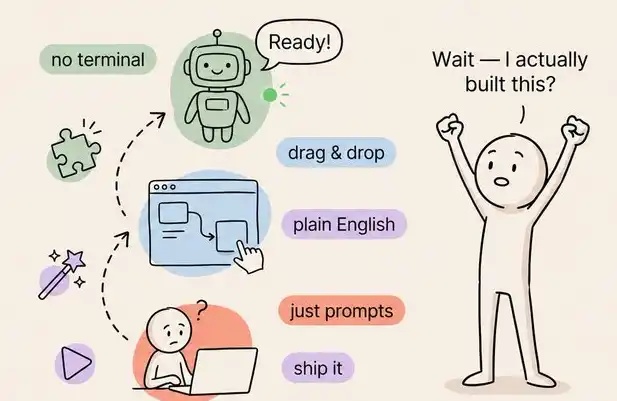
In his practice, AI is no longer just a code completion assistant in an IDE, but more like a dispatchable "execution team": first organize fuzzy ideas into plan.md using /ce-plan, then execute using /ce-work; use voice input instead of typing; simultaneously open multiple cmux, Claude, and Codex sessions to progress in parallel; let Claude handle planning and judgment, let Codex handle building; turn meeting recordings, notes, historical solutions, and codebase into the Agent's context; then crystallize high-frequency actions into reusable skills.
The underlying change behind this method is that the core value of developers is shifting from "hand-crafting every line of code" to "posing questions, setting constraints, directing, and continuously course-correcting." When the Agent can take on a large amount of execution work, humans resemble more of a signal source in the system: providing taste, experience, priorities, and final judgments.
Therefore, what is truly worth paying attention to in this article is not a specific plugin or command, but the production relationship changes brought about by the maturity of AI tools. After the cost of execution has decreased, individuals can advance multiple projects simultaneously and are more susceptible to getting stuck in a cycle of continuous building and releasing. The author reminds readers at the end of the article: being able to create something does not mean someone needs it. For those using AI to code, build products, create content, or manage knowledge work, this article poses a more realistic question: as "doing" becomes increasingly cheaper, how should we redefine our value?
The following is the original text:
Three months ago, I posted an article titled "All Claude Code Tricks I Know." That article had 913,000 views. When @kevinrose asked what IDE to use, my answer was: "No IDE needed. Just a plan.md file and voice."
This was previously called vibe coding. Around Thanksgiving last year, the model's capabilities finally improved enough to turn this "toy" into a practical tool, now known to many as Agentic Engineering. This is also the only reason why I have been able to deliver consistently this year. I have released last30days (27,000 Stars), Printing Press (4000+ Stars), and the newly launched Agent Cookie; at the same time, I have also become a significant contributor to several major open-source projects, including Python, Go, GStack, and Paperclip. Since high school, I haven't produced any software that people truly care about. Here are all my tricks.
Tips
YOLO Speed Reading Tips: Copy the entire article to your agent, let it draft a plan, configure everything mentioned here, and then execute each tip one by one. That's my full workflow, without even reading it yourself.
1. Whenever You Have an Idea, Create a CE plan.md First
This is still the first principle. It's also the most important thing I've learned.
Whenever I have an idea, the first thing I do is generate a plan.md using /ce-plan. It's not "let me think first," nor is it "let me start coding first." Every time, it's /ce-plan. It also supports images, so anything you can capture can be a starting point:
· Wild product idea: /ce-plan.
· Bug on GitHub: Copy the issue URL, paste it, /ce-plan.
· Terminal error: Cmd+Shift+4 for a screenshot, Ctrl+V to paste, /ce-plan fix this.
· Screenshots, error messages, design drafts, Slack threads: all can be directly thrown in.
If the idea is still vague, and I don't even know what I want, I'll use /ce-brainstorm first with the agent to clarify the problem, and then use /ce-plan after the outline is clear.
Under the hood, /ce-plan will dispatch multiple research-type agents in parallel. One reads your codebase, looks for patterns, checks your code conventions; one searches your past solutions, extracting experiences from them. If the topic is worth deep diving, it will dispatch more agents to research external documentation and best practices. All this is happening simultaneously. It then consolidates the results, writes a structured plan.md: where the problem lies, what the solution approach is, which files need to be changed, acceptance criteria with checkboxes, which patterns from your own code should be followed. It's not vague advice but a solution generated based on your repo, conventions, and historical experiences.
/ce-work will take this plan to build. Context lost? Start a new session, point it to this plan, and you can continue from where you left off. This plan is a checkpoint that transcends all context loss.
Traditional development is 80% coding, 20% planning. Here, it's the opposite: all thinking is put into the plan, and execution becomes a mechanical action.
Compound Engineering is a plugin made by @kieranklaassen and @trevin that really makes this whole process work.
I went from being a super fan to a contributor and am now the third-largest contributor outside the core team. My rule is simple: unless it's just changing one line of code, there must always be a plan.md first.
Tips
Installing Compound Engineering:
/plugin marketplace add EveryInc/compound-engineering-plugin
Paste a screenshot, bug URL, or error, then /ce-plan, and then /ce-work.
Not sure about the idea? Start with /ce-brainstorm.
2. Don't Read plan.md
I always generate a plan.md. But I hardly ever read it. The plan is for the agent to see; you, as this stupid human, should not bother.
Forcing a plan to be generated prevents the agent from being lazy. It has to research, has to commit to an approach, has to write down acceptance criteria, and then actually meet those criteria. A planned-out coding agent will deliver full work; a coding agent without a plan will cut corners and stop early. The plan is what ties it down.
So I have it write the plan, glance at the title, and then go straight to /ce-work. If I have questions, I ask right in the same session: "Wait, why this approach?" or have it give me a TLDR. Or when I completely don't get it, I say, "eli5 this plan" (explain this plan as if to a 5-year-old). I get a paragraph version, nod, and move on. I'm not going to sit there and read 300 lines of markdown. That's the agent's job, not mine.
Generate the plan. Trust the plan. Don't read the plan.
Tips
Don't let yourself read the plan. Just ask in the session: TLDR?, eli5 this plan, or "Wait, why this approach?"
3. Use /ce-plan on the deepest non-engineering work: Plan the "Plan" first
Many people think /ce-plan and /ce-work are for writing code. But the biggest lesson I've learned since March is that they are not just for code. The most in-depth knowledge work I do now all runs in the same loop. The key skill is: the first plan isn't to solve the problem directly; it's to first plan how to plan. I'm not even repurposing a code tool; /ce-plan is built with a general planning pattern, designed for this type of non-code work.
This doesn't just apply to business problems. Strategic documents, product specs, competitive analyses, board updates—all can use the same loop.
Let's take a real example. I was working on a business challenge and met with Michael Margolis. He was a research partner at GV, known for the bullseye-customer method. He suggested I read his book, which was available for free download in PDF on his website. The old way would probably be to quickly skim through it and move on. But this time, I opened Claude Code and said something like:
/ce-plan make a plan for the plan. I'll now give you two things: Margolis's book in PDF format and the full transcript of the two-hour Granola meeting I just had with him. I want you to craft a thoughtful plan on how to combine my business problem, this conversation, and the book's insights into something I can truly use. Do not write the document now. Writing that document is the formal work. Right now, I just need you to plan on how you will approach reading this book, digging into the meeting transcript, and producing a high-quality piece.
What it came up with in the next 45 minutes was a very grand plan.
This is also the best trick I know to keep LLM from slacking off. If you directly ask it for a deliverable, it will often take shortcuts. But if you first have it plan "how to produce this deliverable" and then execute that plan, it always comes up with a deeper version.
Tip
Deep non-code work: Use /ce-plan make a plan for the plan, give it all the context and meeting transcripts, and then /ce-work.
4. Accept Voice Input
Using voice input with LLM is different from using it with anything else. Transcripts don't need to be perfect because what's listening to you speak understands the context. It figures out where the microphone misheard. You can mumble, pause, start over halfway. Voice is finally usable because the other end is smart enough to fill in the gaps.
My setup is as follows:
· Mac: Using Monologue (made by Every) or Wispr Flow. Choose one of them to input voice directly into the current focused app and speak directly to Claude Code. I also bought a gooseneck microphone for the office.
· Phone: Not using Monologue and Wispr Flow, as switching back and forth on iOS is too cumbersome. The built-in Apple dictation is sufficient because you are talking to LLM, not a person. Even if it mistranslates half of the words, the agent can still understand. Lazy notes are also completely fine.
· To be honest: I am very good at using voice input when I am alone. But in the office, I find it challenging. Some say you can speak softly into the microphone, but I actually find myself not doing that because I don't want to appear impolite or disturb others. Therefore, the desktop scenario in a shared office is still a weakness in my workflow. If you have already solved the voice input issue in an open office and have not become "that person," please tell me how you did it. I really want to hear your advice.
Tips
· Mac: Install Monologue or Wispr Flow.
· Phone: Use the built-in Apple dictation.
· Get another gooseneck microphone.
5. Open Many, Many Tabs in cmux
This is my real day. Four to six cmux tabs, sometimes more, each representing an independent session:
· One for writing a plan.
· One for building based on another plan.
· One for running last30days.
· One for fixing a bug I found while testing something.
When /ce-plan is starting research in one window, I switch to another window, run /ce-work on a plan I've already written. While it's building, the third window can be used to investigate a new bug. By the time I switch back to the first window, it has finished and is waiting.
I've heard Orca is doing well in mobile work. I used to be a purist with Ghostty, but I missed too many notifications in Ghostty.
Tips
Use cmux.
Keep 4 to 6 tabs open, each handling a different task.
6. Set Terminal to Default Open Claude or Codex Instead of Shell
A new tab should open directly to Claude Code instead of the shell. By opening a tab, you are already in conversation with the agent. No need to cd, no need to type claude. Opening a tab, you should open them more frequently with just one keypress. I also don't use directories. Your agent will find the project on its own.
Tip
Copy this text to your agent:
Have every new terminal tab open Claude Code directly. Add this line to ~/.config/ghostty/config: command = ~/.local/bin/claude-launcher.sh, without breaking any other settings in this file. Then create ~/.local/bin/claude-launcher.sh to run claude --dangerously-skip-permissions, print a short prompt after Claude exits, and enter an interactive login zsh. Make this script executable with chmod +x. This applies to both Ghostty and cmux, as cmux reads the same Ghostty configuration.
7. Remote Control Every Window and Give Claude Code or Codex an Email Address
These two tips allow access to every session from anywhere.
Open remote control every time you open a new window.
Set remote control to automatically open for each session.
Now, every window can be accessed from the Claude mobile app. You start a session at your desk, then walk away, and continue controlling the same real-time task on your phone. While waiting in line, you can also control what's running on your Mac at home.
Give your Claude an email address.
Through AgentMail, Claude Code can have an email address. This is what founder Adi @adisingh taught me. You email that inbox, a new session will open, and start processing the email subject and body, with all attachments available as paths. Found a bug at dinner? Send an email from your phone, and by the time you're back at the screen, the session is already running. I open-sourced the whole thing: github.com/mvanhorn/agentmail-to-claude-code.
It consists of three parts:
A daemon that listens to the AgentMail inbox via WebSocket. Whenever a whitelisted email is received, it opens a new Claude session, writes the email to a prompt file, and instructs Claude to read and execute it.
Two terminal backends: cmux or a standalone Ghostty, so it can drive your existing startup flow.
A sender. I integrated it into the cc command in Hermes, so I can run cc <task> on my phone, and the task will land in a working session on my Mac, without needing a VPN or SSH.
The whitelist acts as a gatekeeper. Only emails from addresses you control can pass through; any email that fails DKIM or SPF checks is discarded before the session is opened.
Tips
Always enable remote control: Add the following to ~/.claude/settings.json:
"remoteControlAtStartup": true
Give Claude an email. Pass this paragraph to your agent:
Give Claude Code an email address using github.com/mvanhorn/agentmail-to-claude-code. Clone it, set up an AgentMail inbox, fill out cc.env with my API key, inbox, an allowlist containing only my own email address, and my terminal type (cmux or Ghostty), then run the daemon and install it as a launchd task. When I email that inbox, a new Claude Code session should open on this Mac and start processing the email subject and body.
8. Dangerously Skipping Permission Prompts. Yes, really
Claude Code requests permission every time it edits and executes a command. When you have six sessions running simultaneously, you can't watch it all the time. There are two settings that make this feasible. Some say automatic mode is the "safer" route, but it's too slow for me.
The key is:
skipDangerousModePermissionPrompt: true
Without it, Claude will ask for your confirmation every session. You can also use Shift+Tab to switch. Someone told me that the new "auto" mode can achieve most effects under a safer condition. Maybe. My attitude is YOLO. This is my computer. If I mess everything up, GitHub is still there. When helping a friend set up Claude Code, AI even actively tried to persuade him not to enable this setting. You have to be direct.
Another setting is the sound hook. This is non-negotiable with six parallel sessions.
You can walk away, hear the sound, and come back. When running six sessions simultaneously, the sound is how you know which task just completed.
Tips
Paste into ~/.claude/settings.json:
{
"permissions": {
"allow": [
"WebSearch",
"WebFetch",
"Bash",
"Read",
"Write",
"Edit",
"Glob",
"Grep",
"Task",
"TodoWrite"
],
"deny": [],
"defaultMode": "bypassPermissions"
},
"skipDangerousModePermissionPrompt": true
}
{
"hooks": {
"Stop": [
{
"hooks": [
{
"type": "command",
"command": "afplay /System/Library/Sounds/Blow.aiff"
}
]
}
]
}
}
Codex also has the same YOLO mode. In ~/.codex/config.toml:
approval_policy = "never"
sandbox_mode = "danger-full-access"
Or use it for a single run:
codex --yolo
9. How I Rarely Open the Codex CLI Yet Run Most of My Code Through Codex
I spend the whole day delegating work to Codex, but I rarely open the Codex CLI. Claude plans, Codex builds, and I always stay in the Claude session.
I have three ways to delegate work to Codex without leaving Claude:
· Codex IDE Extension: Submit a task, apply the results, no need to enter the Codex terminal.
· /ce-work --codex: Directly delegate the build to Codex within the Compound Engineering loop.
· Printing Press's Codex mode: Append codex to the end of the prompt to hand off the build to Codex.
My setup is to have both engines set to extra-high reasoning:
Codex: reasoning xhigh, fast mode always on.
Claude Code: reasoning xhigh, fast mode off. Its fast mode incurs token charges outside your $200 Max plan, so I don't use it.
Running both $200 subscriptions side by side is like having a whole additional second engine. I push large parallel builds to Codex, letting Claude handle planning and taste. Some friends do it the other way around: Codex builds, Claude reviews.
Tips
Codex: reasoning xhigh, fast mode on.
Claude Code: xhigh, fast mode off.
Delegate the work to Codex: use the Codex IDE extension, /ce-work --codex, or append codex at the end of the Printing Press prompt.
10. Research Before Planning: last30days
Before I run /ce-plan, I usually run /last30days on the topic.
Once, I had to choose between Vercel's agent-browser and Playwright. Without reading the documentation, I ran:
/last30days Vercel agent browser vs Playwright
A few minutes later, I had dozens of Reddit discussions, X posts, YouTube videos, HN stories. The agent-browser consumed much less context per call, while Playwright would dump thousands of tokens just defining the tool. I fed the entire output into /ce-plan to integrate agent-browser. This resulted in a plan based on what the community truly knows now, not on training data from six months ago.
last30days is an open-source project, now with over 26,000 stars. It simultaneously searches Reddit, X, YouTube, TikTok, Instagram, HN, Polymarket, GitHub, and the entire web. I run it before choosing libraries, building features, meeting business partners, or writing articles. I have also run it on several topics in this article. Research, plan, build. That's the true loop.
Tips
Install last30days.
Before /ce-plan, run:
/last30days <topic>
Remember to install the ScrapeCreators key.
11. Delegate Everything to Granola and Transcribe the Original into LLM
I had lunch with a candidate. We talked about products, food, kids, and in the midst of a 90-minute casual conversation, there was a product idea. Granola was recording the whole time. Afterward, I pasted the full original transcription into Claude Code:
/ce-plan turn this into a product proposal
The key is "rawness." I won't summarize first. I'll just dump the entire messy transcript in, including the off-topic sushi content, and then have Claude extract useful information based on my actual codebase and all the strategic plans I've written in the past. Granola context + codebase + historical plans equals gold. It spit out a proposal in one go, automatically ignoring the restaurant chatter, and I sent it out that night. That person is now full-time with us.
The upgrade since March has been: Printing Press Granola CLI. This thing is magical. I can pull in any meeting as clean structured data directly into a session, search through every meeting I've had to find something someone said three weeks ago, and then import it into the plan. No more copy-pasting. The context of every meeting is only a command away.
Tip
Dump the raw transcript of Granola directly into /ce-plan without summarizing first.
Install Printing Press Granola CLI.
12. Human Signal
This was the mindset shift that took me the longest to complete. When you're running six agents at once, your job is not to do the work yourself. Your job is to be a signal.
The agent provides output. You provide taste, direction, and the "feedback-loop" cycle of redirection. You see what it returns and say, "The second proposal is closer, but use the wording from the first proposal," "Address the most significant risk," "This section is too long," and they move. The scarce and valuable thing in this cycle is your judgment, not your typing speed. The more I embraced being just a "human signal" and stopped trying to be the person doing the actual work at the same time, the more I delivered.
You are in charge of taste. Let them be in charge of doing the work.
Tip
Use your brain to direct the agents, adding value to the world. Your brain still holds value.
13. Use HyperFrames for Video, Use It for All Videos
Video used to be something I outsourced or skipped altogether. Now, the way I do videos is the same as everything else: I talk, the agent builds, I provide feedback.
HyperFrames allows me to turn videos into HTML so the agent can write them. The process of scripting and coding is exactly the same, except the output changes from PR to MP4. Each video is a folder containing a script.md where the script is written scene by scene, including dynamic text, subtitles, and every beat. The agent turns the script into composite frames and renders the video. No need for an editor, no need for a timeline.
Some of the videos I have published using this method include:
Granola CLI demo
Agent Cookie launch
The release video for Agent Cookie was made using HyperFrames.
The cost of videos has come down to a single conversation, so anything worth having a video for now has one: release shorts, product demos, animated explainer videos, captioned clips. They are not just posted on X. I even directly embed the rendered demos into PRs, like in this PR for the Facebook AI Research project atlas-lean.
Tips
Creating Videos with HyperFrames: Write a script.md and have your agent render it into an MP4.
Upload GIFs to catbox, they look great in GitHub, PRs, READMEs, and issues.
14. Your notes are the agent's knowledge base
The strategy-folder trick from March was later generalized by me. The reason why a plan gets better each time is because Claude can access every plan I have ever written. This is compound context. So, I made it point to my entire brain.
The tools I make it access include:
Bear, in conjunction with Bear CLI. Notes from the past decade, meeting minutes, half-baked ideas, and decisions, all readable and writable by the agent. This is a personal RAG, just not called that. The more I put in, the smarter each session gets.
Obsidian. I don't use it myself, but many people love using it for this purpose, and its plugin ecosystem is extensive.
gbrain. The brain I synchronize across different machines and agents.
supermemory. A highly recommended agent memory layer. I am currently diving deep into it, will share conclusions later.
The key to this trick lies in the form: choose a note-taking tool with a CLI or API, point the agent to it, and let your own knowledge start compounding.
Trick
Have your agent simultaneously connect two types of tools: one for your own note-taking, such as Bear or Obsidian; the other for the agent's memory, such as gbrain or supermemory. Choose tools with a CLI or API so the agent can read them.
15. Working Anywhere, Anytime: My Mac Mini
Trick
Mosh, for when you must SSH in. It can keep the session as smooth and responsive as local even in terrible Wi-Fi and roaming networks. With regular SSH, Claude Code crawls so slowly that each keystroke waits for the network round trip. The difference Mosh brings is between "usable" and "painful."
Tmux, for when you are on a plane. SSH into a remote machine within a tmux session, where work will run on the remote machine instead of your laptop. Fly over the Atlantic, Wi-Fi cuts for 20 minutes, you reconnect, attach back, and everything picks up where you left off. I've delivered features continuously throughout an entire flight back from Europe.
Run Hermes and OpenClaw simultaneously, for autonomous remote work. Hermes is an ecosystem that learns in repetitive tasks, getting progressively better; OpenClaw excels in building a wide range of agent skills. I switch between the two. If you abandoned OpenClaw early on, consider clearing it out and starting afresh.
Agent Cookie is used to sync cookies and .env files between your Mac Mini and main Mac.
16. Proof: Sending the Plan to Colleagues
plan.md is perfect for me, but it's entirely useless if sent to someone who doesn't live in the terminal. This is the final real gap, and Proof, also from Every, happens to fill it.
Opening a plan in Proof and reading it like a document is already nice. But what truly makes it invaluable is when you send the plan to a colleague. I throw plan.md or spec into Proof, send the link, and a person who doesn't use the terminal can read it clearly, comment in-line, and these comments flow back into the agent's loop. No more pasting markdown into Slack and watching it render into a mess. This is the human layer of collaborative review for the entire plan file workflow, and it's the first time I've felt that sharing agentic work with a non-technical colleague is no longer awkward.
As I write this article, I also put it in Proof. That's how it's being reviewed.
Moreover, I wrote the whole article in cmux, while having Proof review open on the side.
Tips
Share a plan: Drop a .md file into Proof, send the link, and then pull the comments back into the work loop.
17. Write Your Own Skills
The biggest upgrade is not using agents but teaching them the skills that can stick around. Anything I've done more than twice, I turn it into a skill: a reusable command that an agent can run indefinitely. Start by writing your own skills and use them to automate your workflow.
You don't need to start from scratch. The real trick to unlocking this is to have your agent look at an already effective skill and then mimic its structure. The literal prompt is, "Look at this skill from Compound Engineering, help me make something similar for [what I want to automate]." It reads a good example, learns the structure, and scaffolds it for me. That's how I've created a bunch of skills.
This has also become most of my open-source life now. If you look at my GitHub, you'll find my work is all about various skills and the tools around them. last30days started as a skill for myself, and it's now open-source with over 26,000 stars. Printing Press is a full factory that generates agent-native CLI, and it's my most-used tool personally, with over 320 PRs merged into it. I'm also one of the top contributors to Compound Engineering itself. None of this was part of some grand plan. Everything was just a workflow I ran so frequently that it was worth making the agent permanently good at it.
Master a skill once. Each subsequent session will be faster. This is the compounding part of Compound Engineering.
Skill
Anything you've done more than twice should become a skill: Look at the Compound Engineering skill and help me build a similar one for [X].
18. Open Source: Contributing to Your Beloved Projects
The same loop that helped me deliver my own projects also helps deliver others’ projects. I've had hundreds of PRs merged into open-source projects, including Python, Go, OpenCV, Vercel's Agent Browser, and OpenClaw. These were not just typo fixes but real features in tools I use daily.
At some point, I found myself at the top of some contributor leaderboards:
3rd in Compound Engineering, Superpowers, and Emdash.
4th in GStack and Paperclip.
6th in Vercel's Agent Browser.
2nd in Camoufox.
@pejmanjohn jokingly said that now whenever he opens a repo and looks at the contributors' avatar grid, finding my face has become his personal version of "Where's Waldo?"
However, the merged PRs are not the real prize. The real prize is the people. I enter Discord, get to know maintainers, and make true friends. This is also incredibly helpful for recruiting. I just hired an engineer for my new company through this method. When you contribute to a project you love, you'll meet others who love it too, and this will compound.
Skill
Choose a tool you use daily, figure out one thing it's truly missing, and then use the same /ce-plan + /ce-work loop to build it.
Join the Discord for this project. PRs get you in the door; people are why you stay.
Add value to X.
On X, subscribe for $1 to $3 monthly to someone you respect. I pay $1 a month to subscribe to @garrytan. That way, when I submit a PR, I can link him to the X post, and he gets a special notification knowing I'm a paying subscriber. I also subscribe to @jason, @teknium, and @Teknium.
19. My Current Laptop Setup
My two-year-old laptop is struggling to keep up with my current workload: running six Claude sessions simultaneously all day, along with Codex. So I upgraded to the M5 Max with 64GB of memory. It's a beast, and I love it. However, this workload still pushes it to its limit: my brand-new machine lasts only an hour on battery.
So I've resorted to panic buying power. I now carry an Anker power bank with me and have an Anker charger in the car, so my Tesla can charge on the go.
Tips
Never Sleep: sudo pmset -a disablesleep 1
Carry an Anker power bank with you; keep a charger in the car.
20. Printing Press: Running Real-World CLI
Most of these tips live inside the terminal. This tip steps outside the terminal. Printing Press is a set of CLIs that wrap real-world services, allowing an agent to run errands for you directly. It is now a standalone project with the handle @ppressdev, boasting over 3700 stars, and I am working on it with @trevin.
What truly enables these tools to run is authentication, which was released last night: Agent Cookie. It hands over your real browser session to the CLI, allowing the CLI to operate as you without pasting passwords or reauthenticating. It transforms "an agent that knows a service" into "an agent already logged into a service."
A real afternoon, start to finish: Tesla preheat. Kids in the car ten minutes later: "Preheat the car to 72 degrees." The Tesla CLI kicks in, and by the time we leave, the car is already warm.
Instacart. "Add Corona to the Instacart Costco cart."
ESPN Polling. A session watches the game for me and only alerts me when the score is close. I don't have to refresh anything; I only receive that one truly important reminder.
Alaska Airlines itinerary for the kids. It fetches ticket prices and prices for the days before and after, checks our Atmos points balance, feeds the results into /ce-plan, and then provides a booking strategy, including the cheapest dates and purchase reminders. The whole process unfolds on the sidelines of a soccer field.
This is no longer just about "AI helping me write code." Agentic Engineering will run errands for you, watch a game, warm up your car, book travel, while you can do something else.
Tip
Install a ready-made CLI from the library of printingpress.dev, and hand off a task directly to your agent.
Painless auth: Agent Cookie will transfer your real browser session to the CLI, allowing it to operate on your behalf.
The real trick is: print one yourself. Hand off something you do all day, an API, or an indispensable service to the Printing Press, and let it generate an agent-native CLI. The tool you build for your workflow is the one that truly changes how you work.
21. Be Honest: AI Spiritual Malaise
Agents were supposed to do all the work for us. Instead, every friend I know is in the most frantic state of work in their lives.
The simplest response is: take a break, go touch some grass. But the problem is not here. The problem is addiction. Building with agents is the greatest video game in the world, and its loop is just too strong.
I'm genuinely worried about some friends. They are completely ignited by the sudden ability to build anything, so they do nothing else but build. Then they release a product, but there are no users. That's okay too. I've released many things without users. The trap is not in releasing and having no one use it, but in disappearing into the building and losing the people around you.
So be careful. Talk to your loved ones. Ask yourself if anyone really wants what you're building. If the honest answer is: it's just a tool for yourself, that's okay too. Some of the best things I've done were just for myself.
If you do want an audience, then follow the content path Gary Vaynerchuk always talks about. You start somewhere, publish into the void, hoping for one person to notice. Then it's three people, ten people, a hundred people, until gradually reaching thousands. No one starts with thousands. Anything you build is the same.
Tip
Take a break. Go touch some grass.
Talk to your loved ones.
Build something that someone wants, even if that someone is just you.
This is How This Article Came to Be
This is a markdown file. Claude Code runs in cmux, and I talk to Monologue: "Optimize the beginning of the no-IDE section", "Make the don't-read-the-plan section spicier", "Add Tesla and Instacart stories". It gets rewritten, I give feedback, and the article goes through Proof review. last30days provides new material. By the way, I didn't use Zed this time. I don't use it anymore. No IDE. No coding. Talking, planning, building. From desk to couch to car to the sidelines of a soccer field, it all works.
This is all I know as of June: a voice app, a plan file plugin, a few config tweaks, a bunch of tabs, a Mac Mini, two remote machines, and a CLI fleet that can run real life.
Tips
Copy this entire article and paste it to your agent to help you set up everything mentioned inside as much as possible. Your agentic engineering workflow will do wonders.
Welcome to join the official BlockBeats community:
Telegram Subscription Group: https://t.me/theblockbeats
Telegram Discussion Group: https://t.me/BlockBeats_App
Official Twitter Account: https://twitter.com/BlockBeatsAsia
 Related Articles