Bitcoin Plunges, Not Just Because of the Strategy Sell-off

TL;DR
· Bitcoin sees nearly 7% drop in 24 hours, testing $66,000 support.
· Significant liquidation of leveraged positions, while buy-side reentry signal awaits confirmation.
· Related assets: BTC, MSTR (US stock), Bitcoin spot ETF, ETH.
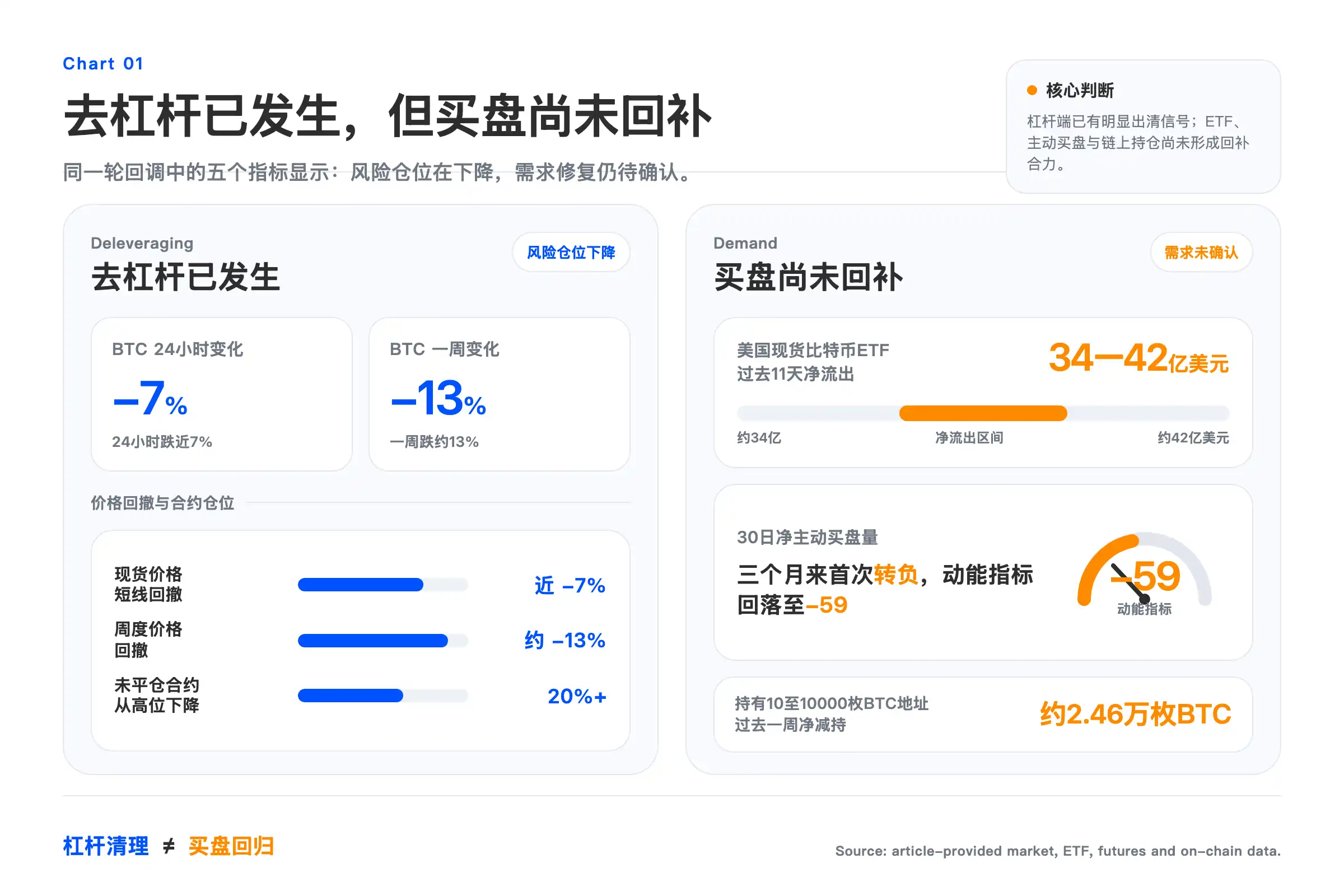
While the US stock market and AI sector continue to hit new highs, Bitcoin is under pressure at the key level of $66,000, seeing a nearly 7% drop in the last 24 hours and a weekly decline of around 13%. The current focus of the market is the deleveraging process. The US Bitcoin spot ETF has seen net outflows for several consecutive days, totaling over $3.4 billion. The on-chain net buy-side volume (the net difference between actively initiated transactions by buyers and sellers) has turned negative for the first time in three months, with the momentum indicator plummeting to -59. Additionally, whale sell-offs, MicroStrategy's small-scale sale of 32 BTC to pay dividends, and concerns over the transfer of around 10,422 BTC (about $739 million) from Mt. Gox have contributed to the unease.
These changes indicate that the phase dominated by buyers has temporarily ended, and the pullback is fundamentally grounded. Most discussions are focusing on short-term risks compounded by a single bearish factor, easily interpreting MicroStrategy's symbolic sale or Mt. Gox's one-time transfer as a direct sign of long-term weakening positions or a flood of supply. The real question to ask is, at what stage is this correction now? After the leveraged positions have been cleared, what are the traceable signals needed for buy-side reentry and bottom confirmation?
Is the $66,000 Test Due to Leveraged Position Liquidation or Permanent Demand Weakness?
The selling pressure has been significantly alleviated.
Bitcoin has dropped by about 13% this week, with the largest single-day decline at a recent high level, accompanied by increased trading volume and liquidation volume. The US Bitcoin spot ETF has seen net outflows of about $3.4 billion to $4.2 billion over the past 11 days, primarily driven by products such as IBIT under BlackRock.
On-chain data shows that addresses holding 10 to 10,000 BTC have net sold approximately 24,600 BTC in the past week, while small addresses have only slightly increased their holdings.
The demand from active buyers has been exhaustively consumed in this phase.
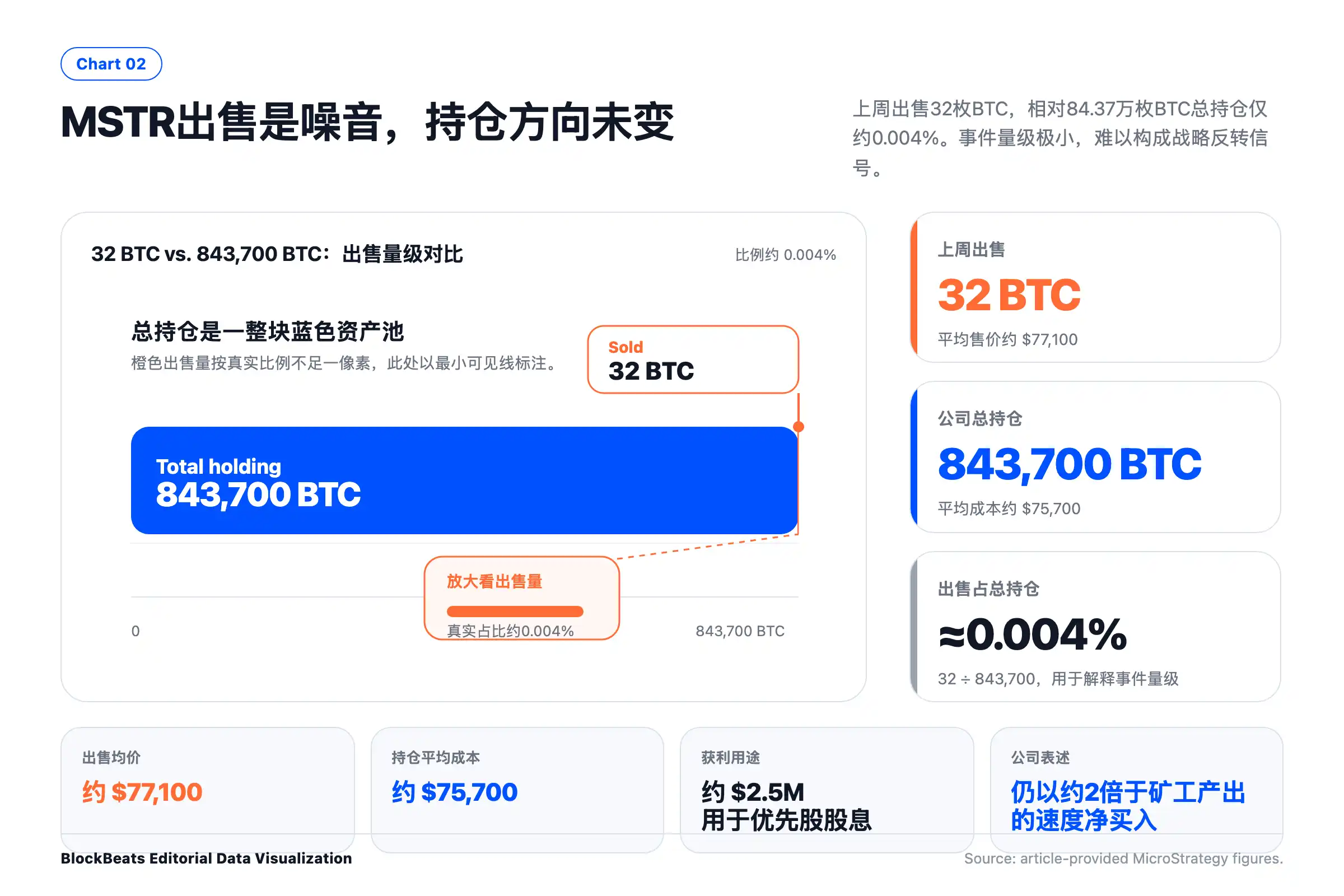
The net active buy-side volume for the past 30 days has turned negative, and the momentum indicator is rapidly approaching a critical negative zone. MicroStrategy sold 32 BTC last week at an average price of around $77,100, realizing a profit of about $2.5 million to pay preferred stock dividends. Despite the company's total holdings still standing at 837,000 BTC with an average cost of around $75,700 and emphasizing a net purchase rate at about twice the mining output speed, this small move has still been magnified by the market. The funds from the Mt. Gox transfer mostly remain on-chain, not yet forming significant exchange sell pressure, mostly producing short-term panic sentiment.
This pullback is significant but not extreme.
Compared to historical bear market weekly declines, this one is notable but not catastrophic. Retracing approximately 45-50% from the 2025 high, the price has retraced to near the sentiment-recovery range from early 2026. These data collectively point to a temporary ebb in buying pressure, with $66,000 becoming a crucial support level to hold. However, market sentiment tends to lean towards a linear bearish view. Are these factors simply isolated bearish developments or a necessary step in systemic deleveraging?
Leverage Liquidation is Purging Speculative Chips
This appears more like a systemic cleanse of speculative risk rather than a seller-driven structural breakdown.
Open interest (unrealized leveraged positions) has dropped over 20% from its peak, falling in sync with the price. Some traders view this as a healthy deleveraging: high-leverage speculative chips being liquidated have reduced the floating supply in the market, making the structure cleaner and leaving room for incoming funds.
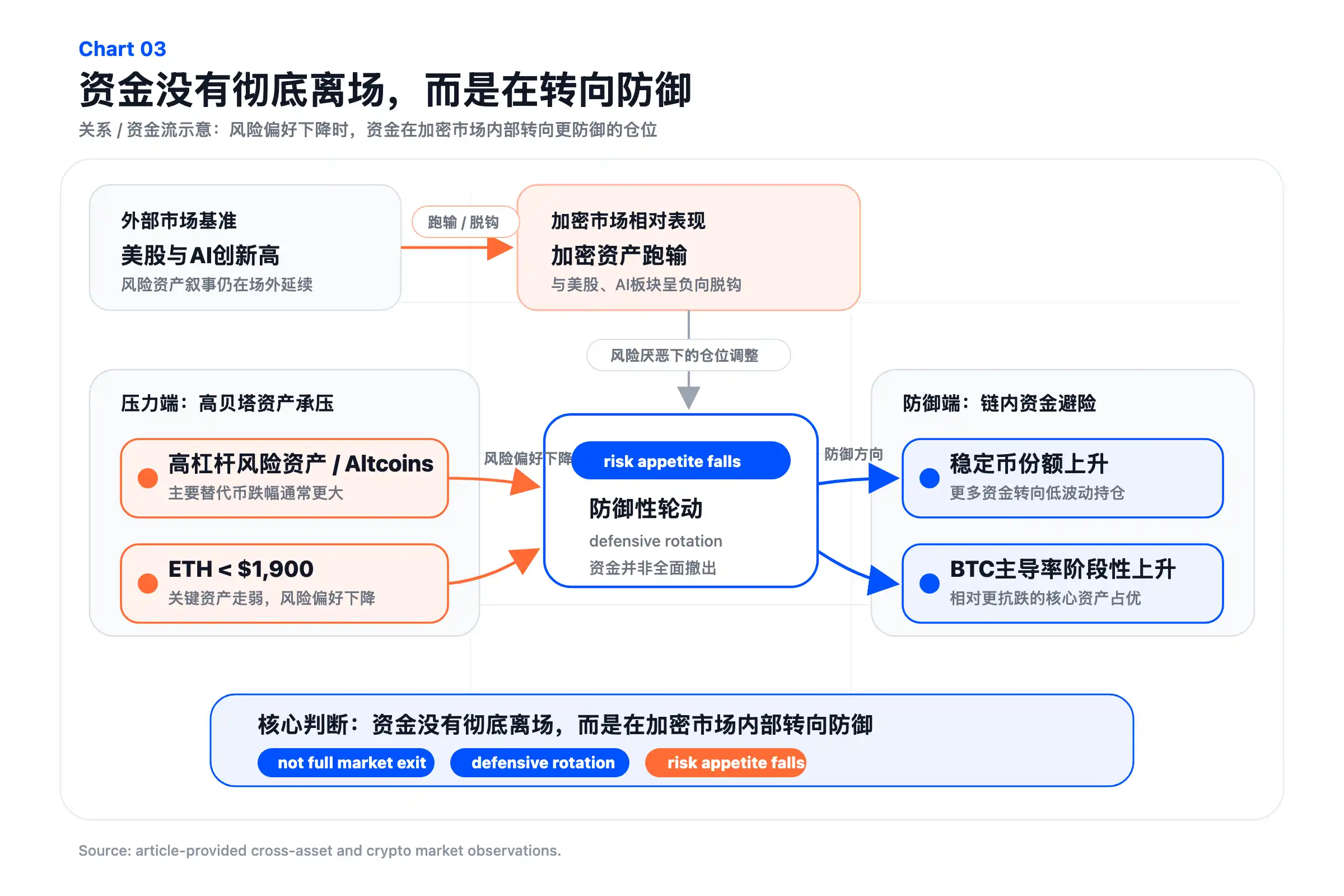
Most of the funds from the Mt. Gox transfer remain on-chain, not immediately converted into selling pressure. On-chain records also show some accumulation at lower levels, presenting a mixed signal of reduced holdings. Funds have not entirely exited the crypto market but have partially rotated into stablecoins (cryptocurrency assets pegged to the dollar), reflecting a defensive posture in risk aversion rather than a full-blown panic sell-off. MicroStrategy's founder Michael Saylor and the company's position still emphasize long-term net buying, believing that the "crypto winter will not return," endorsing the strategy of corporates adopting Bitcoin as a reserve asset.
Similar to the stock market's high-leverage shakeout, post-liquidation, the remaining participants' positions are usually more robust, and volatility may temporarily decrease. Whale selloffs and insufficient buying from small addresses have exacerbated short-term fluctuations. However, post-liquidation, the key question is who will re-enter the market. If this is a healthy deleveraging process, the cleansing effect will gradually manifest across the entire market and on a cross-asset level. Clear differentiation will also emerge within crypto, and the realized pessimistic expectations have limits.
Cryptocurrency Underperforms US Stocks as Funds Move to Stablecoins for Defense
The entire crypto market has been collectively affected by deleveraging, but differentiation has emerged, and some pessimistic expectations have been partially fulfilled but not to the extreme.
Bitcoin dominance (Bitcoin's share of the total crypto market) has temporarily increased, ETH dropping below $1,900, with major altcoins usually experiencing larger declines. MSTR stock price has also faced temporary pressure due to holdings-related news. The entire sector underperforming US stocks and AI reaching new highs has shown negative decoupling. This indicates that the current situation is primarily due to leverage and demand issues within the crypto market itself rather than broad macro risk aversion.
Funds Opt for Defense Rather Than Full Exit.
Stablecoin Market Share Rises, in Contrast to a Complete Exodus During Historical Panic Cycles.
Although the Scale of Leveraged Liquidations is Significant, It Is Lower Than the Peak in 2022. Some Institutional Views Suggest that Post-Liquidation, the Market Structure Will Be Healthier, Creating Conditions for New Capital Inflows. As the Largest Corporate Holding Agent, MSTR, While Selling a Small Portion for Dividend Payments, Still Emphasizes Long-Term HODLing, Signaling Dynamic Management under Financial Asset Attributes Rather Than a Complete Flip.
This Differentiation Indicates that Pessimistic Expectations have been Realized to a Significant Degree in Price, Outflows, and Indicators, yet a Full-Fledged Collapse has not Materialized. Stablecoin Inflows Coexist with Accumulation at Lows, and the Market Still Retains Some Resilience. Assessing whether this is a Phase of Correction in 2026 or Requires a Longer Bottoming Process, Specific Signals of Buying Support are now the Most Critical Variable.
Buying Support Signals Await Confirmation, What is the Biggest Risk?
The Current Judgment Revolves around Whether Buying Support can Quickly Return.
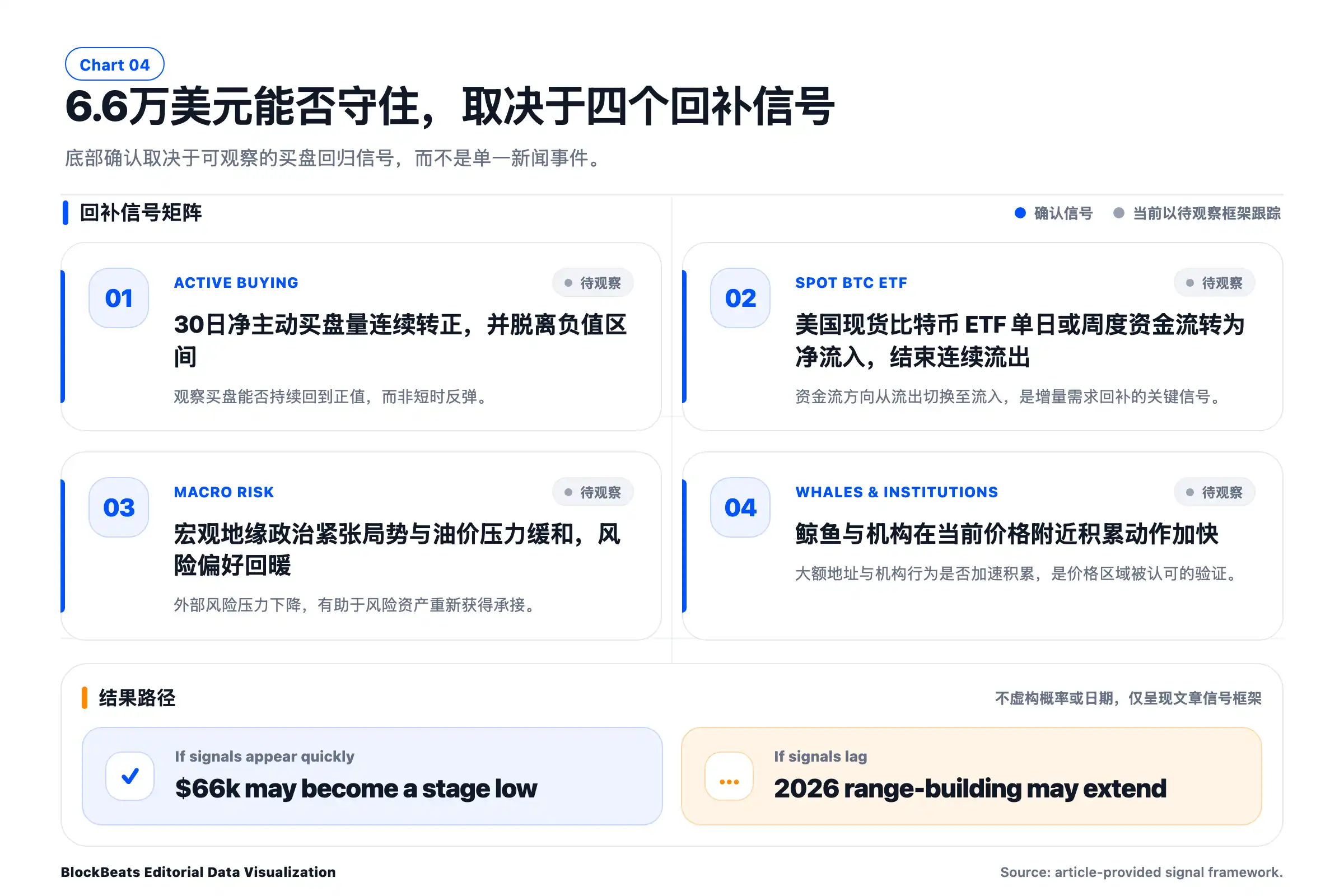
Key Metrics to Monitor Include: Whether the 30-Day Net Buying Volume can Continuously Turn Positive and Move away from Negative Territory; If Spot Bitcoin ETFs See Net Inflows on a Daily or Weekly Basis, Ending a Streak of Outflows; Whether Geopolitical Tensions and Oil Prices Ease, Signaling a Return to Risk Appetite; and Whether Whales and Institutions Accelerate Accumulation Actions near Current Price Levels.
Views from Technical Analysts like Peter Brandt Indicate a Late 2026 (Possibly September-October) Extension of the Bottoming Phase, Followed by the Next Cycle, with Long-Term Targets Higher, but Currently Existing in a Transitional Window.
If These Signals Emerge in the Near Term, $66,000 Could Become a Phase Low, as the Cleansed Market Provides Better Entry Conditions for New Buyers, Allowing for a Gradual Transition of Positions from Stablecoins back to Risk Assets. Conversely, If Buying Support is Delayed, Macroeconomic Risks Continue to Deteriorate, or ETF Outflows Persist, Support Levels may Face Further Tests, Extending the 2026 Phase of Oscillatory Consolidation.
What Investors Should Currently Do is not Predict the Exact Bottom or Blindly Catch a Falling Knife, but Track the Above-mentioned Verifiable Indicators to Adjust Positions. Moderately Reduce Leverage, Maintain a Long-Term HODLing Position, and Adopt a Defensive Posture while Awaiting Confirmation. The Greatest Risk at Present Lies in Buying Support Returning Slower than Expected or Geopolitical Risks Deteriorating Beyond Expectations. This will Determine whether $66,000 is Indeed a Phase Low or a Midpoint of an Extended 2026 Bottoming Process. While Markets have Shed Some Speculative Chips, Long-Term Institutional and Corporate Allocation Logic Persists, Yet Patience in the Short Term is Still Required, and Positioning Decisions Should Stem from these Specific Signals rather than Emotional Swings Caused by Singular News Events.
Welcome to join the official BlockBeats community:
Telegram Subscription Group: https://t.me/theblockbeats
Telegram Discussion Group: https://t.me/BlockBeats_App
Official Twitter Account: https://twitter.com/BlockBeatsAsia
 Related Articles