Exploring the virtual realm: Blockchain guarantees land that is attracting real estate investors
Source: Cointelegraph
Read Yin Si Tang
In the "real" world, real estate has traditionally been seen as a viable investment. Individuals and companies often buy land and property for development or to sell at higher prices in the future.
As the world becomes increasingly digital, the trend to give significant value to land and property seems to be spreading to the virtual scene. At the intersection of emerging technologies such as virtual reality and blockchain, developers, investors and hobbyists are creating a vibrant virtual real estate market.
While VR provides the tools to visualize these digital Spaces, blockchain technology is serving as the base layer for the monetization of virtual real estate. With the impact of the coronavirus pandemic, human communication has taken a critical step towards becoming more digital, and interactive virtual worlds may provide a safe space for preserving many social structures.
Second Life and Linden Yuan
Virtual real estate is by no means a recent development. Urban simulators like SimCity have been around for decades. In 2003, a 3D virtual environment called Second Life arguably launched the monetization process of virtual real estate, with users scrambling to buy digital land using the platform's native currency, Linden Dollars. Second Life, which predates bitcoin, has seen users buy, sell and rent properties and operate on virtual land.
With the advent of other immersive interactive virtual real estate projects, the platform quickly faded. In its heyday, however, a gamer named Anshe Chung became a millionaire by selling digital real estate.
The linden dollar, an official currency popular in the virtual world of Second Life, trades millions of Lindens each month for goods and services provided to the virtual world's inhabitants. Atms have even been set up in some virtual locations to facilitate transactions.
Virtual land as a commodity
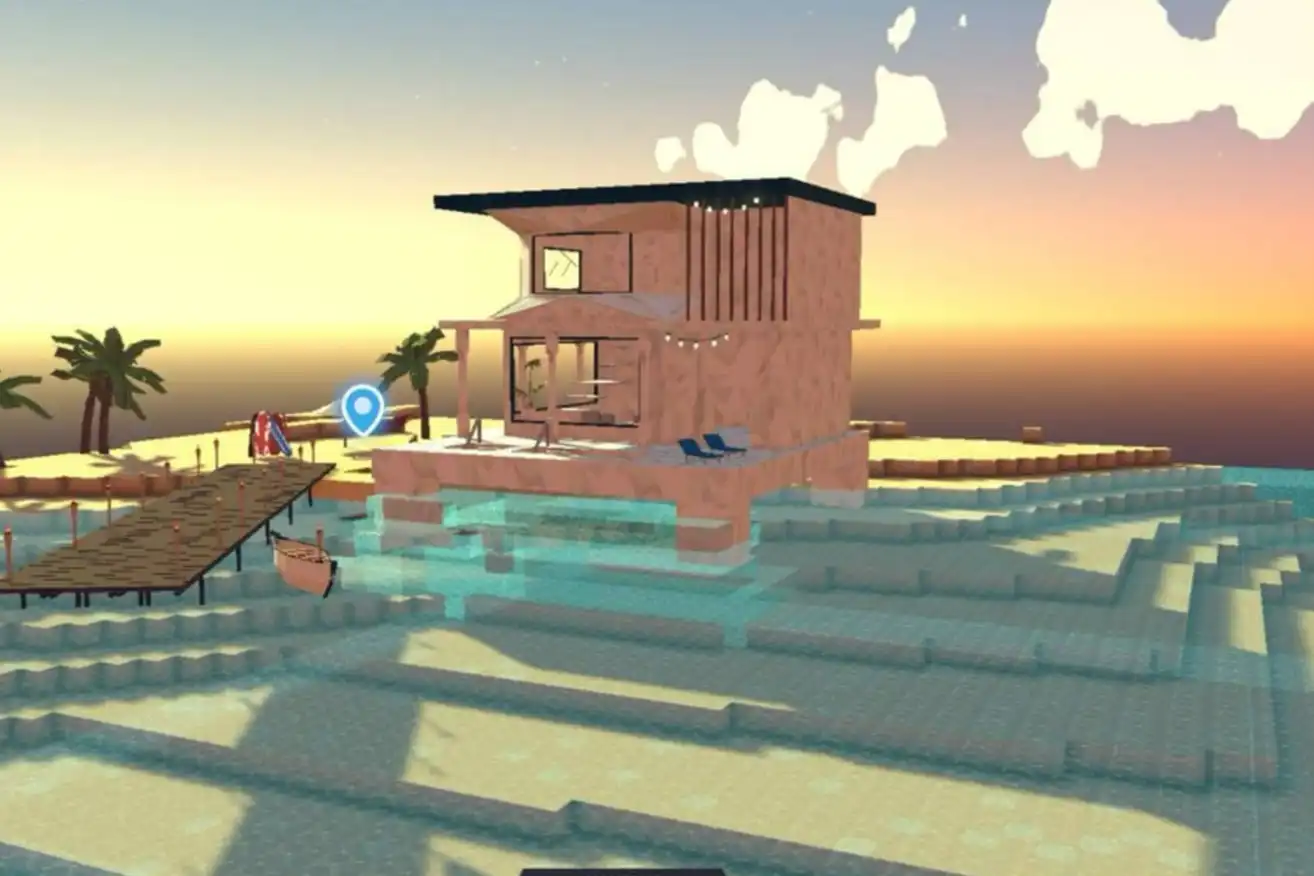
With the advent of blockchain technology, VR platforms such as Somnium Space, Centre and can enable users to obtain and monetize virtual land. Recently, The Whale, a non homogeneous (nonfungible) tokens library - become The Sandbox game, The second largest holder of The virtual land.
In August, Coinan Launchpad launched The Sandbox IEO and raised about $3 million through a token sale. Coen, one of The investors in The project, bought 4,012 LAND tokens in early September to acquire virtual real estate resources in The Sandbox. It is understood that Coan plans to organize social games within The Sanbox platform, such as NFT and game creation competition, and give The best creator LAND token as a reward. The Sanbox, which plans to launch a public beta in December 2020, has organized four LAND presales and sold nearly $1.5 million worth of tokens.
Commenting on The growing popularity of virtual real estate, Joseph Madding, a marketing and public relations consultant at blockchain gaming platform The Sandbox, said investors are increasingly open to The idea of digital land as a viable investment: "Virtual real estate is becoming more and more popular. Undoubtedly, in the past 10 weeks, using our Telegram chat, Discord, Twitter and other social media platforms to interactive user has increased by more than 1000%. We therefore to expand the community management to meet the growing demand. In terms of the virtual LAND as a commodity, we see the original LAND as a small real estate price is about $370 to more than $2000 for resale. This is shocking, It also shows the tremendous interest of the community in our NFT products."
In fact, the craze for virtual land assets is just one part of an established trend of digital properties quickly selling out. In March, Somnium Space, a VR world, sold 110 pieces of VIRTUAL land worth of ETH in the first week of its planned 10-week launch.
As well, after the platform opened in February, Users of Centre and bought digital land worth millions of dollars. In 2019, "Estate 331", part of the "Genesis Plaza" in the virtual world, is sold for approximately $80,000, becoming the second most expensive NFT in 2019.
Expand the digital property map
While projects seeking to coinage real-world goods are common, the emerging virtual real estate space is creating a self-sufficient digital economy. With blockchain technology as a base layer, these platforms can monetize digital land, allowing users to trade assets within a virtual world.
In addition to early adopters buying virtual land to see assets grow in value over time, some individuals and organizations are developing these assets all the time. This process is similar to real estate development, including the establishment of commercial and residential complexes, industrial zones and parks.
Part of the appeal of pushing people to own virtual land seems to be based on optimism about the feasibility of virtual reality technology. According to a study released in August, the combined market value of virtual and augmented reality will reach an estimated $20.9 billion by 2025, with Chinese and Indian companies expected to drive this significant growth over the next five years. Head-mounted displays (HMD) are becoming increasingly popular among game developers and game enthusiasts. As 3D technology advances, manufacturers are getting better at creating HMDS that offer more immersive and interactive VR experiences.
Also, for blockchain projects in general, scarcity plays an important role in driving the value of their native tokens. As in the real world, these virtual lands in the Metaverse must be limited in order to maintain the value of real estate.
The monetization of virtual real estate also provides another tangible use case for NFT. Digital land developers are building shopping malls, boutiques, stores and other retail stores where they sell electronic goods such as fashion, rare CARDS and concert tickets. For game developers, the combination of VR and blockchain technology creates an opportunity to enjoy "all-digital" games. Talking about the benefits of a fully digital environment, Madding says:
"For a game developer, virtual real estate to your game release provides a platform of almost no risk. With the technology of NFT, you will no longer just released the game in the app store, you will have to design and publish the ownership of the real game space. As a consumer, with LAND feel like buying any entity game, if you find that you want to do some innovation, you can use our free tools to create, or you can resell digital real estate, just like you will sell a copy of any entity game."
Life after the outbreak
The COVID-19 epidemic has brought tremendous changes to interpersonal communication, and the use of virtual communication has become a focus of attention. As the global ban continues, organizations have begun to use electronic videoconferencing solutions to hold meetings. The American tech giant has even issued orders to work from home. This practice will continue regardless of whether scientists develop a vaccine for the coronavirus, the report said.
Meetings and parties are ubiquitous in the cryptographic and blockchain space. However, due to COVID-19 restrictions, people will not be able to participate in many of these activities in person in 2020.
To overcome this hurdle, organizers and attendees have flocked to virtual worlds to discuss important issues in the industry. These events push the boundaries of electronic interaction, as people move from leveraging third-party messaging services to interacting in a fully digital space.
According to Madding, established social structures are gradually opening up to digital: "As time goes on, the large social events we saw in Epic Games' Fortnite [Fortress Night] will certainly become more common, and we want to lead the way in making these amazing social Spaces in our Metaverse."
Meanwhile, the appeal of virtual real estate has been growing for Somnium Space founder and CEO Artur Sychov, who told Cointelegraph:
"We really see people on Somnium Land Parcels (PARCEL) is more and more interested in, because more and more people realize that they can deploy and use these Parcels of real applications. For example, talk shows, galleries, cinemas, fitness club, the encrypted exchange, etc., have appeared in our virtual reality world."
As developers work to create more immersive and interactive virtual environments by addressing issues such as display delays, it is possible for almost all social activities to take place in a digital space. These solutions may even be tied to the growing NFT market for items such as concert and theatre tickets.
Welcome to join the official BlockBeats community:
Telegram Subscription Group: https://t.me/theblockbeats
Telegram Discussion Group: https://t.me/BlockBeats_App
Official Twitter Account: https://twitter.com/BlockBeatsAsia
 Related Articles