NFT's next opportunity comes with its liquidity premium
Original title: "NFT's Next Opportunity and its Liquidity Premium"
Originally written by Mable Jiang, executive director of Multicoin Capital
I have wanted to write on this topic for a long time. I just want to record some thoughts in this article. Special thanks to Vincent founder DappReview bullshit with me 90 minutes writing inspiration for this article.
& have spent
The next step for NFT development and opportunities
& have spent
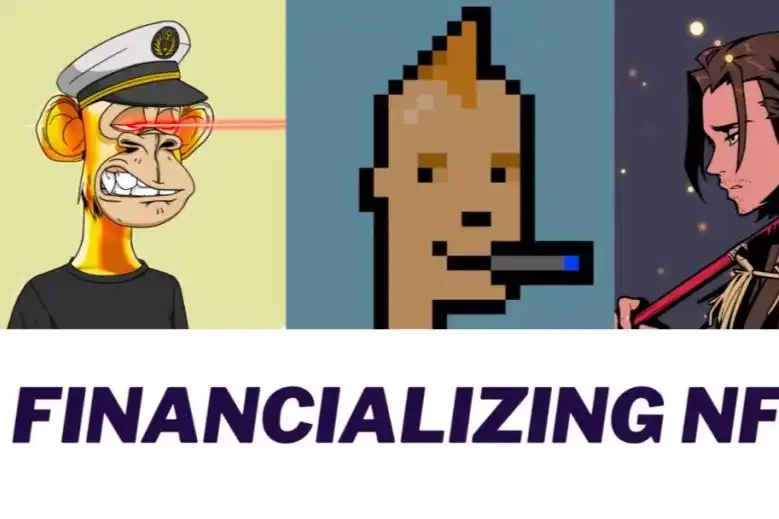
It's been nearly three years since Cryptocat became popular in 2017, and there have been a variety of NFT pre-sold games with game props, and an initial OpenSea asset trading platform is enough for everyone. And encryption Art collection is from the beginning of last year began to bud, the first platform of Art, such as Editional, SuperRare, Digitally Rare, R.A.R.E Art, Mintable, etc.), to this time last year has ten to twelve, and now here, some are already below permanently closed, SuperRare is suddenly begin from this spring is known by many, probably because of the outbreak, everyone especially keen to show that the virtual).
& have spent
The NFT chain of art has developed to this day and has accumulated enough works yetThere is a lack of tools and platforms for combing.
& have spent
In the traditional art world, it is worth drawing lessons from NBSP;artsy.net. Artsy was founded in 2009 by Wendi Deng, a co-founder. What makes it impressive compared to other online Art trading platforms is that it has a subdivided tag for all The Art they contain online, called "The Art Genome Project" (its Github page:https://github.com/artsy/the-art-genome-project), including each genre, period, material, technique, theme, etc. This is essentially similar to the flow of information on Twitter and Weibo, or concepts and sectors in the stock market. With different subdivided tags, collectors can search for all relevant works by searching the relevant tags. This can be of great help in selecting investment targets by analyzing hot trends.
& have spent

Artsy.net homepage screenshot
& have spent
& have spent

Screenshot of The Art Genome Project page (https://www.artsy.net/categories)
& have spent
Another question to ponder: Is the current bottleneck in encryption art caused by not having enough people in the real art world involved? Vincent's point is that just as the cryptocurrency community has always felt the need for traditional money to enter, the current growth bottleneck in the cryptocurrency art community is largely due to the fact that there are not enough professional artists involved in the creation of works that are not artistic enough to attract more collectors.
& have spent

BCA, known for its art-world resources, may be a way out
& have spent
On the one hand, I agree with the creators guiding the art circle to try to use NFT as their digital art media. From this point of view, the interaction between the two circles can bring a group of players collecting traditional art. On the other hand, I don't agree with the fact that the existing creators are not artistic enough, which leads to a small audience.Because artistry in the second half of the nineteenth century had a marked tendency not to be defined by professional artistic techniques. For example, in manet's works in the late 19th century, the audience's gaze is part of the allegory of the works. Another example is Roland Barthes' The Death of The Author in The 20th century, in which The classic sentence "The birth of The reader must be at cost of The Death of The Author", pointing out that The creator is only The trigger of The work, but it only has meaning at The moment when The viewer receives it.
& have spent
So from my point of view,NFT just further makes modern art quotidized and flat, allowing everyone to carry their creations in their wallets, and allowing others to check and view others' work at will. However, how to become the most popular creators on the platform is similar to that of douyin and thousands of other creators competing for traffic (excluding advertising), depending on who can lead the topic.
& have spent
Liquidity premium: Financialization of art assets and game props
& have spent
The financialization of art assets did not begin with the rise of cryptographic art.
& have spent
In fact, private banking units such as UBS and Citigroup have been exploring this approach for a decade. In New York, there are Banks like Emigrant Bank, which specialises in art finance and credit. These private line art financial sector, will be based on professional art connoisseurs (usually museum or auction houses do several decade researchers) phase (degree of well-preserved) applied to the work product, ZhenGuiXing and integrity (such as a series is complete) assessment make corresponding price decision, thus to art as collateral to unlock certain liquidity. Normally, the LTV loan to value is 50% of a person's loan, so you can borrow $500, 000 without otherwise getting a haircut. Banks also reassess at regular intervals to see if valuations are falling and if they need to demand more collateral. The liquidity created by artworks that cannot be mortgaged apart gives collectors the flexibility to move (buy more).
& have spent

Art financing services provided by Emigrant Bank to clients (https://www.emigrantbankfineart.com/)
& have spent
In the early days, there were two different groups of people who evaluated works of art finance and underwrite works of art finance, because appreciation and evaluation had a high professional requirement for people, and they needed experts with rich experience in the palm and eye to appraise them. But then a small wave of private customers began to mortgage digital art to raise money. Assessment of the value of the digital art, due to the digital art does not exist on the techniques of judgment (or in Chinese painting and calligraphy called "pen and ink"), is largely based on the analysis of the data: the creator recently for a period of time of heat, work in an international auction and private gallery contact, display frequency, and so on.
& have spent
As recently as 2012, I wondered why anyone would pay for Artsy without looking at the work itself: even if it wasn't technically sophisticated modern art, I wondered if I didn't need to look at the preserved artwork (even with an ULTRA HD scan, I thought the naked eye would see something different). So for a long time, I thought Wendi was using her investors and her love to generate electricity, and that buying non-digital art online was a fake need. But today, with more digital art, art on the chain,I think the e-commerce era of art has really come.
& have spent
As I write this, I am reminded of an article I wrote last year that quoted three years earlier (https://www.theblockbeats.com) :
& have spent
A few years ago, when I was an art history student, I could not figure out why someone would pay a lot of money to collect Digital Arts. Didn't I feel that I lost the uniqueness and non-replicability? From a purely artistic point of view, their liquidity and appreciation of the space is also very limited. The explanation I am trying to give is that the community that recognises Digital Arts sees these works as having aesthetic value (or any other subjective value, including pleasure) and is less concerned with reproduction (rarity) and an adequate economic premium. Also today, the barrier between virtual worlds and real life in games is the pleasure that people get from spending time playing games, which makes no sense to people who don't play games (unless there's a financial benefit to flipping items). In both cases, there is a mismatch between the value of a virtual asset determined by insiders and outsiders involved in a certain activity.
& have spent
The value of physical assets and virtual assets is not equal, and today may be linked by economic value. For example, a person who cannot identify with digital art has previously chosen not to participate in any activities related to digital art because his psychological valuation does not match the price tag (too expensive, difficult to sell, etc.). In the future, digital art is based on blockchain circulation, can be divided, and has better market liquidity. For those who cannot understand the works, they may still be willing to participate in the way of pure economic activities. The inspiration for me from Ready Player One is that in the future, each individual will be the creation and participant of multiple communities. Because the threshold is low enough, some circles that might otherwise be out of touch can explore value exchange for the first time.
& have spent
In the traditional art collection, there is a kind of collector like to put things away at ordinary times, and occasionally take them out to play with them, and then hide the scroll after playing, so as to obtain a pure psychological pleasure. Another kind of collector likes to put his collection things in the center of the living room to let the people see, as the owner of the work can have psychological unique sense and pride. But look up any address and you can pull up all the NFTS it has. You can watch it a few times a day if you like, all for free. So for chain art, it's almost irrelevant whether you have the work or not and whether you have the same viewing experience.
& have spent
So it occurred to me that what really supports the art of encryption may not be the rarity or unreplicability that everyone praised as a meme two years ago. Cryptographic art, in addition to a certain artistry of the work itself (let alone the definition of artistry, because this is a question throughout the history of art, "What is art? ) and creators of reputation, more important, it is stronger than traditional art of liquidity (sold more easily, collectors don't need to deal with mailing, transportation between these tedious details, go back on our word void transaction does not exist after the auction buyers, etc.), it is more easy to value other than similar assets swap (art, I collect a encryption can change you a piece of cryptovoxel). Even for First Supper, if I collected a whole set of primary and sub-layers, I could only collect one of them for cash, but it would be difficult to extract and sell one of the ordinary oil paintings alone (except for Huang Gongwang's "Fuchun Mountain"). It must be noted, of course, that the price of a complete set of works, whether in the traditional art world or in cryptographic artists, is always at a premium to the sum of the individual pieces sold (this also works in art mortgage financing).
& have spent
The same logic applies to the assets of the game on the chain. Why is A GodsUnchained card so expensive? True, they formed the market effect at the time, asset prices more or less be pushed up, but another important point is that its market compared to the offline magic the gathering collection type (limited to the same region, or if the trans-regional trade) also need to mail more liquid, chain CARDS can be seamlessly into other assets has nothing to do with the CARDS of the chain. Although the money you sell Magic can technically be used to buy other assets offline, the liquidity of buying unrelated assets directly on the same trading platform cannot be compared, not to mention that it is impossible to cash out the assets of ordinary online card games.
& have spent
In a nutshell, the liquidity premium that NFT brings is at the heart of its value as an "asset".
& have spent& have spent
Postscript: This is the age of the creator. Create, give. The pleasure of creation itself may be double the pleasure of selling your work for Ethereum.
Welcome to join the official BlockBeats community:
Telegram Subscription Group: https://t.me/theblockbeats
Telegram Discussion Group: https://t.me/BlockBeats_App
Official Twitter Account: https://twitter.com/BlockBeatsAsia

 Related Articles