Mobile apps, the second half of the crypto industry

Nine Years
Can you imagine it? An internet company that launched its website back in 2017 only built its first mobile app nine years later.
That company is the DeFi lending platform Aave. By February 2026, its cumulative loans issued had surpassed $1 trillion. After completing a trillion-dollar business, it finally remembered: we probably should have an app. In August 2026, Aave's app brought in its first batch of users on iPhone.
Aave official introduction to mobile
Stories like this don't only happen in DeFi.
Meme trading has been the most competitive business on-chain over the past two years, flooded with speed-focused trading bots and web terminals. In May 2025, three people who came out of dYdX charged in with a mobile app called Fomo. In July 2026, Fomo's revenue over seven days surpassed the veteran GMGN, making it the highest-revenue trading app across all chains.
Two months later, another veteran Meme trading terminal, PepeBoost, announced it was shutting down its website XXYY, ceasing trading from December 1. The announcement noted: the mobile app GigaX, previously incubated by the team, would continue operating. The website is gone; only the mobile app remains.
On November 18, PancakeSwap, the largest decentralized exchange on BNB Chain, announced a name change—from then on it would be called Pancake—and would launch its mobile app within weeks.
These days, Bitcoin is hovering between $64,000 and $65,000, roughly half of the $126,000 high from over a year ago, and down another 20% from a month ago.
Money and people are both rushing toward AI. In the first quarter of 2026, about 81% of global venture capital went to AI companies; over the whole of 2025, AI took in $211 billion, while the crypto industry received only $19.7 billion. At the start of the year, several familiar faces in crypto successively announced they were switching to AI.
Projects are shutting down one after another. Statistics show that by August 2026, more than 100 crypto projects had shut down, gone bankrupt, or gone completely silent this year. In October, Blast, an Ethereum Layer 2 network that had once attracted over $2 billion in deposits, also announced its closure. One researcher said she had never seen a wave of closures like this before.
The gold rush era is over, and this industry has entered a grueling second half.
Yet it is precisely at this moment that they have started rushing to build apps. Why?
To understand this, we need to start with Hyperliquid.
A New Button in the Wallet
2026 is Hyperliquid's year. This largest on-chain contract exchange has quietly become the trading engine behind a large number of apps.
Hyperliquid has a feature: any app can route users' orders to it for execution, and the app sending the orders can charge a small additional fee on each trade and keep it for itself. In jargon, these apps are called builders.
For a wallet, this is almost free money. Matching, clearing, and counterparties are all handled by Hyperliquid; all the wallet needs to do is add a button in the app.
The first big wallet to taste the sweetness was Phantom. On July 8, 2025, it put this button into its app. Phantom is the largest wallet on the Solana chain, with about 15 million monthly active users at the time, and 18,000 people clicked into it in the first two weeks. As of the writing of this article, more than 210,000 people have clicked this button, and Phantom has collected a total of $29.17 million, with each person contributing an average of $137 to it.
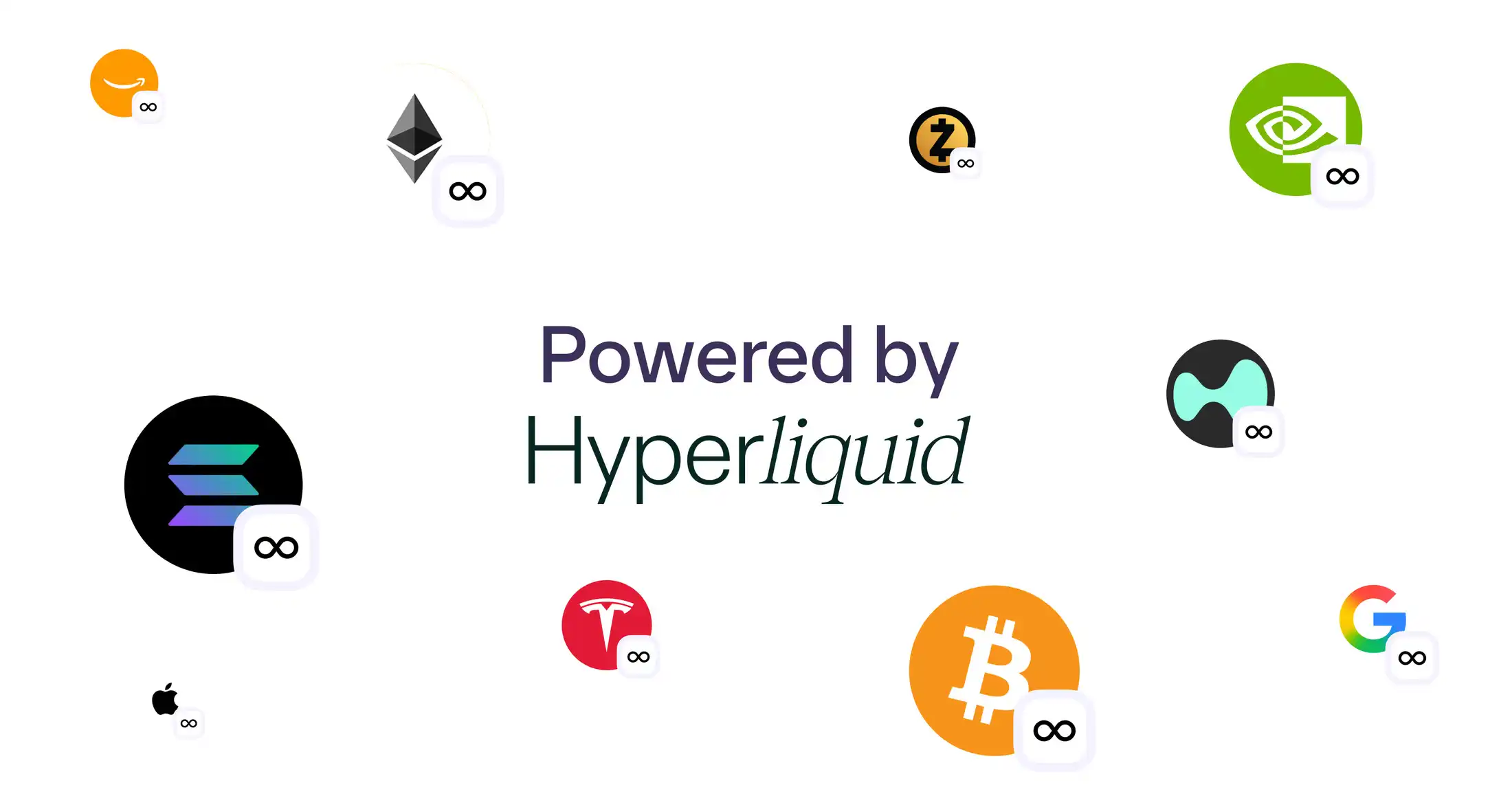
Phantom official Perpetual Futures product promotional image
To be honest, doing contracts in a wallet is far less smooth an experience than apps like Binance today. But these users don't care. Most of them are not professional traders; they keep a little crypto in their wallets, usually just transfer funds, or simply hold without moving it. Statistics show that on these mainstream apps, a person typically deposits only $30 to $60.
For them, this is the first time in their lives touching contracts. The button is right there in the wallet, and one click opens a position—who would still go compare whose candlestick charts look better.
MetaMask followed, collecting $14.5 million; Trust Wallet only integrated at the end of April 2026 and collected $5.6 million in just over half a year. The three wallets spent almost no cost and opened their own contract exchanges inside their wallets, splitting nearly $50 million among them. Most surprising of all is Based, a trading app built specifically around Hyperliquid that almost no one outside the circle has heard of, with only more than 45,000 users, yet it also collected $15.5 million.
By March 2026, trades coming through these third-party apps already accounted for about 10% of Hyperliquid's total trading volume, most of it from mobile.
These few players essentially set an example for the entire industry: it turned out there were so many people lying around on mobile, and it turned out a single button could turn them into money.
To this day, integrating a Hyperliquid order button has become standard for crypto apps. On the Hyperliquid integrator revenue leaderboard, there are 3,248 names listed. New trading apps are popping up one after another.
However, what really made peers sit up and take notice was a meme coin trading app.
A Slower Fomo
Meme coins are those small coins pumped up by a meme, an image, or a celebrity tweet. Over the past two years, meme coin trading has been the most cutthroat business on-chain.
What's cutthroat is speed. When a new coin launches, buying in the first few seconds versus a few minutes later could mean the difference between a 10x gain and going to zero. So everyone desperately competes on speed: trading bots on Telegram, web terminals like GMGN, screens packed with dense data, every trade able to pay a little extra in fees to jump the queue, all to grab those few milliseconds.
Fomo didn't compete on that.
Paul Erlanger and Se Yong Park worked together at Deutsche Bank, and later both went to dYdX. Erlanger once said something blunt: "One of the biggest problems in crypto is that the people building apps and tools don't trade themselves."
In May 2025, Fomo launched. A month later, they added a feature: Apple Pay.
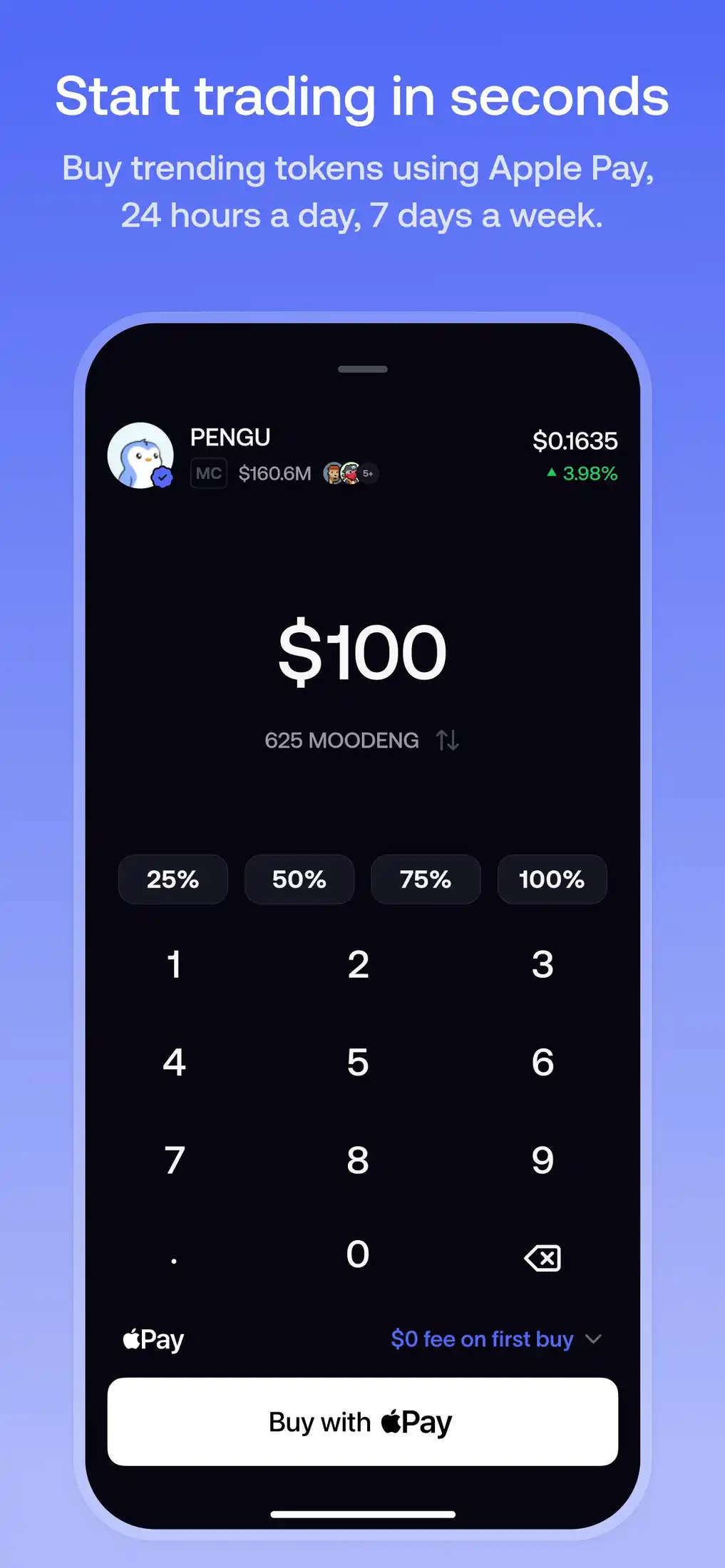
Official screenshot of Fomo on the Apple App Store
Download, link a card, scan your face, and within minutes you can start buying coins. No need to first go to an exchange to buy USDT, no need to know which chain the coin is on, and no need to worry about on-chain fees—Fomo pays that part for you, and only charges 0.5% per trade. Erlanger later told TechCrunch that after adding Apple Pay, users and revenue poured in.
In June 2026, Fomo secured $75 million in funding at a valuation of $550 million. At that time, the company had only 17 people and was adding 3,500 users per day. A month later, the scene at the beginning unfolded: an app that doesn't compete on speed had weekly revenue that surpassed GMGN, the one that competes hardest on speed.
Even GMGN's iPhone app has added deposit buttons for Apple Pay, PayPal, and Venmo.
The one that went the furthest was XXYY mentioned at the beginning. It was backed by the same team behind the Telegram trading bot Pepeboost. When they launched this web terminal in December 2024, their selling point was "zero-latency candlestick charts, industry-leading sniping and trading speed." In less than two years, the website shut down, leaving only GigaX on mobile. GigaX's self-introduction on X is: "The easiest way into memes."
Two years ago, the competition was about being the fastest; now it's about being the simplest.
Competing on speed is an expensive business. Take GMGN for example—its web terminal has to simultaneously monitor every newly emerging token across more than a dozen chains, check each contract for hidden traps, and track the movements of a large number of "smart money" wallets in real time. The more chains and new tokens there are, the more data the servers have to handle, and that money burns every second. This setup is built for veteran players who decide wins and losses in seconds.
But newcomers on mobile just want to tap once and buy—they don't need all that. This year, XXYY isn't the only one that shut down its web terminal; BullX and Zap also went offline one after another. Bad market conditions are one reason; not being able to afford it is another.
Erlanger told Fortune about Fomo's goal: "Don't let people think of it as a crypto app."
So who exactly are these newcomers on mobile?
The $30 User
In October 2026, a statistic calculated the numbers: wallets that accessed Hyperliquid contracts through six mainstream apps including Phantom, MetaMask, Trust Wallet, and Fomo numbered nearly 400,000, and together they lost $280 million.
Even more striking are two other figures. About half of monthly active traders are newcomers placing their first order; and of those newcomers, only about one in seven is still trading three months later.
This machine relies on a constant stream of new wallets. A person clicks in, deposits thirty or fifty dollars, gambles a few rounds, loses, and leaves. Next month, someone else has to take their place.
But the number of people with wallets is finite. Phantom has 15 million monthly active users, and over the course of more than a year, 210,000 have clicked the contract button. Those willing to try have tried, and most of those who tried have left. The people who already have wallets on their phones and already have coins in those wallets will eventually be cycled through by this machine.
Everyone sees one thing clearly: new users are on mobile. But having a phone alone isn't enough. The step Fomo truly won wasn't how good-looking the app was—it was that Apple Pay button. What it captured was people who only have fiat currency and have never touched crypto.
What a wallet can sell you is the coins you already hold; what Apple Pay can capture is the money in your bank card.
Whoever can capture the money in these people's bank cards will have the next wave of users.
Aave's founder thought about this many years ago.
A Computer
1997, Finland. A father working in the logistics industry saved for about half a year to buy the family's first computer. His wife was a nurse. Many years later, the son described the family this way: "Very blue-collar, very hard-working."
The son's name is Stani Kulechov. At nine, he learned to build web pages on that computer. Later he played hockey for ten years, wearing number 31. And later still, he built Aave.
In January 2020, Aave had just officially launched. That month, Stani said in an interview: "People earn almost nothing in their bank accounts." Then he said these people needed to be brought into DeFi.
These people never came.
Before 2025, to use DeFi you first needed a computer, a plugin wallet installed in a browser, and a "password" made of twelve English words—get one word wrong and your money was gone for good. Only crypto veterans could cross these thresholds.
In 2024, Stani gave an interview at an Ethereum conference, chatting while playing Jenga with the host. When the conversation turned to his parents, he said they now use Aave too. Then he added: but for them, DeFi is still too hard to use.
His son built the world's largest DeFi lending platform, and even his own parents find it a hassle to use.
What Stani was initially looking for was exactly people like his parents: money sitting in a bank, where the national average interest rate on U.S. savings accounts is 0.38%—deposit $10,000 and earn $38 in interest a year.
These people don't have wallets. How does the money get in?
One account number, one routing number
On November 17, 2025, Aave's development company announced it would list an app on the Apple App Store. Stani told Fortune: "The next step for DeFi is to let ordinary consumers use it directly."
On the app's launch page, Aave placed its own interest rate alongside two lines of small text: one was that 0.38% for U.S. savings accounts, the other was the 3.25% savings rate of Cash App, a popular U.S. payment app. It had spent years comparing rates with peers, but this time, not a single peer's name appeared.
Its rival had become the banks.
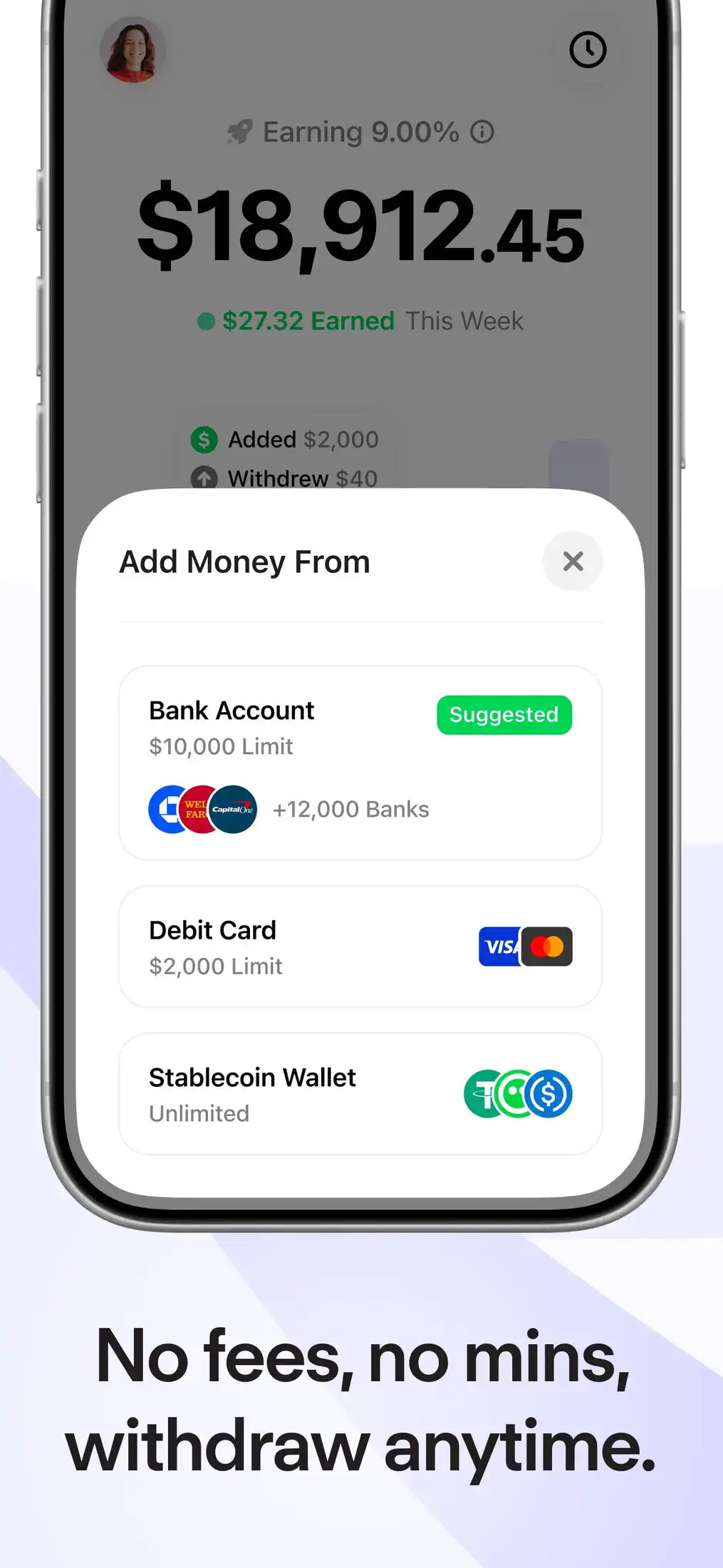
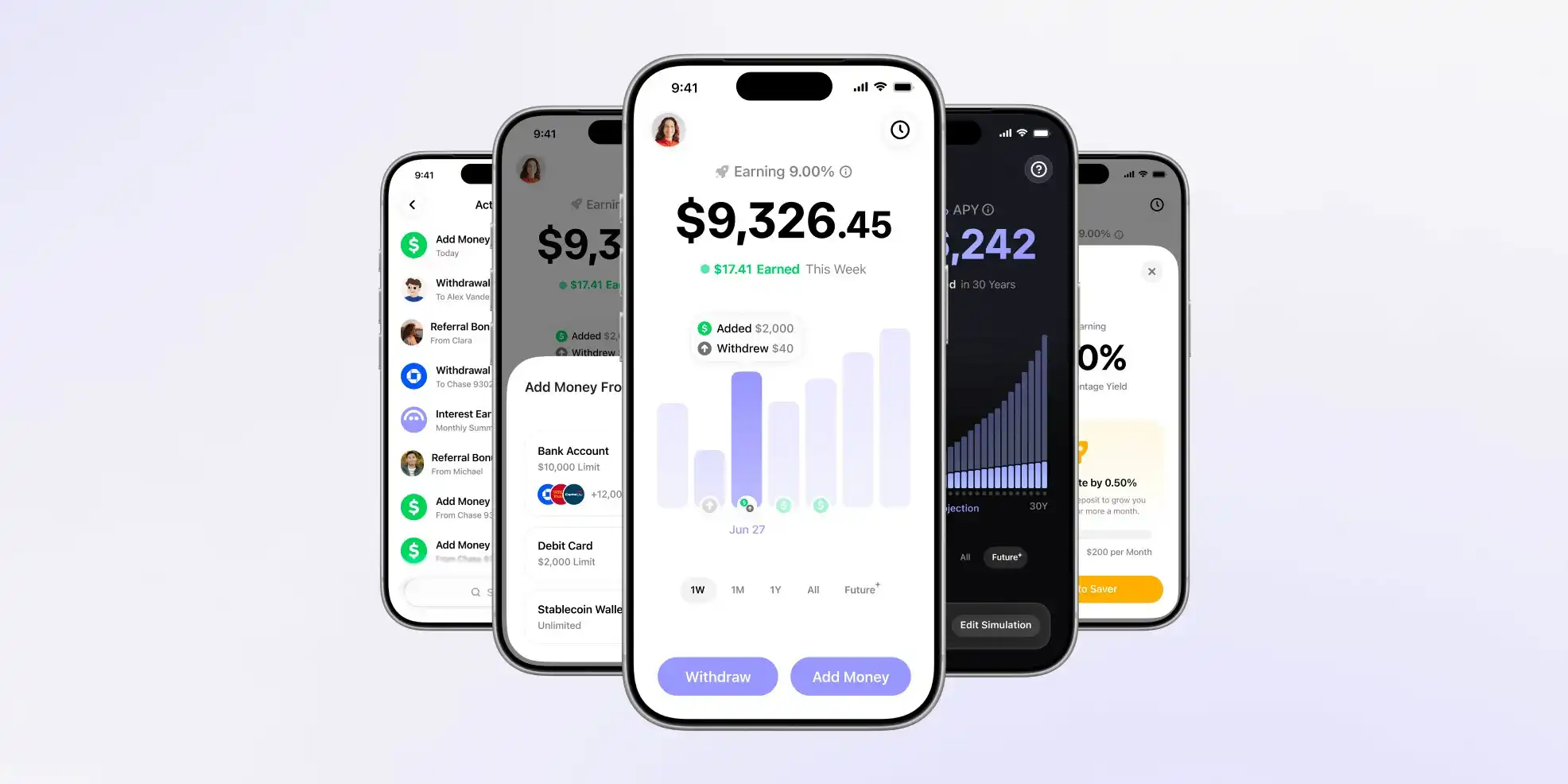
An official screenshot provided by Aave on the Apple App Store. The deposit options list Bank Account, Debit Card, and Stablecoin Wallet.
There is no "connect wallet" in the app, no incomprehensible "health factor," and no visibility into which chain is being used. Log in with an email or phone number, and money can be transferred in directly from accounts at more than 12,000 U.S. banks, or by swiping a debit card. The money transferred in is automatically converted in the background into stablecoins—"on-chain dollars" pegged one-to-one to the U.S. dollar; which chain it sits on and how it gets moved there are handled by the system.
Users see only one number: transfer in $100, and the balance ticks up a little every second.
Fomo's Apple Pay handled the first step: swiping money in from a bank card, and once that swipe is done, the matter is over. What Aave and others want to do is the next step: once the money comes in, keep it there.
That requires shifting from "buying coins" to "opening an account."
ether.fi announced in October 2026 that it would hand the entire deposit pipeline to payments company MoonPay, and every user would receive a virtual account with an "account number" and a "routing number." A routing number is the string of digits the U.S. banking system uses to identify "which bank you are." With an account number plus a routing number, entered into a company's payroll system, salaries can be paid in directly, no different from being deposited into an ordinary bank account.
Rok Kopp, head of growth at ether.fi, didn't mince words:
"ether.fi's benchmark isn't other crypto products—it's the banking app users open every morning."
Ethena gives every user a virtual European bank account where euros, Japanese yen, and Brazilian reais can all be deposited for free. According to the official blog, users "never need to know what a chain is, what a wallet is, or what a cross-chain bridge is."
Money that comes in to buy coins is mostly speculative capital; money that comes in to open accounts is salaries and savings.
But opening an account is just the beginning. Once the money is in the door, what these apps do next looks increasingly familiar.
Three Kinds of Money
On the web, platforms can only collect one kind of money: the cut from lending interest. An account can collect three.
The first is called float income. Behind every stablecoin in a user's hands sits a real reserve, and that reserve earns interest every day. Who gets the interest? Whoever issued that dollar. Aave, Ethena, and ether.fi all issue their own coins.
The second is card transaction fees. Every time a user swipes a card, the merchant pays a small fee to the card issuer. Mike Silagadze, CEO of ether.fi, has said that this is the main revenue source for their card business.
The third is the interest spread. For example, paying 6% on the deposit side and charging 9% on the lending side—the 3 points in between are profit. These numbers are an example for illustration, not figures published by any company.
Interest on reserves, card transaction fees, the spread between deposits and loans. What a bank makes money from is, broadly speaking, these same few things.
Ethena's own dollar is called USDe. When it launched Ethena Pay in September 2026, it admitted something a bit awkward in the announcement:
"To date, every USDe issued has reached its holder through someone else's product."
So it wants to build its own interface, because "the economics of the interface belong to whoever builds the interface."
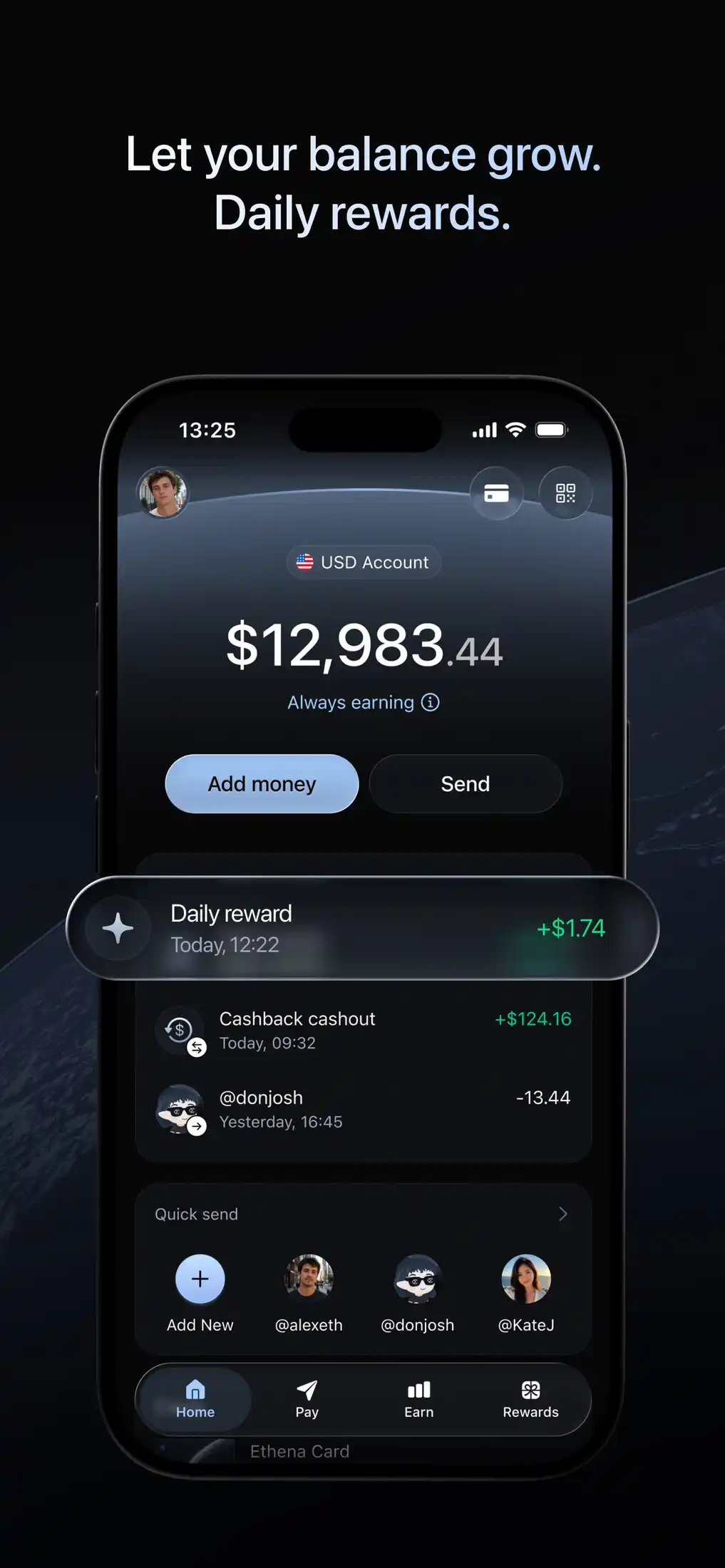
Ethena Pay's mobile app
That button on Hyperliquid earns fees from someone gambling a few rounds before walking away broke. What accounts want is a different kind of money: a salary that lands on time every month.
Open an account, receive a salary, issue a card, pay interest, extend loans. String these together and you have what a bank does every day. The apps built by Aave and its peers are bank counters moved into a phone.
But if building an app were only about attracting new users and opening counters, one thing wouldn't add up: companies that already have apps and tens of millions of users should lack nothing. Yet they too are lining up.
Licenses
Coinbase lacks neither an app nor users.
On November 9, 2026, Coinbase, the largest U.S. crypto exchange, received final approval from the Office of the Comptroller of the Currency to establish "Coinbase National Trust Bank."
A trust bank sounds like a bank, but its work is far narrower: it mainly safekeeps client money and assets, unlike ordinary banks that take deposits and extend loans at scale. Coinbase filed its application in October 2025, received conditional approval in April 2026, and converted to full status seven months later. In its application it took care to state that even if approved, it had no intention of becoming a bank. Yet the institution it wants to set up has the word "bank" right in its name.
Not just Coinbase. Exchange Kraken's parent company wants to establish "Payward National Trust Bank," Crypto.com received conditional approval, Cash App's parent Block also filed an application, and stablecoin issuers Circle and Ripple have obtained this license as well. More than 12 crypto companies have filed such applications.
Everyone has their eye on this license for another very practical reason: most U.S. state money transmission rules do not cover trust companies, and with this nationwide license, they may no longer need to apply for money transmission licenses in all 50 states one by one.
Aave is also filling in the piece it lacks. In May 2026, Aave's development company had two U.K. subsidiaries complete crypto asset registration with the U.K. Financial Conduct Authority, and also obtained an EU crypto license covering all of Europe, offering zero-fee, zero-spread exchange between euros and stablecoins.
Put the two groups side by side. DeFi platforms hold yield but lack accounts, so they build apps; exchanges hold apps and users but lack a legal status for safekeeping money, so they obtain licenses. One group moves from product toward license, the other fills in product from license, and in the end they stand behind the same counter: safekeeping dollars for ordinary people, and making money from that money.
This is something only banks used to do.
The banking industry sees it more clearly than anyone. The Independent Community Bankers of America has taken the Office of the Comptroller of the Currency to court, saying this opens a side door for crypto companies; Senator Warren says these approvals are illegal; the American Bankers Association demands that licenses be issued only after all supporting rules under the new U.S. stablecoin law are fully in place.
The lawsuit is still ongoing, and the licenses are still being issued.
That line of small print
No one can say for sure right now whether this business will ultimately succeed.
When Aave announced its App, it cited yields of a minimum 5% and a maximum 9%. At the time of writing, the page shows 6.25%, with "variable" written underneath. The "balance protection" the App offers is also not the kind of deposit insurance backed by the federal government that U.S. banks provide.
In 1997, Stani's father saved for half a year before he could buy that computer. Nearly thirty years later, what his son has built finally doesn't require a computer—a phone and an email address are enough to open an account. Who knows whether his parents would still find it difficult to use now.
In Nigeria, far from Finland, there is an engineer named Elvis Anselm who works remotely for overseas clients.
In 2021, he lost a job. The reason wasn't that he did the work poorly—it was that the client couldn't pay him: neither PayPal nor Stripe provides services to Nigerians. In 2022, he was about to lose another one. Anxious, he saw people on X discussing accepting cryptocurrency and asked his client: Can you pay me in USDT?
The client said yes. From then on, every cent he earned from remote work was in cryptocurrency.
USDT solved "being able to receive money," but nothing else. It sits in a phone wallet—it can be transferred, it can wait for a good exchange rate, but it doesn't earn interest, and it isn't an account where a salary can be deposited monthly, where you can swipe a card, or where you can save.
This year, these Apps are racing to fill exactly the gap he has. What shut him out back then was PayPal and Stripe; now the ones racing to open accounts for people like him are a group of companies that say they are not banks.
At the very end of Aave's App announcement, there is a line of small print:
"Aave is not a bank."
When Coinbase submitted its license application, it said something similar. Fomo's founder said: don't think of it as a crypto App.
To Elvis, these names probably don't matter. All he wants is a place to catch his next paycheck when it comes in.
Welcome to join the official BlockBeats community:
Telegram Subscription Group: https://t.me/theblockbeats
Telegram Discussion Group: https://t.me/BlockBeats_App
Official Twitter Account: https://twitter.com/BlockBeatsAsia
 Related Articles