Soaring Securitize puts equity-bearing US stocks on Solana — how far can this compliant path go?
TL;DR
· Securitize (NYSE ticker SECZ) launched 12 stock equity tokens on Solana on October 8, covering Apple, Nvidia, Tesla and others. Qualified investors can buy and sell with USDC, and the company's stock closed up about 11% that day.
· Each token is backed 1:1 by one underlying share, constituting a security entitlement under UCC Article 8, with dividend and voting instruction rights preserved. However, the underlying companies did not participate in the endorsement, and trading currently only occurs during extended trading hours.
· Related tickers: SECZ, SOL, USDC.
On October 8, publicly listed RWA (real-world asset) infrastructure company Securitize (NYSE ticker SECZ) launched Securitize Stocks, with the first batch of 12 stock equity tokens going live on Solana. The underlying assets include Apple, Microsoft, Nvidia, Google, Tesla, Meta, Amazon, Netflix, Circle, MSTR, Palantir and SPCX. Trading is conducted through its registered broker-dealer Securitize Markets, with Jump Trading as market maker, USDC settlement, and the initial phase open only during extended trading hours. On the day of the announcement, SECZ closed up about 11% at $12.66.
The significance here is not how many more stocks have gone on-chain. Over the past few years, the vast majority of on-chain stock tokens have been offshore-issued synthetic wrappers aimed at price tracking, where holders receive contractual exposure rather than rights in the stock itself. What Securitize has rolled out this time is a set of rights certificates under a U.S. legal framework — that is why the stock price reacted.
What rights exactly does it give investors
Bottom line first: what holders receive this time are legal rights corresponding to positions held in a broker's name, not shares directly recorded on Apple's shareholder register.
Each token is backed 1:1 by one underlying share, officially described as a security entitlement under UCC Article 8. In plain terms, the shares are held by the broker in street name, and investors receive a transferable claim on that portion of the position, along with dividend and voting instruction rights. This adds a layer of protection beyond synthetic tokens that merely track price, but it still falls short of direct share ownership.
The accompanying mechanism is CET (Convertible Entitlement Token), which can be understood as a bridge to registered shares. When an issuing company itself accepts tokenized form, holders can convert on-chain certificates into direct shareholdings in the name of the transfer agent. The official disclosure also makes clear that the tokens do not lend out the underlying shares, and the underlying companies have not sponsored or endorsed the product.
CEO Carlos Domingo laid out the positioning bluntly: tokenized stocks should give investors more than an offshore price wrapper. That statement is the key to understanding the product and the yardstick for judging future progress.
Where Liquidity Begins
What can currently be traded is a KYC-gated pool of qualified investors, not an all-weather free market open to everyone.
The initial setup includes extended trading hours, Jump Trading market making, USDC settlement, and trades routed through a registered broker-dealer. Officials say the design does not rely on exemptions, while anticipating future access to tokenized securities trading venues envisioned under the SEC's Innovation Exemption launched on September 17.
This Innovation Exemption is a five-year observation sandbox the SEC has opened for a class of permissioned on-chain trading venues, banning synthetic books, with a 30-day issuer objection right and volume caps. Chair Paul Atkins framed it as an experiment to collect data and pave the way for future rules, not a license issued for these 12 tokens.
The New York Stock Exchange's all-weather digital venue under study, and OKXICE, the joint platform between Intercontinental Exchange and OKX, have yet to launch. Whether the first phase can generate sustained trading and inventory depth is the first set of numbers to watch.
By comparison, recent growth in stock tokens has mainly come from retail wrappers like bStocks, xStocks, and Ondo, which have expanded holder bases, while Securitize takes a compliant but narrower gate. Whether a closed pool can grow liquidity is a question no public data can yet answer.
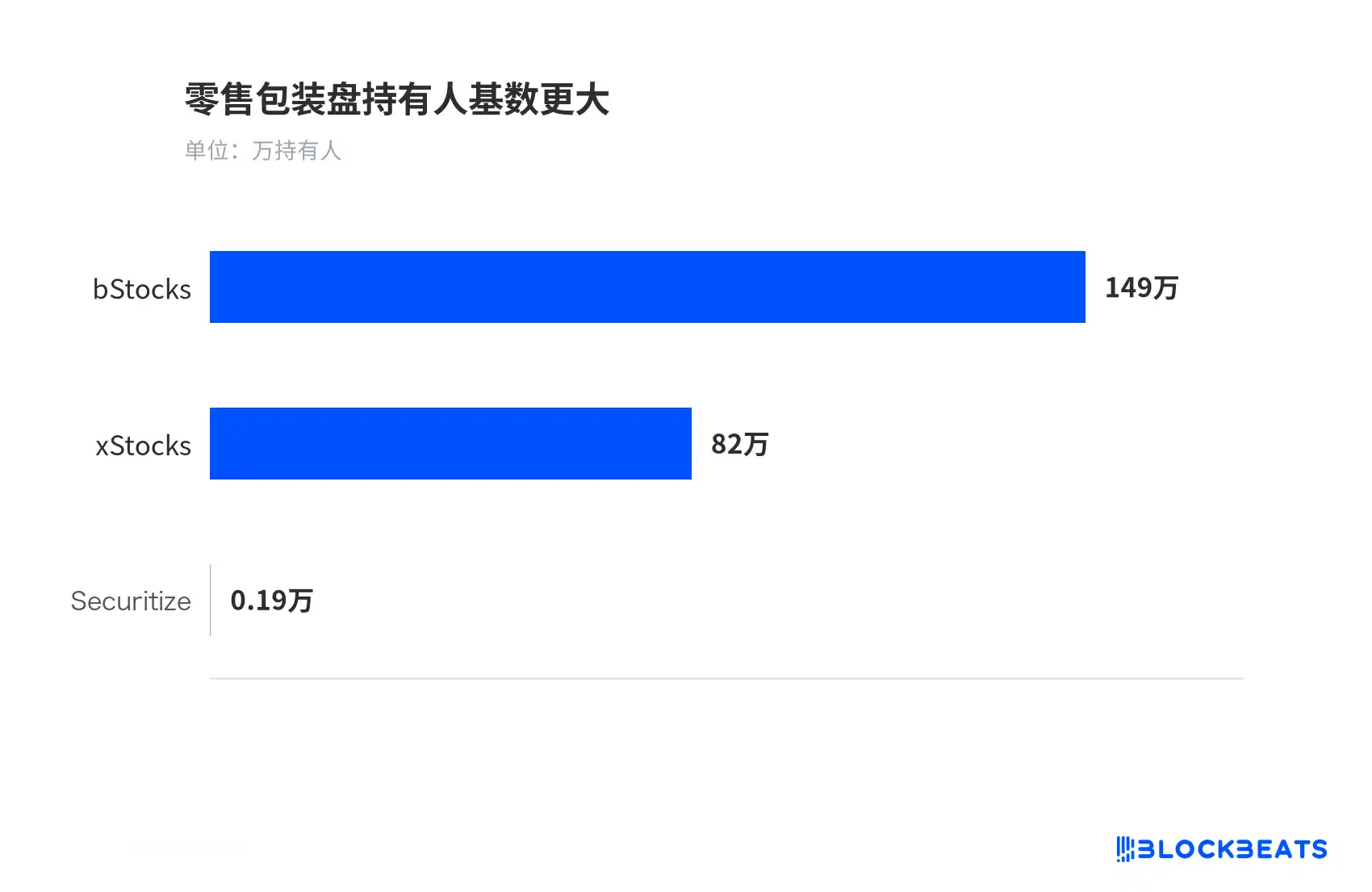
Retail wrappers have larger holder bases
The Narrative Is Priced In, Revenue Hasn't Caught Up
The stock price moved first, but the fundamentals present a different picture.
For the second fiscal quarter ended June 30, Securitize reported $14.4 million in revenue, down about 5% year-over-year, a net loss of $21.7 million, and an adjusted EBITDA loss of about $5.5 million. Tokenized assets under management at quarter-end were about $4.3 billion, with quarterly trading volume of $5.3 billion, up 147% year-over-year. After the earnings release, the stock fell about 20% at one point, and the company cut its full-year revenue guidance to $70 million to $80 million. With about $350 million in cash and no debt, that is its confidence for launching new products.
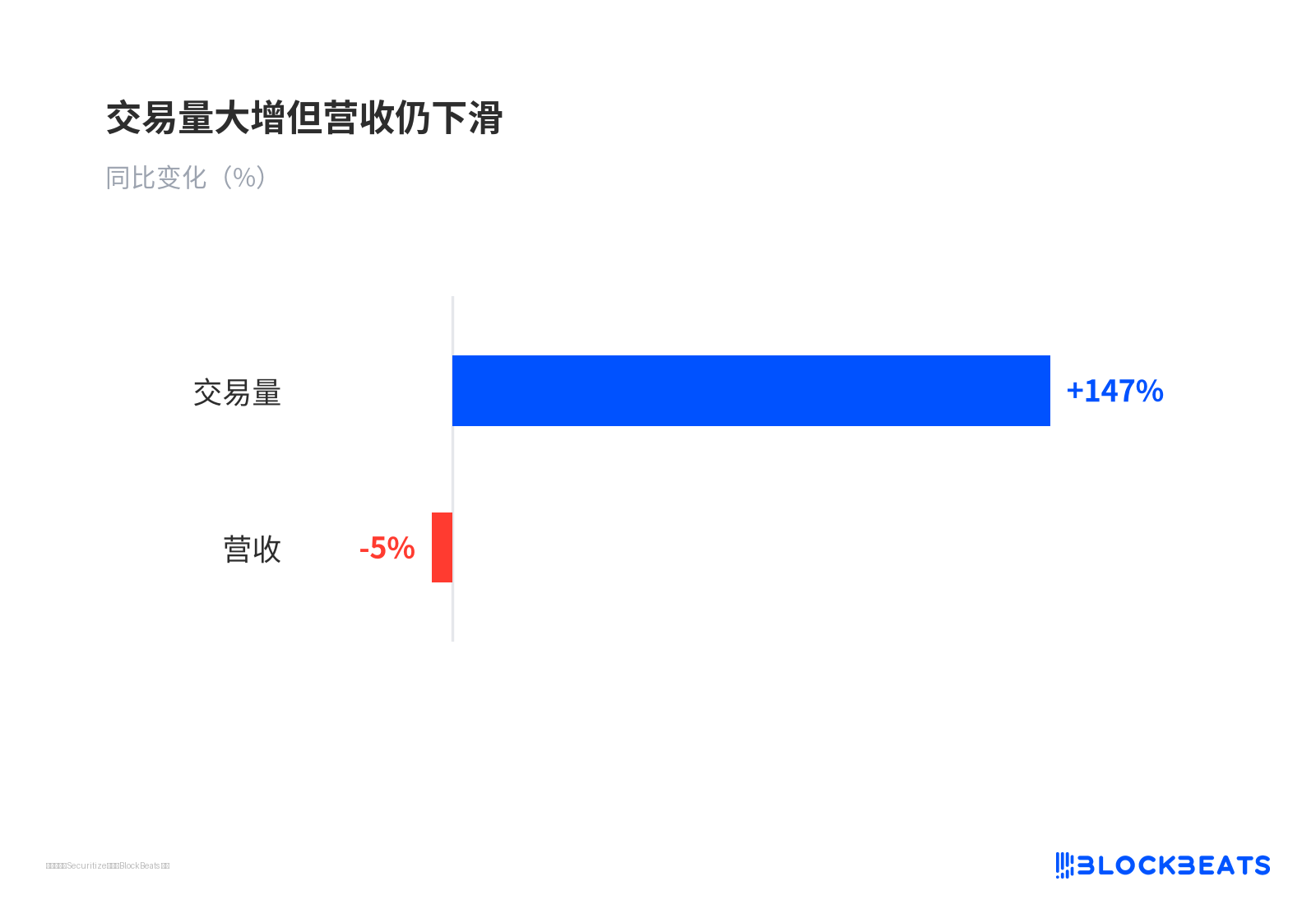
Trading volume surged but revenue still declined
Industry-wide figures are also worth comparing. On October 9, the total distributed RWA market was approximately $38.9 billion, with the Securitize platform at about $4.475 billion, still ranking first among platforms, but down about 11% over the past 30 days. Categories are proliferating, but the stock of the leading platform has not expanded in tandem. These 12 stock tokens look more like a new narrative than a scale increment that has already materialized.
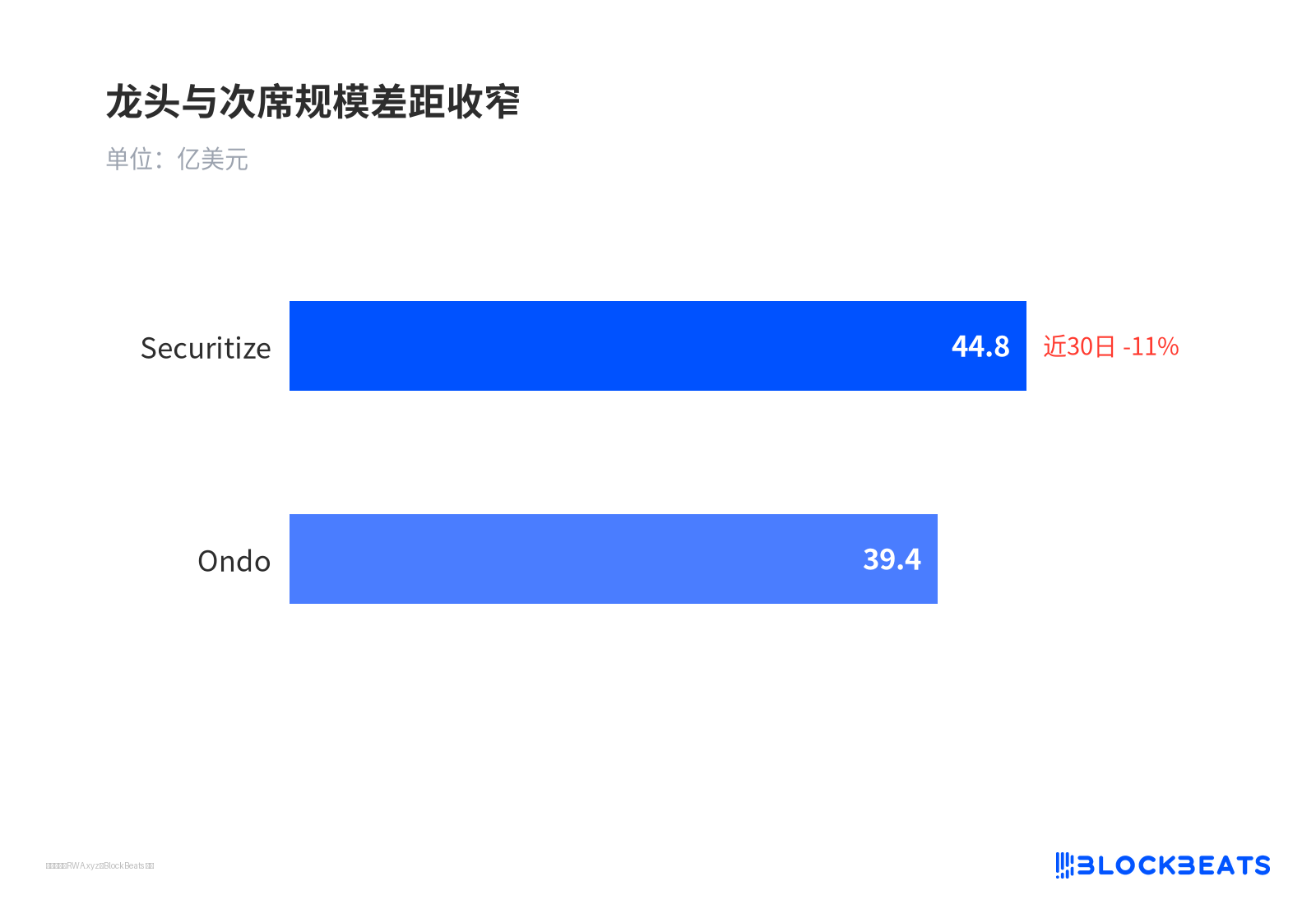
Gap between leader and runner-up narrows
There is clear divergence on the sell side. Cantor Fitzgerald initiated coverage on SECZ on September 21 with an overweight rating and a price target of about $21.20, arguing that on-chain traditional assets still account for only a tiny fraction of traditional finance, leaving ample room for growth. The aggregated analyst consensus price target is around $13.94, not far from the October 8 closing price. The distance between these two numbers itself reflects the market's disagreement over how much of the narrative can be delivered.
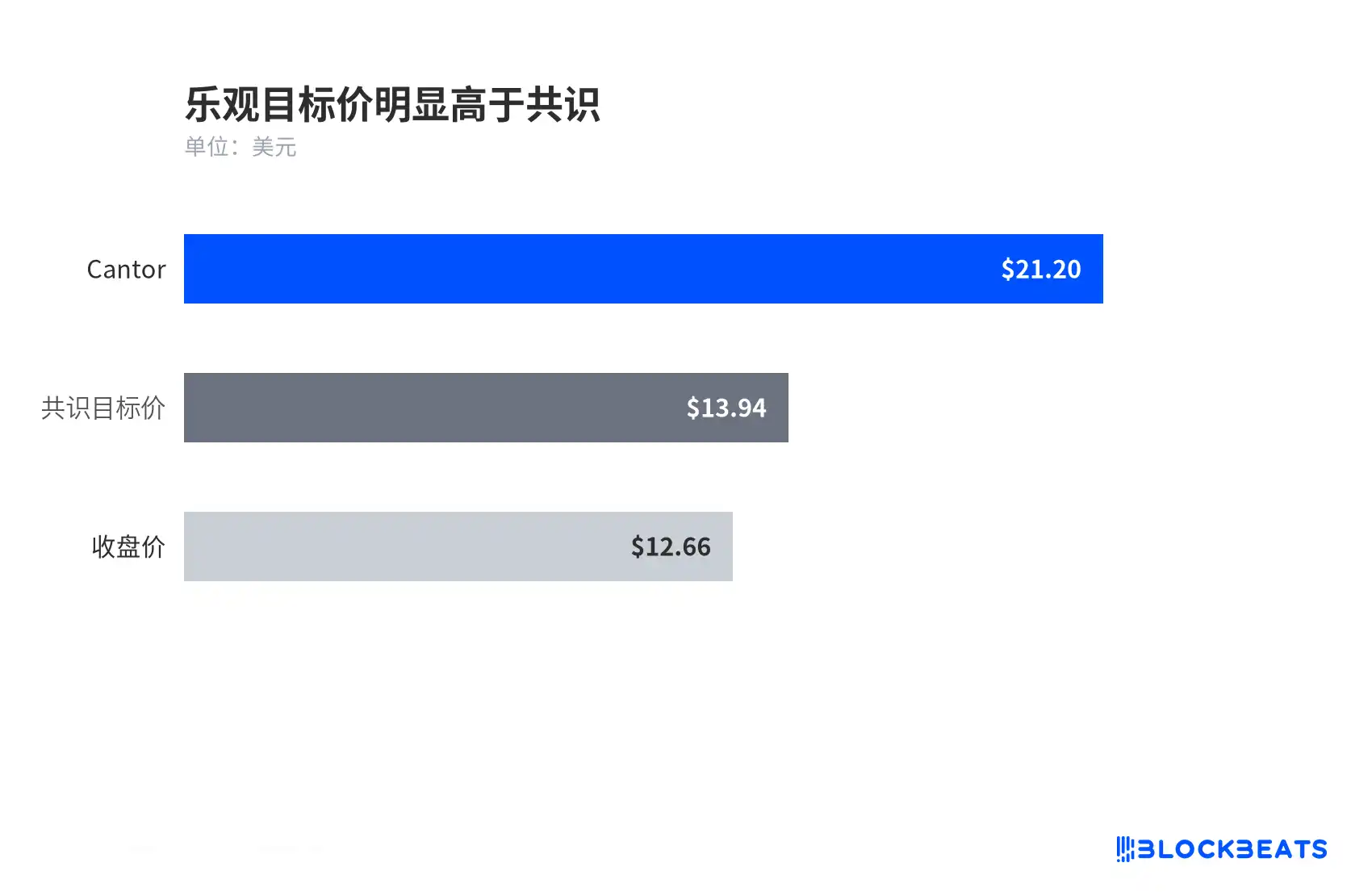
Bullish target price significantly above consensus
First-phase trading and the next earnings report will determine whether the narrative can land
Connecting the dots above, what this launch confirms is the pathway, not the outcome.
U.S.-registered broker-dealers can standardize equity-bearing stocks into transferable certificates on Solana and sell them to accredited investors — that path is now open. But from closed pools to scaled liquidity, from assets under management to revenue, from extended hours to round-the-clock venues, all three links remain unresolved. The SEC's sandbox provides direction, but also retains brakes such as issuer objection rights and volume caps.
The variables to watch are concentrated in a few areas. Whether first-phase trading and inventory can form sustained depth, whether this business shows up as revenue in the next earnings report, and issuers' true attitude toward future trading on permissioned venues. How private company shares like SPCX are custodied and priced also needs clearer standards.
Domingo and Cantor see a long-term market measured in trillions of dollars, but what can be verified right now is only the first segment of this compliant channel.
Welcome to join the official BlockBeats community:
Telegram Subscription Group: https://t.me/theblockbeats
Telegram Discussion Group: https://t.me/BlockBeats_App
Official Twitter Account: https://twitter.com/BlockBeatsAsia