LIT Skyrockets to New All-Time High, Lighter and Robinhood Revealed to Have the Same Roots

From a historic low of $0.7794 set by LIT at the end of March this year, to today, 5 months later, LIT has soared by nearly 5 times, reaching a peak of $3.79. It has risen by 75% in the past 30 days and 24% in the past 7 days.
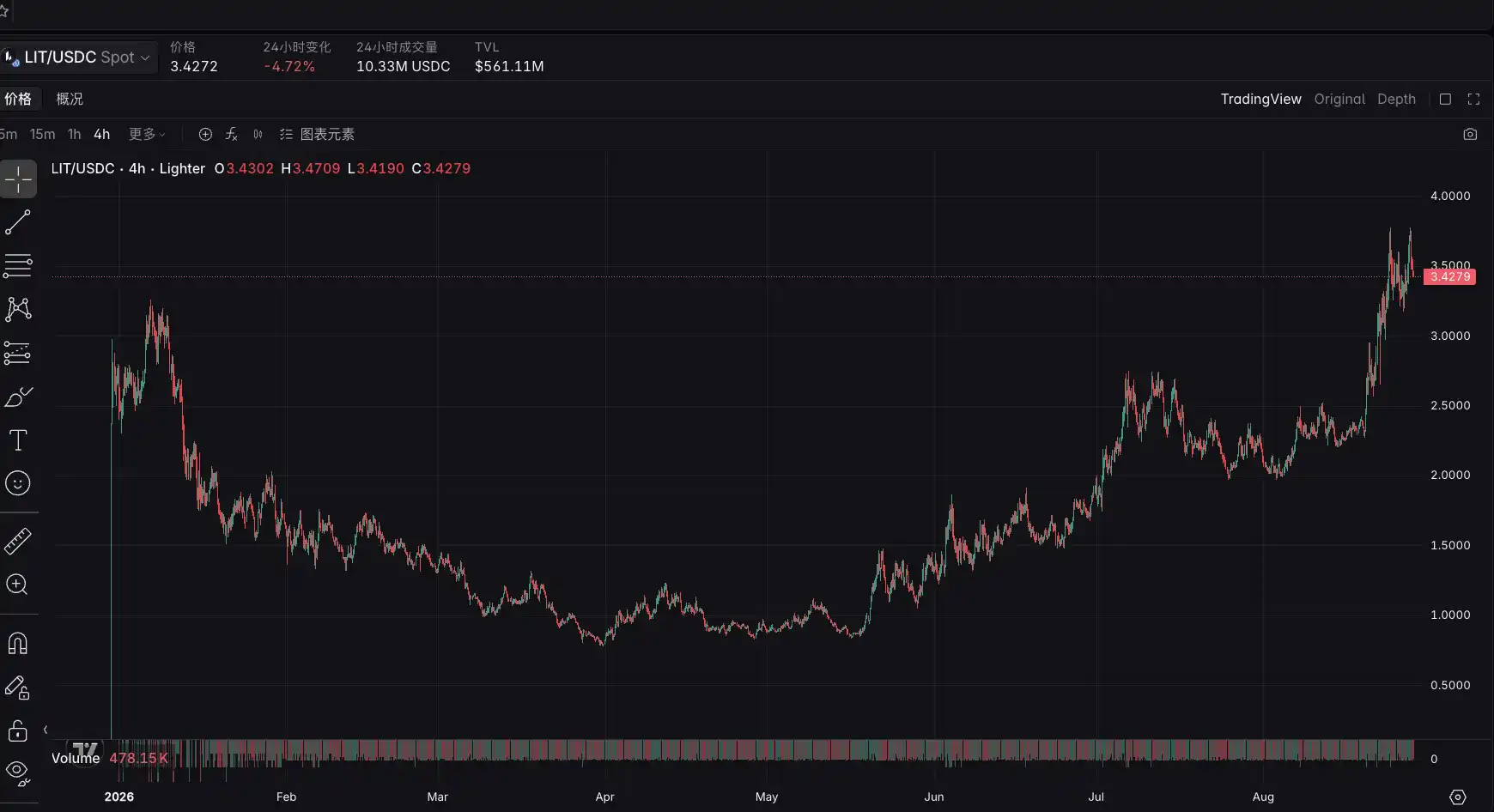
LIT can be said to be one of the most bullish coins in the crypto market this year. Currently, it ranks 76th in the global crypto market with a market capitalization of $8.65 billion. As altcoins followed the rising trend of Bitcoin and HAPE at the beginning of the bull market, it was only natural for them to rise along with the tide. However, LIT's rise is not solely due to the overall market surge.
Perp Dex has been a core sector in the past two years, with Hyperliquid as the benchmark, and it has recently had an unexpectedly smooth run in the United States. Regulation, compliance, and institutional access have not been major obstacles, giving the entire sector an expectation: this business can be done in the United States. Lighter operates in the same field and naturally has been a core project in these past two years.
But in terms of "American legitimacy," Lighter's position is even higher than that of Hyperliquid. After all, it is a domestic U.S. project, registered in Delaware, with tokens issued directly by a U.S. C-Corp, rather than taking the route of most projects through a foundation in the Cayman Islands or Switzerland. Lighter's founder, Vladimir, is an American immigrant from Russia since childhood. Under the tone of the Trump administration's "America First," this identity is an invaluable pass.
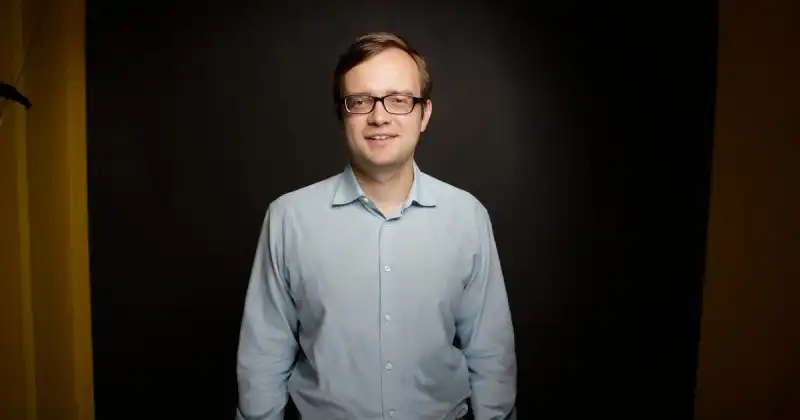
Lighter Founder Vladimir
Therefore, on August 20, when the newly established Innovation Advisory Committee of the U.S. Commodity Futures Trading Commission (CFTC) held its first meeting to discuss "what a decentralized exchange needs to look like to operate legally within the U.S.," Lighter's founder and CEO, Vladimir, sat at the table to provide insights.
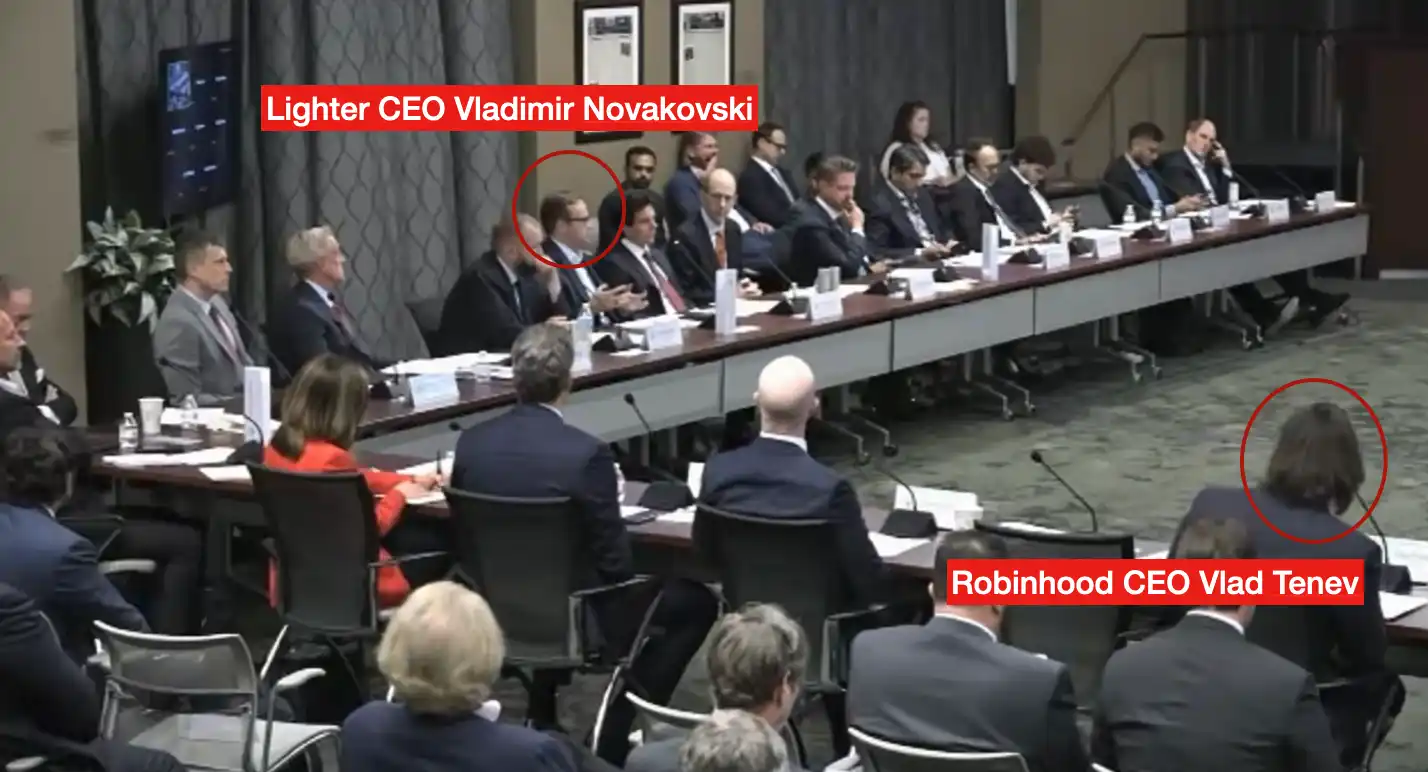
August 20 CFTC Innovation Advisory Committee First Meeting
Meanwhile, Lighter's business is also in an expansion phase. In April of this year, the Telegram wallet launched perpetual contracts, exclusively supplied by Lighter, covering 150 million registered users. On July 1st, Robinhood's own chain went live, with Lighter also providing the perpetual contract engine, sharing a 50-50 revenue split. Lighter has remained zero fees for retail investors, with 0 order placement fees and transaction fees for all 241 markets. On August 24th, South Korea's largest exchange, Upbit, listed the KRW trading pair for LIT, which surged by 22% on the same day.
All these reasons combined may explain much of this round of market enthusiasm. However, they still cannot explain one thing: why, among all the projects building Perp Dex, it is Lighter that has managed to turn the United States' largest retail broker, Robinhood, into its distribution channel and receive a 50-50 revenue split.
During an interview on Laura Shin's podcast, Lighter's founder and CEO, Vladimir, recounted a past event.
He said that he once joked with his team that this collaboration had been brewing for 12 years, or viewed from another perspective, even 25 years. "Because Robinhood's founder, Vlad Tenev, and I are high school classmates; we were the only two Vlads at our school."
We Were the Only Two Vlads in High School
Lighter's founder, Vladimir, and Robinhood's founder, Vlad Tenev, were the only two Vlads in their high school.
The high school attended by the two Vlads is called Thomas Jefferson High School for Science and Technology, known as TJ. It is one of the top, most renowned, and most difficult-to-enter public STEM high schools in the United States. It attracts the strongest group of STEM students in the Washington D.C. metropolitan area, with many going on to top universities and entering the technology and finance industries. Therefore, it is also an easily recognizable resume signal in Silicon Valley, quant, and startup circles.
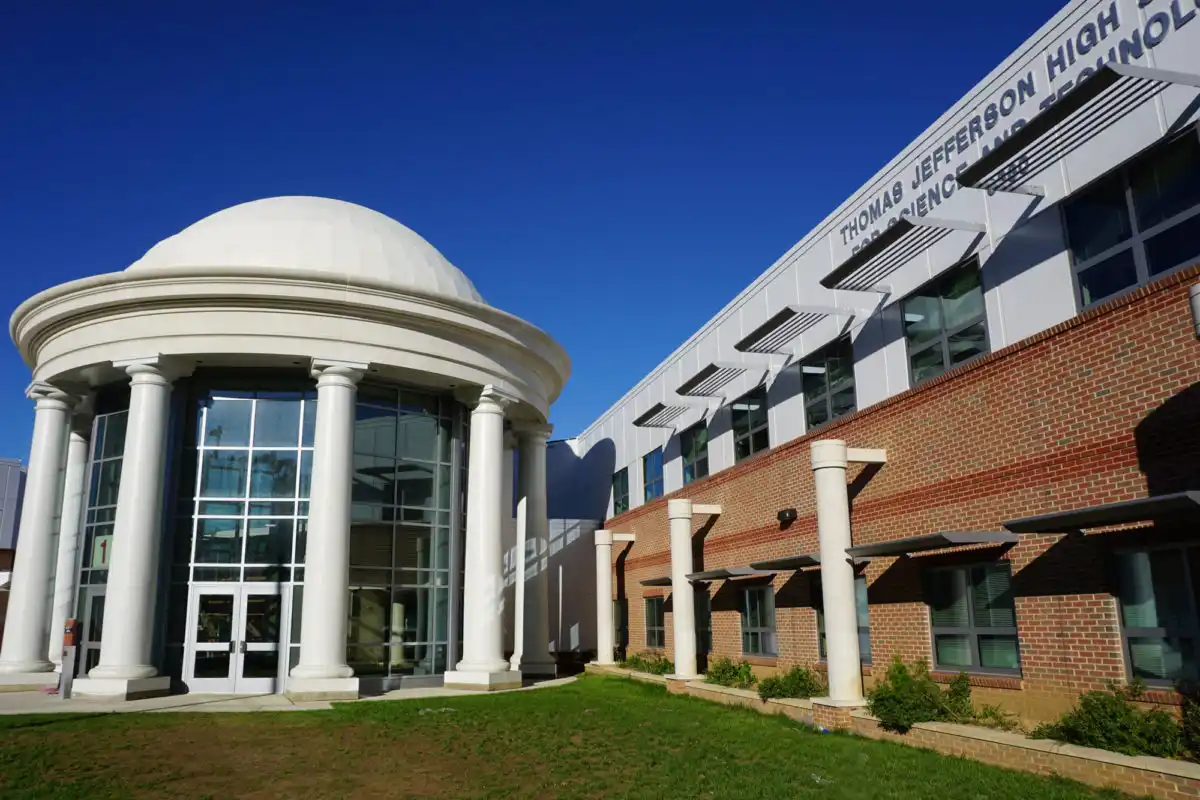
TJ High School
As Lighter's founder is three years older than Robinhood's founder, for convenience in the rest of this article, we will refer to Lighter's founder as "Big Vlad" and Robinhood's founder as "Little Vlad."
When Big Vald was a high school senior, he was one of the most famous students in the school.
That year, he won first place in the USA Physics Olympiad, then represented the United States at the 32nd International Physics Olympiad in Antalya, Turkey, where he won a silver medal. After that, he took a project called "Optimal Holographic Design of Photonic Neural Networks" to the national finals of the Intel Science Talent Search. That year, only two students from the entire school made it to the finals, with most of the list consisting of 16 to 18-year-olds, while Big Vald was only 15.
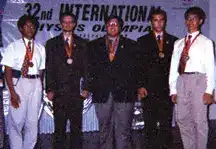
2001 Physics Olympiad participant, second from the left: Lighter founder Big Vald
Big Vald later reminisced about that time on Quora, recalling that he still remembered the scene of his first math team practice two weeks after starting school. He had no idea how long he would last in this training group based on his abilities. So, to enhance his competition skills, he and several classmates began organizing extra-curricular gatherings after school, focusing on math team, computer team, and Olympiad training. The culture of that afterschool training session still continues to this day.
When Little Vald just entered high school, his first impression of Big Vald was the senior student organizing after-school competition training. It was through this afterschool training that the two Valds began to get to know each other.
Surprisingly, Big Vald was an Early Advisor to Robinhood
Soon after, at the age of 16, Big Vald graduated from high school and entered Harvard. He graduated early after just two years and was personally recruited by Ken Griffin, the founder of the renowned hedge fund Citadel.
This was Big Vlad's first job, doing quantitative research and tasked with building high-frequency trading systems for the forex market. He then moved to Graham Capital, a global macro and trend-following fund with over $10 billion in assets under management, where he rose to the positions of portfolio manager and director, staying for seven years.
Big Vlad's workplace in New York City was convenient for commuting, while Little Vlad was already in New York at the time.
That was two years after the Lehman crisis when Little Vlad started a company called Celeris, which did not succeed. In January 2011, he pivoted to Chronos Research, selling low-latency trading software to banks and hedge funds, achieving some success with several million dollars in revenue within a year.
Big Vlad, as the portfolio manager of a hundred billion dollar quant fund, and Little Vlad, promoting his low-latency trading software to funds, found common ground. Graham, with its sizable quant macro fund, was the prime target for products like Chronos.
Publicly available information does not definitively confirm their collaboration at the time. However, the quant industry was relatively small back then. In the aftermath of the 2010 Flash Crash in the US stock market, the entire Wall Street arms race revolved around the word "latency." With two Vlads—one on the buy-side and the other on the sell-side—close communication was likely.
In 2013, as Little Vlad embarked on a new entrepreneurial journey, Big Vlad became an early advisor, offering significant support to his junior colleague's early startup career. Little Vlad's venture at the time is now a household name in the US—Robinhood.
Robinhood was originally known as Cash Cat, which happens to be the origin of Robinhood Chain's largest memecoin.
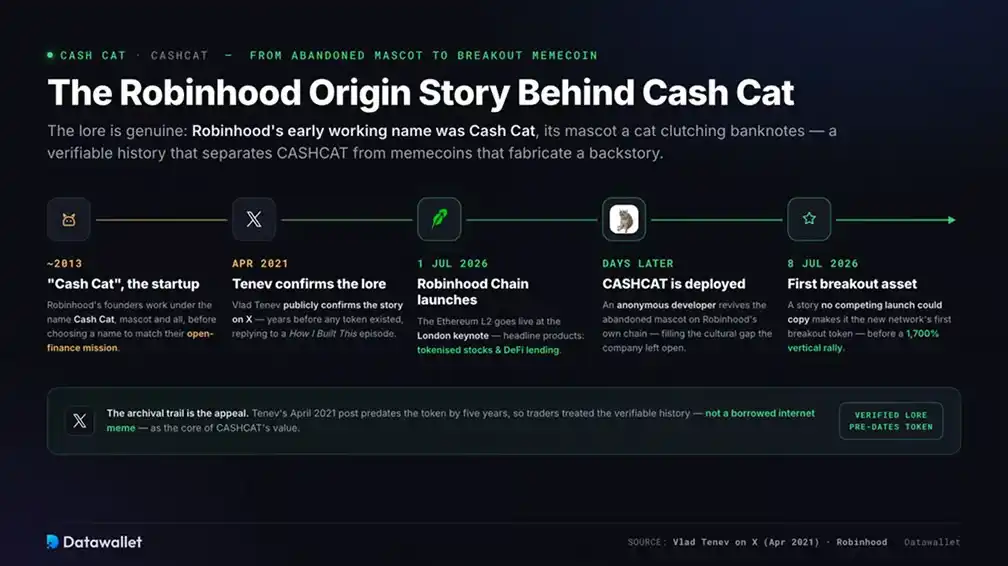
Little Vlad found the business of the low-latency trading software not as appealing. Even if he were to perfect this business over the next three or four decades, he wouldn't want to tell the story to his grandchildren. He envisioned creating a commission-free stock trading mobile app.
In a podcast, Big Vlad reminisced about the experience twelve years prior, saying: "I was an early advisor at Robinhood. At the time, their company was previously called Cash Cat, right? They had just changed their name to Robinhood and were working on a waitlist. I had already known their team at that time and had been involved in some things."
The following year, Big Vlad also made a career move. He joined Addepar, a company that develops wealth management software, as the VP of Engineering. Addepar was founded by Joe Lonsdale, a co-founder of Palantir and one of Peter Thiel's protégés.
Addepar was in Mountain View, and Robinhood was in Palo Alto, with a distance of no more than ten kilometers between the two locations. Their relationship grew even stronger.
Supporting Fellow Alums in Entrepreneurship
It was a period of rapid career growth for the two Vlads.
The big Vlad brought in two interns, one named Scott Wu. Ten years later, Scott Wu created the AI programming intelligence Devin. The company is valued at $10.2 billion and acquired Windsurf last year. The other intern was Alexandr Wang, who sold Scale AI to Meta this year for $14.3 billion and now leads Meta's Superintelligence Lab.
The competitive circle is a small world.
In November 2017, two years after leaving Addepar, the big Vlad co-founded a social AI company called Lunchclub with Scott Wu. They used machine learning to match people, analyzing users' backgrounds and goals to arrange worthwhile dinner meetings.

Early UI of Lunchclub
In September 2019, the big Vlad's Lunchclub completed a $4 million seed round with a16z leading the investment. The list of angel investors included the co-founders of Robinhood.
When alumni start a business, it's natural for the juniors to support.
In August 2020, Lunchclub raised another $24.2 million in Series A funding, led by Lightspeed with Coatue participating, valuing the company at over $100 million. The investors in this round included Hollywood talent agent king Michael Ovitz, PayPal co-founder Max Levchin, Quora co-founder Adam D'Angelo, and the young Vlad.
That year, the young Vlad was on the eve of his peak. The pandemic pushed millions of American retail investors into mobile stock trading frenzy, causing a surge in Robinhood's user base. In the following year, in April, Coinbase went public on Nasdaq with a valuation of $100 billion; in July, Robinhood itself went public; in November, Bitcoin surged to a record high of $69,000.
However, the crypto industry soon experienced several historic events that directly influenced the two Vlads' direction for the next five years.
In May 2022, Luna went to zero, evaporating over $40 billion. In November, FTX went bankrupt, the largest centralized exchange in the industry collapsed, and users couldn't withdraw their funds.
Big Vlad saw an opportunity here. He thought that an exchange could make the matching engine itself verifiable. Using zero-knowledge proofs to mathematically prove that every trade is fair, ensuring no one can front-run or manipulate the system.
He named this concept Lighter.
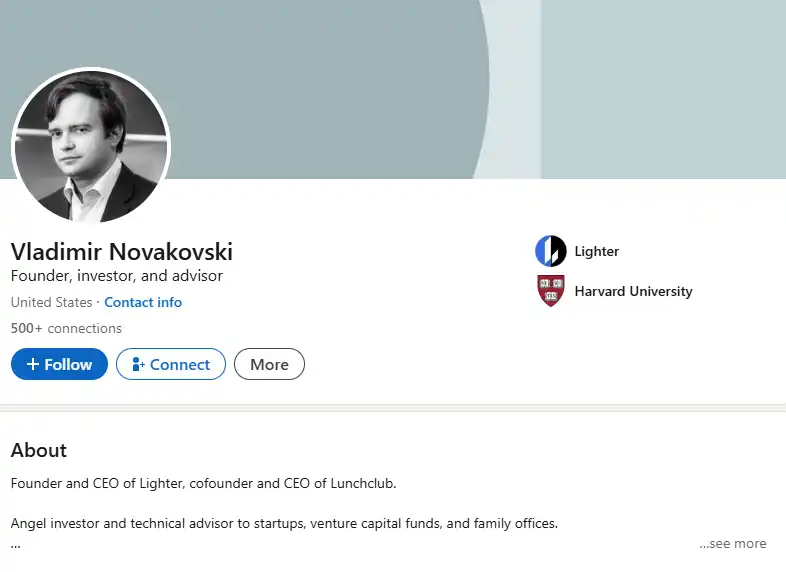
Big Vlad later said that when they started Lighter, on-chain perpetual contracts accounted for only 1% of the entire perpetual market. The ceiling of this track was Hyperliquid at the time. By this year, Lighter's on-chain share has reached 10% to 20%.
In November 2025, Lighter raised $68 million, with a valuation of $1.5 billion, led by Peter Thiel's Founders Fund and fintech veteran fund Ribbit Capital, with participation from Haun Ventures.
Of course, Robinhood Ventures was not absent.
Robinhood Joins Forces with Lighter
On July 1, 2026, the Robinhood Chain mainnet went live. This is Robinhood's own Ethereum Layer 2 network, built on Arbitrum's technology, with 100-millisecond block confirmation times, no native token, and Ethereum settlement for transaction fees.
The perpetual contracts running on the Robinhood Chain belong to Lighter.
Lighter did not route Robinhood's orders to its primary order book but instead ran a separate order book, which they call Lighter Domains. The two order books are independent of each other, but as they are both built on Ethereum, market makers can quote prices on both sides using the same balance sheet, with nearly instant fund transfers between the two books. The order book on Robinhood's platform uses USDG as collateral and quoting asset, while Lighter's primary order book uses USDC, sharing a 50-50 split of the revenue.
In a podcast, Big Vlad acknowledged that this setup poses friction for market makers. However, he also explained why market makers are still willing to participate: they know that the orders coming from Robinhood are predominantly retail orders, which is the "ultimate traffic" they desire.
Due to regulatory reasons, Americans cannot use it at the moment. The perpetuals in the Robinhood wallet are not available to users in the United States, United Kingdom, Canada, Switzerland, the United Arab Emirates, and Singapore.
However, both Vlads are members of this new Innovation Council, with Big Vlad in talks with the Commodity Futures Trading Commission for a decentralized perpetual license.
This license would cover both Lighter's own frontend and brokerages like Robinhood that connect to it. Just like how Robinhood is currently operating a prediction market under Kalshi's license.
"But currently, no one has obtained this type of license yet," Big Vlad stated.
Welcome to join the official BlockBeats community:
Telegram Subscription Group: https://t.me/theblockbeats
Telegram Discussion Group: https://t.me/BlockBeats_App
Official Twitter Account: https://twitter.com/BlockBeatsAsia