Apple Sues OpenAI: 400 Former Employees Involved in AI Hardware Dispute

TL;DR
· Apple has sued OpenAI in a U.S. court, alleging that the company recruited over 400 former Apple employees and systematically obtained trade secrets to develop consumer-grade AI hardware.
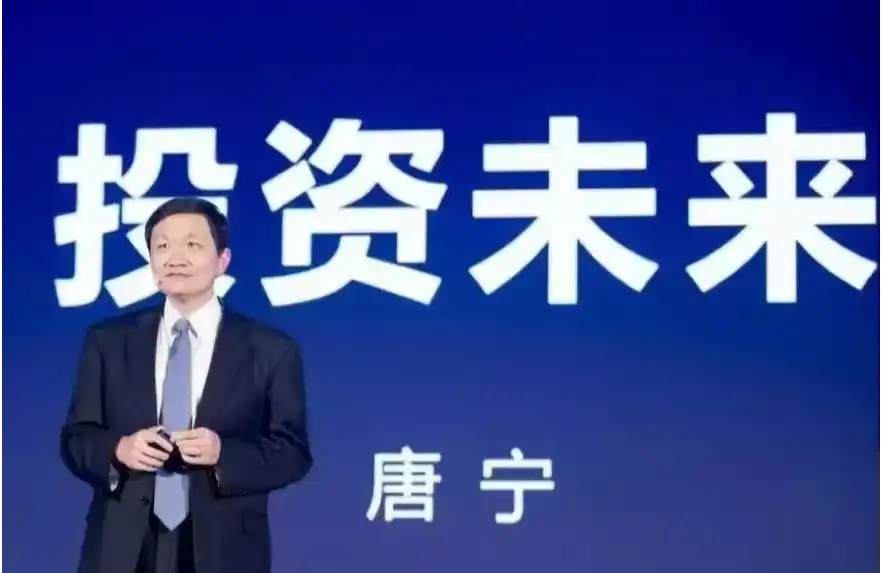
· The lawsuit names OpenAI's Chief Hardware Officer Tang Tan and engineer Chang Liu as defendants, with Apple accusing them of having candidates bring components, leak unreleased product information, and download internal files.
· The lawsuit could impact OpenAI's upcoming AI hardware and IPO plans, but the case is expected to last several years, with the current allegations yet to be tried in court.
Apple's competition with OpenAI, which began with AI model and system collaboration, has now escalated to the courtroom.
According to The Information, Apple has filed a lawsuit against OpenAI and several former Apple employees in the U.S. Northern District Court of California, accusing them of the long-term, organized acquisition of Apple's trade secrets for the development of consumer-grade AI hardware products. Apple stated that since OpenAI initiated its hardware project, over 400 former Apple employees have joined the company, including former iPhone product lead and current OpenAI Chief Hardware Officer Tang Tan, as well as engineer Chang Liu.
This is the first public legal battle between the two parties following a sharp deterioration in their relationship. Two years ago, Apple even integrated ChatGPT into Apple Intelligence, being seen as one of OpenAI's key partners; now, the focus of their competition has shifted from AI software to consumer hardware.
Apple Claims OpenAI Continuously Poached Around Hardware Project
In the lawsuit, Apple believes this is not just regular talent movement but a systematic recruitment plan centered around AI hardware.
The complaint indicates that Tang Tan was one of the key recruiters for the OpenAI hardware team. Apple alleges that before his departure, he discussed supply chain matters with OpenAI or its partners and sent Apple supplier information and internal industry data to himself. After joining OpenAI, he then asked candidates still working at Apple to introduce unreleased product details during the recruitment process, even bringing Apple hardware components to interviews to obtain more internal information.
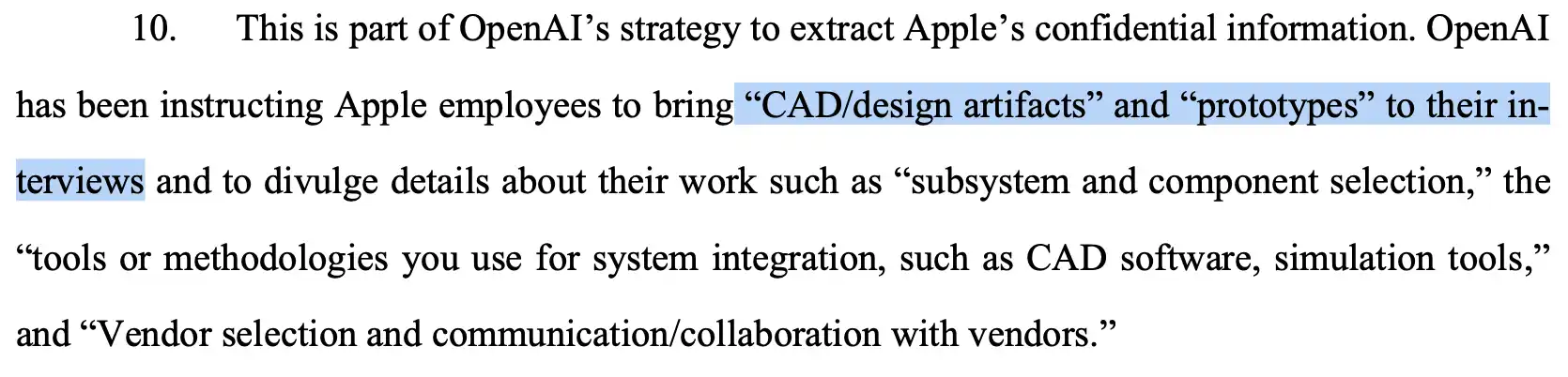
Apple also accuses OpenAI of requesting candidates to share R&D information such as product designs, CAD files, prototypes, supplier collaboration methods, and system integration tools during recruitment, and advising new employees on how to avoid detection by Apple's security team for these behaviors. The above information is all from Apple's complaint, still unilaterally alleged by Apple and yet to be confirmed by the court.
Chang Liu Accused of Exploiting Vulnerability to Download Confidential Files
Apple has also named another former employee, Chang Liu, as a defendant.
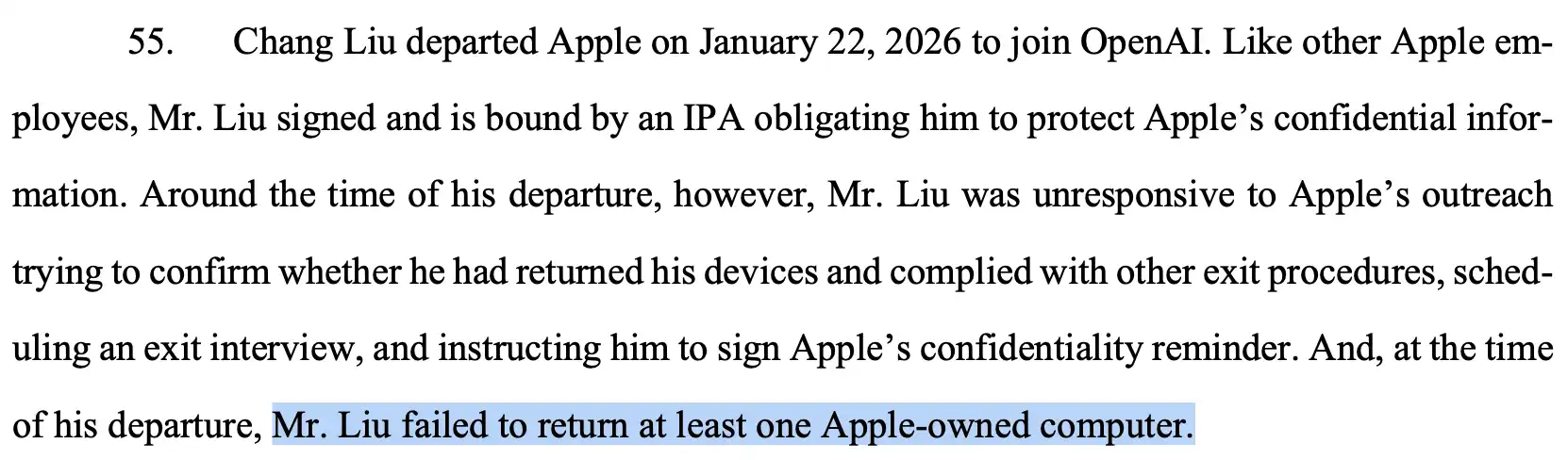
According to the complaint, Chang Liu left Apple but retained an Apple work laptop, exploiting a previously unknown authentication vulnerability in the Apple enterprise system to access and download dozens of confidential files related to hardware development.
Apple further alleges that Chang Liu instructed Apple employees recruited by OpenAI on how to replicate internal data without detection by Apple's security team. During the investigation, Apple believed it had uncovered a broader pattern: some former employees who joined OpenAI had sent Apple's internal data to personal email accounts before resigning, while others used acquired trade secrets to contribute to OpenAI's hardware development.
In response, OpenAI stated that the company "has no interest in other companies' trade secrets" and has always been focused on developing innovative AI technology. Tang Tan and Chang Liu have not publicly responded to the allegations.
Lawsuit Behind OpenAI's Hardware Plans
The backdrop to Apple's lawsuit is OpenAI's rapid advancement in AI hardware.
Last year, OpenAI acquired io Products, founded by Tang Tan and former Apple Chief Design Officer Jony Ive, in a deal valued at around $6.5 billion in an all-stock transaction, establishing it as a key foundation for OpenAI's hardware business.
According to a previous report by "The Information," OpenAI has been in discussions with suppliers for various products, including screenless smart speakers, AI glasses, digital recording devices, and wearables, and plans to launch its first products between late 2026 and early 2027. Apple also noted in the lawsuit that OpenAI has recruited a large number of Apple hardware employees from various teams, including product design, displays, antennas, supply chain management, and procurement.
Apple further alleges that OpenAI misled an Apple supply chain partner into believing it had Apple's authorization, thereby providing OpenAI with access to Apple's in-house metal surface treatment process.
AI Hardware Competition Enters Legal Phase
This lawsuit not only involves talent movement but also signifies a new stage in the competition between Apple and OpenAI.
Apple contends that a significant portion of OpenAI's hardware business was built using Apple's trade secrets. As OpenAI has not yet publicly released any hardware products, these allegations will need to be litigated in court and subjected to evidentiary examination.
Based on past experiences, legal disputes over intellectual property between Apple and companies like Samsung and Qualcomm have often lasted for years. Therefore, this case may not necessarily impact OpenAI's product release schedule in the short term. However, for an AI company that has reportedly confidentially filed for an IPO and is preparing to enter the consumer hardware market, this lawsuit adds a layer of legal and regulatory uncertainty, signaling that the AI hardware competition is evolving from model capabilities and talent acquisition to encompass intellectual property and the supply chain.
Welcome to join the official BlockBeats community:
Telegram Subscription Group: https://t.me/theblockbeats
Telegram Discussion Group: https://t.me/BlockBeats_App
Official Twitter Account: https://twitter.com/BlockBeatsAsia