The AI Genius: Why They are Returning to Big-Tech Companies

Article by Sleepy
In some eras, smart people all headed out.
They couldn't stand school, couldn't stand the research institute, and definitely couldn't stand big companies. Outside, there was money, a new poker table, a whiteboard with several people sitting around it until midnight, takeout boxes piled beside them, and everyone thought they were about to change the world.
In the 19th century, gold rushers headed west, Silicon Valley engineers left their immortal youth behind, and during the years of the mobile Internet, product managers resigned from big factories, always posting on Moments with a sentence like "starting anew."
In some eras, smart people headed back.
Heading out sounded like an adventure, heading back sounded like surrender. But this time, it's not that simple. Those who headed back weren't admitting defeat; it was just that what they needed to do suddenly became weightier. Weighty to the point where a few people, an office, funding, and passion were all insufficient.
In the mid to late 20th century, physics went through a similar phase. It started out as a blackboard, chalk, instruments, and a few geniuses in a lab. Then it grew into colliders, national budgets, massive projects, and collaboration involving thousands of people. Some call it "big science."
For certain problems, you need machinery, electricity, systems, budgets, and a group of people continually pouring money into a seemingly bottomless pit.
Now it's AI's turn.
By 2023, the most respectable ambition was to head out. Big companies were meant to be left behind, and those who stayed behind seemed lacking in courage, as if they had missed the charge of the times.
By 2026, the winds shifted.
Several of the most prominent young AI talents began to enter big corporations.
Luo Fuli, from a rural area in Yibin, Sichuan, a graduate of Peking University, one of the authors of DeepSeek-V2. After being named by Lei Jun, the four words "genius girl" trended on hot search for a long time. She joined Xiaomi, taking charge of the large-scale model MiMo.
Sun Tianxiang, born in 1997, a Ph.D. from Fudan University. The MOSS he led was one of the earliest ChatGPT-like models in China to be open to the public. After founding Rixingji, he later joined Baidu as the head of the Basic Model R&D Department and joined the Model Committee.
Yao Shunyu, from Tsinghua's Yao Class, a Ph.D. from Princeton, focused on language model reasoning and intelligent agents for a long time. His contributions to ReAct and Tree of Thoughts allowed many to see for the first time that models could not only chat but also use tools, observe feedback, and take further actions. At twenty-seven, he became Tencent's first Chief AI Scientist.
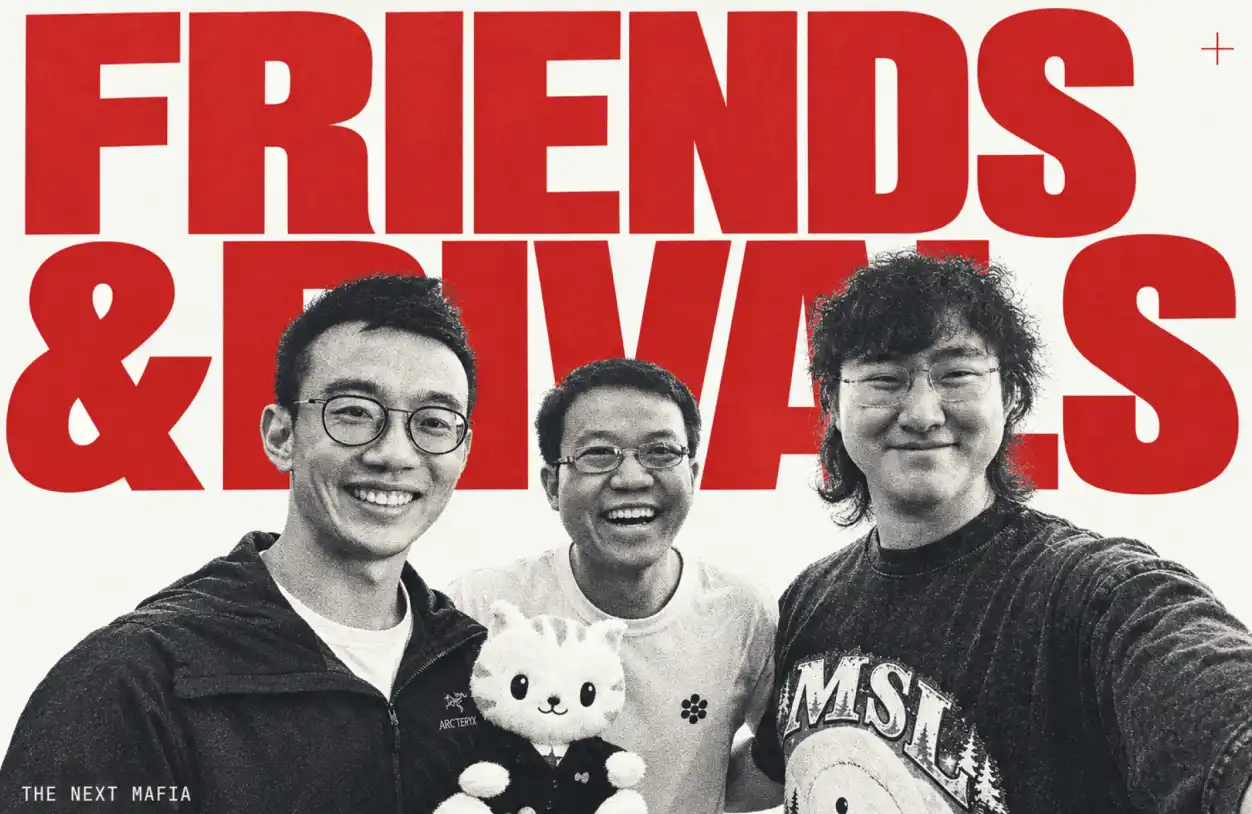
These individuals were actually sitting at the same table, facing a single question. When the model becomes a business, the paper becomes a job, the ideal becomes an organizational goal, how big of a machine should a person place themselves in to not waste their intelligence?
Rare Talent
In December last year, at a Xiaomi event, Luo Fuli made her first public appearance.
One journalist wrote that she appeared slightly nervous, focusing mainly on technical interpretation. Many people in the audience did not know her from a technical standpoint. Lei Jun mentioned her by name, the rumored million-dollar salary, the "genius girl," the hot searches, the short video clips. When a person is enveloped in these things, the hardest thing to find is often the person themselves.
She has actually mentioned what she wants.
During the time when her name was all over the internet, she posted on her WeChat Moments, roughly saying that she was asking the internet to return her a peaceful working atmosphere. She said she was not a genius girl, just wanting to quietly do difficult and right things.
Difficult and right. Where does the difficulty lie? Many people think the difficulty lies in technology, but when it comes to large models, technology is only the first layer.
The second layer is money, the third layer is organization, the fourth layer is time. The most difficult fifth layer is how a person can maintain their initial beliefs amidst all these things.
Seven years ago, Luo Fuli knew this was not simple. When she graduated with a master's degree, she received offers from many top companies. While others choose offers based on money, position, cafeteria and gym, and which HR speaks better, she set her own criteria.
The vast majority of AI teams in China cannot achieve a balance between research and business, either letting you do the work or letting you do research similar to academia. A place that encompasses both is rare talent.
She was looking for that rare talent.
At that time, ChatGPT had not yet appeared. She first went to Alibaba Damo Academy, then to DeepSeek, and later to Xiaomi. At first glance, she transitioned between a big company's research institute, a startup, and a big company's business department, like a person switching sides between several camps.
But when her criteria from seven years ago are pulled out, everything aligns.
This also explains why Sun Tianxiang later walked into Baidu.
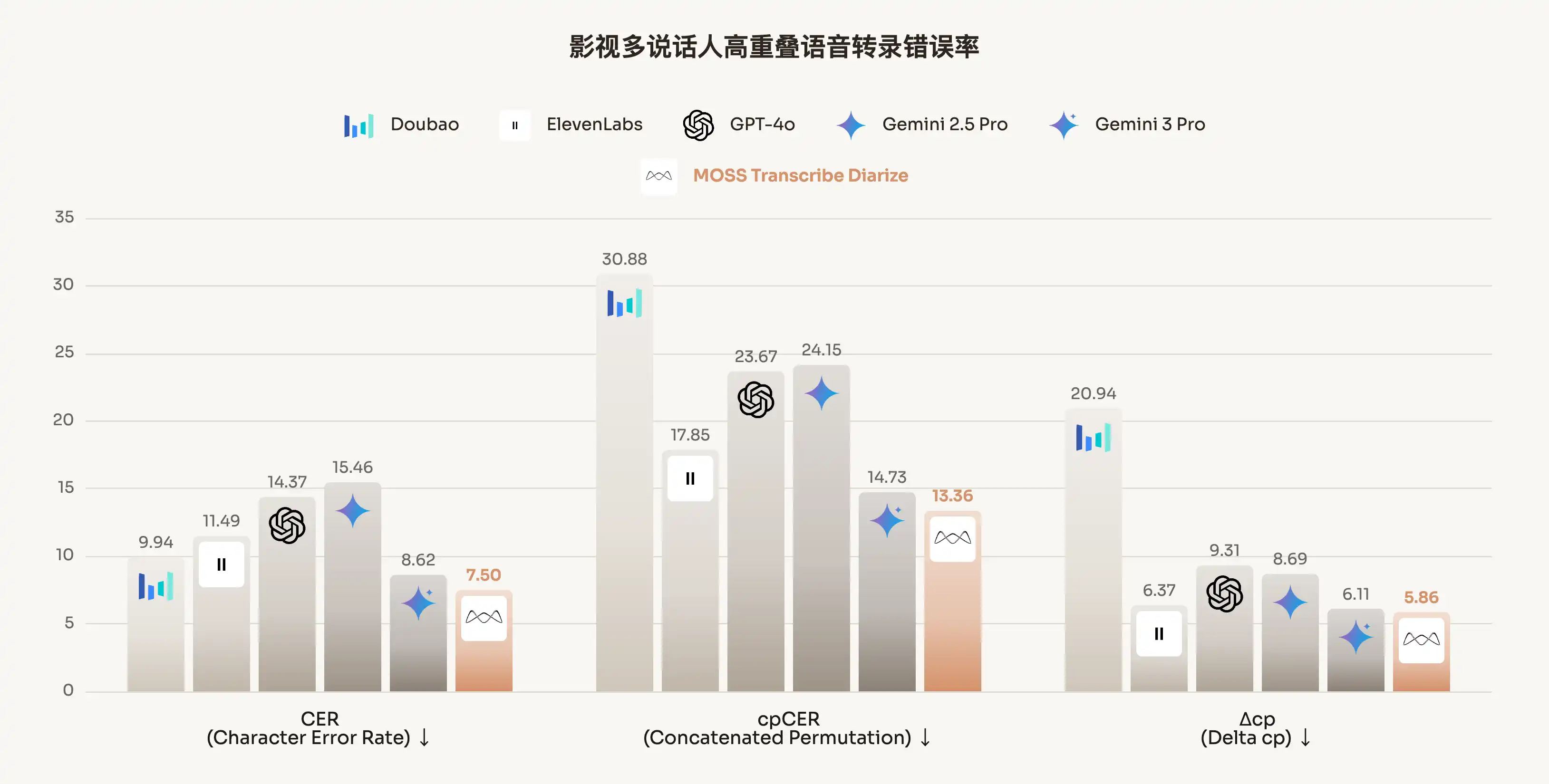
In February 2023, Fudan University released MOSS. It was not the strongest model in China, but it was one of the earliest projects in China to bring a ChatGPT-like model to the public. On the day of the release, the website traffic was so high that it crashed the servers.
An academic laboratory was suddenly thrust into the spotlight, like a classroom door being kicked open. Outside, there were investors, the media, tech giants, and onlookers. Everyone was excited. So excited that they paid little attention to what the classroom was originally used for.
At that time, Sun Tianxiang was still a Ph.D. student, young and sharp, facing a suddenly enlarged problem.
His advisor Qiu Xipeng later said that an academic laboratory couldn't produce a model comparable to ChatGPT in capability.
The significance of MOSS was never about equaling OpenAI. Its significance was to open the door, allowing many people to realize for the first time that large models were not a distant vision in research papers; they were about to become a reality in the industry.
Once the door opened, the wind rushed in. Wang Huiwen made a heroic post, investing $50 million of her own money, saying she wanted to create China's OpenAI. Wang Xiaochuan founded Baichuan Intelligence, while Yang Zhilin worked on the dark side of the moon. Tech executives from big companies, after seeing ChatGPT, quickly left to start their own ventures. These kinds of stories became the standard beginning of that year. When investors met with entrepreneurs, they often didn't ask what you were going to do first, but rather who else you could bring on board. By mid-year, there were seventy-nine large models with over a billion parameters released in China. Many companies, just newly established, had valuations soaring into the billions of dollars.
Several well-known large model entrepreneurs had invited Sun Tianxiang. He declined, citing that he hadn't finished his Ph.D. yet.
It's not that he lacked ambition. On the contrary, if someone truly had ambition, they would be particularly cautious about timing. Not every seemingly fast-moving train is one you should board.
Later, after Sun Tianxiang graduated, he started his own company called Daybreak.
If you take a photo of the sun at the same time every day, for a whole year, and connect all the positions, you'll see a closed figure-eight in the sky, which is called the sun's daybreak in astronomy. Although the sun appears to move every day, over the course of a year, it follows the same path.
Sun Tianxiang didn't immediately join a tech giant, nor did he rush to the hottest startup scenes. He became an assistant professor at the Shanghai Institute of Smart Innovation, conducting AI research and running his startup. Following the script for 2023, the next step for him should have been to turn his company into a unicorn and compete on stage with Baidu, Alibaba, and Tencent at a major event.
But the script didn't play out that way.
The Wilderness
During the most glorious moments of the startup narrative, people always tend to forget the cost. The 2023 wave of large model startups was like a new gold rush. Everyone knew there was gold in the distance, but few asked how much food they would need for the journey. At that time, leaving a tech giant was a statement. Big companies were slow, bureaucratic, and layered. Those who left seemed closer to the future. Big tech felt like the old city, while startups felt like the wilderness.
This sounds good, but the problem is that the basic model is not the mobile internet.
In the era of the mobile internet, a small team could receive funding, build a product first, acquire users first, and focus on growth first. Once the webpage was live and the growth was there, the story could continue.
It's different in the era of the basic model.
The first invoice can be a rude awakening. Tens of thousands of cards, stable power supply, data engineering, training framework, inference costs, long-term cash flow. The model is not something that a few people burning the midnight oil in an office can produce. It's more like a mine where the gold has to be mined before the railroad can be laid.
The loudest gunshot is often the first to muffle. Wang Huiwen exited half a year later due to health reasons, LightInTheBox was acquired by Meituan far away, and the total consideration in the Hong Kong Stock Exchange announcement was approximately RMB 2.065 billion.
At that time, many saw it as an individual's accident. Looking back now, it seems more like a trailer. Later, according to media reports, Baichuan shifted its focus to healthcare, and Lingxi Wanwu no longer bluntly rushed toward trillions of parameters or above super-large-scale base model pre-training. Kai-Fu Lee said that at this stage, the ROI for super-large-scale base model pre-training for startup companies is extremely low, meaning the accounts do not add up.
In MiniMax's IPO prospectus, it is written that the expected monthly cash burn is about $27.9 million. This number would have been enough to sustain a company for a long time in the mobile internet era. In the era of the basic model, it's only enough for one month.
The rush of Zhìpǔ and MiniMax to the capital market's most important significance is that it brought them supplies. To survive, model companies need a continuous supply of provisions.
Some might argue with DeepSeek. It is not a traditional giant company, but has it not also developed a basic model? However, behind DeepSeek is Huànfāng, a quant fund that early on built a 10,000-card A100 cluster. It wears the cloak of a startup company but carries the baggage of a giant. When Luó Fúlì appeared on the DeepSeek-V2 author list, she was also supported by this baggage.
From this point on, Sun Tianxiang's entry into Baidu was no longer abrupt.
MOSS went online, proving that something can happen. During the daily trajectory period, he tried to turn a research AI entity into a company. In the era of the basic model, the question is no longer just whether a smart team can create a demo; the model must undergo long-term training, run stably, integrate into the product, and withstand the repeated real-user and real-business hits every day.
Baidu is not a blank sheet of paper. It has search, cloud, Wén Xīn Yī Yán, autonomous driving, and long-term AI accumulation. However, old accumulation is sometimes a foundation and sometimes a burden.
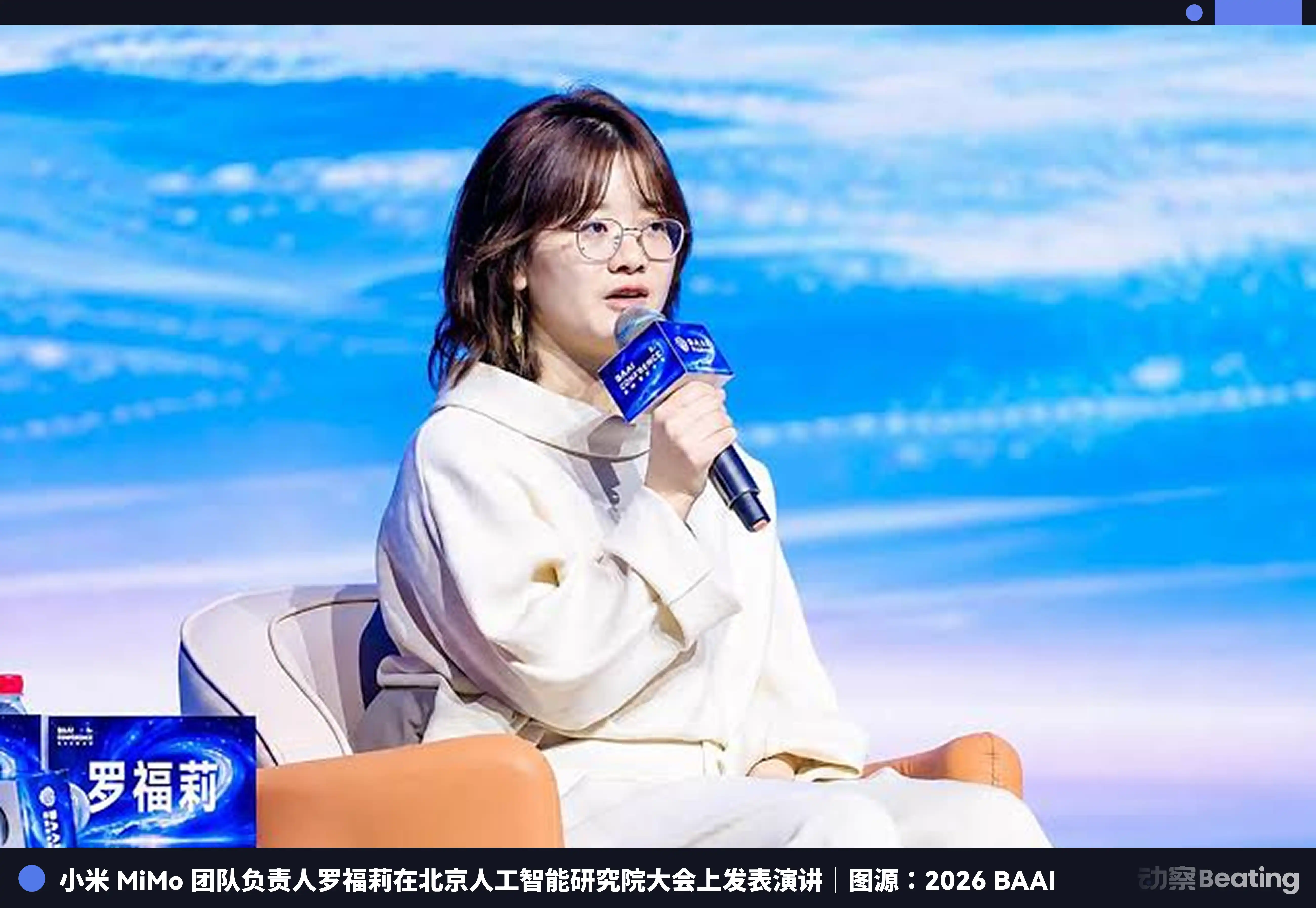
This is very similar to what Ruofei Li faced. Xiaomi doesn't want just a model that looks good in a lab. It has smartphones, cars, IoT, supply chain, things that users interact with every day. MiMo is not just a name in a paper; its significance lies in becoming the answer inside a device, the decision in a car system, the interaction in a home setting. The business is no longer just an abstract concept.
So, Ruofei Li's statement "to do difficult and right things quietly" is even harder at Xiaomi. Because the closer you are to real users, the harder it is to stay quiet.
Yao Shunyu became Tencent's Chief AI Scientist at the age of 27. A graduate of Tsinghua Yao Class, Princeton, and places like OpenAI, he trained in language model reasoning and AI. ReAct enables models not just to answer questions but also to call tools, observe feedback, and take further action. Tree of Thoughts transforms reasoning from a linear chain into a tree. A young individual drove the transition of large models from "being able to chat" to "being able to perform tasks."
Tencent placed him in this position not to honor a young person. Tencent has WeChat, Tencent Meeting, games, office collaboration, and one of China's most intensively used internet ecosystems.
It doesn't lack entry points or users.
What it lacks is someone who can organize model capabilities into product capabilities.
A method that proves itself in a paper does not necessarily work within WeChat. In academic papers, peers look for innovation, while in large corporations, the organization also considers cost, stability, risk, and various other factors.
When Yao Shunyu took that seat, these questions became his responsibility.
In the past, a researcher could gradually progress: publish papers, work on projects, lead a team, and then have complex issues delegated by the organization. However, now the industry can't wait, companies can't wait, and the media can't wait.
If a person creates something significant in those crucial two or three years, they will be thrust into the spotlight and become a top search.
Search trends favor results, not processes. Yet, a person's destiny usually resides in the process.
The same spotlight also shines on other faces, but they choose not to walk into the brightest part of the light.
Ruofei Li stands on the stage at Xiaomi's product launch event, Sun Tianxiang joins Baidu's foundational model department, and Yao Shunyu is appointed Tencent's Chief Scientist. On the other side, some hear the same wind but decide to close the door a bit.
The same generation, parting ways at the same intersection.
Another Fork in the Road
Zeng Guoyang did not head towards the spotlight. Born in 1998 in Chengdu, he started learning programming at the age of eight, won a gold medal in computer science in high school, and later received a recommendation for Tsinghua University. In 2022, he co-founded Mianbi Intelligence with his mentor, Liu Zhiyuan, becoming the tech lead. Mianbi focuses on on-device small models, at the scale of twenty billion parameters, known in the circle as the "Little Cannon."
There were rumors last year that Zeng Guoyang was going to take an eight-person core team to Tencent MIX. The company came out to deny the rumor, stating that he himself was "completely clueless" about it.
Rumors also carry the scent of the times. A few years ago, the most popular rumor was about a high-ranking executive leaving a certain tech giant to start a business. Now, rumors suggest that young tech leads are always destined to join a major corporation.
Zeng Guoyang's small team has no thick cushion, little money, and a short window. But the on-device small model project was never meant to directly compete with the foundational model.
A foundational model is like building a reservoir. It requires a grand valley, dams, an engineering team, and years of investment without immediate returns. On the other hand, the on-device small model is more like digging a well.
It focuses on something else. Can the model be smaller, faster, cheaper? Can it run on phones, computers, cars, and robots? Can it be closer to the user, close enough to not have to route every request back to the cloud?
A reservoir can change the landscape. A well can save a village.
This is the fork in the road.
The same generation of young people, pushed by the same era to face models. Some discover that what they need to do requires entering a large corporation because the problem has grown too big for individuals to handle. Others realize that what they need to do cannot fit into a massive machine, where the personal touch would be lost.
Several Ways of Endurance
Returning to a big corporation is not a form of assimilation, just as staying outside its walls is not necessarily a form of resilience.
Many things are not so easily categorized. The adult world is not like when we were students, answering multiple-choice questions where A is ideal, B is realistic, C is a compromise, and D is none of the above. In the real world, these four options often mix together and do not allow you to choose again.
Leaving in 2023 is reasonable; the money is outside. Entering in 2026 is also reasonable; the machinery is inside.
Those who are overly eager to get things done are sensitive to the conditions. Someone who truly cares about a problem will not pretend that tens of thousands of business cards can fall from the sky just because the title "entrepreneur" is printed on them. Nor will they believe that just because the title "chief scientist" is on their card, the organization inherently understands science.
So this group of people is not divided into those who entered a tech giant and those who didn't, they are divided into several different types of perseverance.
Those who entered a tech giant persevere through the organization, those who stayed outside the walls persevere through resources, those who built foundational models persevere through invoices, and those who specialized persevere through glass ceilings.
This is the most touching aspect of this round of AI talent coming back. It's not about how much money they made, nor about how high of a position they reached. It's about some young geniuses who, for the first time, encountered something greater than individual talent.
They are not entitled to see the world as a table that can be overturned with courage, like the previous generation of Internet entrepreneurs. The table of the era of models is too heavy. When you can't overturn it, you have to sit down and see if you can nail the nail you have in your hand on it.
However, among those in the same camp, some become Guo Jia, while others become Kong Rong. Guo Jia was able to change Cao Cao's mind before the Battle of Guandu, while Kong Rong was just a pretty name on the list of literati in Xuchang.
Today, when these young people enter a tech giant, what really matters is power. Can they change the direction, can they control the bottleneck, did they choose the team themselves, and did the model actually make it into the product. If they only take a high salary, hold a meaningless position, and appear as a young scientist on a conference poster, they will be drained in a few years. On the other hand, if they truly have a say in these aspects, then it's not just an ordinary job entry; the tech giant has really delegated some power.
Siddhartha by the River
Hesse wrote about such a person in "Siddhartha."
He was a Brahmin's son, the most promising young man in the city, everyone thought he would follow in his father's footsteps. Later, he followed ascetics, and a few years later, he left them. He met the Buddha, deeply admired him, prostrated himself, yet refused to stay and become a disciple. He went into the city to become a merchant, then later abandoned everything and went to the riverside to ferry people.
From the viewpoint of any one of his departures, he was a traitor. In his father's eyes, he betrayed the family; in the eyes of the ascetics, he betrayed the practice; in the world of merchants, he betrayed wealth. But looking at these departures together, it was the same thing; he was discarding ready-made answers handed to him by others. Each departure seemed like a defection when viewed in isolation, but viewing them together, it was one path.
It wasn't until his later years that he understood the water by the riverside. The river exists at its source and simultaneously at its mouth where it meets the sea. A river cannot be understood by just looking at the segment flowing in front of you.
We always like to categorize others. Lofly went to Alibaba, then to DeepSeek, and then to Xiaomi. Sun Tianxiang declined invitations from entrepreneurs, started his own company, and then joined Baidu. Yao Shunyu transitioned from cutting-edge academia to Tencent. Zeng Guoyang stayed outside the walls, rumored to be pushed towards the inside, but then stopped.
From above, they sometimes veered north and sometimes south, as if changing their minds every day. However, a person's entire life cannot be judged by the shadow of a single day.

The charm of the sun's path lies here. At the same time every day, looking at the sun, its position is always different. Watching it for a day, it may seem elusive. Watching it for a year, you will realize that all those deviations linked together form a closed figure-eight.
What Rufoli wrote down seven years ago remains unchanged. Sun Tianxiang, from MOSS to the sun's path and then to Baidu, is still doing the thing that makes models enter reality. Yao Shunyu transitioned from reasoning methods to landing intelligent agents, still facing the question of how models can transition from chatting to taking action. Zeng Guoyang and the others stayed outside the wall, not standing still, but rather narrowing down the problem to where they could still grasp the edge.
They did not come for the company; they came for the cause. If conditions change again one day, they will walk away again. At that time, they will not feel they have betrayed anyone, and the tech giants should not be surprised either. A person truly driven by a problem will not remain loyal to a single organization forever.
What they are loyal to is the path that they themselves may not be able to fully explain.
At night, screens in several places are still lit. In Beijing, Shanghai, Shenzhen, and Hangzhou, some are in the tech giant's meeting room adjusting the roadmap, some are in small teams focusing on resolving reasoning delays, some are repeatedly reviewing technical drafts before the product launch, some are writing down the next attempt next to the experiment that was not completed.
The light from the screen shines on their faces, revealing no distinction whether a person is inside or outside the wall.
In the sun's path, the sun seems to change its position every day, yet it never changes its mind; only the seasons change.
References
[1] DeepSeek-V2: A Strong, Economical, and Efficient Mixture-of-Experts Language Model, arXiv
[2] ReAct: Synergizing Reasoning and Acting in Language Models, arXiv
[3] Tree of Thoughts: Deliberate Problem Solving with Large Language Models, arXiv
[4] Official Repo of Tree of Thoughts, GitHub / Princeton NLP
[5] Just Now, MOSS Founder Sun Tianxiang Starts a Business, Live AI4AI Large-Scale Scientific Research, Sina Finance
[6] MOSS Founder Sun Tianxiang's New Company Aims to Have AI Write 100 Papers on Its Own, Plus Livestream Across the Web for a Month, 36Kr
[7] Conversation with Founder of the Sun's Path, Sun Tianxiang | When AI Automatically Writes Top Conference Papers, Where is the End of Human Scientific Research, Small Universe
[8] MiniMax-01: Scaling Foundation Models with Lightning Attention, arXiv
[9] Wang Huiwen Initiates Beyond Light Years, Personally Invests $50 million to Build China's OpenAI, 36Kr
[10] Meituan Acquires Beyond Light Years for 2.065 Billion Yuan, LatePost
Welcome to join the official BlockBeats community:
Telegram Subscription Group: https://t.me/theblockbeats
Telegram Discussion Group: https://t.me/BlockBeats_App
Official Twitter Account: https://twitter.com/BlockBeatsAsia

 Related Articles