Why NVIDIA's Bond Issuance was Fine, But SpaceX's Bond Issuance Plummeted

Summary: Debt is bringing the space narrative back to cash flow validation.
TL;DR
· SpaceX advances with at least a $20 billion debt financing post-IPO to repay previous bridge loan; company has ample cash on hand, but the market is starting to reassess future capital expenditure pressure.
· Concurrently, Nvidia's bond issuance saw strong demand, providing a contrasting reference point: the AI narrative has entered revenue and profit validation, while SpaceX's space narrative still requires further stage-wise proof.
· Related Tickers: SPCX, Nvidia, AMD, TSMC, AI Data Centers, Satellite and Space Commercialization targets.
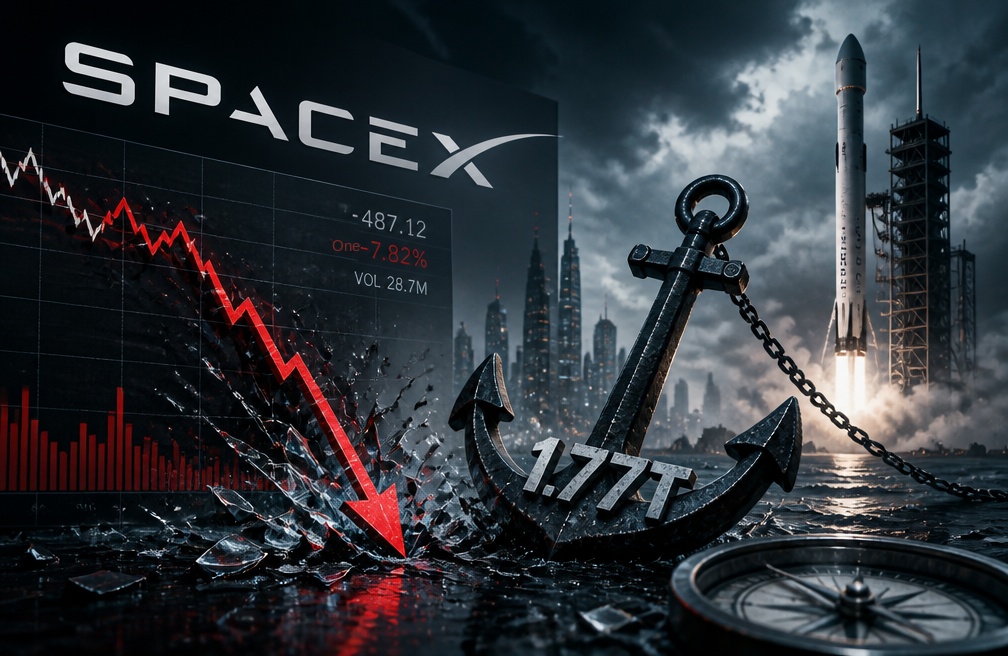
Around June 22, SpaceX advanced with at least a $20 billion debt financing post-IPO to repay previous bridge loan; subsequently, SpaceX-related ticker SPCX came under pressure in the secondary market, trading around $154.60 on June 23 midday, below the first day closing price but still above the $135 IPO price.
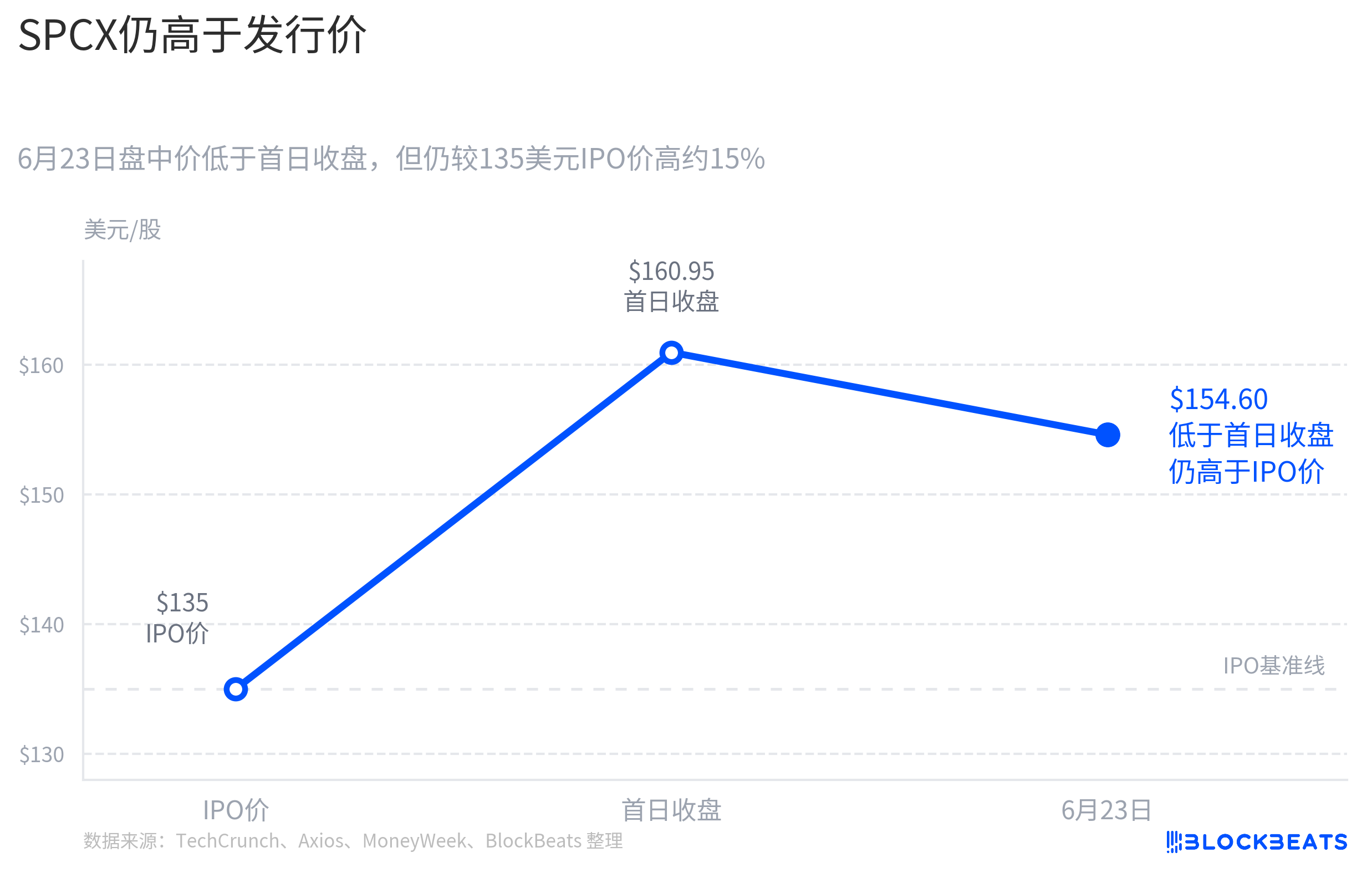
This price movement should not be simplistically attributed to a single bond event, but the financing news did act as one of the triggers. It swiftly refocused the newly public space narrative on cash flow concerns: the market is starting to recalculate how much funding SpaceX's long-term projects will need and which business segment will cover it.
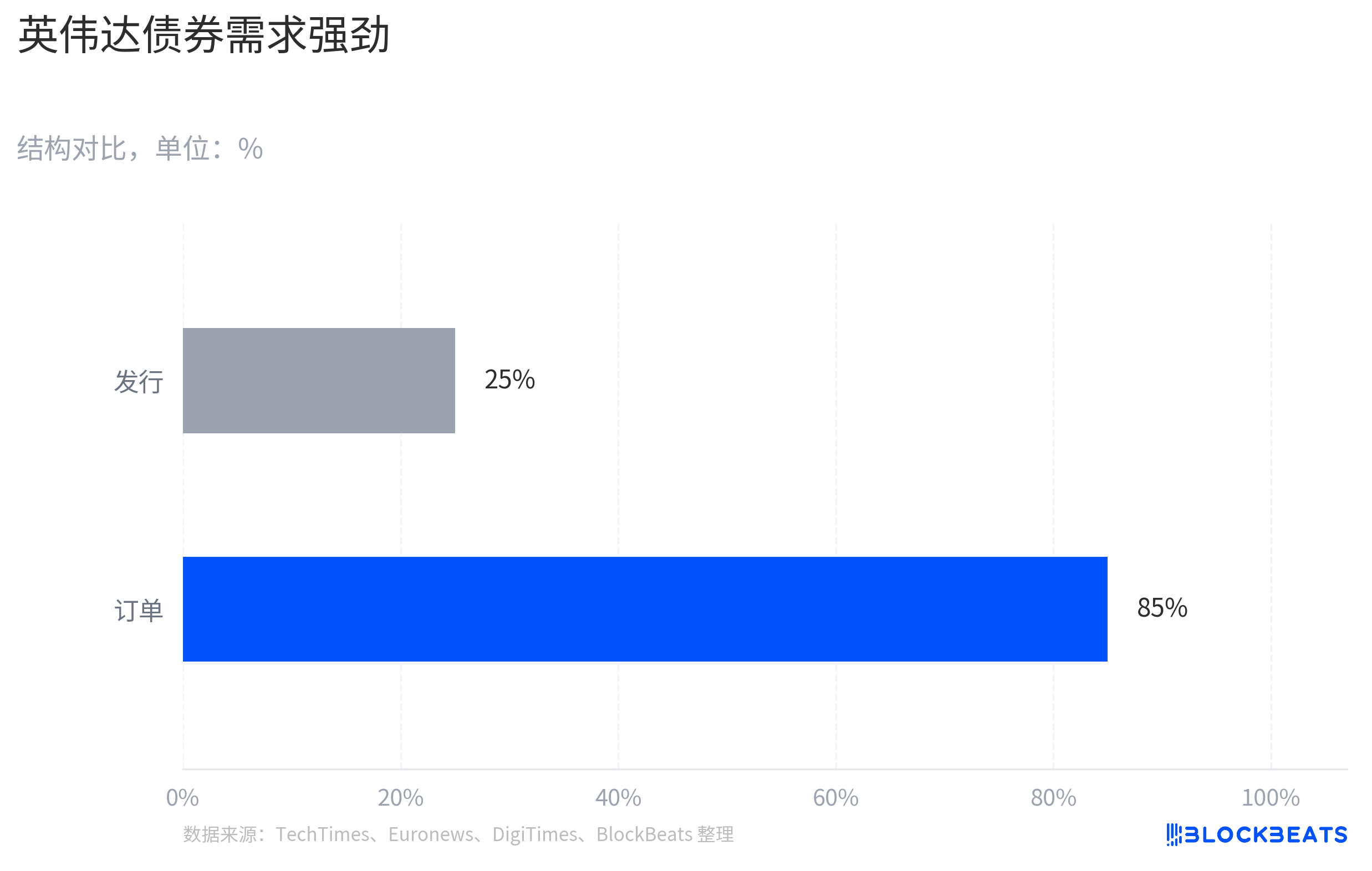
Nvidia serves as the most significant reference point. On June 15, Nvidia issued $25 billion in high-grade bonds, with order demand peaking at around $85 billion at one point, and the issuance size was also increased from the initial plan of around $20 billion. Both companies are financing within super narratives, but the market feedback is entirely different: post-bond, Nvidia is more easily viewed as locking in long-term capital, while SpaceX, post-debt issuance, is put through a capital expenditure stress test.
The difference lies not in the bond actions themselves, but in the market's level of trust in cash flow. Nvidia's AI demand has already entered revenue and profit validation, with debt more akin to amplifying a growth curve already realized; SpaceX, on the other hand, needs to answer a different question: can the money earned from Starlink support Starship, the satellite network, AI infrastructure, and the longer-term space vision?
SpaceX's Financing Prompts Market Recalculation of Capital Expenditure
The bond issuance per se is not the issue. For high-credit companies, swapping short-term bridge loans with long-term debt is often merely capital structure management. SpaceX's at least $20 billion debt financing was also primarily reported as repayment of the previous bridge loan, and should not be oversimplified as a bearish signal.
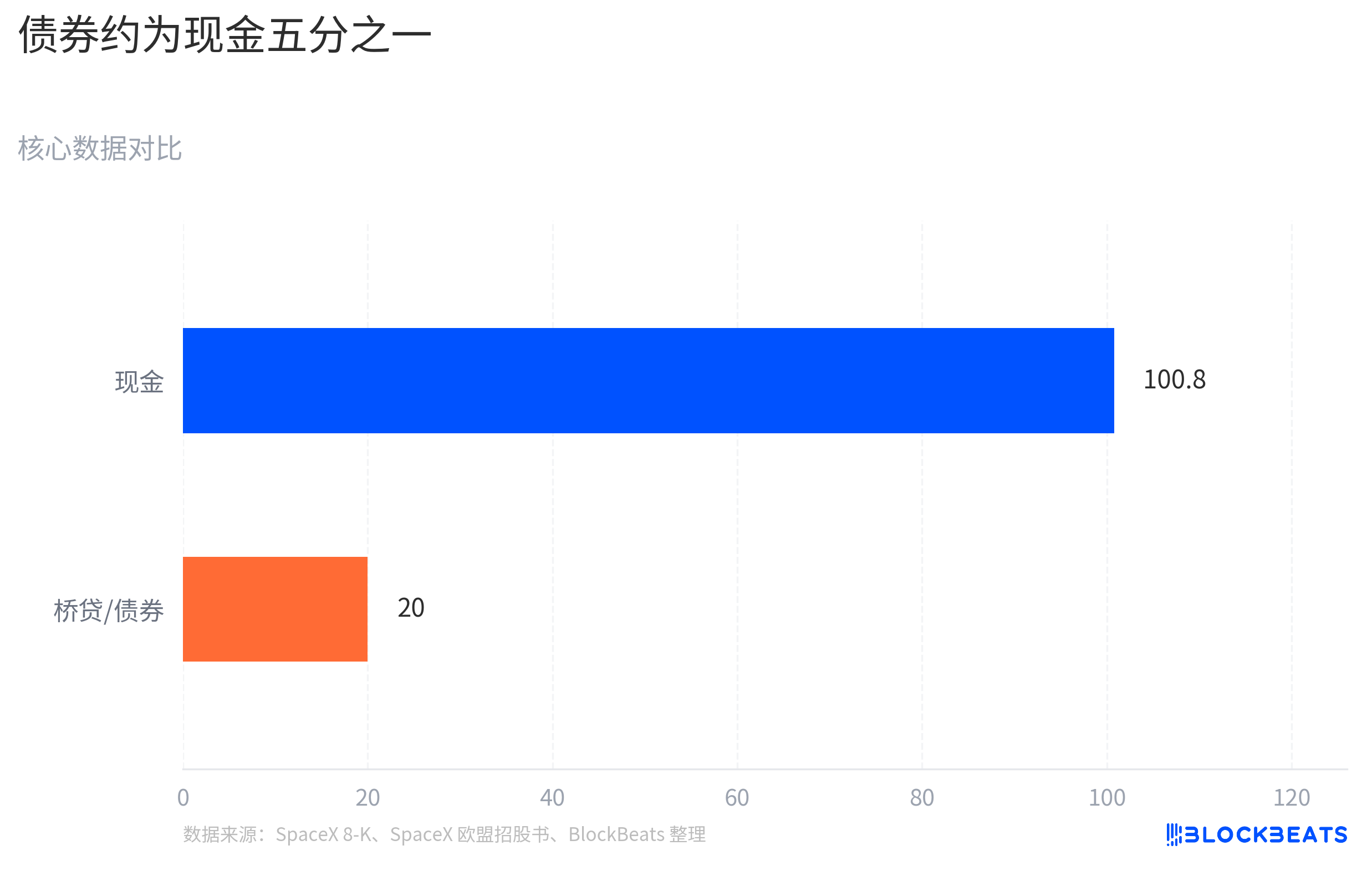
SpaceX is not relying on the bond market to stay afloat either. Regulatory filings show that as of June 19, the company had around $100.8 billion in cash and cash equivalents. The fact that the post-IPO cash balance reached the hundred-billion-dollar level at least indicates that the company's financial structure is not poor.
However, having a lot of cash does not mean the market will not reassess the speed at which the company will spend in the future. More importantly, there is the bridge loan structure: SpaceX already had a $20 billion unsecured bridge loan in March, maturing on September 2, 2027, with extension options. Subsequently, at least $20 billion in bond financing, mainly described as refinancing or repayment of this bridge loan.
Bonds will change how the market views SpaceX. Equity investors can prepay for Starship, Mars transportation, and space infrastructure because they are buying future upside space; bond investors are more concerned about cash flow, capital expenditures, and debt repayment. When SpaceX goes public and immediately pursues large bond financing, the market naturally shifts the focus from "how big Musk can tell the space story" to "how much more money is needed to realize these projects before they pay off."
SpaceX already has revenue-generating businesses; what the market is questioning is whether this segment can cover the entire company's long-term projects being simultaneously advanced. Starlink is currently the clearest cash flow engine, with satellite internet users and revenue growth setting it apart from many pure-play space concept companies.
But SpaceX's valuation is not only based on Starlink; it is also based on Starship's high-frequency reuse, global satellite network expansion, Mars transportation, and potentially new narratives related to AI infrastructure. All of these narratives are grand and expensive. Starship requires continuous testing, iteration, and launch infrastructure development; the satellite network needs replenishment and updates; if AI infrastructure is further tied to SpaceX's capital story, investors also need to evaluate when this investment will start generating returns.
So, bonds are not the sole reason for SpaceX's decline, but they are a clear trigger. They remind the market that after the space narrative enters the public market, companies need to prove not only that their vision is big enough but also that their self-sustaining ability is strong enough.
The AI Narrative and the Space Narrative Are at Different Stages of Realization
NVIDIA issued bonds at the same time, providing the market with a clear reference point. On June 15, NVIDIA issued $25 billion in high-grade bonds, with orders reaching around $85 billion at one point. The market did not initially interpret this bond as pressure but rather saw it more as a strong company securing long-term capital.
The difference comes from the cash flow stage behind the bond. NVIDIA's AI demand has already entered the financial statements through data center revenue, customer orders, and profit margins, and investors are discussing how long this growth curve can be sustained. For NVIDIA, issuing bonds is more like increasing financial flexibility on an already realized growth curve.
The situation is different for SpaceX. It also has the Starlink cash flow engine and ample cash reserves post-IPO, but the company's valuation includes more yet-to-be-fully-commercialized heavy capital projects. When the market saw SpaceX issuing bonds, the question was not "Can it borrow money?" but "Will the future project's funding outpace cash flow realization?"
This does not mean that space commercialization has lost its value, nor does it mean that the market has rejected SpaceX. A more accurate statement is that the AI narrative is already visible revenue for NVIDIA, while the space narrative for SpaceX still requires more phased proof. The value of Starship awaits higher frequency, lower cost, and more stable reusability to be proven; Mars transportation and space infrastructure are further out; if AI infrastructure becomes an additional growth point, it also needs real customers, real revenue, and understandable capital returns.
This is exactly the difference in deep tech investment that is most easily overlooked. A company can have strong technology, a strong brand, and a strong founder simultaneously, but as long as cash flow validation lags behind capital input, debt will be seen by the market as a source of pressure.
The term "Mars burns cash" is catchy but incomplete. SpaceX has a path to commercialization; it's just that multiple future projects require continued capital advancement. The opposite reaction from NVIDIA makes this clearer: the market rewards not the vision tag but how quickly the story turns into revenue, profit, and free cash flow.
Cash Flow Coverage Speed Determines Room for Recovery
SpaceX's room for recovery depends on whether the market can see Starlink's profit expansion covering a heavier capital expenditure curve. As long as Starship is still in a high investment phase, the satellite network requires ongoing updates, and the AI infrastructure lacks a clear payment pathway, investors will keep recalculating cash consumption.
Bond pricing will provide an initial signal. If the final issue spread, coupon, and order demand demonstrate that the credit market is willing to provide long-term funds at a relatively low cost, it indicates that investors are still accepting SpaceX's longer-term realization of the space infrastructure story; if financing costs are high, or the market demands a thicker risk premium, equity valuation will continue to be under pressure.
More importantly is the business end. If Starship provides stronger validation in high-frequency reuse and launch costs, the business models of Starlink, deep space transportation, and even space infrastructure will be reevaluated. Conversely, if subsequent disclosures show that Starlink's growth cannot cover the expansion of other projects, the debt will continue to remind the market: SpaceX is still in the heavy capital expenditure phase.
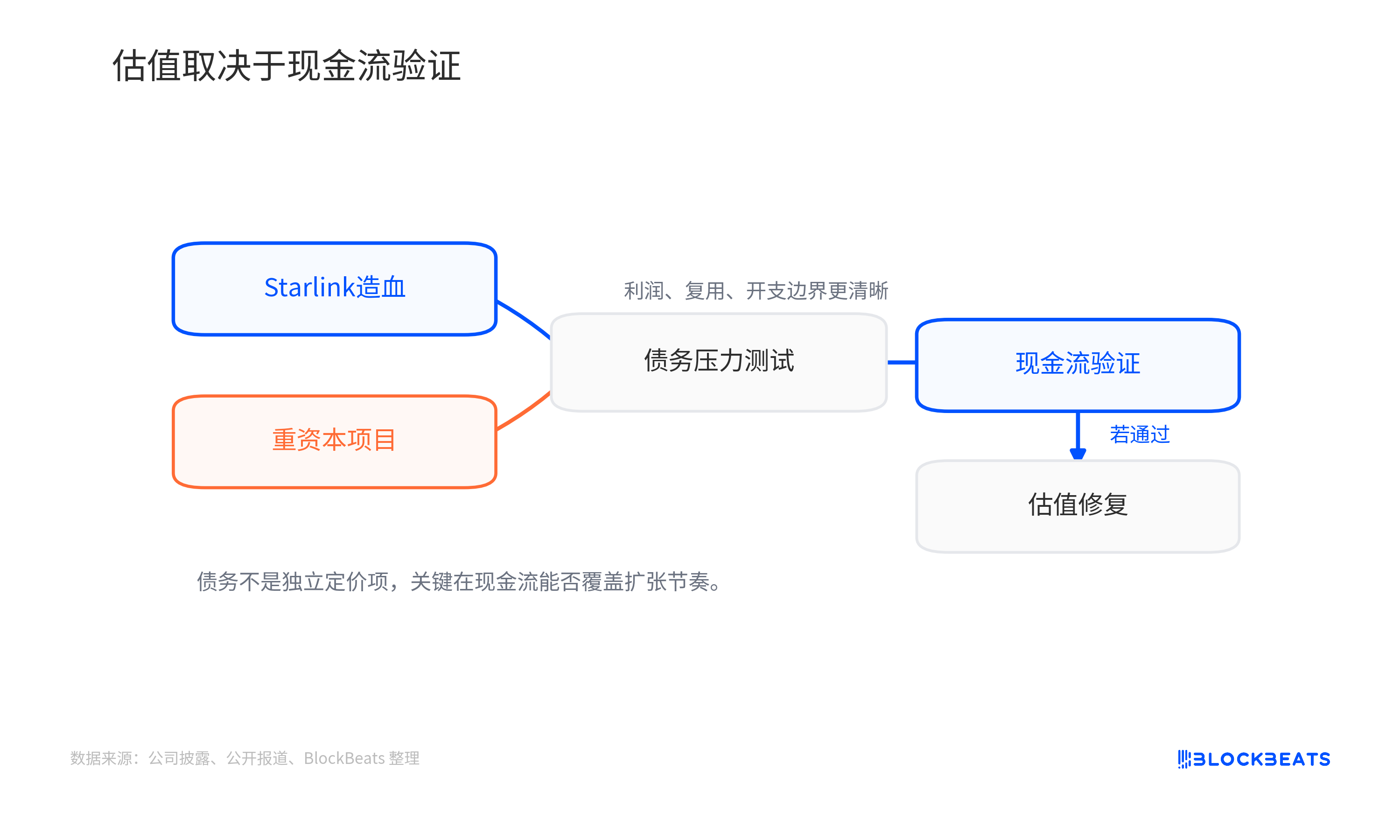
This is also the core contradiction of SpaceX's current valuation. It has a cash balance in the hundreds of billions of dollars and a cash flow engine like Starlink, but the public market will not price solely based on cash balance. Only when Starlink's profitability, Starship reusability progress, and capital expenditure boundaries become clearer together, will debt may transition from a pressure item back into a growth enabler.
Welcome to join the official BlockBeats community:
Telegram Subscription Group: https://t.me/theblockbeats
Telegram Discussion Group: https://t.me/BlockBeats_App
Official Twitter Account: https://twitter.com/BlockBeatsAsia

 Related Articles