We scraped thousands of job postings and found out that Byte is rebooting its mobile development efforts

Article | Sleepy, Strange Thinking
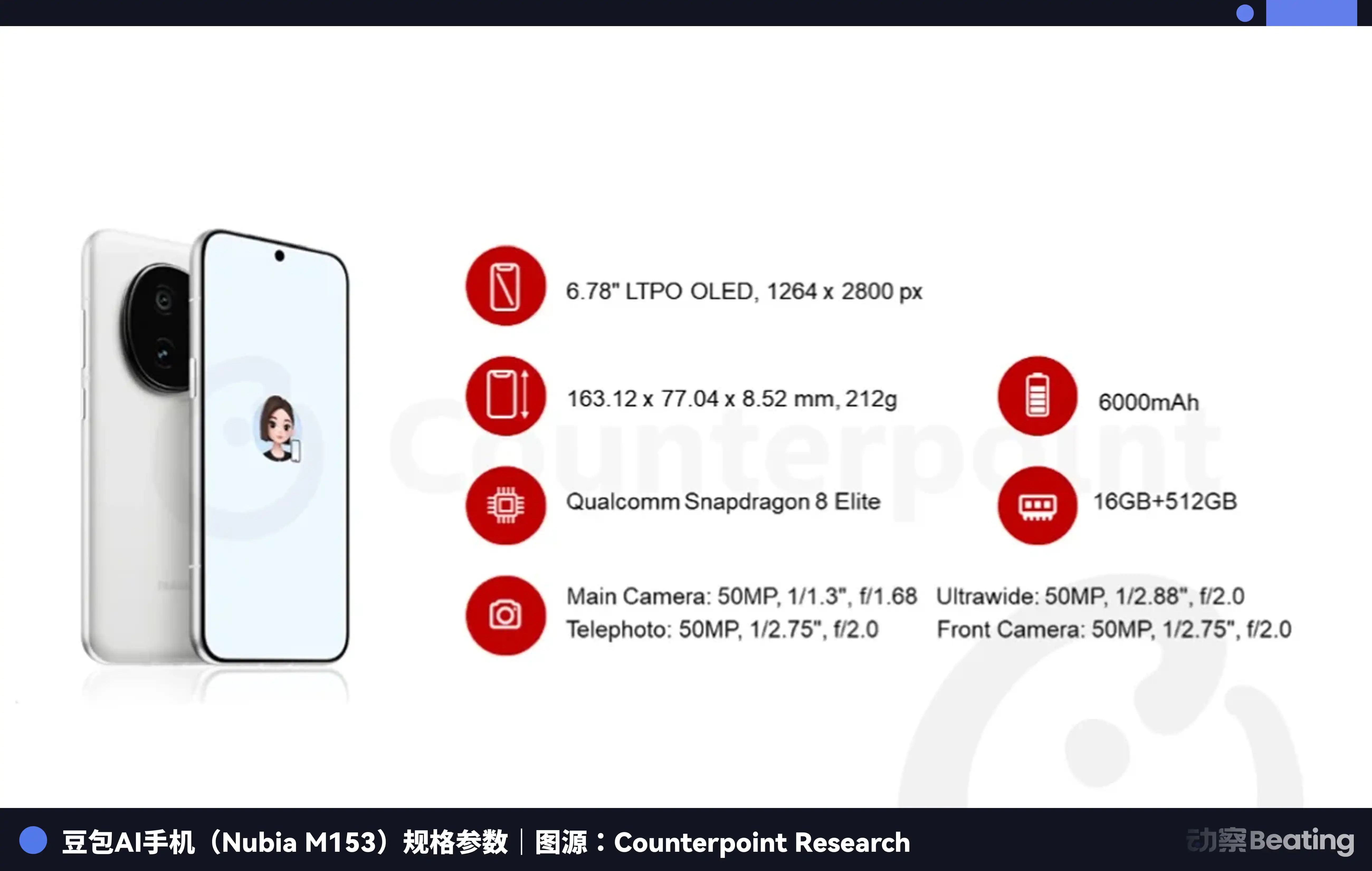
In December 2025, the long-rumored "Bean Phone" finally made its debut. It packed the Bean Phone Assistant technology preview into the Nubia M153 engineering prototype, with a launch price of 3499 yuan. The first batch of about 30,000 units sold out on the day of release.
I remember that in the early days of its release, its price at the seafood market surged several times. The Beating Newsroom even bought two units.
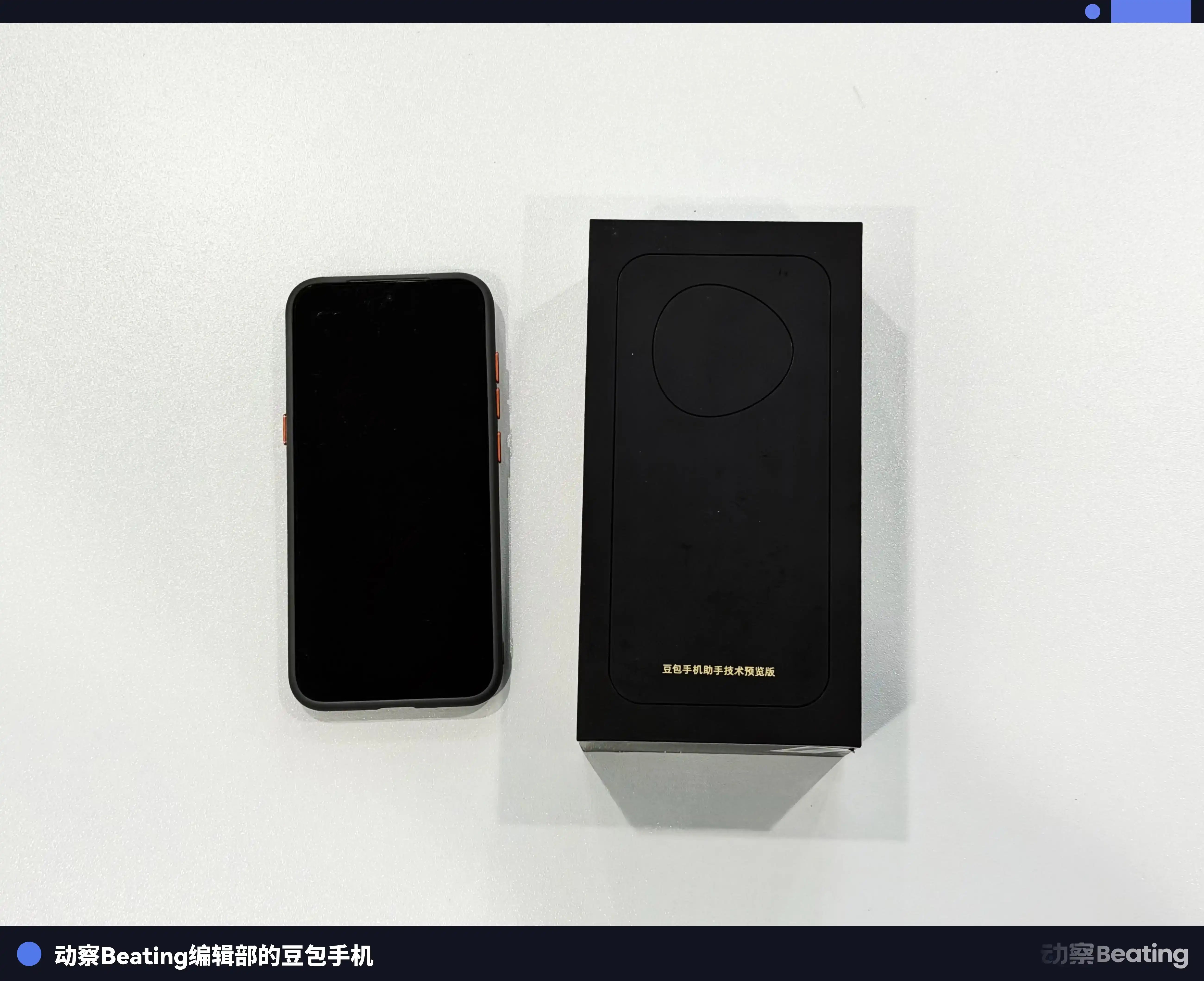
The reason was not that it was a very usable phone. On the contrary, the first-generation Bean Phone, as a "technology preview version," did not offer a good user experience. What excited us was that, for the first time, it pulled AI out of the chat box and transformed it from a chatbot into an AI Agent that could control a phone.
On the Bean Phone, AI could see the screen, understand the content you were browsing, hear you speak, switch between different apps, and directly help you with many tasks, such as checking tickets, price comparisons while shopping, coupon redemption, and photo editing. Although for sensitive tasks like payments, the user still needed to confirm, it could independently complete many operations that we used to click through one by one in the past.
Although it was still a bit clumsy, sometimes slow to respond, and would freeze at times, like someone who just learned to use a smartphone, it indeed allowed us to intuitively feel how convenient AI could be in daily life.
Later, the Lobster was born and became a global sensation. The AI Agent became another iPhone moment in the AI field after ChatGPT was introduced, and a bunch of manufacturers and entrepreneurs began selling computers and phones preloaded with OpenClaw. The Bean Phone was ahead of them by at least one version, and it could even be said that the Bean Phone was a pioneer in this wave of Agent craze.
Unfortunately, the Bean Phone soon faced siege from major companies. WeChat, Taobao, Alipay, banking apps, and other scenarios began to block access or operations. Some said it was a "ban," while others said it only triggered risk control, but for users, it made no difference – they just couldn't use it anymore.
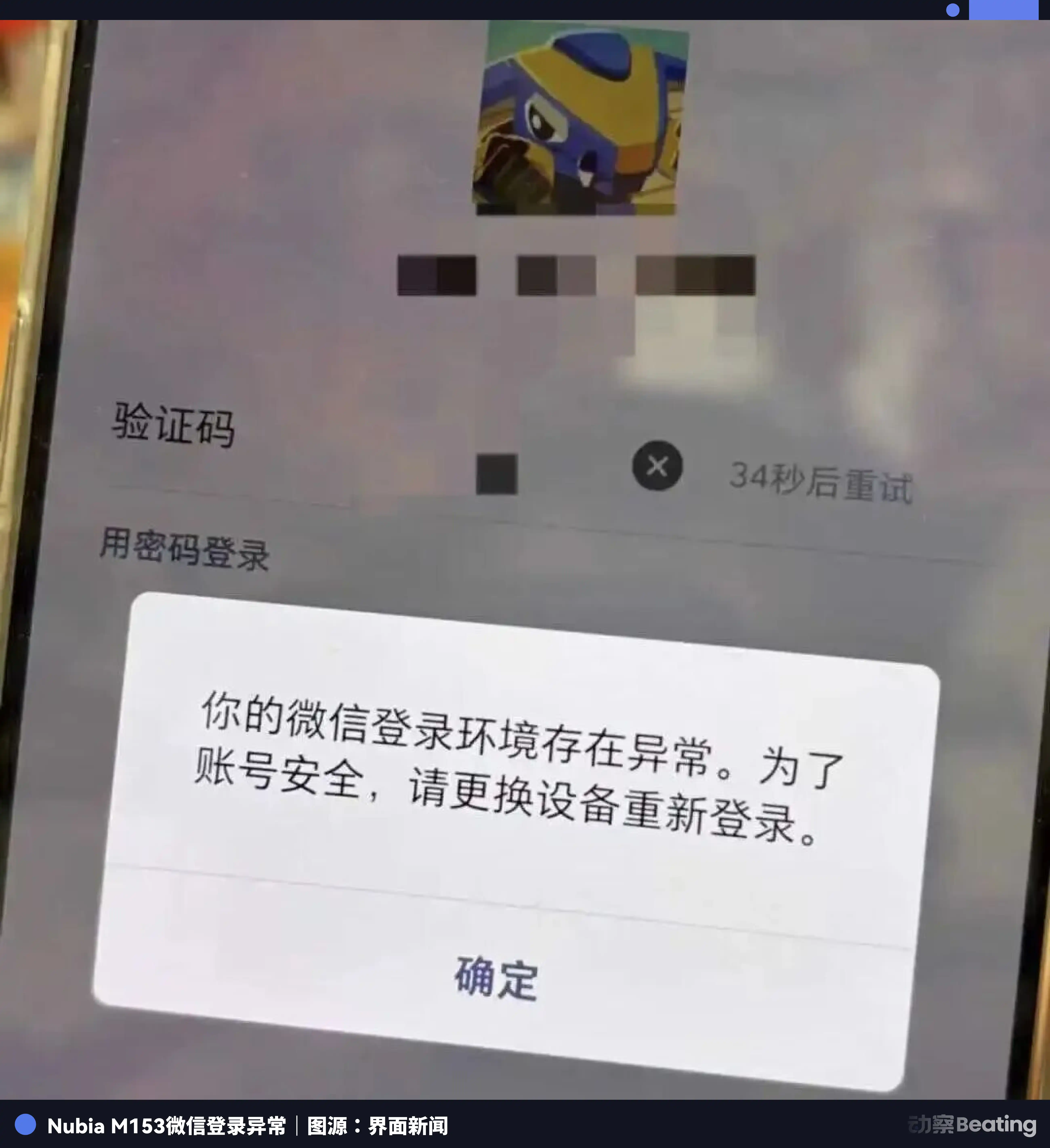
We are very regretful. The Bean Phone was certainly not a mature consumer electronics product, but it showed the industry a glimpse of the next-generation gateway.
So even though the wave of excitement around the Bean Phone has passed, we still haven't completely let go of this matter. Until recently, our daily information collection captured thousands of job postings, and analysis revealed that Byte seemed to be restarting its phone development.
Three Dimensions, One Clue
We crawled three dimensions from ByteDance's official job page, namely AI Innovation Business, Mobile OS, and Douyin Mobile Assistant.
After deduplication based on job ID, we further crawled the details, cross-referencing the job title, job description, and key requirements for keywords.
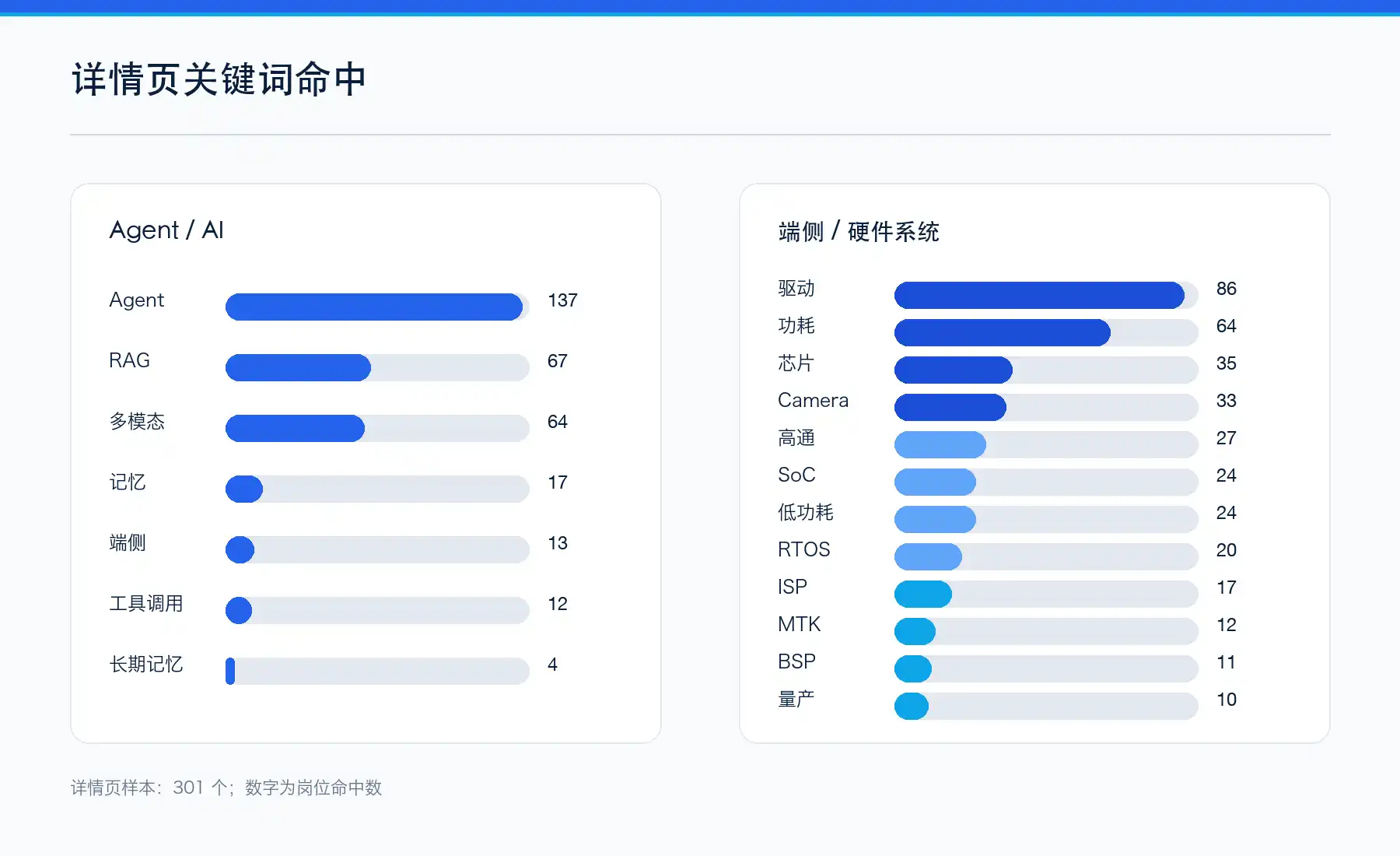
Unlike the recruitment of a regular AI App team, in this batch of ByteDance's job openings, positions related to mobile systems, camera, touch, connectivity, battery life, heat dissipation, chip adaptation, structural design, overall device process, and production line testing also appeared.
These terms are uncommon in internet companies; they are things that only mobile phone manufacturers, supply chain companies, and engineering teams deal with every day.
ByteDance is hiring for factory-related positions.
However, this does not necessarily mean ByteDance will develop its own mobile phone brand, but it does confirm that they are reinitiating the R&D work on mobile-level terminals.
Now, let's see what these job positions themselves indicate.
Douyin Mobile Assistant: From Answering Questions to Performing Tasks for You
Let's start with the Douyin Mobile Assistant.
We conducted a more focused screening, searching for positions where the term "Douyin Mobile Assistant" appeared in the original data in the name, description, and requirements. In total, we found 83 such positions, which can be divided into three categories, forming the shape of a system-level AI Agent.
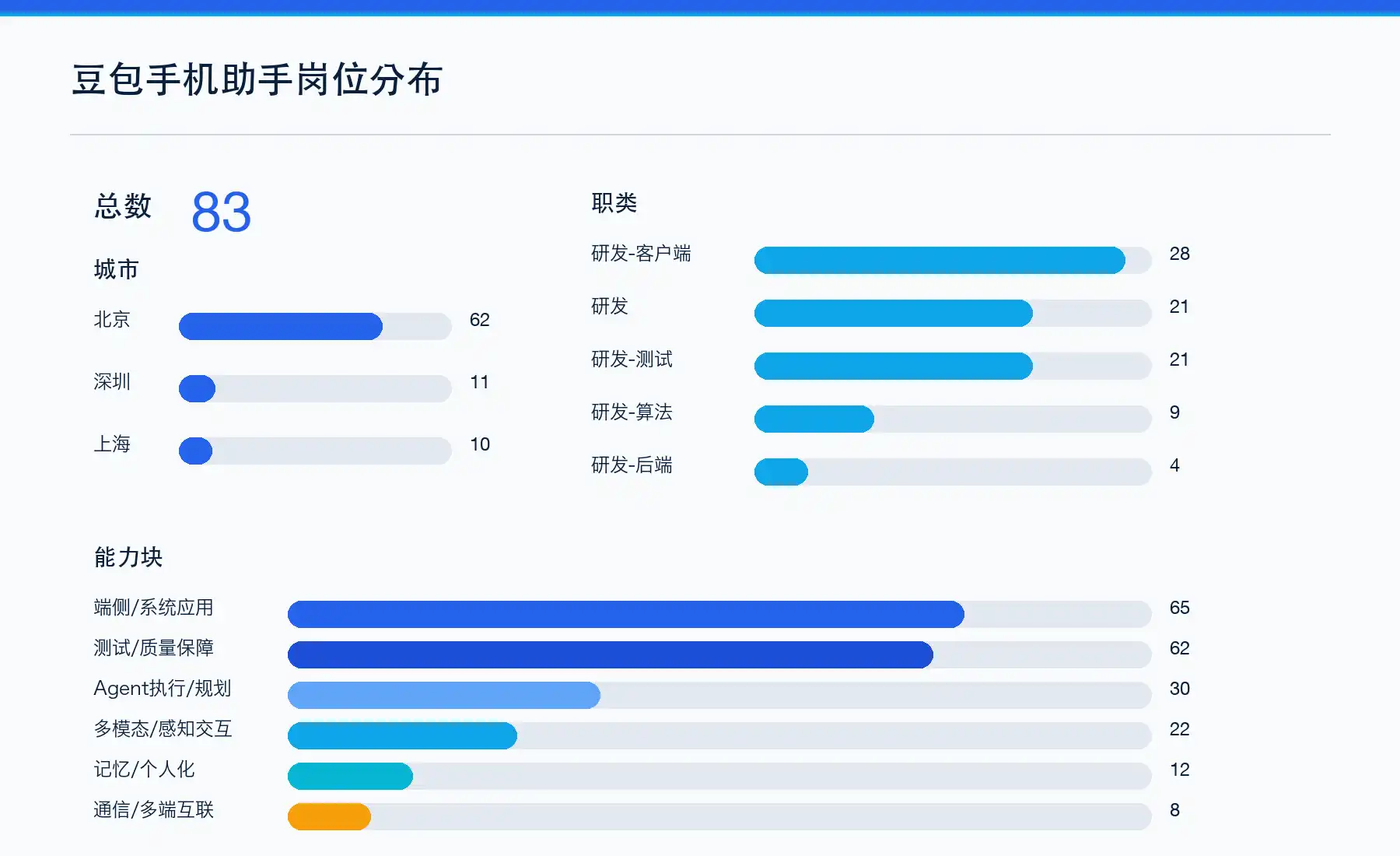
The first category of positions is responsible for enabling AI to act as an Agent.
For example, the job posting for "Agent Development Engineer - Douyin Mobile Assistant" mentions the need to enable AI to perform task decomposition, context organization, tool invocation, memory retrieval, state management, result verification, and error recovery. These are the basic capabilities of all AI Agents we currently use.
The second category of positions is responsible for giving AI Agents a good memory.
Positions appear for "perception and memory," "user memory," "personal knowledge graph," and "long-term preferences." If we want AI Agents to truly integrate into our lives, we cannot have them treat us as strangers every day; they need reliable and stable long-term memory.
Of course, this easily touches upon privacy and boundary issues, but from the recruitment materials, ByteDance has at least started to consider "memory" as one of the most important capabilities of the Bean Coin mobile assistant.
The third category of positions is responsible for enabling the AI Agent to unleash those capabilities on the phone.
If the Bean Coin mobile assistant is to operate the phone on behalf of the user, it cannot merely exist in the cloud, nor can it be just an app. It needs to have a full set of capabilities, including models, memory, task execution, edge deployment, system applications, audio and video, communication, testing, and quality assurance, in order to understand user speech, comprehend the environment, collaborate across devices, be always ready, and not cause trouble.
Mobile OS: The Real Challenge for the Agent Lies in the Phone's Underlying System
Let's look at the mobile OS.
There are 236 positions related to the mobile OS, mainly based in Beijing, Shanghai, and Shenzhen. In the job descriptions, the recurring terms include kernel, chip, driver, camera, display, audio, network, power consumption, heat management, and mass production delivery. These are all terms that are closer to hardware and the underlying system of the phone.
As an example, the responsibilities of the "Kernel Leader - Mobile OS" position state that the individual must lead the memory and storage team in adapting and developing the kernel for a new Qualcomm platform, ensuring the system can cooperate with mainstream mobile chips and manage the memory and storage in the phone effectively. These capabilities are crucial for an AI Agent to achieve real-time responsiveness and handle tasks in the background.
Furthermore, terms such as SoC, BSP, and RTOS appear in the job descriptions. SoC can be roughly understood as the core chip of the phone, BSP is a set of underlying software that allows the system to communicate and cooperate with the hardware, and RTOS is often used in scenarios with high responsiveness and power consumption requirements.
Therefore, the signal released by the mobile OS positions is that ByteDance is recruiting individuals who understand the mobile-level end system. They must at least know where the AI Agent running on the phone might encounter permission issues, power consumption challenges, system stability issues, and which problems need to be solved together with the chip, manufacturer, and testing team.
Based on the job requirements for these positions currently being recruited, ByteDance has already entered the deep waters of the mobile phone world.
Location: Shenzhen - Signals of Hardware and Mass Production
It is also necessary to separately highlight those positions located in Shenzhen.
If a position in Beijing leans more towards models, algorithms, and platforms, and a position in Shanghai leans more towards product and engineering, then a position in Shenzhen is often related to hardware, the supply chain, testing, and mass production.
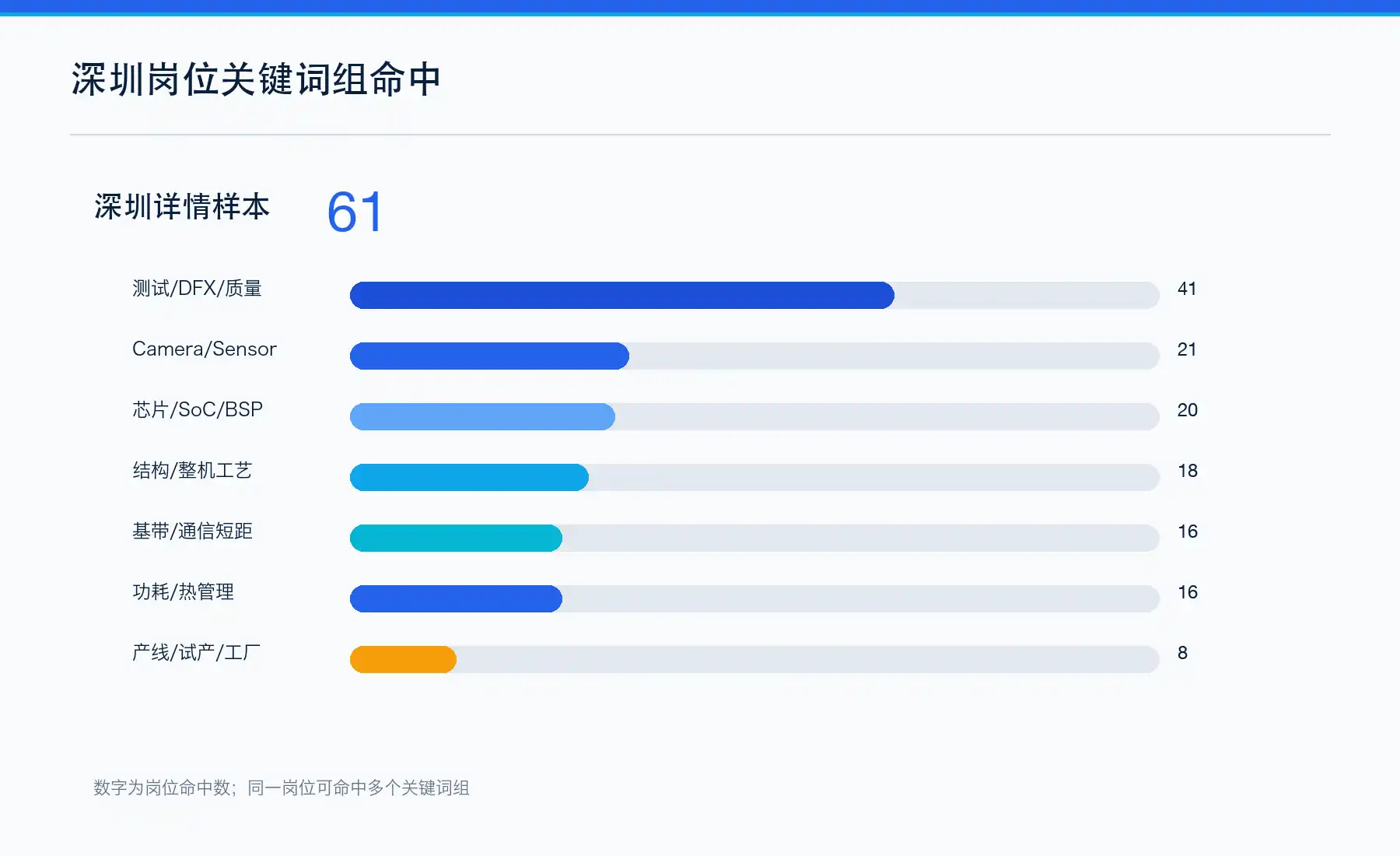
For a project that only involves cloud services, Shenzhen is not as crucial; but once it involves physical products, Shenzhen becomes very important.
What we see in relevant positions in Shenzhen are exactly these things.
Some positions are titled Human-Computer Interaction Design, covering hardware physical interaction, software interface interaction, and multi-end interactive experience. These positions not only consider how to design the interfaces on the screen but also the feel of the physical device, buttons, how to wake it up, and how to interact with other devices.
Then there are positions closer to the engineering site, such as interconnection, power consumption, short-range communication, baseband, whole machine process, structure, and test process.
These terms are not as catchy as "intelligent agent," "multimodal," and "world model." However, in the end, consumer electronics are determined by these things.
If ByteDance only wants to turn Douyin into a better mobile app, it doesn't need to do so much hard work. Once it starts recruiting for these positions, it means it is ready to get on this ship.
ByteDance Can't Just Be an App
In the past, the phone was the container for apps; in the AI era, the phone might become the body of an agent.
If the phone is just a container for apps, then a company like ByteDance can use content, algorithms, and product strength to build its kingdom through individual apps. But if the phone becomes the body of an agent, the user first issues a task, and whoever can take on the task will have the opportunity to decide the next steps.
In this scenario, apps will be downgraded to callable tools. This will make all super apps uncomfortable because agents naturally bypass the middleman.
Therefore, the real challenge may not be whether Douyin can open an app, but whether others are willing to let it open. And an AI that can make decisions for users cannot be easily granted access like a regular app.
For an agent to move from the chatbox to the action layer, it must deal with a bunch of dirty work that used to be outside the AI team's scope. They need to know when the system will kill the background process, when an operation will trigger risk control, why the phone is overheating, why the factory's yield rate is not improving. These were things that the AI team used to not worry about, but now they are unavoidable.
So ByteDance is recruiting for these positions. It may not necessarily launch a phone, but ByteDance definitely cannot just be an app in someone else's phone anymore.
For a major tech company to become the next-generation user gateway, it cannot always rely on someone else's operating system.
Welcome to join the official BlockBeats community:
Telegram Subscription Group: https://t.me/theblockbeats
Telegram Discussion Group: https://t.me/BlockBeats_App
Official Twitter Account: https://twitter.com/BlockBeatsAsia