The New Paradigm and Investment Thesis in the AI+Web3 Era
Author: Dashan, Founding Partner of Waterdrip Capital
Foreword
Over the past two years, the concept of AI has been soaring, with large models and decentralized technologies intertwined, causing many to be dazzled. As a VC, we have looked at hundreds of projects of all sizes and would like to share some insights—including the real cycles of the AI industry, why AI and Crypto are inseparable, and what we value most and are most cautious about when evaluating projects.
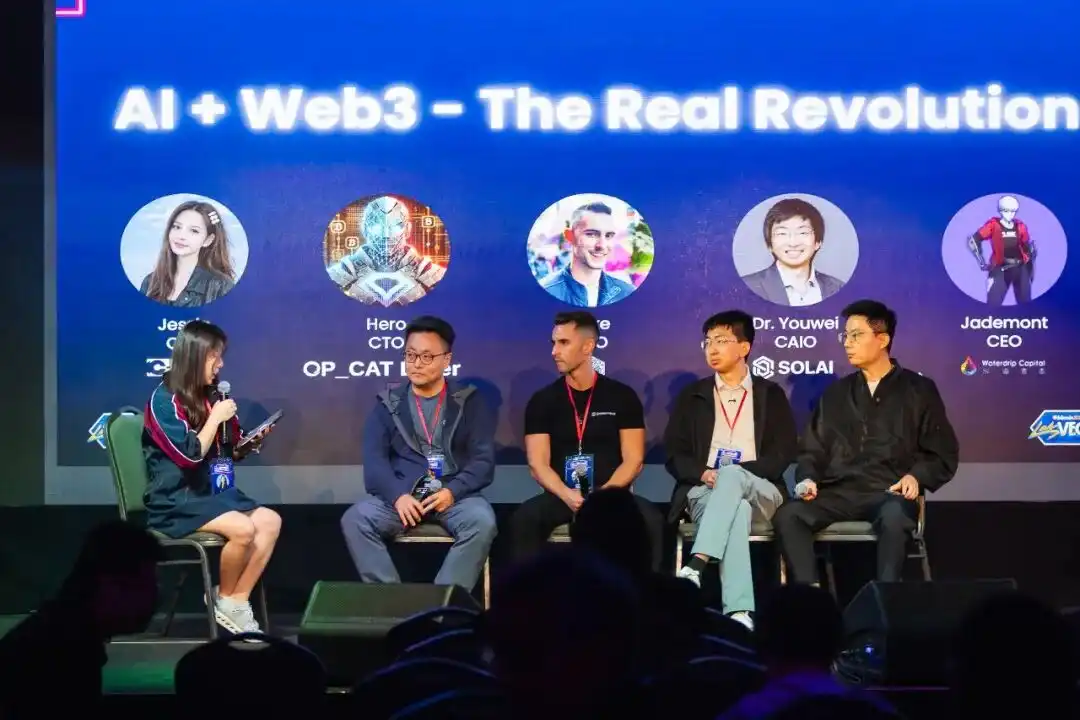
Note: This article is excerpted from the roundtable discussion "AI+Web3-The Real Revolution" held on April 28th as part of the "AI + Bitcoin, the Next-Gen Revolution - BTC Vegas Side Event."
1. The "Seven-Layer Matrix" of the AI Industry and the Investment Cycle
Although giants like OpenAI, Anthropic, and Google are currently dominating the scene, appearing to have the momentum to take over everything, our research has shown that the entire AI industry is actually still in a very early stage.
Being in the early stage does not mean that you can blindly invest now, especially in areas like AI hardware manufacturing that have already been hyped up, which require more careful consideration. In our view, the AI industry chain can actually be divided into seven different levels from bottom to top, and how money should be invested at each level is completely different:
• Seventh Layer: AI Intelligent Agent
• Sixth Layer: Token Optimization
• Fifth Layer: Token Distribution
• Fourth Layer: Large Language Models
• Third Layer: GPU
• Second Layer: AI Data Centers
• First Layer: Power Infrastructure
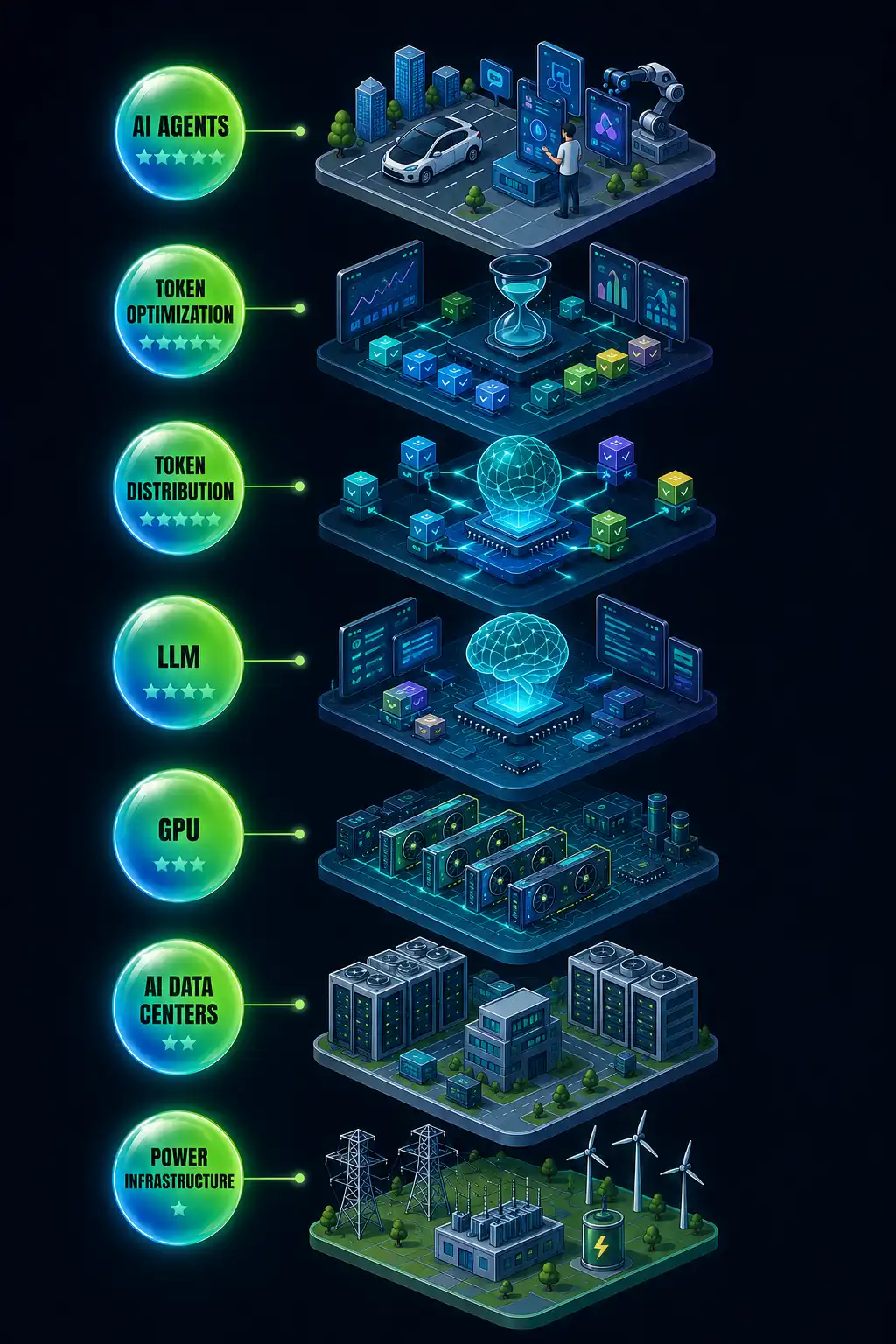
Take the second layer, AI Data Centers, for example; this is a typical cyclical industry. Over the past two years, global capital has been frenziedly buying land and constructing data centers for heavy asset expansion. However, there is a time lag from the completion of this capacity construction to its actual launch into the market. Based on our observations, this massive capacity is likely to come online around 2028.
errorIII. Investment Thesis: Measuring by "Honesty"
Every year, thousands of AI + Web3 business proposals can be seen in the market. After reviewing so many stories, we have distilled the most core screening principle into two words: honesty. This may sound like a no-brainer, but in the current frenetic industry, it may be the scarcest. We divide honesty into two levels:
1. Honesty of the Team—Rejecting Packaging and Patchwork
The resumes of founders and the core team must not contain any fabrication or excessive exaggeration. It is common in the industry to see some hastily assembled teams who, in order to catch the bull market or follow the hot trend, forcibly put together a group of big tech company scientists and Ivy League backgrounds, packaged with no internal cohesion. These projects often fall apart as soon as they encounter technical bottlenecks or market adjustments. A truly successful team must have complementary skills, and the founder's background must be genuine, grounded, and truly determined to accomplish something.
2. Honesty of the Product—Rejecting PPT-Driven Approaches and False Metrics
The extent to which a product can perform, and the user data must be supported by solid, tangible metrics such as underlying code and node count. We have seen too many projects where they simply connect to an OpenAI API on the frontend, change the interface, and dare to claim on the PowerPoint that they are a "natively built large model," using a false demo to deceive investors. At the product level, there must be a commitment to truthfulness and a genuine ability to solve real problems.
In the capital markets, projects that are dishonest, driven by hype and fraud, may temporarily boost their valuation through some flashy financial maneuvers in the secondary market or on exchanges. However, because there is no real business underlying it, once the bubble bursts, their ultimate fate is inevitably zero.
In contrast, projects that are honest and dedicated to their work may initially seem slower because they disdain hype and fraud, and may even appear a bit naive to some savvy capital players. However, because of their solid foundation, they often have a much longer trajectory. In investment, slow is fast, and those projects that can survive in the long term are the ones we are willing to invest in and strategically support.
IV. The Most Underestimated Opportunity in 2026: The Ultimate Fusion of AI + Blockchain + Entertainment
Finally, regarding what future opportunities everyone has yet to notice or have severely underestimated, our research has led us to the most anticipated: the deep integration of AI + Blockchain + Entertainment.
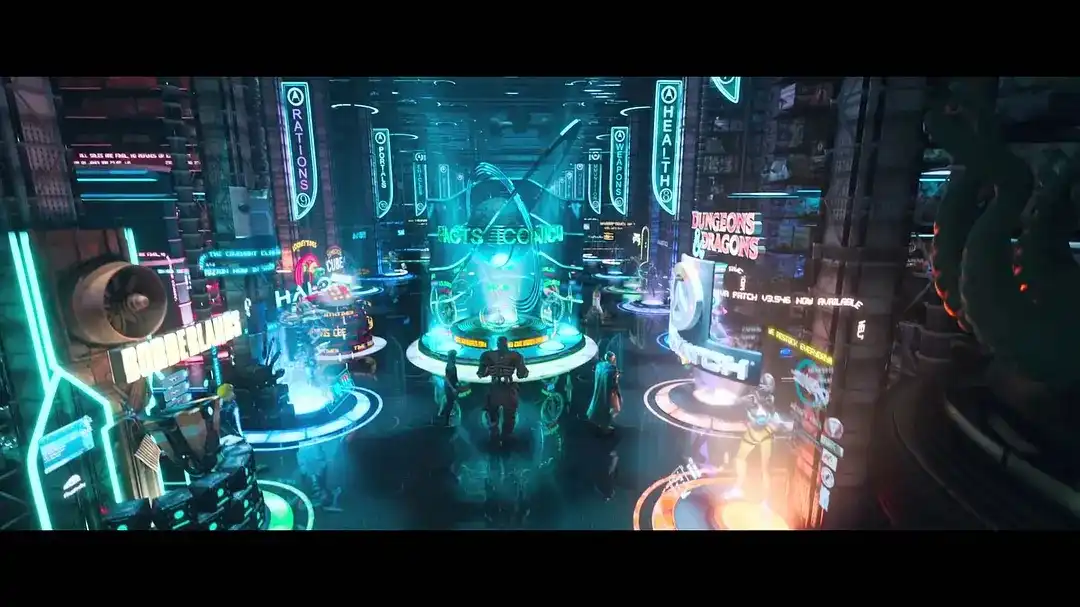
Currently, most of the funds in the market are focusing on hardcore and somewhat dull B-side infrastructure such as AI payments and Decentralized Computing Power (DePIN). While these tracks are undoubtedly important, the competition is too intense, causing everyone to overlook the consumer side, which has the greatest potential to attract mass users and retain funds.
Our observation and rationale are as follows: As large-scale models and agents mature, AI, as efficient labor, will inevitably replace the vast majority of repetitive white-collar and blue-collar jobs. In a future where productivity is highly abundant and material costs are very low, human society will undergo a fundamental transformation—where most people will no longer need to work just to make ends meet. At that time, with a surge in demand for leisure and entertainment, where should human time and energy be spent? High-quality entertainment will be the ultimate destination.
The future of entertainment should fully integrate AI.
Take games, for example. In a game, every NPC has its own consciousness, memory, personality, and social relationships. When a player enters the game, they will no longer face a parrot but rather a "live person" who can develop emotions based on your words and actions, and even spontaneously engage in on-chain transactions with you. The incorporation of AI will significantly enhance the freedom and fun of gaming.
Blockchain's role in this is to establish "ownership": defining land ownership and the uniqueness of rare items in this virtual world, establishing an economic order through tokens.
When people no longer need to work in reality and dedicate a significant amount of time, energy, and even assets to such a fun and AI-driven virtual world where assets belong to the players, the explosive commercial value that emerges will be tremendous. We are actively seeking disruptors in this direction, which could be the next narrative to ignite the entire industry.
Disclaimer: This report represents only the author's personal and institutional industry research perspectives and is provided for industry communication purposes only, not constituting any investment advice.
This article is contributed content and does not represent the views of Blockbeats.
Welcome to join the official BlockBeats community:
Telegram Subscription Group: https://t.me/theblockbeats
Telegram Discussion Group: https://t.me/BlockBeats_App
Official Twitter Account: https://twitter.com/BlockBeatsAsia