Karpathy Joins Anthropic | Rewire News Morning Brief
Karpathy Joins Anthropic|Rewire News Brief
Karpathy Joins Anthropic, Google I/O Fully Bets on Agent, Standard Chartered to Cut 7,000 Jobs Declaring End of Banking AI Replacement Predictions.
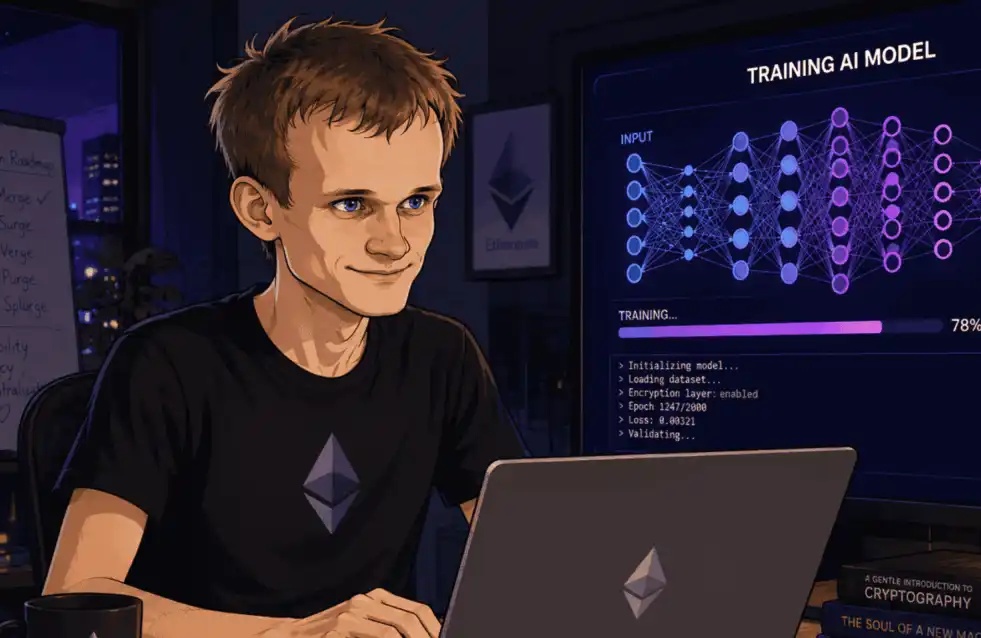
1|Karpathy Joins Anthropic Pre-training Team, Tipping the Scales in AI Talent War
Andrej Karpathy announced on Tuesday that he is joining the Anthropic pre-training team, with his post receiving nearly 3 million views within an hour. The OpenAI co-founder, former Tesla AI head, and creator of the "vibe coding" concept has chosen to join OpenAI's top competitor.
Pre-training is the most expensive and compute-intensive part of cutting-edge models, and Karpathy has joined precisely the core team that determines Claude's underlying capabilities. Fortune reported that Anthropic is valued at nearly $1 trillion, with its revenue growing almost parabolically. On the same day, Google DeepMind poached talent from Contextual AI. The AI talent war is transitioning from "high-salary poaching" to "alignment defection," where top researchers voting with their feet can better illustrate the direction than benchmark testing.
(Source: TechCrunch / CNBC / Axios / Fortune / Reuters)
2|Google I/O 2026 Fully Shifts to Agent, Gemini 3.5 Flash and Smart Glasses Simultaneously Released
Google unveiled Gemini 3.5 Flash at I/O, focusing on the strongest encoding and Agent model, capable of autonomously performing complex tasks and building software from scratch. Also announced were audio smart glasses (launching this fall, competing with Meta Ray-Ban), the integration of Genie's world model with Street View, and an Android CLI for third-party AI coding tools aimed at Claude Code-oriented development.
The signal is not in a single product but in direction. Google's search is transitioning to an Agent-centric entry point, the Android toolchain is open to competitors' AI coding tools, and wearable hardware is starting to take over some phone scenarios. All three events point to one conclusion: the next-generation platform entry isn't a dialogue box but omnipresent Agents. Google is exchanging ecosystem control for platform openness, continuing the logic from the early days of Android.
(Source: TechCrunch / Financial Times / Bloomberg / Google Blog)
3|Standard Chartered to Cut 7000 Jobs in AI Push, CEO Publicly States Intent to Replace 'Low-Value Human Capital'
Standard Chartered Bank CEO Bill Winters has publicly mentioned using AI to replace 'low-value human capital,' with the bank planning to cut around 7000 positions. The majority of the layoffs will impact back-office operations and compliance roles, as Standard Chartered's Asian operations account for over 60% of its business.
Yesterday, Rewire reported Meta cutting 8000 jobs in favor of AI. Today, Standard Chartered has done almost the same with nearly the same number, but with a different significance. Meta is a tech company undergoing internal restructuring, while Standard Chartered is a traditional bank. When a century-old bank headquartered in London, with its business focus on Asia, starts openly discussing layoffs using the term 'low-value human capital,' AI replacing becomes more than an organizational experiment from the tech industry; it has transformed into cost accounting in finance. Meta also officially carried out the 8000 job cuts on the same day, as confirmed by The New York Times. The pace of AI-driven restructuring is not one industry after another but simultaneous across industries.
(Source: Bloomberg / Tom's Hardware / The New York Times / Reuters)
4|Trump Administration Escalates Anthropic Blacklist in Court, Simultaneously Seeks to Deploy Its Model to Combat Cyber Threats
The Trump administration defended in a federal court hearing on Tuesday its decision to classify Anthropic as a supply chain risk. At the same time, internal government discussions are underway on how to leverage Anthropic's most powerful model, Mythos, to counter cyber threats. The Pentagon's stance is that the military and its contractors using Anthropic technology is 'impractical,' but evidently, the cybersecurity department thinks otherwise.
Labeling a US company as both a national security threat and a national security tool is not a policy mistake; it is a symptom of AI governance frameworks lagging behind technological iterations. With an annual revenue exceeding $30 billion and a valuation nearing a trillion, Anthropic just poached Karpathy earlier today. Having a trillion-dollar company blacklisted by the government while being seen as an irreplaceable tech supplier by the same government showcases how the logic of separating military and civilian technologies has become outdated in the AI era.
(Source: Axios / Wired / CNBC)
5|NVIDIA Earnings Report: $350 Billion Pre-Earnings Option Pricing Volatility, AI Arms Race Market Barometer
Reuters reported that NVIDIA's stock price had an implied pre-earnings option volatility corresponding to approximately a $350 billion market value swing. This number itself is newsworthy, as the expected volatility for a single earnings report of a company exceeds the total market capitalization of the vast majority of companies in the S&P 500.
Wall Street opened lower, semiconductor stocks continued to sell off, and the 30-year Treasury bond yield remained above 5%. Bloomberg reported on the rapid rise of AI data center loans on Wall Street's risk radar. BlackRock and Google announced a joint $5 billion AI infrastructure project (using TPU chips), and clean energy transactions are poised to hit a record high. All funds are flowing into AI infrastructure, but the bond market is sounding a warning that money is not unlimited. NVIDIA's earnings report will be a key test of whether this investment cycle can deliver.
(Source: Reuters / Bloomberg / CNBC / Axios)
Worth Knowing ↓
The founder of SMIC and CEO of Naura openly called on Chinese wafer fabs to test domestic equipment on production lines. Chinese semiconductor equipment manufacturers collectively set a revenue record in 2025, but profit margins are under pressure due to domestic price competition. The transition from "usable" to "daring to use on the production line" is a crucial step. (Source: Tom's Hardware)
Intel issued a final ultimatum to PC manufacturers, using the 18A chip or facing a supply cut of Intel 7. Taiwanese and mainland Chinese module manufacturers are at the forefront. Intel is forcefully pushing the new process with the leverage of the supply chain, betting that 18A can deliver on performance promises. (Source: Tom's Hardware)
Trump ordered the government and the Federal Reserve to review crypto companies' access to payment channels. The long-awaited relaxation of bank access restrictions in the crypto industry is progressing, shifting regulatory attitudes from "blockage" to "inclusion in a framework." (Source: CoinDesk)
Former OpenAI employees have established an AI security oversight organization, warning that xAI security records could affect SpaceX's IPO. Musk accelerated the SpaceX IPO process after OpenAI's defeat, but xAI's security issues may become the focus of investor due diligence. (Source: Wired)
Clean energy transactions are poised to hit a record high, driven by AI's electricity demand and expiring tax credits. The scale of corporate clean energy procurement continues to accelerate even after federal support cuts under the Trump administration. (Source: Axios)
Following the successful Cerebras IPO, Wall Street is gearing up for a wave of tech IPOs. The Financial Times reports that investment banks are preparing listing materials for several AI companies, although the market window may be narrower than expected due to bond market pressures. (Source: Financial Times)
PayPal partners with Anthropic to offer AI capabilities to small businesses. 82% of small businesses believe that adopting AI is essential, but 73% say they lack the necessary tools. Anthropic's partnership ecosystem spans across various sectors from defense to payments. (Source: Finextra)
Welcome to join the official BlockBeats community:
Telegram Subscription Group: https://t.me/theblockbeats
Telegram Discussion Group: https://t.me/BlockBeats_App
Official Twitter Account: https://twitter.com/BlockBeatsAsia