WSJ: Revealing the Mysterious Arbitration Panel Behind the Polymarket Market Dispute

Original Title: The Mysterious Crypto Judges Who Settle Polymarket Disputes
Original Authors: Alexander Osipovich, Sam Kessler, WSJ
Original Translation: Chopper, Foresight News
Last month, Garrick Wilhelm followed the crowd into the prediction market trade but soon began to regret it. The user, based in British Columbia, Canada, signed up for the Polymarket platform and started betting on events related to the Middle East, with one betting option being whether Israel and Hezbollah could reach a ceasefire agreement.
Wilhelm placed a $567 bet that ended up in loss, believing that the armed group would never sign a ceasefire agreement, stating that it was a sure win situation.
However, following a ceasefire agreement between Israel and the Lebanese government, some traders deemed this to be equivalent to a ceasefire with Hezbollah. After carefully studying the platform rules, Wilhelm strongly disagreed with this decision.
The outcome of this high-stakes bet involving millions of dollars was ultimately not in the hands of the Polymarket platform. Wilhelm then learned that the outcome of his trade was determined by a loosely organized group of cryptocurrency holders who serve as arbitrators.
With a large influx of new users and a surge in trading volume, trading disputes have become an increasingly challenging issue for prediction market platforms like Polymarket. While the platform originally aimed to frame betting topics as clear-cut questions with binary outcomes, real-world events are often complex, making the determination of winners and losers uncertain.
Most similar prediction market platforms, such as Kalshi, handle disputes and finalize outcomes internally; however, Polymarket has chosen to outsource dispute resolution to a third-party service provider, UMA. When transaction parties disagree on the outcome, the UMA dispute resolution mechanism is activated, with voting rights controlled by UMA token holders. The more tokens held, the greater the voting power, and the identities of the vast majority of voters are anonymous.
Polymarket explicitly states in its user agreement that the platform does not bear any responsibility for resolving disputes related to transaction contracts.
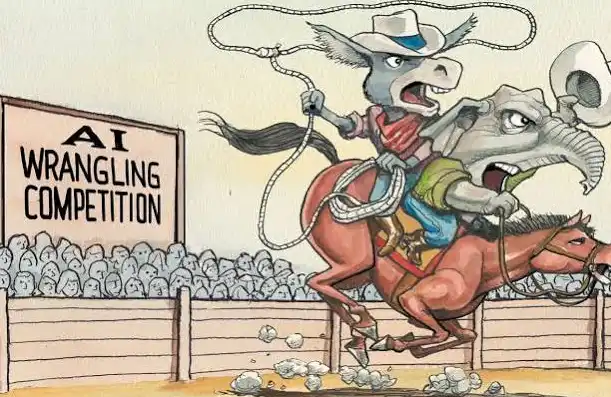
Many traders and industry veterans in the cryptocurrency field assert that this UMA voting system is highly susceptible to fraudulent activities. Token holders can easily participate in voting on disputes where they have a vested interest, with no institutional constraints.
The Wall Street Journal, combining Polymarket trading data with on-chain analysis, concluded that: over the past year, at least 60% of active UMA voters could be linked to a Polymarket trading account; during the same period, in over 300 dispute cases, UMA voters themselves held positions in the disputed bets.
UMA promotes itself as having decentralized characteristics, but on-chain data shows that voting power is highly concentrated in the hands of a few whales. Statistical data indicates that in the majority of dispute votes, over half of the votes come from the top ten wallet addresses.
Nic Carter, founding partner of venture capital firm Castle Island Ventures, bluntly stated that Polymarket should not simply offload dispute resolution responsibility. "Resolving disputes is inherently Polymarket's job and should not be outsourced to this group of unidentified, anonymously acting third-party token holders."
A spokesperson for Polymarket responded by stating that only 0.2% of betting contracts on the platform trigger UMA vote arbitration, and further mentioned that UMA decentralizes arbitration authority to the public market system, rather than entrusting it to a single entity for unilateral decision-making.
In March of this year, Polymarket founder Shayne Coplan admitted during a Harvard Business School panel that the platform's current dispute resolution mechanism indeed has many loopholes. "Relevant optimization solutions are on the way," but he did not disclose specific details of the rectification. It is reported that Polymarket has reached a data partnership with Dow Jones, the parent company of The Wall Street Journal.
UMA, co-founded by two former Goldman Sachs traders and overseen by the foundation Risk Labs registered in the Cayman Islands, has not found any concrete evidence of platform manipulation, according to James Fry, a spokesperson for the foundation. "Most of the outside doubts are just excuses from traders who incurred losses on their bets."
During disputes, UMA token holders engage in debates on the social platform Discord, citing various evidence to support their views. Additionally, UMA has a penalty mechanism that imposes economic sanctions on users expressing minority opinions, with the platform stating that this is intended to guide voters to make fact-based correct judgments.
According to statistics from the Polymarket exclusive trading terminal Betmoar, from 2026 to the present, the platform has encountered over 1150 betting disputes, a number that has already exceeded the total for the entire year of 2025.
Recently, another hotly debated prediction market dispute unfolded regarding streamer Clavicular's announcement of pregnancy: the streamer did announce publicly that her partner is expecting a child, but many traders believed that this announcement did not meet the contract's criteria for a "formal valid declaration." Ultimately, a UMA vote ruled that this announcement had regulatory effect. Additionally, there were several arbitration disputes related to the Iran situation prediction bets.
Public regulatory disclosure documents show that in the early days, Polymarket internally handled various disputes; however, in early 2022, the platform settled allegations of violating U.S. financial regulations with the Commodity Futures Trading Commission, leading to UMA taking over all dispute resolution responsibilities.
Relying on a decentralized token holder arbitration model has also become a key argument for Polymarket to demonstrate that it is an offshore platform not subject to U.S. regulatory constraints.
However, Polymarket occasionally overturns UMA's final rulings and also provides additional explanations of the betting contract terms in advance to avoid potential controversies.
As mentioned earlier, novice trader Wilhelm ultimately lost the bet related to the ceasefire agreement, with 87% of UMA token voters agreeing that the agreement applied to the Hezbollah-related prediction market. Despite efforts by Wilhelm and others to argue their case, they were unable to reverse the arbitration outcome.
A group of losing traders formed a Discord community called "Whale Hunters" to collectively denounce the alleged vote manipulation behaviors of key UMA voters.
Traders directly targeted the startup project UMA.rocks, a platform supporting UMA token holders to combine voting power and delegate voting authority to a specific decision-making committee. In recent arbitration votes, their vote share reached 8%, making them a significant indicator of UMA's overall arbitration direction.
Founder of UMA.rocks, Lancelot Chardonnet, responded, "Many losing traders fundamentally failed to carefully read the betting rules themselves and then shifted all the blame to UMA and our platform after the fact; we are the easiest targets for such attacks."
At the end of April, UMA.rocks formally expelled Scout from the voting committee due to suspicions of past market manipulation.
When contacted via Discord, Scout denied manipulating the market or intentionally influencing incorrect voting results but openly admitted to participating in Polymarket's disputed betting events while exercising UMA's arbitration voting rights.
Scout believes that these conflicted voters actually make the ruling outcome more aligned with the facts. "Voters with no vested interest may spend a maximum of 5 minutes hastily understanding the background of the event; whereas traders like us, considering our own financial interests, will delve deep into the whole picture of the event to make an accurate judgment."
He admits that the industry is in a dilemma: "Either enable conflicted traders to participate in the ruling, or let outsiders with no professional knowledge lead the vote. Currently, there is simply no perfect solution."
Original Article Link
Welcome to join the official BlockBeats community:
Telegram Subscription Group: https://t.me/theblockbeats
Telegram Discussion Group: https://t.me/BlockBeats_App
Official Twitter Account: https://twitter.com/BlockBeatsAsia