MicroStrategy Selling Bitcoin Not Causing Price Drop, Is STRC's Rebound Really a Positive Sign?

The eerie silence of the market is unsettling.
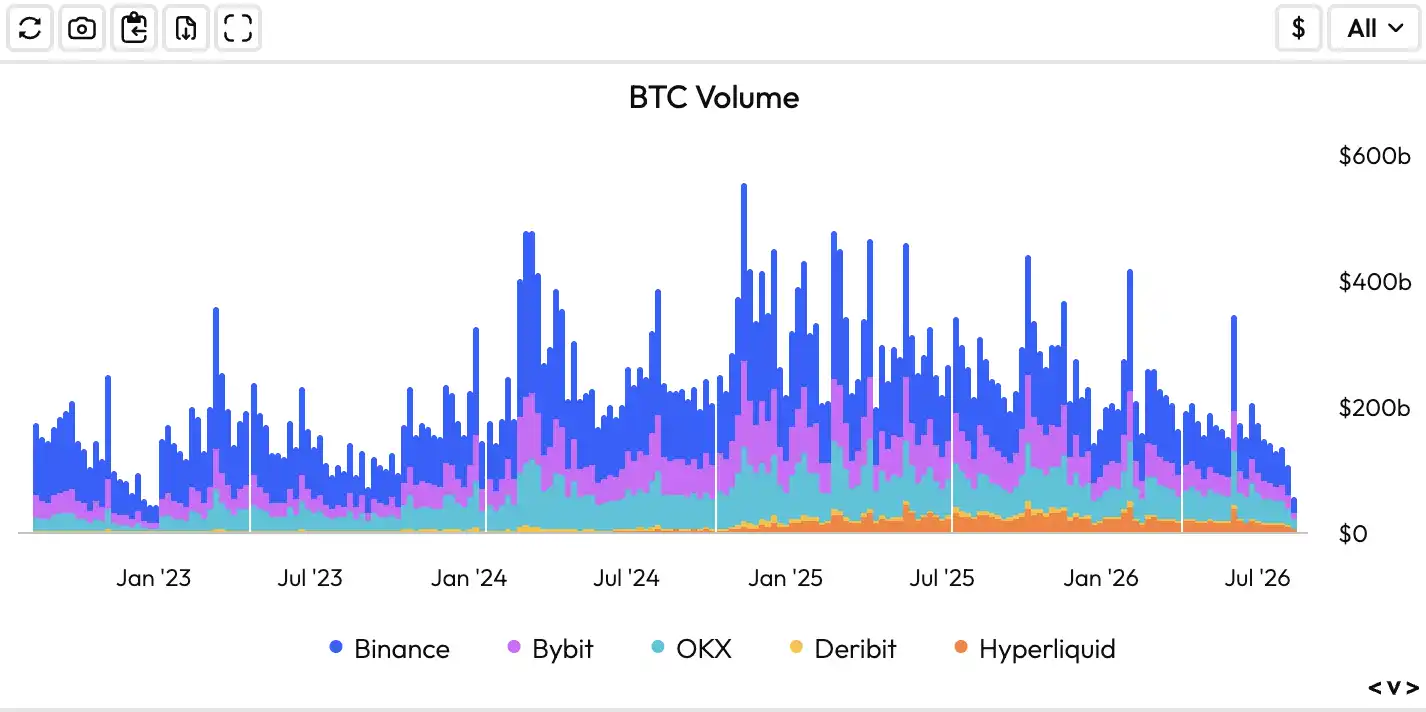
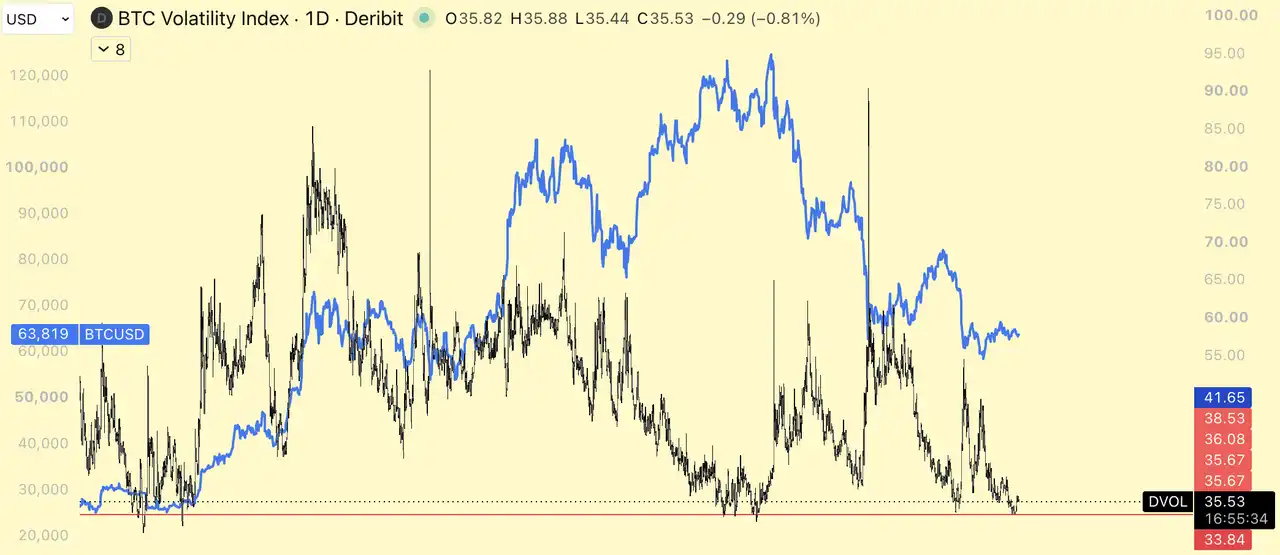
BTC's weekly trading volume has dropped to the lowest level since 2023. Deribit's BTC volatility index DVOL also hit a bottom last week.
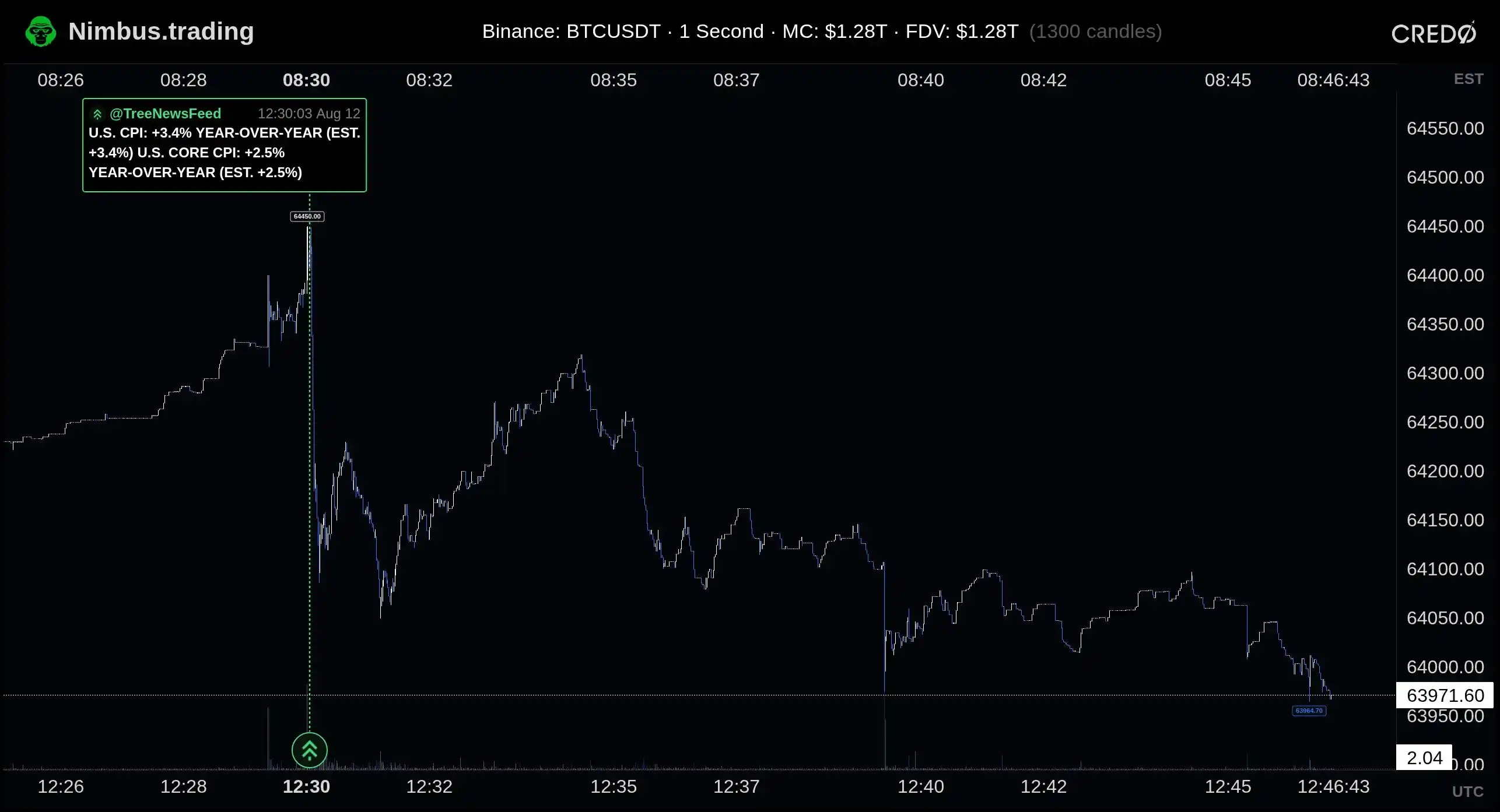
Liquidity is also lacking. Last night at 8:30 PM, CPI data was released. At the moment of the CPI announcement, BTC swiftly dropped from $64,450 to $64,100, then rebounded to around $64,300 before falling again.
One hour before the U.S. stock market opened, BTC participants were scarce. Apart from brief capital flows from cross-market arbitrage, the market did not establish a new direction. The current BTC price is susceptible to manipulation, but there are not enough traders willing to sustain the trend.
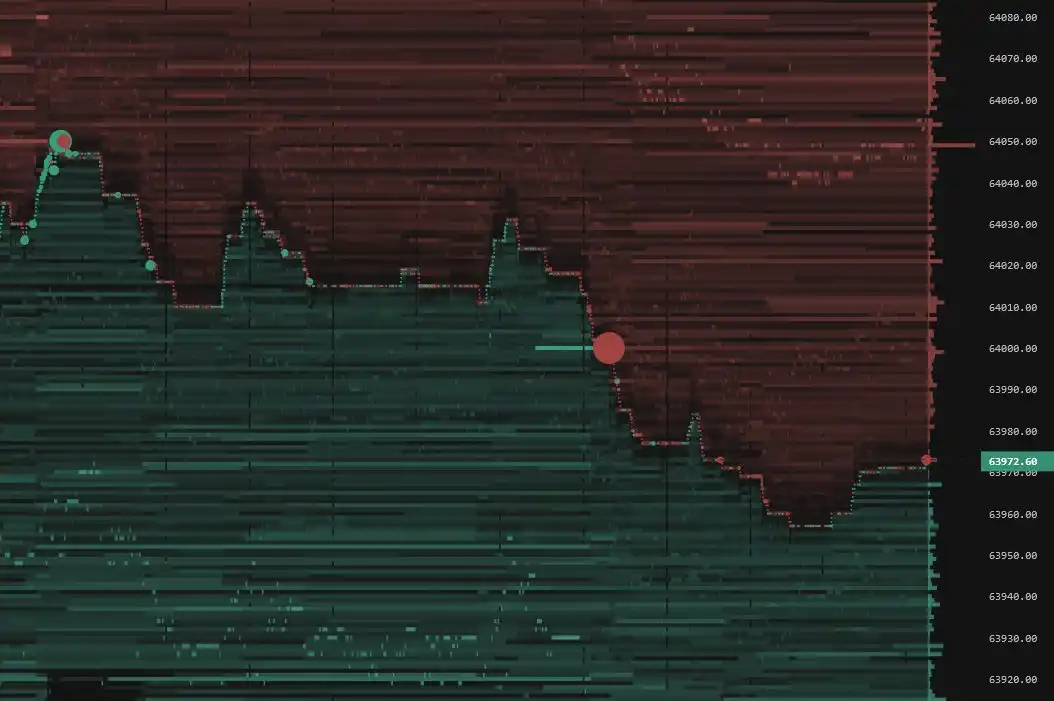
What the market lacks is not just a piece of bullish or bearish news.
It lacks participants.
Options Market
Let's take a look at the options data.
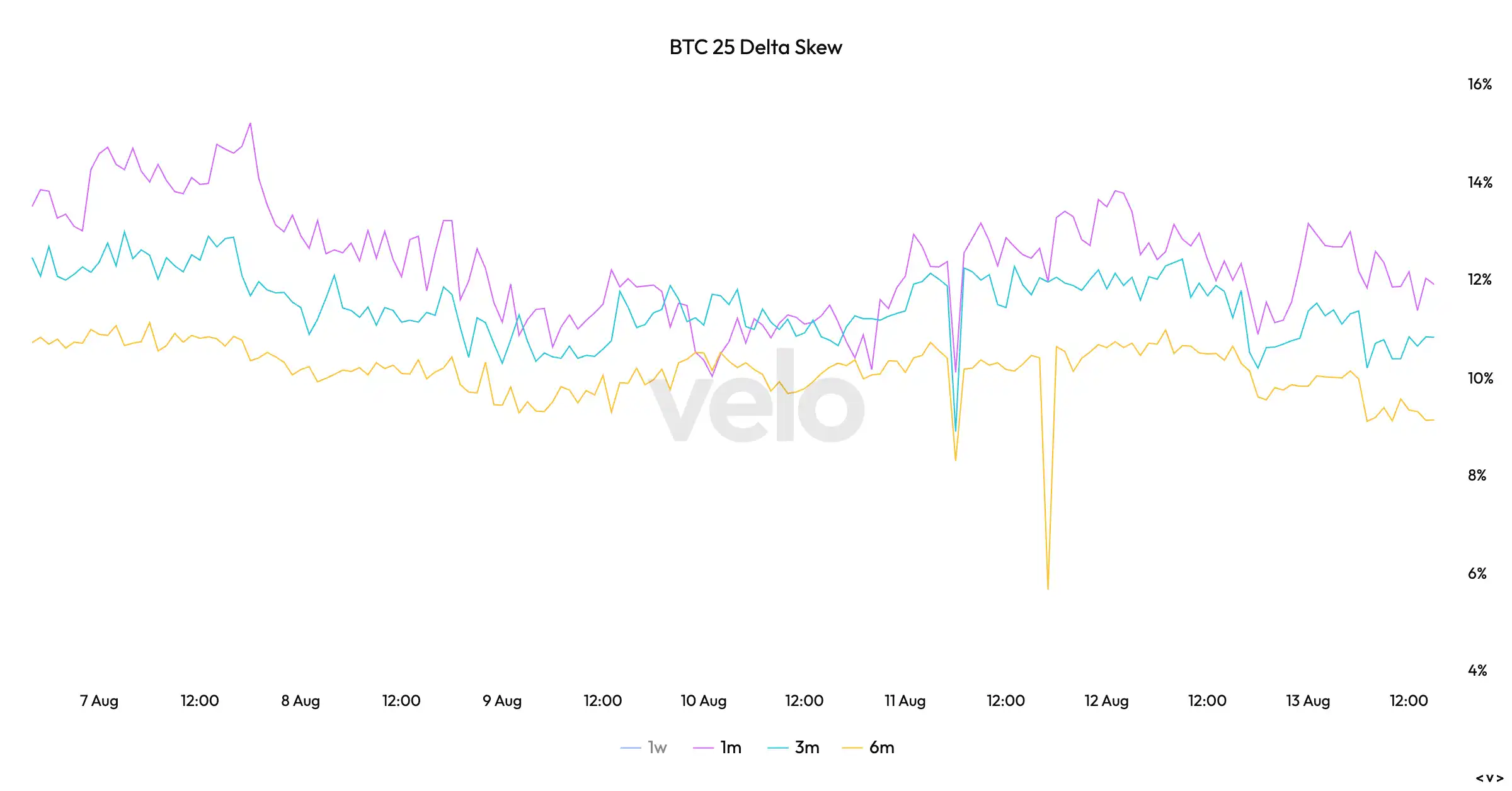
The BTC 25 Delta Skew measures the implied volatility difference between near-month put options and call options with a similar delta. The curves for one month, three months, and six months are all in positive territory, around 12% for one month, 10.7% for three months, and 9.1% for six months. The shorter the term, the higher the skew. Traders' demand for short-term downside protection is significantly higher than the pricing of forward risk.
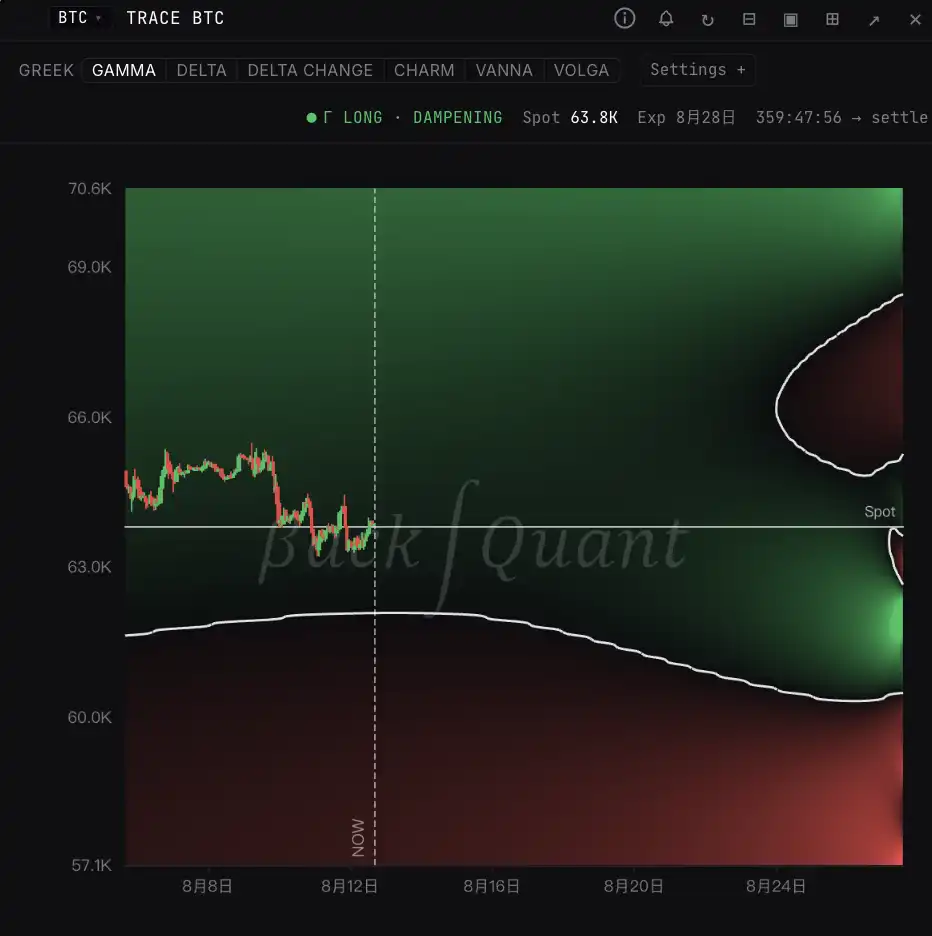
The aggregated Gamma heat map to month-end provides more specific price boundaries. Currently, the market is still in the volatility-suppressed area of long gamma. Market makers buy on price drops and sell on rallies, and their hedging behavior brings the price back into the range. The gamma flip region is around $61,000 to $60,000. If BTC remains above this boundary, market makers' hedging will dampen volatility; if the price falls below the boundary, positions shift to short gamma, and market makers need to continue selling on the downside, changing their hedging behavior from a dampener to an accelerator during the decline.
If You Don't Buy, Who Will?
Many traders are using two developments to support a bullish view. Over the past month, Saylor has gradually sold off hundreds of millions of dollars' worth of BTC, amounting to around 0.13% of the Strategy's holdings, yet the BTC price has remained relatively stable. On the other hand, STRC has bounced back from around $73 to $95.45, just a step away from $100. Saylor sells coins, BTC doesn't crash, STRC recovers most of its decline; naturally, the market interprets these as signs that the bad news has already been absorbed.
The issue is that, given the current low liquidity and low volatility market conditions, an alternative explanation can be provided for the above phenomenon.
Large entities still need to offload their spot holdings, but the current trading volume cannot accommodate large sell orders. They temporarily cease selling, purely due to the thin order book. When STRC returns to $100, bringing in buying interest for BTC, it will provide these entities with perhaps a final opportunity to exit.
Positive news will improve the selling conditions.
This narrative can explain why BTC traded sideways during Saylor's small sell-off and why there remains selling pressure risk even after Saylor resumes buying. The determining factor for the price is how significant Strategy's orders are relative to the potential sell pressure across the entire market. Looking solely at Saylor's buys or sells does not provide a complete answer.
A plausible counterargument is, given that large entities have experienced volatility events and Strategy buy-side support before, why have they not completed their exit? The answer from historical trends is not optimistic. After the last STRC fund flow recovery and Strategy providing spot liquidity, BTC experienced a rapid decline, settling around $59,000, followed by a prolonged consolidation.
Furthermore, the options positions have set a volatility amplification range from $61,000 to $60,000. Once a large spot sell order drives the price into negative gamma territory, the next bottom is likely to form.
The Predicament of STRC
Strategy recently increased its USD reserves by $650 million and repurchased $109 million worth of STRC. The company disclosed that these actions extended the USD reserve coverage period by 143 days to 2.7 years and narrowed STRC's Bitcoin credit spread by 10 basis points. Consideration of the operations from the previous week amounts to a total repurchase of approximately $190 million over two weeks.
This money brought STRC back to $95 but did not address the most crucial issue.
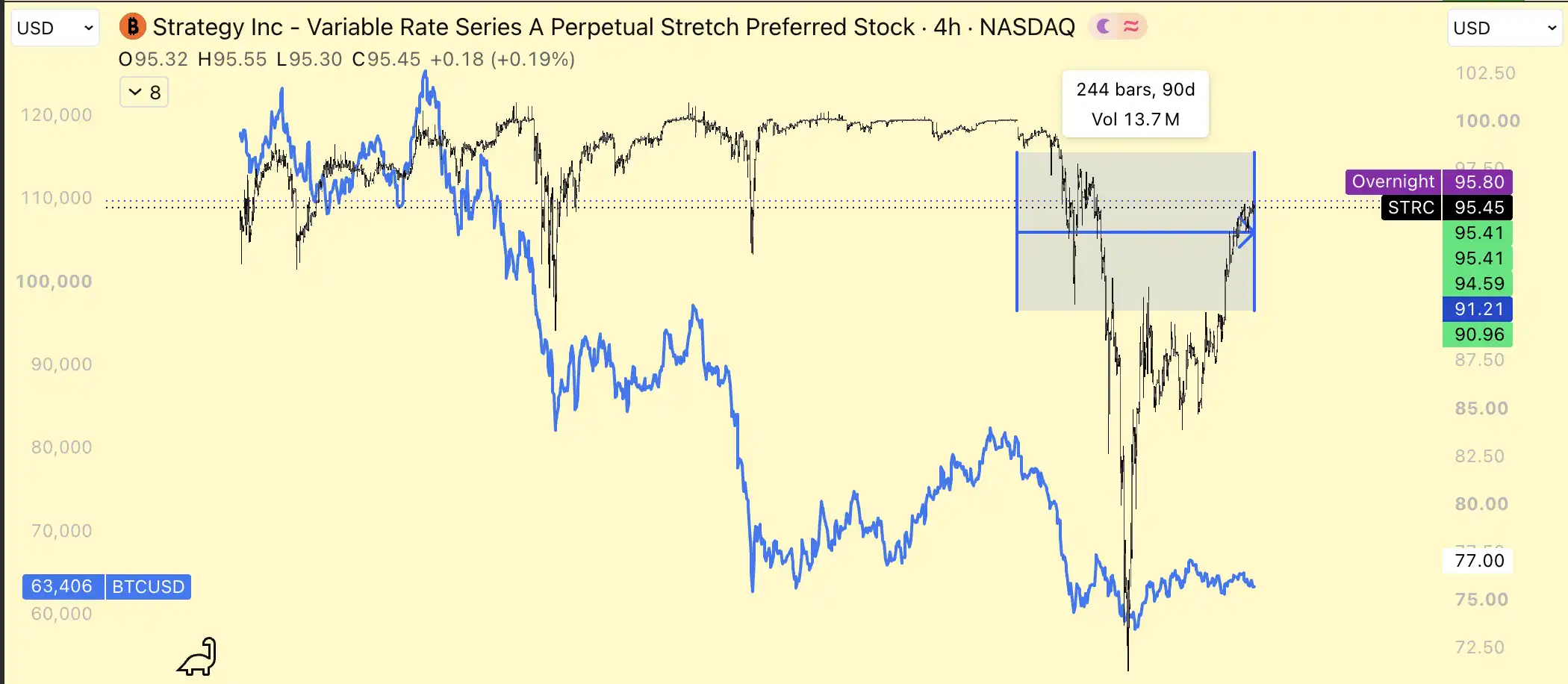
STRC must return to $100.
Strategy will issue more STRC near $100 through ATM at market price. This implies that as long as the share price approaches $100, the company will issue more new shares. Consequently, all holders who bought below $100 will sell around $99.9, even if the STRC price reaches $100, these holders will immediately sell back below $100; similarly, short sellers can sell borrowed shares around $99.9, buy back when the price drops again to $95, thus earning a price difference of about $5.
The biggest risk of this transaction is that if STRC breaks through $100 and continues to rise, short sellers will have to cover at a higher price. However, Strategy itself increased the supply near $100, effectively capping some of the upside potential. The more the market believes the company will issue more shares at $100, the more willing traders are to sell early at $99.9, making it harder for STRC to truly break above $100.
As long as this rule remains unchanged, if a $190 million buyback still cannot push STRC back above $100, the market will continue to question where the next round of funds to buy STRC will come from, raising concerns about BTC liquidation. By simultaneously bolstering their USD reserves and conducting a share buyback, Strategy has indicated that the company's current priority is to fix the funding side, with restoring net BTC purchases coming later.
Shorting is also not a free trade. Short sellers need to borrow STRC first, sell it on the market, and during the holding period, they must pay over a 50% annualized loan interest rate and compensate for around a 12% dividend, totaling an annualized cost of over 60%. If the stock price remains near $100 for a long time, the longer it stays there, the more these expenses eat into profits.
Because STRC will issue more shares to dilute the upside potential, short sellers rarely need to face losses from a continuous rise in the stock price. If Strategy stops issuing more STRC at $100, and STRC rises from $99.9 to $102 to $105, short sellers will immediately incur a book loss of $2.1 to $5.1 per share. Some short sellers may have to buy back STRC to cut their losses, and their buy orders will further drive up the price, leading to a short squeeze.
The loan interest rate determines how long short sellers can hold, and Strategy's issuance rules determine whether they need to cut losses early. As long as shares start to be issued at $100, it will attract short sellers to enter.
The contradiction in capital allocation has not disappeared. When MSTR's mNAV is below 1, continuing to sell common stock will dilute the per-share value of common stockholders; however, repurchasing STRC without increasing the dividend or buying back MSTR provides preferred stockholders with more direct protection. The company sees a longer period of USD reserve coverage and a narrower Bitcoin credit spread, while common stockholders are calculating who bore the cost of this repair.
Bitfinex Long
Bitfinex Long positions usually move inversely to the BTC price. When BTC falls, large long positions on Bitfinex often increase; when BTC rises, these positions gradually decrease. The market commonly views this inverse relationship as a position indicator, used to observe whether large funds are stepping in to buy BTC during price weakness.
Bitfinex Long Squeeze Ratio Indicator
Recently, this indicator has failed. The Bitfinex Long Squeeze Ratio has dropped to the lowest level since the end of the 2022 bear market. With BTC trading sideways at over $60,000, Bitfinex long positions have neither seen significant increases nor decreases, failing to provide a clear direction for the next trend.
The "savior" of BTC has turned dark and become the "devil."
Welcome to join the official BlockBeats community:
Telegram Subscription Group: https://t.me/theblockbeats
Telegram Discussion Group: https://t.me/BlockBeats_App
Official Twitter Account: https://twitter.com/BlockBeatsAsia