In the AI era, How to Make Onboarding No Longer a "From Scratch Handover"
Original Title: Onboarding in the AI Era: My First 100 Days at Ramp
Original Author: @danbeksha
Translation: Peggy, BlockBeats
Editor's Note: AI is entering the enterprise, but the real question is not whether to use an agent, but whether these agents can understand the company itself.
This article takes the author's first 100 days at Ramp as a clue to discuss a more fundamental issue: in a fast-paced company, newcomers cannot rely solely on slowly reading documents, asking colleagues, and filling in context, nor can every AI tool work in isolation. What is truly important is to build a continuously updated "company brain," where meetings, documents, Slack discussions, customer feedback, and product decisions are solidified, allowing both newcomers and agents to start from the same context.
When context is systematized, onboarding is no longer just a long adaptation process, and AI is no longer just a set of isolated tools. The value of enterprise AI may ultimately lie not in deploying how many agents, but whether the company can first establish a trustworthy, readable, and reusable knowledge base.
The following is the original article:
In a 4x100m relay race, the victory is often not decided over the entire course but is compressed into a 20-meter exchange zone. Runners must complete the handoff at high speed: if the handoff is started too early, the baton will drop to the ground; if started too late, the relay team has to slow down, losing the advantage in an instant. If the handoff action itself is not precise enough — any error in hand position, angle, or timing — the result could also be a dropped baton.
A team can have the fastest runners on the track but still lose in these 20 meters. Speed is important, but so is the handoff. What truly determines the outcome is whether both can stand together.
Every job handover I have witnessed is essentially like a relay race, except one of the runners is still on the starting block. A new employee starts on Monday, everything starts from scratch; yet, the organization does not slow down and continues to operate at its original pace. Therefore, newcomers can only rely on reading documents, lurking in Slack, repeatedly asking the same few questions, and spending three months understanding the organization's operational mode until they finally become "useful."
We often consider this gap as a matter of time, as if given enough time, newcomers will naturally catch up. But the reality is not so. This gap either needs to be addressed by the system or it will persist.
Context is the True Handoff System of an Organization
I've been at Ramp for about 100 days now. Prior to this, I spent five years at Plaid, where I was familiar with every product, every customer story, and the background behind every decision. I could effortlessly tell these stories. However, coming to Ramp, I was almost clueless about it all.
At the core of product marketing is storytelling. If you don't know the roles, plot, and cause and effect within the story, you can't truly tell it well.
From day one, my goal has been to build an AI-native product marketing organization. However, to do this without context, I first needed to expand my knowledge base—which is the "context layer" that supports all work.
Ramp is known for its speed. There is no room for "catching up next quarter" here. The company is shipping, iterating, and progressing every week. You either keep up or become an additional cost in the organization's operations.
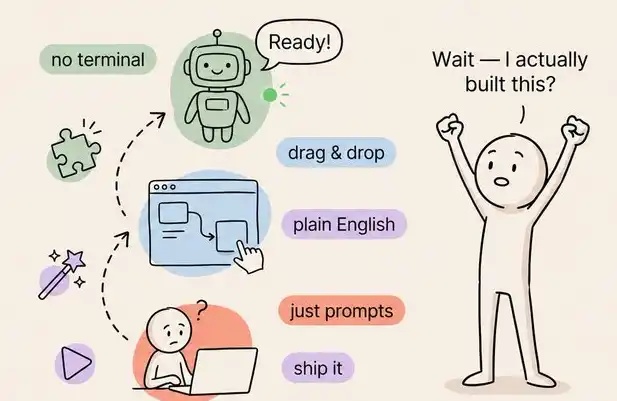
Simultaneously, I was going through another layer of onboarding. Ramp was fast, but AI is faster, and I had to learn both a new company and a new way of working with AI. I'm not an engineer, and the last time I opened a terminal was in a college computer class. This means I had to both catch up on organizational context and adapt to a new AI workflow, adding to the complexity.
What ultimately relieved me from this pressure was not completing a specific article, product launch, or workflow, but treating the "context" itself as a deliverable. As long as the context layer is built right, all subsequent work becomes more cost-effective.
So, I started building something truly scalable: a system that could help me catch up quickly like a great wiki aids researchers. By the third week, it was already drafting content based on my notes; by the eighth week, it was summarizing meetings I hadn't attended. Learning and catching up didn't disappear, but as the system continued to fill in, their costs started decreasing each day.
A personal version of this idea has actually been around for a while. Karpathy, former Head of AI at Tesla and one of OpenAI's founding members, wrote an article in April describing what he called a "personal LLM knowledge repository": a folder holding raw inputs including papers, articles, transcriptions, and personal notes; an LLM generating a wiki on top of these materials; and using an editor like Obsidian as the frontend. When the collection grew to about 100 articles, the LLM could answer complex questions around the personal corpus without the need for advanced search techniques.
His judgment is: There is an opportunity here to create a truly outstanding new product, rather than a bunch of makeshift scripts.
The personal version is already here today. But the corporate version is not. That is precisely the problem.
Broadly speaking, in the first 100 days of my tenure, what I built is such a system. They are not yet sophisticated, but together they form the "connective tissue" within the organization.
At the core is an Obsidian vault, accessed and written to by Claude. Meeting transcriptions I've been involved in, documents, public opinions, and personal notes all flow into this knowledge base. When I ask, "What did Geoff and I decide about the homepage three weeks ago," it looks to this vault for answers rather than relying on the model's own generalized memory.
To continue feeding this vault, Granola automatically records every meeting and archives transcripts overnight. So, the meeting I missed on Monday is queryable by Wednesday. To keep others in the company up to speed, I opt for working in public—most of what I'm building shows up first in #team-pmm or relevant project release channels before making its way into Notion docs. The building process itself acts as a sync mechanism.
On top of this vault, there is also a small naming skills library that agents can invoke on demand. One skill can generate an agenda based on my last four meetings with someone; another skill can scan a week of product updates in Slack and turn them into article topics. Each skill is about 200 lines of markdown, replacing a class of work that used to require manual completion.
Additionally, I built a dynamic product roadmap on Ramp's internal app platform. It reads from the same contextual layer, so it does not go stale, as it was never a static document from the start. There's also a morning digest sent to my Slack DMs at 8 a.m. daily: what launched yesterday, where things got stuck, what needs my response. These are tidied up while I'm asleep.
Individually, none of these things is particularly impressive. But together, they provide a workable answer: What if a company also had the kind of wiki Karpathy described? What would it look like?
You can call it a wiki, a graph, a contextual layer, or a company brain. The name is not important; the function is. It must be able to absorb all the signals the company is already producing: meetings, Slack discussions, documents, code, transcripts, customer calls, and key decisions, and it must remain continually updated without relying on manual upkeep. It must also be the first thing every new employee, every new agent reads before they begin.
If there's a new employee starting tomorrow, what should be their Day 1 read? If the answer is truly a Notion document from 2024 plus a now-dead Confluence link, it’s essentially handing them the baton from a standstill.
From Single-Point Tools to Company Brain: The True Gap in AI
Today, the primary way AI enters an enterprise still relies on forward-deployed engineers. Whether it's OpenAI, Anthropic, or large consulting firms, they choose to build specific workflows atop models.
These jobs are real and valuable. But they are still in the "chatbot era of enterprise AI": narrow tools wrapped around specific tasks, individually useful but not plugged into a system that can provide ongoing compound interest.
The true "company brain" has yet to emerge. The customer service agent and HR onboarding agent may have been built in different months by different teams. They do not know what the last all-hands decided, how the company understands its market, or what judgments the head of sales made at the last management offsite. Each agent is just a task-specific chatbot, but they don't share the same brain.
This is the current biggest gap. And outside the lab, there are hardly any building products around this issue.
If you're assembling a team or founding a company in 2026, the sequence of operations is already different from 2022. Write the context document first, then install the tools. Document every meeting. Build the wiki before the dashboard. Deliver skills, not slides. Have the new employee read the wiki on Day 1 and start contributing to it on Day 2. Hire and promote those who keep the "company brain" running continuously, and also reuse agents who truly read from the company brain.
Context is not a side project. It is the infrastructure that makes all AI investments truly pay off.
I am currently at Ramp building a part of this: a wiki, a skill library, apps that read from the same context layer, and organizational mechanisms for continuously feeding it. It's still small and early. If you’re also trying to build an enterprise-grade version elsewhere, I'd love to exchange notes. Two brains in one room are more useful than one trusted brain.
Back to the relay race. The true win condition is not the cleanest handoff or the fastest leg, but both happening simultaneously within the same 20 meters.
A new employee plugs into the company brain and then starts sprinting. A new agent plugs into the company brain and then starts working. A new customer plugs into the company brain and is in an operational state from day one.
When the word "ramp-up" no longer makes sense, we know we've done it right.
Welcome to join the official BlockBeats community:
Telegram Subscription Group: https://t.me/theblockbeats
Telegram Discussion Group: https://t.me/BlockBeats_App
Official Twitter Account: https://twitter.com/BlockBeatsAsia