Energy Crisis Is More Severe Than You Think
Original Title: The Energy Crisis Is Worse Than You Think
Original Author: Liberty's Lens
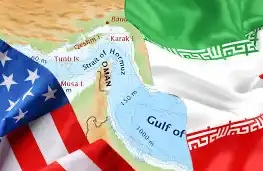
Editor's Note: The Strait of Hormuz is not just a regular waterway; it is one of the most critical chokepoints in the global energy system. It carries approximately 20% of the world's daily oil supply and about 20% of liquefied natural gas transport. If it is blocked for an extended period, the impact will not only be felt in oil price fluctuations but will also transmit to shipping, insurance, industrial production, food prices, and even global economic growth.
The key point of this article is: the strait does not need to be completely "closed off." As long as risk perception rises, insurance is withdrawn, and shipowners stop transiting, a "partial closure" is enough to cause a significant supply disruption. While military forces may be able to escort a few vessels, they cannot immediately restore market confidence, insurance coverage, and the commercial decision-making chain.
If the conflict escalates further and affects the energy infrastructure in the Gulf region, the world may face an energy shock more severe than the 1970s oil crisis. The real issue is not just whether the strait can reopen but whether the global energy market can still trust that it is secure enough.
Below is the original article:

The current White House is trying to make people believe that the Strait of Hormuz can be reopened through a "simple military action" or that it will "reopen on its own" at some unspecified time. However, as of now, the Strait of Hormuz remains largely closed.
If this situation persists, especially if the war escalates further, Iran destroys more energy infrastructure in the region, and the U.S. and Israel take similar actions inside Iran, then we may be heading towards an energy crisis unseen since the 1970s and possibly even more severe.
The key point is that the Strait of Hormuz does not need to be "completely sealed off" in a literal sense for the global supply chain to stagnate. The modern energy system is not just pipelines and oil tankers; it is a chain of commercial decisions: shipping schedules, insurance coverage, port access, inventory capacity.
When enough of these links fail, a "partial closure" has the same practical effect as a complete closure.
Impact Scale
The Strait of Hormuz transports about 20 million barrels of oil per day, while the world's daily oil demand is about 100 million barrels, meaning this strait carries approximately 20% of the world's oil supply. It also handles about 20% of global liquefied natural gas transport. And now, there are hardly any vessels related to these activities able to pass through smoothly.
It is indeed the most critical chokepoint in the global energy sector, but its impact goes far beyond energy. A large amount of petrochemical products, aluminum, and fertilizer also pass through this strait, directly affecting industrial output, food production, and food prices. Even when considering only oil and gas, there is no chokepoint more important globally than the Strait of Hormuz.
Since the 1970s, the Gulf region has been at the core of the global energy market. Iraq, Saudi Arabia, the UAE, and Iran are all major oil-producing countries. Most of this oil has to pass through oil tankers, traversing this narrow channel to enter the global market. The Strait of Hormuz is a narrow corridor winding along the Iranian coastline.
Due to such geographic conditions, disrupting shipping does not require a high cost. A few drones or a small boat carrying explosives rushing towards an oil tanker are enough to create risk. You don't need to launch a large-scale, long-term military operation. Before this round of conflict, about 100 tankers passed through the Strait of Hormuz every day. Just one or two credible attacks could lead insurance companies to withdraw coverage, and shipping operators would deem the risk unacceptable.
Of course, there are some alternative routes. Saudi Arabia can transport a limited amount of oil through pipelines. Somewhat ironically, Iranian oil is still circulating. Strategic oil reserves have been tapped into. Sanctions on Russia and Iran have also been somewhat relaxed, and there is significant debate on whether this choice is wise.
However, even considering all these factors, analysts still estimate that disruption could affect the supply of around 10 million barrels of oil per day, and possibly even more. This is equivalent to over 10% of global supply.
By comparison, the 1973 Arab oil embargo caused long lines at gas stations, rationing, and severe inflation, affecting about 6% to 7% of global supply at that time. Whether measured by absolute scale or as a percentage of global demand, the supply disruption resulting from the closure of the Strait of Hormuz would be significantly greater than any shock the modern global economy has experienced.
Why Risk Perception Is a Key Driver
Or, why can't the navy simply order the "opening" of the strait.
Creating risk perception does not require much action, and in global shipping, risk perception is almost everything.
You don't need to completely block the Strait of Hormuz, nor stop every ship. You only need to hit a tanker every few days, or every one or two weeks, or even just create a credible threat, to make insurance companies and shipping companies deem the risk unacceptable.
With so many vessels crossing this strait, it is impossible to protect them all. Considering modern drone technology and small high-speed boats, creating the impression that "any ship could be attacked at any moment" is not particularly difficult. Once this impression takes hold, the entire route will begin to appear insecure.
You may be able to protect a few warships, even escort a small number of merchant ships through under tight security. But protecting dozens of oil tankers, safeguarding the daily flow of global energy transportation, is a completely different issue.
And once insurance coverage is withdrawn, the market essentially self-closes.
Oil tankers carry highly valuable cargo. Operators will not allow them to enter a high-risk area without insurance, and insurance companies will not cover an open geopolitical escalation. At that point, the decision is no longer a political or military issue, but a business issue.
Therefore, even if naval escort can allow some vessels to pass, it cannot solve the real jam. The Strait of Hormuz is not closed due to a dramatic blockade, but because insurance companies have withdrawn coverage, operators refuse to take on the risk, and global business activities come to a standstill.
In other words, this is not just a military issue. It is an insurance issue, a risk management issue, and ultimately a business issue. And the speed of response of these systems is much faster than fleet deployment.
Why It May Initially Appear Unusually Calm
The reason the current situation may seem oddly calm is that the disturbance initially manifests as "absence" rather than a dramatic scene. Oil tankers will not be burning in front of the cameras; they will simply stop moving. Production will be reduced in advance, and stockpiles will cushion the initial impact.
Currently, a significant amount of energy infrastructure in the region remains physically intact, which is crucial. If the strait can quickly reopen and the infrastructure is not severely damaged, energy flow may return to normal within weeks or months. But as risk awareness solidifies and damages accumulate, this window is rapidly narrowing.
How the Impact Accumulates Over Time
The closure of the Strait of Hormuz is the most terrifying nightmare scenario for the global energy market. If you were to tell people that 20 million barrels of oil per day, most of the supply transported through the strait, will be disrupted, many might expect oil prices to rise to $150 or even $200 per barrel.
However, it is worth noting that oil prices are still only slightly above $100. From a historical perspective, this is already high but not extremely high.
Analysts believe there are several reasons for this.
One of them is that the market generally believes that this crisis may end with leaders from all sides taking a step back, declaring the mission accomplished, and finding a way out. In other words, the market expects the political system not to tolerate a prolonged, debilitating crisis.
However, if the situation persists, energy prices may still be far from their peak.
What you see in the newspaper as the oil price is essentially the price set by traders every day based on their expectations of future trends. But at some point, physical reality will ultimately take the upper hand.
And we have already begun to see early signs of this disconnect. For example, the prices of jet fuel and heating oil are already significantly higher than they usually should be when the benchmark oil price is around $100 per barrel.
This indicates that physical constraints are starting to matter.
Another reason the market initially appears "calm" is the factor of time. Actual supply disruptions in certain markets take time to materialize.
If an oil tanker loads crude oil in Iraq or Saudi Arabia, it may take two weeks to reach its destination. We are still consuming oil that was loaded before the crisis began.
So currently, the market is depleting inventories, relying on oil that is already in transit. But as time goes on, the physical shortage will become more pronounced and severe.
By then, the lag between market expectations and physical reality will be erased, and prices may fluctuate sharply.
Demand Destruction and Economic Recession: Potential Impacts
As the physical reality of the supply disruptions catches up with market expectations, prices will have to rise to a level high enough to truly destroy demand. And this is not easy. It requires large-scale behavioral changes.
If the Strait of Hormuz remains closed in the coming weeks, global oil supply will actually decrease by about 10 million barrels per day, and prices will have no choice but to rise to a level that will enable global consumption to decrease by a similar amount. It is difficult to determine precisely what price level can achieve this, but it will certainly be far higher than today's oil price.
Demand destruction is not a theoretical concept. It means that consumers and businesses are forced to find alternatives and stop buying gasoline or burning fuel.
Consumers will drive less. Travel will be postponed or canceled. Airlines will begin adjusting flight schedules, suspending low-profit routes that are no longer financially viable under high oil prices.
The industrial sector will follow the same logic. Factories will reduce shifts or even shut down completely. Energy-intensive facilities will halt operations because the cost of fuel has made their output unprofitable.
In regions where high oil prices are particularly burdensome, we have already seen an early version of this reaction. Several countries in Southeast Asia, including Thailand, Indonesia, and Malaysia, have announced emergency measures such as mandatory work-from-home days, school closures, and other policies explicitly aimed at reducing fuel consumption.
So the question becomes: How high does the oil price need to rise for the global economy to reduce daily oil consumption by about 10 million barrels?
The last time the world faced a similar-scale shock was the 1973 Arab oil embargo. At that time, there was more room for easy adjustments, more efficiency improvements, and substitute solutions that could be quickly implemented. However, over the past few decades, many of these adjustments have already been made.
Today, oil is mainly used in areas where short-term substitute solutions are limited. In the long term, alternative pathways certainly exist, such as electric vehicles, electrification of industrial processes, and redesigning cities. But in the short term, system flexibility is very scarce. The remaining tool is only one, and it is very blunt: compressing economic activity.
People switch to public transportation where possible. Companies scale back operations. Some economic output will simply disappear.
As demonstrated by economist James Hamilton, almost every major oil shock in the 20th century was followed by an economic recession. Whether the same result will occur here depends on how high the oil price ultimately rises. But if the oil price must rise enough to eliminate global daily demand for about 10 million barrels of oil, then yes, this is indeed a shock big enough to push the global economy into a recession.
What Else Can Be Done, If Anything
There is no single policy tool in the global policy toolbox that is sufficient to offset a daily loss of 10 to 15 million barrels of oil supply.
If the Strait of Hormuz remains closed, it would be impossible to prevent a sharp increase in oil prices. No combination of reserve releases, waivers, or short-term remedies can offset such a supply disruption of this magnitude.
Policymakers have already deployed some of the most powerful tools. The International Energy Agency announced the largest-ever coordinated release of strategic oil reserves, approximately 400 million barrels.
An interesting observation is that on the day the reserve release was announced, oil prices rose instead of falling. This is not because the reserves are meaningless, but because the market understands the scale mismatch. Relative to the size of the supply disruption, this oil is still far from sufficient.
In such a crisis, what truly matters is not the total number of barrels in the reserves, but how many barrels can be delivered to the market each day. In a scenario of losing 10 to 15 million barrels of supply every day, strategic reserves can at most substitute 2 to 3 million barrels per day and only for a limited time.
In addition, some familiar ideas are starting to emerge, almost ubiquitous in every recent energy crisis. These include exemptions from the Jones Act to make fuel transport between U.S. ports easier; relaxing environmental or fuel standards; and making some incremental adjustments to refinery regulations.
These measures may marginally lower gas station prices. However, in the face of such a massive supply disruption, none of them is enough to stabilize prices.
Therefore, if the Strait of Hormuz remains closed, especially if the conflict escalates to sustained physical damage to the region's energy infrastructure, the outcome is not blurry. You would no longer be facing a temporary shock, nor just a market fluctuation.
You would be facing a full-blown energy crisis. And there are no policy shortcuts to make it disappear.
Why the Situation May Not Immediately Normalize
The key is that energy markets do not just react to the "start" or "ceasefire" of a war. They also react to risk perception and physical damage, both of which could persist for months or even years after the fighting ends.
One possible outcome is that the risk perception itself never fully dissipates. Even if the U.S. declares an end to the action, Iran and Israel still have a say. Shipping will only resume when insurers, operators, and governments all believe that passage is indeed safe.
This means that even without further attacks, lingering uncertainty could effectively keep the Strait of Hormuz closed. Tankers will not return because of a speech or a ceasefire statement. They will only come back when the risk premium disappears. And that requires confidence, not declarations.
But the greater danger lies in physical damage.
If major export hubs or processing facilities are attacked, retaliation against other critical energy facilities is highly likely. At that point, the timeline no longer moves in weeks but in years.
We have seen similar situations before. In 2019, Houthi rebels attacked the Saudi Arabian Abqaiq oil processing facility, briefly halting 5.7 million barrels per day of production and sending oil prices soaring at a record pace. In that incident, the physical damage was limited, and Saudi Arabia rapidly restored output. But it showed how fragile the entire system is and how much worse the consequences could have been.
If the attacks in the current conflict escalate further, it is not hard to imagine another several million barrels per day offline, supply that is not currently lost.
The Strait of Hormuz does have some alternative transit routes, but these routes are limited in capacity and equally vulnerable. Before the crisis, Saudi Arabia exported around 7 million barrels of oil per day. Now, it can export approximately 4 to 5 million barrels per day through pipelines bypassing the Strait of Hormuz, heading to Red Sea ports, especially Yanbu.
However, these routes are not immune to disruption. In recent years, the Houthi rebels have demonstrated that Red Sea shipping can also be effectively targeted. In this latest round of conflict, we have not yet seen sustained attacks in that area, but given the Houthi rebels' links to Iran, the risk is clearly rising.
Then there is Qatar. Following a recent attack on one of its liquefied natural gas facilities, Qatari authorities have stated that even if only about 20% of the damage is repaired, it could still take three to five years. Perhaps it will ultimately be closer to two to three years. Regardless, the timeframe is being counted in years, not weeks or months.
This is the most crucial distinction.
If the war were to end swiftly and cleanly, with most infrastructure intact, energy flows could potentially recover relatively quickly. However, if key facilities across the region are damaged in an escalating cycle of retaliation, then high prices and supply constraints could persist long after the guns fall silent.
In such a scenario, the belief that a ceasefire alone will swiftly restore the energy market to normalcy is a reassuring illusion, but also a dangerous one. Unfortunately, this seems to be the prevailing illusion behind the current strategy.
Welcome to join the official BlockBeats community:
Telegram Subscription Group: https://t.me/theblockbeats
Telegram Discussion Group: https://t.me/BlockBeats_App
Official Twitter Account: https://twitter.com/BlockBeatsAsia
 Related Articles