Fueling the Perp DEX Feud: Solana Foundation's Arrogance and Prejudice

「On-chain Nasdaq」
As we all know, Solana has always had a dream of PerpDEX.
When founder Toly envisioned the Solana architecture in 2017, the goal was to create a blockchain that was "fast enough, cheap enough, fast enough to be able to run a usable order book on it."
Now, 9 years later, Solana's most successful PerpDEX to date, Drift, was hacked and $285 million was stolen, leading to its downfall.
The "sudden death" of Drift did not shake Solana's conviction. In the Foundation's narrative, Solana's endgame is ICM, the "On-chain Capital Market" — bringing stocks, commodities, derivatives all onto the chain, creating a permissionless Nasdaq.
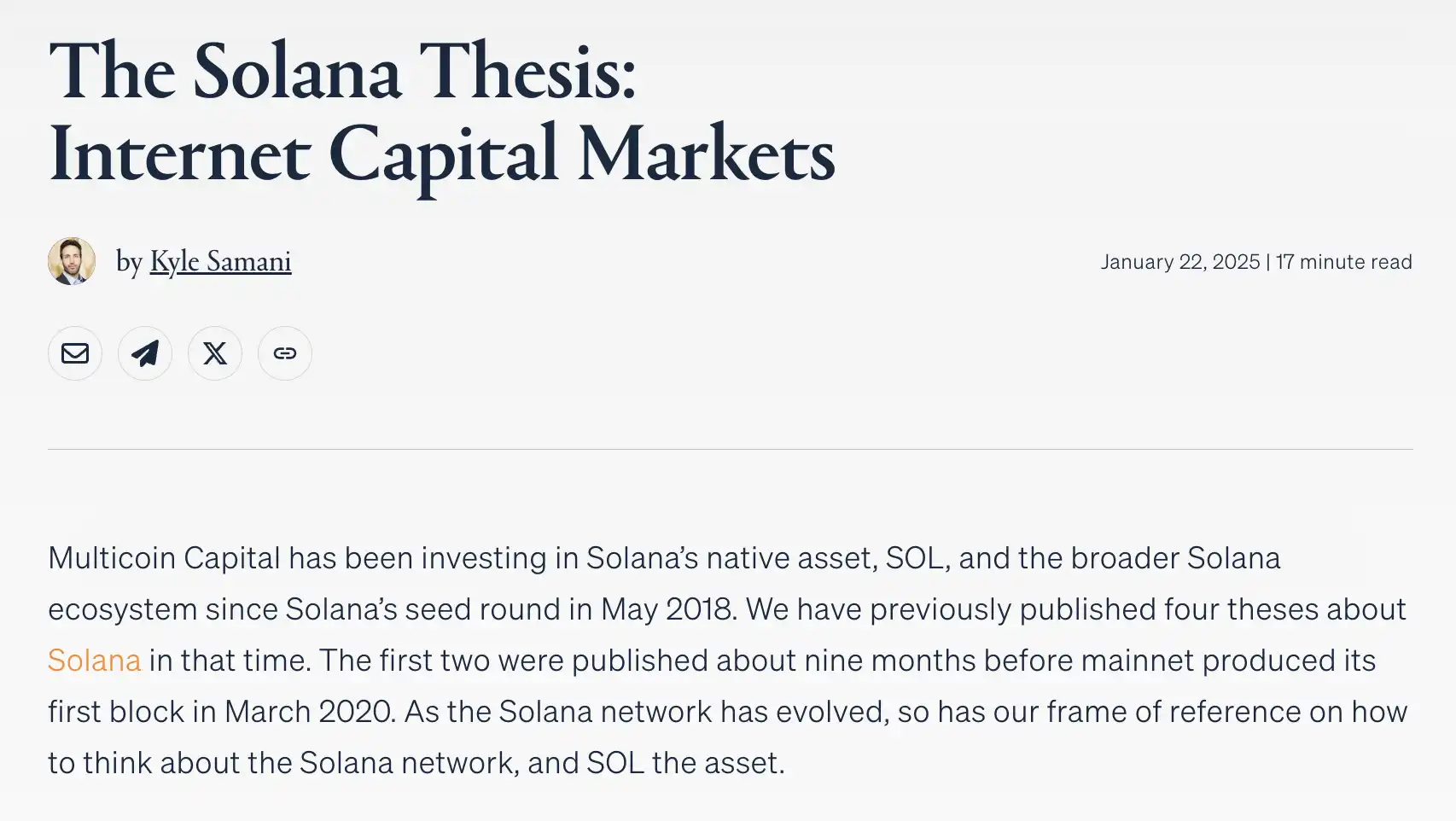
Previous versions of Solana were actually a "slow" public chain that couldn't keep up with this narrative. However, just last month, Solana's Alpenglow consensus layer upgrade entered community validator testing. This new consensus mechanism aims to compress Solana's transaction confirmation time from about 12.8 seconds to around 150 milliseconds, approaching the matching speed of traditional stock exchanges. The technical barriers in the way are being removed one by one.
Solana purchased the @perps account
The Foundation is more eager than ever for a "flagship" PerpDEX.
Brainchild "Phoenix"
This PerpDEX is called Phoenix, and the development team is Ellipsis Labs.
On Solana, Ellipsis Labs carries weight. Led by Jarry Xiao and Eugene Chen, the team launched the proprietary AMM SolFi at the end of 2024, a trading venue that has no frontend, does not accept retail LPs, and relies solely on market makers quoting with their own funds. The trading volume on SolFi skyrocketed after its launch, at one point accounting for 60% of all AMM trading volume on Solana.
Phoenix is the product of this team taking the same expertise to contract trading. According to Ellipsis Labs themselves, market makers can update quotes at a lower cost, thus maintaining tighter spreads, deeper order books, and traders on one side also avoid gas costs.

A fully on-chain order book perpetual contract that runs entirely on the Solana mainnet without relying on any off-chain components, something that had not been achieved before Phoenix.
The Foundation certainly thinks so too. Over the past two weeks, toly and several Foundation members have repeatedly forwarded and commented on Phoenix, with the density of promotion being visible to the naked eye.
However, the official team's promotion has sparked a backlash from the community.
Other Solana-based PerpDEXs like Pacifica, Bulk, and Jupiter are doing the same thing, but have never been mentioned by the official team.
Constance, the founder of Pacifica, expressed restraint, stating, "The team chose Solana for 2025, has not received any funding from the Foundation, has not raised money from investors, and just wants to build a good product and let the market decide." She said that there are often questions about whether Pacifica's growth is due to support from the Foundation, and the answer is no. In her view, this tribalism, this approach that forces developers to cater to specific needs, will burn down the existing bridge before more bridges are built."
kdotcrypto, co-founder of Bulk, expressed regret over the Foundation's favoritism, saying, "They will promote what they believe is most beneficial to themselves. Pushing others away just because one team meets certain criteria turns friends into enemies."
Are Interests Aligned? Like This
The Foundation's logic is actually self-consistent.
toly's core assertion is that he prefers protocols that run entirely on-chain and can interact with other smart contracts, because only these protocols will bring income to Solana's validators. PerpDEXs like Pacifica and Bulk that place order matching off-chain, no matter how much trading occurs, Solana itself does not receive a penny.
Max Resnick of Solana developer Anza directly pointed out, "Pacifica's relationship with Solana is like Hyperliquid's relationship with Arbitrum; even if Pacifica does flip Hyperliquid, Solana will not benefit at all."
Multicoin, a shareholder of Solana, also acknowledges this kind of "brand alignment" behavior: "The chain can be neutral, the Foundation does not have to be neutral, and it is only natural to concentrate limited resources on the teams they are most optimistic about."
The basic idea behind "Solana Club" is as follows. A public chain is like a well-located shopping mall that earns rent and a percentage of the turnover. A protocol running entirely on the chain is like a tenant in the mall renting a space and paying a turnover-based fee. PerpDEX, with its matching off-chain, is more like a company that only puts the mall's address on its business card while conducting its actual business elsewhere. Customers come in under the mall's name, but none of the money stays in the mall.
kdotcrypto and Pacifica do not buy into this analogy.
Bulk's rebuttal is that its storefront is actually inside the mall. Bulk is operated by Solana validators, sharing the same set of validators as the mainnet, and 12.5% of the exchange's revenue goes to Solana validators. kdotcrypto has calculated that the value brought in by this revenue share is much greater than that of one hundred thousand on-chain transactions.
Pacifica's Constance points out that users need to cross-chain their funds to Solana in order to use Pacifica, which in itself creates a real network effect. Pacifica has also opened SOL as the platform's first and only non-stablecoin collateral asset.
toly acknowledges that there is overlap between Bulk and validators, but this overlap is merely "work done by the same group of people," not "the same security system."
On the mainnet, SOL stakers can vote to activate a feature switch to forcefully change the fee rules, but they cannot do so on Bulk because Bulk's revenue share is determined by the operator running it, and the SOL held by stakers does not influence it. While both systems share the same set of operators, saving costs does not mean they are tied together. toly likens this relationship to the overlap between Wormhole's cross-chain bridge guardians and Solana validators: they may look like the same group of people, but in reality, they each have their own jurisdiction.
Regarding validator income, toly mentions that the mainnet can generate income from high-frequency transactions by relying on burning base fees, even if only a tiny amount is burned per transaction. Under a load of one hundred thousand transactions per second, this would still amount to tens of billions of dollars annually.
"You Are Not Our Brother"
Solana has the right to make its own choices.
The foundation is using its limited resources to bet on the architecture it believes is correct, and this is its prerogative. Blockchain neutrality does not mean the foundation must equally support every team; allocating resources to the direction it believes in the most is beyond reproach. In this regard, toly and Tushar are not wrong.
However, the arrogance displayed by the Solana team is another story.
In a tweet by toly, among other things, the rest of the Solana PerpDEX team is referred to as enemies to be "forked into oblivion." Foundation members proceeded to blindly retweet a post claiming that Phoenix is "6x cheaper" than Hyperliquid without fact-checking.
This "6x cheaper" claim is only valid for a carefully selected trading pair, which happens to be the only gold RWA contract on Hyperliquid that has opted out of the growth model and thus bears the full trading fee. When compared to a regular crypto contract on Hyperliquid, Phoenix is only about 1.23x cheaper on maker fees and 2.88x cheaper on taker fees. Taking into account the self-rebate discount commonly used by traders, the gap narrows even further.
In contrast, Hyperliquid is actually cheaper when compared to most contracts using the growth model like HIP-3.
A harsh reality check came from high-volume trader WhiteWhale regarding Phoenix's performance: mandatory desktop usage, liquidity depth visible only 1/15th of Hyperliquid's, lack of advanced order types, and requiring an invite code to access.
Perhaps Phoenix is not bad, just premature.
A product not yet ready to handle the traffic was pushed into the spotlight by the foundation's highest-volume promotion, damaging not Hyperliquid, but Phoenix's own reputation.
PUMP is not part of the Solana core team but still stands out on Solana. Despite not receiving a single penny from the foundation, Pacifica has become the highest-volume PerpDEX on Solana. Data revealed by real users casting their votes with their feet is something the foundation's marketing budget cannot buy.
Traders will not blindly trust the foundation's endorsements; the victor is the product with the best user experience.
Welcome to join the official BlockBeats community:
Telegram Subscription Group: https://t.me/theblockbeats
Telegram Discussion Group: https://t.me/BlockBeats_App
Official Twitter Account: https://twitter.com/BlockBeatsAsia