Regulators Cancel Meta's Acquisition of Manus Deal, Foreign "Buy Buy Buy" Not Acceptable in China

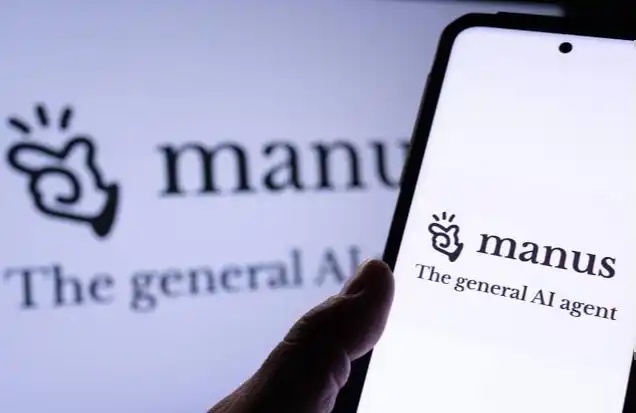
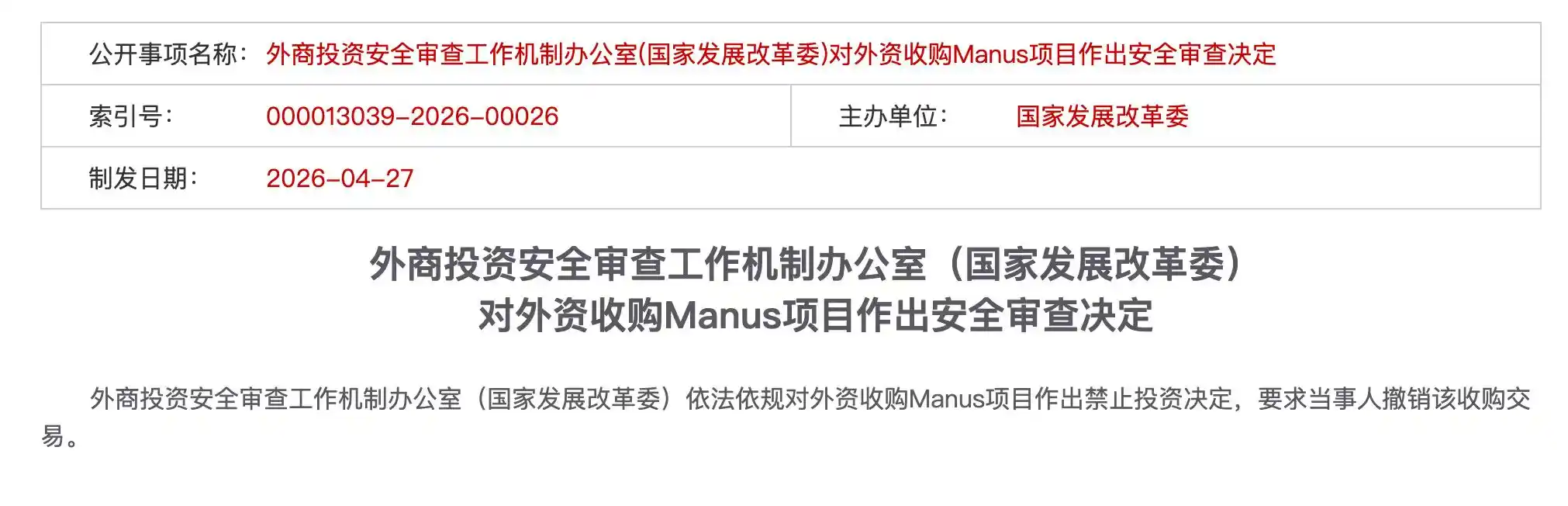
The domestic Agent Manus, worth billions of dollars, acquired by Meta, has been halted by regulators today.
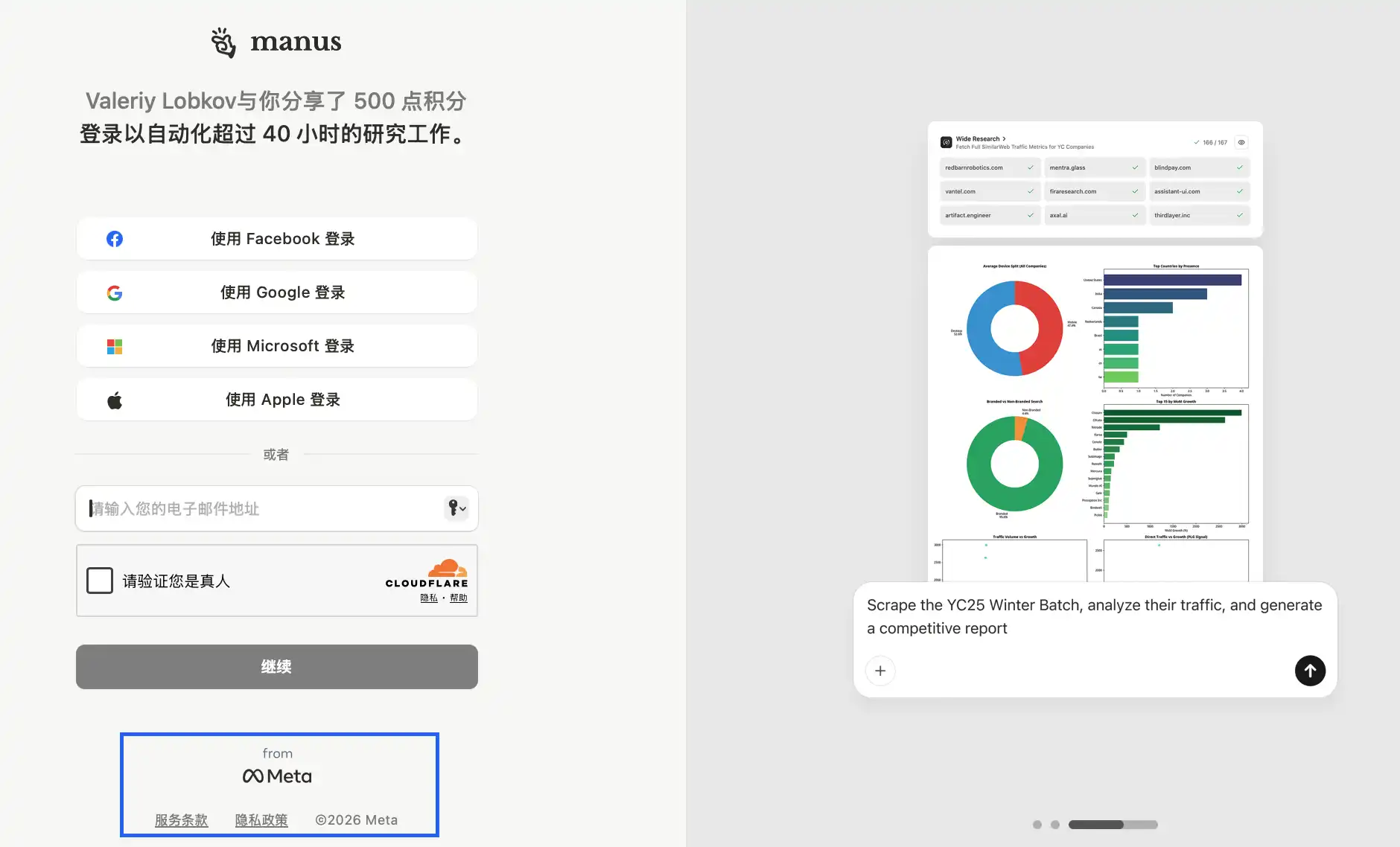
Even though Manus's logo has been on Meta's products for several months, even though Meta has already paid the acquisition amount, even though Zuckerberg was willing to spend billions of dollars.
But today, Meta's acquisition of Manus has been halted by regulatory demands. This transaction, which started to shake up and attract the attention of the global Chinese AI community at the end of December 2025, has ultimately been "terminated."
The "Buy, Buy, Buy" Strategy of the Zuckerbergs Doesn't Work in China
Zuckerberg's anxiety actually began before Manus.
On April 5, 2025, Meta released LLaMA 4. Within 48 hours, developers on Reddit issued their verdict: for tasks like coding and reasoning, DeepSeek and Qwen were superior, and the gap was not small. A month later, the flagship model Behemoth was indefinitely shelved due to underperforming benchmarks. A few months later, it was discovered that DeepSeek R1 reused LLaMA's architecture. Meta's open-source asset, created with real money, was taken for free by a Chinese competitor and improved upon.
Meta lost its position as the "big boss" in the open-source AI field starting from LLaMA 4.
After losing the open-source throne, Meta decided to go the closed-source route. The next-generation flagship model, codenamed Avocado, led by Alexandr Wang's TBD Lab, is set to be released in the first quarter of 2026. However, according to CNBC, Avocado has been struggling with performance testing issues during the training phase, and there are doubts internally about its timely delivery. There were rumors in the industry that Meta might seek Google's Gemini solution to save the situation.
If the model doesn't work, buy it. This has been Meta's consistent strategy over the past two years.
So, in the past two years, we have seen Meta's remarkable density and scale of investment in AI. In 2025, Zuckerberg personally intervened and acquired a 49% stake in Scale AI for $14.3 billion, also luring founder Alexandr Wang to become the Chief AI Officer. The same year, Meta established Meta Superintelligence Labs, an obviously research organization targeting OpenAI and Anthropic, with signing bonuses reportedly in the range of hundreds of millions, with extreme cases rumored to touch the billion-dollar mark.
Next is Manus by the end of December 2025, at $20 billion, the third-largest acquisition behind only WhatsApp and Scale AI.
Meta's 2026 capital expenditure budget has been raised from $115 billion to $135 billion, up from $72 billion in 2025.
Behind these numbers lies a simple logic: what Meta's engineers can't build, they buy with money.
Yann LeCun has left, the Chief Scientist of Meta AI for a decade, admitted in a January 2026 exit interview that LLaMA 4 was a failure. The FAIR lab and infrastructure team were laid off by 600 people in October 2025, as Meta made room for the new direction. Chief Product Officer Chris Cox was also reassigned from the AI business.
In their place are Alexandr Wang and his team brought over from Scale AI, along with a group of researchers poached from OpenAI and Google with seven-figure or even eight-figure signing bonuses.
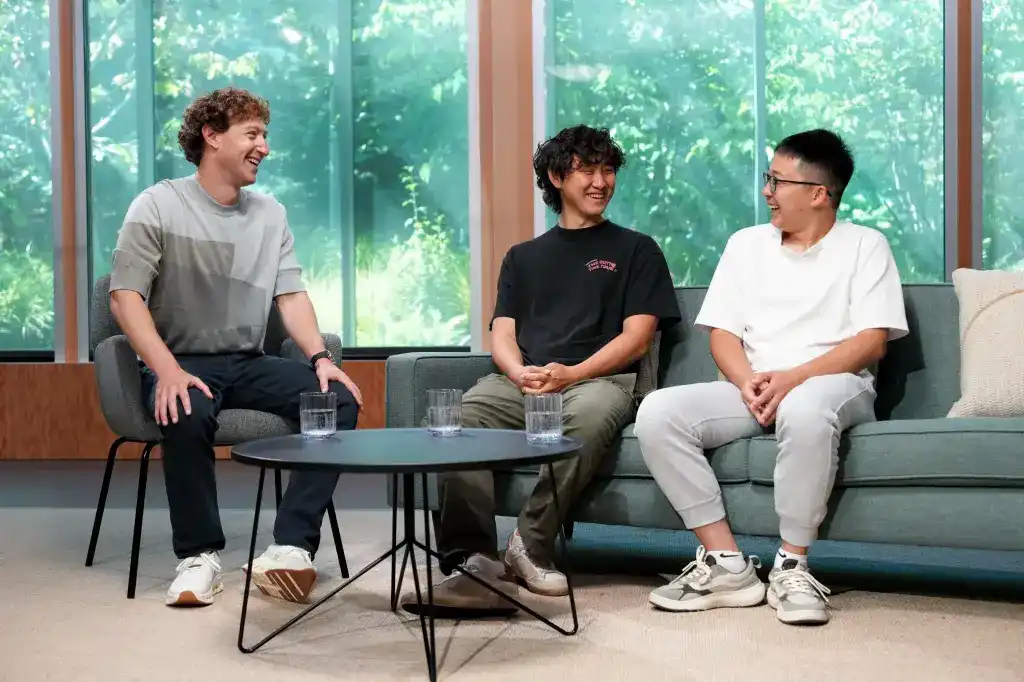
Zuckerberg (left) with Scale AI co-founder Alexander Wang (center) and Meta MSL Chief Scientist Zhao Shengjia (right)
In 2024, Meta also bought a batch of smaller targets: Modelbook, various agent and toolchain companies, each an extension of the same logic: capabilities they can't excel at themselves, they exchange for money.
This playbook has been a surefire strategy in Silicon Valley over the past decade. Instagram, WhatsApp, Oculus, Scale AI — Zuckerberg has become accustomed to the idea that "as long as the check is big enough, there is nothing you can't buy."
In Meta's January 2026 earnings call, Zuckerberg shared a story about personal superintelligence. The core of this concept is not how powerful the model itself is, but whether the model can "do things for you." It can help you book flights, compare prices, manage your schedule, and even make shopping decisions directly on Instagram and WhatsApp.
This is why Manus is so important to him.
Meta isn't lacking in models. The Llama series has iterated to the fourth generation, and FAIR Lab has twenty years of technical accumulation. What Meta lacks is the application-layer agent capability, a "digital employee" that can truly reassure users to delegate tasks. By mid-2025, Manus had achieved this to the extent that even Benchmark, a top-tier venture fund, was willing to lead the investment.
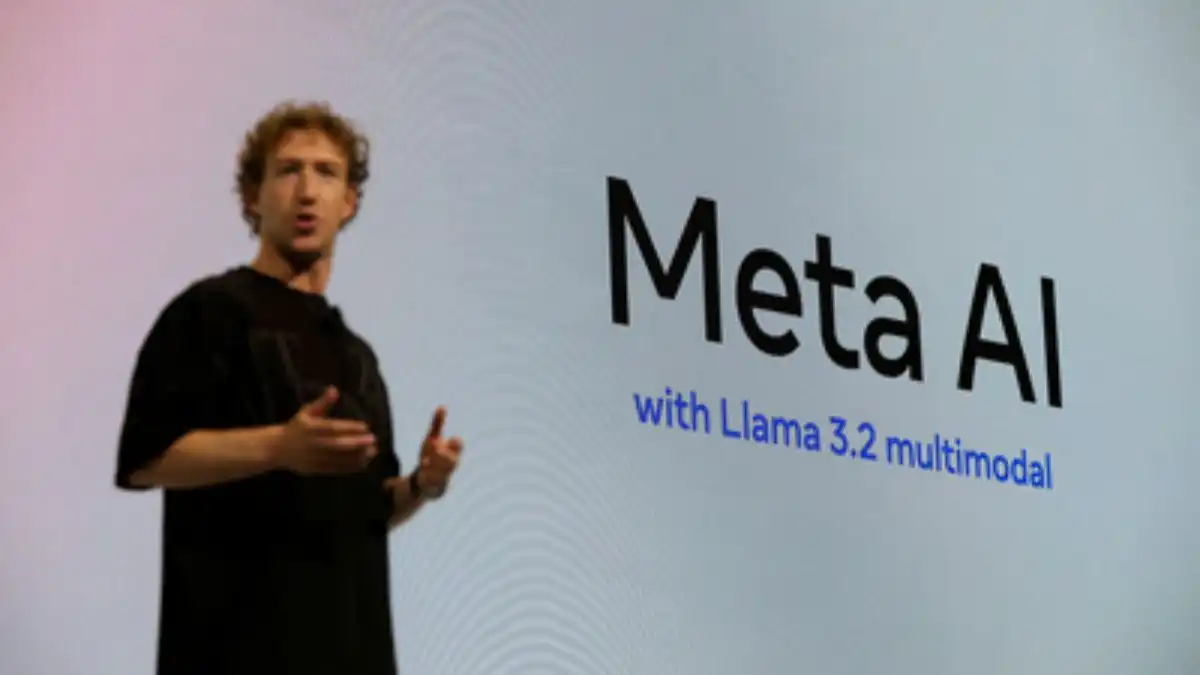
For Zuckerberg, buying Manus is essentially buying "time."
Developing an in-house agent platform takes 18 to 24 months, while Manus has already been running in this race for two years. Meta's financial report is expected to "begin shipping in 2026," a timetable set according to Manus's integration pace.
Meta's agent strategy immediately faces a choice: either continue to integrate bravely, bear possible secondary sanctions, and face complete blocking in the Chinese market in the future; or strategically retreat, accept the pieces being taken away, and retell the personal superintelligence story in 2026.
Whichever option is chosen, Zuckerberg needs to rethink.
As for the venture funds, their accounts are even more difficult to tally. Benchmark, Sequoia Capital, these funds that bet on "Chinese AI agents going global" in the second half of 2025, are now facing a more systemic issue: this path to global expansion may be closed starting today.
Subsequent reports from Bloomberg stated that regulators have required companies like Dark Moon, LeapStar, and others to reject U.S. capital in financing rounds, and ByteDance has also been required not to introduce new U.S. capital through old stock transfers. This is not a single-point intervention but a complete redraw of the entire industrial channel of "Chinese AI companies connecting with U.S. dollars and selling to American buyers."
For Zuckerberg, Manus is not just a $2 billion loss. It signifies that the talent acquisition path Silicon Valley has excelled in for a long time is now challenging to navigate in China.
How to Retract a $2 Billion Deal?
Regulatory rejections in cross-border mergers and acquisitions are not uncommon domestically or abroad.
A recent reference is Jupiter Systems. In February 2020, a Hong Kong-backed Chinese company, Suirui International, completed the full acquisition of this U.S. audiovisual equipment company. The transaction was closed, integration completed, and business as usual. It wasn't until July 2025, when Trump issued an executive order citing national security reasons, demanding the dismantling of this deal from five years ago. From closure to revocation order, five years and five months had passed.
Even more classic is ByteDance's Musical.ly. Acquired in 2017 and rebranded as TikTok, the app faced an executive order by Trump in 2020 to divest. ByteDance sued the U.S. government, dragging the lawsuit into Biden's term and even into Trump's second term. Eight years on, this matter has still not been resolved.
The lesson from these two cases is that once a revocation order is issued, the real trouble is just beginning.
Moreover, Manus's situation is even more awkward than these two. Jupiter Systems is a hardware company with tangible assets, making the concept of "selling it back" at least have a clear subject. The core of the TikTok dispute lies in user data and algorithms, which can be negotiated around "data localization" and "algorithm licensing."
But Manus is different. The code has been running on Meta's servers for four months. Employees have moved from Beijing, Shenzhen to Singapore and Menlo Park, with some already applying for U.S. H-1B visas. The product name Manus was mentioned by Zuckerberg himself during Meta's earnings call in February 2026, positioning it as a key piece of the "agentic commerce" strategy.
So how can this deal be unwound? How can the already transferred funds be refunded?
In theory, there are several paths. The first is for Meta to divest the entire Manus business to a non-U.S. buyer, with Meta bearing the loss. The question is, where can such a buyer be found? Chinese regulations prohibit U.S. ownership, so the buyer must be Chinese or non-U.S.; however, an asset that has been labeled as "Meta-owned" for four months and whose core team has already left the country, would Chinese investors dare to take it?
The second option is for Meta to shut down the Manus product line, strip, destroy, or archive the code modules integrated into Meta AI, terminate or reassign employee contracts. However, this would be tantamount to wasting $2 billion. Moreover, Meta has been telling investors the "Manus story" for a whole year, and a significant portion of the $115 billion to $135 billion capital expenditure budget for 2026 is based on the assumption of "Manus landing and monetization."
But regardless of the path Meta chooses, one fact remains unchanged: Manus is actually at a greater disadvantage.
The revocation order was directed at Meta, but the code and team have already moved. Throughout the first quarter of 2026, Manus's core engineers in Menlo Park were modifying Meta's agent architecture and embedding their methodologies into Meta's codebase. They have seen Meta's internal training data, model weights, and agent orchestration logic. These "seen things" cannot be rolled back.
Stepping back, even if Meta really spins off the Manus business and sells it to a non-U.S. buyer, the new buyer would not be getting the Manus of December 2025, but a Manus that has been integrated by Meta for four months and has already gone through a soul transfer.
Technical bridge is unidirectional. You can block transactions, you can claw back a check, you can take down code, but you can't make an engineer "forget" what they have learned in the past four months.
Regardless of how this transaction ultimately unfolds, the Manus team's bargaining power is much weaker than it was at the negotiating table in December 2025.
AI Team's Overseas Journey Comes to a Close
Now back to Manus's two founders, Xia Hong and Ji Yichao.
Every decision they made starting from last summer—emptying out domestic employees, shutting down Chinese social media, terminating cooperation with Alibaba, relocating headquarters to Singapore—each step seemed like the best choice at the time.
When the December 2025 transaction was announced, the capital flow between China and the U.S. AI was still in a gray area, with both sides testing each other's boundaries. Mark Zuckerberg personally flew to Singapore and made a $20 billion offer, and Liu Yuan, a partner at ZhenFund, used "so fast that I started to doubt if this was a fake offer" to describe the pace of the negotiation.
But the gray area quickly disappeared.
In January 2026, Chinese regulators began their review; in April, The Washington Post reported that MiroMind, a subsidiary of Shanda, was required to retain talent in the country. The same week, regulators directly issued a revocation order for the Manus transaction.
If the Manus transaction had been completed half a year earlier, with integration in place, it might have passed that critical window. Referring to the script of Musical.ly, even if it were reviewed later, there would have been several more years of operational facts and negotiation chips. If it had been delayed by another half year, this path would have been completely blocked, and the Manus team would have adjusted its strategy earlier or simply not proceeded with the sale.
They are not the first group of entrepreneurs to encounter such a "time fold." They follow the management team of Qualcomm, which was acquired by Broadcom in 2018 but ultimately rejected by Trump, and they follow Masayoshi Son, who watched ARM being sold to NVIDIA in 2020 only to be dismantled by regulators. They follow the story of Alex Holmes, who wanted to sell MoneyGram to Ant Group but was vetoed by CFIUS. The structure of each story is similar: the technical efforts are one thing, but standing between the forces of two superpowers is another.
In the folds of time, there is no perfect decision.
All we can do is to make the best decision possible at each specific moment. And then accept one fact: some costs are not due to the individual entrepreneur's ability, nor are they due to a business judgment error, but rather to larger structural forces that happened to materialize at that moment.
When Xiao Hong was 19 years old developing the Rasgueado input method, he probably didn't think that twenty years later, his most valuable asset would actually be his freedom. When Ji Yichao was seen by Sequoia Capital as the "Chinese Steve Jobs" in the AI field, he probably also didn't expect to become "the heaviest collateral in the Sino-U.S. technological Cold War" in this way.
How this $20 billion acquisition case will conclude, no one can say for sure right now. The most optimistic prediction is that it will be prolonged, discussed extensively, and finally settled with a compromise solution that everyone is dissatisfied with but can accept. Meta may have to pay a sum of money, the Manus team may regain their freedom under certain conditions, and the code may need to undergo some level of isolation.
It is said that the times create heroes. A founder's judgment of the times is the most difficult aspect of entrepreneurship.
Technology, product, business judgment, negotiation skills—all these are variables that entrepreneurs can work hard on. But grasping the timing is so challenging.
Welcome to join the official BlockBeats community:
Telegram Subscription Group: https://t.me/theblockbeats
Telegram Discussion Group: https://t.me/BlockBeats_App
Official Twitter Account: https://twitter.com/BlockBeatsAsia