"The Dangerous Game of Chicken: Will the US and Iran Reach the Breaking Point?"
Original Title: Iran and U.S. Sink Into Awkward Limbo of 'No War, No Peace'
Original Author: Erika Solomon, The New York Times
Translation: Peggy, BlockBeats
Editor's Note: When a ceasefire no longer leads to peace, conflict only finds new ways to persist.
This article presents a typical "neither war nor peace" situation: there is no full-scale war, nor is there a clear agreement, leaving U.S.-Iran relations stuck in a state of "no war, no peace." Surface-level restraint does not mean reduced risk; instead, it complicates the situation, with no stable expectations or driving force for de-escalation.
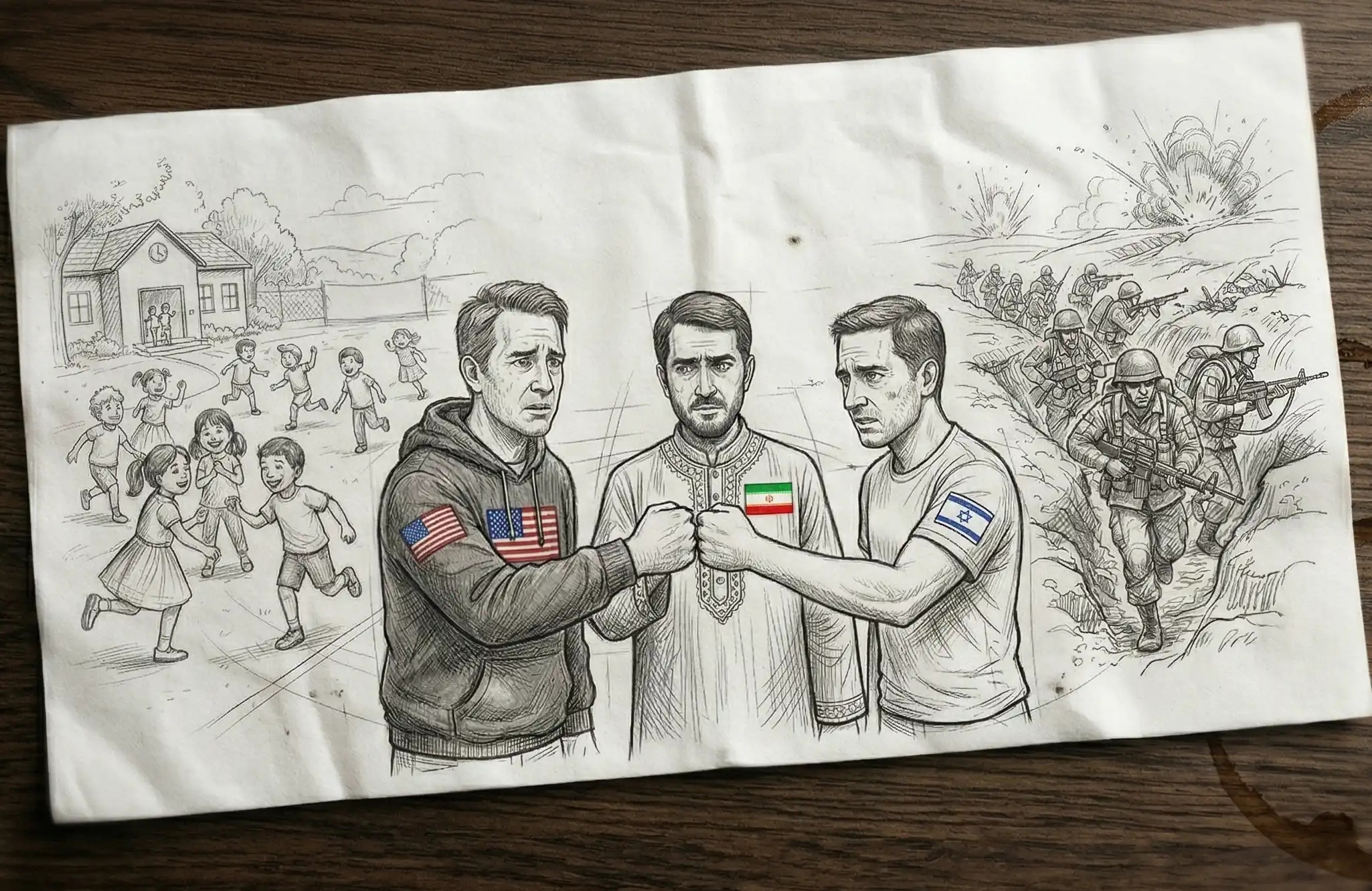
In this framework, both sides' strategies gradually converge to the same logic: waiting for the other side to give in first. Negotiations are repeatedly postponed, concessions are seen as risks, and time becomes the only bargaining chip available. However, this consumption-based game does not automatically lead to a resolution; it only continues to build up pressure.
This pressure is manifested domestically in Iran - with inflation, damaged industries, and social pressures intensifying. Furthermore, through key points like the Strait of Hormuz, this pressure transmits uncertainty to the global energy and market, causing ripple effects from the local standoff.
The real issue lies in this "status quo" that seems secure but lacks an exit. When no one is willing to make the first move, the deadlock itself becomes a source of risk. This type of unresolved confrontation often proves harder to end than a brief conflict.
Below is the original text:
Two women walk past a large mural in Tehran. The mural depicts an Iranian missile attack on a U.S. Navy vessel. Caption: A mural in Tehran depicting an Iranian missile attack on a U.S. Navy vessel. Source: Arash Khamooshi / The New York Times
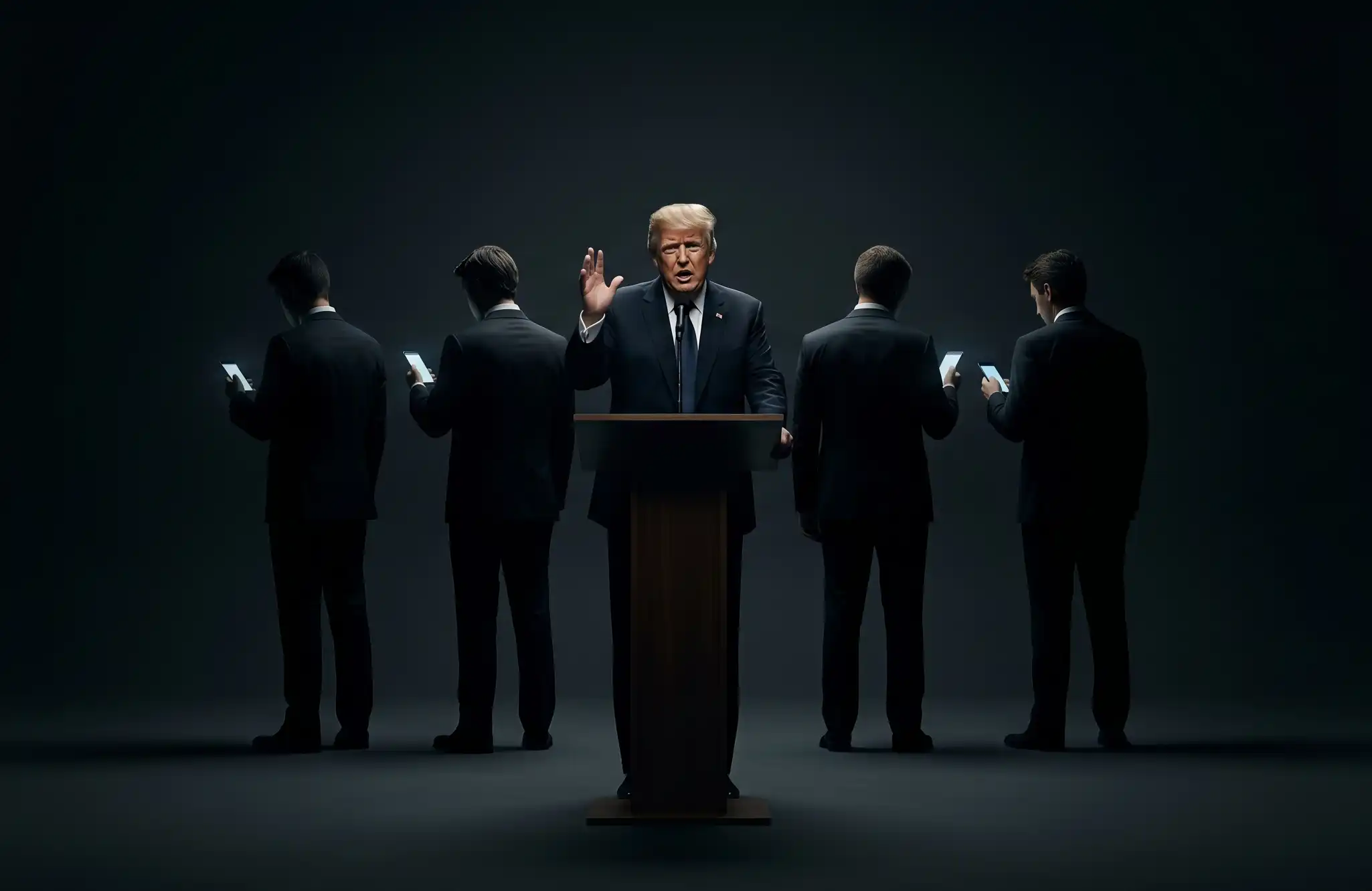
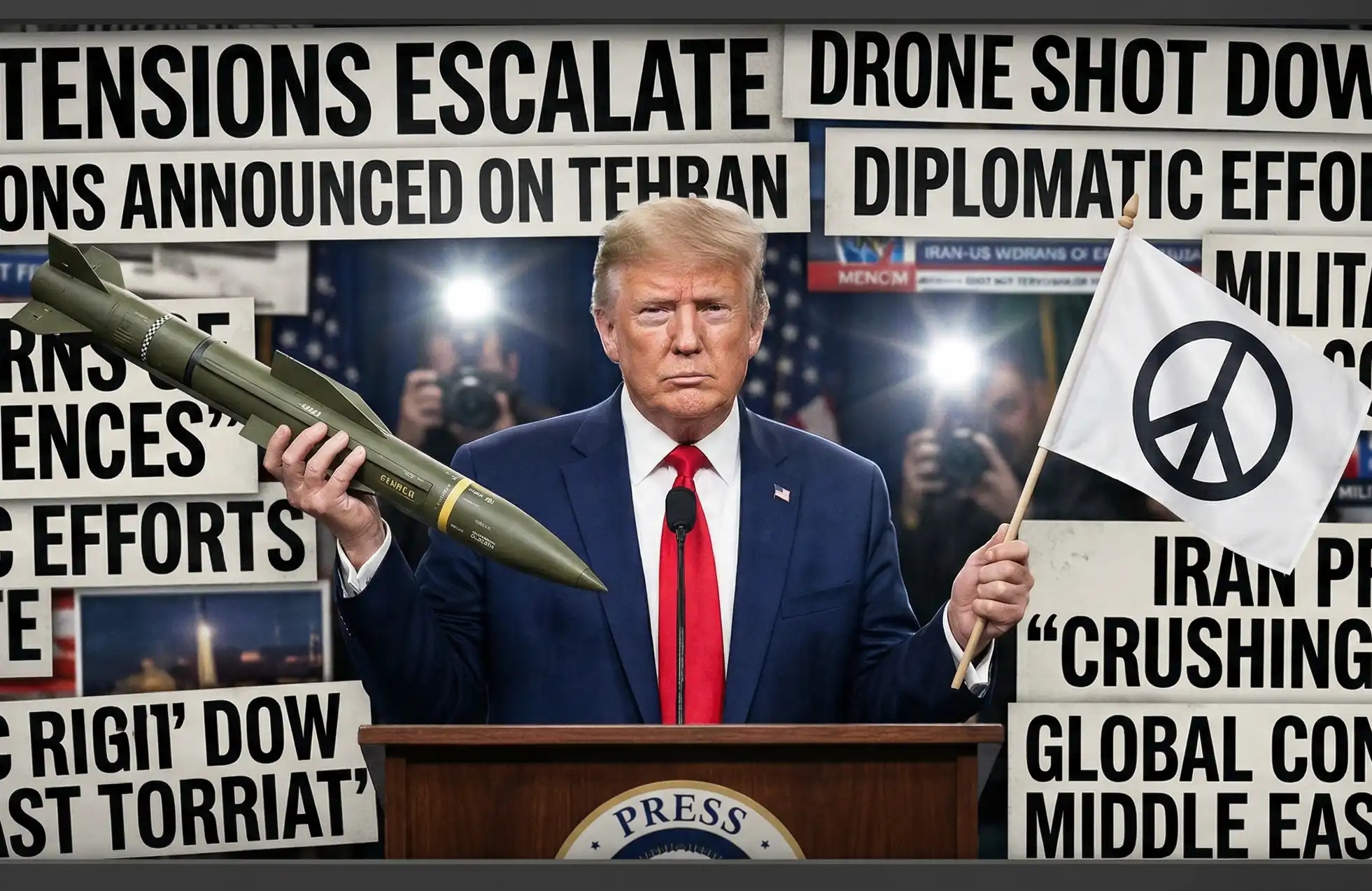
With the U.S.-Iran peace talks - at least for now - declared dead, Tehran and Washington are now mired in an awkward limbo of neither war nor peace. Both sides hope to outlast the other in this high-stakes global standoff.
Analysts say Iranian officials seem to believe they can endure the economic pain of war longer than President Trump. However, they are also concerned that if negotiations lose momentum, Iran will remain vulnerable to American or Israeli strikes.
"What is happening now is a bit like where we found ourselves at the end of the twelve-day war - the war ended, but there was no permanent arrangement," said Sasan Khoram, former Iranian Vice President and political scientist at the University of Tehran, referring to the June 2019 US-Iran conflict.
Over the weekend, a prominent Iranian conservative newspaper, *Kayhan*, published an article that was subsequently picked up by multiple Iranian media outlets, describing the current situation as a "strategically risky stalemate."
"Both sides have stepped back from the brink of full-scale war, but neither has transcended the logic of force and pressure," the article stated. This state of affairs "may be more perilous than the short-term war itself."
Efforts to restart ceasefire negotiations mediated by Pakistan have faced challenges, reflecting the overall dynamics since the US-Iran standoff earlier this month following American airstrikes on Iran. Both sides claim to have the upper hand. Trump seems to believe that the US can endure the economic pain of war longer than Iran—the two have blockaded the Strait of Hormuz, leading to a stalemate.
As a result, neither side is willing to make concessions to move the negotiations forward.
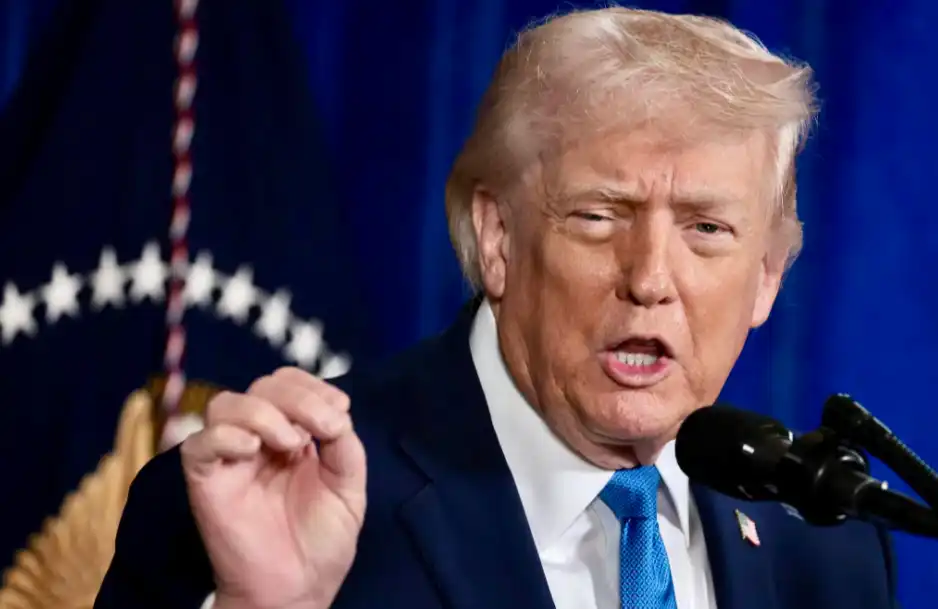
Last Saturday, Trump called off a planned trip by his envoy Steve Weinberg and son-in-law Jared Kushner to Islamabad for a second round of ceasefire talks. He stated that the Iranians would only waste the negotiators' time.
Iranian senior officials, however, insist they will not engage in direct talks until after the US Navy blockade of Iranian ports following Trump's abrogation of the ceasefire agreement.
Despite this, Iran's top diplomat, Foreign Minister Abbas Araghchi, visited Pakistan last Saturday, then proceeded to Oman for a meeting before returning to Pakistan on Sunday. According to Iranian state media, he is scheduled to fly to Russia later this week for a second-round meeting with Pakistani officials.
In a bazaar in Tehran, men and women shop between stalls filled with food, with a lighting shop in the background. Caption: Shoppers in a Tehran bazaar this month. Source: Arash Khamooshi/The New York Times
In addition to Islamabad—the planned venue for the next round of talks—Iranians see coordination with Oman, a Persian Gulf state strategically located near the Strait of Hormuz, as crucial. Oman is another country bordering the strategic chokepoint and is essential for reaching an agreement.
Former Iranian official Karimi urges the current Iranian leadership to seize the moment and articulate a systematic framework for an overall agreement with the US—from Iranian concessions to their ultimate demands, to a vision for regional peace.
But domestically in Iran, "maintaining the status quo is the most politically conservative course of action at the moment," he warned, "because any change would invite one possibility: blame for a failed plan in the future."
Iran also still believes that, at the economic level, "it can wait out Trump, at least over the next few weeks — in fact, the blockade of the strait has caused more damage to Trump than to the Iranians," said Esfandyar Batmanglij, CEO of the London-based think tank Bulls & Bazars Foundation.
However, the Iranian economy is mired in a severe crisis. News of layoffs is spreading nationwide, and domestic production of petrochemicals and pharmaceuticals is in dire straits due to the impact of the war.
Iran's most influential economic newspaper, the World Economic Journal, predicts that the annual inflation rate could rise to 49% even in the "most optimistic" scenario of reaching an agreement. The newspaper warns that the "neither war nor peace" state could push the inflation rate to 70% in the coming months, and if hostilities resume, inflation could even exceed 120%, leading to hyperinflation.
Despite this, some economists estimate that Iran's authoritarian rulers could withstand the current economic crisis for three to six months. In contrast, Batmanglij suggested that disruptions in oil production and exports such as fertilizers could start to have a deeper impact on the global economy in a matter of weeks, prompting Trump to push negotiations forward.
However, even if Iran can weather the current impasse economically, he said their strategic dilemma remains. "From Iran’s point of view, the non-agreement and non-war model leaves them in a fragile position," he said.
Welcome to join the official BlockBeats community:
Telegram Subscription Group: https://t.me/theblockbeats
Telegram Discussion Group: https://t.me/BlockBeats_App
Official Twitter Account: https://twitter.com/BlockBeatsAsia
 Related Articles