Who Is Cole Allen? The Other Side of the Unsuccessful Trump Assassination Attempt
Original Title: Assassin Wasn't on FBI's Radar, Sources Say
Original Author: Ken Klippenstein
Translation: Peggy, BlockBeats
Editor's Note: On April 25, 2026, a shooting incident occurred at the White House Correspondents' Association dinner. Following the incident, the suspect Cole Allen was quickly labeled as an "extremist." However, as his pre-action "manifesto" and personal background were gradually revealed, this image began to become more complex.
Who is he really? This article, through his resume and interviews with classmates, attempts to reconstruct a more realistic individual. Allen is not a traditional fringe figure, but an engineer with a background from Caltech, a stable career, religious beliefs, and a relatively complete value system. This is inconsistent with the official emphasis on the "anti-Christian extremist" narrative—instead, he repeatedly quotes the Bible in his manifesto, attempting to establish some form of "legitimacy" for his actions from a faith and legal perspective.
The author further points out that these individuals are not isolated cases but share a common judgment: the political system has broken down, and therefore "someone must act." Under this logic, violence is no longer seen as exceptional but is understood by some as a moral responsibility.
As the government and media continue to reinforce a certain security narrative (such as the "anti-Christian threat"), perhaps a more worthwhile question is: why are more and more seemingly normal individuals turning to political violence.
Below is the original article:
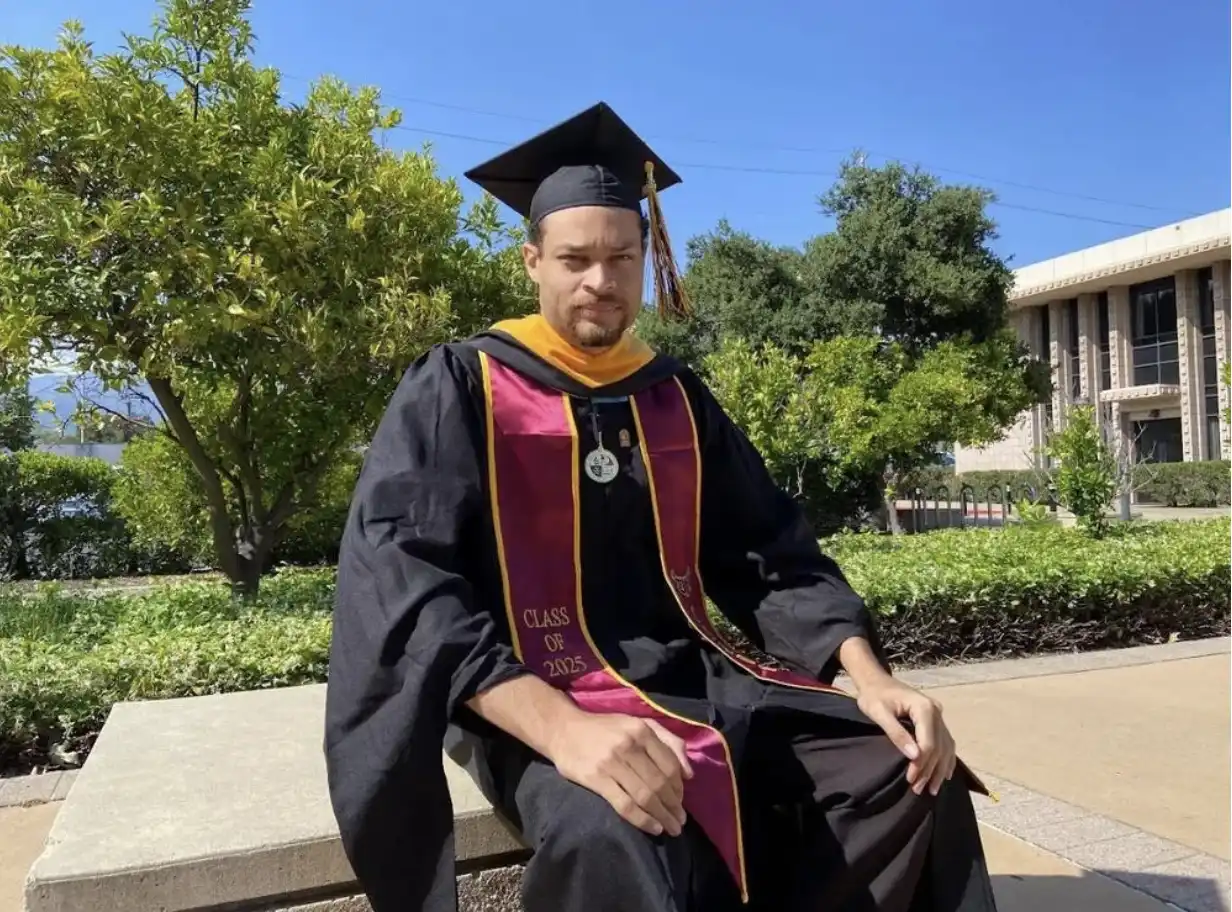
Cole Tomas Allen
Cole Tomas Allen never entered the vast domestic counterterrorism surveillance apparatus of the FBI, multiple sources, including a senior FBI official, confirmed to me. The 31-year-old suspected gunman who attempted to breach the White House Correspondents' Association dinner on Saturday had apparently always been just an ordinary person until everything suddenly spiraled out of control.
Allen himself was reportedly shocked by the "absurd" security lapse at the Washington Hilton hotel. The hotel has hosted the dinner for decades (also the site of the 1981 attempted assassination of Ronald Reagan). Video footage from the scene shows that after guests were seated, Secret Service agents and Washington Metropolitan Police Department security personnel were still chatting and joking around, allowing Allen to run past them.
Now, various rumors surrounding Allen have begun to spread, with some claiming he is an anti-Christian extremist who may have been aided by a group of left-wing accomplices. Acting Attorney General Todd Branch stated that the FBI is investigating whether he acted alone. But the question remains: who is he really? And what does he represent?
The answer comes from a copy of his resume I obtained, as well as an interview with an acquaintance.
What is unsettling is its "normalcy."
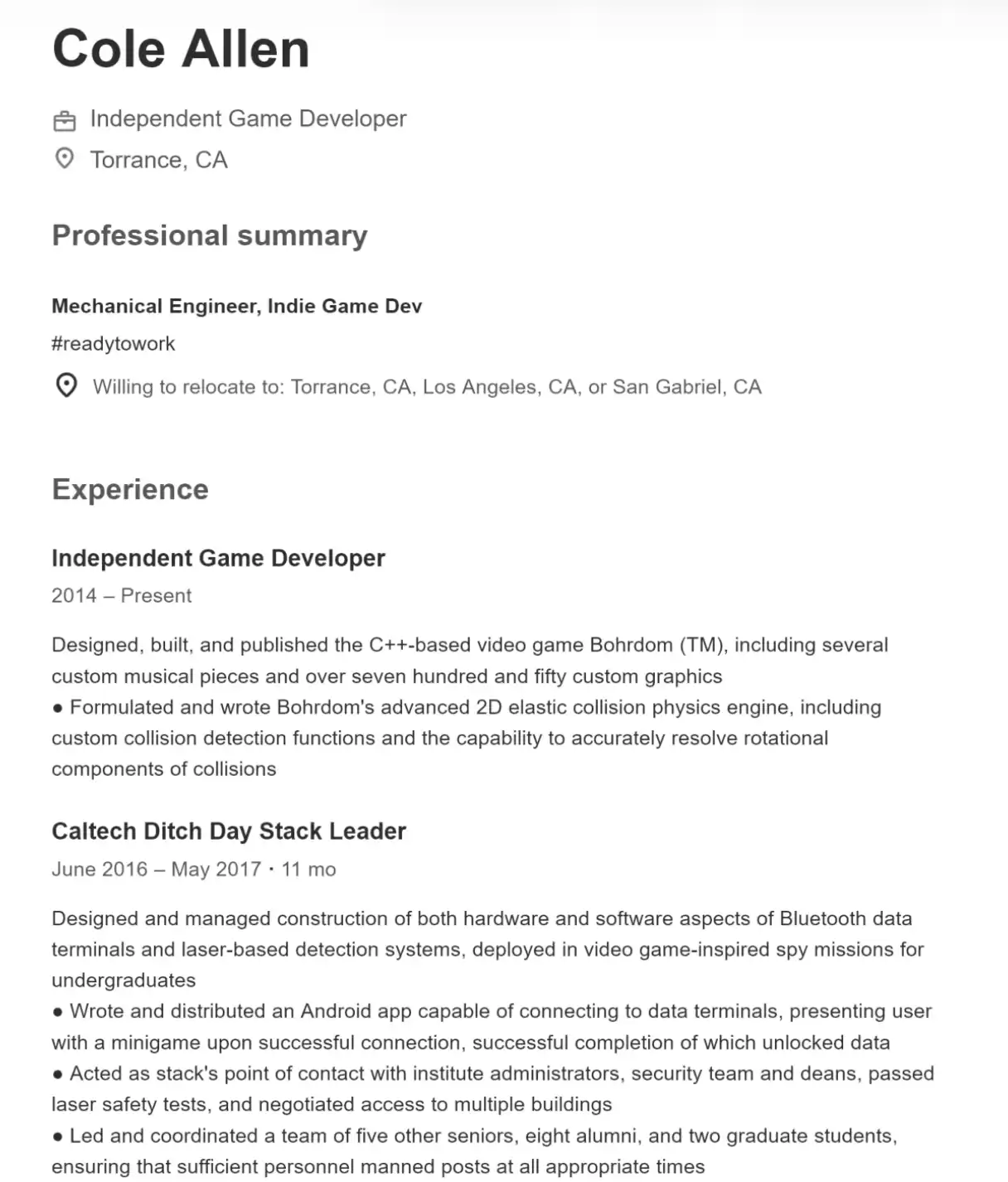
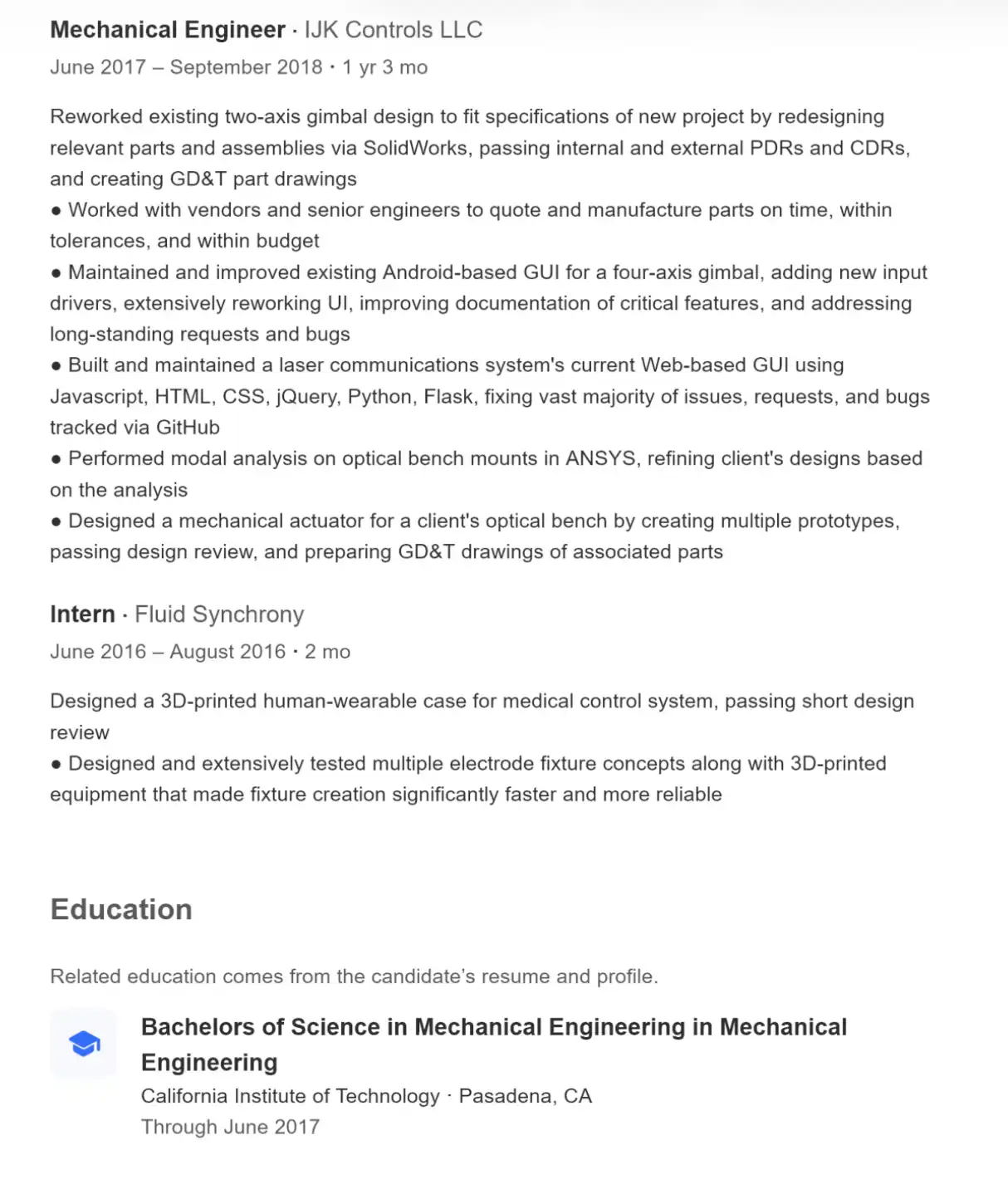
Looking at his resume, Cole Allen followed a typical STEM path. He graduated from the California Institute of Technology with a major in Mechanical Engineering. Early on, he interned at a biotech startup, where he was involved in 3D printing design of medical device casings and development of related fixtures.
Professionally, he worked as a Mechanical Engineer at IJK Controls, an engineering company in Southern California, primarily focusing on the design of precision mechanical systems (such as gimbal structures) and optical platform analysis. He was also involved in software development, including Android interface optimization and web development based on a laser communication system. Additionally, he has been independently developing games for a long time, handling everything from the underlying physics engine to graphics and music. Overall, his background spans engineering and software, showcasing a versatile technical skill set.
Allen graduated from the California Institute of Technology in 2017, a renowned institution in Pasadena that has produced 24 Nobel laureates and nurtured NASA's Jet Propulsion Laboratory (JPL). He majored in Mechanical Engineering and upon graduation, joined a small engineering firm, IJK Controls LLC, in Southern California, working on precision hardware development — these technologies are used to stabilize cameras and sensors on a motion platform, widely applied in drones, satellites, and military targeting systems. Additionally, he was involved in developing software that utilizes laser, instead of radio waves, to transmit data between devices.
Prior to Caltech, he interned at a biotech startup, where he was responsible for designing 3D printed casings for medical devices and creating specialized jigs and fixtures for securing electrodes during the production process.
He also developed electronic games from scratch — not modifications of existing games but built from the ground up. His most representative work, "Bohrdom," was entirely developed independently: including a foundational physics system controlling object movement and collisions, 750 original graphics, and a soundtrack composed by himself.
His classmates mention that this is not uncommon at Caltech, known for its technical prowess. There is a tradition there called "Ditch Day Stack," where seniors design elaborate puzzle games for freshmen, and Allen was deeply involved in this. "You can tell he's really proud of it," a former classmate said.
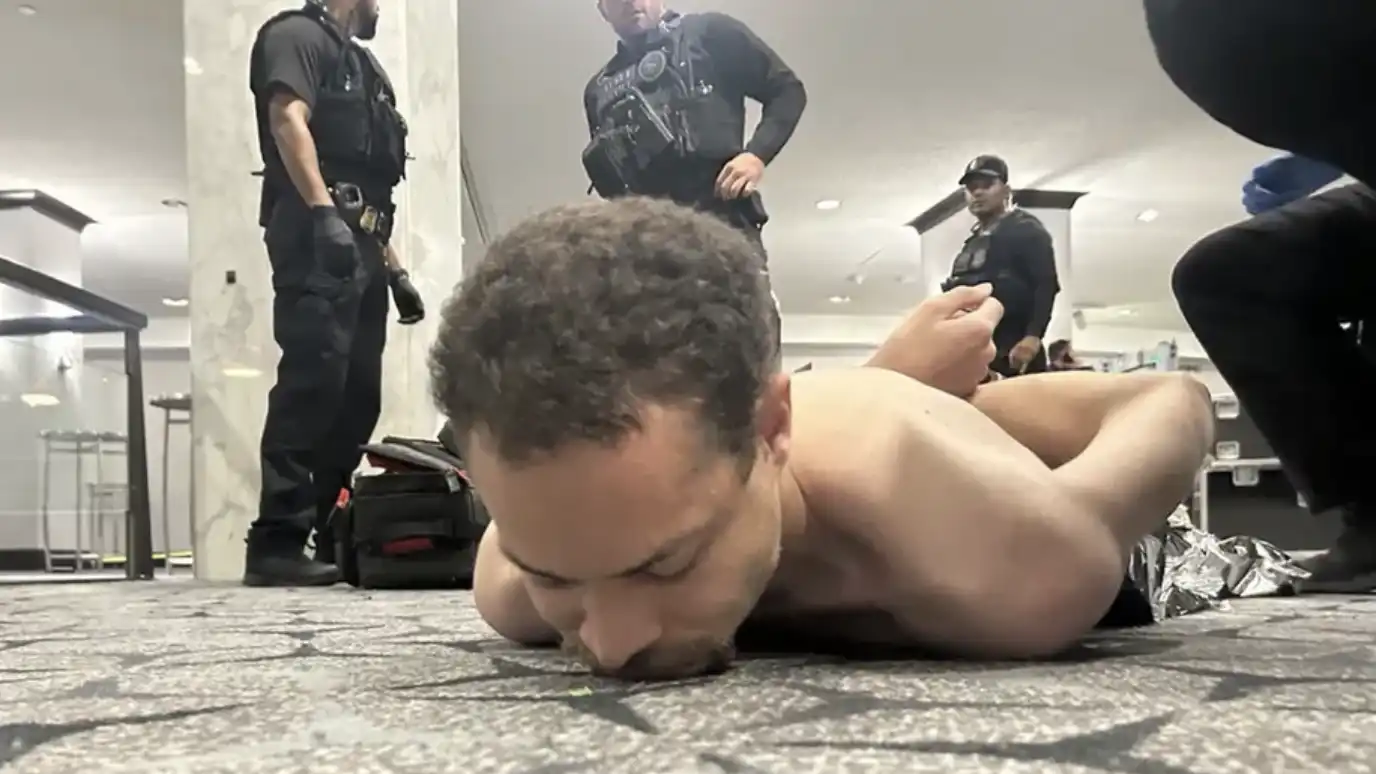
In the classmates' impression, Allen was diligent, devout, and polite. "He was very active in the Christian fellowship at Caltech," a acquaintance and former classmate told me, "very devout and gentle." "If I hadn't seen him being pinned to the ground, face down, I wouldn't have believed it was him at all," he said, referring to the photo leaked by the police after Allen was finally subdued.
These details, especially his religious beliefs, are clearly at odds with President Trump's description of the attack.
Note: This passage is expressing that he did not hate Christianity (as the media and Trump defined him), but rather used Christianity to morally justify his violent actions, thus challenging the simplistic narrative that "he is an extremist."
"When you read his manifesto, he hates Christians," Trump said in a Fox News interview, "He hates Christians, a kind of hatred." Subsequently, several mainstream media outlets cited anonymous "government officials" to repeatedly reinforce this judgment.
Note: The assassination attempt took place during the White House Correspondents' Association dinner on April 25, 2026. The suspect, Cole Allen, sent a "manifesto" to his family approximately 10 minutes before the operation.
But the manifesto itself was not like that. On the contrary, if anything might have angered Allen, perhaps it was Trump's portrayal of himself as the image of Jesus Christ (such as the AI-generated image of Trump wearing a robe and healing the sick). In addition, a suspected copy of the manifesto revealed by the New York Post shows that Allen extensively referenced Christian theology in defending the shooting, dissecting the Gospels paragraph by paragraph, in a manner more akin to someone who had truly spent time studying the Bible.
In a section titled "Response to Dissenting Views," he first responded to the doctrine of "turn the other cheek" — a teaching from Matthew 5:38–39 (Sermon on the Mount), where Jesus advises believers not to retaliate against personal harm.
Allen reinterpreted it: this principle does not apply when the victim is someone else:
Dissenting View 1: As a Christian, when others harm you, you should not retaliate but choose to endure and forgive, letting them "turn the other cheek."
Response: "Turn the other cheek" applies when you are the one being oppressed. I am not the one raped in a detention camp, I am not the fisherman executed without trial, I am not the student bombed, the child starved, or the girl abused by many criminals in this government.
Choosing to "turn the other cheek" when others are oppressed is not the behavior of a Christian, but a complicity in the oppressor's wrongdoing.
He then went on to discuss the classic phrase "Render unto Caesar what is Caesar’s" from the books of Matthew 22:21, Mark 12:17, and Luke 20:25. When asked whether one should pay Roman taxes, Jesus replied that what belongs to Caesar should be given to Caesar, and what belongs to God should be given to God. This passage has long been used to argue for obedience to political authority.
Note: The phrase "Render unto Caesar what is Caesar's, and unto God what is God's" signifies that one should obey secular authority (the government) in secular matters and give to God what belongs to God.
Allen, however, raised a constitutional objection:
Counterpoint 5: Render unto Caesar what is Caesar’s.
Response: The United States of America is governed by law, not by one or a few individuals. As long as elected representatives and judges do not follow the law, no one is obligated to obey their unlawful orders.
In the declaration, the third mention of religion is a brief acknowledgment: "Thanks to my family, both on a personal level and within the church, for the love they have shown me over these 31 years."
Reportedly, Allen's account on the Bluesky social media platform has also referenced Christianity multiple times, including earlier this month when he identified as a "Protestant" and has likened Trump to the "Antichrist" on several occasions.
On April 13, in response to an image depicting "Trump as Jesus," Allen quoted a passage about the Antichrist from Revelation, which now seems quite prophetic: "And all who dwell on the earth will worship it, everyone whose name has not been written before the foundation of the world in the book of life of the Lamb that was slain."
Perhaps most ironically, there is a story told by one of his former classmates.
Allen once served as the president of the Nerf Club at the California Institute of Technology (Caltech) and took this role quite seriously. He opposed the club's internal tendency to "militarize" toy guns—such as modifying them for increased power or painting them to look more like real weapons. He worked closely with campus security and, according to classmates, demonstrated a considerable level of maturity in resolving conflicts, leaving a lasting impression.
In other words, the person who once worked hard to ensure that toy guns did not look too much like real guns is now accused (as reported by NBC) of carrying a sawed-off shotgun and multiple handguns, driving across state lines, and attempting to assassinate the president. "It's really shocking," said another acquaintance, "From what little interaction I had with him, he seemed very bright."
So, what exactly happened?
From Luigi Mancini to Cole Allen, such gunmen are not the antisocial loners that the media imagines. They are smart, popular, often with a hint of idealism; no criminal record; even deliberately avoid harming the innocent—Allen is said to have done the same. But they share a common belief: the political system has completely failed, and someone must take action.
“I can’t see anyone else filling this void,” Allen wrote in his manifesto.
While Trump's claim that Allen was “anti-Christian” is not accurate, this statement is consistent with the logic in his national security directive NSPM-7—which lists “anti-Christian” as an indicator of domestic terrorism. This narrative is likely to dominate, and regardless of the facts, the FBI and intelligence agencies will be tasked with investigating the so-called “anti-Christian threat.” Law enforcement will also use this as a basis to request more budget for security checks and surveillance, budgets that are likely to be approved.
The real question is: Will anyone still ask why more and more seemingly “ordinary” people feel that the political system is unresponsive to their concerns, leading them to resort to violence?
Welcome to join the official BlockBeats community:
Telegram Subscription Group: https://t.me/theblockbeats
Telegram Discussion Group: https://t.me/BlockBeats_App
Official Twitter Account: https://twitter.com/BlockBeatsAsia