a16z: 9 Charts to Understand the Future Evolution of Stablecoins
Original Article Title: 9 charts on what stablecoins are becoming
Original Article Authors: Robert Hackett, Jeremy Zhang, a16z crypto
Original Article Translation: Chopper, Foresight News
Stablecoins are gradually evolving into a universal public payment infrastructure.
For years, stablecoins have been seeking their core positioning.
Initially, they were merely a transaction tool used to transfer dollar assets between major trading platforms. Subsequently, stablecoins evolved into a savings tool, becoming assets for long-term holding rather than daily spending. Today, all data points to a new direction of development: stablecoins are becoming the global core financial infrastructure.
The following nine charts illustrate the underlying trends driving this transformation.
Regulatory Implementation Accelerates Market Growth
Throughout most stages of stablecoin development, regulatory uncertainty has long hindered institutional funding. With the enactment of the GENIUS Act, the regulatory framework has become clearer. This act did not originate the industry trend but accelerated its development.
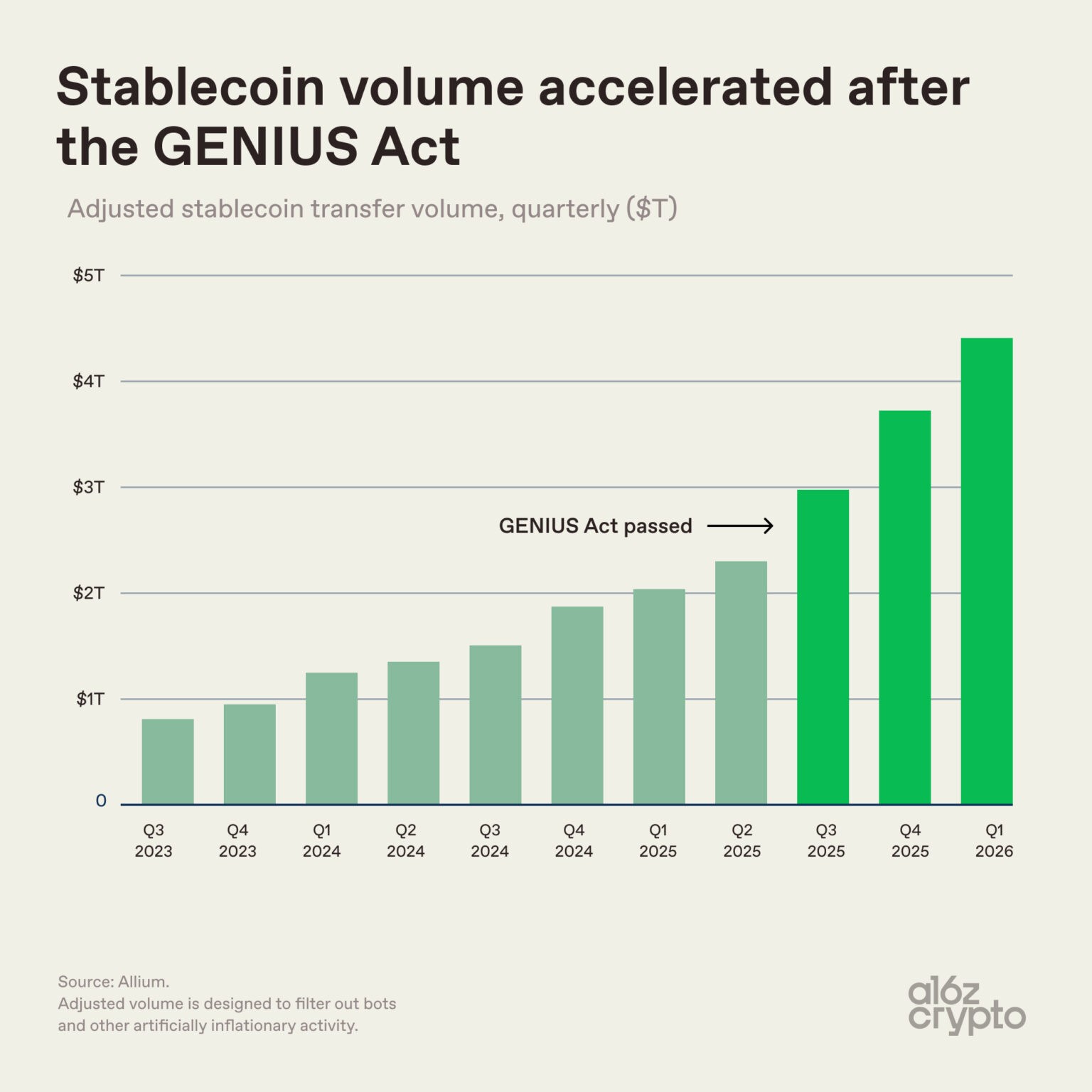
Change in Stablecoin Transaction Volume Pre and Post GENIUS Act
Through the GENIUS Act, the US established a federal-level regulatory framework for stablecoin issuance for the first time. The data change visually confirms the policy impact: in the several quarters before the act was implemented, stablecoin adjusted transaction volume had been continuously increasing; after the act came into effect, the growth further accelerated, with the transaction volume reaching around $4.5 trillion in Q1 2026.
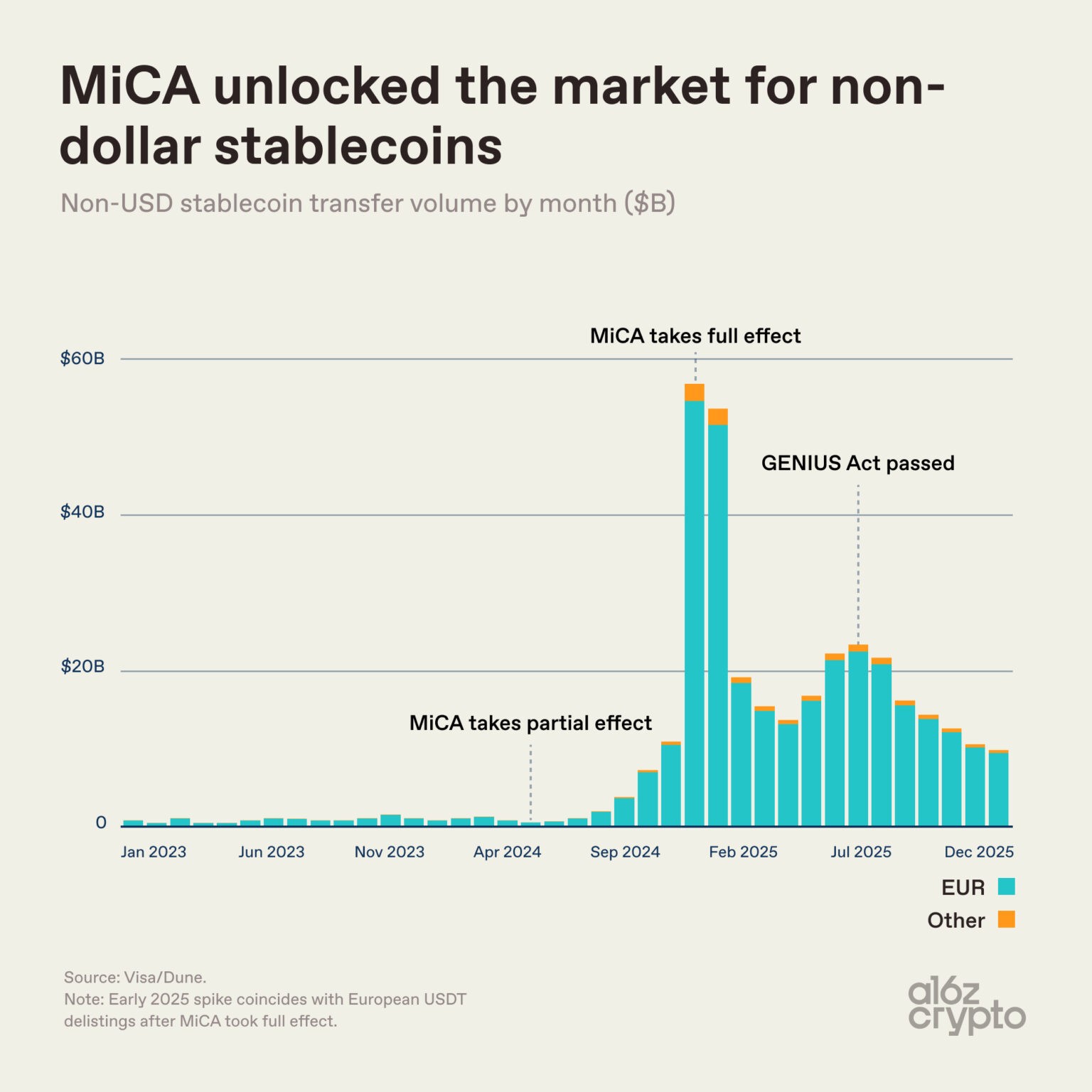
MiCA Driving Non-Dollar Stablecoin Market
The rollout of the European crypto asset regulation framework, the Markets in Crypto-Assets Regulation (MiCA), presented a more complex situation. After MiCA fully took effect at the end of 2024, several mainstream trading platforms delisted USDT for compliance reasons, directly driving a short-term surge in non-dollar stablecoin trading volume, peaking at over $40 billion.
Subsequently, the market trading volume stabilized, with the overall scale significantly increasing compared to pre-MiCA implementation, and the monthly trading volume remaining stable at $150 billion to $250 billion. The regulatory new rules have driven the emergence of a previously almost non-existent non-dollar stablecoin demand market.
Stablecoin Commercial Payment Scene Continues to Expand
Perhaps the most important change in the market structure is how stablecoins are actually being used.
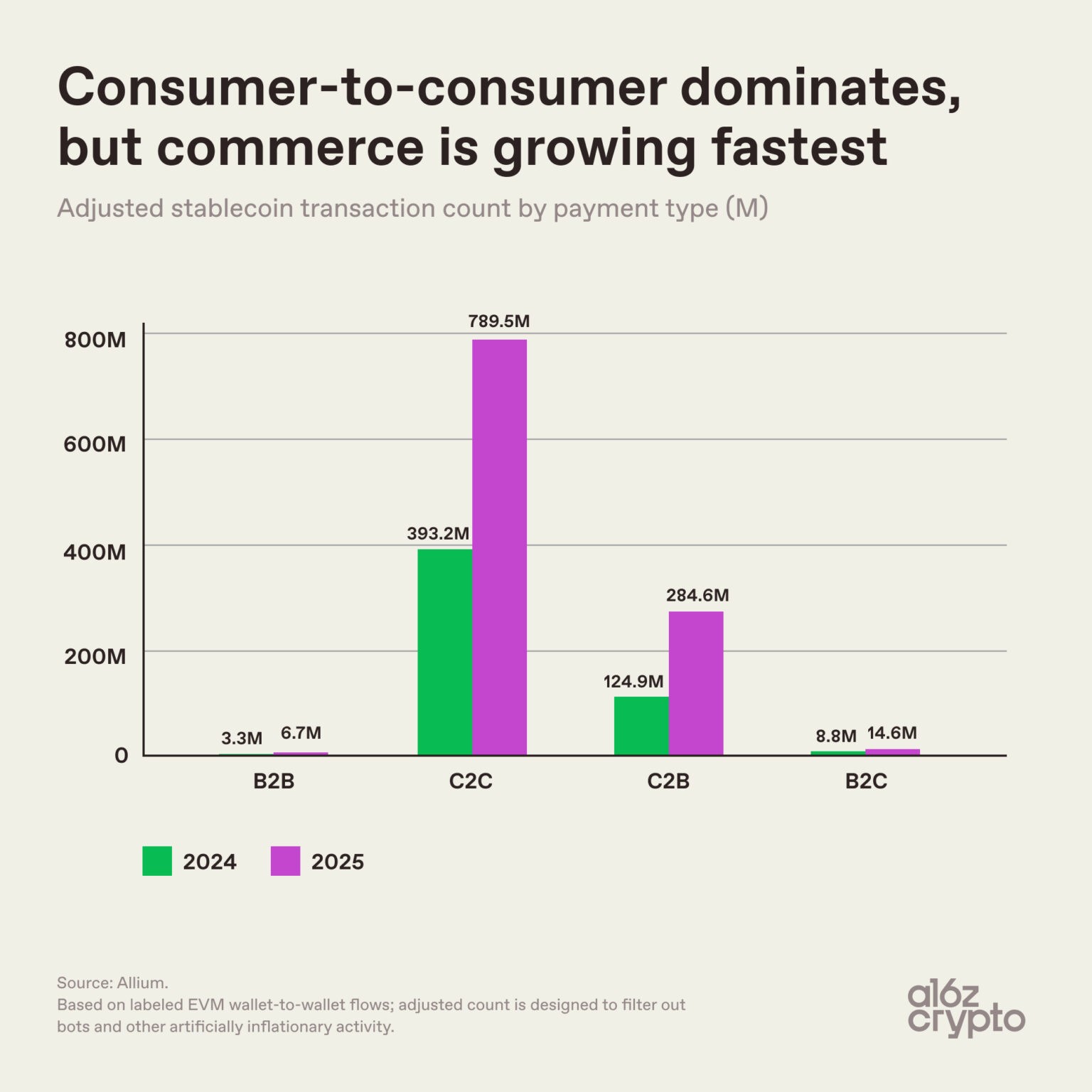
Stablecoin commercial payments are concentrated in the C2C sector
In terms of transaction volume, peer-to-peer (C2C) transactions are far ahead, reaching 7.895 billion transactions throughout 2025. Meanwhile, peer-to-business (C2B) transactions had the fastest growth, with transaction volumes increasing from 1.249 billion transactions in 2024 to 2.846 billion transactions in 2025, a year-on-year growth rate of 128%.
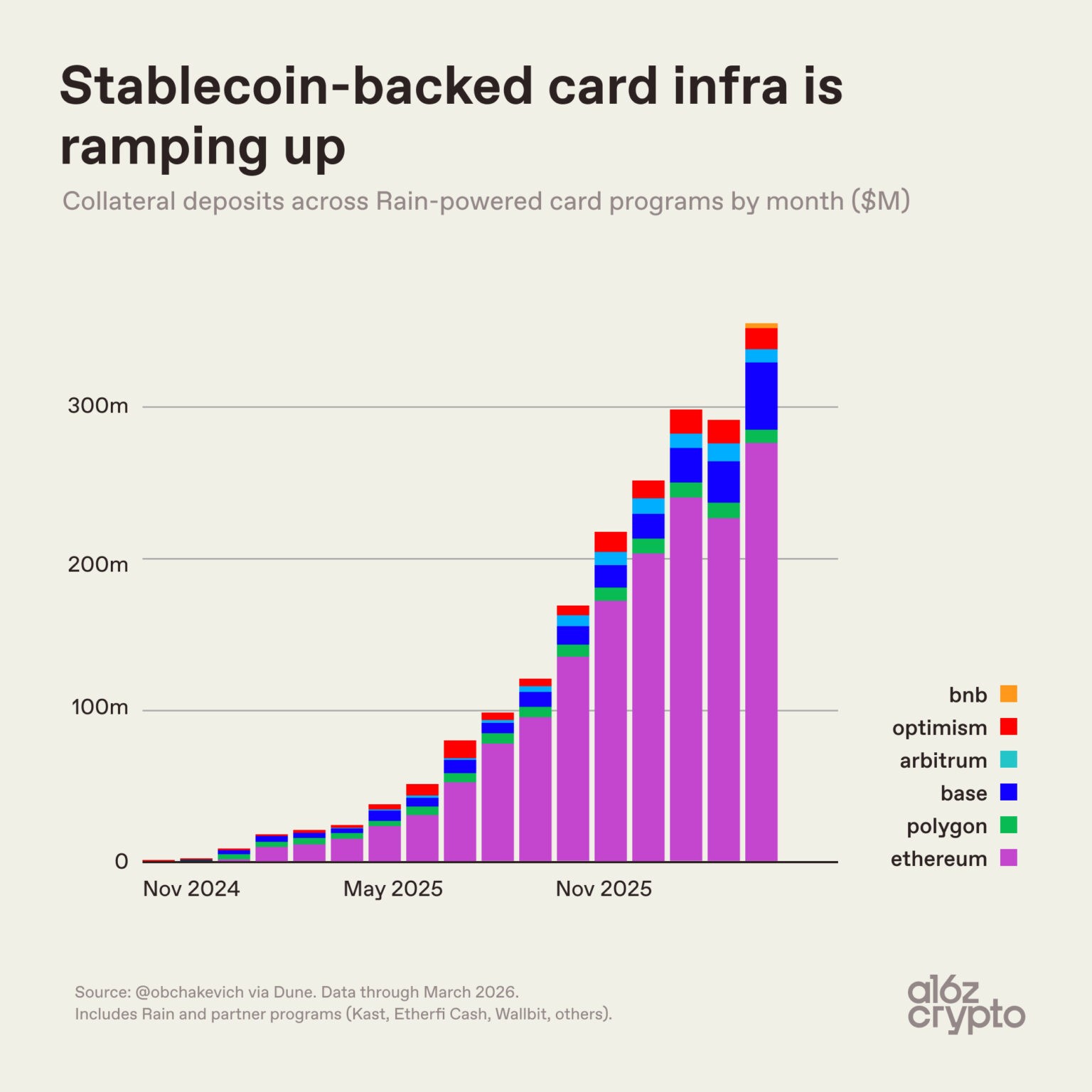
Stablecoin Payment Card Infrastructure Growth Trend
The data on stablecoin payment cards also confirms this trend.
Monthly collateral deposits for stablecoin payment card projects (including Etherfi Cash, Kast, Wallbit, among others) based on Rain technology went from nearly zero in November 2024 to over $300 million per month in early 2026. Although these funds serve as collateral for payment consumption and not direct stablecoin consumption, their growth curve is highly representative: the stablecoin commercial payment scene is rising rapidly.
Significant Increase in Stablecoin Circulation Speed
The circulation turnover rate of each stablecoin is continuously accelerating.
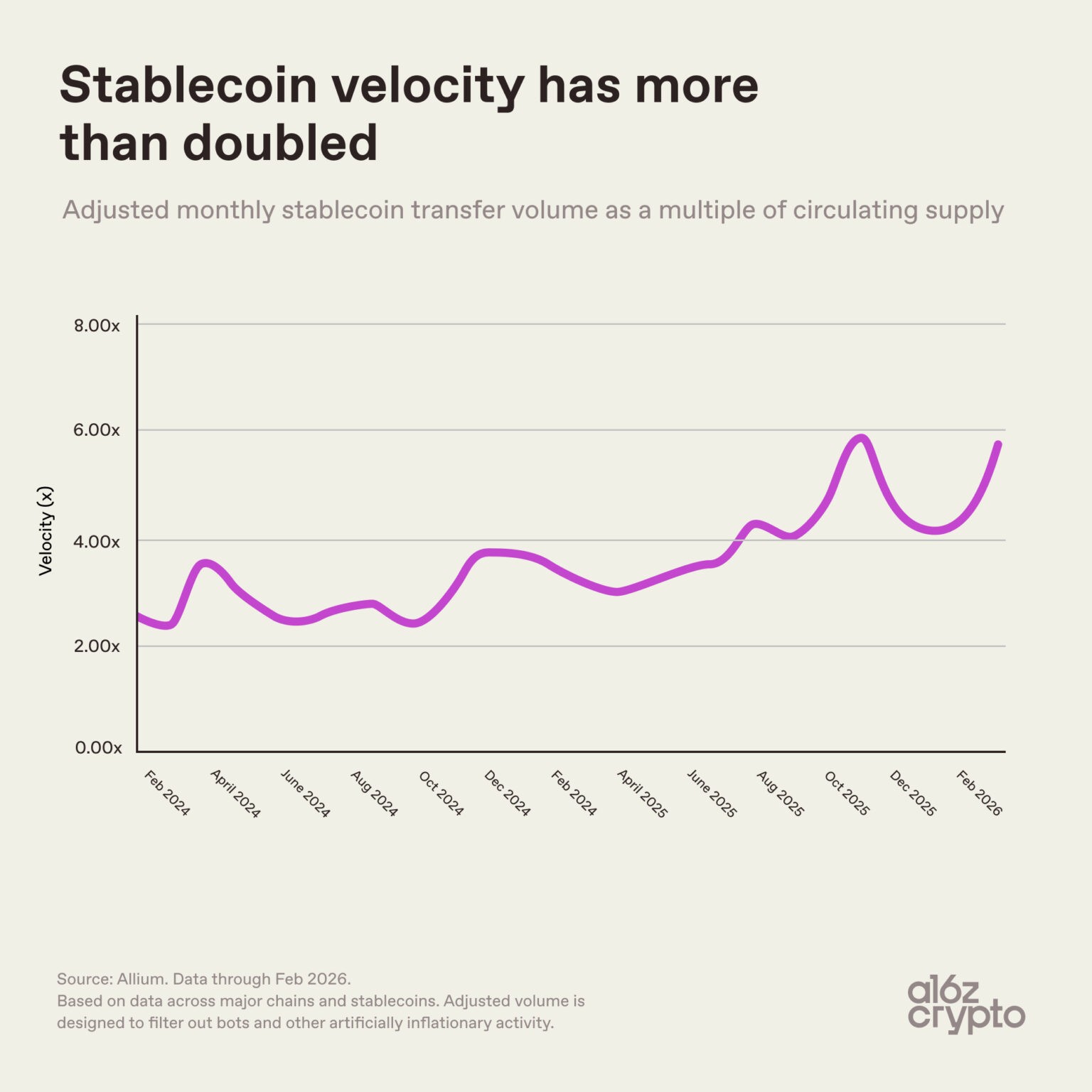
Stablecoin Circulation Speed Trend
Since early 2024, the stablecoin circulation speed (adjusted monthly transfer volume ÷ circulating market value) has nearly doubled, rising from 2.6 times to 6 times. The faster circulation speed means that the growth rate of stablecoin transaction demand has exceeded the new issuance speed, significantly improving the efficiency of fund utilization.
This is also a core feature of a mature payment network: the underlying currency is actively used at a high frequency rather than being passively held.
Transaction Structure Transformation, Payment Attributes Highlighted
If we exclude behaviors such as trading, fund flows, and exchange mechanisms (the majority of stablecoin transactions), the estimated payment volume between various participants last year was between $350 billion and $550 billion.
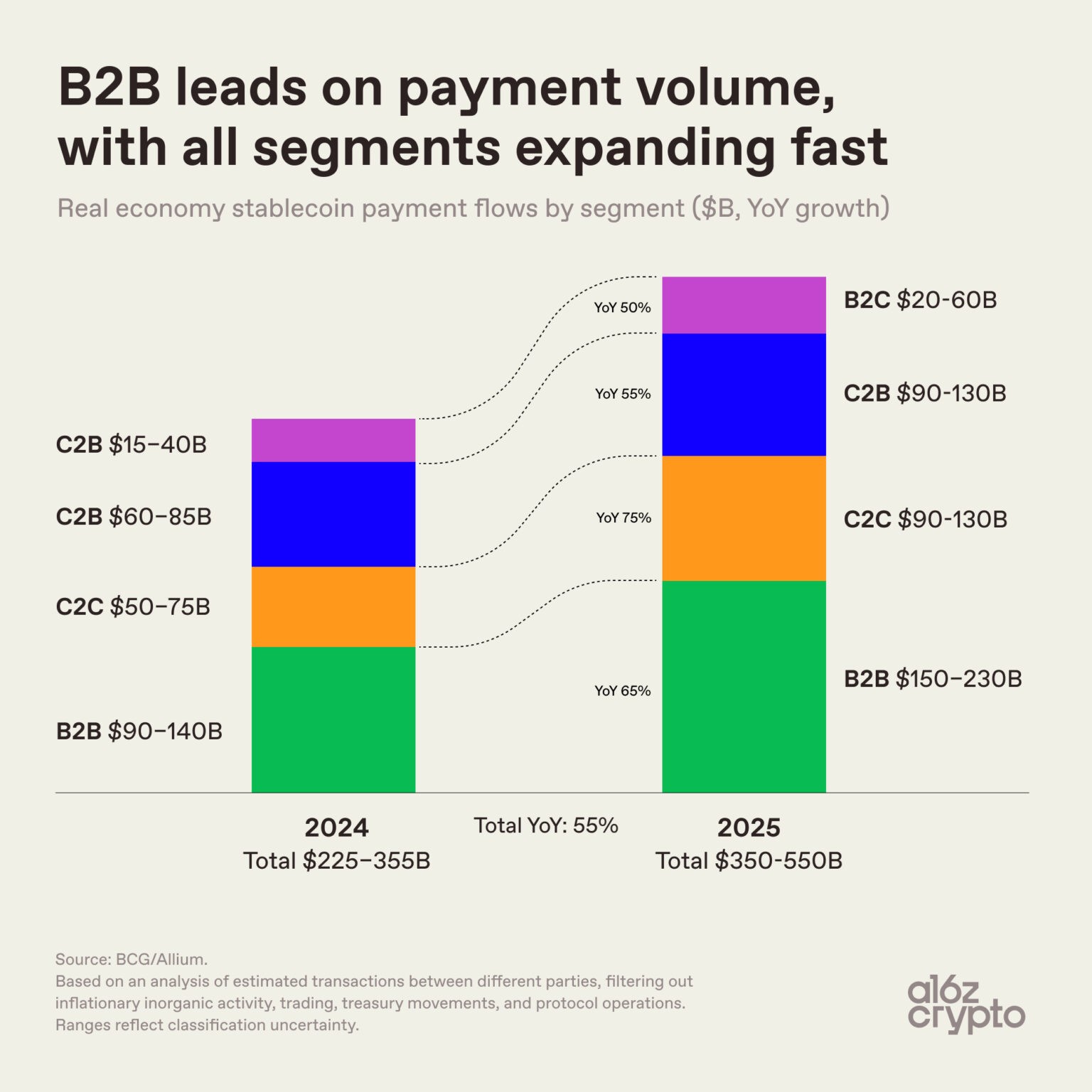
B2B Stablecoin Payments Take the Lead
Business-to-Business (B2B) transactions continue to be the core driver of stablecoin payments, maintaining the largest volume. At the same time, person-to-person transfers, merchant payments, and other segmented scenarios are rapidly expanding.
High Geographic Concentration of Stablecoin Payments
From a geographical perspective, the distribution of stablecoin payment activity is not balanced.
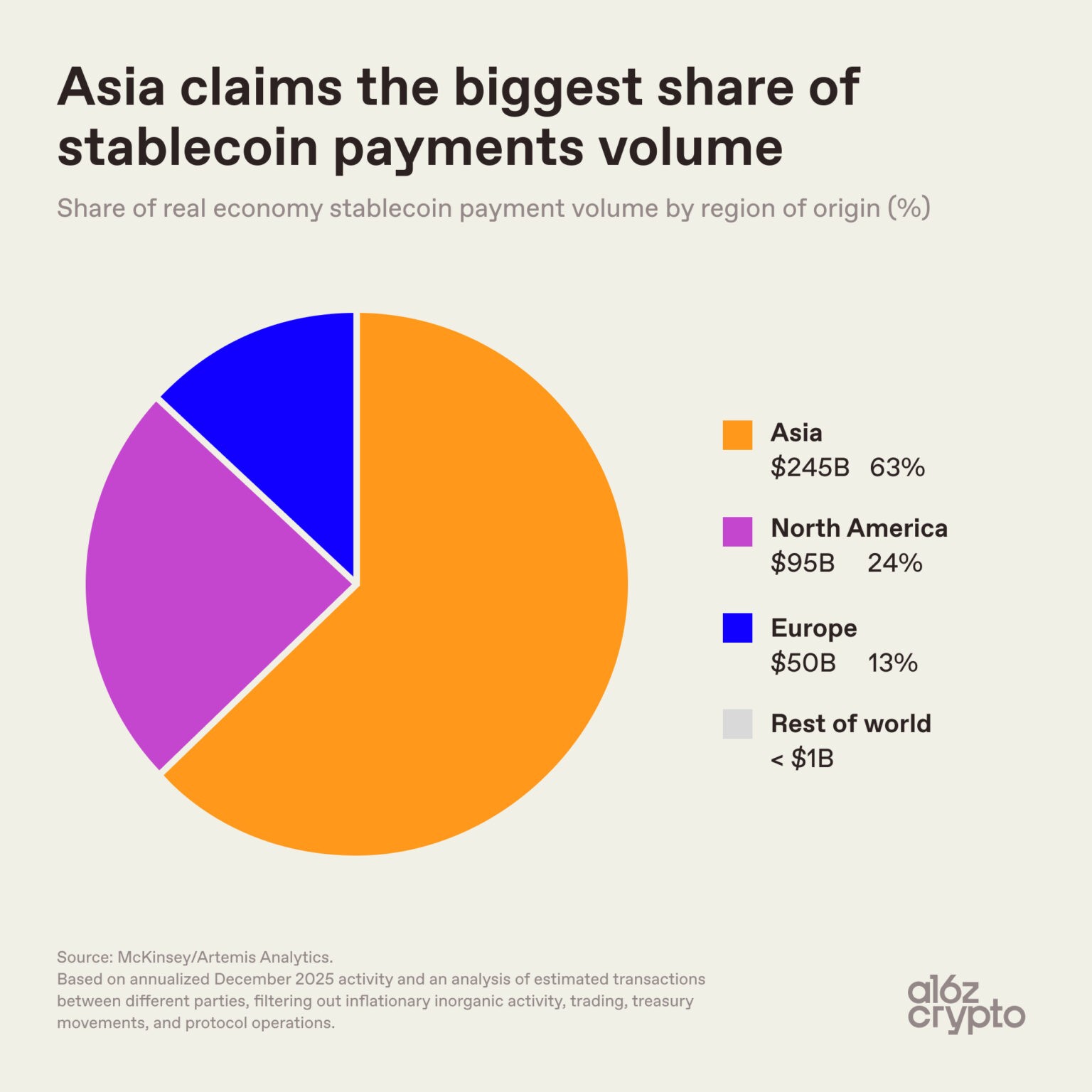
Asia Dominates Stablecoin Payments
Nearly two-thirds of the transaction volume comes from Asia, mainly from Singapore, Hong Kong SAR, and Japan.
The North American market accounts for about a quarter, Europe about 13%. Latin America and Africa together have a very small scale, totaling less than $1 billion overall.
Local Stablecoins Operate on Global Underlying Networks
The rise of non-USD stablecoins is not unique to Europe; emerging markets are also rapidly adopting them, each with different driving factors.
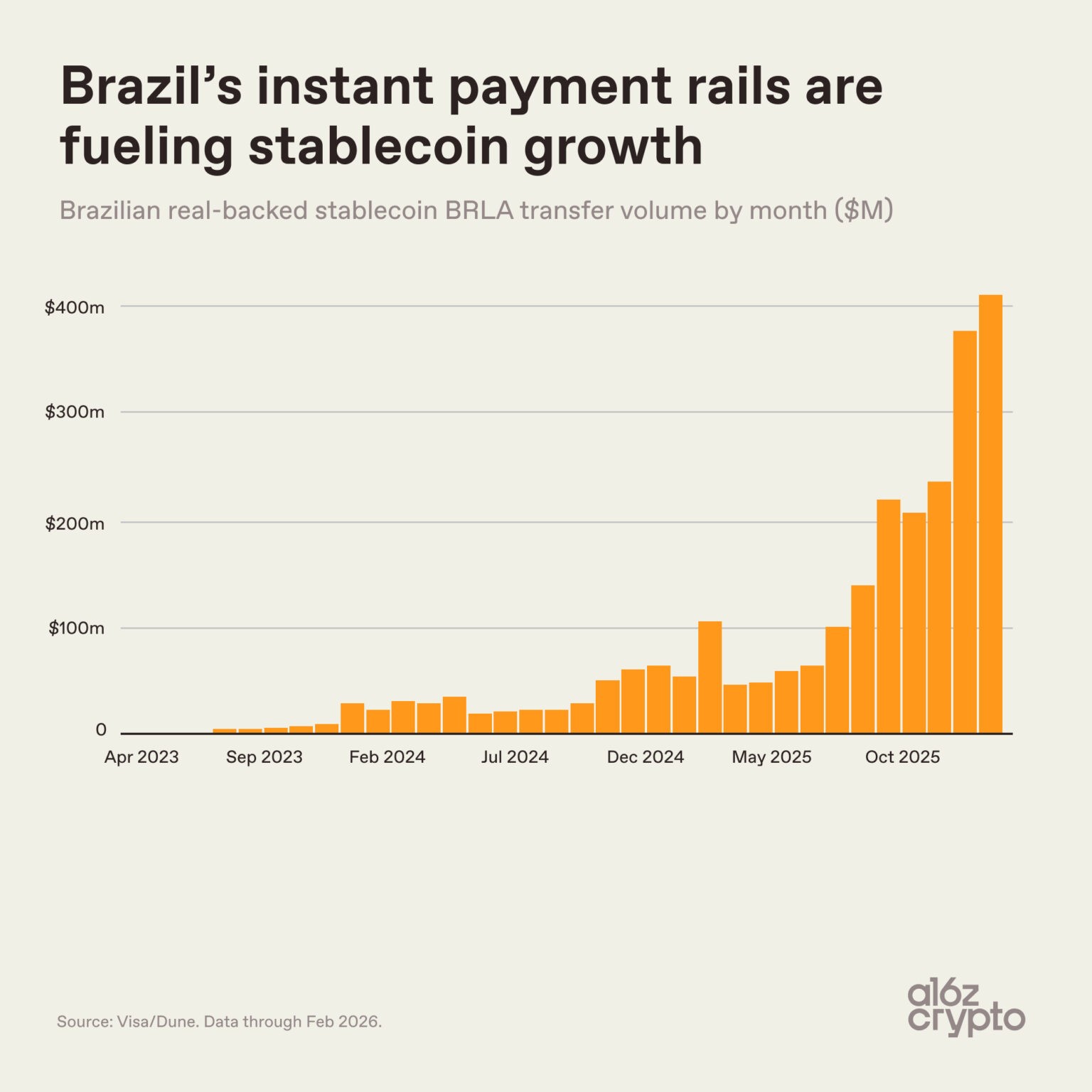
Monthly Transaction Volume of the Brazilian Real-Pegged Stablecoin BRLA
Brazil is a vivid example. The monthly transaction volume of the Brazilian Real-backed stablecoin, BRLA, grew from almost zero in early 2023 to around $400 million by early 2026, greatly driven by its integration with Brazil's instant payment network PIX.
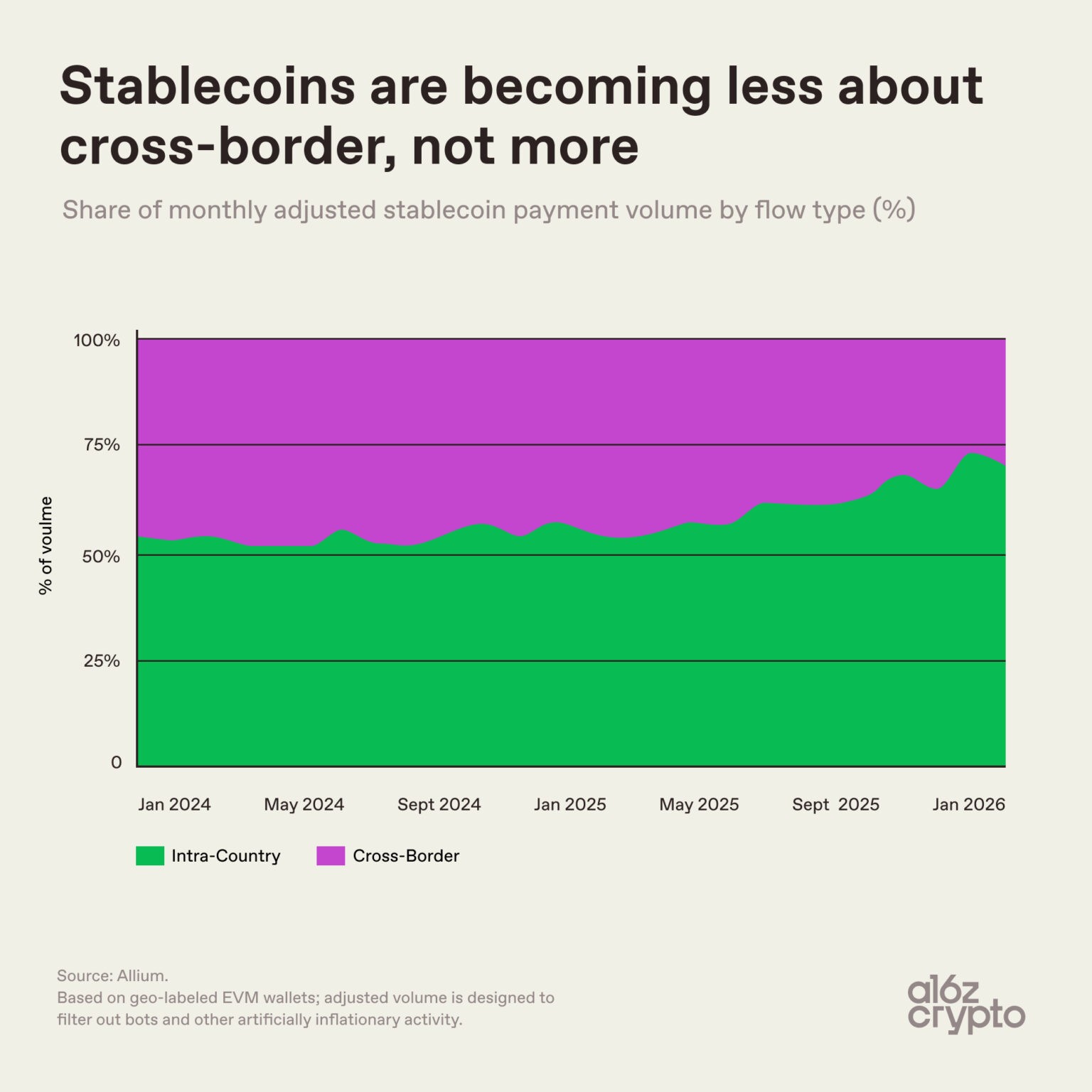
Cross-Border Payment Attributes of Stablecoins are Weakening
For a long time, stablecoins have been widely defined as cross-border tools, but the actual share of cross-border transactions is continuously decreasing.
The proportion of onshore domestic transactions has increased from about 50% in early 2024 to nearly 70% in early 2026. This shift sends a clear signal: the core value of stablecoins is no longer limited to cross-border remittances and foreign exchange. It is gradually evolving into a localized everyday payment tool, relying on the global underlying network.
Summary
Considering all the data, a clear industry picture has emerged, which is vastly different from the general public's previous expectations: it was widely believed that the core value of stablecoins was in cross-border transfers. In reality, stablecoins are undergoing deep localization. Currently, USD-pegged stablecoins dominate, but stablecoins are not merely USD-denominated instruments. Non-USD stablecoins backed by local fiat currencies such as the Euro and the Brazilian Real continue to gain market share.
Although peer-to-peer transfers remain the largest use case for stablecoins, the proportion of daily commercial payments is steadily increasing.
Quarterly data consistently corroborates that stablecoins are gradually evolving into a universal public payment infrastructure. While inherently global, they are increasingly being adopted locally.
The industry's development is still in its early stages, but the ultimate form and development pattern of stablecoins are becoming increasingly clear.
Original Article Link
Welcome to join the official BlockBeats community:
Telegram Subscription Group: https://t.me/theblockbeats
Telegram Discussion Group: https://t.me/BlockBeats_App
Official Twitter Account: https://twitter.com/BlockBeatsAsia