Is Nasdaq About to Reach a New High, Is the Bull Market Back?

The war is not over yet, but the market seems to have already started pricing it in.
Almost All Assets Are Rising
Starting from March 27, the S&P 500 Index has rebounded by nearly 10%, on track for a third consecutive week of gains. The Nasdaq 100 has seen a larger increase, rising by about 12%, closing positively for the tenth straight trading day, marking the longest winning streak in 2021.
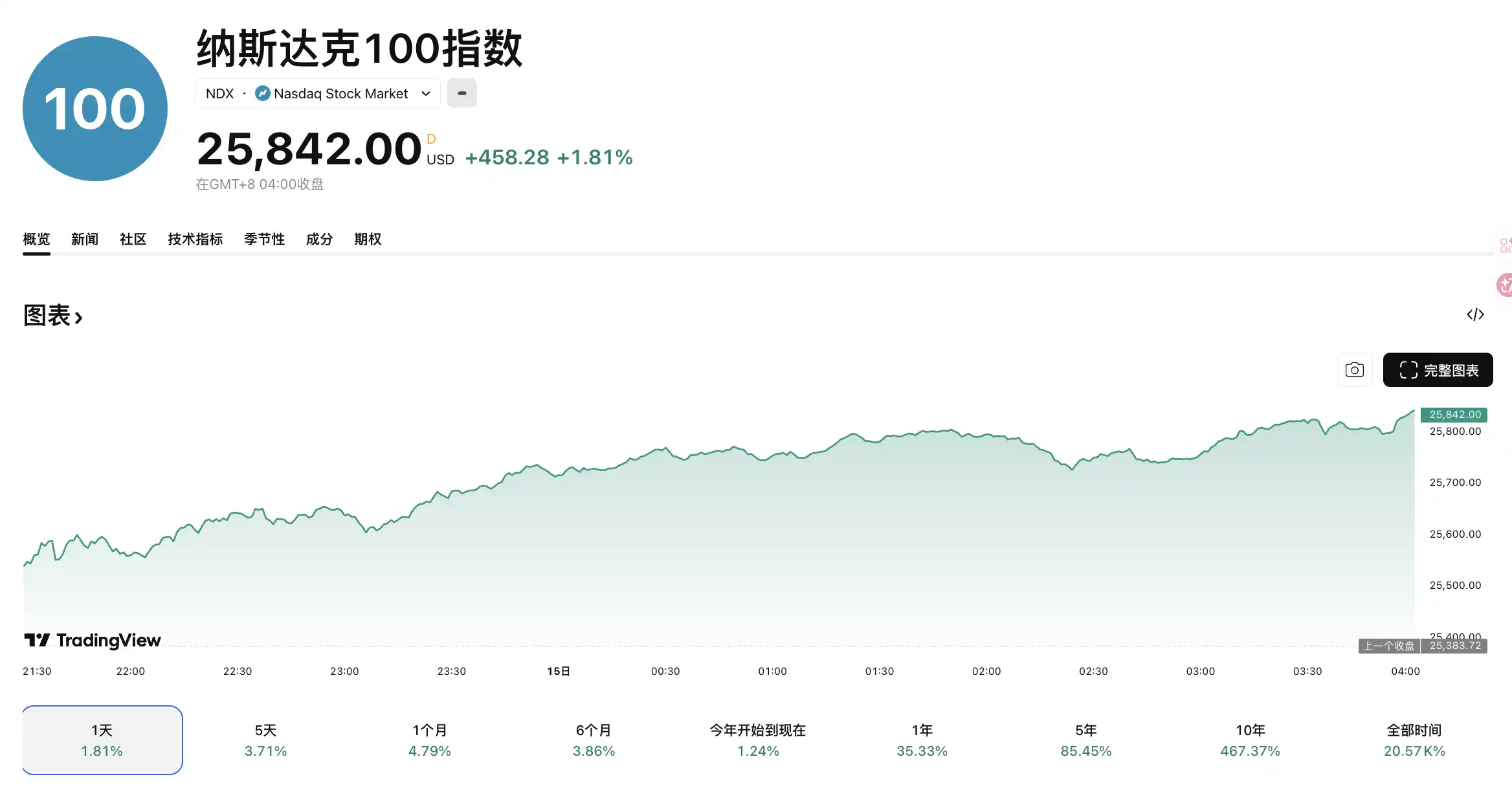
U.S. market close: Dow rose by 0.66%, S&P rose by 1.18%, Nasdaq rose by 1.96%. Crypto-related stocks surged across the board: Robinhood jumped over 10% in a single day, Circle rose by nearly 7%, Coinbase went up by 5.65%, and Riot followed with a 4.32% increase. The Japanese and Korean markets are also following suit. The Nikkei 225 opened with a 0.71% increase, breaking through 58,000 points for the first time since March. The KOSPI in South Korea opened 2.98% higher at 6145.62 points.
As for Bitcoin, it reached a high of $76,120 on Tuesday, hitting a new high since February 6, successfully reclaiming the key support zone at $75,000. Analyst CryptoBlockto pointed out that Bitcoin has broken through the upper bound of the ascending triangle at $73,000, with the daily RSI rising to 63. The next target is set at $80,000, with a measured target of $89,050, approximately 18% higher than the current price.
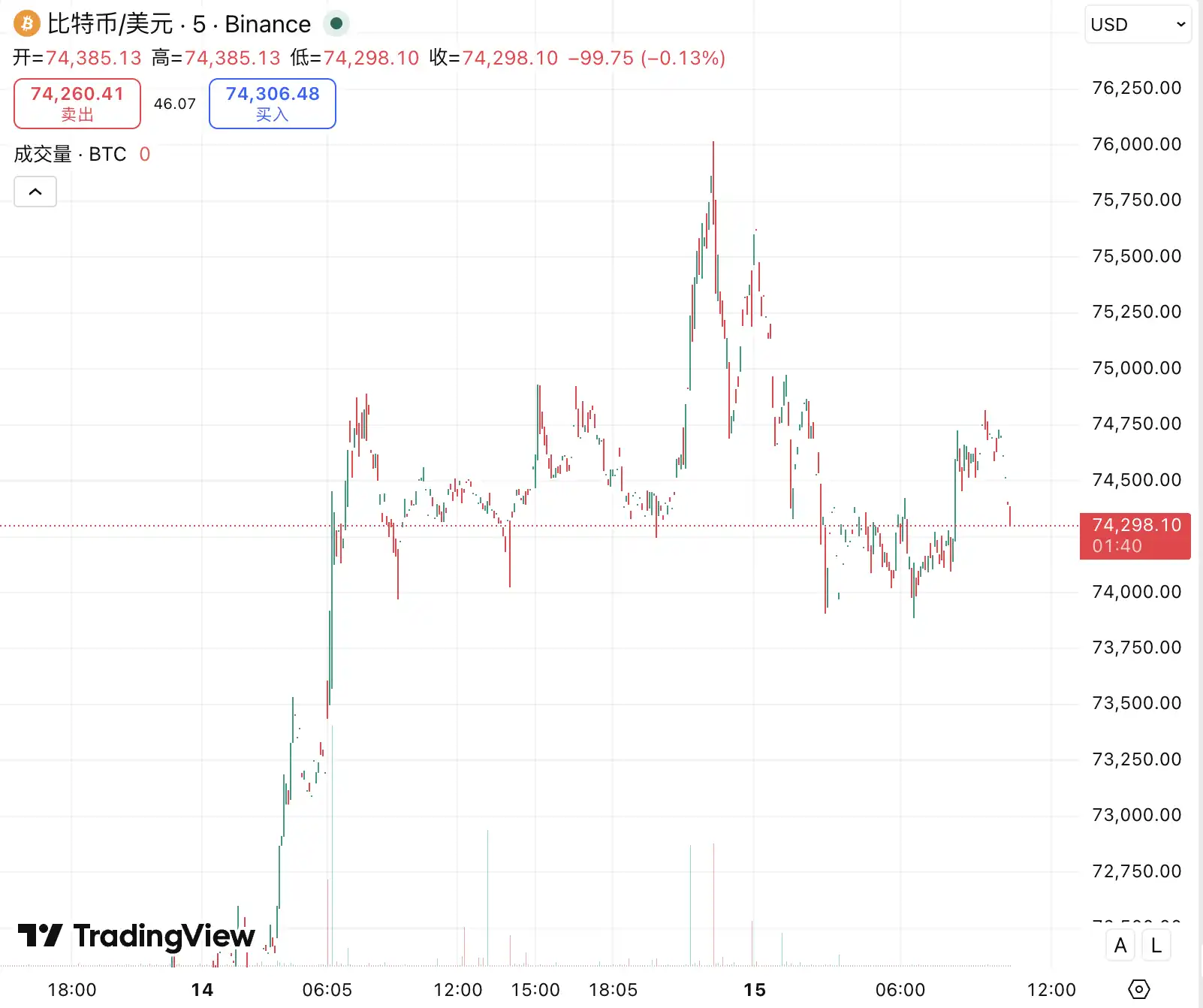
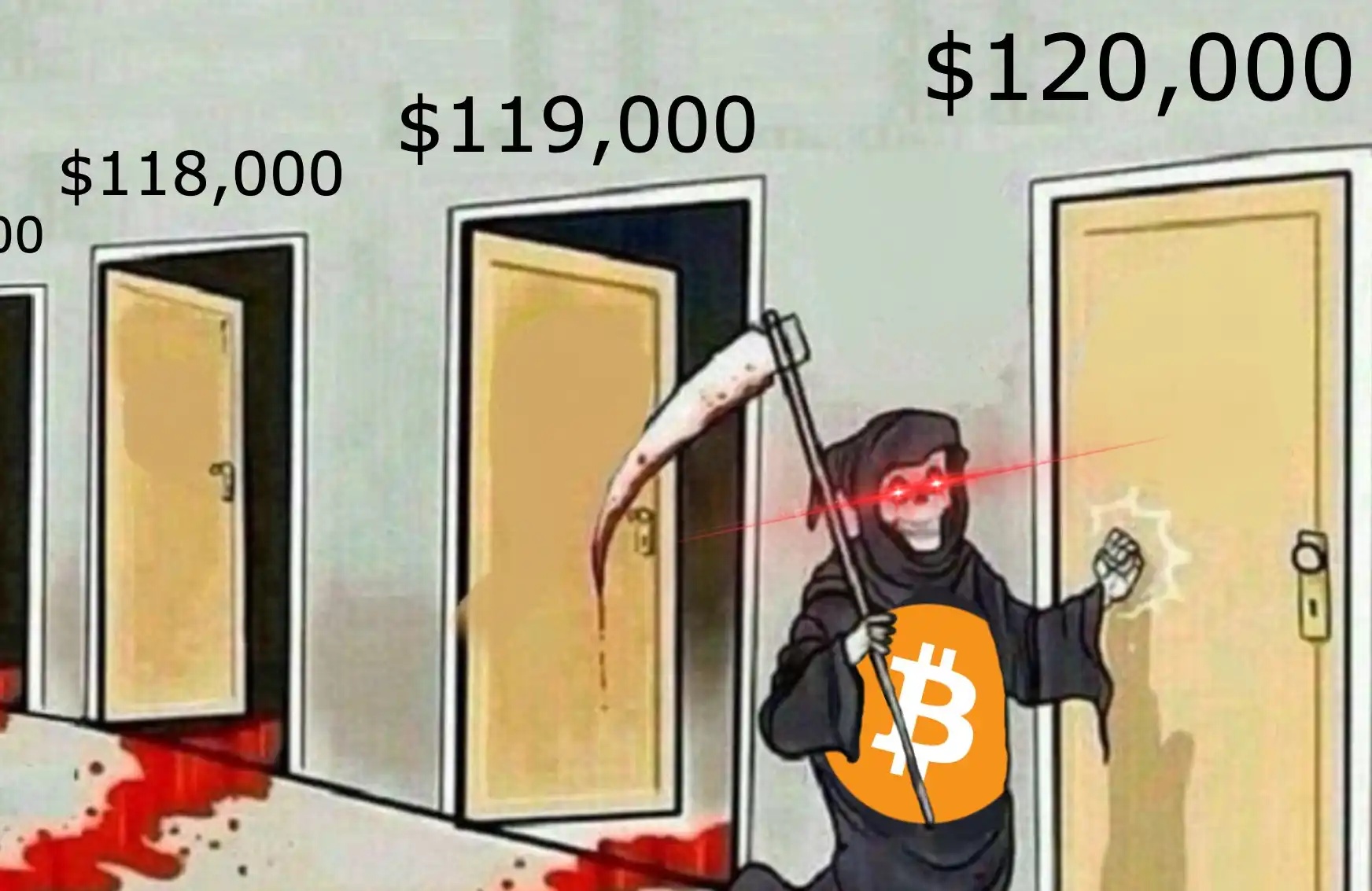
Bitcoin's on-chain data is also worth noting. Since 2026, the average daily transaction count of Bitcoin has increased by 62%, reaching 765,130 transactions on April 5, hitting a 17-month high. Analyst CW8900 put it plainly: "The current daily transaction count of Bitcoin is higher than when the BTC price was at $120,000, signaling bullish network behavior."
Of course, it's not all optimism. The cryptocurrency market funding rates show that both BTC and ETH have negative funding rates on major platforms like Binance, where shorts are paying fees to longs to maintain their positions. From a sentiment perspective, bearish signals have not completely subsided.
But the market seems to be rising due to the "expectation of the war's end."
Rich Privorotky, Head of Delta One trading at Goldman Sachs, puts it well: "The market seems to have declared victory in the war with Iran, even though the conflict itself has not truly ended."
Tom Lee's interpretation is more direct. Speaking to CNBC, he stated that current defense spending is around $30 billion per month and could potentially double to $60 billion, providing a significant boost to the economy. A $20 increase in oil prices would only add about $12 billion in monthly burden to households. "Overall, the war is actually helping corporate profits."
He referenced the precedent of World War II: the US stock market bottomed in May 1942, only five months after the US entered the war, when not a single soldier had set foot on the European or Pacific battlefields yet. "The market is good at anticipating outcomes in advance. The current stock market rally indicates that the market is pricing in a favorable outcome."
The Second Round of Negotiations is Coming
What may have triggered all of this is a geopolitical easing.
On April 14, President Trump reiterated in an interview with Fox News, "The Iran conflict is nearing its end." He added, "I think Iran wants to make a deal right now." He also revealed to the New York Post that a new round of US-Iran negotiations "could take place in the next two days" in Pakistan.
This follows on from last Saturday's "lengthy but unproductive" Islamabad talks. The US and Iran announced a two-week ceasefire on April 8, with the deadline set for April 22. According to Russian sources citing Arab diplomatic sources, discussions to extend the ceasefire are currently ongoing.
Who will represent the US? Trump has not specified, but confirmed that he will not attend. According to CNN sources, if a new round of face-to-face talks can be achieved before the ceasefire expires, Vice President Pence is expected to lead the second round of negotiations. Pence has stated that he will continue to strive for the "big deal" Trump hopes to reach with Iran.
After the news broke, WTI crude oil plummeted by 4% during Wednesday's Asian session. Meanwhile, commercial shipping in the Strait of Hormuz is improving.
According to the WSJ, over the past 24 hours, more than 20 cargo ships, container ships, and oil tankers have crossed the strait, although this is only a small fraction of pre-war levels.

Doug Peta, Chief US Investment Strategist at BCA Research, said, "As earnings season kicks off, fundamentals are more forcefully driving stock prices compared to the headlines of the Iran situation."
The noise of war persists. But the market has chosen to look ahead.
Welcome to join the official BlockBeats community:
Telegram Subscription Group: https://t.me/theblockbeats
Telegram Discussion Group: https://t.me/BlockBeats_App
Official Twitter Account: https://twitter.com/BlockBeatsAsia

 Related Articles