Tether Duality: USAT's Legitimate Persona and the Grey Empire of USDT


The most stable asset in the crypto market is a dollar without identity.
Over the past decade, with $170 billion in assets and ubiquitous liquidity, USDT has transformed itself into the "de facto dollar" of the crypto world. However, the more successful it becomes, the sharper the identity anxiety: a dollar without U.S. backing will always be a vulnerability.
In recent years, Circle has applied for a banking trust license, Paxos has built a global settlement network, and Visa and Mastercard have also stepped up their game in stablecoin settlements. In comparison, Tether has remained within the narrative of an "offshore shadow empire."
Under regulatory pressure and amid competition, in September 2025, the parent company of USDT, Tether, finally presented a brand-new solution: USAT. This marks its first attempt to provide the long-missing identification.
Simultaneously, Tether appointed 29-year-old former White House advisor Bo Hines as CEO. A decade ago, he was a star wide receiver for the Yale football team; now, he has been thrust into the most sensitive battlefield of the global financial market, becoming Tether's "legal facade" in the United States.
Hines was not parachuted in. In January 2025, the U.S. White House established the President's Digital Asset Advisory Committee, and his name prominently appeared on the list of executive directors. At just 28 years old, he was involved in driving the legislation of the "GENIUS Act," laying the groundwork for the U.S. stablecoin regulatory framework. Just a few months later, he resigned from the White House and transitioned to join Tether, the world's largest stablecoin issuer, taking on the responsibility of "pioneering" the U.S. market.
For Tether, this marks a strategic exploration deeply embedded in the U.S. political and regulatory system. Hines's arrival serves as Tether's leverage in Washington, as well as its first step in proactively correcting the image of the "shadow empire."
Yet, this is only the beginning. What truly gives USAT the opportunity to shed the impression of being an "offshore dollar clone" is the comprehensive compliance strategy behind it: from incorporating top-tier U.S. political and economic resources to aligning with institutional arrangements in the traditional financial market, Tether attempts to use a three-pronged approach to insert itself into the U.S. regulatory narrative and capital market logic.
The issuance of USAT is by no means just an expansion of the stablecoin landscape. It signifies that Tether is beginning to construct a "legal alter ego" mechanism: no longer content with the role of a global financial conduit, but aiming to reshape its identity to become a compliant part of the U.S. financial order.
The Birth of Legitimate Identity, Tether's Three Cards of USAT
Over the past few years, stablecoins have become one of the most nuanced assets in financial history. Not entirely the dollar, nor entirely cryptocurrency, yet they have permeated every corner of the globe in the last five years. Challenging the $500 billion valuation, Tether has constructed a vast "shadow dollar" system with USDT: in Latin America, it is the lifeline of worker remittances; in Africa, it has replaced local inflationary currencies; in Southeast Asia, it has become a settlement tool for cross-border e-commerce.
However, as the largest supplier in this system, Tether has always operated in regulatory blind spots. Blurred audits, complex offshore structures, and the shadows of money laundering and sanctions have earned it the label of "shadow empire." For U.S. regulators, Tether's existence is a paradox: on the one hand, it has driven the globalization of the dollar; on the other hand, it is seen as a potential systemic risk. A globally most widely circulated "digital dollar" ironically lacks a legitimate identity from the United States.
This identity misalignment finally forced Tether to come up with a new solution. In September 2025, it launched the USAT specifically for the U.S. market. This was not a simple iteration but a three-card experiment: people, money, and institutions. Tether aims to see if the shadow dollar can be accepted into the U.S. narrative through these three steps.
First Card: People
The first card of USAT is people, backed by Bo Hines's political endorsement.
Bo Hines, 29 years old. During college, he was the starting wide receiver for the Yale football team. An injury cut short his athletic career prematurely, leading him into politics.
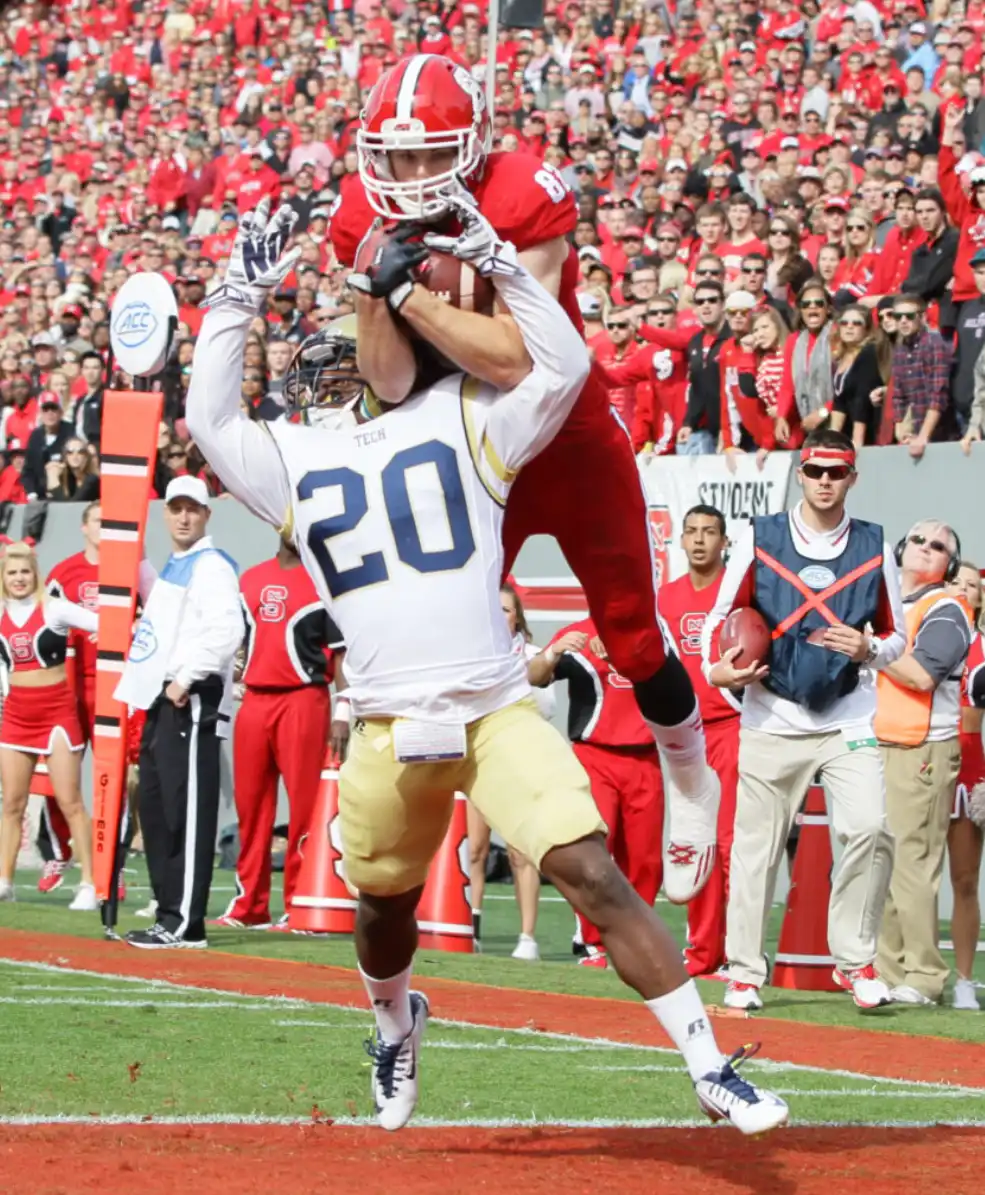
Bo Hines (in red) in football game image source: Yale Daily News
In 2020, he ran for Congress as a Republican candidate but was unsuccessful. However, he then entered the policy circles. Since 2023, Hines has served on the White House Digital Asset Advisory Council and was later promoted to Executive Director. According to public records, he was involved in drafting the "GENIUS Act" during his tenure, which was the first draft of stablecoin regulation legislation in the U.S. and served as a reference for subsequent proposals.
In August 2025, Hines left the White House. On August 19, Tether announced his appointment: Hines would join the company as a strategic advisor, responsible for compliance and policy communications in the U.S. market. In the same announcement, Tether also stated that they would be launching a U.S.-regulated stablecoin, USAT, in the coming months.
errorCard Three: Institution
The issuance and compliance of USAT will be carried out by Anchorage Digital Bank. This is the first digital asset bank in the US to receive a federal trust charter and one of the few compliance entities that can directly accept federal regulation. Unlike USDT, which relies on offshore architecture, USAT's reserve and audit processes will be integrated into the US institutional framework. This not only meets the regulatory requirements for stablecoin issuance under the GENIUS Act but also signifies that Tether, at the institutional level, has completed an "identity registration."
The geographical choice is also intriguing. Tether will base USAT in Charlotte, North Carolina—the second-largest financial center in the US, home to traditional financial institutions such as Bank of America. Compared to New York and Washington, Charlotte not only has a strong financial atmosphere but is also relatively away from the regulatory spotlight. This detail indicates that Tether is not satisfied with just institutional design changes but is attempting to truly implement these changes in operational reality.

Bank of America Corporate Center in Charlotte Image Source: SkyscraperCenter
Therefore, USAT is not just a new stablecoin but a formal handshake between Tether and the US market. Politically Bo Hines, financially Cantor, institutionally Anchorage—this forms a complete compliance combination, transforming Tether from a "shadow dollar" supplier to an "institutional participant."
However, how far this transformation can go remains an open question. Tether's essence has not changed: its business path remains global, its structure remains offshore, and its fund flows remain complex. USAT may provide a US identity card, but it is challenging to immediately alter the market's fundamental perception of Tether.
The launch of USAT signifies that Tether's issuance of stablecoins has extended to a identity reconstruction: the shadow dollar is beginning to knock on Wall Street's door.
Will the Stablecoin Market Landscape Be Reshaped?
In the US market, Tether's new move directly targets Circle and its issued USDC.
Over the past few years, USDC has been the representative of the US compliant market. However, compared to USDT, USDC's volume and circulation are much smaller. As of September 2025, its market capitalization is around $70 billion, accounting for 25–26% of the stablecoin market.
Despite being only a third of USDT's volume, USDC has established solid trust in U.S. politics and Wall Street through an exclusive partnership with Coinbase and endorsements from institutions like BlackRock.
Circle even repurchased the stake of the joint venture Center in 2024, becoming the sole issuer of USDC to further strengthen its control. The longstanding implicit narrative of USDC has been: U.S. compliance equals security, offshore markets equal risk.
However, it is this very path that has also given Tether room to exert pressure.
Tether's CEO Paolo Ardoino has emphasized multiple times that the significance of USAT is to break the potential monopoly USDC could form in the U.S. market.
He plainly stated: "Without USAT, the stablecoin market in the U.S. could be locked in the hands of a few institutions." In other words, the strategic mission of USAT is not just a product upgrade, but also a direct confrontation with USDC in the market.
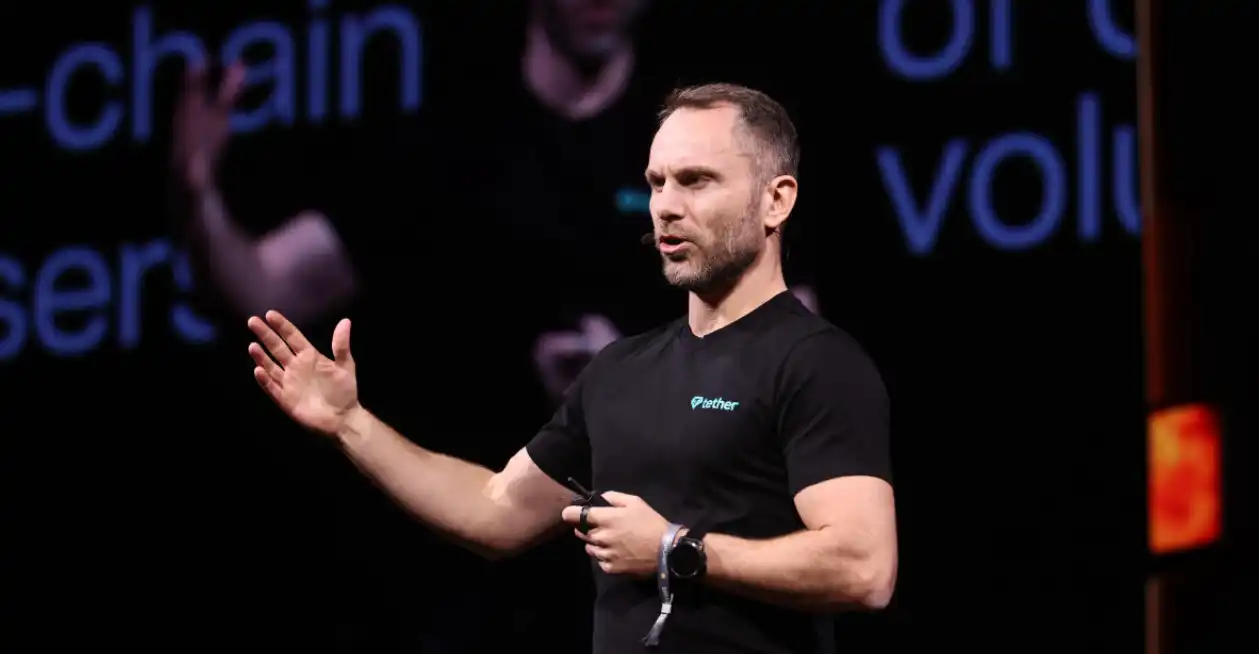
Tether's CEO Paolo Ardoino speaking at the 2025 Bitcoin Conference in Las Vegas Image Source: Nasdaq
Tether's launch of USAT is equivalent to attempting to fill the "compliance gap" with its substantial volume. The significance of USAT is to allow Tether to combine volume and compliance for the first time, posing a direct threat to USDC's moat.
If Circle represents the top-down compliance faction, rooted in the U.S., then Tether is using USAT to construct a "dual narrative": maintaining a vast network of the "gray empire" globally while shaping a "compliant alter ego" in the U.S. market.
The future stablecoin market is likely to evolve into a "dual-track structure": USDT will continue to maintain a strong user base globally, especially in Latin America, Africa, and Southeast Asia, while USAT will focus on the U.S. domestic market and institutional clients. This structure can solidify Tether's advantage in emerging markets and attract more institutional funds in terms of compliance, bringing new expansion momentum to the entire ecosystem.
For Tether, this is not just about issuing a new coin or advancing a listing; it is a transformative identity shift. Once listed on the U.S. capital market, it can completely shed the label of the "shadow empire" and enter the global financial stage as a "dollar company."
However, Tether's aggression is bound to draw a response from its competitors. Circle is likely to accelerate its collaboration with regulatory bodies and institutions to further solidify USDC's compliance moat; licensed issuers like Paxos may take advantage of the situation to expand their presence in niche markets such as payments and cross-border settlements.
Traditional financial giants have also shown interest, with everyone from Visa and Mastercard to Wall Street investment banks exploring how to integrate stablecoins into the existing system. It can be foreseen that the launch of USAT will not only mark a turning point for Tether but also potentially ignite a new round of stablecoin race.
Epilogue
The launch of USAT has presented Tether with an unprecedented opportunity but has also brought along new risks to overcome. Will the market believe that a much-doubted 'shadow empire' can truly achieve self-transformation through a compliant alter ego?
Historical experience shows that the 'whitewashing' of gray forces is not without precedent.
In the late 19th century, there was widespread distrust of financial capital in American society, with the Morgan family even being called 'financial oligarchs'. Technically, the Morgans did not break the law, but in an era lacking modern regulations, their vast capital and influence were often seen as 'hijacking the public interest', thus becoming the 'gray force' of the time.
However, banker John Pierpont Morgan changed this image through practical actions: assisting the government in issuing bonds, resolving financial crises, and helping to restructure debts of railway companies. Over time, it transformed from a 'capital oligarch' into the 'nation's financial agent'.
Today, Tether's large-scale purchase of US bonds and the idea of a compliant version of a stablecoin are somewhat similar to Morgan's actions back then, exchanging problem-solving for a legitimate identity.

Morgan Family's old address on Wall Street Image Source: NYC Urbanism
However, not all 'gray giants' can smoothly undergo such a transformation.
As the world's largest cryptocurrency exchange, Binance was almost entirely 'offshore' in its early days, operating outside regulatory boundaries. In recent years, it has started to seek licenses in markets such as France and Abu Dhabi, attempting to move towards compliance and entering the US market. However, in the US, it faced the toughest regulatory resistance and ultimately had to downsize and tighten its operations. This cautionary tale indicates that gray giants looking to 'whitewash' will not find regulatory approval easy to come by.
This implies that Tether's future remains highly uncertain. Reserve transparency, compliance enforcement, and interaction with regulatory bodies will all be indicators continuously tested in the coming years.
At the same time, the acceleration of competition has begun to emerge.
Circle is applying for a U.S. national trust bank charter to strengthen its compliance capabilities, further solidify its ties with regulators and institutional investors; Paxos has revealed a significant increase in demand for its stablecoin infrastructure and has partnered with Mastercard to launch the "Global Dollar Network," aiming to expand the usage of a dollar-pegged stablecoin; meanwhile, Visa is continually expanding its support for stablecoin settlements, driving the integration of such products into existing payment systems. Concurrently, Plasma is taking on-chain settlement and cross-border payments as an entry point, attempting to embed stablecoins directly into the underlying pathways of the global payment network.
The stablecoin market is transitioning from its early days of wild growth into a more intense and institutionalized competitive phase.
USAT has Tether attempting to file its identity for the first time in Washington. The real test is not on the chain but at the meeting table: who can leave their mark on the regulatory agenda, and who is qualified to define the next generation of digital dollars. Whether the shadow empire can step into the sunlight remains the biggest suspense of crypto finance.
Welcome to join the official BlockBeats community:
Telegram Subscription Group: https://t.me/theblockbeats
Telegram Discussion Group: https://t.me/BlockBeats_App
Official Twitter Account: https://twitter.com/BlockBeatsAsia