Bitget US Stock Trading Guide
Article Source: Bitget
CEO Letter
Dear Esteemed US Stock Trader,
From now on, you are no longer a "crypto degenerate," you are an esteemed US stock trader. To all respected Nasdaq & NYSE decentralized finance research analysts, Chicago Mercantile Exchange and US stock traders, may the Bitget US Stock Trading Guide help illuminate the trading journey of every esteemed US stock trader!
Bitget CEO
Gracy Chen
Table of Contents
Foreword
Unit 1: Getting to Know Bitget's Stock Products
1.1 What Are Stock Tokens
1.2 What Are Stock Contracts
1.3 Why Choose Bitget
Unit 2: Initiating First Bitget Stock Token and Stock Contract Trades
2.1 Introduction to Bitget Stock Market Section
2.2 How to Start Your First Stock Token Trade
2.3 How to Start Your First Stock Contract Trade
Unit 3: Newbie Strategies
3.1 Earnings Season Strategy
3.2 Fundamental Analysis Strategy
3.3 Newbie Technical Indicators
Unit 4: Intermediate Strategies
4.1 Stock Contract Hedging Idea
4.2 Crypto Asset + Stock Contract Correlation Trading
4.3 Intermediate Technical Indicators
Unit 5: Advanced Strategies
5.1 Macro Trading Strategy
5.2 Contract Risk Management
Appendix
Foreword
The boundary between the crypto market and traditional finance is being redefined.
With the emergence of Stock Tokens and Stock Contracts, traditional assets such as US stocks are no longer confined to Wall Street's trading hours but have entered the trading scene of the crypto world—allowing traders to participate in the price fluctuations and thematic trends of global leading companies in a single account, priced in USDT, and using familiar crypto trading methods.
This is exactly the experience Bitget has built within the Universal Exchange (UEX) framework:
Connecting crypto with global assets, bringing market opportunities that were originally scattered across different systems back into the same trading logic.
However, behind this opportunity also come new product structures, trading mechanisms, and sources of risk.
Stock Tokens and Stock Contracts are neither the same as spot crypto assets nor equivalent to traditional securities trading, posing higher requirements for understanding and execution.
Based on this, we have prepared this "Bitget US Stock Trading Guide" aiming to help traders at different stages systematically master the operational paths, risk control methods, and practical strategies for trading Stock Tokens and Stock Contracts on Bitget, enabling you to not only know how to participate but also understand how to find opportunities in volatility.
Unit 1: Understanding Bitget's Stock Products
1.1 What is a Stock Token
Definition
A Stock Token refers to a tokenized product issued and traded on a crypto platform, with the price reference being a stock of a listed company. Its purpose is to allow users to participate in the price fluctuations of traditional stocks using a crypto account and stablecoins such as USDT.
Price Anchoring
The Stock Tokens supported by Bitget are issued by Ondo Finance, with Ondo being the industry-leading RWA platform. According to Ondo's current anchoring mechanism, when a user places an order to buy $100 worth of Stock Tokens, Ondo will purchase $100 worth of the corresponding stock on the stock market (such as NASDAQ) and mint the Stock Tokens on the chain; when the user sells, Ondo will immediately destroy the Stock Tokens and sell the stock in the stock market. This achieves a 1:1 anchoring of Stock Tokens to stocks.
Ondo will regularly release audit reports, which can be viewed in the "Token Holder Protection" section on the Ondo Global Market asset product details page.
Trading Hours
The stock tokens are traded 24/5; their price is influenced by the U.S. regular market hours/pre-market/post-market.
Bitget Stock Token Supported Trading Underlyings (as of December 2025)
Bitget now supports 200+ stock token tradings, including:
Tech Giants: Apple (AAPLon), Tesla (TSLAon), Microsoft (MSFTon), Google (GOOGLon), Nvidia (NVDAon), Meta (METAon), Amazon (AMZNon), and other globally influential tech companies
Crypto-related Stocks: MicroStrategy (MSTRon), Robinhood (HOODon), Circle (CRCLon), Coinbase (COINon), and other star companies representing the development of the crypto industry
International renowned companies and ETFs: Disney (DISon), Netflix (NFLXon), Goldman Sachs (GSon), iShares series ETFs, SPDR S&P 500 ETF, covering assets in consumer, finance, energy, and global indices
Chinese Concept Stocks: JD.com JDon, Futu FUTUon, and other high-quality Chinese tech companies
1.2 What is Stock Contract
Definition
Bitget Stock Contract is a USDT-margined perpetual contract based on the tokenized U.S. stock assets index. By tracking the price index of tokenized stocks, it allows you to participate in the price movements of top global companies like Apple and Tesla in a familiar cryptocurrency perpetual contract manner with zero threshold.
Three Key Differences from Traditional U.S. Stocks
Trading Hours: 24/5 each week (Monday 00:00 to Saturday 00:00 UTC-4), far exceeding the daily hours restriction of traditional U.S. stocks, but with a slight market closure arrangement compared to full-time crypto contracts.
Asset Form: No ownership of actual stocks, but synthetic contracts based on tokenized indices.
Account Opening Process: No complex account opening, identity verification, or cross-border remittance required.
Leverage and Direction: Supports Bi-directional Trading + High Leverage (up to 25x), while traditional US stock spot trading usually has no leverage or very low leverage, and it is difficult to short sell conveniently.
Bitget Stock Contract Supported Trading Objects (as of December 2025)
Since the launch of Bitget US Stock Perpetual Contracts in September 2025, they have rapidly expanded. They currently mainstream support 30+ US stock-related perpetual contracts and continue to add new ones regularly.
Individual Stock Perpetual Contracts: TSLAUSDT (Tesla), NVDAUSDT (Nvidia), AAPLUSDT (Apple), MSTRUSDT (MicroStrategy), METAUSDT (Meta), COINUSDT (Coinbase), etc., covering popular sectors such as technology, semiconductors, crypto concepts, and finance.
Index Perpetual Contracts: QQQUSDT (Nasdaq 100 Index), other US stock industry/composite index contracts.
The popular trading objects for stock contracts are: TSLA, NVDA, MSTR, AAPL, META, etc., with a total trading volume easily surpassing the billion-dollar level, and liquidity continues to strengthen.
Trading Mechanism and Key Parameters Overview
Contract Type: USDT-M Perpetual Contract (USDT Margin Settlement)
Leverage: 1-25x (adjusted in tiers based on specific objects, up to 25x for popular stocks, 10-25x for some index contracts)
Margins Mode: Isolated / Cross (it is recommended for novices to control risks by using isolated margin first)
Funding Rate: Settled every 4 hours (mechanism is the same as regular crypto perpetual contracts, long-term holders need to pay attention to directional costs)
Trading Hours: Monday 00:00 - Saturday 00:00 (UTC-4), trading is paused during holidays and underlying market closures
Minimum Price Movement Unit (Tick Size): Usually 0.01 USDT
Liquidation Mechanism: Triggered by the mark price + Insurance Fund to protect against negative balances
Special Note: No opening/closing positions during market closures, there may be significant price gaps when trading resumes after the break, so be cautious about holding positions over the weekend
1.3 Why Choose Bitget
Compared to traditional US stocks, the Bitget Stock function has the following core advantages:
24/7 Trading: Following the style of the crypto market, trading is available from Monday 00:00 to Saturday 00:00 UTC-4, surpassing the traditional US stock market opening hours restriction, allowing users to position themselves before the market opens.
Support Long and Short Positions: Regardless of market conditions, users can still profit in both bullish and bearish markets through Bitget US Stock contracts.
Up to 25x Leverage: Some popular tech stock contracts can have leverage of up to 25x, while other index contracts have a flexible leverage of 10-25x.
No Need to Hold Real Stocks: Users can benefit from price movements without holding the actual stocks. Additionally, Bitget US Stock contracts have no settlement date or expiration date, allowing positions to be held indefinitely.
Transparency and Security: All stock token trading records are on-chain and visible, reducing the space for potential opaque operations by traditional intermediaries.
On-chain Applications: Stock tokens can be integrated into the DeFi (Decentralized Finance) ecosystem. Users can not only hold these tokens but also use them as collateral for on-chain borrowing or participate in liquidity mining, thereby unlocking asset liquidity.
Commission Structure: Bitget regularly launches zero transaction fee trading events, which are highly attractive to stock high-frequency traders.
Interchangeable with Spot Account Funds: Bitget now supports a unified account, eliminating the need for a separate account application. In this unified mode, fund transfers are more convenient, and operations are smoother.
Full Coverage of Popular Stocks: Covering tech giants and crypto-related assets such as TSLA, NVDA, AAPL, MSTR, META, and other high-demand, high-volatility US stocks, meeting user investment needs.
Which Users are More Suitable for Bitget Stock Trading?
Bitget Stock trading is suitable for users who are familiar with the crypto contract interface, do not want to open a traditional US stock account, like to use leverage, seek around-the-clock trading flexibility, are aggressive, and hybrid users who frequently trade both coins and stocks.
Investors Bullish or Bearish on the US Stock Market but Do Not Want to Open a US Stock Account
No need to open a traditional brokerage account, no need to go through the cumbersome KYC process of overseas brokers, no need to deal with USD deposits and withdrawals. You can directly trade popular US stocks such as Apple, Tesla, Nvidia, Coinbase, etc., using USDT in your wallet.
Investors Accustomed to Crypto Trading Interfaces and 24-Hour Markets
For cryptocurrency users, the interface, order types (limit/market/conditional orders), leverage adjustment, position management, and funding rate mechanism are almost identical to BTC/USDT, ETH/USDT perpetual contracts. Trading is open almost 24/7 from Monday to Saturday (with pauses during US stock market holidays and closures), much longer than traditional stock market hours.
Investors Looking to Amplify Stock Price Volatility Gains with Leverage
Up to 25 times leverage available (some stock index contracts offer 10 times leverage), much higher than the 2-4 times margin trading typically offered by most traditional US stock brokers. Whether you want to amplify gains from a small investment in Tesla or Nvidia's surge, or want to heavily short overvalued tech stocks, you can greatly magnify your volatility gains.
Hybrid Investors Trading Both Cryptocurrency and Traditional Stocks
With the same account, the same USDT funds, the same app, and the same interface, you can easily switch between:
Trading BTC, ETH futures during extreme price movements
Switching to NVDA, TSLA, META, following US stock earnings reports, and tech stock trends
Switching back to altcoins or meme coins without the need for cross-platform transfers, significantly improving fund efficiency and operational smoothness.
Short-Term Investors Looking to Short Overvalued Tech Stocks or Capture Short-Term Volatility
Those accustomed to shorting in the crypto market can easily short high-valuation stocks such as Tesla, Nvidia, Meta, without facing the challenges of stock borrowing and expensive shorting costs. Short-term opportunities such as trading earnings reports, news events, and pre-market/post-market volatility are also very flexible (Note: Funding rates may be high during extreme one-sided market movements, so when shorting, pay attention to the rate direction to avoid being "rate killed").
Veteran in the Crypto Community
A large amount of cryptocurrency is concentrated in BTC and Ethereum, making it vulnerable to systemic risks across the market. By shorting certain tech stocks or longing defensive stocks through US stock perpetual contracts, a certain level of asset portfolio hedging can be achieved.
Small-cap High-frequency, Quantitative, and Grid Users
Low fees + USDT settlement + familiar API interface + high leverage, particularly suitable for players using bots, grid trading, Martingale strategy, etc., in the US stock direction.
Investors Particularly Interested in the RWA (Real World Assets) Track
Bitget stock contracts are essentially one of the most mature and liquid on-chain RWA derivatives currently available, suitable for users looking to get an early start in the RWA track.
Module 2: Initiating the First Bitget Stock Trade
2.1 Introduction to the Bitget Stock Section
How to Access the Bitget Stock Section?
Update the Bitget App to the latest version, click on [Market] on the bottom bar of the homepage, then click on the top tab [Stock] to enter the Bitget Stock section.
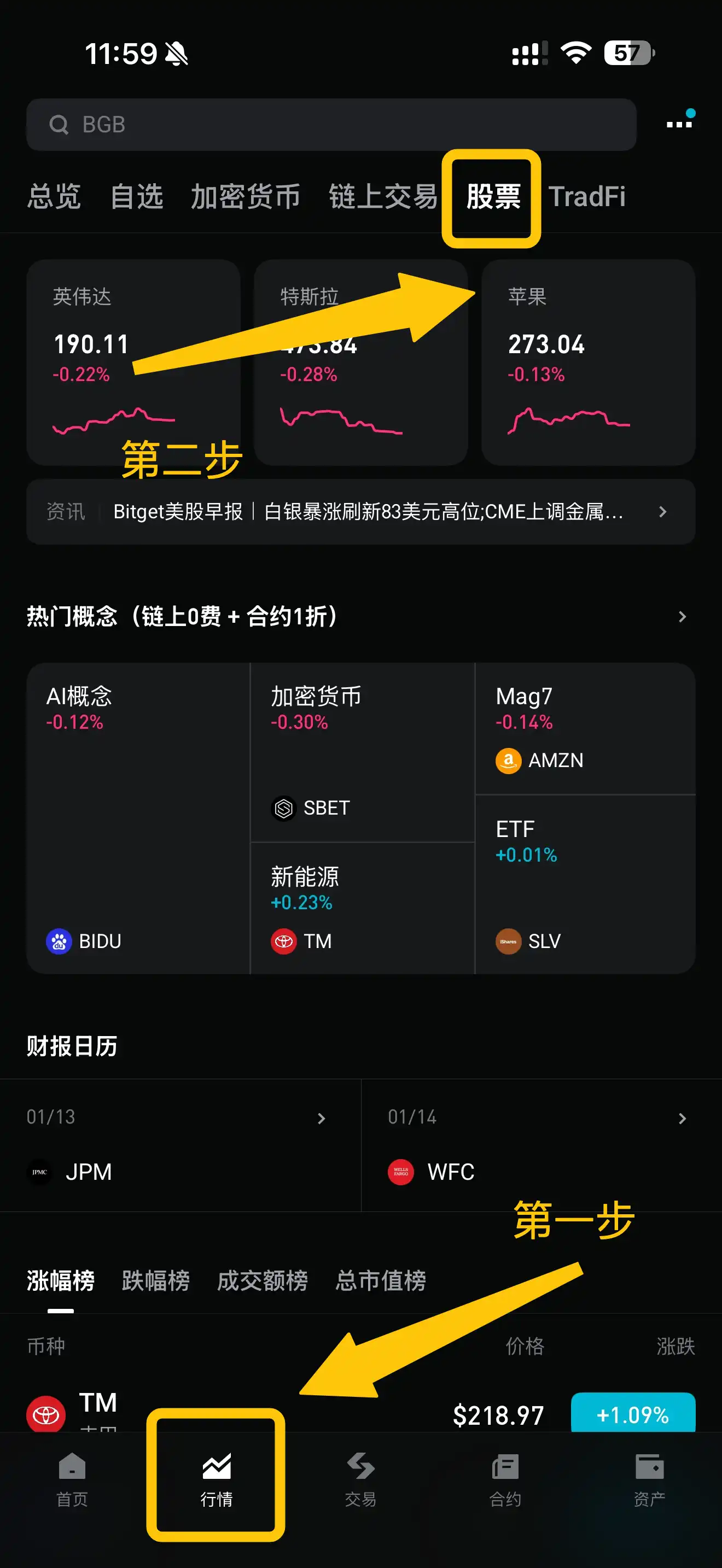
Within the stock section, there are diverse data dimensions to help users fully understand real-time market trends and the trends of different sectors/concepts, including:
Popular Stock Trends—automatically selects the hottest stock tokens for you at the moment
Latest Market Information—quickly understand global market information within the Bitget App
Popular Concept Classification—shows you the trends of different concepts to assist your trading decisions
Financial Report Calendar—presents the most critical time points for stocks in each quarter in calendar form
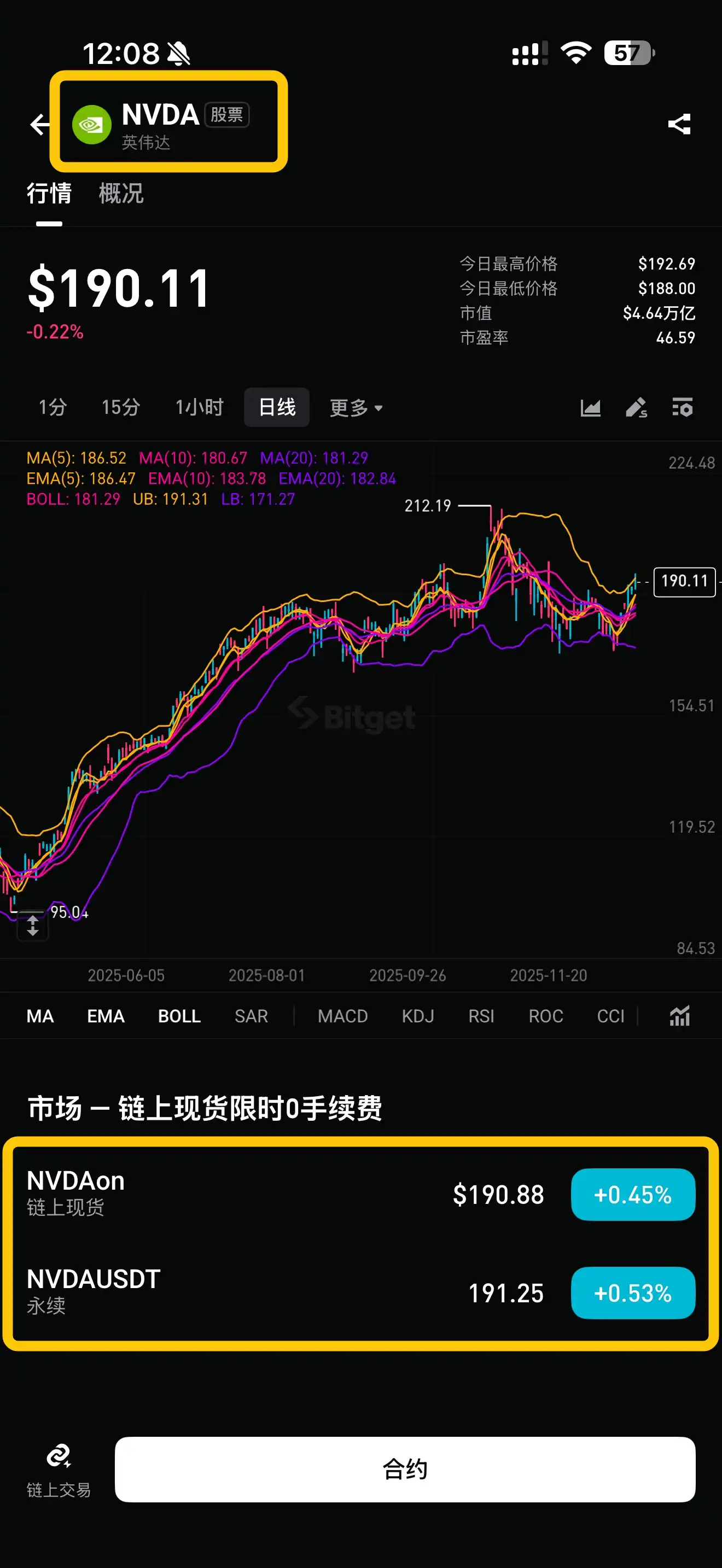
In the individual stock quote page, users can view price trends at different time dimensions on this page, and at the bottom, users can choose to trade stock tokens or stock contracts.
2.2 How to Start the First Stock Token Trade
How to Access the Bitget Stock Token Trading Page?
In the individual stock quote page, select the stock token you wish to trade, for example: TSLA (Tesla), and click to enter the corresponding trading interface TSLAon.
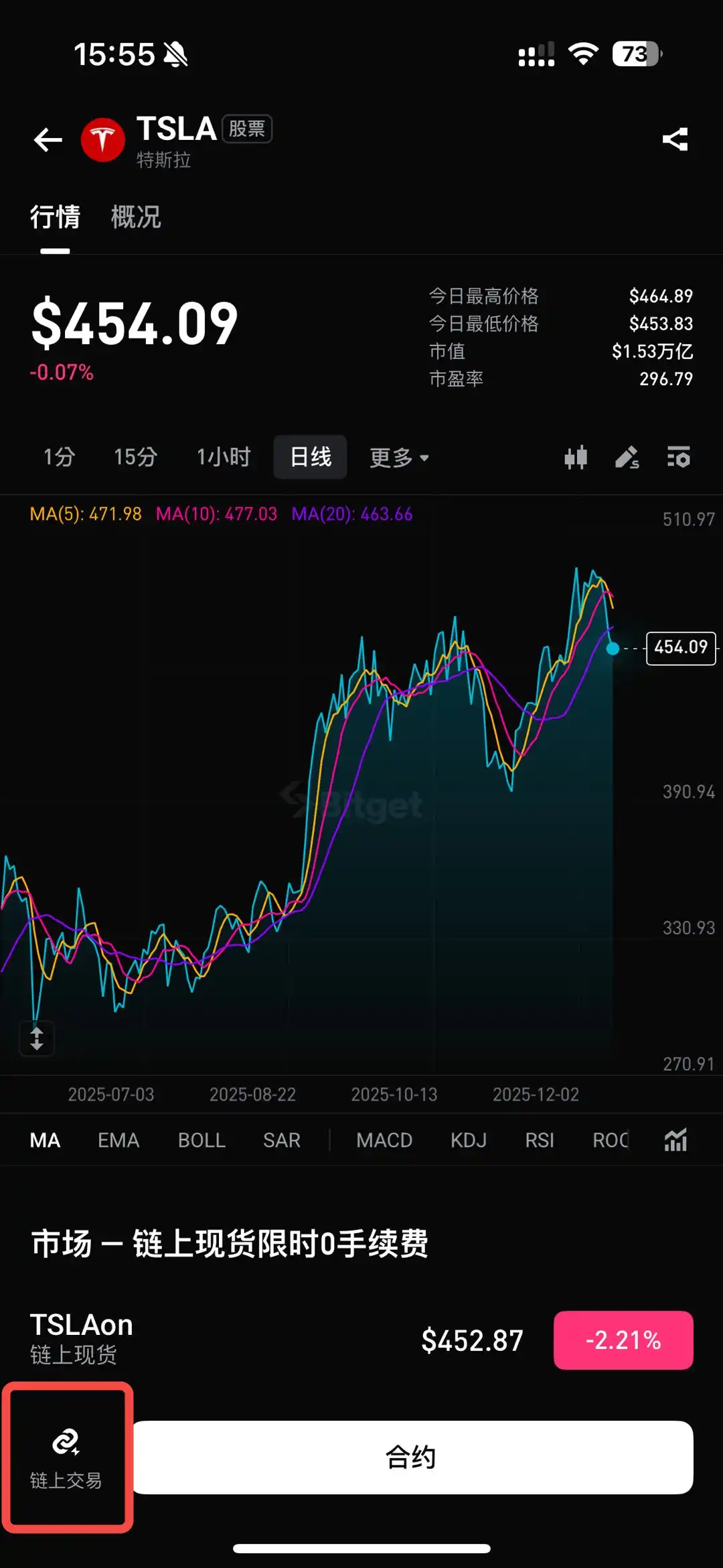
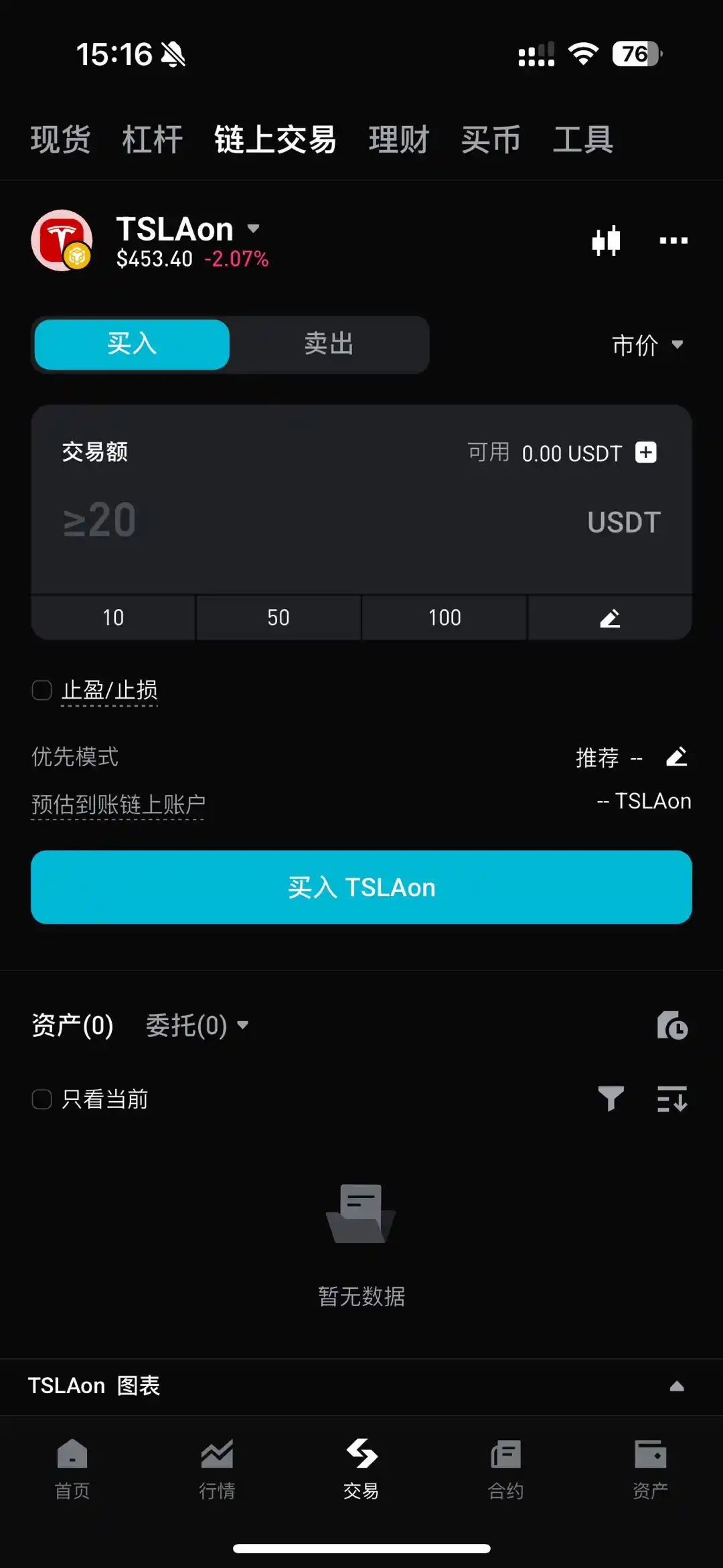
After selecting the target trading pair, you can begin trading and order management.
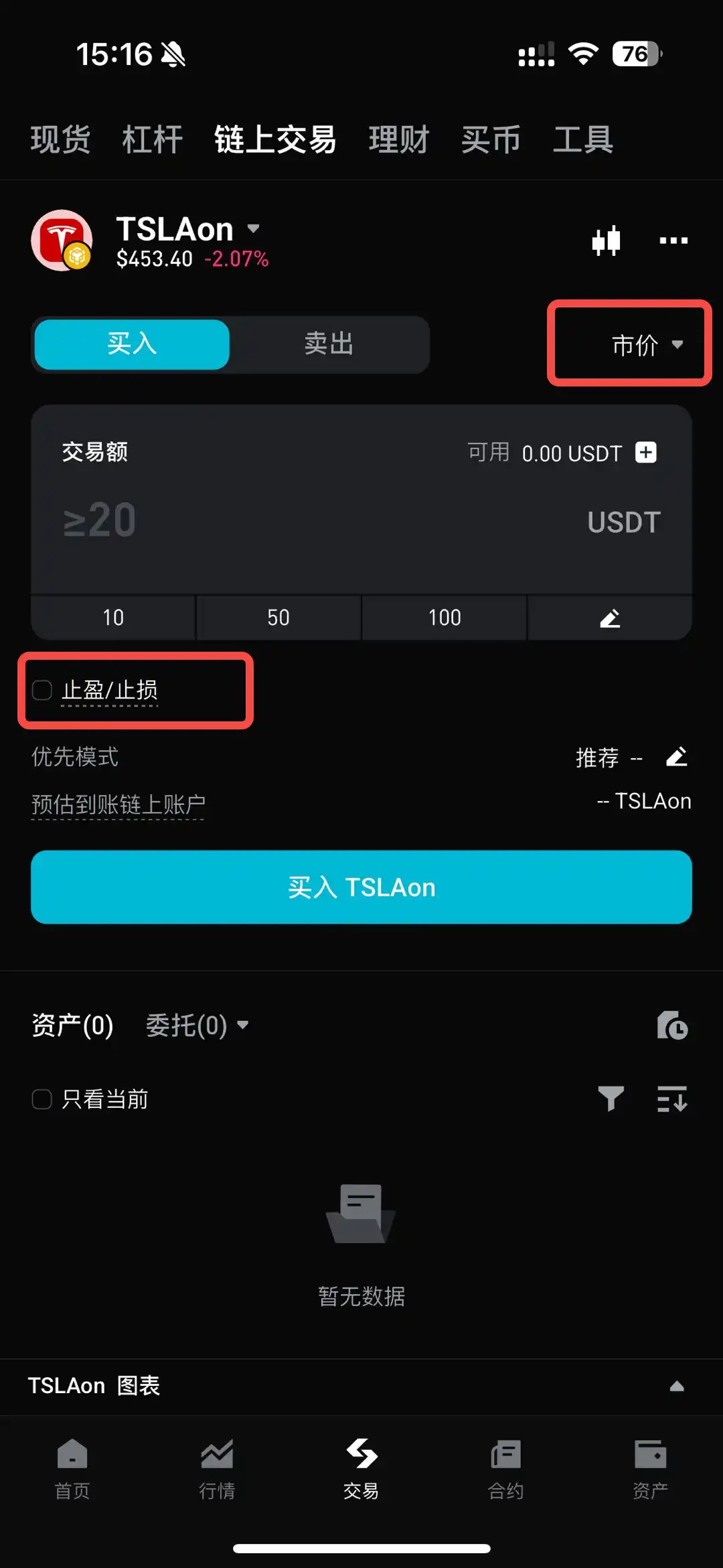
Choose the Appropriate Order Type:
Market Order: Executed immediately, suitable for quick entry.
Limit Order: Set a specific price and quantity, order enters the order book, and executes when the market price is reached. Bitget supports 0 Gas limit orders.
Enter Quantity: Calculate position size based on your funds.
Set Take Profit/Stop Loss (TP/SL): Strongly recommended to manage risk. For example, set the stop loss price below the entry price (when going long) to prevent further losses.
Click "Buy" or "Sell" to Confirm Order: After the order is executed, view details in the "Position" or "Holdings" tab, including unrealized gains or losses.
Close Position: Go to the "Holdings" page, select "Market Close" or set a limit close.
2.3 How to Start the First Stock Contract Trade
How to Access the Bitget Stock Contract Trading Page?
In the individual stock quote page, select the contract you wish to trade, for example: TSLA (Tesla), and click to enter the corresponding trading interface TSLAUSDT (Perpetual).
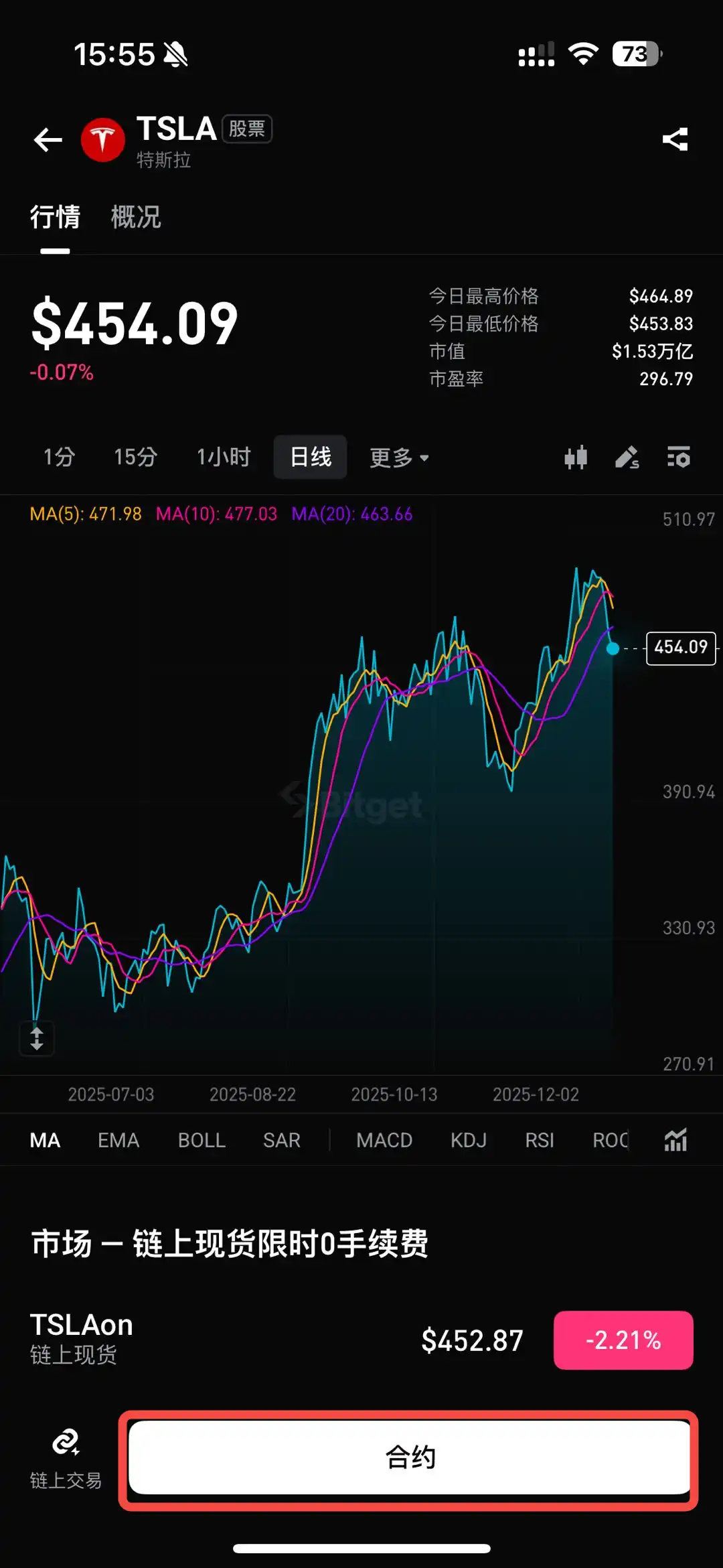
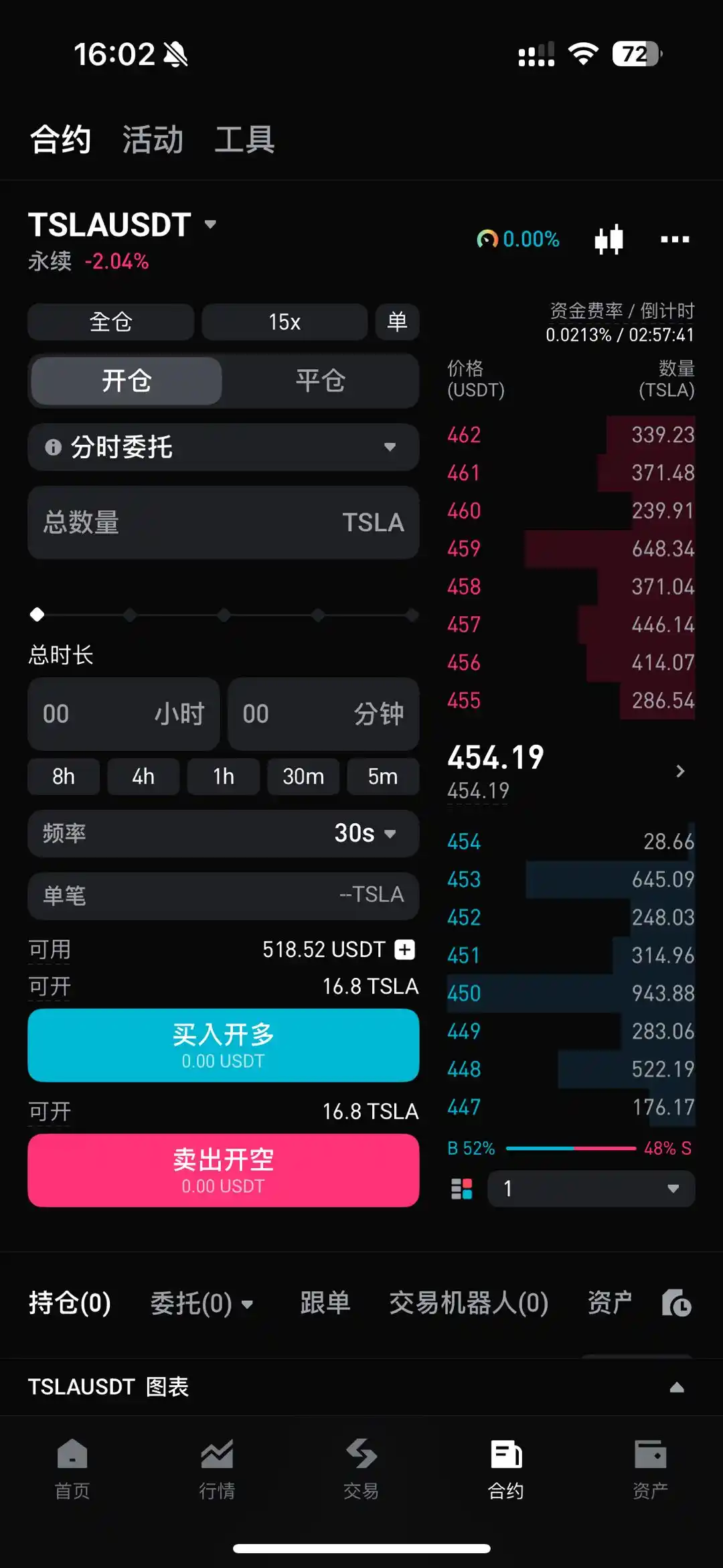
Leverage and Margin Mode Setup:
Click on the leverage icon (default might be 10x), and users can also adjust to a suitable multiplier (beginners are recommended to start with 1x–5x, up to a maximum of 25x, but risk increases accordingly).
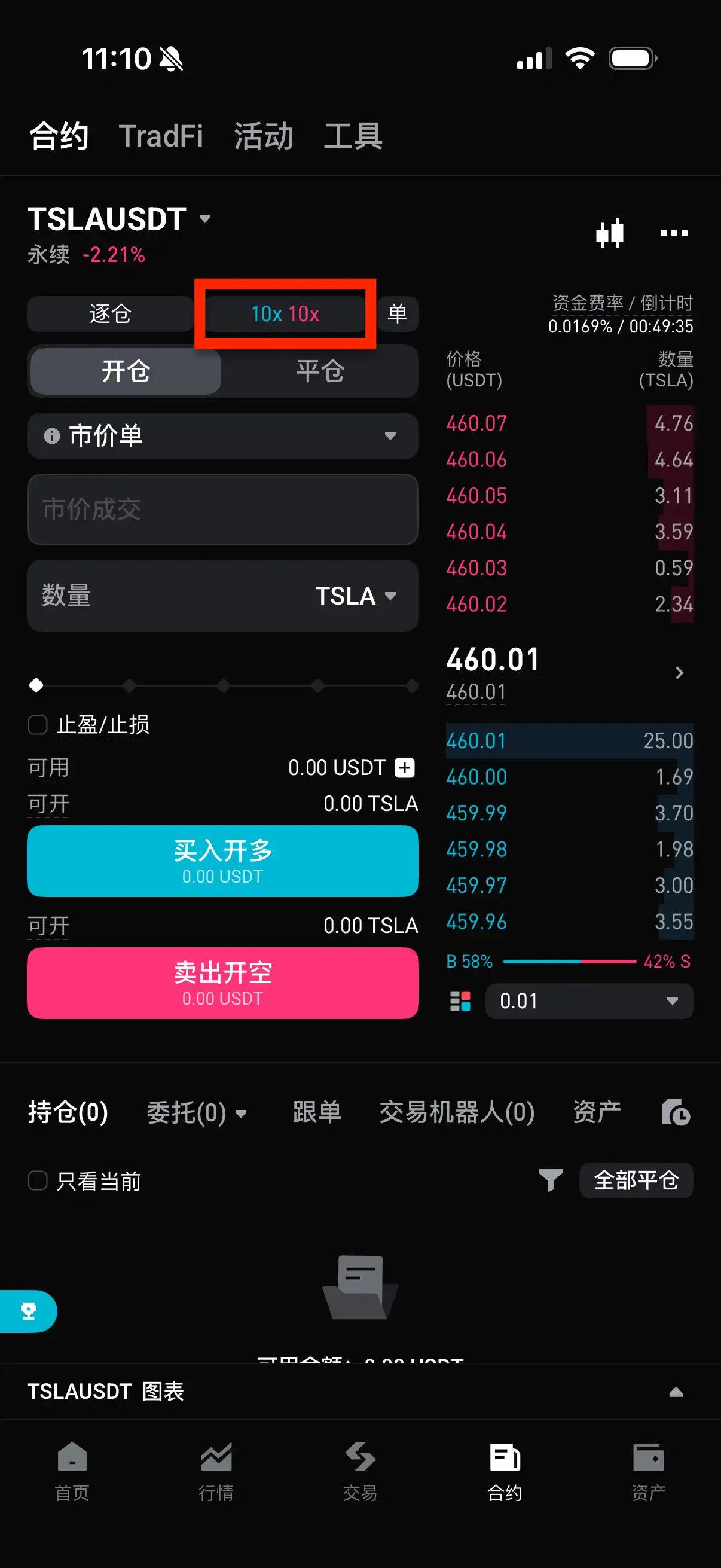
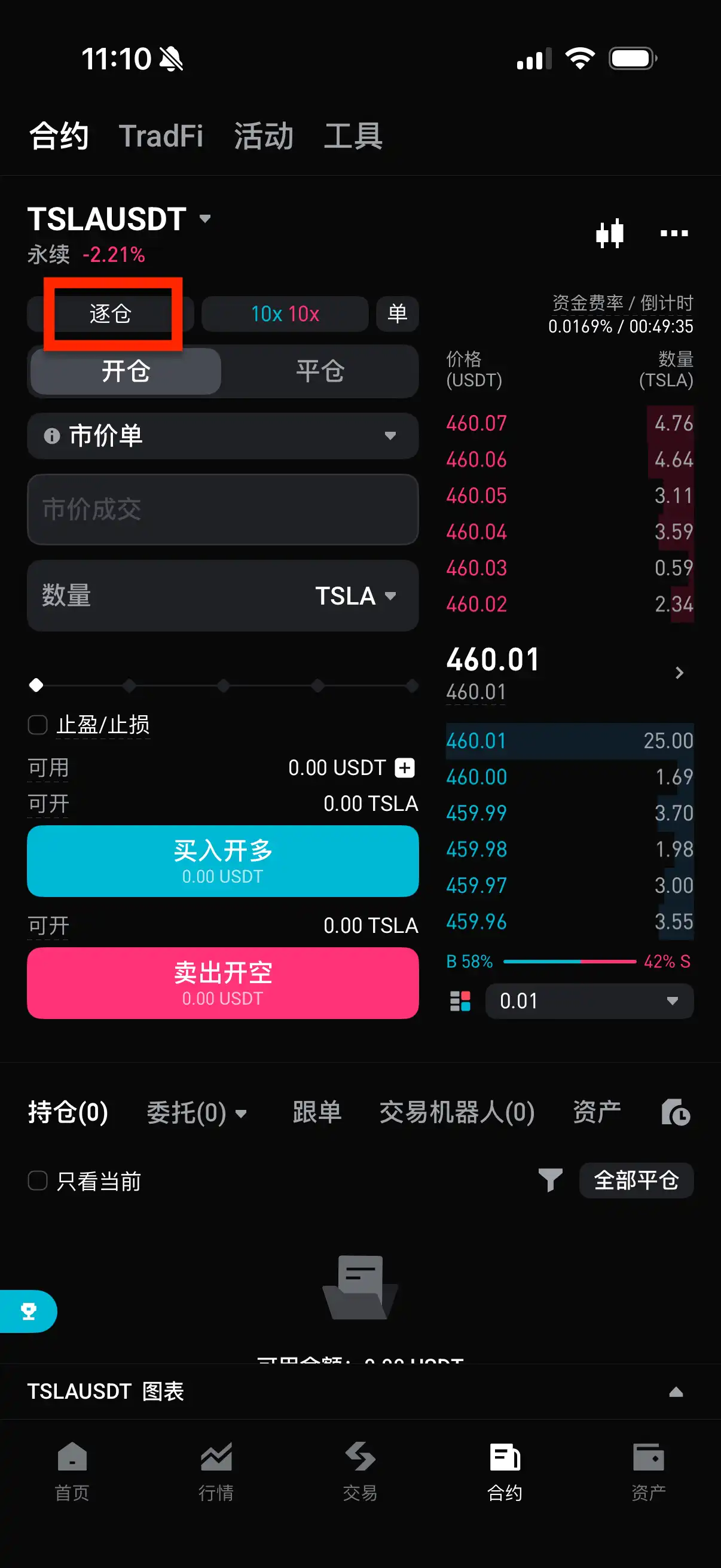
Margin Mode: Supports Cross, Isolated, and Unified Account modes.
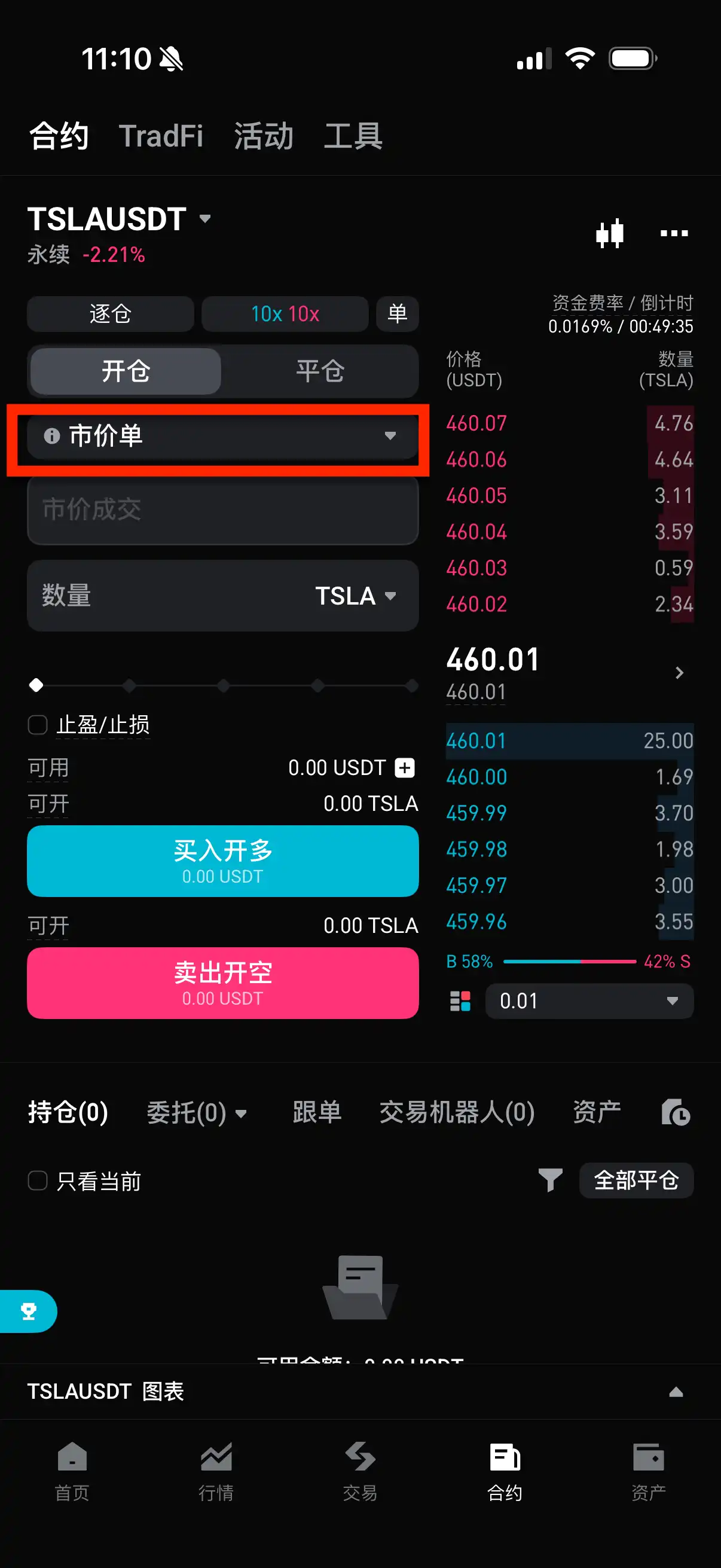
Choose the appropriate order type:
Market Order: Immediate execution, suitable for quick entry.
Limit Order: Specify price, suitable for placing precise orders.
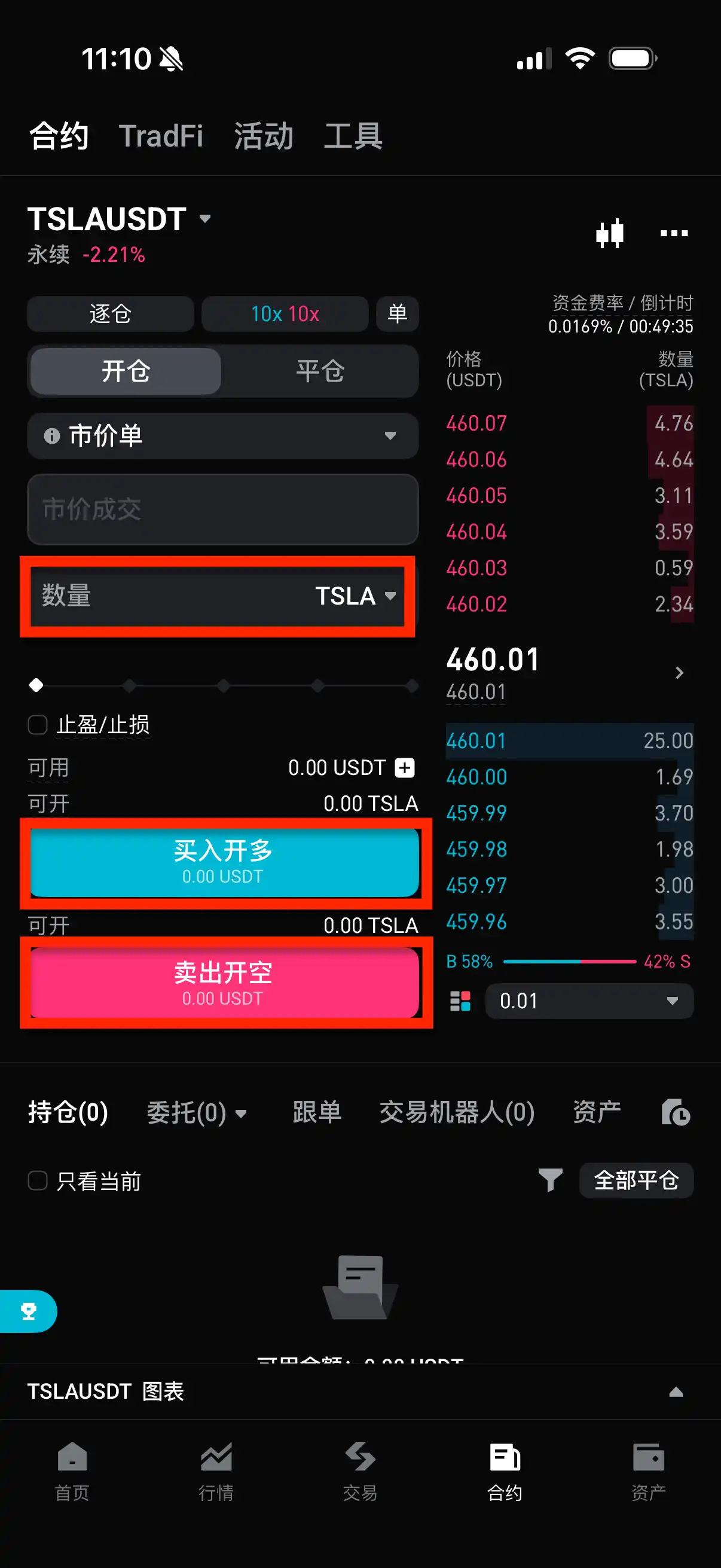
Opening Direction and Quantity:
Long Position: Bullish on the stock index.
Short Position: Bearish on the stock index.
Enter the contract quantity (the system automatically calculates the corresponding position value, for example, 100 USDT margin × 5x leverage = 500 USDT position value).
Set Take Profit/Stop Loss (highly recommended for beginners!):
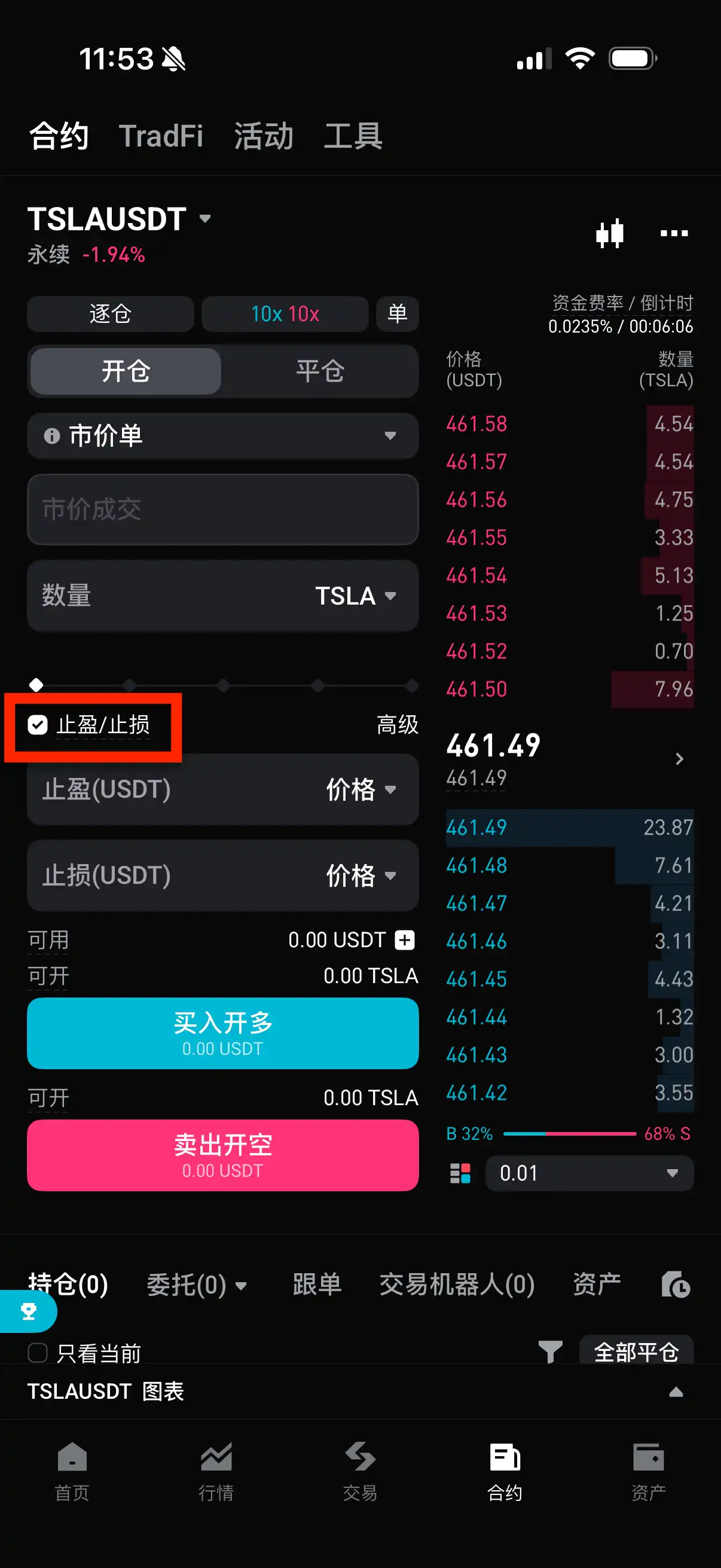
Check TP/SL on the order placement interface, and enter the take profit/stop loss prices.
You can enable Trailing Stop to follow profits and protect gains.
Order Confirmation:
Review all parameters → Click 【Long/Short】 → Confirm.
After a successful order placement, go to the 【Positions】 page to monitor in real-time: current P&L, liquidation price, funding rate, etc.
Practical Advice:
Start with a small amount (50-100 USDT) for practice.
Prioritize using demo trading to familiarize yourself with the process.
Always set a stop-loss to control individual risk within 1-2% of the account.
Pay attention to Bitget announcements: leverage, ladder, and maintenance margin ratios will be dynamically adjusted based on market risk.
Utilize contract grid robots or futures copy trading to reduce the difficulty of manual operations.
Unit 3: Novice Strategy
3.1 Earnings Season Strategy
Bitget's US stock contracts support up to 25x leverage with 24/5 trading. If a user is confident in a company's fundamentals, they can engage in event trading around earnings reports, simultaneously setting take-profit and stop-loss orders at opening to keep risk exposure manageable. Most US listed companies release a new quarterly report 2-5 weeks after the end of the previous quarter.
Strategy Example: Trader A understands NVDA's financial situation and anticipates an earnings beat at 5:00 PM New York time on October 19.
Trading Strategy: At 4:00 PM on October 19, NVDA, at $185, 25x long position, $1000 principal, 2% stop-loss, 6% take-profit.
Order Parameters: Entry at $185; Stop-loss at $181.3; Take-profit at $196.1
Strategy Outcome: Following the earnings release, the market strengthened, hitting the take-profit approximately 5 hours after opening, resulting in a profit of around $1500.
3.2 Fundamental Analysis Strategy
Novices don't need complex valuation models; they can focus on three key aspects:
1) Look at expectations: Are market expectations high?
2) Look at trends: Is the company's growth narrative favorable?
3) Look at position: Is the price in a trend pullback or an emotional peak?
Strategy Example: Trader B is focused on TSLA and notices that the market's delivery and gross profit expectations are too high. Historically, there tends to be a post-earnings rally. Trader C does not chase momentum upon announcement but only trades after confirmation:
If post-earnings report breaks key resistance level and holds, they go long;
If post-earnings report drops below key support level and fails to rebound, they go short.
The key is to use the expectation gap to turn directional risk into a trigger-based trade.
To have a comprehensive understanding of company valuation data, you can use Bitget's "Company Valuation" feature.
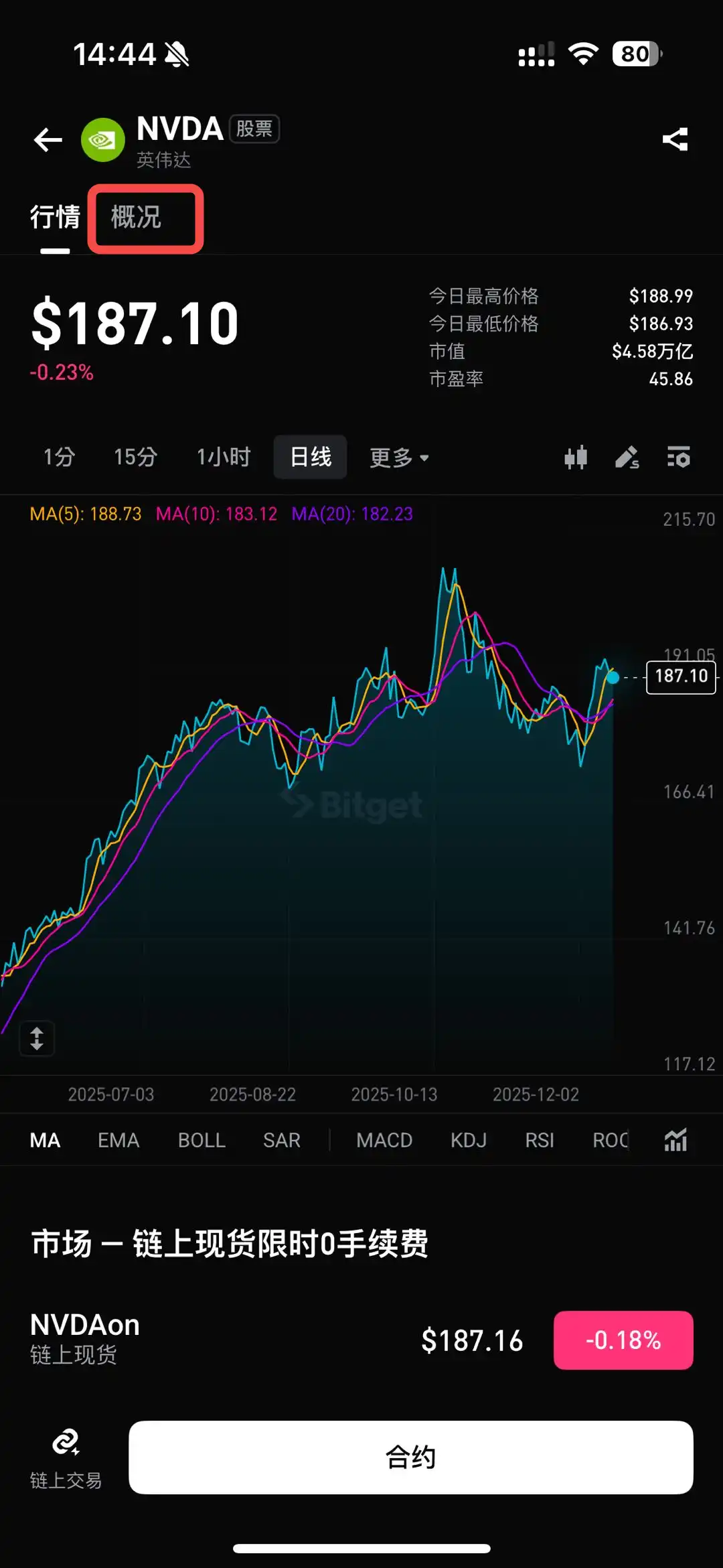
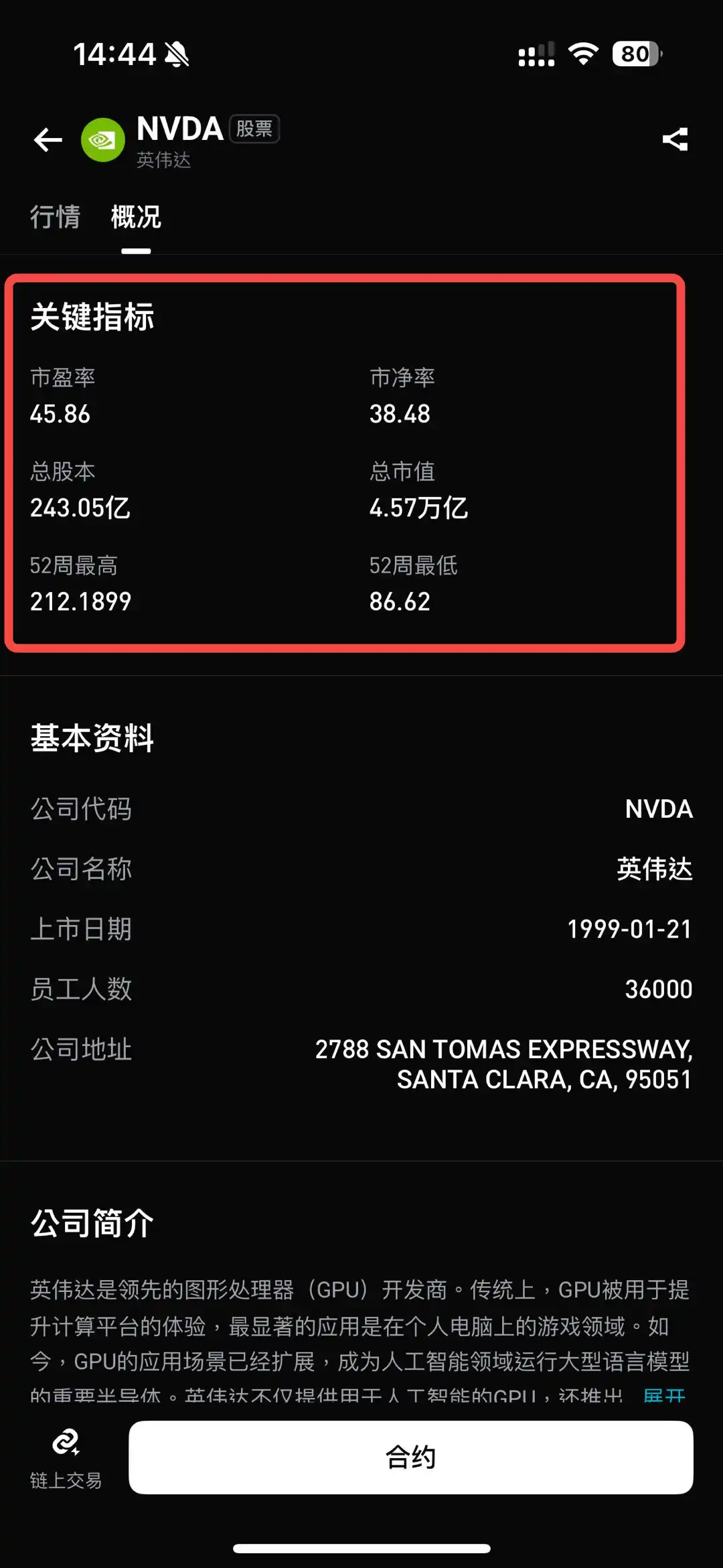
In the search box, select the stock you want to look up, for example: NVIDIA
Go to the corresponding trading interface and click on 【Overview】 to see the 【Key Metrics】 data, providing two valuation models: Price-to-Earnings Ratio (P/E TTM) and Price-to-Book Ratio (P/B). The formulas for the models are as follows:
P/E (P/E TTM) = Price per share / Earnings per share (EPS = Net income attributable to common shareholders in the last 12 months / Total shares)
P/B (P/B Ratio) = Price per share / Book value per share (Book value per share = Shareholder's equity / Total shares)
3.3 Technical Analysis for Beginners
Candlestick patterns are one of the most practical stock price analysis tools for beginners. By analyzing the shape and arrangement of candlesticks, you can interpret the current market sentiment. When similar patterns or combinations recur, it often indicates that historical trends may repeat. It is important to note that candlestick patterns can only be used to speculate on potential future price movements and cannot predict stock price changes with 100% accuracy. Therefore, they should mainly be used as supplementary tools.
Here are some common candlestick patterns for your reference:
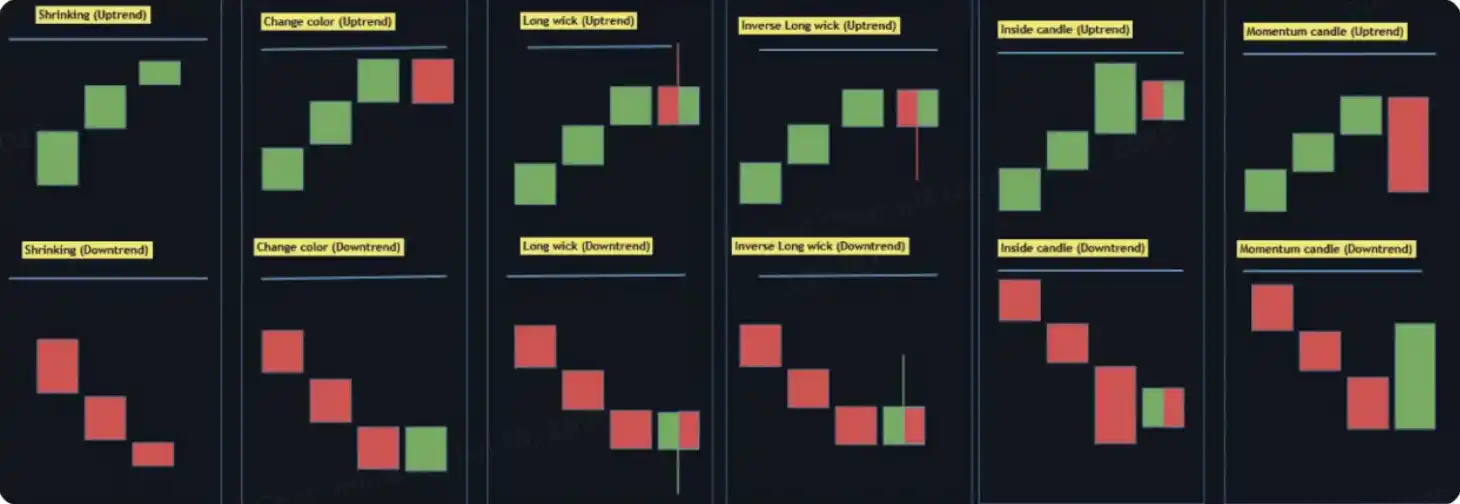

Shrinking Real Body
Uptrend: Momentum weakens, commonly followed by consolidation or deeper pullback
Downtrend: Sell Pressure Weakening, often followed by Consolidation or the start of a Rebound
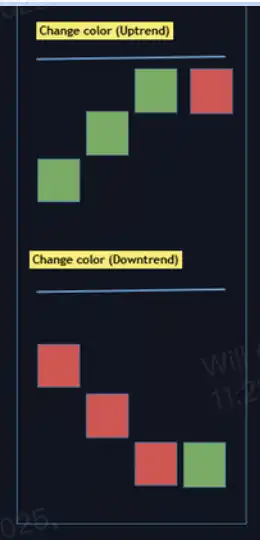
Change Color
Red K in Uptrend: Often a normal pullback, not a reversal
Green K in Downtrend: Often a retracement, not the end of the trend
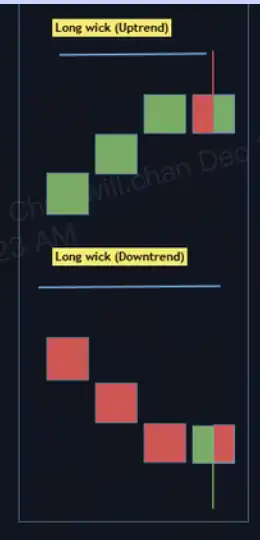
Long Wick
Long Upper Wick in Uptrend: Rejection at high, strong selling pressure above
Long Lower Wick in Downtrend: Pullback from low, strong buying support below
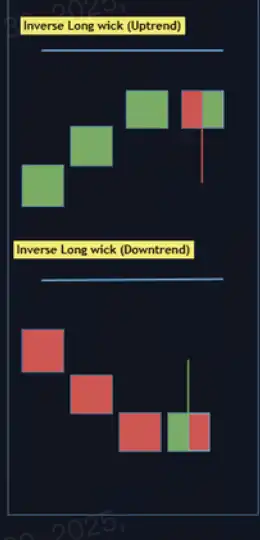
Inverse Long Wick
Long Lower Wick in Uptrend: Strong buyback on pullback, bullish defense effective
Long Upper Wick in Downtrend: Strong rejection on bounce, bearish suppression effective
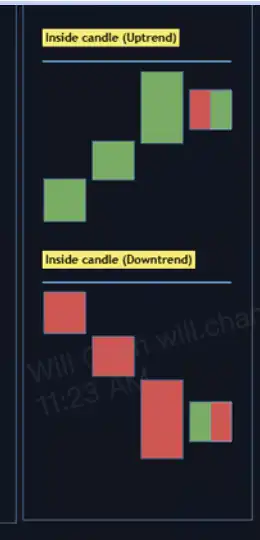
Inside Candle
Inside Candle in Uptrend: Consolidation in uptrend, likely to break out and continue
Inside Candle in Downtrend: Consolidation in downtrend, likely to break down and continue
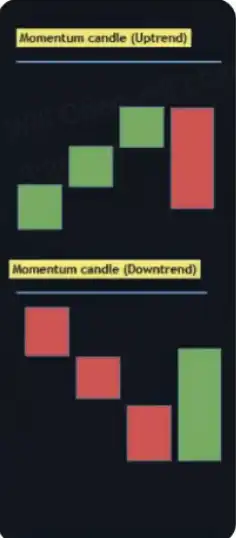
Momentum Candle
Momentum Bullish Candle in Uptrend: Increased probability of trend continuation
Momentum Bearish Candle in Downtrend: Increased probability of acceleration in the downtrend
The most important thing about a Momentum Candle is to confirm the breakout quality, not to blindly chase the rise and fall.
Module 4: Intermediate Strategy
4.1 Stock Contract Hedge Thoughts
Under a common margin, stock and currency spot cannot be margined. Therefore, an intermediate hedge strategy is more suitable for implementation as a structural trade within the same margin system. Profits come from the funding structure or price spread, not just betting on the direction.
Strategy Example: Trader C believes that a certain phase is characterized by a high concentration of risk events and direction uncertainty but wants to achieve structured returns:
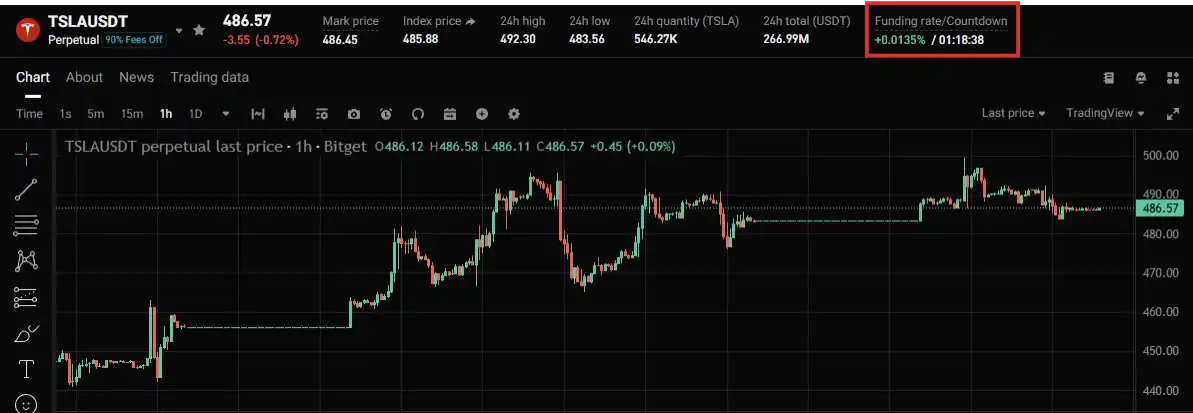
Look for a cryptocurrency asset with a relatively high funding rate, such as the one shown in the chart for TSLA, with a 6-hour funding rate of +0.0135%, equivalent to an annualized 29.565%;
Users can choose to construct a portfolio: Onchain purchase of TSLA cryptocurrency asset and opening a short contract for an equivalent value of TSLA, which can yield a decent "stablecoin-like return";
4.2 Cryptocurrency Asset + Stock Contract Correlation Trading
Under a cross-margin mechanism, one can simultaneously open BTC contracts and US stock contracts, managing both legs within the same margin system, suitable for correlation and strength trading.
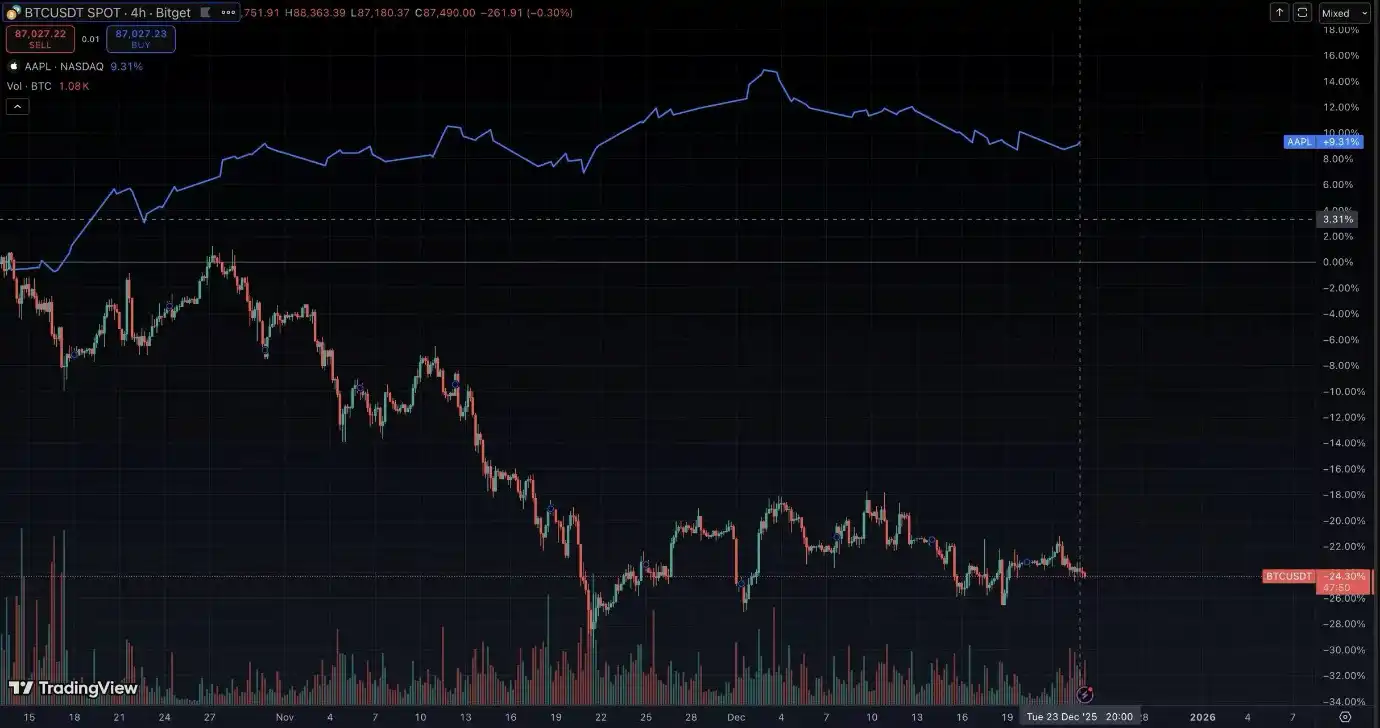
Strategy Example: Trader D realized on October 10th that the cryptocurrency market had experienced an epic liquidation event, facing significant selling pressure in the subsequent rebound, but wished to hedge against systemic risk with tech stocks; assuming an opening on October 13th with a $1000 capital:
Trading Strategy: 10x short BTC, 10x long AAPL
Order Parameters: Short BTC at 115,000, currently at 87,000, with an unrealized gain of approximately $2434; Long AAPL at 247, currently at 272, with an unrealized gain of approximately $1012
Strategy Result: Total unrealized gain of approximately $3446
4.3 Intermediate Technical Indicators
Technical indicators are quantitative analysis tools based on mathematical and statistical methods and specific formulas used to assess market trends.
They primarily rely on analyzing historical trading data and charts to help traders interpret the current market conditions and price trends. While using technical indicators can help reduce FOMO trading and invalid trades, given the plethora and complexity of indicators (numbering in the hundreds), mastering the most commonly used core indicators should be the first step in incorporating them into a trading strategy.
Below is a compilation of common technical indicators for your reference:
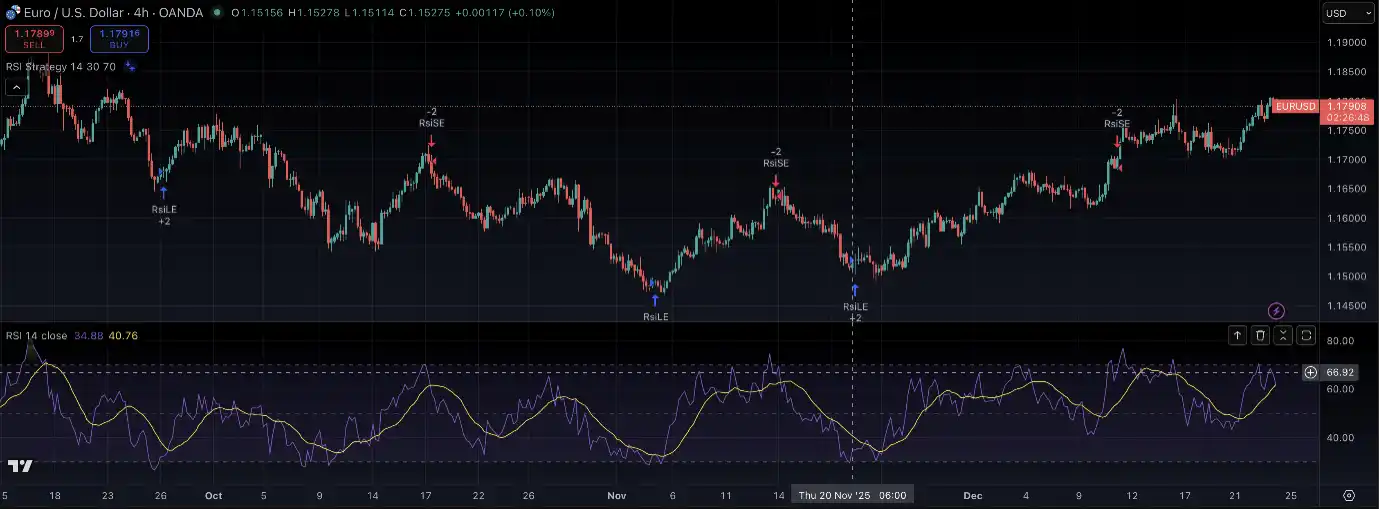
RSI 14
Trend Market Use: During an uptrend, RSI falling to around 40–50 and stabilizing is often a retracement completion zone; during a downtrend, RSI rebounding to 50–60 and being rejected is often a pullback completion zone
Range Market Use: RSI above 70 watch for a pullback, below 30 watch for a rebound
Application: RSI is used to determine momentum but should not be used as a standalone entry signal; must be combined with key price levels
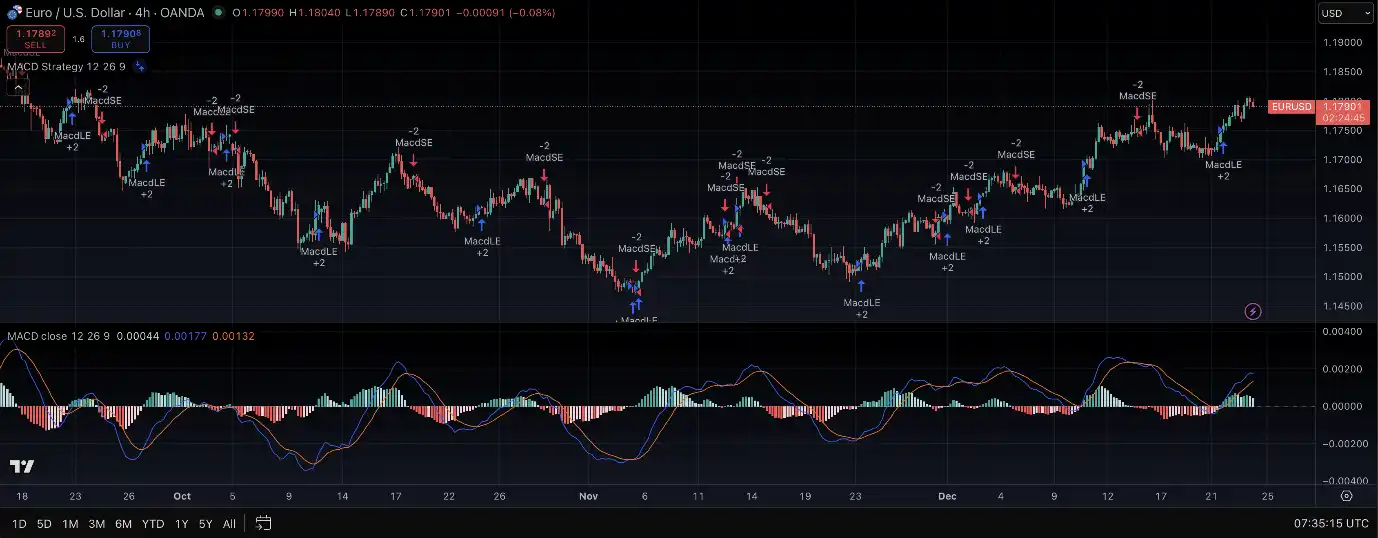
MACD 12,26,9
Zero Line Filter: Bullish crosses above the zero line are more bullish, bearish crosses below the zero line are more bearish
Momentum Confirmation: After a bullish cross, if the histogram bars continue to increase, it indicates strength;
Divergence Handling: Divergence occurs when the price makes a new high but the MACD does not follow or when the price makes a new low but the MACD does not follow, it indicates caution
Application: MACD is used to confirm whether trend momentum is truly keeping up
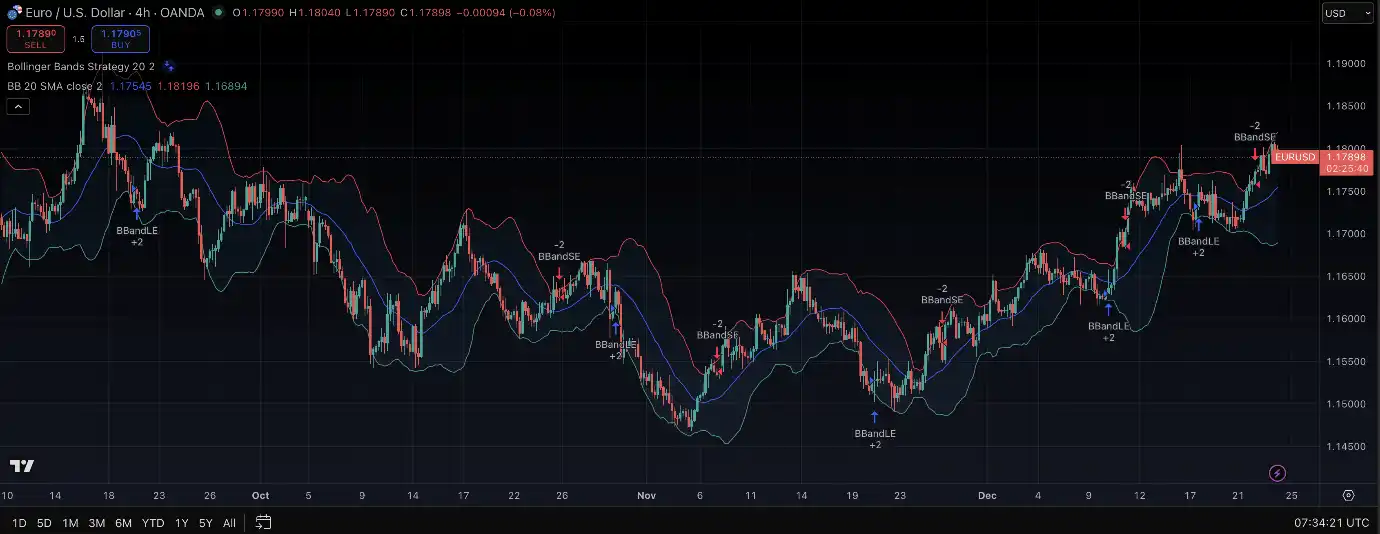
Bollinger Bands 20,2
Contraction to Expansion: After a bandwidth contraction, a volume breakout above the upper band or below the lower band increases the probability of a trend start
Middle Band Divide: Price above the middle band indicates strength, price below indicates weakness
Application: A breakout followed by a retest of the middle band without breaking it is considered a bullish confirmation; a breakdown followed by a pullback to the middle band that doesn't cross it is considered a bearish confirmation
Three Indicator Combination Conditions
Long Position: Bollinger Band breakout and holding above the middle band; MACD bullish cross with increasing strength; RSI returning above 50
Short Position: Bollinger Band breakdown and staying below the middle band; MACD bearish cross with increasing strength; RSI dropping below 50
Module 5: Advanced Strategies
5.1 Macro Trading Strategy
The core of macro trading is scripting: different data outcomes, different paths. Most efficient with index or US stock futures; coin contracts can serve as cross-linked legs.
CPI
Above expectations: Rate expectations rise, growth stocks and Nasdaq are under pressure
Below expectations: Rate expectations fall, risk appetite rebounds
In line with expectations: More likely to return to range or be taken over by the earnings report theme
Unemployment Rate
Significant increase in the unemployment rate: Economic slowdown expected to rise, risk appetite easily decreases
Unemployment rate remains low: Stronger growth resilience narrative, but may also lead to prolonged expectations of high rates
Strategy Example: Trader E uses Bitget QQQ contract to capture the market after CPI
Trading approach:
Pre-data: Market is cautious, first use a small position to take the "hedge leg"
Upon data release: Confirming "below expectations," execute a long script, capturing trend repair
Actual execution
Step one (short the day before the data, capturing hedge retracement)
12/17 Short QQQ contract near the open price of 613.06, 10x leverage, $1000 USDT capital
Closed at 600.41 near the closing price on 12/17
Asset decline: (613.06-600.41)/613.06 ≈ 2.06%
Contract profit (linear approximation): $1000 × 10 × 2.06% ≈ $206 USDT
Step two (switch to long after CPI announcement, capturing intraday surge)
After CPI announcement on 12/18, QQQ's intraday range: Low 606.92 / High 612.93
Trader E opened a long position near 607, 20x leverage, $1000 USDT capital
Took profit and exited near 612
Asset increase: (612-607)/607 ≈ 0.824%
Contract Earnings (Linear Approximation): 1000 × 20 × 0.824% ≈ 165 USDT
Total Profit (Two-phase Total): About 206 + 165 = 371 USDT
5.2 Contract Risk Management
Shared margin funds are efficient but require account-level discipline:
Advanced Risk Control Implementation Rules
Account Level: Stop trading immediately when the daily maximum loss threshold is reached; lower leverage and position when the maximum drawdown threshold is reached
Strategy Level: Set a loss quota for each strategy to avoid multiple strategies resonating on the same day
Single Trade Level: First define how much to lose at most, then calculate position size based on the stop loss distance
Strategy Example: When Trader F trades Bitget's QQQ contract, he first sets his risk: Account at 10,000 USDT, and he specifies a maximum loss of 1% per trade (100 USDT).
He goes long at 610 in QQQ, sets the stop loss at 605.12 (about -0.8%). Then, he calculates the position size based on "at most lose 100": Nominal position size = 100 / 0.8% = 12,500 USDT; Using 20x leverage, the margin occupied is about 625 USDT.
Directly set according to the risk-reward ratio:
2R Target: Earn 200 USDT, corresponding to a price of **619.76 (+1.6%) for take profit.
3R Target: Earn 300 USDT, corresponding to a price of **624.64 (+2.4%) for take profit.
This way, no matter how the market moves, the worst-case scenario is a loss of only 100 on this trade, while making at least 200 to 300 if correct, thus fixing the risk-reward ratio at 1:2 or 1:3.
The overall content is output by difficulty level, and readers can start practicing from entry-level strategies, gradually transitioning to advanced methods based on combinations and macro drivers, forming a tradable and iterable trading ability. Each strategy emphasizes applicable scenarios and execution logic, avoiding "sharing opinions without methods," enabling users to truly incorporate the strategy into their trading plans.
Appendix
Below are the most commonly used and essential terms in Bitget's stock contract trading, suitable for beginners to quickly get started and for daily reference;
Bitget Stock Contract Commonly Used Terms
Click the image to view the sheet.
Conclusion
In the volatile US stock market, you need a trading system that can withstand both bull and bear markets.
This guide aims to help you establish a long-term competitive advantage in the US stock market through Bitget's professional insights. Whether you are a newbie to the US stock market or an advanced trader seeking a breakthrough, here you will find the advanced path you need.
Key Concepts and Getting Started
Portfolio and Macro-Driven Approach
Strategy Execution Logic Analysis
This article is contributed and does not represent the views of BlockBeats.
Welcome to join the official BlockBeats community:
Telegram Subscription Group: https://t.me/theblockbeats
Telegram Discussion Group: https://t.me/BlockBeats_App
Official Twitter Account: https://twitter.com/BlockBeatsAsia