OKX C2C Merchant: Why am I willing to "Freeze Payment"?
Source: OKX
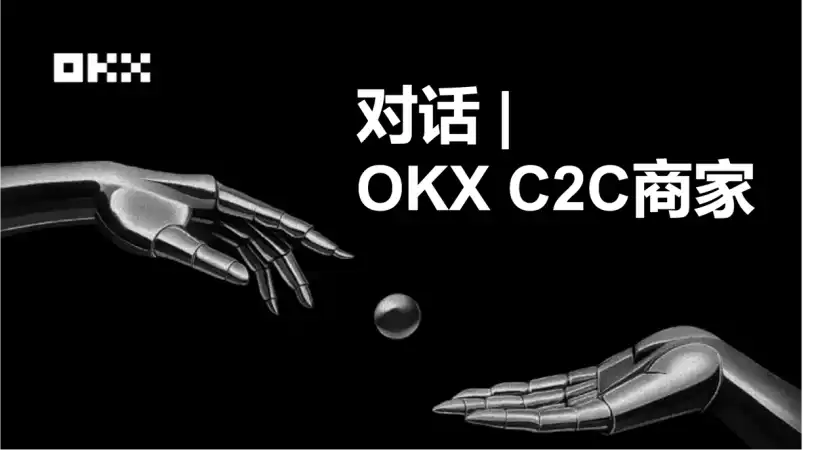
Welcome to this interview. Today we have invited an OKX C2C merchant, "Kunlun" (alias), to talk to us about how he entered the crypto world, why he chose to become an OKX C2C "frozen compensation" merchant, and how he uses the 'frozen compensation' mechanism in his business to provide security for users. We hope that through this interview, everyone can learn about the value and services of OKX C2C from scratch.
For easy reading, here are the key points from the merchant:
1. User withdrawal security is always the top priority and collective consensus of OKX C2C merchants.
2. Transaction speed is also crucial. Deposits and purchases must be timely; otherwise, customers may incur losses.
3. Choosing OKX because the C2C product is simple yet efficient, with a large user base.
4. The frozen compensation mechanism introduced by OKX is a qualitative change, not a gimmick. It provides real security guarantees for users.
5. After the implementation of the 'frozen compensation' mechanism, user order intentions and transaction speed have significantly improved.
6. Merchants feel OKX's 'shared risk' attitude and are taking their work seriously.
7. New merchants should fully understand C2C, communicate more, accumulate experience, and gradually progress.
8. Users choosing frozen compensation merchants are more reliable.
9. The C2C market will only get better, and merchants need to enhance their operational and technical capabilities while maintaining a good service attitude.
The following is the full text of the interview (edited for clarity):
I. Entry into the Circle and Starting Point: From Individual to Merchant
Q: When did you start paying attention to crypto? What prompted you to enter this circle and start C2C trading? Which platform did you first learn about at that time?
Kunlun: I originally worked in a traditional industry and started getting involved with cryptocurrency around May 2024. At that time, I had friends who were trading coins, so I started with Bitcoin. Later, through several purchases of USDT from merchants, I gradually understood the operation mode of C2C merchants. At first, I was quite aggressive in trading contracts with high leverage and incurred significant losses. Later, I switched to Bitcoin spot trading, coincidentally catching the market rebound after the election. After breaking even, I decided to become a long-term C2C merchant, feeling that this approach was more stable.
I approached it with a "give it a try" attitude at the time and didn't tell many people around me. I just quietly made the decision myself. Through a year of practical operations and contact with the platform's team, I felt that the platform has a sound compliance system and a rigorous risk control mechanism. For example, from merchant application, daily maintenance, quality control to customer service and product, every aspect is strictly managed. It made me feel like OKX is taking this seriously, wanting to do well with the platform, rather than just going through the motions or messing around. This gradually made me want to expand my merchant business and do more because the platform does have an attitude. OKX was the platform I first got to know.
Q: Now doing C2C, are you operating alone or do you have a team? What is the most important thing for C2C merchants? Have you encountered any pitfalls or memorable experiences during the operation?
Kunlun: I have two merchants myself, which has developed into a studio and is gradually growing in scale. I think the most important thing is definitely security. It's particularly crucial for users. Deposits are generally not an issue, but what everyone is most concerned about is the security of withdrawals. In addition, transaction speed is also very important. Deposits and coin purchases must be timely; otherwise, market fluctuations may cause customers to incur losses. I always hope that users can complete transactions smoothly and quickly, even when withdrawing profits, with security remaining a top priority. As far as withdrawals are concerned, I have my own dedicated isolation method. Funds received will undergo isolation processing. Starting from November 15 last year until now, I still maintain a "0" freeze.
Q: Did you start with bulk trades or did you start with small orders? Besides isolation, what other factors make it challenging for merchants to get started quickly?
Kunlun: I started with a minimum of 30,000 initially, and now it's 50,000. The smoothness of the payment channels is also crucial. Customers should be able to complete transactions quickly when depositing funds, buying coins at the first opportunity, which is very important for service experience.
II. Why Choose to Become an OKX C2C Merchant
Q: Compared to when you first entered the industry, what changes have you personally experienced?
Kunlun: The industry's standardization is becoming stronger, and platforms' security mechanisms and risk control measures are more robust. Many issues that used to be solved by individual experience now have more standardized operations. Users' trust in merchants increasingly relies on platform mechanisms rather than just individual judgment.
For me, the most noticeable change is a series of policies from the OKX platform, such as supportive policies, the mechanism to freeze and compensate merchants, and various activities launched daily. The connection between C2C merchants and the platform is very close. Whether encountering issues in the operations group or handling customer complaints, feedback and solutions are promptly provided. In my year as a merchant, I deeply feel that the platform has been actively rolling out policies, truly putting effort into it, rather than being as casual as some small platforms.
Especially the Freeze Compensation policy, in the short term, may have increased margin requirements and added some barriers and operating costs, but at the same time, it has also forced merchants to improve their overall operations and technical service levels. In the long term, merchants can enjoy the dividends brought by the platform policy: users have a high level of trust in the platform and are more willing to place orders with merchants participating in Freeze Compensation. This actually benefits long-term stable development. Overall, these changes have more advantages than disadvantages, and the platform has played a positive role in promoting industry standards, enhancing user trust, and safeguarding merchant rights.
Q: Among many platforms, why did you ultimately choose to become an OKX C2C merchant?
Kunlun: Firstly, OKX's operation interface is very simple and efficient, with few but comprehensive functions, a clear layout, and high trading efficiency. Secondly, the after-sales response is timely. If a user or merchant makes a payment mistake, customer service can handle it promptly, and issues can be resolved directly through appeals. For example, I once mistakenly added an extra zero in a payment. After submitting an appeal, customer service quickly contacted the other party. The customer received a refund within two days, and the whole process was smooth. Lastly, there is a large amount of traffic and active users, which is crucial for merchants. In general, I chose OKX based on product experience, service efficiency, and platform traffic.
Q: After becoming a C2C merchant, what changes have occurred in your business and community?
Kunlun: The C2C trading model is real-time and highly liquid, allowing for stable income even with limited funds. Previously, trading spot or speculating on coins resulted in large income fluctuations, but C2C trading operates 24/7 with high platform traffic, attracting many rational and active users. These users rely on their own knowledge and efforts to make money, rather than relying on relationships or external assistance. This fair and professional atmosphere has made me more confident in the industry.
III. Reasons for Becoming a "Freeze Compensation" Merchant
Q1: When you first saw the "Freeze Compensation" mechanism, was your initial reaction positive? Was this also the reason you decided to become an OKX C2C merchant? How do you view the costs and responsibilities?
Kunlun: Yes, my initial reaction was that this was positive. It is beneficial not only to the platform and users but also to the merchants themselves. The platform and merchants share the risk, making the mechanism more reliable. Because the security of user withdrawals is always the top priority for OKX C2C merchants and a collective consensus.
Regarding costs and responsibilities, I believe that the benefits far outweigh the drawbacks. This mechanism is mutually beneficial: merchants can avoid risks, and users gain a sense of security and trust. In the long run, if customers' transactions are not frozen or compensation issues arise, they will trust the platform more and increase stickiness. As trust increases, the platform's total customer base grows, and merchants' customers and traffic naturally increase. This not only benefits merchants but also reflects the platform's sense of responsibility and long-term business attitude.
Previously, users had significant concerns about security, especially newcomers, who were always afraid of fund freezes. Nowadays, information spreads quickly, but not necessarily accurately. New users are particularly sensitive to the security, risks, and even legal liabilities associated with fund withdrawals. OKX's introduction of the freeze compensation mechanism represents a qualitative change, providing users with real and tangible protection, significantly enhancing their sense of security and trust.
Some platforms may charge fees or impose direct fines and are not very willing to share risks with merchants. In contrast, OKX's mechanism involves the platform and merchants jointly bearing risks, safeguarding merchants, enhancing user trust, and strengthening platform stability. In the long run, this is beneficial for merchants, users, and the platform, making the entire ecosystem more equitable and reliable. OKX's design reflects an attitude of responsibility—everyone is serious about their work, the platform incurs additional operating costs, takes on certain risks, but the goal is to conduct business well and provide customers with sufficient peace of mind.
Q: Does this mechanism have any flaws? Some say it's a gimmick. What is your opinion?
Kunlun: The freeze compensation is not unlimited; there are indeed limitations. However, the overall positive cycle is very apparent: enhancing user trust, more users are willing to deposit and withdraw through the platform, creating a virtuous cycle. "Freeze compensation" is not a gimmick; the platform is genuinely implementing this measure and has repeatedly communicated the policy in merchant operation groups, sharing risks with merchants as promised.
Q: After the implementation of the mechanism, have there been any changes in user order placement intentions and trading volume?
Kunlun: Order placement has significantly increased, and both order placement and execution speeds have also accelerated. Previously, it might have taken ten minutes, but now it can be done in three minutes.
IV. Advice for Newbie Merchants and Users
Q: If a newcomer wants to become a C2C merchant, what advice would you give? And for users?
Kunlun: For merchants, it's important to have a thorough understanding of C2C, carefully select, engage in more communication, and promptly inquire about anything they don't understand in the merchant management group. Experience will grow as the number of transactions increases. Speed and security are paramount. For users, choosing OKX, especially selecting freeze compensation merchants, is more reliable and can help mitigate risks.
Q: As a C2C merchant, what has been your greatest realization?
Kunlun: C2C will continue to improve, and the market will expand and strengthen. This is my genuine belief. Being a merchant requires continuous learning, risk mitigation, improving operational and technical proficiency, and maintaining a good service attitude towards customers. There is no need to rush; everything should progress step by step.
Disclaimer:
This article is for reference only. The views expressed in this article are those of the author and do not necessarily represent the views of OKX. This article is not intended to provide (i) investment advice or investment recommendations; (ii) an offer or solicitation to buy, sell, or hold digital assets; or (iii) financial, accounting, legal, or tax advice. We do not guarantee the accuracy, completeness, or usefulness of such information. Holding digital assets (including stablecoins and NFTs) involves high risk and may experience significant price volatility. You should carefully consider whether trading or holding digital assets is suitable for you based on your financial conditions. For your specific situation, please consult your legal/tax/investment professional. You are solely responsible for understanding and complying with relevant local laws and regulations.
This article is a contributed piece and does not represent the views of BlockBeats.
Welcome to join the official BlockBeats community:
Telegram Subscription Group: https://t.me/theblockbeats
Telegram Discussion Group: https://t.me/BlockBeats_App
Official Twitter Account: https://twitter.com/BlockBeatsAsia
 Related Articles