「Web3 Night Talk」 - Market Deep Dive, Market Sentiment Shifts, and Post-ATH Trends
Source: Jsquare / DFG
From fund flows, policy environment to various asset performances, a deep dive into the bull market structure, addressing the community's most pressing ultimate question: How much longer can the market rise? What are the remaining opportunities?
Host: Jsquare / DFG
Guests:
· James-DFG Founder and CEO
· Du Jun - Vernal Founder
· Lily - D11-Labs Cofounder
· Yang Mindao - dForce Founder
Host: Angela Tong - DFG&Jsquare CMO
Topic One: What are the core driving factors behind BTC's new all-time high? Is it sustainable?
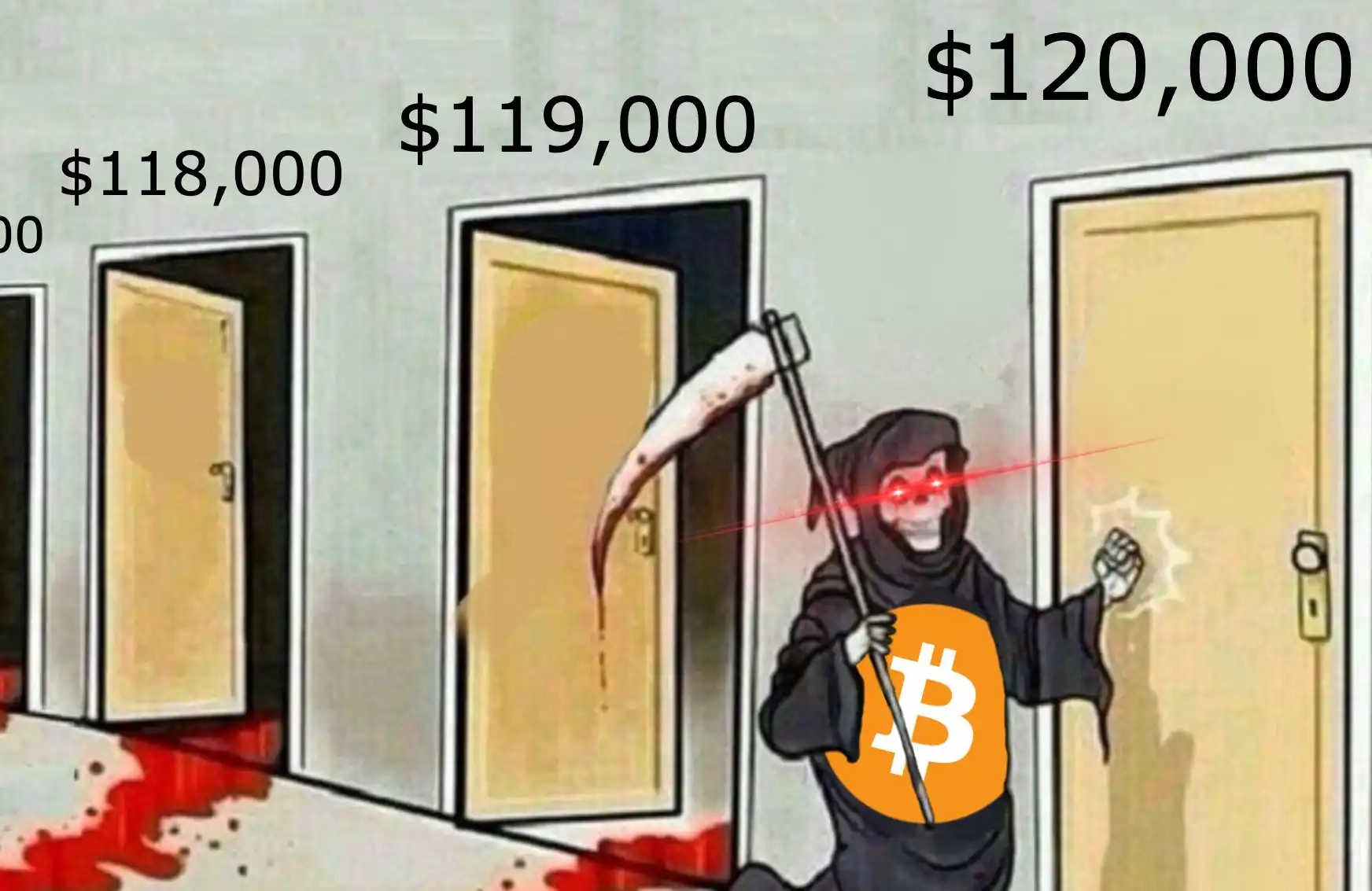
1. This year, the cryptocurrency market capitalization surpassed 4 trillion US dollars, BTC reached a new high of 120,000, and over 90% of Ethereum addresses are in profit. In your opinion, what was the "spark" of this rally?
James: From a holistic perspective, the main reason is still liquidity. During a rate hike cycle, both the cryptocurrency and stock markets usually enter a bear market or experience a pullback. However, we are currently in a rate cut cycle, where the market is flush with funds, making high-quality assets more likely to receive buying support. Additionally, this market rally has been accompanied by pivotal events such as the approval of a Bitcoin ETF and large-scale Bitcoin purchases by US companies like MicroStrategy, further driving funds, especially institutional and retail funds, directly or indirectly into the crypto industry. The combination of these two factors is a key reason why Bitcoin has surged to $120,000 and has not yet experienced a significant pullback.
Mindao: In this market rally, the availability of funds is a crucial factor, especially as there has been a fundamental shift in the capital structure. Taking Bitcoin ETF as an example, the asset under management has grown to around $150 billion over the past two years, coupled with MicroStrategy's approximately $70 billion, totaling over $200 billion. In previous cycles, the market rally was mainly driven by leverage funds within the crypto space, following a "leverage up—deleverage" cycle to drive the market. In contrast, ETFs and MicroStrategy fundamentally represent equity capital rather than leverage funds. For example, MicroStrategy's ATM financing is pure equity, with no margin call concept; the terms of the issued convertible bonds also lack a coin price settlement mechanism. Therefore, even if the coin price falls, these funds will not be forced to sell, making it less likely to trigger a panic-induced crash. From Bitcoin's rise from $50,000 to $70,000, this over $200 billion of funds have an average entry cost between $70,000 and $80,000.
Recently, Ethereum has experienced a 25%-30% price increase over the past two weeks. However, the on-chain funding rate is only around 10%, significantly lower than the 20%-50% seen during previous high-leverage periods. This discrepancy reflects that the current market rally is being primarily driven by low-leverage, long-term capital allocation funds. This is one of the key reasons why both Bitcoin and Ethereum have been able to break into new highs, and this trend is likely to continue. Previously, arbitrage in the crypto market was mainly focused on offshore exchanges, but now more arbitrage is happening between ETFs and CME futures, involving a fund scale of $200-300 billion. Therefore, ETFs are not only passive investment targets but are also becoming essential tools for compliant market arbitrage and hedging, potentially even possessing option attributes in the future. As this type of capital continues to flow in, the volume of the "traditional coin-stock" asset class is expected to expand, providing crucial support for Bitcoin to surpass $120,000 and even higher prices.
2. Is ETF or US stock fund inflow really becoming the "new must-have"? Is there data to support this?
Lily: I feel that this current market rally is the most blurred boundary between the crypto and stock markets that I have ever experienced. I have a very senior crypto friend who has recently been in contact with many Wall Street institutions, and he mentioned that almost all Wall Street institutions involved in any way with crypto are trying to engage in coin-stock, trading, or similar businesses.
From a macro perspective, the US GDP accounts for less than 30% of the global total, yet the US dollar represents about 60% of global foreign exchange reserves and dominates over half of cross-border payments. This asymmetry mainly stems from "trust" — the belief that the US is the strongest sovereign nation and its currency has the strongest credit endorsement. However, in recent years, this trust has started to waver. Trump has repeatedly stated that he "does not want to be the world's policeman" and is more concerned about the welfare of the US, leading to global doubts about the long-term value of US dollar assets and treasuries. Therefore, behind this current market rally, one of the biggest consensuses is: the weakening of the US dollar's credit. The world is starting to seek out assets that are inflation-resistant and worth holding for the long term, which is also one of the reasons for the significant increases in the prices of gold and Bitcoin.
The approval of ETFs has played a crucial role. Many Wall Street institutions were previously unable to hold cryptocurrencies directly due to compliance issues, but through ETFs, they can indirectly allocate them as assets proof, allowing crypto assets to officially enter the traditional financial landscape and blurring the boundaries between traditional and crypto. The introduction of ETFs poses a significant challenge to centralized exchanges. After MicroStrategy, we are seeing more and more treasuries allocating tokens such as Ethereum, for example, WoodSister buying BMNR, which is also driving a deeper understanding of crypto within traditional financial circles.
However, I believe that the current Wall Street enthusiasm for crypto is somewhat overheated, and this enthusiasm may experience periodic adjustments, but it is still in an upward trend. A large amount of traditional capital is actively participating. I am more familiar with the investment banks in the US that are involved in Crypto; they are promoting some well-known practitioners from Asia and the US to issue new stocks, coordinating PIPE financing, and raising funds of $5 to $10 billion, relatively easily too. Therefore, the current wave of this trend in terms of fund volume, enthusiasm, Wall Street recognition, and consensus level is still at a very high level.
3. Hong Kong Immigration Policy Supports Crypto ETF as Proof of Assets. Besides US stocks, has funds from the Hong Kong Stock Market flowed into the crypto market?
Lily: Currently, the Hong Kong stock market is clearly in a bull market phase. I was one of the early private investors who was bullish between 2023 and 2024. Whether it's the recent IPO volume or various developments related to the crypto industry, all indicate a high market sentiment. Take Boya as an example, despite its red-chip structure and the full connection of financing channels has not yet been achieved, the market still highly regards it, with the PB ratio currently exceeding two times, even close to three times, surpassing benchmarks like MSTR. Recently, the market has shown very positive reactions to any large-scale investments related to Crypto, with stock prices often skyrocketing. Established Hong Kong stocks such as OSL, Blue Port, and New Fire have shown significant gains recently; traditional payment companies like Lianlian, after transitioning to Web3, have also performed well in stock prices. Overall, Hong Kong stock targets are scarce, and the market's enthusiasm for Crypto is high. Many A-share analysts are also discussing whether A-shares can introduce concept targets similar to stablecoins, making it a hot topic right now.
4. The US House of Representatives has passed three cryptocurrency bills; how will this policy direction affect BTC's future performance?
Mindao: I believe the impact of the passage of these three bills on Bitcoin (BTC) may not be so direct. The Genius bill mainly involves stablecoins, and the Clarity bill may have a greater impact, focusing on clarifying which regulatory agency is responsible for overseeing the market. The most significant significance of these three bills is to provide a very clear landing framework for many compliant exchanges and asset issuers. For example, we have seen that Coinbase has already allowed the trading of perpetual contracts on its domestic platform in the US, which I think will directly drive the demand for Bitcoin trading. However, overall, I think the biggest beneficiaries of this round are likely Ethereum, DeFi, and projects serving as financial infrastructure like stablecoins.
Lily: In the long term, these changes are definitely positive overall. Bitcoin, as the "institution" of the entire crypto industry, will only be more widely accepted as the entire industry becomes more open. However, in the short term, I agree with Mindao's view that there won't be a particularly direct impact. The greater significance lies in bringing more regulations to the entire industry, something many have been eagerly anticipating for a long time. If we hope that this industry can develop in the long term and give birth to truly great companies, then at this stage, to make this industry more widely accepted by ordinary people, we must rely on more legislative support.
Topic 2: Is ETH's Recovery Signal Genuine? What Does It Mean for the Future Market?
1. ETH Being Embraced by Multiple Publicly Listed Companies, Is This a Long-Term Positive for ETH?
James: After Bitcoin surged to $120,000 and traded sideways, mainstream capital shifted to speculate on Ethereum, which is not surprising. The previous market structure indicated that Ethereum had gained a certain level of mainstream capital recognition, and its on-chain DeFi TVL data is relatively accurate. During the 2021 bull to bear transition, Ethereum and Bitcoin experienced a similar decline, making Ethereum a hedge asset. In this current bull market, mainstream capital typically prioritizes allocating to Bitcoin, establishing its bullish market trend first. Now, Ethereum is catching up, following a logically natural progression. From our perspective, Ethereum still remains attractive in the long term. On one hand, it enjoys mainstream recognition, and on the other hand, its on-chain DeFi applications are active, with TVL accounting for over 50%-60%. Currently, TVL and FDV have not reached their all-time highs, whereas Solana has seen more issuance. Overall, we remain optimistic about Ethereum's mid- to long-term performance in this market cycle.
2. Will the Return of ETH's Price Redirect Attention Back to the Ethereum Ecosystem?
James: First of all, I don't think there is an issue of reclaiming, even at Solana's peak, its market cap never came close to Ethereum's. In terms of TVL, over 50% has always been on Ethereum, it's just that when there's a hotspot in the industry, for example, a wave of meme coin trends brought by Trump coin, the Solana ecosystem may appear to be more active. But Ethereum's status, I believe, has always been that of the chain king, it's just a matter of how far ahead it is from others.
Mindao: What I find interesting is that when we discuss Ethereum and Solana now, we are actually discussing whether the future of blockchain will be a multipolar world or a unipolar one. Ironically, the Ethereum community often says "Bitcoin is the idea, Ethereum is the execution," meaning Bitcoin is the idea, and Ethereum is where it is implemented. Although the "multi-chain" concept was first proposed by Polkadot and Cosmos, it is Ethereum that has truly executed it well. One could say Ethereum "copied the homework" but did it more successfully.
Returning to this current cycle, I believe the future will definitely be a multi-chain world. In the early days, BSC, Huobi, and OKEx all created their own EVM chains, and in this cycle, Coinbase and Kraken have also launched L2 solutions based on Ethereum. Recently, Robinhood issued assets on Arbitrum and plans to launch its own L2 based on the Arbitrum Stack. In the future, when institutions like JP Morgan or BlackRock want to build chains or issue assets, they would also like to do so in a controlled environment, further validating the multi-chain trend.
One advantage of Ethereum is its greater willingness to be compatible with traditional finance. From a political perspective, the real world consists of 195 sovereign countries, indicating that the landscape is inherently multipolar. The blockchain world will not be left with only three or four chains dominating. In this multipolar landscape, Ethereum's multi-chain architecture may make it a core part of blockchain infrastructure.
Additionally, the playstyle of Ethereum-related strategy companies is different from Bitcoin. Bitcoin treasury companies like MicroStrategy are more like passive reserves; whereas companies on Ethereum, such as Sharplink, not only bring stock market funds onto the chain but also push on-chain assets into the stock market, for example, actively participating in on-chain DeFi, such as Staking, LSD, and more. In the future, if companies like Sharplink and Bitmine allocate their Total Value Locked (TVL) to DeFi, it could lead to a round of infrastructure upgrades. A scenario I am looking forward to is seeing publicly traded companies issue DeFi convertible bonds and place them on-chain, interacting directly with DeFi protocols. Even protocols like AAVE, I hope that one day they can issue convertible bonds on the stock market, using the funds raised to enhance on-chain liquidity. For example, recently, Ethena announced a reverse merger through a SPAC, planning to list as a stablecoin protocol, which is also a reflection of this trend.
Dujun: First of all, why am I bullish on Curve? Because it is essentially the on-chain world's "foreign exchange market." If this can be achieved, then it will be a $100 billion-level company, while currently its market cap is only about $10 billion. There are basically no real challengers, including Uniswap v3, which has not reached a stage where it can challenge it. Moreover, due to the founder Michael's liquidation event, this project has now achieved thorough decentralization. So, this is the reason why I am bullish on Curve. Second, whether it's last year or now, I have always been quite optimistic about Ethereum. One point worth emphasizing: in today's entire blockchain world, apart from Bitcoin, the only project that has truly achieved full decentralization and possesses a relatively neutral identity is Ethereum. Other chains either lack sufficient decentralization or their technical maturity is not high enough.
When we discuss what problems blockchain can actually solve, I believe we should focus first on the "financial" field, such as bringing real-world assets (RWA) onto the chain. Then, which chain will these assets choose to be deployed on? Clearly, it will not be various small chains. Because for large-scale funds and institutions at levels like $10 billion, $100 billion, or even sovereign states, they will only choose a chain that has a high degree of decentralization and neutrality, and that is Ethereum. So, from the current situation, I think Ethereum does not yet have a true challenger. Whether looking at maturity, ecosystem, or developer numbers, it is the strongest. So, I firmly believe in Ethereum. If blockchain is truly able to rise on a large scale in the future, Ethereum will definitely be a very high-quality core target.
Topic 3: Why is there such a significant divergence in Altcoin performance? Is there still an opportunity for synergy?
1. Has this round of Altcoin synergy reached its conclusion, or has it yet to truly begin?
Lily: I believe that this round of Altcoin market movement has not truly begun yet, let alone ended. Of course, divergence is inevitable. Projects like EOS, for example, have passed their peak and are more focused on new attempts. Similar to the stock market, the 50 strongest companies a century ago are completely different from today, and long-term sustainability depends on whether the team continues to operate. Currently, Altcoins can be broadly divided into two categories:
The first category is emotion-driven, such as the meme coin flagship Pump. Although it has recently experienced a pullback, its circulating market value still exceeds tens of billions of dollars, with daily revenue in the millions. The core of these projects lies in "human nature" and "narrative," with many CEX contracts amplifying this game mentality.
The second category is application-driven, and I personally am more inclined towards DeFi. This is because Crypto initially aimed to transform the financial system, especially the payment system. For example, the recent hot Xstock, which issues and trades stocks on-chain, achieves a 24/7 non-stop market, something that is difficult to achieve in traditional markets in the short term. For instance, Nasdaq plans to achieve 24/7 spot trading only by 2026, and the options market does not even have a timetable. The advantage of DeFi is that it can already provide this infrastructure, but it still needs more liquidity and user education. The pricing mechanism of traditional assets may also migrate to the chain in the future. So I believe that DeFi projects like Curve, which can serve real financial scenarios, will become essential infrastructure for the entire industry. Of course, the combination of AI and Crypto is also worth paying attention to. Both AI for Crypto and Crypto for AI have opportunities, but currently, apart from data empowerment and some interactive scenarios, a truly powerful point may not have been found yet. However, it is definitely one of the major race tracks worth betting on in the future.
2. How do you view the subsequent development of the AI and DeFi sectors?
James: Bitcoin itself is a product of the financial crisis. It was precisely because of problems in the traditional financial system that Bitcoin was born. If we were to find the most "practical" direction in the blockchain industry, then DeFi is undoubtedly the most solid and meaningful. The current mainstream DeFi protocols, especially the Blue Chips, are generally profitable from a financial data perspective, and their product systems are very mature. The difference between traditional finance and on-chain DeFi is significant. Offline financial services are more geared towards high-net-worth clients, making it difficult for ordinary people to access quality services, while DeFi is more equitable and open. Traditional financial institutions can even block accounts based on vague user agreements, while on-chain rules are transparent and trustworthy. In addition, DeFi is constantly evolving in terms of product experience, stability, and innovation. Although there were security issues during DeFi Summer in the past, mainstream protocols on Ethereum have matured, can achieve stable profits, and continue to provide high-quality services. Therefore, we will also focus on allocating to leading projects in the DeFi sector, such as DEX and lending, in the secondary market. In the long run, DeFi is the sector we are most optimistic about in all areas.
As for the AI direction, I do not have a technical background myself, so my understanding is limited. Currently, most Crypto+AI projects are still mostly about storytelling, and there are not many actual products on the ground yet. The future growth of this track depends on whether it can achieve large-scale application and have real users using the product. If it's just about concepts, the storytelling hype may not last, and the investment risk will also be higher. However, once a blockbuster product appears, it may experience explosive growth. Many CryptoAI projects are still relatively undervalued, such as Render and Near, which are our main holdings, and they are not considered expensive. The key going forward is still to see if there is anything concrete being implemented.
Dujun: At the time, we mainly focused on the infrastructure sector. Because at that stage, apart from stablecoins, the industry had hardly produced many tangible results. The projects available for investment were limited, and there weren't many compelling stories to tell. There was a common logic among everyone at the time: if the infrastructure is not sound, applications will naturally struggle to develop. This is actually a "chicken and egg" problem. Many people believed that "without TikTok, we cannot have 5G," but in my opinion, it is "only with 5G can we have TikTok." Therefore, roughly one-third of our projects at that time were in the infrastructure direction, such as account abstraction, data analysis, L2, and parallel EVM. These projects were more technically foundational and were a relatively reasonable choice at the time.
So why is Vernel still continuing to incubate infrastructure today? It's because the logic of infrastructure has changed. In the past, it was about public chains and data, but now it's more about security. The current biggest challenge is: how to allow users to enter the on-chain world more conveniently, securely, and trustingly. Although some projects in the past (such as account abstraction, gasless transactions) addressed some "usability" issues, security remains a significant concern, such as frequent theft, scams, and the proliferation of rug pulls. Today, thousands of tokens can be launched on-chain every day, but behind them, there may only be dozens or even single-digit individuals repeatedly operating. How can wallets identify such malicious behavior? How can they prevent scams? Additionally, in the future, as stablecoins become more widely used, how will wallets address issues such as compliance and anti-money laundering? For example, Know Your Transaction (KYT), how can it identify funds from sanctioned addresses or illegal accounts? All of these fall under the category of "next-generation infrastructure." Therefore, we will still incubate some technical projects, but the focus is more on security and compliance. Overall, in each project round, roughly one-third to one-quarter will still be concentrated in this direction.
Mindao: In this current cycle, our definition of the "Altseason" has also changed. Looking back at the cycles of 2013, 2017, and 2021, the traditional definition of Altseason was "most coins other than BTC and ETH hitting new highs." However, I believe that in this cycle, the Altseason rally, as we understood it in the past, may not truly occur. Why? Mainly because the capital structure has undergone significant changes, as mentioned just now. For example, why has Ethereum clearly underperformed Bitcoin in this cycle? It's because Bitcoin already has institutional funds of over two hundred billion dollars backing it, including ETFs, MicroStrategy, and so on. These funds are entirely different from the high-leverage funds in the traditional crypto market. Looking back at the previous cycles, the market's pricing benchmarks have also changed: from 2013 to 2015, BTC was the main focus; after 2017, Ethereum gradually became the benchmark unit of value; and moving forward, stablecoins began to proliferate, and now the vast majority of tokens are priced based on USDT. Once priced in stablecoins, the market's "resonance" effect is not as evident as in the previous cycles. This is because stablecoins are no longer directly tied to the prices of BTC and ETH, weakening the logic of "dominant coins leading the way."
Ethereum and Bitcoin have reached new highs, with the biggest beneficiaries still being those underlying protocols that absorb TVL overflow. The overall TVL of DeFi has recently approached its all-time high, but this is not due to the innovation of the protocols themselves. Most DeFi protocol structures were already well established back in 2019, such as AMMs, lending, asset management, etc., lacking substantial breakthroughs. The growth in TVL and fees is more of a natural result of the rising coin prices rather than a reflection of the projects' own efforts. This also highlights the key difference between DeFi and other meme coins (such as Meme, AI, GameFi)—the former can naturally absorb liquidity after the main chain's surge, while the latter find it more difficult to do so. However, from an investment perspective, I do not agree with the statement that "DeFi is a three times leverage on ETH." This is not because DeFi cannot capture value but rather due to the current capital structure. The market's focus is more on directly allocating to BTC or ETH as asset reserves or ETF underlying assets, rather than further sinking into DeFi projects.
Topic Four: How are institutions and the stock market changing the Web3 market?
1. Looking at the fund flows, is Wall Street really "entering" or just "pumping and dumping"?
Lily: Not all Wall Street funds are long-term funds, and everyone needs to have a basic understanding of this. I have been involved in the operations of many crypto companies in the US stock market and am very familiar with the situations of several projects. Many hedge funds in the market actively participate in PIPEs (private investments in public equities). They acquire chips at a discount and then, through hedge strategies, conduct large-scale sell-offs on the day after the PIPE issuance, resulting in massive trading volume. Such fund operations may not necessarily indicate a bullish view on the industry's long-term value, but their entry does benefit the industry. Because the LPs of these funds are various retail investors, family offices, or institutional investors, in a sense, this is also a form of "bridging the gap."
The entire Wall Street's involvement in crypto is becoming increasingly normalized. For example, everyone has long been paying attention to the flow of funds into ETFs and will attempt to build models to predict the price trend of BTC: how much capital flows into ETFs weekly corresponds to how much Bitcoin may rise, and this model has become a reference value. Similarly, we can also look at the flow of funds into CoinStock companies in a similar way. For example, when some companies announce support for Ethereum, the actual funds invested behind the scenes may come from money originally allocated for real estate and other assets. This will make Ethereum more closely linked to traditional funds. In addition, apart from Bitcoin, all other chains are essentially "application chains." Platform chains such as Ethereum, Solana, and BSC rely more on cross-over applications and user scenarios. As more institutions enter the industry through primary market investments or direct product usage, they will drive more positive impacts.
Overall, the integration of traditional finance with the crypto world is beneficial for the industry to be better known by more people. However, we can also see issues: much of Wall Street's funds are also leveraged, and when the market enters a downturn, many coin-stock companies will have a net asset value lower than their market capitalization, that is, their market value is lower than their book value. In the past, entities like Grayscale have experienced this inversion, and it will happen again in the future, especially for long-tail companies. Truly becoming a company like MicroStrategy that firmly and long-termly bets on Crypto is very rare.
2. For startup projects, has the preference of VCs, CEXs, and traditional funds changed?
James: We are currently in a bull market phase with rising coin prices, so many "coin-stock" companies naturally prefer to benchmark against crypto assets, and even have a very positive attitude. But when it truly comes to a bear market with a sustained coin price decline, the asset value of these companies may be heavily discounted, or even experience an "inversion" phenomenon. I completely agree with this point. So, we have always been very cautious in our investments. Although we have received many good investment invitations, with various coin-stock companies hoping we will participate, such as businesses looking to buy Ethereum, Solana, or other crypto assets, we have not invested in any of them so far. Of course, this does not mean we will not invest in the future, just that we will be more cautious. Especially for those that are not mainstream, have not reached the top, but have a very high valuation, we believe they do not provide much value to long-term investors. In contrast, we prefer to invest in companies that truly have product capabilities, a clear business model, and even profitability, companies that may go public on the US stock market in the future, such as Circle, Ledger, CoinLis, which are leaders in their field, have real users and revenue. This type of company is more in line with our investment logic of focusing on "long-term value."
Mindao: The recent "coin-stock" craze on Wall Street is indeed intense, but from my perspective, there are not many coin-stock companies that truly possess long-term value. Bitcoin-related leading companies, such as MicroStrategy, do have value because they issue debt and stock in real money, use structured products to net purchase Bitcoin in the market. In contrast, there are structural differences in coin-stock companies based on Ethereum and other public chains. Many such companies conduct PIPE issuances, bringing in holders who already have coins, and then use the raised funds to repurchase tokens, essentially conducting a "left-pocket to right-pocket" maneuver, which does not represent a real inflow of new funds. The risk of such operations should not be overlooked, especially as they are more likely to be exposed in a downtrend. The current market is not sensitive enough to the "market value premium" of coin-stock companies (market value divided by the number of coins per share). The premium of some Ethereum-based coin-stock companies has reached 2-4 times. If they continue to issue more through ATM offerings, their behavior is very similar to the early algorithmic stablecoin Rebase model—continuously issuing to dilute existing shareholders at high premiums, creating an arbitrage loop. Only a few companies like MicroStrategy can maintain a premium above NAV through financial instruments and sustain their market value through buybacks during a bear market. However, this is almost impossible for the majority of coin-stock companies. To achieve a long-term positive cycle, these companies must quickly become industry leaders, becoming core liquidity counterparties that market arbitrage and hedging institutions cannot bypass. Otherwise, they mostly remain in the arbitrage logic of "stock trading with coins," similar to the early DeFi Summer play. Therefore, we always maintain a high level of caution when facing such projects, focusing on whether they have real product capabilities, financial instrument capabilities, and long-term value.
Dujun: I think we can look at this issue from a different perspective. Regarding listed companies like Xinhuo, we won't go into specifics here. Everyone should pay attention to the official announcement. But whether you are doing a coin issuance project or running a listed company, ultimately, it comes back to a fundamental question: What value has your company actually created? How do you make money? What is your cash flow situation? From this perspective, I am actually quite grateful for this wave of market activity. Because it allows us to see more clearly—good projects are good projects, and garbage is garbage. So whether it's a primary market company or a listed enterprise, they all must ultimately return to fundamentals, back to real value creation and cash flow capabilities.
This article is contributed content and does not represent the views of BlockBeats.
Welcome to join the official BlockBeats community:
Telegram Subscription Group: https://t.me/theblockbeats
Telegram Discussion Group: https://t.me/BlockBeats_App
Official Twitter Account: https://twitter.com/BlockBeatsAsia

 Related Articles