DeFi yield surpasses government bonds, RWA protocols may fail.

A new report from Fidelity suggests that institutional investors may enter the DeFi space by 2024 as yields begin to rise.
This report covers the asset management company's outlook for the cryptocurrency industry in 2024, with a focus on several key areas of development, including Bitcoin mining, stablecoins, and DeFi. The report states that "if DeFi yields become more attractive than TradFi yields again and more advanced infrastructure emerges, people may reignite their interest by 2024."
大户在 DeFi 中曾一度赚不到钱
Big players once couldn't make money in DeFi
This prediction was made when DeFi investors were earning yields on lending stablecoins that exceeded US Treasury yields. Previously, Fidelity also predicted that institutional investors would begin to meaningfully participate in DeFi in 2023, but this prediction did not come to fruition.
The fundamental reason is that large-scale investors cannot make money in Defi.
Although decentralization and security are important for DeFi, both traditional finance and decentralized finance cannot do without a core point, which is to be able to make money, especially to enable wealthy people to make money. This is crucial for whales and institutions with tens of millions of dollars in on-chain assets. Enabling these people to make money is the most realistic problem that DeFi faces.
Related reading: "E Weekly Observation | Curve problem, the symptom of DeFi's "yield disease"".
Since the LUNA thunderbolt, liquidity issues have begun to spread throughout the entire cryptocurrency market. Subsequently, Three Arrows Capital also collapsed due to reduced market activity, leading to large clients withdrawing their investments and ultimately collapsing. According to some former employees of 3AC who spoke to BlockBeats, towards the end of the company's operation, the team could hardly find any scenarios that could generate expected returns for the large-scale assets they managed. The year-end thunderbolt of FTX has further worsened the market situation.
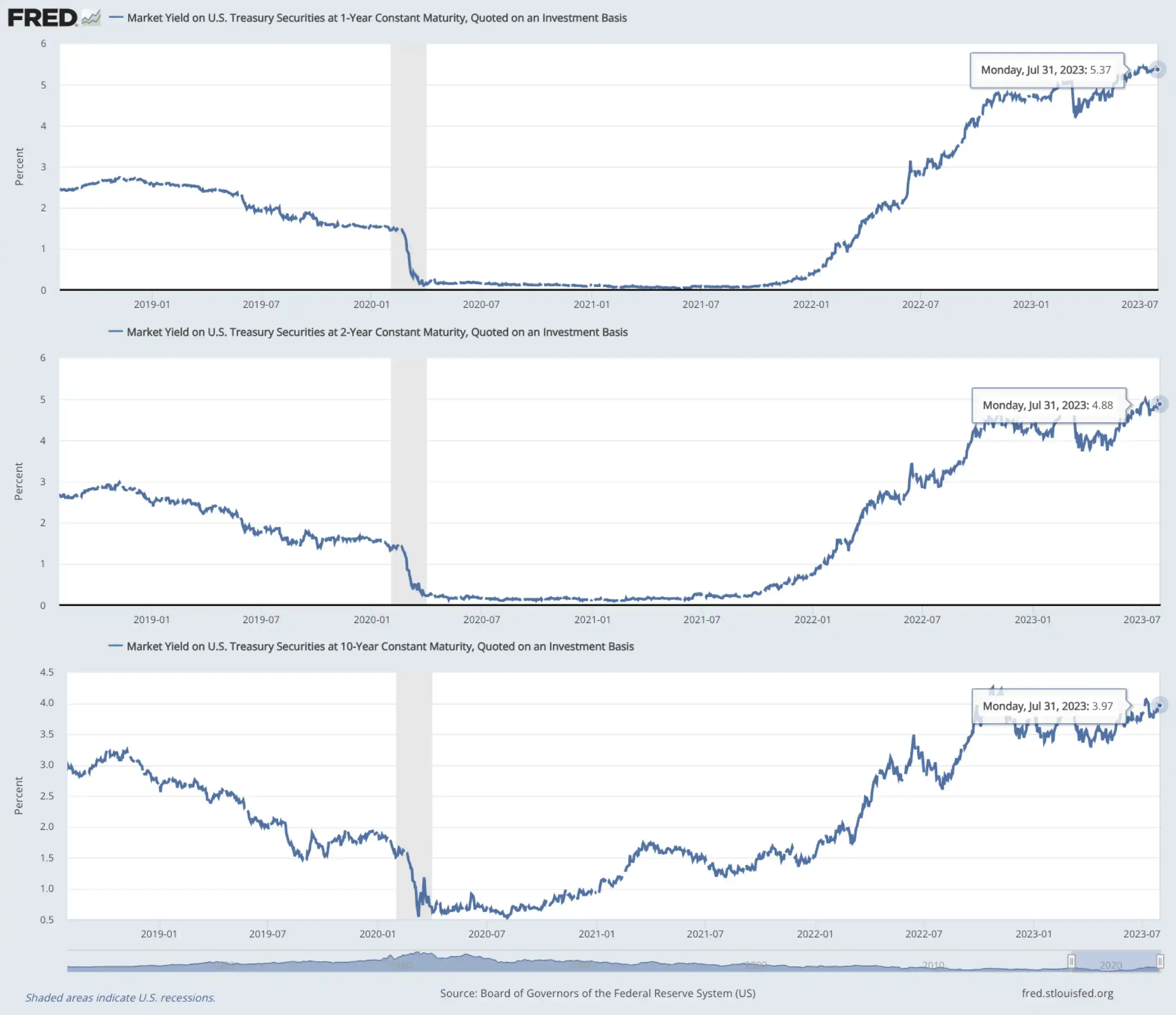
According to FRED data, as of August last year, the yields of one-year, two-year, and ten-year US Treasury bonds were 5.37%, 4.88%, and 3.97%, respectively. Regardless of the yield curve, whether it is short-term or long-term bonds, the yield has been steadily rising since the end of 2021. Compared to mainstream DeFi protocols such as Curve and Aave, even the yield of ten-year Treasury bonds is significantly higher than their average yield.
On the other hand, the yield level of DeFi is gradually declining. According to DeFi Llama data, the median yield of DeFi has dropped from 6% to 2% between early 2022 and July 2023. For large investors, this is almost unprofitable.
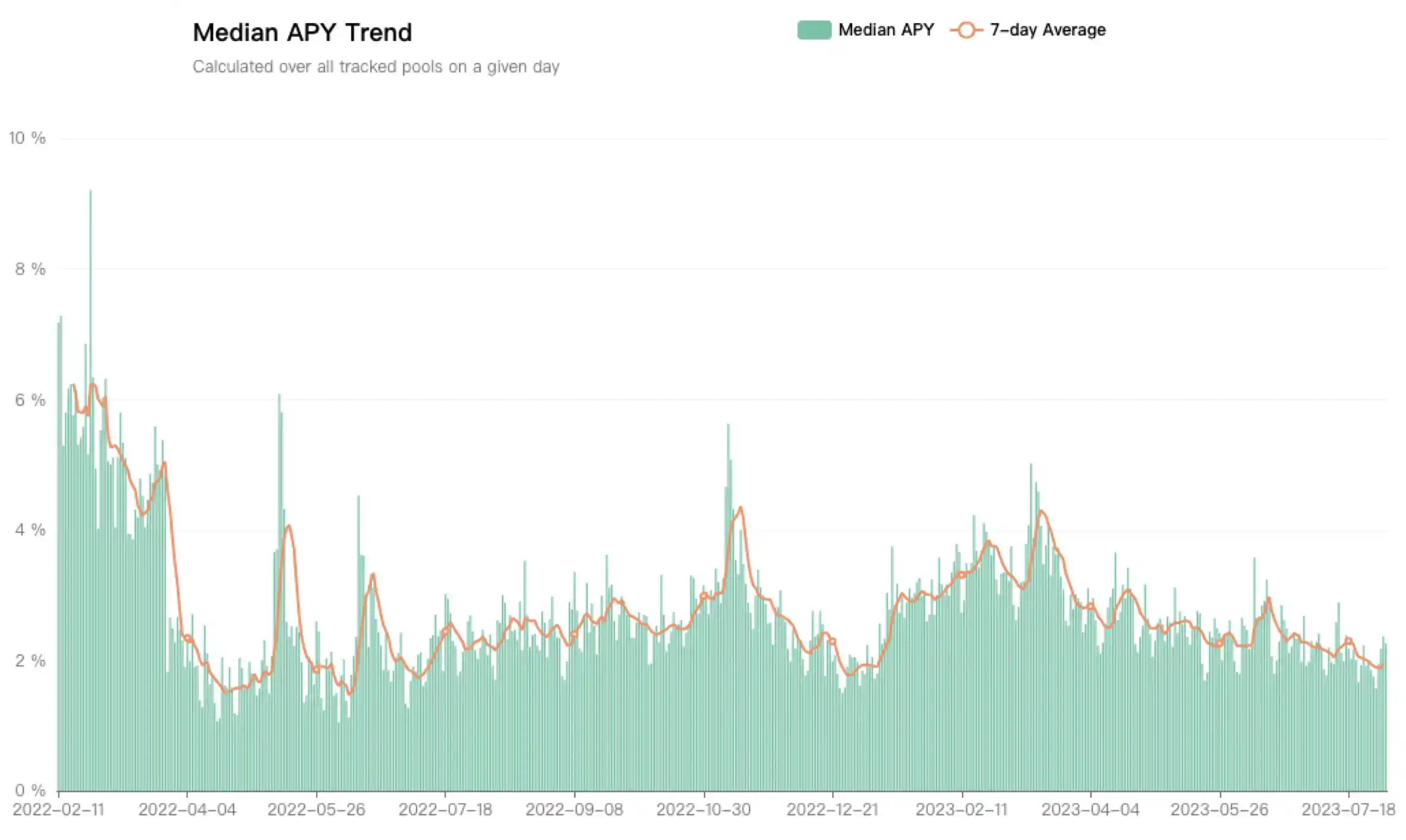
Regarding this, Fidelity's latest report states that last year, "in a generally risk-averse environment, institutions believed that the mid-single-digit returns offered by DeFi yields were too low for the associated risks." Additionally, the Federal Reserve's decision to raise interest rates in 2023 has provided institutions with better, or at least perceived as safer, options, further exacerbating the liquidity squeeze in the cryptocurrency market.
DeFi Yield Surpasses National Bonds
Throughout 2023, as DeFi investors turn to US Treasury bonds to earn higher yields, stablecoins pegged to the US dollar have been hit hard.
However, if the Federal Reserve lowers interest rates by 0.75% by the end of 2024 as predicted, institutions may start looking for more profitable ways to make money, such as investing in DeFi.
DeFi lending protocols like Aave are the largest in their class, with over $8.3 billion in deposits, providing investors with a simple way to utilize their cryptocurrency assets. However, in order to do so, other investors must deposit stablecoins for them to borrow. In recent months, Aave users have earned interest rates on stablecoin loans that have surpassed the 10-year US Treasury bond rate.
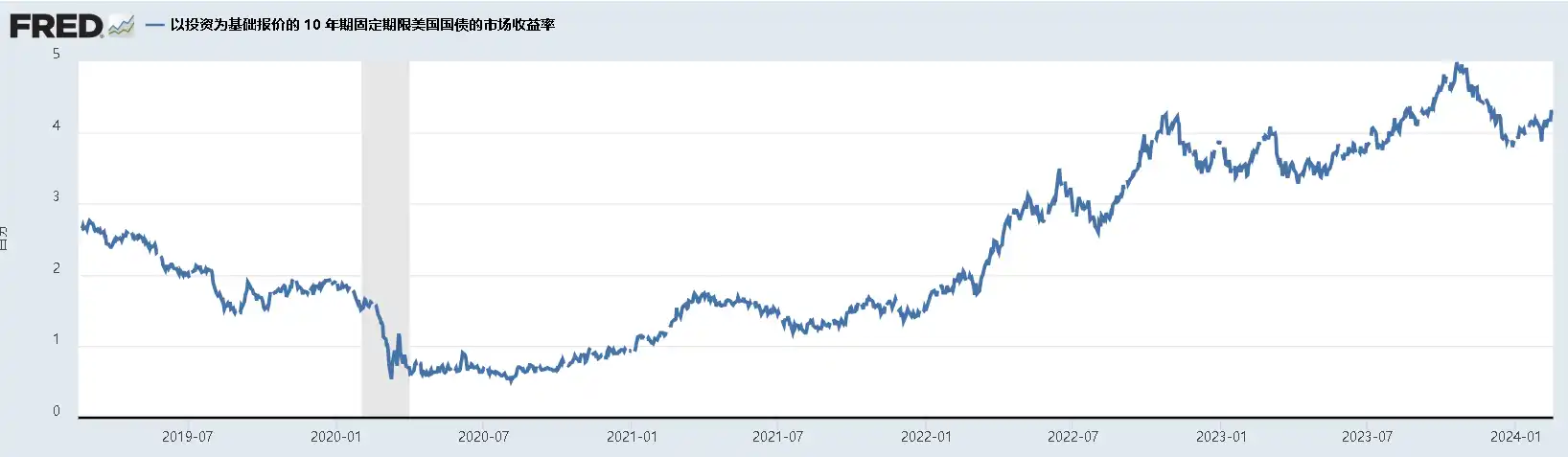
According to FRED data, the current 10-year interest rate in the United States is approximately 4.25%. For the largest USD-pegged stablecoin in DeFi, USDT, investors can earn up to 14% in returns. The circulating supply of USDT exceeds 97 billion USD, which is an increase from around 5% in August.
Other stablecoins also have higher yields. Dai is the third largest stablecoin with a circulation of approximately $4.8 billion, and Aave depositors earn about 8.5% in interest, while the second largest stablecoin, Circle's USDC, has a slightly lower yield of around 5%. DeFi investors typically view the DeFi stablecoin lending rate provided by protocols such as Aave as the industry's risk-free rate of return. This is because it represents the benchmark return for evaluating all other DeFi positions.
The interest rate offered to borrowers on Aave is determined by the protocol's algorithm, with yields increasing as assets become more popular among borrowers. If US Treasury yields decline, such high yields may attract institutional investors to DeFi. As long as risk appetite persists, the attractive returns that DeFi investors can earn through stablecoin lending are unlikely to diminish anytime soon.
When it is not possible to generate sufficient profits on the chain, bringing real-world profits into DeFi is a viable solution, namely RWA. Today, DeFi yields are once again higher than government bonds, which may indicate that the RWA protocol relying on US bonds will fail again and enter an irreversible downward trend in profits.
Reference link:
https://www.dlnews.com/articles/defi/fidelity-says-institutions-could-look-to-defi-for-yield/
Welcome to join the official BlockBeats community:
Telegram Subscription Group: https://t.me/theblockbeats
Telegram Discussion Group: https://t.me/BlockBeats_App
Official Twitter Account: https://twitter.com/BlockBeatsAsia

 Related Articles