OKX Ventures: Embracing all markets, how can RWA help DeFi conquer the world.
This article is provided by Sally Gu, a researcher at OKX Ventures, and does not constitute any investment reference. Please indicate the source when quoting, and contact the OKX Ventures team for reprinting.
Introduction Primer
The impact of the epidemic, coupled with the successive interest rate cuts by the Federal Reserve after Powell took over from Yellen, has led to the biggest financial asset bubble since World War II in the past few years, despite high inflation and low real interest rates. However, the trade war between China and the United States, the confrontation between Russia and Ukraine, and the rise of populist forces in Europe have fundamentally begun to undermine the foundation of globalization over the past 40 years. The liquidity easing and high leverage since 2018 have created a financial wealth effect that is now gone, and the excess returns generated by valuation expansion due to declining interest rates seem to be irreversibly moving towards mean reversion, amid a trend of inflation at the bottom of social wages and deflation at the top.

Source:TS Lombard

Source:Bloomberg
Therefore, after the interest rate hike cycle is extended, the deep inversion of the US bond long and short ends is maintained by more than 50 basis points. At present, the pure virtual financial narrative such as the metaverse PFP NFT cannot be supported by intrinsic value and is declining. DeFi or the crypto economy is embracing real assets and TradFi from virtual to real, which may be a way to go with the trend in the recession and deleveraging cycle.
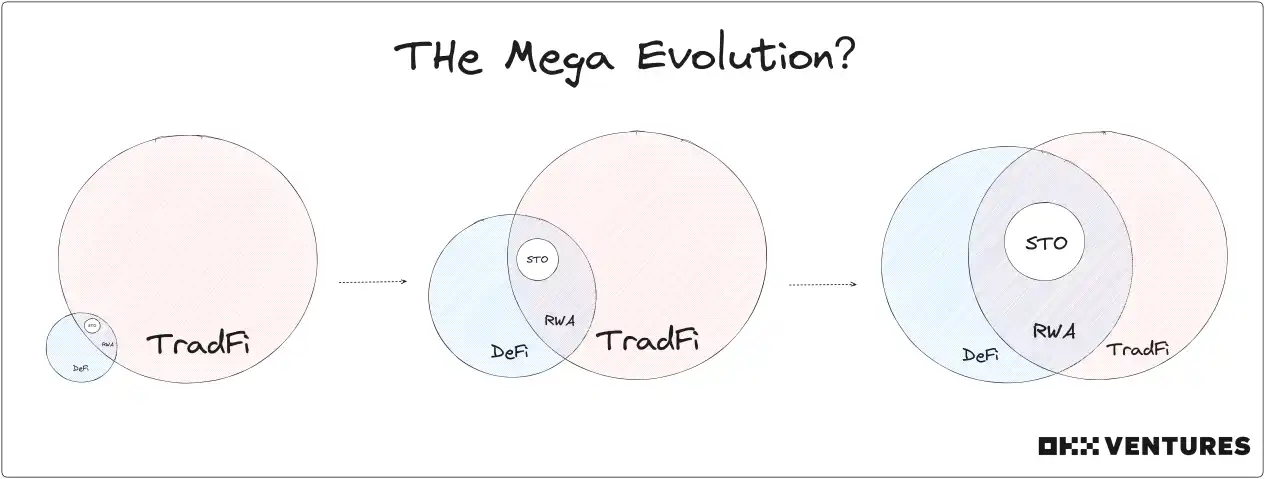
In order to further explore the trend of integration and evolution between DeFi and TradFi, we have conducted a simple analysis of the RWA track, which has been increasingly focused on and discussed in the following text.
TL; DR
Logic
TradFi Perspective: Reduce trading costs, increase trading transparency and capital circulation efficiency; increase the composability of financial primitives, provide more hedging tools; activate the funds of potential speculators and institutions.
DeFi Perspective: Supporting and Amplifying the DeFi Speculation Loop; Introducing Massive Liquidity to Expand the DeFi User Base; The Stablecoin Market Has Been Proven.
Race development impetus: macro cycles promote capital inflows to the U.S. dollar, traditional institutions' interest in old money is gradually increasing, and the cryptocurrency market needs to attract new users.
Roadblocks to development: uncertain regulatory environment, limited traction, limited high-quality underlying assets.
Evaluation dimensions: product fundamentals, risk control capabilities, protocol mechanisms, and cooperative partners.
Classification
Defined by asset form: standardized, non-standardized.
Classified by asset categories: fiat currency, fixed income (bonds, credit), equity, alternative (real estate, collectibles, commodities).
46 projects mentioned: Centrifuge, ONDO, Maple, OpenEden, BondbloX, FortunaFi, CredeFi, Goldfinch, TrueFi, Defactor, Credix, Clearpool, Bru Finance, Resource Finance, Backed Finance, Sologenic, Swam, AcquireFi, Horizon Protocol, Hamilton Lane, RealT, Parcl, LABS Group, Propy, Atlant, ELYSIA, Tangible, Blocksquare, Milo, Figure, LandShare, Lingo, HOME Coin, Theopetra, EktaChain, Robinland, Homebase, 4K, Arkive, mattereum, Codex Protocol, PAX Gold, Tether Gold, Cache Gold, Agrotoken, LandX.
Viewpoint
Currently, most RWA products are difficult to find PMF: in the short term, more are narrative FOMO, rather than truly breakthrough innovation or strong growth momentum; closely monitor the dynamics of compliance policies in the United States, Hong Kong, and Singapore to minimize policy risks.
Alternative assets & non-standard RWA protocols are emerging: non-standard assets can be put on-chain using erc721/1155, and erc20 may not be the mainstream in the future. There is great potential for NFTs such as bill NFTs, RETIs NFTs, and collectibles NFTs.
Government bonds RWA will still remain mainstream, while equity RWA is gaining more attention: US Treasury bonds have been recognized by the crypto community; the demand for thickened equity RWA is real, but it faces layers of obstacles in compliance.
The recognition of the encryption community is crucial, and it is even more difficult to achieve native community cooperation: the difficulty of fixed-income RWA lies in the integration of the loan side; DeFi DAO members have significant differences in their understanding of off-chain assets, and overly complex off-chain assets are difficult for the community to understand.
Points worth discussing and further researching: on-chain Ponzi schemes such as RWA Fi and RWA options trading; middleware for on-chain verification, SaaS companies, compliant issuers, and intermediaries for matching loans and borrowing; the division and coexistence of RWA DeFi and native DeFi.
Basic Concepts
RWA - Real World Asset Tokenization on the Blockchain
STO - Corporate Bond Financing
Difference: RWA's asset products are more diverse, spanning both primary and secondary levels, and the gradient of yield can be more extended.
Market Data

Source:Defillama

Source:Dune
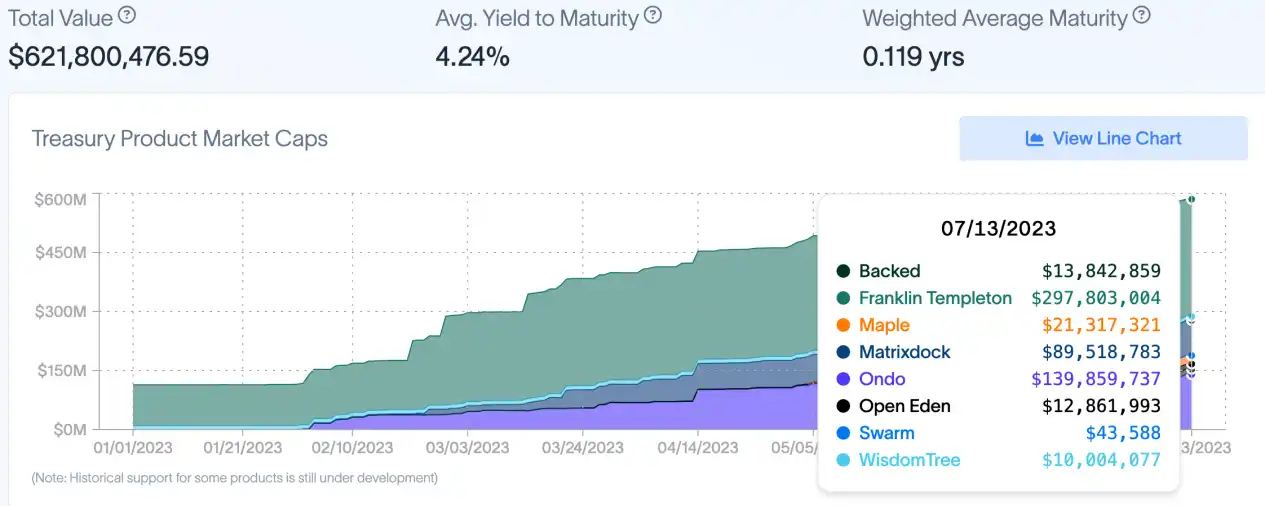
Source:rwa.xyz

Source:rwa.xyz
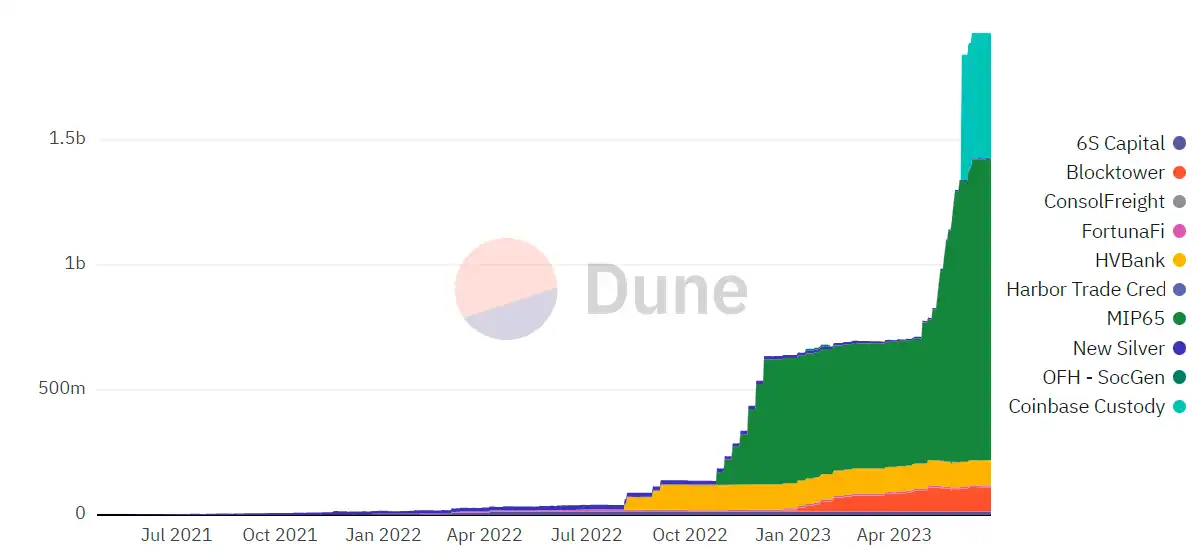
Source: MakerDAO
TradFi-wise
· On-chain alternative assets & synthetic architecture improve the composability of financial primitives, providing more available hedging capabilities.
Deriving multiple combination paradigms, vertically extending asset product spectrum, diversified and dispersed investment portfolio risk exposure.
Within a single mixed fund or structured product, on-chain assets can serve as hedges against traditional assets and fluctuations in jurisdictional currencies.
· Activate the funds of restricted foreign potential speculators and institutions
Inclusive finance narrative, larger TAM means higher profit space.
The funds that escape from banks actually flow back into tradfi in another form.
Further activation of global liquidity has benefited some local institutional investors, but the potential result is the rapid exacerbation of regional poverty and liquidity problems, leading to more brutal social differentiation.
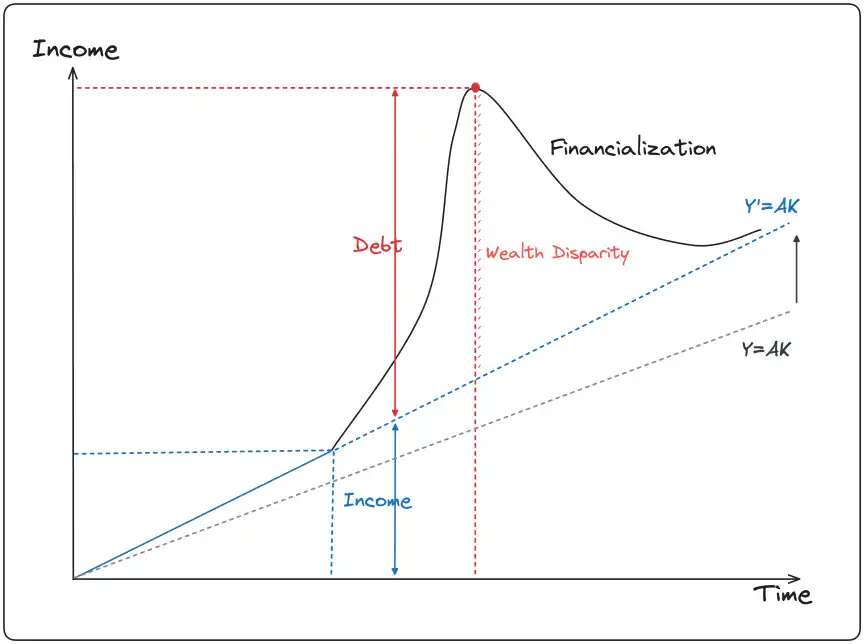
DeFi-wise
· Supporting and Amplifying the DeFi Speculation Loop
Simply put, the game rules of tradfi are more easily recognized and accepted by the mainstream, which to a certain extent helps to lower the learning and entry barriers of DeFi.
The scale and density of institutional funds, the scope of the audience, the size of the exposure they can afford, the sales window channels, the proportion of market participants, and the degree of specialization in tradfi are all much higher than in DeFi.
BCG & ADDX research believes that the tokenization market could reach a scale of 16 trillion by 2023 (including a 3 trillion real estate market, a 4 trillion listed/non-listed asset market, a 1 trillion bond and fund market, a 3 trillion alternative asset market, and a 5 trillion other tokenization market).
Citi calculates that the combined size of digital securities and blockchain trade finance could reach 5-6 trillion yuan by 2030 based on the most basic calculation.
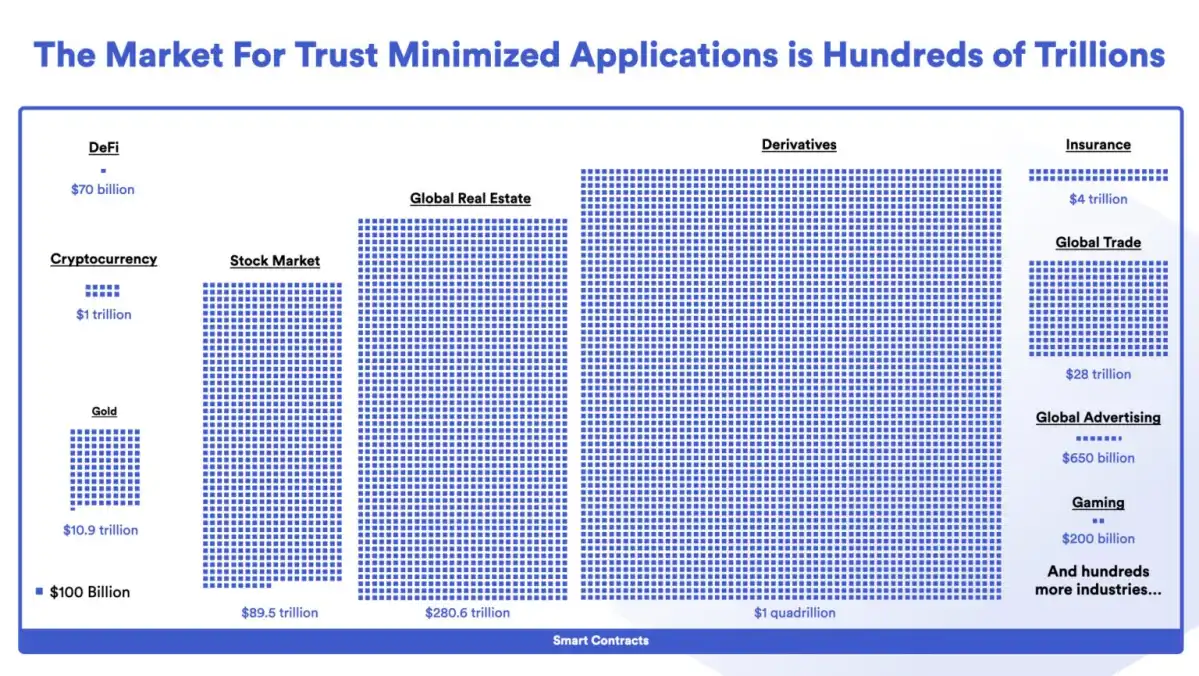
Source:Chainlink
· The stablecoin market has been demonstrated
USDC and USDT are also RWAs with fiat currencies as their underlying assets.

Source:The Block
推力 Momentum
Thrust Momentum
Macro cycles prompt capital inflows to U denomination
Regulations are tightening and compliance laws are improving.
Traditional U-based fund income has increased, and continued interest rate hikes have pushed short-term government bond rates up to 4% (the latest 2-year rate is 4.64%, slightly narrowing but remaining high).
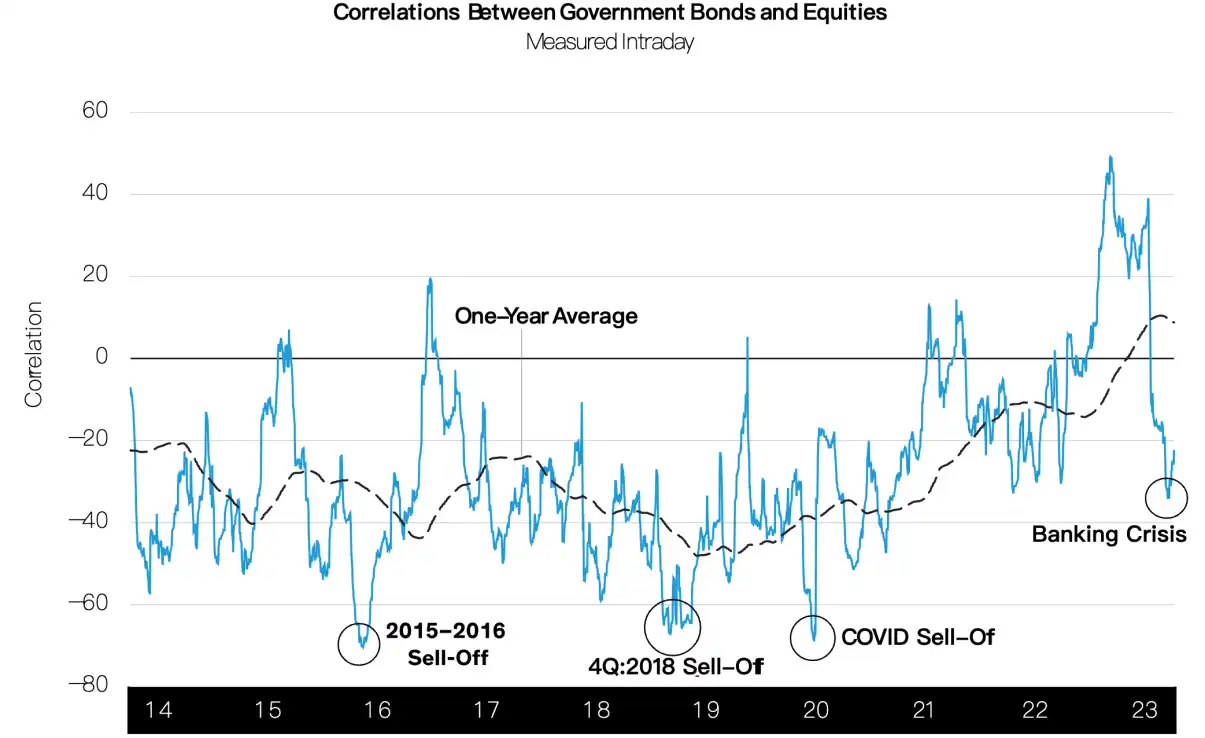
Source: Alliance Bernstein
The issuance of BTC ETF also indicates that traditional market alpha opportunities are disappearing, and mainstream beta passive income is maintained (not actively seeking to outperform the market, only seeking average market returns).
Tradfi is facing a bottleneck in its own development and is seeking industry transformation. It has seen past examples of Internet+ finance, embracing AI, and fintech Aladdin.
Lao Qian believes that the native encryption industry lacks a complete understanding of tradfi and cannot fully penetrate the market depth. The RWA track is more suitable for traditional players to explore and layout.
Encryption market needs new customers
The native infrastructure layer of the encryption industry is inverted at levels one and two, and the innovation of protocol Lego is dull.
The tax, asset definition, licensing establishment, recovery process and other system links all depend on the local financial policy environment.
The attitude of the central bank, banks, and the China Securities Regulatory Commission basically determines the life span of the agreement, and the probability of default is high.
· Inconsistent with the native beliefs of cryptography, PMF cannot be found
Early adopters of encryption were extremely resistant to centralized regulation and the banking system, seeking independent on-chain development of the DeFi ecosystem.
Most DeFi participants are opposed to KYC/AML (even though zkp solutions can provide privacy protection) and prefer completely permissionless interactions.
DeFi users with high risk preferences are not interested in RWA yields, even if they have equity in RWA. The returns may not be as good as creating a pool on Uni (especially now with the release of v4 and the hook, which further enhances playability and freedom).
Low-risk preference DeFi user base itself is not large, and they can choose to directly pledge mainstream coins/buy ETFs to passively earn income.
· Traditional institutions are not in a hurry to enter and are still weighing their options.
The on-chain liquidity is still small compared to traditional finance. Coupled with the insufficient market depth, it is difficult to create a huge wealth effect. It is only possible for off-chain traditional finance players to invest in on-chain, rather than the other way around.
Based on this logic, traditional institutions are willing to spend a lot of effort and allocate a large percentage of their balance sheets to explore the unknown for a mystical alpha arbitrage space. Currently, it is unlikely that they will allocate more than 0.01% on their balance sheets in the short term, which is insignificant compared to other businesses.
After communicating with traditional secondary fund managers, most of them expressed that they do not consider trading on-chain assets or synthetic assets in the short term for two reasons: first, there are sufficient alternatives and hedging tools in traditional stock markets; second, due to the background attributes and risk preferences of LPs, it is not possible to allocate too many crypto assets, which may cause interference to their original investment system.
有限的优质底层资产 Limited high-quality underlying assets
Limited high-quality underlying assets
The high-quality underlying asset products such as US Treasury bonds are limited, and niche assets such as New Zealand stocks are not sufficiently liquid and do not follow a T+0 delivery method. Other small-cap stocks, penny stocks, and altcoins are also difficult to develop speculative strategies due to their lack of correlation with macroeconomics. Therefore, there is no need and it is unlikely for them to be tokenized.
Tokens of similar underlying assets mean that the protocol's competitive barriers will not be very high, making it easy to see a trend towards homogenization.
The later stage track is inevitably heading towards the maturation similar to LSD.
评估维度 Evaluation
translates to
评估维度 Evaluation
in English.
Product Fundamentals
The types of RWA products and the range of returns offered may vary in the market and have competitiveness. What assets are currently being managed and where are these services being offered? Is there a long-term qualification to provide such services?
TAM stickiness, user retention, asset pool depth and liquidity, funding discount rate.
Protocol revenue and net profit, token value and circulation efficiency.
Risk Control Capability
Team: Do you have experience working in traditional investment banks, commercial banks, or securities companies? Do you maintain good relationships with local legal systems? Have you had any illegal records or bad reputation in the crypto industry?
Compliance: Does the company comply with local securities laws and regulations (what is the local policy environment and tolerance for crypto)? Are regulatory documents clearly defining asset attributes or prohibiting such assets? KYC/AML, default settlement, compliance costs, credit assessment.
Protocol Mechanism
The tokens mapped by real-world assets need to interact with multiple blockchain ecosystem backends, and the interoperability of the protocol is required for building architecture on different chains.
The method of on-chain deployment is decentralized or not, and follows what kind of trust minimization mechanism. Is the off-chain cash flow and related mortgage debt information disclosed regularly? What kind of oracle network data operation mechanism is adopted, and how are nodes selected?
The security mechanism of the protocol, whether it can effectively prevent the leakage of information such as interactive account addresses, oracle manipulation, hacker attacks, etc.
Partner
Whether to choose an experienced and trustworthy third-party on-chain asset custodian (e.g. off-chain collateral SPV control and disposal rights).
Whether there is long-term cooperation with top-tier bank trusts and other tradfi intermediaries in terms of reputation, scale, and service scope.
Asset Segmentation
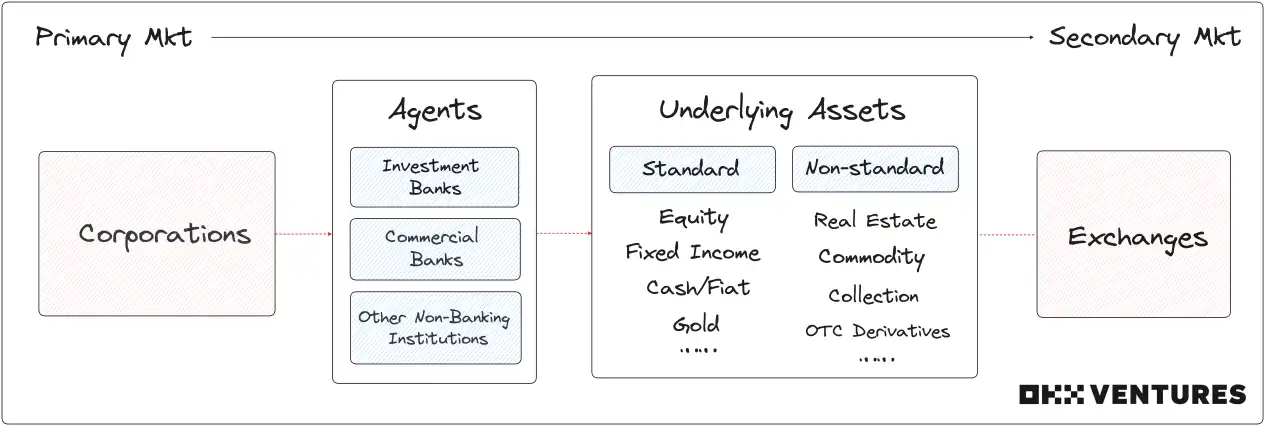
Defined by asset form
Standardization (S)
Semi-fungible/fungible, easy to circulate, assets with financial and monetary value.
Public + on-site circulation
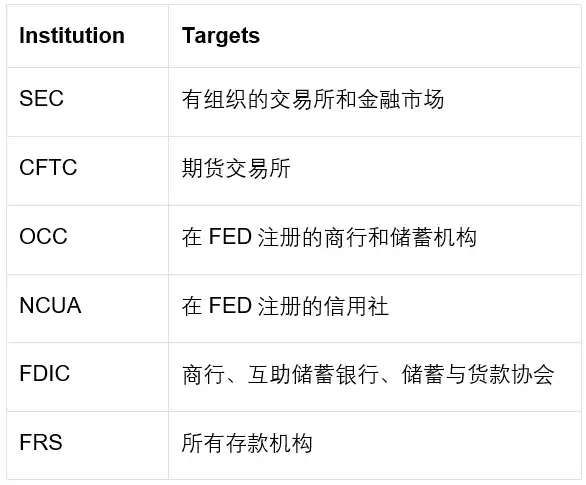
Generally regulated by the SEC.
Non-standard (N)
Non-liquid, non-homogeneous, difficult to price, and difficult to trade assets.
通常在私人+场外市场流转
"Usually traded in private and over-the-counter markets."More likely to be regulated by CFTC
A brief overview of US regulatory agencies and their regulatory targets is as follows:
按资产大类界定
translates to
Defined by Asset Class
The nature of funds determines the behavior of traders, and the classification of trading behavior in major asset categories determines the available options.
The tolerance range of potential users for risk and uncertainty determines their allocation ratio for different asset classes.
1. Fiat-based RWA
Common: US dollar, Euro, Japanese yen, British pound, Renminbi, etc.
Focus sequence: Australian dollar, Canadian dollar, Korean won, Swiss franc, South African rand, Mexican peso, etc.
Key tool: Mortgage stablecoin
Project: Circle, Tether, Frax, MakerDAO, etc.
The original RWA was a stablecoin project based on fiat currency (primarily the US dollar), such as Circle's USDC and Tether's USDT.
The transaction costs, channels, and optional categories are currently relatively limited.
If more fiat currencies in the future can be issued as on-chain assets, stablecoins related to stocks and currencies such as Russia, Malaysia, etc., and stablecoins negatively correlated with fiat currencies such as Canada, Australia, and South Korea may become a good hedging tool (without discussing the depth issue for now).
2. Fixed Income RWA
2.1 Bond
Common: government bonds (sovereign bonds: US, Europe, Japan, Australia, China), central bank bills, government bonds, corporate bonds, foreign debt, credit bonds, convertible bonds, etc.
Key tools: ETF, bond derivatives.
Single asset types with relatively large amounts, but low standardization.
make dealer as trader has good imagination space.
Common: Precious metals (gold, silver, platinum, palladium), base metals (copper, aluminum, cobalt, lithium, zinc), energy (crude oil BRENT, WTI).
Focus sequence: iron ore, coal, dairy products, agricultural products, etc.
Project: PAX Gold, Tether Gold, Cache Gold, Agrotoken, LandX, etc.
The degree of non-standardization is high, and the on-chain methods for tracing, confirming ownership, pricing, and verification are usually very complex. The process of finding and packaging assets by the project party themselves may result in significant cost consumption and make it difficult to achieve rapid growth and expansion.
TAM is relatively limited, and niche assets need to consider the depth dimension, only suitable for professional commodity investors.
Farm products tend to be in a pure commodity investment framework. Investors who lack traditional commodity investment experience find it difficult to judge the production cycle, storage and transportation process, regional market environment, and the impact of climate temperature changes on economic crops.
Crude oil is generally observed as an interest rate-related impact and is highly correlated with interest rates. Traditional investors can directly purchase mainstream interest rate products, but cannot see significant on-chain demand.
On-chain gold purchases can achieve instant settle and redempt, which has certain advantages. However, gold can be considered based on bond logic (interest rates + inflation expectations), and investors with large positions can still prioritize mainstream US bonds and other RWA.
POV
Long-term planning, taking small steps, and waiting for the wind to come.
RWA may be a "necessary evil" for DeFi to expand to the next billion users, but in the short term, it is more about sellers shouting orders and narrative FOMO, rather than truly breakthrough innovation or strong growth momentum. For small and medium-sized retail investors, asset allocation should still be based on their own needs.
It is recommended that institutions focus on long-term and innovative design for the top 1-2 projects. In addition, closely monitor the dynamic compliance policies of the United States, Hong Kong, and Singapore. Only with the collaborative cooperation of tradfi financial institutions can the policy risks of the overall track be minimized.
明显的趋势是另类资产&非标 RWA 协议正在涌现
The obvious trend is the emergence of alternative assets and non-standard RWA agreements.
It is not necessary to standardize the underlying assets. Non-standard assets can be directly put on the chain using non-standard protocols such as ERC721/1155. Even structured products can be directly used with the latest 6551, and there is no need to use 20. In the long run, 20 may not become mainstream.
Centrifuge, Fortunafi, and other companies have already provided mortgage loans that package future income receipts as NFTs. There are also emerging protocols for RETIs and underlying protocols for collectibles that narrate NFT RWA, such as 4K, which have a large imaginative space. After gaining community trust in the early stages of operation, there is a chance to lead the next wave of trends.
国债/美债 RWA will still maintain the mainstream ecological position, and equity RWA will receive increased attention
The mechanism of putting US Treasury bonds on the chain is mature and the asset structure is robust, which has been recognized by the encryption community. However, most of them have already issued coins on the platform, leading to fierce competition in the existing market. Although the market size is large, there is not much room for innovation.
Thickening products such as equity RWA provide on-chain traders with opportunities to speculate on traditional stocks. The demand is real, but there are many obstacles in terms of compliance, as the on-chain influx of funds that is too dispersed and untraceable may disrupt the normal operation of domestic financial systems in various countries.
Currently, most equity RWAs are still only available to institutional users with high net worth and ultra-high net worth, and have not played a role in lowering the threshold for retail speculation. There is still a lot of room for development in this area.
Recognition within the encryption community is crucial, and cooperation within the on-chain native encryption community is more difficult to achieve than off-chain cooperation.
As far as fixed-income RWA is concerned, it is not difficult for downstream partners to promote it because they can bear less borrowing costs. The difficulty lies in the integration of the lending side.
DeFi DAO and other cryptocurrency treasuries have a large amount of lendable capital, but there is a significant difference in the understanding of off-chain asset collateral among DAO members. In specific audit, underwriting, and off-chain asset tracing processes, the project party needs to provide a transparent solution.
The lending compliance process and DAO governance mechanism of off-chain tradfi will inevitably encounter some friction. The overly complex off-chain assets make it difficult for the crypto DAO community to understand, and community members who do not understand or do not want to understand may lead to long-term proposals being shelved or rejected, making cooperation impossible. In theory, it is difficult for pure tradfi background project parties to gain the trust of the community.
Points worthy of discussion and further research:
Chain-based Ponzi schemes based on RWA assets may be more suitable for exploring the native features of cryptography, such as RWA Fi, RWA options trading, etc.
Middleware for verifying asset on-chain, SaaS companies, compliant issuers, and intermediaries that match lenders and borrowers on the chain, such as IX Swap, Stima, Castle, Curio, are worth paying attention to. In the future, there may be dominant players.
Regulated RWA DeFi and unregulated native DeFi, how they will be divided and coexist in the future, and what kind of competitive landscape will be presented with CeFi is still unknown.
Conclusion
Western asset management institutions have never lost their enthusiasm for entering emerging market bond markets through various means and private wealth management services. As the encryption infrastructure gradually improves and giant asset management companies such as Blackrock view BTC as digital gold, it is not difficult to see that the traditionally fragmented financial market is also actively seeking better funding utilization scenarios and liquidity efficiency improvement plans. Tightening regulation actually means the beginning of its serious scrutiny and governance of encryption. As the vision of the world economy shifts from Keynes to Austria, the tentacles of encryption in traditional stock, bond, and foreign exchange markets will accelerate their extension.
Amidst the clamor of "models will eventually dominate the world," DeFi is quietly devouring all markets.
TradFi may embrace crypto faster than you expect :)

Welcome to join the official BlockBeats community:
Telegram Subscription Group: https://t.me/theblockbeats
Telegram Discussion Group: https://t.me/BlockBeats_App
Official Twitter Account: https://twitter.com/BlockBeatsAsia

 Related Articles