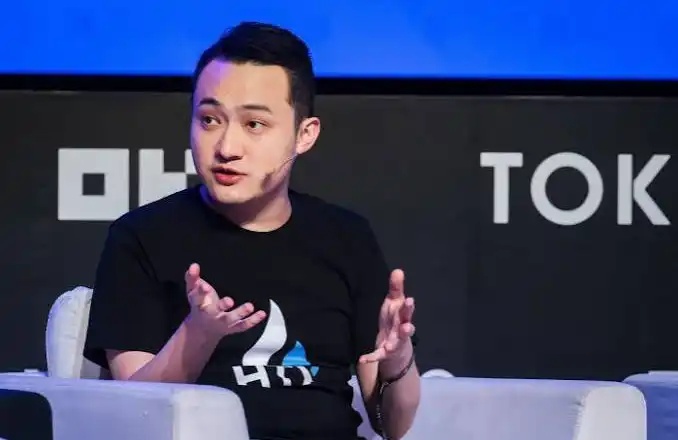
Vitalik's first Chinese AMA: Viewing democratic values from the perspective of Ethereum.
Translation: Kaori, BlockBeats
Editor's note: On January 31st, Dr. Ge Rujun from the Technology Committee YouTube channel invited Ethereum founder Vitalik for a full Chinese interview, and the second episode was released on February 7th. In the first episode, the host and Vitalik discussed the meaning of democracy for Ethereum and how Ethereum implements democracy. In the second episode, Vitalik and the host discussed different voting systems and how they can help achieve consensus. They also touched on topics such as the Zuzalu experiment, Zupass, Quadratic Funding mechanism, and the future of democracy and technology. BlockBeats has compiled Vitalik's noteworthy views from the program for readers. If readers need to listen to the original audio, please check the following links: Episode 1, Episode 2.

Q: As the founder of Ethereum, what is the value of democracy to you? What is the relationship between democracy and blockchain?
Vitalik: Bitcoin is the first blockchain system. Its initial goal was to create a currency payment system and digital gold. However, Satoshi Nakamoto also invented two things at the same time: a payment system that created a valuable asset from scratch on the internet, and blockchain technology.
This reminds me of a Swiss Army Knife, which contains ten or twenty other functions, but is still a limited tool. If you want to discover the second new function, you need to buy a new knife. But there is a better way, which is to create a blockchain for a universal programming language. I started to delve into this direction, and then the Ethereum white paper came out.
The goal of the Ethereum project is not to create a currency, but to explore what can be done with blockchain technology beyond currency. Some of the co-founders did not enter the blockchain space through Bitcoin. Therefore, I believe that Ethereum is like Bitcoin plus a universal technical language, and it is an open-source platform for file storage and collaborative computing power.
You can understand what blockchain does from another perspective. The concept of open source has existed for forty years, but twenty years ago, it was relatively simple - you could run your own open source files on your computer. However, most of the interesting things that people want to do now, including collaboration between people, have not yet been connected to the concept of open source because they always face the problem of centralization, which is about who controls whose power.
The principle of blockchain is decentralization, and what we want to do is not controlled by a company, an individual, or a small group. If we want to do something more complex than currency, there will be a problem of how to upgrade this application. We have been studying various democratic methods, such as whether users of this application can control it together.
Many people tend to think that democracy is only related to the state, but in fact, democracy is already a concept that is used everywhere, such as the interaction on social media, which is also a form of voting. There is macro democracy and micro democracy. In fact, what the blockchain ecosystem needs and what social media and large-scale politics need are different forms of democracy.
Q: Are there any open-source projects related to Ethereum that have practical democracy cases?
Vitalik: I have a blog, and for many years, my articles are usually posted in two places. One is the traditional website vitalik.ca, and the other is vitalik.eth, using Ethereum's ENS domain name and decentralized storage IPFS system. Last month, I found that vitalik.ca was not accessible. After investigating, I found out that my server company had shut down.
The things I create have always relied on another company's existence. When that company is gone, my things are gone too. But ENS is a smart contract where I can send a hash representing my homepage link. My homepage is also a link in the IPFS system. The content of these web pages is all on IPFS. Although it is not a blockchain, the technology is very similar. So, even with just one person, I can ensure that these contents can still be seen a hundred years from now.
In the public goods sector, these common things are not stable and need to be constantly developed. For example, the Ethereum protocol has been continuously improved, from POW to POS, and gas consumption has been reduced by at least a thousand times. So the advantages of improving blockchain protocols are very significant, but the first thing is to determine who will improve the protocol if it needs to be improved. Ethereum has EIP, but who decides which EIP is adopted? The second issue is that research, development, testing, security, and other EIPs require many developers and resources. Currently, we have hundreds of people working on these things. These people need someone to pay them salaries, but where do these salaries come from?
At the beginning, both of these parts were relatively centralized, including a small group of core developers, including myself, who determined the testnet version. But now, many people have completed it. The Ethereum Foundation, a non-profit organization, initially had 60 million ETH for sale, and you could buy 2,000 ETH with one Bitcoin. Then, 12 million ETH were given to the foundation and early developers, and the remaining ETH were mined.
The foundation initially received a lot of Bitcoin, but the price of Bitcoin subsequently dropped significantly, so we had almost none left after about a year. Fortunately, the price of ETH had risen significantly during that time.
Therefore, at the beginning, it was all relying on the Foundation, but now there are many other organizations outside the Foundation that are involved. Currently, there are approximately five clients implementing the Ethereum protocol rules, with some of the client personnel supported by the Foundation and others completely independent. ConsenSys is a company that was initially doing things on Ethereum on a larger scale, and they are now supporting two clients. One or two years ago, Arbitrum bought a client company.
Now there are different people with different funds supporting different teams, so if you want to participate in the development and research of the Ethereum core ecosystem, even if the foundation doesn't like you, I don't like you, you can still apply to these other people and companies. This is also a process of gradually democratizing the ecosystem.
Now there are many companies conducting their own experiments on Ethereum, and there is a Layer 2 project called Optimism that is conducting an experiment called RetroPGF. It can be said to be a sponsored program, but it is not a traditional sponsorship. For example, if I want to do something, I write an application to tell you what I want to do, and then you sponsor me. Instead, I have already done something, and then I can get some rewards from this program.
Q: Can you talk about Zuzalu?
Vitalik: This is an experiment I did in Montenegro last year. In the past five to ten years, some people have been discussing the concept of creating a new city or country, and Balaji's book "Network State" has sparked curiosity in many people. However, I have found that many people are talking about it but no one is actually doing it.
So I decided to conduct an experiment with 200 people from different fields, some of whom are Ethereum developers and researchers, some are from the field of biological science, and some are enthusiasts in the field of governance. These people lived together for two months in a small Eastern European country called Montenegro, in a Pop-up City, a temporary city. The results were quite interesting, and one of our goals was to implement some of the technologies we liked between Pop-up Cities.

One example is Zupass, which is a zero-knowledge proof identity verification. You can use Zupass to prove that you are a participant in the community without revealing your name, but proving that you have participated. Zupass has two parts, one is to scan a QR code, and the other is an online part that allows you to log in to some websites. For example, voting websites allow community members to vote anonymously while ensuring that each person can only vote once. This technology can be used for social media to prevent account bans and fake account issues.
Zupass was born in Montenegro, but now it is being used in many other projects, making it a truly useful tool. Therefore, I believe that zero-knowledge proofs are a very useful thing for the future of freedom and openness.
Q: What role do you think technology will play in the real world? Some people say that zero-knowledge proofs could be used in future elections, but others say that this is too far-fetched. Can you give us a vision or direction?
Vitalik: Actually, I don't think it's necessary to start with the biggest ones. Quadratic Funding can also be used in fields such as universities and non-profit organizations. This mechanism is used to fund public goods by encouraging donations and matching funds, taking into account the number and amount of donations. Let's try it out on some practical things and see what the results are, then gradually expand.
This technology has reached a point where we can start thinking about how to use it. Five years ago, we didn't have zero-knowledge proofs. It was just an academic concept, like Zcash in 2016, where it took two minutes to send a transaction proof on a computer. Now, it can be done in three to five seconds on a mobile phone. In the past five years, there have been many improvements in user accessibility and developer experience. Before 2021, creating a project based on zero-knowledge proofs required you to be a cryptography researcher, but now there are many tools available where you can write your own code and generate a proof automatically.
Technology is becoming increasingly advanced, so now we can consider whether there are any areas at the government level where these methods can be used for large-scale experiments. Some are related to public goods, and others are related to identity verification. Once the first step is done, we can think about the next step, and in the long run, I am very optimistic.
Welcome to join the official BlockBeats community:
Telegram Subscription Group: https://t.me/theblockbeats
Telegram Discussion Group: https://t.me/BlockBeats_App
Official Twitter Account: https://twitter.com/BlockBeatsAsia