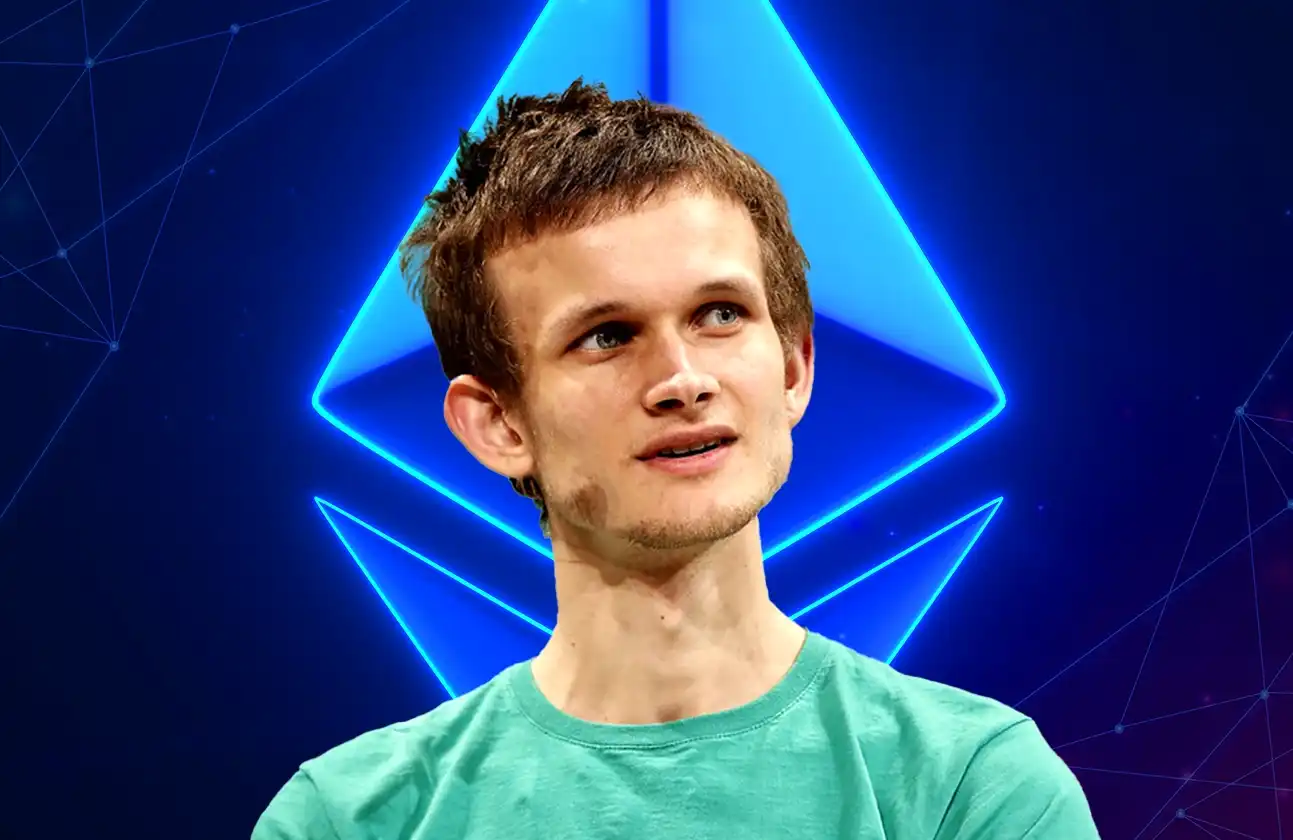
Vitalik Buterin online AMA collation, Ethereum Rollup Layer 2 technology full interpretation

原文标题:《 Vitalik AMA,以太坊 Rollup 二层技术全解读 》
Walking
2 月 28 日晚间,币乎创始人咕噜和 Vitalik 就以太坊 Rollup 二层技术进行的 AMA。本文内容由「行走」整理。
Enjoy:
Gollum: Let me share with you why I chose this topic today. We're doing our own research on Rollup Layer 2. I personally believe that Rollup Layer 2 will become the mainstream application scenario for Ethereum in the future. In the future, you'll probably use dApps on the second layer of the Rollup instead of the first layer. This is a very important topic.
There are rumors that Ethereum will launch some Rollup Layer 2 networks in March. Just take the opportunity to share with you on the third anniversary of the Chinese currency. Vitalik will exchange questions about the second floor and Rollup through a face-to-face question-and-answer format.
Vitalik is not in China, he is in North America, now it is morning to share with us, it is very dedicated. Vitalik will try to communicate with you in Chinese throughout.
If you have any questions before Vitalik comes, I can answer them. (rhythmic note: the following questions for the community, Gollum answers content)
1. Will a two-tier network increase the value of Bitcoin?
It's Ethereum's two-layer network, and it doesn't have much to do with Bitcoin. Of course there is WBTC on Ethereum, but I don't think it's a very direct inertial frame.
2. Which Rollup solution does Gollum like?
Leave that to Vitalik. I have seen a lot about Optimistic Rollup. The advantage is that applications at one level can be easily migrated. At one level the code for DEFI or other applications to Optimistic Rollup is essentially reusable. After being audited on the first floor, the more mature code and application used by everyone can be directly moved to the second floor, so the ecology (establishment) will be faster.
3. Will Ethereum's expansion have an impact on Poca?
I think the development of Ethereum Layer 2 will put pressure on all public chains. Because now Ethereum's ecology is actually the best, and compared with other public chains, it's not even a little better.
The main problem with Ethereum right now is throughput. This is something I talked about in my last live show with Dovey. At the time, many people didn't think throughput was the biggest problem. In fact, when I talked to a lot of people in the industry, two years ago I felt that the biggest problem on Ethereum was the throughput issue. Of course, many people in the Ethereum ecosystem feel the same way.
Ethereum's expansion has been going on for a long time. The capacity is initially expanded through the state channel. It spawned the Thunderbolt Network. The problem with state channels is that users themselves have to be both services and users. The state channel needs to observe the state by itself, and when it ends, it needs to send the state to the public chain at the bottom. It must not be true that the user in the state channel is himself both a user and a server. It is unlikely that users will be required to provide their own services as well as use them.
后来从状态通道之后,衍生出了 Plasma , 服务是有一些节点来提供的。用户只需要关心使用就好了。但 Plasma 有个问题,当数据没有给到你的时候,你如何信任 Plasma 的节点,怎么知道它们在作恶还是没有作恶。这是之前非常困难的问题。在二层的数据,当节点不给你的时候,你不知道它在做什么。
在 Plasma 的假设中,如果用户依然要检测网络的状态。用户没有拿到新的数据的时候,就要从 Plasma 网络中逃跑,因为用户就应该假设 Plasma 的这些节点在作恶。所以 Plasma 也是有多少小时或者几天的过渡期的,就是挑战期。这其实和现在的 Optimistic Rollup 是类似的。
最终 Plasma 没有被以太坊生态所接受,就是因为……
Vitalik online

Gollum: I'm sorry, the Chinese community is so welcoming today. Let me just make a brief introduction.
Why did you choose this topic today? It's because we see it ourselves. Rollup's research, and we're going to do it ourselves on Ethereum Layer 2. Rollup select a Rollup, enabling a decentralized transaction protocol. During my research, I became increasingly convinced that Rollup-based Layer 2 will become the mainstream of Ethereum's future. It is possible that at some point in the future, when people are using Ethereum, they will mainly be using Ethereum's second layer. Such a shift would be a qualitative change for Ethereum itself, as well as for the entire ecosystem. I think based on Rollup's two-tier technology will change the industry by leaps and bounds.
So I'm very, very optimistic about the second layer technology. That's why I chose this topic today.
People are so enthusiastic that I can't even see the questions in the comment section sometimes. Today's topic is mainly completed by the way you ask and I answer. Ask questions and Vitalik answers them. I'm sure you've read a lot about this recently. Rollup's article.
Without further ado, let's get down to business. I'm going to throw a brick at you. My question is also a question that many people would like to ask in The Rollup T2s development team is concerned about.
2 & have spent Rollup security is based on a layer of data. Optimistic Rollup, for example, is accomplished through economic challenges. Rollup is done by zero knowledge proof.
1. My question is: How does the security on Rollup compare to one tier? For example, we have made the smart wallet of MyKey. Can users deploy their smart wallet accounts on the second floor instead of on the first floor? For example, is Optimistic Rollup safe enough? Further, what if the contract issuing token is directly deployed on the second layer instead of the first layer in the future?
Vitalik:This question is of particular importance. A Rollup security issue involves two aspects. One is the security of the application, the other is the security of the asset. The security of an asset is if you have a coin or asset in a Rollup, is it going to be lost or someone will attack the Rollup Stole your coins; System security means that if you have an app on Layer 2, if Rollup gets attacked or something goes wrong, even if the coin is still there, the app can't do anything.
The safety of the assets is basically no problem. There are no security issues at all in ZK Rollup. With a zero-knowledge proof for each Rollup block, there is no possibility of putting an unverified block in. There may be problems in Optimistic Rollup, but within different ranges. If there is a problematic block, and someone can find it before a new block is created, there is no problem. So I don't think the security of assets is a big problem.
The security of the system itself may be a bigger problem. Now the rollups are pretty simple. Rollup is currently packaged with a server block, and if the server crashes, Rollup will not be available for a while.
There are many ways to solve this problem in the future. There are many ways to decentralize servers, so if one node doesn't have a block, a second or third one can do it. There are many ways. Rollup currently doesn't support these methods. While we'll address asset security issues first, the second phase of Rollup will address systemic issues.
Gollum: Can I understand that, at this stage, it is still not recommended to directly deploy contracts such as smart wallet only on the second floor, or to put coins directly on the second floor? Maybe in the second phase, okay?
Vitalik:I think it's time to start putting some applications on the second layer. There are a lot of blockchain applications that don't need to run 24 hours a day, and even if there are security issues, there's not much to lose. For example, many non-financial applications can do this. Such as using blockchain to do some recording, or NFT can already be placed in Rollup.
More dangerous is the particularly high value of the DEFI stuff. If you put $100, $1000, $10,000 in a Rollup, it's not a big deal. But if you're going to start doing a lot of transactions, maybe a hundred million transactions a day, you're going to run into something that's going to attack your server. So my advice is that a lot of things can be done on Rollup, but really high value things should wait a while.
Gollum: Let's answer the first community question: Is there any other use for Ethereum Layer besides fast transfer and low fees?
Vitalik:Lower transaction fees are the most important.
Gollum: Second question: can the value of ETH be linked to ecological value in the long term when a lot of transactions are transferred to Rollup to capture value with ETH as a fee? I think that's a very good question. In fact, there are two layers of GAS payment that can be paid with other tokens except ETH. I thought it might be possible to ask this question.
Vitalik:After Rollup, the project will still pay transaction fees on the Ethereum chain. It is possible that users will have a number of ways to pay their transaction fees (paying with other tokens on tier 2), but choosing the application project on Rollup, the nodes on Ethereum will still need to send Ethereum transactions, and will still need to pay the transaction fees on the Ethereum chain.
And sure enough, if you have to pay $100 for the transaction now, maybe after Rollup, maybe you only have to pay $1. Of course, different applications will have different efficiency. Sometimes GAS is reduced by a factor of 100, sometimes by a factor of 500.
Because the Rollup is more efficient and less expensive. So there will be more transactions on Rollup. If there are now 1 million transactions a day on Ethereum, each transaction will require a transaction fee of $100. If everyone moves to Rollup and there are 100 million transactions per day, the total transaction fee could be much higher, even if it's 1 dollar per transaction.
So the ETH will still have a fee value. ETH will have other values, too. In summary, Rollup's value to ETH is not a threat, but a great help.
Gollum: This one is related to the previous question: does the second tier rob the value of the second tier? Will it develop into a new public chain?
Vitalik:It's always possible. But I don't think the Ethereum community would like it if it did. Communities will move to other projects very quickly. Our community is more strict now. If you're doing a Rollup project, they'll look at your code, look at the details and they'll know if they're actually doing a Rollup. They'll go if it's true, if you say you're a Rollup when you're not. They'll know, and they'll vote with their feet.
So if a Rollup project starts calling itself a Rollup and then moves to another chain (making its own public chain), it can be very threatening to the project itself.
The second problem is, after we do sharding, we have a lot of sharded data. Ethereum's chain-doing Rollup transaction fees are likely to be even lower. So I don't see much value in going from a Rollup to a completely separate public chain. Because the Ethereum ecosystem has more connectivity value, I don't see any benefit in leaving the Ethereum ecosystem.
Gollum: The community could fork if it went from a Rollup to a public chain of its own. The second layer of the Rollup is open data, and anyone can continue to run the Rollup.
Vitalik:right A Rollup has a contract, a mechanism. If the Rollup project wants to make a separate public chain, the contract of the Rollup itself is still there, and the users of the Rollup find that no new Rollup blocks have been generated, they can go in and continue running the Rollup themselves.
Gollum: Ethereum expansion plan Layer 2 is ready, which means the project roadprints have been online. Is Vitalik optimistic about it?
Vitalik:Very good.
6. Gollum: After the London Plan comes into effect in July, how much will it cost per transaction?
Vitalik:预测很难。因为交易费有多少要看用户总量有多少,搬到二层网络的技术如何以及以太坊网络的 GAS 费会不会更高。现在的 GAS 一直是 1250 万,有可能伦敦分叉之后,因为包括 EIP -1559 ,抗安全攻击会更高,有可能会 GAS 费会再提高一点。但至于提高到多少,我不知道。在伦敦计划之后,交易费有可能会很高,有可能不会很高。如果交易费真的太高,我觉得随着 4 或 6 个月之后 Rollup 的进展,能够在 Rollup 上做很多东西,在 Rollup 里面的交易费肯定会很低的。
7. Gollum: Next question: How to compare Optimistic Rollup Differences between Arbitrum Rollup and Arbitrum Rollup.
Vitalik: Both teams are extremely good. I think the biggest difference between them is that the mechanics of Arbitrum are directly manipulated using EVM. Application on Arbitrum can run the code directly. However, Optimistic does its own EVM in its contract. So instead of running your EVM code directly, you use the built-in virtual machine, and the contract is run in steps 1, 2, and 3.
The advantage of the Arbitrum approach is that it can support more VMs, now EVM, and later more programming languages. But the disadvantage is that in optimistically sending a transaction, it may be valid or invalid, and you can directly know the result. But on Arbitrum, the protocol is that you post a transaction first, and another user posts another transaction. The transaction may be repeated three or five times, after which the built-in virtual machine makes an asynchronous decision based on the last step to determine whether you were right or someone else was right. So this mechanism is more complex, it requires more code, so I'm worried that there are more places where there are security hazards and there are problems with this approach. But this approach is more general and can support more programming languages.
Optimistic is simpler and has better code security. Arbitrum can support more VMs and more programming languages.
8. Gollum: at the economic incentive level, Optimistic Rollup Will both Arbitrum and Arbitrum Rollup have their own native tokens?
Vitalik: I don't know. I don't know how likely it is. We know that many projects have their own currency including Uniswap. But the two Rollup programs have yet to announce their financial incentives. So maybe there won't be any coins at all. It will have to wait for them to say what the mechanism will be.
Gollum: Next question, the current use of Optimistic Rollup is only temporary, and will eventually transition to the ZK Rollup, right?
Vitalik:ZK Rollup has a longer term future. Because its mechanisms and economic agreements would be simpler. But I don't know how long the long-term future will be, it could be 5 years, 10 years. Now the technology of zero knowledge proof is relatively complex and novel. Making a full ZK virtual machine takes a lot of time to make sure it is secure.
But once that happens much later? There will be many advantages. I think a lot of the apps will move to the ZK Rollup.
10. Gollum: If the launch of Ethereum 2.0 is too slow, it is easy to be surpassed by other public chains during this period. Why can't it be launched faster?
Vitalik:The short-term fix for extensions now really doesn't need 2.0, it needs Rollup.
Ethereum now has the potential to support between 15 and 45 transactions per second, depending on the transaction. When you move to Rollup, the number of transactions will probably increase by a factor of 100. Depending on the type of transaction, TPS may reach 1500 to 4000 per second.
So even without sharding and Ethereum 2.0, Rollup's technology can solve all of today's scaling problems. But in the long term, there are many public chains with TPS of 4000. But if more people use blockchain in the future, and blockchain becomes more mainstream, we will definitely need more TPS. Because the dominant centralized services now require 10,000 or 100,000 or more transactions per second. So in the long run, sharding is very much needed.
The biggest value of the completion of 2.0 is that PoW is completely moved to PoS. We can gain many advantages of PoS. According to our previous plan, the first step is to start the 2.0 chain. We have done this step. The POS chain has been running for three months, and there is almost no problem. The second step we originally planned was sharding, and the third step was to merge the current Ethereum 1.0 chain with the 2.0 chain.
But right now our plan is to do 1.0 and 2.0 merge first, and we're doing sharding. Because now there are so many communities (other public chains) to replace our ecology. Therefore, the two chains of Ethereum will become one chain again, which will completely solve the problem from PoW to PoS. The sharding problem can be put on hold for a little more time.
11. Gollum: There are several Rollup networks currently available. But the money to migrate users is not huge. Is there a way to guide users through the migration?
Vitalik:Now there are two questions. The first problem is the Ethereum community where many applications like to invoke smart contracts, such as Defi's project. However, the current ZK Rollup does not support smart contracts and only supports simple applications such as issuing and trading coins. That's the first question. When we have ROLLUP with full EVM support, I think more people will move to Rollup;
The second problem is that there isn't much of a Rollup related infrastructure ecosystem right now. For example, we haven't solved the issue of trading between different Rollups. If I have some coins in ZKSync, how do I transfer the coins to Road Seal? The coins need to be extracted from ZKSync's second layer to Ethereum's bottom layer, and then transferred to Loopring's second layer account. If you do, will the transaction fees be particularly high?
Another problem is that there are many services that don't yet support Rollup. For example, no exchange supports DPOS directly by ZKSync or Loopring. But that's going to change, and I already know that a lot of exchanges are looking at Rollup.
Vitalik: 现在以太坊上会有很多用户体验方面的挑战(问题)。但我觉得 6 个月之后很多这些问题都会解决。
Gollum: The following question is from the user's question. As Rollup Layer 2 gets more and more used, so does the number of projects on Layer 2. To finally still can't solve the problem of high poundage.
Vitalik:If there's not enough space on the Rollup, we'll have sharding, which will expand the Rollup's data space. But I don't think there will be a problem with the scalability of the second floor. When we need more scalability, the first step is to set up the shard, and then we can keep upgrading the shard, which is not my concern.
The problem I would worry about is that if the Gas rate at Layer One is going to be extremely high all the time, there are a lot of things you can do in one Rollup, but if you need to trade in different Rollups and you have to pay a very high Gas rate, there will be an unexpected situation that requires you to call the bottom Layer. The transaction fees can become very high. This is a real problem. But we're also looking at a lot of ways to reduce that.
For example, if a Rollup The problem is that many users can post one transaction at the same time, and it is possible to invoke one underlying transaction and move the user's account from one Rollup to another. . This approach reduces the cost of Layer one network in unexpected situations. So there are a lot of technical methods, but it takes a lot of time to develop. But I think we can do it.
13. Gollum: Next question, which Rollup projects are you interested in?
Vitalik:I like all of them. Optimistic is very good, Arbitrum is very good, ZKSync and Loopring are also very good. Not a lot of people are talking about Deversifi right now, but I think it's an interesting project. We probably have five [Rollup's projects] right now. But I know there are more teams doing Rollup.
14、咕噜:我看到大家问了很多和 EIP-1559 有关的问题。我觉得我们可以花一点时间谈一谈你对 EIP -1559 的想法。现在有很多人强烈的反对或强烈的同意,社区中是有争议的。请 Vitalik 谈一下你的想法。
Vitalik: EIP -1559 对以太坊生态是很重要的。可以解决很多用户底层的问题。比如用户需要选择多高的交易费问题。如果想要很快的实现交易,需要支付很高的交易费,如果选择更低的交易费,会产生风险,交易需要等一分钟、三分钟、一个小时或者一天。 EIP -1559 可以解决诸如此类的问题。(让交易手续费更加可预测)
The EPR-1559 also has many other benefits. One of the benefits that is often mentioned is that most of the transaction fees are destroyed. In this case, if the total transaction fee for Ethereum is higher, the total amount of ETH will decrease. The Ethereum economic model will become more sustainable.
There's a lot of criticism of Ethereum right now that there's a ceiling of 21 million bitcoins. But Ethereum ETH has no upper limit, so they think ETH will be unstable. But if there is more trading after EPR-1559, it is possible that the total amount of ETH will go down, or the total amount will go up only a little bit (from inflation to moderate deflation -- walking note). This change in the economic model is what many are particularly looking forward to.
还有很多人在去年担心 EIP -1559 有很多风险,因为是一个新的经济机制。但我们最近一年做了很多研究,包括自己的研究,包括美国博弈论教授的研究报告,包括 Filecoin 的 EIP -1559 大家都可以看到结果。所以到了现在, EIP -1559 的风险减少了很多。
Gollum: People also asked a lot of questions about Ethereum's competitors, other public chains. I think the question you're asking is how does Ethereum Layer 2 compete with other smart contract platforms today?
Vitalik:It's hard to predict. I think the difference between Ethereum and a lot of competing chains is that competing chains will have a higher TPS. When they advertise themselves, they will say, Ethereum's chain is slow, our chain is higher TPS, and blockchain is faster. But one drawback to their selection is that their chains are more centralized.
The Ethereum chain if you have a computer, you can run your own nodes. But in these competing chains, the first problem is that they have fewer nodes, and the second problem is that the consensus algorithm, sometimes TPOS, sometimes POA, has very few nodes, maybe 10, 20, 100. Some should require no particular decentralization and may use other chains in the short term. But in the long run when Ethereum has Rollup, Ethereum can have higher performance and more scalability without sacrificing the security of decentralization. I think it's going to be interesting to see Rollup compete with other chains when we have these.
Gollum: One last question. If the layered network is so successful, is sharding necessary?
Vitalik:I don't think it's necessary in the short term, but in the long term. Use Rollup The scalability is limited. Each transaction in Rollup Square One will still have a little transaction happening on the Ethereum chain (one layer). Some applications are 100, 200, or 500 times better. In the short term, this performance boost is sufficient. But in the long run when more users start using blockchain, like the 500 million new users of Ethereum, Rollup It's not enough. Here we need to combine Rollup and sharding.
Gollum: Thanks Vitalik for answering a lot of questions about Rollup and Level 2. Thank you Vitalik for getting up early and sharing with the Chinese community in depth. I wish Ethereum's two-layer network in Rollup will go on smoothly this year and bring a qualitative leap to the Ethereum ecosystem. I also want to thank Vitalik for his hard work. I personally gained a lot from this sharing.
What are your expectations in terms of community building in China?
Vitalik:Hopefully, Rollup's extended technology will be supported by the community. Because there are going to be a lot of challenges in the ecosystem of Ethereum, there are going to be challenges from scalability, there are going to be challenges from the complex full version of Ethereum 2.0 and the POS process, there are going to be security challenges, there are going to be privacy challenges. But we also have more good technology, we have a good global community. Therefore, we hope that everyone can support and help each other, so that we can build a better blockchain ecosystem that can be used by more people.
Gollum: We also hope that the entire Ethereum Chinese community will remain united as always. Together, we are working on exciting projects that will make it accessible to more people around the world.
以上为本次线上AMA的笔记内容,由 「行走」 整理。
利益声明:本文整理者「行走」 持有 ETH 现货,并参与了以太坊显卡挖矿。
The original link
Welcome to join the official BlockBeats community:
Telegram Subscription Group: https://t.me/theblockbeats
Telegram Discussion Group: https://t.me/BlockBeats_App
Official Twitter Account: https://twitter.com/BlockBeatsAsia

 Related Articles